




WIT Life #299: Portlandia’s Noodle Monster
 Humor, Translating/Interpreting, WIT Life, Writers
  Comments Off on WIT Life #299: Portlandia’s Noodle Monster
WIT Life is a periodic series written by professional Writer/Interpreter/Translator Stacy Smith (Kumamoto-ken CIR, 2000-03). She starts her day by watching Fujisankei’s newscast in Japanese, and here she shares some of the interesting tidbits and trends along with her own observations.
Last night IFC’s Portlandia Season 6 finale featured a tsukemen ramen monster taking over the town, with potentially disastrous results. This monster was brought to life when leftover tsukemen noodles, intended to be just dipped and not soaked, were dunked into their broth due to a lack of refrigerator space.
At a meeting deconstructing what happened, the Mayor (Kyle MacLachlan) recognizes that it’s as if the noodles were “baptized against their will.” They then realize that the only solution is to dip the noodles again to restore them to their original form, and one proposal is filling a city pool with ramen broth for this purpose. I found the episode’s overall handling humorous, though the Asian cliches felt a bit hackneyed. In conjunction with the episode, IFC is offering the chance to win 10 years worth of ramen!
Writer Graham Shelby (Fukushima 1994-97) recently teamed up with The Butcher’s Apron Radio Show to produce this full-on audio story (music, sound EFX, the whole thing) about a distinctly JET experience.
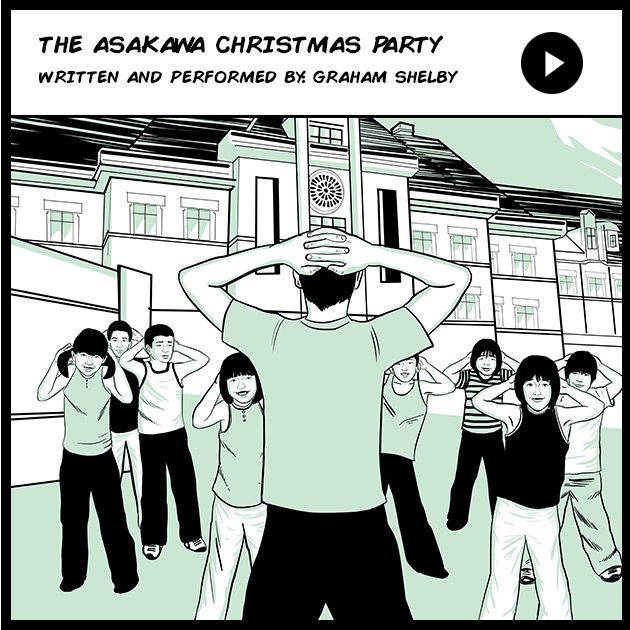
“The Asakawa Christmas Party” tells the true story of a complicated Christmas party Graham and a few other American JETs attended at a Japanese elementary school. It was complicated because…
a.) it took place on the anniversary of the Pearl Harbor attack.
and…
b.) the teachers asked them to teach “a traditional American Christmas dance.” (FYI – there aren’t any).
How’d it turn out? Doozo.
The story was produced as part of Selfridge and Co’s Reasons to Believe series of original Christmas tales. Graham has a few more Japan stories here.
Report: Children Bitten by Lion, Parent’s Ecstatic
Article/Journalism, Humor, Travel/Tourism, Video Comments Off on Report: Children Bitten by Lion, Parent’s Ecstatic
Posted by Benjamin Martin, a JET from 2008-2013 in Okinawa, publisher of the blog MoreThingsJapanese.com and author of the award-winning YA fantasy series Samurai Awakening (Tuttle).
 Yes. This past week on Kume Island, children were sent screaming as a single wild lion went rampaging through a peaceful neighborhood. Well, it was mostly peaceful. Since it was the full moon and August 15th of the Kyureki calendar, there were also a bunch of people around banging gongs and playing music. There were also some creepy Hacaburo running around egging the lion on. Warned in advance that something might be going on, I showed up with some local friends just after sunset with my camera ready. What I saw shocked me, and soon my former students were running for cover… behind me.
By the end of the night no less than 5 children had been bitten. When asked, parents responded that they were overjoyed. One parent, while holding a screaming infant, smiled widely and talked about how smart he would be while neglecting to stop the lion from continuing its rampage.
For more on this story, visit MoreThingsJapanese.com for pictures and video.
CLAIR Magazine “JET Plaza” series: David Namisato (Aomori)
Books, Humor, JETAA Chapter Beat, LifeAfterJET, Notable JET Alums, Return on JET-vestment Comments Off on CLAIR Magazine “JET Plaza” series: David Namisato (Aomori)
Each month, current and former JET participants are featured in the “JET Plaza” section of the CLAIR Forum magazine. The June 2013 edition includes an article by JET alumn David Namisato. Posted by Celine Castex (Chiba-ken, 2006-11), currently programme coordinator at CLAIR Tokyo.
***********
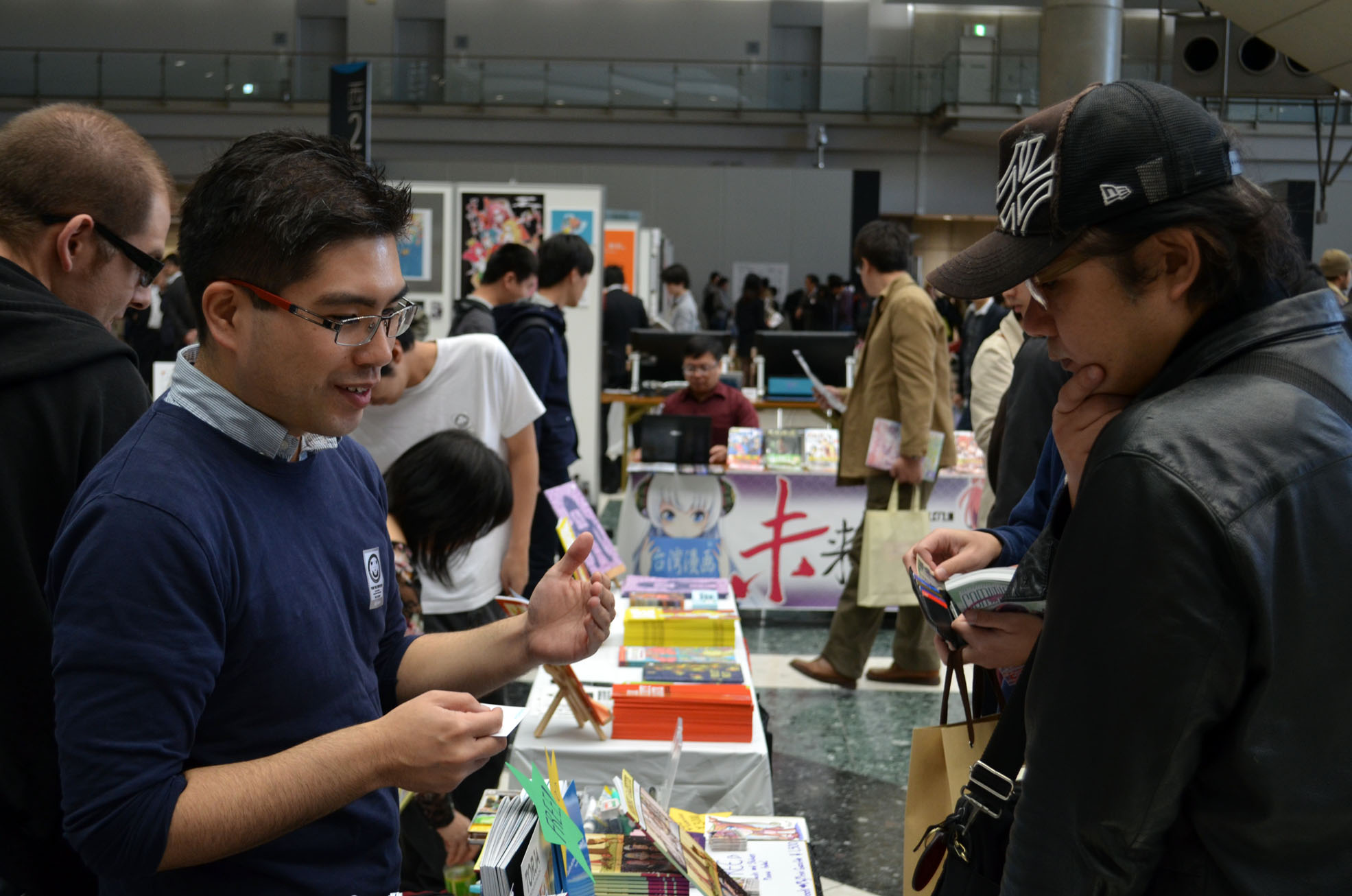
“I went on the JET Programme because I had quit art, but I returned to art because I went on the JET Programme, and thanks to that, here I am, over a decade later, an illustrator and comic book creator, with my JET experience influencing many of my works.”
David Namisato (Aomori-ken, Ajigasawa Town, 2002-04), is from Toronto, Ontario, Canada. He came to Japan on the JET Programme looking for a different career path after animation school, and spent two years in a rural town of Aomori as a CIR. Back in Canada, he started a comic series about the JET Programme experience for the JETAA Toronto Newsletter. Life After the B.O.E. quickly gained popularity inside and outside the JET community, to become a book in 2011. David is now a professional illustrator and has just released his new fantasy comic The Long Kingdom #1.
My Long Journey to the Beginning
In October of 2001, having become disillusioned with art, I decided to drop out of animation school, and to try something completely different and applied to the JET Programme.
Fluent in Japanese and looking for translation and interpretation experience as well as to transition in to a more planning and administrative career, I thought the position of Coordinator of International Relations (CIR) would be a good fit.
I was admitted to the JET Programme in 2002 as a CIR, and went to Japan. However, my contracting organization, Ajigasawa Town in Aomori Prefecture, used CIRs as elementary school English instructors. I had no planning or administrative duties beyond curriculum design and lesson planning, nor did I have translation or interpretation work. Rather, I was entrusted to teach English to children grades one through six at six of the town’s elementary schools.
As an elementary school English instructor, my art skills that I had abandoned were quickly resurrected and came in quite handy as I would use drawings to explain difficult vocabulary and grammar to my students. Slowly my joy of drawing returned, and as it returned, I also began contributing covers to the Aomori AJET newsletter.
In the spring of 2005, six months after my two years as a CIR ended, I decided to give art another try, and I started work as an illustrator creating illustrations and comics for children’s science, and history magazines in Canada. Read More
The sequel to “Sh*t Gaijin Say.” (Also no JETs involved to my knowledge.)
Just came across this on YouTube. (No JETs involved in this to my knowledge.)
Isn’t Japan Supposed to be Polite?
Humor, Japan Local, Writers Comments Off on Isn’t Japan Supposed to be Polite?
Posted by Benjamin Martin, a 5th year JET in Okinawa, publisher of the blog MoreThingsJapanese.com and author of the YA fantasy novel Samurai Awakening (Tuttle).
For those of you who don’t know, I spent my first three years in Japan living on Kitadaito Island. Kitadaito is a small island 320km east of the mainland of Okinawa. While I was there, I experienced the close community of rural Japan, and started writing. A bit over a year ago, I moved to Kumejima which his far larger. Since this is my last year with the JET Programme, I decided to visit Kitadaito during their annual Daitogusai Festival. While I still stayed in contact with many people from Kitadaito, and even saw them occasionally on the mainland, it was the first time I had really seen everyone in over a year.
A year might not seem like a long time to you, but in Japan things can change a lot. Teachers, doctors, and other civil servants often change jobs every few years. On Kitadaito, Junior High graduates have to leave the island since there is no high school for them. So even though it had only been a year, some students and friends were gone, many students had gotten bigger or changed, and there were new people to meet.
Perhaps most surprising was the fact that I had changed too. When I came to Japan I weighed 80kg (that’s 176lbs for all you non-metric people). If you’ve read Samurai Awakening, you probably figured out I played a lot of sports while I was there, and with all the running and sports festivals, I kept in decent shape. Things change though
Back to Daito
So last month, I went back to Kitadaito for 5 days. Nearly the first thing, every single person said to me was “太った” (futotta). Now if you plug that into Google Translate, you’ll get a translation of “Fat” with alternatives of “Chubby” and “Plump.”
Why did literally at least 15 people say this to me on my first day back? Well because when I went I was about 91kg (200lbs). But aren’t Japanese people supposed to be polite? Don’t they ignore stuff so that they can live through dealing with stuffed subway cars and close quarters? Strangely enough, there’s a lot going on in that simple little phrase, and a lot of different meanings.
…Read the full article at MoreThingsJapanese.com
JET alum Lars Martinson publishes “Kameoka Diaries Volume 2” e-comic
Books, Cartoon/Illustration, Humor, Japan Local, JET Alum Author Beat, Language Study, Notable JET Alums, Writers Comments Off on JET alum Lars Martinson publishes “Kameoka Diaries Volume 2” e-comic
 *************
Lars Martinson (Fukuoka-ken 2003-2006), author of the graphic novels Tonoharu: Part Two andTonoharu: Part 1, has just published the Kameoka Diaries Volume 2. This is a follow-up to Kameoka Diaries Volume 1, Lars’ insightful and entertaining (especially to any JETs) e-comic about his return to teaching English, this time in Kameoka, Kyoto.
Notably, you can purchase a copy for $0.99 for iPhone/iPad/iPodTouch or pay $1 for a PDF version for Mac/PC/Android/whatever.
More info here and below: http://larsmartinson.com/kameokadiaries2-now-available/
In Lars’ words:
When I submitted my first e-comics to Apple, ( The Kameoka Diaries: Volume One and Young Men of a Certain Mind ) it took one month for them to get approved, so I’m surprised & delighted it only took two days this time. But hey, I’m not going to look a gift horse in the mouth!
I’ll write more about the new volume of The Kameoka Diaries soon; I just wanted to get this announcement blog entry out right-away.
So please check it out. And if you enjoy it, please consider writing a review on iBooks, and/or telling your friends, and/or tweeting about it, and/or “liking” it on Facebook. Thanks a bunch!
JETwit Note: I just downloaded a copy onto my iPhone as soon as I saw the announcement. Volume 1 was great, even on an iPhone screen.
Lars Martinson’s “Kameoka Diaries” e-comic now available on iTunes
Books, Cartoon/Illustration, Celebrity, Humor, Japan Local, Notable JET Alums, Return on JET-vestment, Writers Comments Off on Lars Martinson’s “Kameoka Diaries” e-comic now available on iTunes
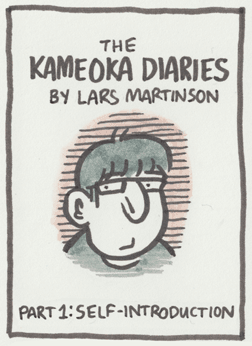 *************
Lars Martinson (Fukuoka-ken 2003-2006), author of the graphic novels Tonoharu: Part Two andTonoharu: Part 1, has just announced the “Kameoka Diaries“, Lars’ e-comic about his return to teaching English, this time in Kameoka, Kyoto, is now available on iTunes.
More info here and below: http://larsmartinson.com/my-first-two-e-comics-now-available/
The Kameoka Diaries: Volume One [ Direct iBookstore Link ]
The Kameoka Diaries: Volume One is a humorous (?) account of my experiences living and working in Central Japan, told over eight chapters. It includes an exclusive chapter not available anywhere else!
JETwit Note: I just downloaded a copy onto my iPhone. 250 pages for only $0.99, and I always love Lars’ work. Plus, it’s my first time using iBook which it turns out is pretty nifty. :-)
Kameoka Diaries #7 by Lars Martinson
Cartoon/Illustration, Humor, Japan Local, JET Alum Author Beat, Notable JET Alums, Travel/Tourism, Writers Comments Off on Kameoka Diaries #7 by Lars Martinson
Lars Martinson (Fukuoka-ken 2003-2006), author of the graphic novels Tonoharu: Part Two andTonoharu: Part 1, has just just published the latest edition of his new cartoon series called“Kameoka Diaries“ about his return to teaching English, this time in Kameoka, Kyoto.
Click here to read the Kameoka Diaries #7.
http://larsmartinson.com/kameoka-diaries-7/
JQ Magazine: On Japanese Winters and Well Endowed Snowmen
Article/Journalism, Humor, JQ Magazine Comments Off on JQ Magazine: On Japanese Winters and Well Endowed Snowmen
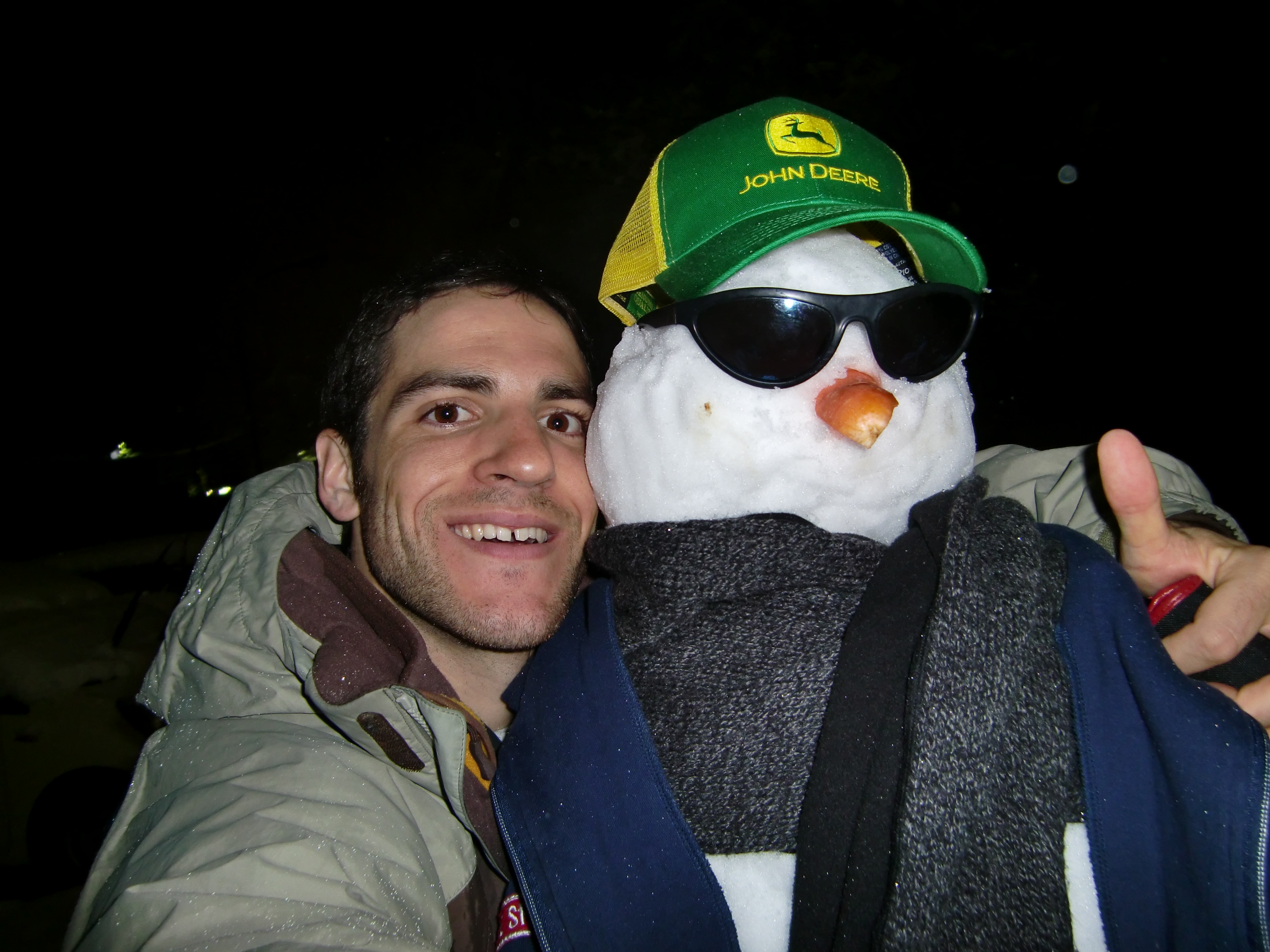
Preston with his cool creation.
By Preston Hatfield (Yamanashi-ken, 2009-10) for JQ magazine. Preston moved from San Francisco to New York City in January 2012 and is now accepting submissions from people who want to be his friend. Abduct him from his house in the middle of the night, or find him on Facebook and ask about his JET blog in which he details his exploits and misadventures in that crazy Land of the Rising Sun we all love.
On JET it may be true that everyone’s situation is different, but I’d bet my left dango that each of us, for whatever extenuating circumstance, suffered a few restless nights without heat in our rooms. My bone-chilling tale of refrigery and woe took place when 2010 was newly born, in the sweeping valleys of Yamanashi Prefecture. I lived in Kofu’s International Exchange Center, a westernized building converted from an old motel with all the comforts of home: shower, central heating, high speed Internet, furnished everything—which is to say I’d gotten used to a very comfortable lifestyle. I was overdue for a slice of humble sashimi.
I should mention that Kofu is not a cold place. It usually gets one storm where the snow sticks, and even that only lasts a few days. But that means nothing to a California boy. The moment my room dropped below its usual 72 degrees of moderation I knew I was in for it and got my building supervisor on the phone. He showed up a few minutes later, a shrunken old man who’d apparently won the battle against time, for indeed time had already done its worst and still the man was up and (very gradually) at ’em.
“A couple of days,” he told me after examining the fuses. “You’ll have to hang in there until then.” I looked out my window where the sky was semi-busy dropping the one good bit of snowfall we’d have that year. By now I imagined the temperature inside had dipped into the upper 60s and the first stages of hypothermia couldn’t be far off. Neither could the epic hissy fit I was about to throw.
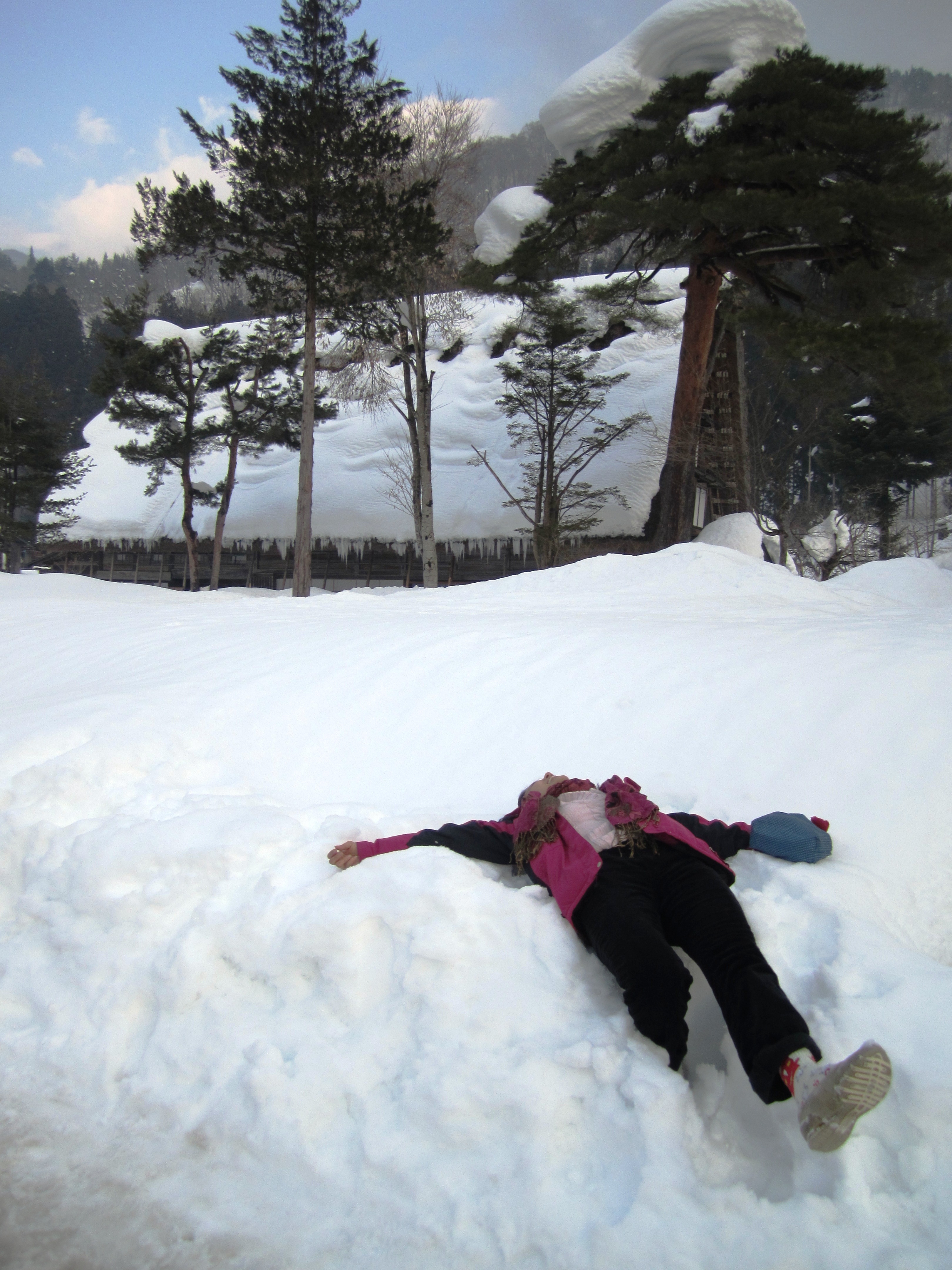
Wendy enjoying the snow (safely) at World Heritage Site Shirakawa-go, Gifu.
By Wendy Ikemoto (Ehime-ken, 2006-2011). Wendy taught at six crazy but lovable high schools and served as a Prefectural Advisor on JET. Now based in the equally crazy New York City, she is looking for her next challenging career opportunity. Wendy is a fan of reading, writing, and cooking as a form of socialization. Visit her LinkedIn profile here.
I learned the hard way that bicycles and snow don’t mix.
It wasn’t that I didn’t have my suspicions about this, but I: a) Needed to get to the train station, and b) was inexperienced with the fluffy stuff (it was only the second time in years that snow in my country town hadn’t immediately melted away, and as a Hawaii girl, the snow seemed more novelty than threat).
So on a January morning in Ehime, I left my apartment to catch a train into town. I followed the same route to the station that I used hundreds of times. I rode past a small temple on the hill. I enjoyed watching the animals in the river along the road. I took the turn by the bridge and in slow motion, my tire slipped out from under me and I crashed. SMACK–I fell on the back of my head.
I couldn’t move for a moment.
Before I could regain composure, I started to get dragged off. A kind Japanese couple had seen the whole thing and sensibly moved me out of the road. I was very grateful, but hugely mortified. After about a minute, I thanked them profusely, assuring them that I was OK, and managed to get back on my bicycle. Slowly and wobbly, I made it to the station.
I met my friend, we bought our train tickets, and through the gate we went to wait for our train. This was my first moment to relax since the accident. Although I felt fine, I decided to inspect the back on my head. Lightly, my fingers caressed where I crashed until they came upon a bump. Not the hard kind that happens when you knock your head against a shelf, but the soft kind that happens when you have a blister. Crap. Well, maybe I can go to the doctor tomorrow, I thought.
When I brought my hand down into my lap, however, I noticed that it looked funny…there was blood all over it.
Most of you have probably seen these two things going around on Facebook and elsewhere. But just in case you haven’t….
1. The 101 Signs You’ve Been in Japan Too Long
2. ALT in Japan

Kameoka Diaries #5 by Lars Martinson
Cartoon/Illustration, Celebrity, Humor, Notable JET Alums, Writers Comments Off on Kameoka Diaries #5 by Lars Martinson
Lars Martinson (Fukuoka-ken 2003-2006), author of the graphic novels Tonoharu: Part Two andTonoharu: Part 1, has just just published the latest edition of his new cartoon series called“Kameoka Diaries“ about his return to teaching English, this time in Kameoka, Kyoto.
Click here to read the Kameoka Diaries #5.
http://larsmartinson.com/kameoka-diaries-5/
Video: “Tonoharu” explained in unique video by creator Lars Martinson
Books, Cartoon/Illustration, Cultural Outreach, Humor, Notable JET Alums, Uncategorized, Video, Writers Comments Off on Video: “Tonoharu” explained in unique video by creator Lars Martinson
****************
Lars Martinson (Fukuoka-ken 2003-2006), author of the graphic novels Tonoharu: Part Two and Tonoharu: Part 1, has put together a rather unique video that “explains” the Tonoharu series in a marvelously tongue-in-cheek way. (BTW, does anyone know if there’s a Japanese term for “tongue-in-cheek”?)
Anyway, have a look at the video. I think it’s fair to say that no one has captured the JET/living in Japan experience in as intricate a way as Lars has:
