Mar 11

WITLife is a periodic series written by professional Writer/Interpreter/Translator Stacy Smith (Kumamoto-ken CIR, 2000-03). She starts her day by watching Fujisankei’s newscast in Japanese, and here she shares some of the interesting tidbits and trends together with her own observations.

There is a bit of a controversy brewing over implementation of one aspect of the DPJ’s Manifesto.  This is the proposal of free tuition for high schools currently being debated in the Diet.  Students have to pay to attend high school as Japanese education is only compulsory through junior high.  The question here is whether North Korean schools in Japan (of which there are 10 and where about 2,000 students of both North Korean and South Korean nationality are enrolled) should be similarly subsidized considering that Japan imposes economic sanctions on North Korea and in light of the yet unresolved abduction issue.

PM Hatoyama is waffling on this issue, with him initially Read More

  • Share/Bookmark

Mar 6

WITLife is a periodic series written by professional Writer/Interpreter/Translator Stacy Smith (Kumamoto-ken CIR, 2000-03). She starts her day by watching Fujisankei’s newscast in Japanese, and here she shares some of the interesting tidbits and trends together with her own observations.

The group I was interpreting for this time returned to Japan yesterday, and I have been enjoying the last destination on our program: Hawaii!  After a week of surf and sun I can’t say that I am particularly looking forward to leaving, but I suppose all good things must come to an end.  One stop I knew I had to make while here was Kansai Yamato, a mochi maker located in the Ala Moana mall.  It’s fun to watch them make and pack the mochi before your eyes at their small stall.  Like the stores profiled in my recent writeup about wagashi in LA’s Little Tokyo, this establishment also has some pretty funky mochi flavors.  When I went today, I counted 12 atypical varieties in addition to the standard ohagi, sakura mochi, kinako mochi, etc.

Some of the more unusual types were mango, honeydew and Hawaii gentei Kona coffee daifuku, but I wasn’t brave enough to try any of those.  Instead I stuck with Read More

  • Share/Bookmark

Feb 27

WITLife is a periodic series written by professional Writer/Interpreter/Translator Stacy Smith (Kumamoto-ken CIR, 2000-03). She starts her day by watching Fujisankei’s newscast in Japanese, and here she shares some of the interesting tidbits and trends together with her own observations.

A thought-provoking article in Salon regarding Japanese reactions at home to President Akio Toyoda’s Congressional testimony and apology to dealers.  It describes how the populace was moved by him getting choked up when addressing the latter, but also that the Japanese can be fickle in their acclaim for someone.  I found it interesting as I am currently traveling as an interpreter for a seven-person group of political aides, and they are overwhelming in their opinion that Japan is getting the short end of the stick regarding this situation.

At one dinner they expressed difficulty in understanding Read More

  • Share/Bookmark

Feb 21

*************************

WITLife is a periodic series written by professional Writer/Interpreter/Translator Stacy Smith (Kumamoto-ken CIR, 2000-03). She starts her day by watching Fujisankei’s newscast in Japanese, and here she shares some of the interesting tidbits and trends together with her own observations.

I just started an assignment as an interpreter for a delegation of young political leaders from Japan, divided about evenly between members of the LDP and the DPJ as well as one journalist.  Over our first dinner tonight it was interesting to hear their respective viewpoints regarding various issues, especially ones that are personal to them.  For example, one DPJ rep and one LDP rep were having a friendly debate regarding day care.  Both of these men have wives who work and 3-year old daughters, and as they live in the Tokyo area child care options are limited.  There are not enough facilities to meet current needs, and those that exist are deluged by requests leading to long waiting lists.

As part of the Manifesto, the DPJ has proposed the implementation of a 子供手当て (kodomo teate) of 26,000 yen per month to provide financial aid to those who have a child.  The LDP, on the other hand, does not advocate this and thinks this money should instead be put toward Read More

  • Share/Bookmark

Feb 19

WITLife is a periodic series written by professional Writer/Interpreter/Translator Stacy Smith (Kumamoto-ken CIR, 2000-03). She starts her day by watching Fujisankei’s newscast in Japanese, and here she shares some of the interesting tidbits and trends together with her own observations.

An interesting article this week in Slate analyzed the intricacies of the Japanese bow and its various gradations.  It was in reference to the apology by Toyota President Akio Toyoda at a press conference last week regarding the company’s massive vehicle recall.  His chosen bow was a keirei, or 30-degree tilt to show respect, though some say he should have opted for a saikeirei, or full 45- to 90-degree bow intended to show the greatest veneration or humility.

With the amount of damage control that Toyota needs at this point, perhaps it is true that Toyoda should have overshot with a deeper bow.  However, critics were likely placated by yesterday’s news that Toyoda will testify before Congress regarding the recalls, something he had previously said he had no intention of doing.  The threat of being subpoenaed by investigators seemed to have persuaded him to accept the formal invitation issued by the House Oversight and Government Reform Committee that followed an informal one.  It remains to be seen how reassuring his testimony will be to the American public.

  • Share/Bookmark

Feb 10

WITLife is a periodic series written by professional Writer/Interpreter/Translator Stacy Smith (Kumamoto-ken CIR, 2000-03). She starts her day by watching Fujisankei’s newscast in Japanese, and here she shares some of the interesting tidbits and trends together with her own observations.

Recently the news ran a piece about the popularity of Japanese foods that are mocchiri, meaning heavy in a way similar to mochi.  Evidently it is a Kansai-ben term that combines mochi mochi shita, sticky or springy, and dosshiri shita, heavy or solid.  The top three reasons consumers cited for liking mocchiri goods were their texture, the ability to make them feel full and the attraction to items with mocchiri or mochi mochi in the name.  In addition, they seem to provide a sense of comfort.

Many manufacturers are capitalizing on this mood by increasing their products that contain such descriptors.  For example, a taiyaki maker with Read More

  • Share/Bookmark

Feb 8

****************************

WITLife is a periodic series written by professional Writer/Interpreter/Translator Stacy Smith (Kumamoto-ken, 2000-03). She starts her day by watching Fujisankei’s newscast in Japanese, and here she shares some of the interesting tidbits and trends together with her own observations.

In Japan measures are being taken to address the phenomenon of 畳離れ (tatami banare), or moving away from tatami.  Many of us probably saw it when we lived over there, as friends’ houses were largely Western style except for the token 和室 (washitsu), or Japanese style-room.  In order to make sure this integral part of the culture does not disappear, a certification has been created for eligible tatami craftsman which gives them the title of “doctor.”

One such craftsman in the prefecture of Tochigi, who estimates that over the last 29 years he has worked on more than 120,000 mats, received his certification just last year.  He is now called a 「畳ドクター」 (tatami doctor), a designation that he admits he is not quite used to.  However, like an MD he Read More

  • Share/Bookmark

Feb 3

WITLife is a periodic series written by professional Writer/Interpreter/Translator Stacy Smith (Kumamoto-ken, 2000-03). She starts her day by watching Fujisankei’s newscast in Japanese, and here she shares some of the interesting tidbits and trends together with her own observations.

Last night I went to an event at Japan Society entitled “Wasabi on a Hot Dog?” which discussed the incorporation of Japanese ingredients and cooking styles into non-Japanese food.  The speakers were Michael Anthony, executive chef of Gramercy Tavern, and Craig Koketsu,  Executive Chef at Park Avenue Autumn/Winter, and the discussion was moderated by NYT Dining section reporter Julia Moskin.  They both spoke of the importance of seasonality as a Japanese concept that they have introduced, which is said to be revolutionary but really is at the root of all cooking.  It was interesting to hear about Anthony’s time training with a female chef at a French bistro in Tokyo, and of Koketsu growing up in California as a third-generation Japanese-American and how this has affected his work.

However, by far the greatest contribution of the evening was the off the cuff remarks Read More

  • Share/Bookmark

Feb 1

WITLife is a periodic series written by professional Writer/Interpreter/Translator Stacy Smith (Kumamoto-ken, 2000-03). She starts her day by watching Fujisankei’s newscast in Japanese, and here she shares some of the interesting tidbits and trends together with her own observations.

Nice to be back in chilly New York, but a bit of an adjustment after the final stop on my business trip last week being balmy LA.  I always love going to this southern California destination for the chance to visit Little Tokyo!  Besides great cultural institutions such as the Japanese American National Museum and the Geffen MOCA, it has delicious mochi flavors that I am yet to find here in the city.  My first two stops when in town are always the sweet shops carrying these creations, Mikawaya in the Japanese village and Fugetsu-do on the main drag.

The more expansive Mikawaya carries a greater selection of mochi, including Read More

  • Share/Bookmark

Jan 29

WITLife is a periodic series written by professional Writer/Interpreter/Translator Stacy Smith (Kumamoto-ken, 2000-03). She starts her day by watching Fujisankei’s newscast in Japanese, and here she shares some of the interesting tidbits and trends together with her own observations.

Quick follow-up to my last post re. the Okinawa base debate.  An editorial in yesterday’s NYT discusses the importance of a meeting that will take place this week between the Obama administration and two visiting Japanese senior officials.  The article urges both countries to not let this contentious issue get in the way of their valuable alliance.  It will be interesting to see what emerges from these security talks.

Also check out Roger Cohen’s editorial in today’s Times which talks about the imagined results of a future America (circa 2040) that has withdrawn from world affairs (or been supplanted by China in this role).  He discusses the frightening ramifications in regard to Japan and the Asian region in the middle of the article.  Happy reading!

  • Share/Bookmark

Jan 26

**************************

WITLife is a periodic series written by professional Writer/Interpreter/Translator Stacy Smith (Kumamoto-ken, 2000-03).  She starts her day by watching Fujisankei’s newscast in Japanese, and here she shares some of the interesting tidbits and trends together with her own observations.

This Sunday’s Times carried an interesting article about the shifting nature of the respective relationships between Japan and the US (日米関係 (Nichibei kankei)) and Japan and China (日中関係 (Nicchuu kankei)), and the seeming diplomatic displacement of the former by the latter.  As an example, it discusses the tension regarding the Futenma U.S. Marine base issue when Defense Secretary Robert M. Gates went to Japan last fall, in contrast to the red carpet treatment that a Japanese delegation to China received two months later.  It is said that within the current government there is frustration with the U.S.’s “occupation mentality,” the Obama administration’s high-handed attitude in the heated dispute over the relocation of this base.

Not only are there ripples in the formerly smooth-sailing Japan-U.S. relationship, but there is a Read More

  • Share/Bookmark

Jan 18

WITLife is a periodic series written by professional Writer/Interpreter/Translator Stacy Smith (Kumamoto-ken, 2000-03).  She starts her day by watching Fujisankei’s newscast in Japanese, and here she shares some of the interesting tidbits and trends together with her own observations.IMG_4047

My travels currently bring me to Rochester, NY, and this morning at the local museum and science center I encountered an unexpected aspect of grassroots exchange between Japan and America.  My Japanese guests and I met with Mr. George McIntosh, Director of Collections, and headed down into the vault to get a closer look at the Japanese Ambassador Doll housed there.  Her name is Tamako and she hails from Nagasaki Prefecture, and she was part of a gift from Japan in return for nearly 13,000 friendship dolls sent over in early 1927 by the Committee on World Friendship Among Children.  IMG_4048

This committee was formed by Dr. Sidney Gulick in 1926 as a reaction to restrictive American Read More

  • Share/Bookmark

Jan 15

WITLife is a periodic series written by professional Writer/Interpreter/Translator Stacy Smith (Kumamoto-ken, 2000-03).  She starts her day by watching Fujisankei’s newscast in Japanese, and here she shares some of the interesting tidbits and trends together with her own observations.

Interesting intersection of American pop culture and Japanese culture on two back-to-back episodes of 30 Rock last night.  In the first one, James Franco (who manages to be amazing in everything he does) playing himself talks of his knowledge of “moe” before whipping out his very own body pillow girlfriend Kimiko.  In a later scene the morning after he and Liz spend the night together, they both emerge in their pajamas, him holding Kimiko.   This strange threesome freaks out Liz’s cousin who is staying at her place.

In the next episode, Frank refers to a high frequency sound used in Japan to chase away kids loitering in front of conbini, and then uses it on Jenna.  I have never heard of this tactic being employed in Japan, anyone else?

  • Share/Bookmark

Jan 14

WITLife is a periodic series written by professional Translator/Interpreter/Writer Stacy Smith (Kumamoto-ken, 2000-03).  Recently she’s been watching Fujisankei’s newscast in Japanese and sharing some of the interesting tidbits and trends together with her own observations.

I recently came across this article from the end of last year in the Economist that discusses how deeply rice is embedded in Japanese society.  Some aspects like the designation of  Emperor Akihito as Japan’s “rice-farmer-in-chief” are humorous, and the in-depth look at the history of this crop that is so central to Japanese culture is fascinating.  The author’s description of a rice-producing area of Niigata suffering from a rural exodus is vividly drawn, and interviews with some of the residents are eye opening.  While reading the article I kept flashing back to my experience of doing Read More

  • Share/Bookmark

Jan 7

WITLife is a periodic series written by professional Translator/Interpreter/Writer Stacy Smith (Kumamoto-ken, 2000-03).  Recently she’s been watching Fujisankei’s newscast in Japanese and sharing some of the interesting tidbits and trends together with her own observations.

Today’s NYT features an interesting editorial from Joseph Nye about the Okinawa base location issue threatening this year’s 50th anniversary of the US-Japan Security Treaty.  This Harvard professor and former assistant secretary of defense coined the term “soft power,” but his article focuses on how he believes our hard power should be used in regard to this matter.  Basically he is urging us to not throw the baby away with the bath water, and advocates a more patient and strategic approach in order to prevent “a second-order issue [from threatening] our long-term strategy for East Asia.”  PM Hatoyama (who Nye describes as being “caught in a vice”) wants to push off resolving this issue until May, but we’ll see what the new year (decade!) brings.

In weather news, we are experiencing quite a cold winter and Read More

  • Share/Bookmark

Jan 4

WITLife is a periodic series written by professional Translator/Interpreter/Writer Stacy Smith (Kumamoto-ken, 2000-03).  Recently she’s been watching Fujisankei’s newscast in Japanese and sharing some of the interesting tidbits and trends together with her own observations.

アケオメ! I hope everyone had a super New Year’s celebration and that you are ready for 2010, aka the Year of the Tiger (toradoshi). Yesterday I had the chance to have some belated osechi ryouri and it was well worth the wait!  Tsukiji Fish Market in Tokyo kicked off the new year with its first auction where appropriately enough torafugu (tiger blowfish) was being sold at prices of 10,000 yen each, cheaper than usual.  Maguro (tuna), on the other hand, sold for almost 16.3 million yen (about $177,000) to a Hong Kong customer known as the  “Sushi King.”

In other Tokyo news, an interesting article in the Wall Street Journal last week portrayed Read More

  • Share/Bookmark

Dec 28

WITLife is a periodic series written by professional Translator/Interpreter/Writer Stacy Smith (Kumamoto-ken, 2000-03).  Recently she’s been watching Fujisankei’s newscast in Japanese and sharing some of the interesting tidbits and trends together with her own observations.

福袋 (or fukubukuro) are an essential part of the Japanese New Year’s celebration.  These are grab bags (literally translated as “lucky bag”) given out at department stores that contain merchandise worth much more than what you pay for the bag itself.  However, there is a bit of chance involved as some deals are better than others.  Here are some new fukubukuro available through the end of 2009 that reflect political and social trends from the past year.

One is the Takashimaya 友愛 (yuai) fukubukuro playing off of Prime Minister Hatoyama’s fraternity theme.  In this case the yuai refers to Read More

  • Share/Bookmark

Dec 23

WITLife is a periodic series written by professional Translator/Interpreter/Writer Stacy Smith (Kumamoto-ken, 2000-03).  Recently she’s been watching Fujisankei’s newscast in Japanese and sharing some of the interesting tidbits and trends together withIMG_3871 her own observations.

One of my favorite things about Japan is the constant changing of flavors, often in accordance with the seasons.  I love just wandering through conbini to see what new tastes have popped up for my favorite snacks/drinks.  One product over there I follow religiously is Kit Kats, as you can often get flavors that are not available here in the States.  This is why I was thrilled to receive an omiyage of ginger ale Kit Kats from a friend who had recently traveled to Japan.

Next to the customary phrase, “Have a break, have a Kit Kat” was a glass of ginger ale with lemon in it.  With use of .3% lemon powder and ginger ale flavor, it promised to be something new.  The aroma was Read More

  • Share/Bookmark

Dec 21

WITLife is a periodic series written by professional Translator/Interpreter/Writer Stacy Smith (Kumamoto-ken, 2000-03).  Recently she’s been watching Fujisankei’s newscast in Japanese and sharing some of the interesting tidbits and trends together with her own observations.

Last week I had the opportunity to hear a talk given by the Japanese sociologist Dr. Yuko Kawanishi.  Dr. Kawanishi has written numerous articles and is often quoted by Western media on topics such as declining birth rate, education reform, mental health and depression, family relations, juvenile crime and youth culture.  She did her undergraduate work at Doshisha University and got her PhD in Sociology from UCLA.  Currently she is the recipient of an Abe Fellowship and a visiting scholar at Hunter College and Columbia University’s Teacher’s College.

Dr. Kawanishi spoke mainly about her new book entitled “Mental Health Challenges Facing Contemporary Japanese Society: The ‘Lonely People.”  It addresses the question of mental malaise in its many forms in contemporary Japanese society, focusing on three main areas:  work, family and youth.  These include Read More

  • Share/Bookmark

Dec 15

WITLife is a periodic series written by professional Translator/Interpreter/Writer Stacy Smith (Kumamoto-ken, 2000-03).  Recently she’s been watching Fujisankei’s newscast in Japanese and sharing some of the interesting tidbits and trends together with her own observations.

Thanks to Rochelle Kopp at Japan Intercultural Consulting, I was alerted to an article posted to the website Boing Boing by Lisa Katayama, writer and commentator on modern Japanese society.  In a previous post this summer, I had discussed Katayama’s New York Times magazine article about the subcategory of otaku men and women who indulge in real relationships with imaginary characters.  This time around she focuses on not taking the weirdness of Japan too seriously.  As an example, she cites the strange story last month of a Japanese man wedding an anime game character which received much attention.

This morning I was surprised to find the topic of otaku also taken up by Read More

  • Share/Bookmark

Dec 11

WITLife is a periodic series written by professional Translator/Interpreter/Writer Stacy Smith (Kumamoto-ken, 2000-03).  Recently she’s been watching Fujisankei’s newscast in Japanese and sharing some of the interesting tidbits and trends together with her own observations.20091211STXKF0427111220091F

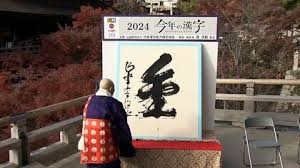
Yesterday at Kyoto’s Kiyomizu Temple the official announcement of 今年の漢字 (kotoshi no kanji), or the Kanji of the Year, took place.  This is an annual contest run by the Japanese Kanji Proficiency Society that had a record number of applications from all over the country this year, 161,365.  Coming off of last year’s selection of 変 (hen) or change, this year’s winner by 14,093 ballots was 新 (shin) or new.  Among the reasons why this character was picked were the new political administration and the new strain of the flu.

This morning’s news interviewed both young and seasoned prominent political figures regarding what their picks would have been.  One was Read More

  • Share/Bookmark

Dec 7

WITLife is a periodic series written by professional Translator/Interpreter/Writer Stacy Smith (Kumamoto-ken, 2000-03).  Recently she’s been watching Fujisankei’s newscast in Japanese and sharing some of the interesting tidbits and trends together with her own observations.

政権交代 (seiken koutai) or “change of government,” was announced to be the winner of Japan’s 2009 Buzzword Award on December 1 (Incidentally, last year the title was won byアラフォー」 or “around 40 years old”).  This phrase of course refers to the rise to power by Prime Minister Yukio Hatoyama and the Democratic Party of Japan (DPJ), overturning over 50 years of Liberal Democratic Party rule.  Other contenders for the buzzword title were 新型インフルエンザ (shingata influenza)  or “new flu” and 草食男子 (soushoku danshi) or “herbivorous men.”

Since the change in administration, Hatoyama has been dealing with 3Ks.  However, this is not referring to the typical usage regarding undesirable 3K jobs that are kitsui (difficult), kitanai (dirty) and kiken (dangerous).  Hatoyama’s very own 3 K’s are kenkin (contribution), keizai (economics), and kichi (military base).

The first K is in regard to a donation scandal plaguing the new Prime Minister. Prosecutors have traced Read More

  • Share/Bookmark

Nov 30

WITLife is a periodic series written by professional Translator/Interpreter/Writer Stacy Smith (Kumamoto-ken, 2000-03).  Recently she’s been watching Fujisankei’s newscast in Japanese and sharing some of the interesting tidbits and trends together with her own observations.

Believe it or not we will be greeting the new year in about a month, and today’s news took a look at what is being forecast for お正月 (oshougatsu) 2010.  Similar to last year, it is expected that in light of the dismal economic climate there will be a tendency toward 巣篭り (sugomori), literally nesting or staying close to home as opposed to going abroad or visiting one’s family.  Compared to last year, there has been 30% increased sales of two-person servings of osechi ryouri.  According to an osechi salesperson at a department store, this goes along with Read More

  • Share/Bookmark

Nov 23

WITLife is a periodic series written by professional Translator/Interpreter/Writer Stacy Smith (Kumamoto-ken, 2000-03).  Recently she’s been watching Fujisankei’s newscast in Japanese and sharing some of the interesting tidbits and trends together with her own observations.

As we get ready to prepare our turkeys, stuff ourselves silly and max out on football, yesterday Japan celebrated their own day of appreciation with 勤労感謝の日(kinrou kansha no hi) or Labor Thanksgiving Day.  More than anything else this gave Japanese citizens a three day weekend to relax and enjoy.  The keyword for how this long weekend was spent was 「安・近・感」 (an/kin/kan), meaning “cheap, close and feeling.”  The first two words are self-explanatory, and the last one refers to the experience, such as getting a sense of the season.

For Tokyoites, this meant to going to places like Read More

  • Share/Bookmark

Nov 20

WITLife is a periodic series written by professional Translator/Interpreter/Writer Stacy Smith (Kumamoto-ken, 2000-03).  Recently she’s been watching Fujisankei’s newscast in Japanese and sharing some of the interesting tidbits and trends together with her own observations.wlb4

My only time traveling one-on-one as an interpreter for the Department of State’s International Visitor Leadership Program was a year ago with a female entrepreneur from Hokkaido named Yuri Tazawa.  No one epitomizes the “Yes We Can” spirit more than Yuri, so it was appropriate that we were able to celebrate Obama’s victory together while in DC.  She began a company in a town called Kitami 11 years ago after being raised in Nara, going to university in Tokyo, and starting a family.  You might wonder what kind of business one could have being located so far away from a metropolis, but Yuri heads a company called Y’s Staff (taking the Y from her name as well as being a homonym with “wise”).

Y’s has offices in both Hokkaido and Nara, but its actual structure is virtual.  Through her company, Yuri is a promoter of teleworking.  This concept is often confused with telemarketing, but is essentially the idea of doing work in a place other than a fixed office.  This could be your home, the local Starbucks or any other location.  Yuri also advocates Read More

  • Share/Bookmark

Nov 13

WITLife is a periodic series written by professional Translator/Interpreter/Writer Stacy Smith (Kumamoto-ken, 20 00-03).  Recently she’s been watching Fujisankei’s newscast in Japanese and sharing some of the interesting tidbits and trends together with her own observations.

Last night I attended the world premiere of Talk Like Singing, the first-ever original Japanese musical to premiere in the U.S.  I had high hopes for this production due to the involvement of several big names in Japan.  The star of the show, Shingo Katori, is a member of the ubiquitous boy band SMAP, and though he is less well-known than heartthrob Kimutaku or recently headline-making Kusanagi he holds his own thanks to his eccentricity.  Back in my JET days, he adopted the persona of “Shingo Mama,” and sang of his cooking skills, eating breakfast together and properly greeting everyone with a genki “oha!”  This abbreviation for ohayou or “good morning” and its accompanying hand motion became all the rage at the workplace and beyond.

This song was composed by Yasuharu Konishi, who is in charge of the show’s music and musical direction.  He was Read More

  • Share/Bookmark

Nov 5

WITLife is a periodic series written by professional Translator/Interpreter/Writer Stacy Smith (Kumamoto-ken, 2000-03).  Recently she’s been watching Fujisankei’s newscast in Japanese and sharing some of the interesting tidbits and trends together with her own observations.

Last night I attended the North American premiere of Goemon, a movie portraying this titular folk hero who was known as the Robin Hood of Japan.  It takes place during the Warring States period, and some prominent historical figures who appear are Oda Nobunaga, Toyotomi Hideyoshi and Tokugawa Ieyasu.  It is interesting to see Eguchi Yosuke, usually seen in lighter fare such as dramas, as the title character of legendary ninja bandit Ishikawa Goemon.  Hirosue Ryoko, another drama veteran, is featured in the role of Princess Chacha whom Goemon spent his early years protecting.  The movie’s plot is almost entirely fictional, and displays many dazzling special effects in a CGI-enhanced fantasy setting.  The director, Kiriya Kazuaki, hails from my JET hometown of Kumamoto and is the former husband of Utada Hikaru.

During the course of the film, Goemon’s attendant talks of his aspirations to become a samurai and steadily working his way up to achieve this recognition.  As the title of this post (samurai e no agokare or “longing for samurai“) suggests, the appeal of samurai has not been lost in this modern day and age.  Recently various media have been Read More

  • Share/Bookmark

Oct 26

WITLife is a periodic series written by professional Interpreter/Translator/Writer Stacy Smith (Kumamoto-ken, 2000-03).  Recently she’s been watching Fujisankei’s newscast in Japanese and sharing some of the interesting tidbits and trends together with her own observations.

Last night I was able to attend a private screening of the intriguing documentary Samurai Umpires in the U.S.A.  Executive producer/director Takayuki Tanaka is a Japanese native who conceptualized the idea for his film while studying at the New York Film Academy.  His work focuses on six Japanese baseball umpires working in the minor leagues with dreams of making it to the Majors.

This all-male group ranges in age and umpiring experience, and the movie delves into Read More

  • Share/Bookmark

Oct 21

WITLife is a periodic series written by professional Interpreter/Translator/Writer Stacy Smith (Kumamoto-ken, 2000-03).  Recently she’s been watching Fujisankei’s newscast in Japanese and sharing some of the interesting tidbits and trends together with her own observations.

Last night at Japan Society I had the chance to catch a sneak preview of the American movie version of the Japanese manga series “Testuwan Atomu,” known here in the States as Astro Boy.  This wide-eyed, spiky haired superhero has a huge following both here and at home, and his Hollywood debut was greatly anticipated.  Though I had never seen the original series, which based on a manga became an anime first in Japan and then here in 1963, I truly enjoyed the Western interpretation of the life of this legendary icon.

The voices were provided by a star-studded cast including Read More

  • Share/Bookmark

Oct 16

WITLife is a periodic series written by professional Interpreter/Translator/Writer Stacy Smith (Kumamoto-ken, 2000-03).  Recently she’s been watching Fujisankei’s newscast in Japanese and sharing some of the interesting tidbits and trends together with her own observations.

The Manifesto is the imposing name of the Democratic Party of Japan (DPJ)’s platform for its new government, one that promises to “put people’s lives first.”  In order to accomplish this, its five pledges are the end of wasteful spending, childrearing and education, pension and medical care, regional sovereignty and employment and the economy.  Although great in theory, new Prime Minister Yukio Hatoyama is realizing that these goals are easier to state than actually carry out.  Japanese ministries and agencies asked to spend a record 95.04 trillion yen ($1 trillion) next fiscal year, risking expansion of the world’s largest public debt.

This creates the issue of whether the DPJ can fulfill its election pledges without worsening an already significant debt burden.  In response to this, Fujisankai carried out Read More

  • Share/Bookmark

Oct 9

WITLife is a periodic series written by professional Interpreter/Translator/Writer Stacy Smith (Kumamoto-ken, 2000-03).  Recently she’s been watching Fujisankei’s newscast in Japanese and sharing some of the interesting tidbits and trends together with her own observations.

Time.com featured an interesting article today about how ANA is encouraging its customers to utilize restroom facilities before coming on board in an effort to reduce its carbon footprint.  With lighter loads, planes would have reduced fuel consumption and therefore less impact on the environment.  A great idea in theory, but as the article mentioned questionable as to how successful it will be in practice.   Also, interestingly enough the pre-flight announcement with the request is only in Japanese, so those who do not speak the language might not know what is being asked.

Reading about this endeavor got me thinking about how my own attitude toward the environment and my habits subsequently changed as a result of my time living in Japan.  I remember one of the first things that surprised me Read More

  • Share/Bookmark

Sep 30

WITLife is a periodic series written by professional Interpreter/Translator/Writer Stacy Smith (Kumamoto-ken, 2000-03).  Recently she’s been watching Fujisankei’s newscast in Japanese and sharing some of the interesting tidbits and trends together with her own observations.

Big news for expecting parents.  Going into effect today in Japan (October 1), child care costs will be  borne directly by hospitals.  Previously pregnant women would have to pay the one-time delivery/child rearing costs up front and later received 380,000 yen back, but now it will be directly paid by the hospitals at a 40,000 yen increase of 420,000 yen .  This was initially proposed in Read More

  • Share/Bookmark

Sep 5

WITLife is a periodic series written by professional Interpreter/Translator/Writer Stacy Smith (Kumamoto-ken, 2000-03).  Recently she’s been watching Fujisankei’s newscast in Japanese and sharing some of the interesting tidbits and trends together with her own observations.

Since my last post there has been a huge shakeup in Japanese politics, with the Democratic Party winning in a landslide election and its leader Yukio Hatoyama poised to become the next Prime Minister.  His wife, Miyuki, has even been getting lots of press for her claim to have been abducted by aliens and taken to Venus when she was younger.  She is already fodder for late-night comedians, as this week she was the subject of a David Letterman Top-Ten list entitled “Signs the Japanese First Lady is Nuts.”

Analysts expect the Democrats to focus at least initially on their ambitious domestic agenda.  The party has pledged to change the postwar paradigm, promising to ease growing social inequality by handing more money and social benefits directly to residents rather than to industry or other interest groups.  It has promised to strengthen the social safety net and raise the low birthrate by giving families cash handouts of $270 per month per child and by charging lower gasoline taxes.  Such policies could bring about the start of recovery by lifting Japan’s flagging consumer spending.  Hatoyama has expressed a desire to move away from American-style capitalism.

The party has said it will rein in the powerful central ministries in Tokyo which have run postwar Japan on the Liberal Democrats’ behalf.  It plans to wrest away power from ministerial bureaucrats to ensure that spending more closely reflects public needs.  However, party’s leaders have not had much to say about how to address productivity, or Japan’s continuing battle with deflation or the overhang of a huge public debt.  Due to this, some people have not embraced its platform with much enthusiasm and are not optimistic about the Democrats’ ability to solve looming problems like the growing government debt and a rapidly aging population. Read More

  • Share/Bookmark

Aug 18

WITLife is a periodic series written by professional Interpreter/Translator/Writer Stacy Smith (Kumamoto-ken, 2000-03).  Recently she’s been watching Fujisankei’s newscast in Japanese and sharing some of the interesting tidbits and trends together with her own observations.

As we get further into August, the weather is not the only thing heating up in Japan.  People are greatly anticipating the national elections to be held at the end of the month, as many expect that at this time Prime Minister Taro Aso’s Liberal Democratic Party will lose its grip on power for only the second time in over half a century.  Voter surveys show that the Democratic Party  is favored to beat the LDP.  This largest opposition party vows to put more money in the hands of consumers, and support has soared for them and their ambitious election platform which includes Read More

  • Share/Bookmark

Aug 7

WITLife is a periodic series written by professional Interpreter/Translator/Writer Stacy Smith (Kumamoto-ken, 2000-03).  Recently she’s been watching Fujisankei’s newscast in Japanese and sharing some of the interesting tidbits and trends together with her own observations.

An article from this past Tuesday’s (August 4) Daily Sun newspaper caught my attention as it focused on gaijin.  It described how  foreigners are increasingly being recognized for the prestigious literature Akutagawa Prize.  Last year Chinese writer Yang Yi became the first non-native speaker of Japanese to win, and her comment at the ceremony held at a Tokyo restaurant was, “As a foreigner I have written novels and I am thrilled to have been recognized in this way.”  The 44-year-old Yang’s award-winning work titled “Toki ga nijimu asa” (A Morning When Time Blurs) is set during and after China’s democratization movement centering on the 1989 Tiananmen Incident.  The book follows a Chinese man who lived through those times and later moved to Japan, still holding on to his ideals.

This year further diversity was added to the proceedings of this 141-year old award when Read More

  • Share/Bookmark

Jul 29

WITLife is a periodic series written by professional Interpreter/Translator/Writer Stacy Smith (Kumamoto-ken, 2000-03).  Recently she’s been watching Fujisankei’s newscast in Japanese and sharing some of the interesting tidbits and trends together with her own observations.

There is talk in Japan of changing the legal adult age of 20 down to 18, as a government advisory panel introduced this idea on Wednesday.  This was put forth by the Democratic Party, who is expected to take power from the long-reigning Liberal Democratic Party in the upcoming general election.  The proposal will be submitted to Japan’s justice minister if the Legislative Council approves it at its general meeting in September.  This could go through sas early as May of next year, and it would allow people to vote in elections and get married without permission from their parents two years earlier than is currently permitted (the current marriage age is 18 for men and 16 for men, but they suggest making it 18 for both).

It has been said that this idea is being floated for the purpose of “young people’s self-sustainability,” but the word on the street from those interviewed on the news was that Read More

  • Share/Bookmark

Jul 20

WITLife is a periodic series written by professional Interpreter/Translator/Writer Stacy Smith (Kumamoto-ken, 2000-03).  Recently she’s been watching Fujisankei’s newscast in Japanese and sharing some of the interesting tidbits and trends together with her own observations.

Today’s news reported on an interesting trend in Japan, that of 便所飯 (benjo meshi) or toilet meals.  The segment focused on college students who don’t want to be seen eating alone, and choose to take cover in the bathroom instead.  The news crew went into a university to determine the extent of this phenomenon, and did a survey of  how many people were found eating alone in the cafeteria within an hour, yielding 11.  They interviewed these solo eaters as to why they were by themselves, and one replied that the time she had available to eat didn’t match that of her friends.

Other people who spoke to reporters said that they would rather skip lunch and wait until a later meal when their friends were free rather than face eating alone.  However, for some Read More

  • Share/Bookmark

Jul 15

WITLife is a periodic series written by professional Interpreter/Translator/Writer Stacy Smith (Kumamoto-ken, 2000-03).  Recently she’s been watching Fujisankei’s newscast in Japanese and sharing some of the interesting tidbits and trends together with her own observations.

暑中見舞い (shochuu mimai) or mid-summer greetings to everyone!  I apologize for my absence, but I was traveling across the country for the past three weeks as an interpreter for a Japanese delegation participating in the State Department’s International Visitor Leadership Program (IVLP).  My co-interpreter and I shared some wonderful adventures with this group that I will detail in a post soon to come.

First I would like to talk about the rage currently overtaking Japan: water bottle boys!  As you probably know, the Japanese love to find trends and attach catchy names to them, thereby creating a stir.  For example, in a previous post I mentioned the phenomenon of 草食男子 (soushoku danshi), “herbivorous men” who are cooperative, family-oriented and kind but not very aggressive when it comes to romance.  This time around the trend is  水筒男子 (suitou danshi), or men who carry around their own bottles.

Manufacturers are coming up with a variety of masculine styles to appeal to this previously neglected market.  One store in Tokyo revealed Read More

  • Share/Bookmark

Jun 17

WITLife is a periodic series written by professional Interpreter/Translator/Writer Stacy Smith (Kumamoto-ken, 2000-03).  Recently she’s been watching Fujisankei’s newscast in Japanese and sharing some of the interesting tidbits and trends together with her own observations.

Japan’s status as a crime free haven is being further tarnished by an increase in a kind of petty thievery known as ひったくり (hittakuri) or bag snatching.   The culprits make their moves while on motorbikes, bicycles or even on foot, and many times their distracted victims do not notice them until it is too late.  According to a policeman, as they are often arrested holding little or no money of their own, it is thought that these crimes are committed out of economic need.

Hittakuri has a comparatively low arrest rate, primarily because Read More

  • Share/Bookmark

Jun 9

WITLife is a periodic series written by professional Interpreter/Translator/Writer Stacy Smith (Kumamoto-ken, 2000-03).  Recently she’s been watching Fujisankei’s newscast in Japanese and sharing some of the interesting tidbits and trends together with her own observations.

Japan has just officially entered the rainy season, a period many of us might remember as a time when it’sguerrillairain impossible to get your laundry done as there are few dry days to hang it outside.  Last year the buzzword at this time was ゲリラ豪雨 (gerira gouu) or “guerrilla rain,” referring to the sudden fierce downpours similar to flash floods that on occasion took people’s lives and are thought to be an effect of global warming.  Courtesy of innovation from the Japan Meteorological Agency, perhaps this year’s rainy season will be spent a bit easier.  It has scattered Read More

  • Share/Bookmark

Jun 1

**************************************************************

WITLife is a periodic series written by professional Interpreter/Translator/Writer Stacy Smith (Kumamoto-ken, 2000-03).  Recently she’s been watching Fujisankei’s newscast in Japanese and sharing some of the interesting tidbits and trends together with her own observations.

Starting today in Japan, as a result of  loosening of the Pharmaceutical Affairs Act, consumers will be able to purchase nonprescription drugs at convenience stores and supermarkets.  With this deregulation, conbini and supermarket chain operators will be allowed to sell most nonprescription products such as cold and stomach medicine at outlets staffed with registered sales clerks.

Currently, consumers can only buy nonprescription products at drug stores where pharmacists are in attendance, but the legal change will allow consumers to buy such drugs at conbini around the clock.  A conbini operator senior official said that Read More

  • Share/Bookmark

May 28

***********************************************

WITLife is a periodic series written by professional Interpreter/Translator/Writer Stacy Smith (Kumamoto-ken, 2000-03).  Recently she’s been watching Fujisankei’s newscast in Japanese and sharing some of the interesting tidbits and trends together with her own observations.

One of Japan’s recent innovations for battling the ongoing recession is providing consumers with products or services that can be paid for with just one coin (the phrase ワンコイン that refers to this phenomenon has been getting a lot of traction lately).  Today there was a feature focusing on 500 yen (or one coin) health related services and how they are boosting business for many establishments.

One location profiled was a place where you can get various health factors evaluated.  Here they provide a “one coin menu” which offers Read More

  • Share/Bookmark

May 19

***************************************************

WITLife is a periodic series written by professional Interpreter/Translator/Writer Stacy Smith (Kumamoto-ken, 2000-03).  Recently she’s been watching Fujisankei’s newscast in Japanese and sharing some of the interesting tidbits and trends together with her own observations.

アラ還 (arakan) describes Japanese around 60 years of age, and it comes from (アラウンド還暦 or around kanreki).  還(kanreki) refers to one’s 60th birthday celebration.  This buzzword is picking up on the previously popular アラフォー (ara fo-), coming from the phrase アラウンド40 (Around 40) which was also the title of a 2008 drama regarding this time of life.  This phraseology can also be applied to other decades as well.  For example,  instead of disclosing my age I can simply reply that I am アラサー (ara sa- or around 30).

As you might expect, like baby boomers here in the States arakan are not taking aging lying down.  A segment in this morning’s news featured Read More

  • Share/Bookmark

May 12

***************************************************

WITLife is a periodic series written by professional Interpreter/Translator/Writer Stacy Smith (Kumamoto-ken, 2000-03).  Recently she’s been watching Fujisankei’s newscast in Japanese and sharing some of the interesting tidbits and trends together with her own observations.

When I was in Japan back in March, a topic that was on everyone’s minds (or at least those of my single friends) was 婚活 (konkatsu), the idea of pursuing a marriage partner in the same way you would look for a job.  The flip side of the coin is the companion term 離活 (rikatsu), referring to rikon katsudou or similar efforts regarding divorce.  In keeping with the times, new dramas this spring season revolve around these themes.  In the interest of anthropological research as well as satisfying my Japanese drama addiction, I checked out 「婚カツ!」 and 「コンカツ・リカツ」 .

The former stars SMAP member Masahiro Nakai as Kuniki Amamiya, a 34-year old who Read More

  • Share/Bookmark

Apr 28

***************************************************

WITLife is a periodic series written by professional Interpreter/Translator/Writer Stacy Smith (Kumamoto-ken, 2000-03).  Recently she’s been watching Fujisankei’s newscast in Japanese and sharing some of the interesting tidbits and trends together with her own observations.

Since the recent shattering of the boy band’s SMAP’s clean-cut image with the arrest of member Tsuyoshi Kusanagi (34) on public indecency charges, the fallout has been pretty well contained.  Kusanagi held a press conference on the 25th to apologize, and his agency has suspended all his activities indefinitely and declared a ban on alcohol for him.  Apparently the famous Johnny’s jimusho is advising all of its high-profile clients to be mindful of their celebrity status when they are out for a night on the town and drinking is involved.  SMAP fans are worried that Read More

  • Share/Bookmark

Apr 23

******************

WITLife is a periodic series written by professional Interpreter/Translator/Writer Stacy Smith (Kumamoto-ken, 2000-03).  Recently she’s been watching Fujisankei’s newscast in Japanese and sharing some of the interesting tidbits and trends together with her own observations.

I thought my sleepy eyes were betraying me when I turned on the tv to watch the Japanese news this morning.   The headline splayed across the screen was that popular boy band SMAP member 34-year old Tsuyoshi Kusanagi had been arrested on charges of public indecency.  Evidently he had been found naked, drunk and incoherent in a Tokyo park early this morning.

According to bystanders, some of what he was muttering was jibberish, some was in Korean (he is known for his Korean language skills and has a big following in Korea), and some were Japanese words they could make out like “baka.”  When Kusanagi was approached by a policeman, he yelled out, Read More

  • Share/Bookmark

Apr 17

*******************************************************************************************************************************

WITLife is a periodic series written by professional Interpreter/Translator/Writer Stacy Smith (Kumamoto-ken, 2000-03).  Recently she’s been watching Fujisankei’s newscast in Japanese and sharing some of the interesting tidbits and trends together with her own observations.

A recent survey of Japanese young men regarding which famous figure they would want to become resulted in Ichiro Suzuki, Ryoma Sakamoto and Ryo Ishikawa for the top 3.  The person in the #1 slot is the most recognizable, especially now that he just broke the Japanese record for most career hits with his 3086th in yesterday’s game against the Angels (though the Mariners ultimately went on to lose).  In the stands to witness this feat was Ichiro’s bat maker (perhaps craftsman is a more appropriate term) of the past 15 years.  He was thrilled to be part of the historical moment, and expressed his desire that the next record he wants Ichiro to break is for 4000 hits.  A matsuri mood pervaded Japan in celebrating Ichiro’s feat, and in honor of his accomplishment one store created Read More

  • Share/Bookmark

Apr 9

************************************************************************************************************

WITLife is a periodic series written by professional Interpreter/Translator/Writer Stacy Smith (Kumamoto-ken, 2000-03).  Recently she’s been watching Fujisankei’s newscast in Japanese and sharing some of the interesting tidbits and trends together with her own observations.

Following up on the recent J-News Mini-Roundup posted on jetwit, the unemployment craze is also having an effect on the kinds of jobs new Japanese graduates want to apply for.  According to a survey by Recruit of 5810 college students and 2099 graduate students from the class of 2010, travel industries come out ahead while manufacturing jobs were left in the dust.  The financial and insurance industries also came out strong, occupying five of the top ten spots.  Central Japan Railway Company (JR Central) took the top spot after being 4th last year, and in 2nd was East Japan Railway Company (JR East).  All Nippon Airways (ANA), which had claimed the top spot last year, trailed at 3rd and Mizuho Financial Group came in 4th.

The largest descents were those of Read More

  • Share/Bookmark

Apr 7

**************************************************************************************************************

WITLife is a periodic series written by professional Interpreter/Translator/Writer Stacy Smith (Kumamoto-ken, 2000-03).  Recently she’s been watching Fujisankei’s newscast in Japanese and sharing some of the interesting tidbits and trends together with her own observations.

Having recently returned from a trip to Japan, during my time there I was reminded of the cultural differences large and sshipping-parts-92308-470mall that exist between our two nations.  Some were simple things I forgot, such as the sometimes lack of paper towels and dryers in the restrooms and the need to carry around a small towel to dry your hands.  Other issues were more deeply integrated into the cultural psyche, such as the surprise that friends expressed when I told them about pregnancy/motherhood here in the States.  I happened to visit many pregnant friends and new mothers, and they get to enjoy a long stay in the hospital after giving birth.  Also, for working mothers the amount of time you can take off in Japan before returning to the workplace is quite generous (for some cases such as civil servants a year compared to the typical three months here), although I think the tendency for women not to return to work after having a baby is more common than here in the States.

Anyway, the news this morning profiled a story that fits into the larger cultural difference category.  According to the report, actor Shunta Nakamura (31), the son of actor Masatoshi Nakamura (58) and actress Junko Igarashi (56), was arrested this weekend for Read More

  • Share/Bookmark

Apr 2

——————————————————–

shipping-parts-92308-4953

WITLife is a periodic series written by professional Interpreter/Translator/Writer Stacy Smith (Kumamoto-ken, 2000-03).  Recently she’s been watching Fujisankei’s newscast in Japanese and sharing some of the interesting tidbits and trends together with her own observations.

I have been on a bit of a hiatus as I was traveling around Japan for the last 2 weeks!  It’s always great to go back and experience what a wonderful, crazy, beautiful, amazing country it is.  This trip was particularly special as I had the chance to visit my JET hometown of Kumamoto where the sakura were in full bloom!

The ones in Tokyo were just starting to bud, but I unfortunately wasn’t able to see them in all their grandeur.  I was, however, able to Read More

  • Share/Bookmark

Page Rank