




WIT Life #386: 25 Cats from Qatar & Nippon Steel success
 Film, Translating/Interpreting, Uncategorized, WIT Life
  Comments Off on WIT Life #386: 25 Cats from Qatar & Nippon Steel success
Interpreter/Translator/Writer Stacy Smith (Kumamoto-ken CIR, 2000-03) presents WIT Life, a periodic series about aspects of Japanese culture such as art, film, food and language. Stacy starts her day by watching Fujisankei’s newscast in Japanese, and here she offers some interesting tidbits and trends along with her own observations.
As I’m sure everyone can relate, recent domestic and world events have taken a great toll so I’ve been seeking solace wherever I can find it. Last night that was by going to see the documentary 25 Cats from Qatar at the Museum of the Moving Image (Tokyo Cowboy co-writer Dave Boyle is one of its producers). It features Katy McHugh, a flight attendant and Midwestern cat cafe owner who saves cats from around the world by bringing them to the U.S. for adoption. The film depicts her latest rescue mission in Qatar, a wealthy country powered by the migrant workers who make up 89% of its 3 million population. This is also the population of its street cats, 25 of whom McHugh plans to fly back to her cafe after careful selection.
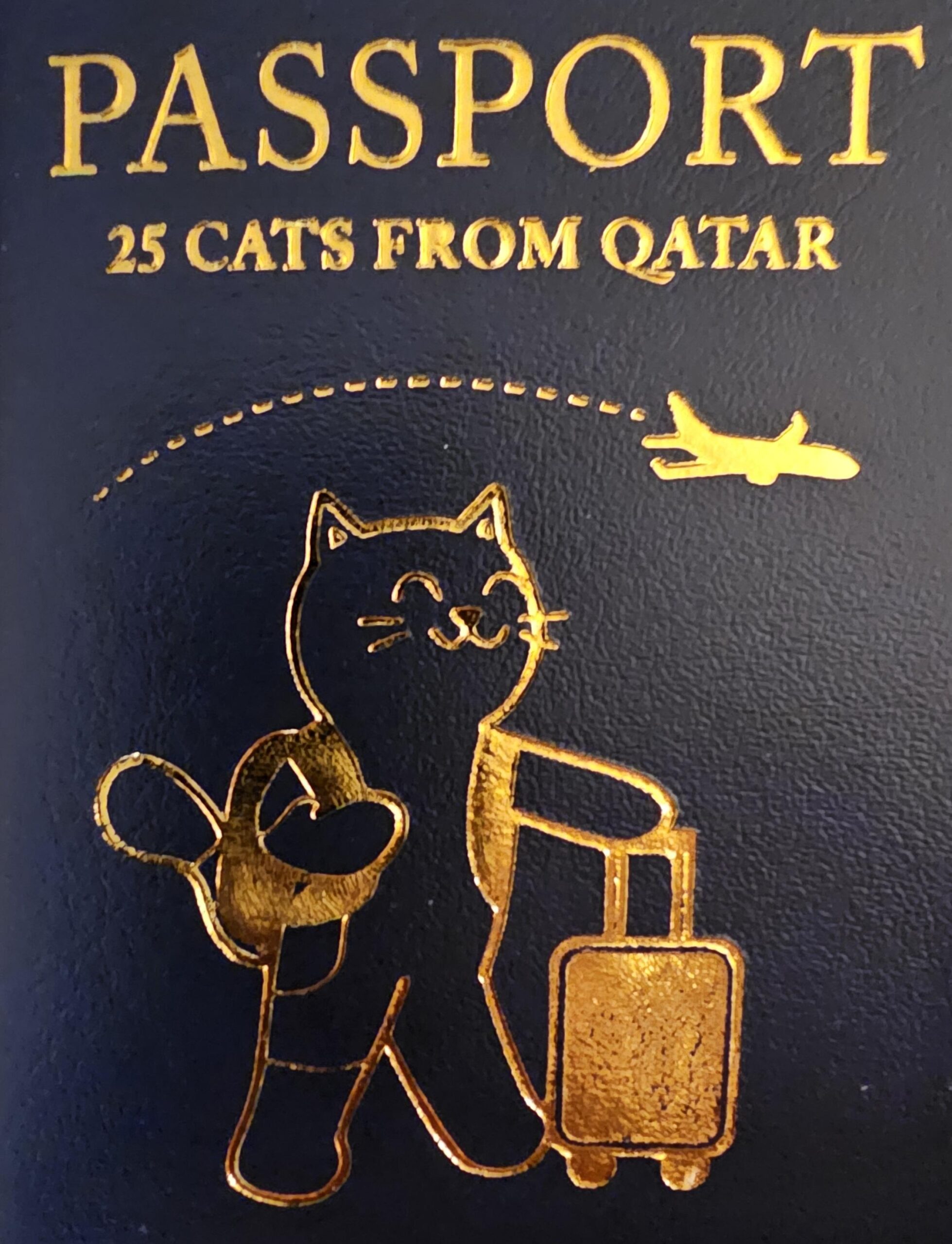
The film has both tragic and heartwarming elements (often in the same scene), and many tears were shed by the audience. The behind-the-scenes stories shared during the post-screening Q&A with director Mye Hoang and McHugh were a bonus. They will be on hand for an encore show at the Angelika tomorrow at 7 p.m if you want to see the film before it moves to other parts of the country. It’s a fundraiser for LIC Feral Feeders & Cat Rescue, so please show some love by donating when you buy your ticket.
Read MoreWIT Life #385: J01 Taking the World by Storm
Music, Translating/Interpreting, WIT Life Comments Off on WIT Life #385: J01 Taking the World by Storm
Interpreter/Translator/Writer Stacy Smith (Kumamoto-ken CIR, 2000-03) presents WIT Life, a periodic series about aspects of Japanese culture such as art, film, food and language. Stacy starts her day by watching Fujisankei’s newscast in Japanese, and here she offers some interesting tidbits and trends along with her own observations.
Most of my interpreting jobs take place in conference rooms and courtrooms, but every now and then I get a fun gig that makes me realize how lucky I am to do what I do. This happened in March when I had the chance to work with the global pop sensation J01, a Japanese boy band formed in 2019. Its 11 members were selected by viewers during a live broadcast of a reality competition show that had 6000 contestants. New York was one stop on their first world tour, which concluded with the group’s first performance at the Tokyo Dome. While in town J01 performed two shows at the Brooklyn Bowl, and I interpreted for them at promotional appearances at outlets like Teen Vogue, Pandora and Good Day New York.
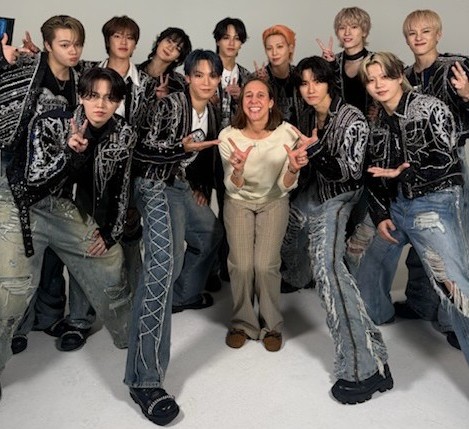
This year J01 celebrates its five-year anniversary, as its debut single and first album came out in 2020. To mark this milestone, last month the group released its first greatest hits album called Be Classic. It features five new songs including the titular song, a banger that samples Beethoven’s Fifth Symphony. It’s one of those tunes that’s difficult to get out of your head once you hear it, and the choreography is pretty unforgettable too. I wasn’t well versed in boy bands before spending time with J01, and I came away with a profound respect for how hard they work to make all of their complicated dance moves look so easy.
Read MoreWIT Life #384: Shogun does it again
Film, Translating/Interpreting, Uncategorized, WIT Life Comments Off on WIT Life #384: Shogun does it again
Interpreter/Translator/Writer Stacy Smith (Kumamoto-ken CIR, 2000-03) presents WIT Life, a periodic series about aspects of Japanese culture such as art, film, food and language. Stacy starts her day by watching Fujisankei’s newscast in Japanese, and here she offers some interesting tidbits and trends along with her own observations.
After a deep chill here in New York last week, we’re blessed with spring-like temps as we head into March. We’re also in the thick of awards season, and on Sunday I enjoyed watching the SAG Awards (The Film Independent Spirit Awards also took place the day before, but I haven’t had a chance to catch them yet). Much like at the Emmy’s and Golden Globes, the television show Shogun dominated the categories it was nominated in. Once again, Hiroyuki Sanada and Anna Sawai won for Best Male/Female Actor, and the show itself clinched Outstanding Performance by an Ensemble in a Drama Series.
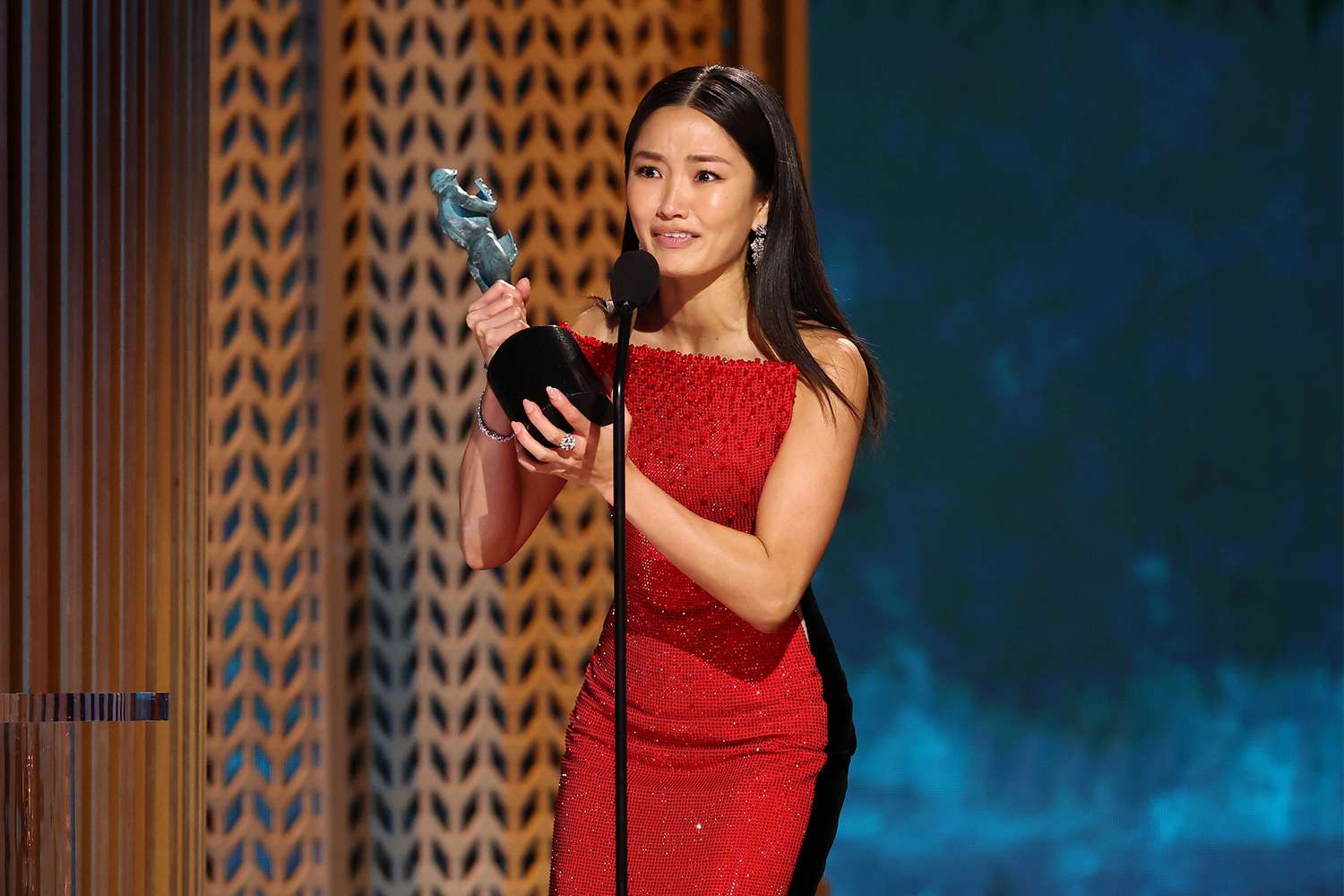
In her acceptance speech, Sawai highlighted her sadness at the fact that this was the last time she and her cast would be there as a team celebrating together. A few days before the ceremony Sawai was selected as one of TIME’s Women of the Year. In the article she discusses the weight of portraying Asian women on screen, as well as her desire to challenge herself in different genres going forward. Sawai was the first Asian woman to win the Emmy for Lead Actress in a Drama.
Read MoreWIT Life #383: Year of the Snake (and Shogun)
Translating/Interpreting, Uncategorized, WIT Life Comments Off on WIT Life #383: Year of the Snake (and Shogun)
Interpreter/Translator/Writer Stacy Smith (Kumamoto-ken CIR, 2000-03) presents WIT Life, a periodic series about aspects of Japanese culture such as art, film, food and language. Stacy starts her day by watching Fujisankei’s newscast in Japanese, and here she offers some interesting tidbits and trends along with her own observations.
明けましておめでとうございます! Here’s hoping everyone is having a good start to 巳年 (hebidoshi or Year of the Snake), which is associated with wisdom, intuition, and transformation (i.e. shedding of one’s old skin). Not sure how many of you made 抱負 (houfu or resolutions), but if you did I wish you good luck in sticking to them and 2025 being your best year yet.
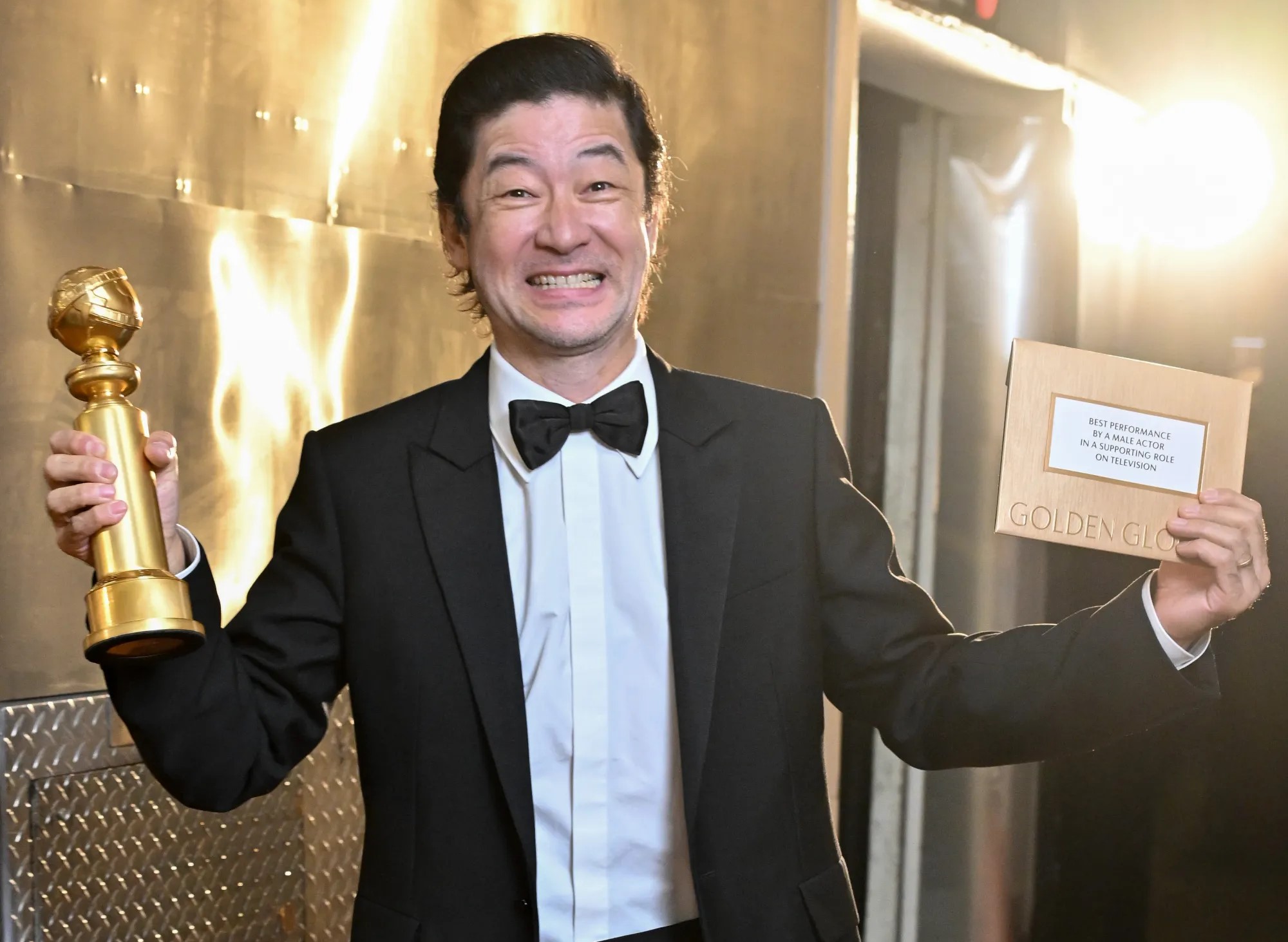
The Golden Globes kicked off the new year’s award ceremonies, and the television show Shogun dominated much like it did at last year’s Emmy’s. There the series swept all major categories to snag a record 18 awards out of 25 nominations, including wins for lead actors Hiroyuki Sanada and Anna Sawai and in the best tv drama category. This time Tadanobu Asano was not only nominated for Best Supporting Actor, but clinched the award as well.
WIT Life #382: 今年の漢字 and 忘年会離れ
Translating/Interpreting, WIT Life Comments Off on WIT Life #382: 今年の漢字 and 忘年会離れ
Interpreter/Translator/Writer Stacy Smith (Kumamoto-ken CIR, 2000-03) presents WIT Life, a periodic series about aspects of Japanese culture such as art, film, food and language. Stacy starts her day by watching Fujisankei’s newscast in Japanese, and here she offers some interesting tidbits and trends along with her own observations.
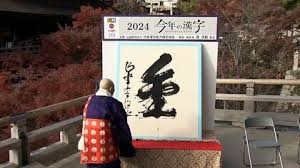
We are at the close of another year as time continues to fly. 今年の漢字 (kotoshi no kanji or Kanji of the Year) as chosen by 12,148 out of 221,971 respondents across Japan was 金 (kin or kane, meaning money or gold). This had been the selection in 2021 as well, and last year’s 税 (zei or tax) was also finance related. The explanations provided for this selection were Japan’s 20 gold medals at the Paris Olympics, the LDP slush fund scandal, the rise in prices, issuing of the first new paper currency in 20 years, robberies linked to illegal part-time jobs, and the designation of the Sado gold mine as a World Heritage Site by UNESCO. 災 (sai or disaster) came in second with 9772 votes, as 2024 was a year that began with 災い (wazawai or calamity). The Noto earthquake struck on the 1st with a death toll exceeding 500, and the following day a runway collision occurred at Haneda Airport between a JAL flight and a Japan Coast Guard aircraft. The Coast Guard plane was scheduled to deliver relief supplies for the earthquake. All JAL passengers survived, but only the Coast Guard captain did.
WIT LIfe #381: Japan’s New PM (plus Shogun and Sunny and Manga, oh my!)
Translating/Interpreting, Uncategorized, WIT Life Comments Off on WIT LIfe #381: Japan’s New PM (plus Shogun and Sunny and Manga, oh my!)
Interpreter/Translator/Writer Stacy Smith (Kumamoto-ken CIR, 2000-03) presents WIT Life, a periodic series about aspects of Japanese culture such as art, film, food and language. Stacy starts her day by watching Fujisankei’s newscast in Japanese, and here she offers some interesting tidbits and trends along with her own observations.
Last week was the first in office for Japan’s new Prime Minister, former Defense Minister Shigeru Ishiba. He’s a member of the Liberal Democratic Party but not part of former PM Shinzo Abe’s faction, and his anti-Abenomics proposals like raising taxes and curtailing spending have ruffled some feathers in the party. Ishiba is looking to dissolve Parliament’s lower (but more powerful) house Wednesday ahead of the general election on October 27. In this election the LDP is expected to retain its majority allowing Ishiba to stay on as PM, though opposition parties are expected to pick up seats due to recent LDP political funding scandals.

In cultural news, last month’s Emmy’s gave the Japanese show Shogun a record-breaking 18 wins for its first season. In addition to outstanding drama and directing awards, Anna Sawai became the first Asian actor to win Lead Actress in a Drama Series and her co-star Hiroyuki Sanada took Lead Actor (I personally believe Tadanobu Asano, who was nominated in the supporting actor category for his role as the deliciously demented Yabushige, was robbed). Sawai was also selected for TIME100 NEXT 2024, and Sanada wrote her a lovely tribute in the magazine.
Read MoreWIT Life #380: Tokyo Cowboy
Film, Translating/Interpreting, Uncategorized, WIT Life Comments Off on WIT Life #380: Tokyo Cowboy
Interpreter/Translator/Writer Stacy Smith (Kumamoto-ken CIR, 2000-03) presents WIT Life, a periodic series about aspects of Japanese culture such as art, film, food and language. Stacy starts her day by watching Fujisankei’s newscast in Japanese, and here she offers some interesting tidbits and trends along with her own observations.
Happy early fall everyone! I can’t believe that six months have passed since my latest entry, but time seems to have a way of doing that. Last night I had the chance to check out the film Tokyo Cowboy starring actor Arata Iura. I was struck by Iura when I saw him in his first leading role in Hirokazu Kore-eda’s 1998 film After Life, (Japanese title: ワンダフルライフ or wandafuru raifu) which is second only to Defending Your Life as my favorite movie about what happens when we die.
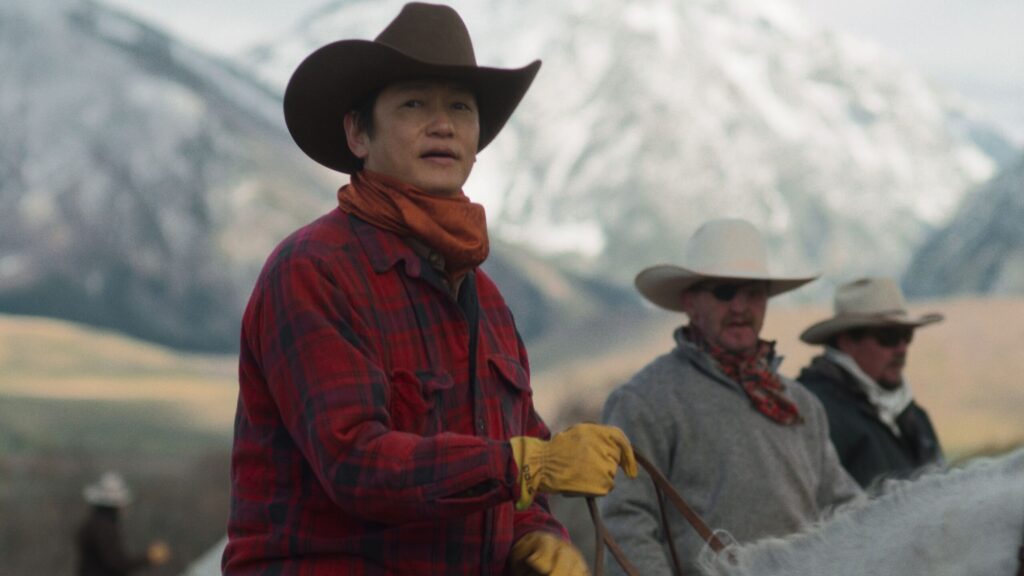
Tokyo Cowboy is directed by Marc Marriott and written by Dave Boyle and Ayako Fujitani, who also produced and stars in the film as Iura’s boss and love interest. The fish out of water story is reminiscent of Ryusuke Hamaguchi’s latest Evil Does Not Exist, with a city slicker trying to change the ways of rural folk. Iura’s character businessman Hideki goes to visit the Montana cattle ranch his Japanese company owns. Developers plan to buy out this underperforming ranch, but Hideki has an idea to save it by raising wagyu. However, upon arrival he realizes this will be much more difficult to achieve than he initially thought.
Read MoreWIT Life #379: Black Box Diaries
Film, Translating/Interpreting, Uncategorized, WIT Life, Writers Comments Off on WIT Life #379: Black Box Diaries
Interpreter/Translator/Writer Stacy Smith (Kumamoto-ken CIR, 2000-03) presents WIT Life, a periodic series about aspects of Japanese culture such as art, film, food and language. Stacy starts her day by watching Fujisankei’s newscast in Japanese, and here she offers some interesting tidbits and trends along with her own observations.
Last night I went to the screening of the documentary Black Box Diaries, which premiered earlier this year at the Sundance Film Festival. This film directed by Shiori Ito depicts her own five-year journey from being raped by an older colleague in 2015 to the court case she brought against her perpetrator. You might recall hearing about her crusade, as she had been featured as one of Time’s Most Influential People of 2020 and wrote a memoir about the incident called Black Box. This film does a deep dive from Ito’s point of view as a journalist investigating her own case. She states that maintaining this relative objectivity is the only way she was able to tell her story, as directly facing herself and what happened would be too difficult.
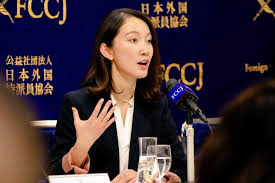
Her honest portrayal is as harrowing as you might imagine, and this film is a tough watch. Ito provides a personal trigger warning at the beginning, one of many written messages superimposed throughout the film in her own handwriting. Along with interspersed confessional videos, these messages serve to connect us to the narrator and illuminate her mental state. Ito delves into the personal and professional ramifications of her assault, boldly holding nothing back. She uses her story to advocate for legal reform, as at the time the legal age of consent was 13 (it’s now 15) and male victims weren’t recognized (and now systematic sexual abuse within the Johnny’s talent agency has been exposed). It’s amazing to realize that Ito took on Japan’s rape culture and patriarchal society six months before Me Too became a concept. The moment in the film when she hears about the Weinstein case is one of pure joy, as she realizes that her bravery was not for naught and that she is part of an international movement.
Read MoreWIT Life #378: Happy Valentine’s Day!
Translating/Interpreting, Uncategorized, WIT Life, Writers Comments Off on WIT Life #378: Happy Valentine’s Day!
Interpreter/Translator/Writer Stacy Smith (Kumamoto-ken CIR, 2000-03) presents WIT Life, a periodic series about aspects of Japanese culture such as art, film, food and language. Stacy starts her day by watching Fujisankei’s newscast in Japanese, and here she offers some interesting tidbits and trends along with her own observations.
Happy Lunar New Year! It’s been a while since I’ve checked in, and I hope your Year of the Dragon is going well so far. Somehow we’ve already made it to Valentine’s Day, and I hope you have a wonderful holiday with your loved ones whether they are family, friends or pets.

Some interesting V-Day trends were shared on the Japanese news recently. As you might know, in Japan this holiday involves women gifting chocolate to men (and men returning the favor with cookies or other sweets during next month’s White Day). According to this year’s statistics, women’s average Valentine chocolate budget is 5024 yen (a little more than $33 at today’s exchange rate). This is 1200 yen ($8) more than last year’s average, or around 1.3 times that figure.
Read MoreWIT Life #377: Things She Carries exhibition at Seizan Gallery
Art, Translating/Interpreting, WIT Life Comments Off on WIT Life #377: Things She Carries exhibition at Seizan Gallery
Interpreter/Translator/Writer Stacy Smith (Kumamoto-ken CIR, 2000-03) presents WIT Life, a periodic series about aspects of Japanese culture such as art, film, food and language. Stacy starts her day by watching Fujisankei’s newscast in Japanese, and here she offers some interesting tidbits and trends along with her own observations.
Recently I had the opportunity to interpret at an artist talk for photographer Aya Fujioka, whose collection Here Goes River is part of the current exhibition Things She Carries at Seizan Gallery. Hiroshima-born Fujioka began taking photos of her hometown after returning in 2013. Thanks to a scholarship from the Agency for Cultural Affairs in Japan, she had spent the previous five years in New York where she created the series Life Studies. Here Goes River depicts everyday life in modern Hiroshima, and one portion of the collection focuses on the apartment she moved back into from its initial empty state to getting filled up over time via being lived in.
Although Fujioka doesn’t deal with the topic of the atomic bomb directly, its legacy can’t help but be reflected in her work. During the talk, one photo she highlighted was of a group of high school students practicing dance choreography in front of the iconic Atomic Bomb Dome. Fujioka shared that she received a lot of bashing on social media when this photo was unveiled. Hiroshima citizens decried her for tarnishing the memory of those who lost their lives there, but she explained that for her as an artist the work would be meaningless without the dome. Always striving to avoid didacticism, Fujioka saw its inclusion as an opportunity for people to reinterpret the image and its symbolism. She also noted that when this photo was part of an exhibition in Tokyo there was no pushback, so she’s wondering how it will be received by New York audiences. She hopes that her work in general will enable viewers to imagine the Hiroshima of today.
Read MoreWIT Life #376: MANGA in New York exhibition
Art, Translating/Interpreting, Uncategorized, WIT Life Comments Off on WIT Life #376: MANGA in New York exhibition
Interpreter/Translator/Writer Stacy Smith (Kumamoto-ken CIR, 2000-03) presents WIT Life, a periodic series about aspects of Japanese culture such as art, film, food and language. Stacy starts her day by watching Fujisankei’s newscast in Japanese, and here she offers some interesting tidbits and trends along with her own observations.
Yesterday I had to chance to stop by the event MANGA in New York, presented by Ginza Sony Park Project. This free Chelsea exhibition features work from six groups of Japanese artists who use diverse forms of expression to create original manga. According to the enthusiastic staff member who greeted me at the door and kindly provided an explanation of the exhibition, this is one of several experimental activities being tested out for next year’s expected completion of the second phase of Ginza Sony Park (it opened in 2018). They’re looking to receive feedback from visitors and potentially incorporate it into their new project.
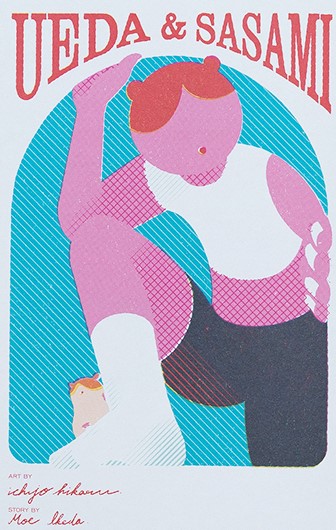
There are two floors of manga to enjoy, and enhancing the visitor experience is a free vending machine with specially designed MANGA-CANs exclusive to the event. When you put in the letter and number of your choice, you receive a can of tea with a label showing a scene from one of the manga in the exhibition. The label is actually a commemorative sticker, so you can peel it off to save when you’re done with the tea. I picked UEDA & SASAMI from illustrator Hikaru Ichijo, a manga depicting the story of an aspiring painter named Ueda and the hamster Sasami who lives in her stomach. Ueda derives her energy from Sasasmi running on her hamster wheel, and Sasami is in turn is powered by eating sunflower seeds. But what happens when Ueda discovers that she can be the source of her own strength?
WIT Life #375: PERFECT DAYS
Film, Translating/Interpreting, WIT Life Comments Off on WIT Life #375: PERFECT DAYS
Interpreter/Translator/Writer Stacy Smith (Kumamoto-ken CIR, 2000-03) presents WIT Life, a periodic series about aspects of Japanese culture such as art, film, food and language. Stacy starts her day by watching Fujisankei’s newscast in Japanese, and here she offers some interesting tidbits and trends along with her own observations.
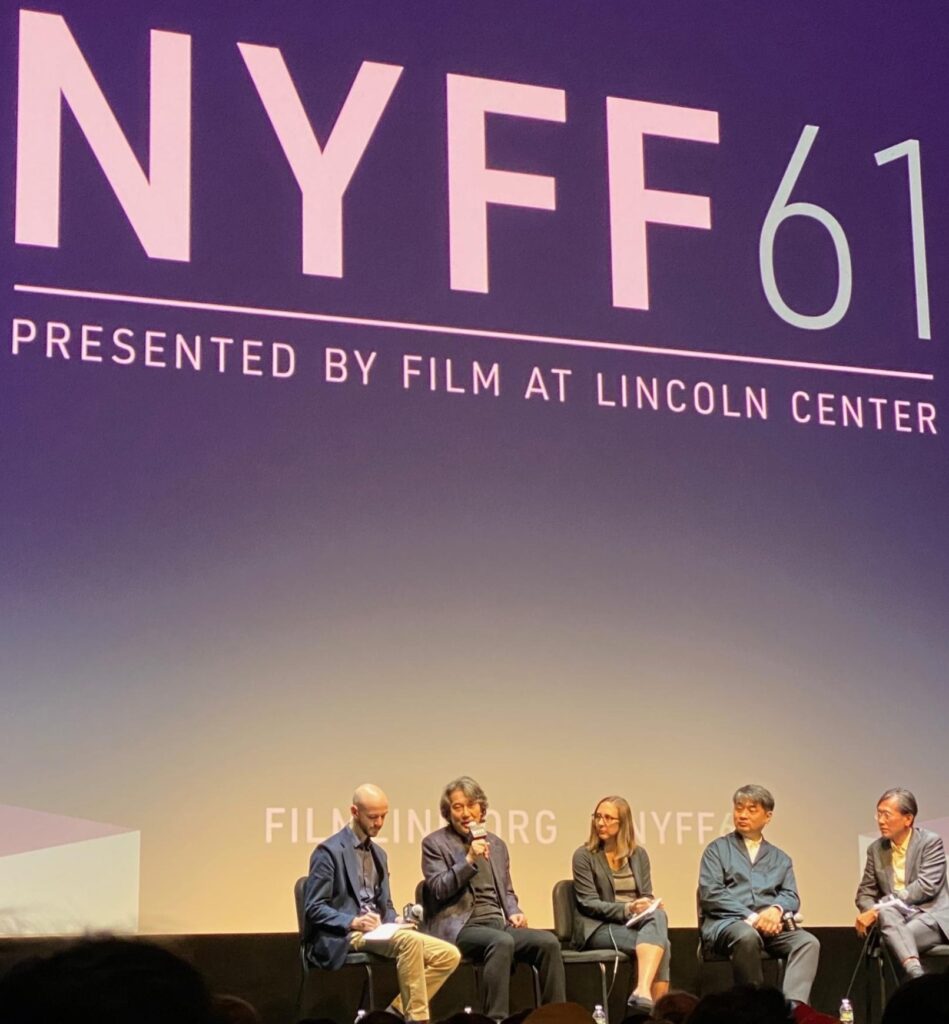
Earlier this month I had the amazing opportunity to work with the legendary actor Koji Yakusho when his newest work PERFECT DAYS premiered at the New York Film Festival. The film was helmed by German director Wim Wenders, who shot it over the course of 16 days in Tokyo. Wenders co-wrote the screenplay with the film’s producer Takuma Takasaki, who I had the honor of interpreting for during the festival.
The film’s backdrop is The Tokyo Toilet, a public works project featuring 17 public toilets throughout Shibuya designed by world renowned creators. Yakusho plays a cleaner of these toilets named Hirayama, a man who leads a simple life. His days consist of an early morning commute to work with a soundtrack of nostalgic music, enjoying a soak at the public bath, having a simple meal before returning home and reading before bed. Hirayama has a flip phone and no Internet access, but he is content with his existence. The unexpected arrival of his niece shakes up his routine, and during their time together we learn more about his background.
Read MoreWIT Life #374: TIME100 NEXT featuring two Japanese women
Translating/Interpreting, Uncategorized, WIT Life Comments Off on WIT Life #374: TIME100 NEXT featuring two Japanese women
Interpreter/Translator/Writer Stacy Smith (Kumamoto-ken CIR, 2000-03) presents WIT Life, a periodic series about aspects of Japanese culture such as art, film, food and language. Stacy starts her day by watching Fujisankei’s newscast in Japanese, and here she offers some interesting tidbits and trends along with her own observations.
This month Time magazine released its list of the world’s 100 rising stars designated as the “TIME100 NEXT,” and two Japanese women made the cut. Both have very interesting stories, so I’d like to share them here for those who might have missed checking it out.
34 year-old Arfiya Eri is an LDP member of Japan’s House of Representatives with Uighur-Uzbek heritage. She grew up in southern Japan and spent some of her childhood in China, where she attended an American school. She went on to study at Georgetown University and eventually work at the Bank of Japan as well as the UN. Her platform is one emphasizing diversity, inclusion and female representation in politics, which might be surprising considering her political party. However, Eri aligns with the LDP on security and diplomacy, and a Japan Times profile says this mixture of being progressive regarding civil rights and diversity “while being conservative on defense issues could help boost the LDPs profile and appeal among younger voters.”
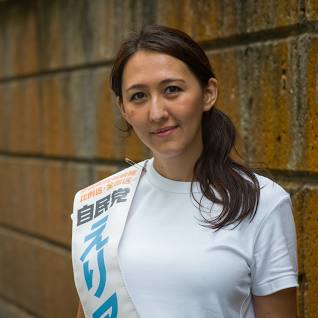
(Kentaro Takahashi/Bloomberg via Getty Images)
The other Japanese woman profiled is Rina Gonoi, a former member of the Self-Defense Forces (SDF) who endured physical and verbal sexual abuse for over a year while serving. After leaving the SDF in 2022 and appealing to the authorities but being ignored, she took her case to social media when traditional media also dismissed her. Thanks to her efforts, five servicemen were dishonorably dismissed and four others punished. In addition, Gonoi received a public apology from the Ministry of Defense, as well as apologies from several officers. She also filed charges against the government and her assailants in both criminal and civil cases. In the former three perpetrators were indicted on sexual assault charges, but in the latter four of the five accused denied the charges. Gonoi continues to battle sexual harassment in Japan’s male-dominated military.
Read MoreWIT Life #373: Discovering Isamu Noguchi in Philly
Art, Translating/Interpreting, Travel/Tourism, Uncategorized, WIT Life Comments Off on WIT Life #373: Discovering Isamu Noguchi in Philly
Interpreter/Translator/Writer Stacy Smith (Kumamoto-ken CIR, 2000-03) presents WIT Life, a periodic series about aspects of Japanese culture such as art, film, food and language. Stacy starts her day by watching Fujisankei’s newscast in Japanese, and here she offers some interesting tidbits and trends along with her own observations.
I’ve been on the road for the majority of this month interpreting for the Department of State’s International Visitor Leadership Program. I’m traveling with a six-person group from Japan here in the U.S. to study technology transfer and commercialization of biotechnology. Our three-week journey is an East Coast tour that has taken us from Washington D.C. to Boston and Philadelphia, followed by our current final stop of Orlando (where we were almost derailed by Hurricane Idalia!).
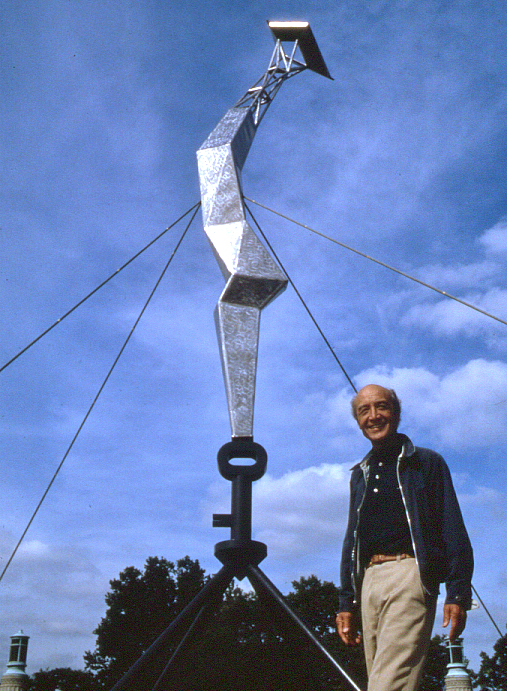
During our time in Philly, I was delighted to discover a previously unknown Isamu Noguchi sculpture. Philly has a robust public art program, including a wide variety of murals all throughout the city. This Noguchi work called A Bolt of Lightening refers to Benjamin Franklin’s famous experiment flying a kite in an electrical storm. It rises above what seemed to be a construction site so at first I thought it was some sort of crane, but upon closer look it revealed itself to be a stainless steel structure supported by cables.
WIT Life #372: Kaiten Zushi in NYC
Food & Drink, Translating/Interpreting, Uncategorized, WIT Life Comments Off on WIT Life #372: Kaiten Zushi in NYC
Interpreter/Translator/Writer Stacy Smith (Kumamoto-ken CIR, 2000-03) presents WIT Life, a periodic series about aspects of Japanese culture such as art, film, food and language. Stacy starts her day by watching Fujisankei’s newscast in Japanese, and here she offers some interesting tidbits and trends along with her own observations.
One of my favorite meals during my recent trip to Japan was 回転ずし (kaiten zushi, or conveyer belt sushi). It’s always fun to watch the food as it goes around and grab whatever looks good. I have a faint recollection of kaiten zushi in midtown run by a Singaporian company existing some years ago, but since then we haven’t had this type of restaurant in the city. But the wait is over, since a new kaiten zushi establishment opened last week.
Called Kaiten Zushi Nomad, this futuristic restaurant has ordering via tablet and three levels of conveyer belts that deliver your food. There are booths and counter-style seating, as well as a front waiting area that looks like it could double as a bar (Kaiten Zushi also has a wide array of alcoholic beverages to go with your food). They boast over 100 types of sushi, but fear not if raw fish isn’t your thing for they have plentiful appetizers and main dishes that feature meat and other cooked items such as donburi, ramen and karaage.
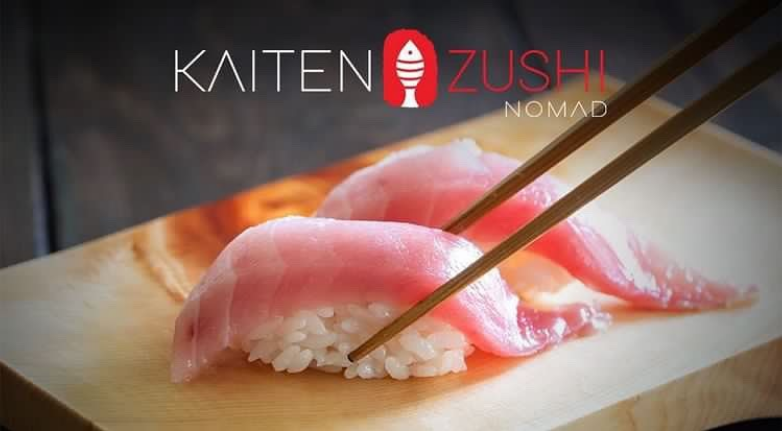
(Photo courtesy of @kaitenzushi_nomad on Instagram)
