
Culture Spreader: John Gauntner – The Sake Guy
 Books, Celebrity, Cultural Outreach, Food & Drink, Notable JET Alums, Writers
  Comments Off on Culture Spreader: John Gauntner – The Sake Guy
 Culture Spreaders is a new feature intended to shine a spotlight on JET alums involved in spreading and sharing Japanese culture in their home countries. If you know of a good JET alum for a future post, just e-mail jetwit [at] jetwit.com tell us why you think that alum is a Culture Spreader. (Self-nominations welcome too.)
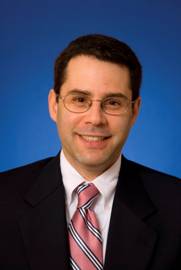
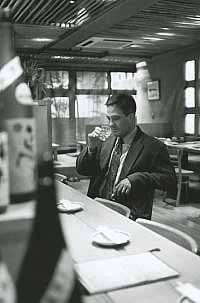
JET alum and leading sake expert John Gauntner (aka “The Sake Guy“) has established himself as the leading non-Japanese sake expert in the world. See, e.g., this 2009 Japan Times article titled, “Nihonshu evangelist preaches heady mix of culture, taste.”
Not only does John spread the sake gospel through numerous appearances and events in the U.S. and elsewhere, but he also offers a Sake Professional Course in various locations to teach others how to be sake experts and evangelizers. As a result, there are now four sake-only specialist shops in the U.S.–True Sake (San Francisco), Sakaya (NYC), SakeNomi (Seattle) and The Sake Shop (Honolulu)–and the owners of all four attended John’s Sake Professional Course for the purpose of starting their respective businesses.
For his work spreading Japanese sake culture around the globe (and helping the Japanese sake industry expand its markets), John Gauntner is hereby recognized by JetWit as a serious “Culture Spreader.”
Editor’s note: In the “JET’s a small world” department, it turns out that both John Gauntner and last week’s “Culture Spreader” Bruce Rutledge are both originally from Cleveland and previously have met at SakeNomi in Seattle, where Bruce currently lives.
JetWit Diary 10.21.10
JetWit Diary, Writers Comments Off on JetWit Diary 10.21.10
JetWit Diary is a new feature by Steven Horowitz (Aichi-ken, 1992-94), founder and publisher of JetWit. Steven is available on a consulting basis to assist organizations with any membership building, social media consulting, creative communications and writing needs.
There’s a lot going on in the JetWit (i.e., JET and JETAA) world right now. New ideas. New information. New projects. New people.
Seattle
I had a great trip to Seattle, primarily to visit JET alum friends (and take in the JETAA Pacific Northwest Happy Hour). I reconnected with former PNW Newsletter Editor Liz Sharpe, former PNW officers Ryan Hart and Shun Endo, and current President Sandra Sakai. Also got to meet a lot of new people, and even JetWit contributor, Stephanie Boegeman, whom I’d never met in person and who is heading to Cambodia to work for JET alum-founded PEPY Tours). As a chapter, PNW very much has their unchi together. e.g., At the happy hour, they had a staff of 2 or 3 alums manning a spreadsheet on a laptop, taking everyone’s orders and keeping track of who owed what so that the bill worked out right in the end.
I also learned that the Kobe-Seattle sister city relationship is strong, and that despite the reduction in Aichi prefectural JETs, Hyogo-ken is still a big supporter of JET and perhaps a good model of how to really extract value from JET and from sister city relationships. In fact, there’s a Hyogo Business & Cultural Center in Seattle that typically employs a JET alum. (Currently it’s Ben Erickson who also serves as PNW’s Webmaster.)
Sister Cities
Speaking of sister cities, I recently spoke with Laura Giroux, Membership Director of Sister Cities International (based in D.C.) The conversation came about thanks to Carlo Capua, a Fort Worth, TX-based JET alum who is on the Board of SSI and who got in touch after seeing the JET-Sister Cities List Project on JetWit. The purpose was to learn more about SSI and see if there’s any potential for collaboration with the JET alum community. But in the process, I gained some historical perspective on sister cities from Laura.
Did you know that the first ever sister city relationship was apparently formed in the 1930s between Toledo, Ohio and Toledo, Spain? Also, SSI was formed thanks to President Eisenhower who, following WWII, pushed for grassroots cultural exchanges especially among the Axis Powers (Japan, Germany and Italy) which led to the creation of SSI as well as many other sister city relationships in those countries. As many of us have noticed, Japan in particular really took to the sister city concept.
FYI, the potential for collaboration with JET alumni may lie in the fact that sister city relationships often involves the over-60 set who have time to maintain the relationships and high school students who have time to go on exchanges. As a result, it sounds like energy from internationally-minded folks in the 23-to-50 age range could be beneficial in some form. Just something to tuck away in your brain for future use and ideas generation.
State of JET
The reason I’ve been focused on the sister city relationships is because it’s becoming clear that one of the key links to sustaining JET lies in identifying its value to Japanese local governments. Based on feedback from knowledgeable sources, I’ve heard that the value of JET has been strongly recognized at the central government level. The JETAA USA press release, the series of op-eds in the Japanese media (including one by JET alums Jim Gannon, Michael Auslin and Paige Cottingham-Streater), pressure perhaps from the U.S. State Department and general common sense of have merged to make key political constituencies aware of how significant a role JET has played and continues to play in US-Japan relations.
That said, there remain long-term concerns about JET’s survival. And attrition at the local level figures as a major one of those concerns.
JET-Visitors Tally Project
In addition to the JET-Sister Cities List Project, another upcoming JetWit project aimed at the JET-local government relationship will be the “JET-Visitors Tally Project.” (That project name is not set in stone, btw.) The gist of the project is that JETs are directly responsible for some amount of tourism revenue for Japan given that most of us had family and friends visit them in Japan. Hence, JETs have been directly responsible for significant tourism dollars (or rather, yen) pouring into Japan’s economy. And this tourism income, as far as I can tell, is not being factored into any cost-benefit analysis or discussion of the JET Program or JETAA.
So, working off an idea raised by Dennis Li (an officer of the Texoma JETAA chapter) at this year’s JETAA USA Conference in NYC in August, this project will invite JETs and JET alums to tell us how many people (and “people-days”) they have been directly responsible for bringing to Japan. The result will be a minimum estimated amount of tourism revenue that JET has generated for Japan. So start reaching back into your visitor memories and stay tuned for the official announcement.
JetWit Funding
And lastly, it’s time to have a potentially uncomfortable discussion about money.
In a nutshell, for the last 3+ years I’ve been building JetWit as a free resource for the JET and JET alumni community. This has all been an extremely enjoyable labor of love. But I’m at the point where I need to start generating enough revenue to justify the time I’ll need to continue spending. (And ideally to be able to pay other key contributors at some point.)
I’m going to put up a more detailed post about this in the near future. But I believe to make JetWit continue to work and grow, the 3 most likely sources of revenue, and the 3 ways you can potentially help are:
1. Direct member contributions – If you think JetWit is a public good worth supporting and that you’d like to see continue to exist, please feel free to contribute via PayPal.
2. Advertising– Advertise your business or services on JetWit. Or introduce JetWit to businesses likely to advertise. (Contact information for a specific person at a company is always helpful.) JetWit has become the de facto central source of JET-relevant information, original content and job listings, is read by key people at CLAIR, the Consulates and MOFA and gets over 13,000 hits/month. Pretty good demographic, right?
3. Grants – Do you know of a grant or foundation that would be a good fit for JetWit? Even better, can you help put a proposal together?
I’m always open to ideas, suggestions and experimenting. So feel free to get in touch with ideas and suggestions or just to brainstorm.
********
Here’s wishing JetWit readers a Happy Thanksgiving (and a belated Happy Thanksgiving for our Canadian readers). I should mention that I’ll be in Tampa, FL around Christmas time and will be looking to meet up with folks from the JET alum community down there on Dec 26 or 27. So get in touch if by any chance you’ll be nearby at that time.
Yoroshiku onegaishimasu,
Steven Horowitz (Aichi-ken, 1992-94)
Brooklyn, NY
jetwit [at] jetwit.com
WIT Life #137: Tokyo Sky Tree
Article/Journalism, Japan Trends, Translating/Interpreting, Uncategorized, WIT Life, Writers Comments Off on WIT Life #137: Tokyo Sky Tree
WITLife is a periodic series written by professional Writer/Interpreter/Translator Stacy Smith (Kumamoto-ken CIR, 2000-03). She starts her day by watching Fujisankei’s newscast in Japanese, and here she shares some of the interesting tidbits and trends together with her own observations.
Very interesting article in yesterday’s NYT about how efforts are being made to reduce the presence of yakuza in various business transactions. The story focuses on the recent construction project of Tokyo Sky Tree, a communications tower. This is a huge change as traditionally yakuza have been an integral part of this industry, often seeking “protection money” from developers. Developers might also call on the yakuza to give an extra push to people unwilling to give up their land. I liked Jake Adelstein‘s quote calling the yakuza “Goldman Sachs with guns.” Check out the adjoining picture to see a comparison between Tokyo Tower and the “new Tokyo Tower,” what Sky Tree was called before decided on its official name. Other candidates were Tokyo Edo Tower, Mirai (Future) Tree, Yume Miyagura (Dreamwatching Tower), Rising East Tower and Rising Tower. It is due to be completed next year.
Sake World e-Newsletter by John Gauntner (November 2010)
Celebrity, Cultural Outreach, Food & Drink, Notable JET Alums, Writers Comments Off on Sake World e-Newsletter by John Gauntner (November 2010)

John Gauntner: JET alum and leading sake expert
The November 2010 issue of the Sake World E-mail Newsletter by JET alum and leading sake expert John Gauntner (aka “The Sake Guy”) is now available online. In this issue:
1. Greetings
2. “I’m from the Gov’t”
3. The 18 Nihonshu Samurai Tasting
4. Did You Know?
5. Sake Basics
6. Announcements and Events: Sake Professional Course in Japan
7. Sake Education Central
Additional Links:
 Culture Spreaders is a new feature intended to shine a spotlight on JET alums involved in spreading and sharing Japanese culture in their home countries. If you know of a good JET alum for a future post, just e-mail jetwit [at] jetwit.com tell us why you think that alum is a Culture Spreader. (Self-nominations welcome too.)
Seattle-based Bruce Rutledge (MEF Program Chiba-ken, 1985-87) is the Editor-in-Chief of Ibuki, the “Japanese Inspired Food and Lifestyle Magazine” for the Seattle/Bellevue/Portland area. (www.ibukimagazine.com)
I was in Seattle this past weekend and (thanks to JETAA Pacific Northwest President Sandra Sakai) was able to pick up a copy of the “I Love Kawaii” issue, which featured “6%Dokidoki Brings Happy Anarchy,” “Your Slice of Japan on the Eastside,” a recipe for green tea sweets, a travel article titled “Kanpai in Tokyo” and a sake article titled “Food pairing hints.” The magazine also includes an extensive Japan-related business directory for the area, including restaurants, galleries, grocery stores, etc.
In addition to his work with Ibuki, Bruce is also the founder of Chin Music Press, which has put out a number of Japan-related books and takes pride in book design.
For all his work with Ibuki and Chin Music Press, Bruce is undoubtedly a major JET alum “Culture Spreader.”
WIT Life #136: Asian affairs
Translating/Interpreting, WIT Life, Writers Comments Off on WIT Life #136: Asian affairs
WITLife is a periodic series written by professional Writer/Interpreter/Translator Stacy Smith (Kumamoto-ken CIR, 2000-03). She starts her day by watching Fujisankei’s newscast in Japanese, and here she shares some of the interesting tidbits and trends together with her own observations.
By now President Obama has returned from his longest overseas trip since taking office, where he made stops in India, Indonesia, Korea and Japan. In Japan he took part in the Asian-Pacific Economic Consortium (APEC) held in Yokohama, pictured here with Prime Minister Naoto Kan and his wife Nobuko this weekend.
However, for Japan the focus of the event was relations with China in light of renewed tensions between the two countries due to the leak of a video of a September collision between Japanese coast guard vessels and a Chinese fishing boat. The footage was taken near Read More
Via Dan Dooher (Akita-ken, 2006-10):
After reading your most recent JetWit Diary post, I wanted to share with you something Akita Prefecture has just recently started:
The Prefecture’s International Affairs Division is trying to reconnect Akita JET alumni and study abroad students with the prefecture via a bi-monthly newsletter called, “Akita Global Network.”
In the International Affairs Division’s own words:
“The project hopes to reach people who have left Akita to both maintain connections to Akita and elevate overseas awareness of our prefecture. We are planning to issue “Akita Global Network Newsletter” bi-monthly. Please enjoy it with your friends and family.”
If there are other former JET alums out there from Akita interested in receiving this pdf newsletter, please contact the International Affairs Division at: kokusaika@pref.akita.lg.jp
The newsletter welcomes submissions from alumni as well.
Dan also wondered if any other prefectures are doing something similar. If you are aware of any similar efforts, please email jetwit@jetwit.com. Yoroshiku!
Gunma-ken JET alum and Florida JETAA Newsletter Editor Bahia Simons-Lane has a good post on her blog–Bahia Portfolio: Posting about Japan, language and education–on the debate concerning benefits derived from the JET Programme.
A little more about Bahia and her background:
Bahia was an Assistant Language Teacher at a girls’ high school in Gunma Prefecture for 2 years, then she worked for the Gunma Prefecture Board of Education as the Assistant Language Teacher’s Advisor. She is currently pursuing a Master’s in International and Intercultural Education.
Lars Martinson’s “Tonoharu: Part Two” reviewed by BoingBoing
Books, Cartoon/Illustration, JETs in the News, Notable JET Alums, Reviews, Writers Comments Off on Lars Martinson’s “Tonoharu: Part Two” reviewed by BoingBoing
JET alum Lars Martinson recently released his follow-up graphic novel Tonoharu: Part 2. Here’s the review by Mark Frauenfelde of BoingBoing:
“Tonoharu Part Two: Excellent graphic novel about an English teacher in Japan”: http://www.boingboing.net/2010/11/10/tonoharu-part-two-ex.html
(Editor’s note: I have a copy of Tonoharu: Part 1, and every time I show it to a fellow JET alum and they start reading it, they end up reading the whole thing (which takes about 15 minutes). It’s really terrific and very unique.)

 JetWit Diary is a new feature by Steven Horowitz (Aichi-ken, 1992-94), founder and publisher of JetWit. Steven is available on a consulting basis to assist organizations with any membership building, social media consulting, creative communications and writing needs.
Early November for JETAA chapters usually means welcome back receptions and career forums. It also means a great opportunity to gather JET-relevant info.
Here in New York, one thing that was clear in Ambassador Nishimiya’s speech at the JETAANY Welcome Back reception is that JETAA has played a significant role in helping to communicate the value of JET to the Japanese public and that JETAA’s efforts have been noticed and appreciated. Those efforts have helped at the central government level to push back against some of the negative and often not-so-well-informed commentary that was getting out there.
That said, I also learned from a recently returned Aichi JET that Aichi will no longer take on prefectural JETs as of the coming year. That news is a bit concerning. Because if budget cuts at the local level take a toll on the JET Programme, and in turn the future number of JET alums, then that means a shift in our priorities.
Going forward, perhaps we need to focus our energy on local governments in Japan and finding ways to help them get a better return on their JET-vestment. It’s worth noting that many JETs are already giving back to their local governments in lots of ways. JETs have set up businesses, have brought tourists, have nurtured sister city relationships and done other things that have provided value. You may not have heard about most of them, but they’re happening. Which means on that level, the challenge is to identify them, gather them and make sure people know about them (e.g., by writing about them on JetWit, on chapter websites, in the media, etc.)
But it also means that the JET alumni community may need to be more innovative and creative (just like that time you were asked to teach a class with 2 minutes’ advance notice and no lesson plan). It would be extremely helpful to our cause if we can figure out more ways to tap the energy of the JET alum community and channel it towards the benefit of local governments in Japan.
The JET-Sister City List Project is one attempt in that direction. But the next step is to figure out what else we can do with it.
Another simple but effective way to lay the groundwork to make things happen is to build up affinity groups such as the JET Alumni Travel & Tourism group, the JETAA Education Professionals group, the JET Alumni Non-Profits group, the JET Alumni Writers group and the JET Alumni Policy & Government group. And if you can think of another group that would be good to have, then go ahead and set it up and we can post it on JetWit.
Whatever we do as a community, it’s clear that now is the time to step up. And keep in mind that every problem is also an opportunity.
************
JetWit Bits
- One recent returnee at the Welcome Back Reception mentioned she found her job in NYC via JetWit and pointed out something I hadn’t really considered: That it’s hard to find jobs back home while you’re in Japan, and JetWit seems to do a good job of filtering through JET-relevant jobs in ways that Monster.com and CareerBuilder don’t. That said, I also realize that JetWit is fairly America-centric. Not by design, but just because that’s where I live and that’s where most job listings come from. If anyone in the UK, Australia, New Zealand or elsewhere wants to start posting JET-relevant jobs on the site, by all means please get in touch.
- “What do people do after JET?” Another recent returnee told me that’s the question that was on her mind as she finished her contract. And she appreciates that JetWit answers it. Her comment reminded me that that’s the same question that drove me back in 2002 when I became the JETAANY Newsletter editor. I had no idea where people went after JET and what they did. As a result, a lot of the articles were driven by my curiosity to figure out the answer to these questions, one JET at a time. We still probably don’t the answer for maybe half the alums out there. (Contrary to popular belief, there is no central or government JET alum list anywhere that tracks where people are and what they’re doing.) But now, at least, we know a great deal more than we used to. And that’s helped strengthen the community and also created a positive feedback loop where the strength of the network draws in more JET alums who were previously off the radar screen.
- Thanks to everyone for spreading the word about the JET-Sister City List Project. I’m enjoying all the responses that come in. And I noticed that JETAA Hawaii and JETAA Pacific Northwest posted the request to their membership which has led to more submissions. Speaking of which, I’ll be in Seattle this weekend to visit some JET alumni friends and am fortunate that my trip happens to coincide with the JETAA PNW Happy Hour at Wann Izakaya! (Also, if anyone in Seattle has an extra pack ‘n play lying around, let me know. :-)
Gambarimashou.
Steven Horowitz (Aichi-ken, 1992-94)
Brooklyn, NY
JET Alumni Writers Group on LinkedIn
Writers Comments Off on JET Alumni Writers Group on LinkedIn
There is now a “JET Alumni Writers Group“ on LinkedIn for anyone interested in linking up with fellow JET alum writers, authors, journalists, bloggers and anyone else with an interest in writing.
http://www.linkedin.com/groups?mostPopular=&gid=3671175
JET alum Foster Klug named AP News Editor in Seoul
Article/Journalism, JETs in the News, Notable JET Alums, Writers Comments Off on JET alum Foster Klug named AP News Editor in Seoul
Thanks to Nagasaki-ken JET alum Christy Jones for passing along this item from the New York Times about fellow Nagasaki JET alum Foster Klug:
According to the article in the New York Times:
Foster Klug, a reporter who has covered U.S.-Asia relations for The Associated Press in Washington, has been named the AP’s news editor in Seoul, South Korea.
…….
Klug was the first U.S.-Asian affairs reporter on AP’s North America Desk, which is responsible for U.S. news coverage targeted for audiences outside the United States. He has written on an array of issues, including U.S. sanctions against North Korea, Washington’s currency dispute with China and U.S. arms sales to Taiwan.
…….
Previously, he lived for three years in rural Nagasaki, Japan, where he taught English and coached basketball at a junior high school. He is a graduate of Colby College in Waterville, Maine.
Here’s the link to the full article: http://www.nytimes.com/aponline/2010/11/05/us/AP-US-AP-Appointments.html?hp
WIT Life #135: Marathon mania
Events, Translating/Interpreting, Uncategorized, WIT Life, Writers Comments Off on WIT Life #135: Marathon mania
WITLife is a periodic series written by professional Writer/Interpreter/Translator Stacy Smith (Kumamoto-ken CIR, 2000-03). She starts her day by watching Fujisankei’s newscast in Japanese, and here she shares some of the interesting tidbits and trends together with her own observations.
We are in the heart of marathon season, a favorite time of year for runners such as myself. I have to admit that I love the sport enough to attempt to do two marathons in a row, the Marine Corps Marathon in DC last weekend and the NYC Marathon this weekend. It will be a first but hopefully my body is up to the challenge!
The running culture has always been huge in Japan, and with the establishment of the Tokyo Marathon in 2007 the number of runners further swelled. Although I have gotten into the marathon every year since its start (and run all but one), most of my Japanese friends Read More
Hokkaido JET Annual Musical Production Tradition Continues
Article/Journalism, Music, Writers Comments Off on Hokkaido JET Annual Musical Production Tradition Continues
Snow, Sea and Song
Hokkaido’s hills are alive with the sound of music, thanks to the efforts of its ALTs
 By Caroline Cronshaw (Hokkaido, 2006-09) – Caroline is an amateur illustrator and instructor at the University New Brunswick in Saint John, New Brunswick, Canada. She has painted and designed posters for the HAJET Hokkaido Players’ productions for the past four years, and is currently working 2011’s poster as of this article. Her work can be seen at http://carrie-ko.deviantart.com.
Whether they choose to go to Hokkaido or not, several hundred new JET participants, some of whom have never seen a snowflake before in their lives, come to live on the northernmost island in the Japanese archipelago each year.
Hokkaido, with its vast tracts of wilderness and ghostly former coal mining towns, can cause even the most steadfast and Canadian of JETs to surrender to homesickness and cabin fever during its long and snowy winters. It’s those same cold and white expanses that probably inspired the Ainu peoples to come up with place names like Shiretoko – ‘the ends of the earth’. Indeed, it’s not easy being a homesick alien living in a half-buried BOE-owned hut in midwinter.
Thankfully, however, the ALTs of Hokkaido have come up with an unusual cure for the winter blues: musical theatre.
Since the mid-1990s, denizens of many Hokkaido communities have been witness to a mysterious caravan of vans and cars rumbling into town on a Friday night and parking in front of a local community centre or temple. These vehicles, laden with wooden planks and props, belong to none other than the members of the HAJET Hokkaido Players, an amateur theatre troupe comprised of JET participants from across the island. While some members do have experience in acting or stage production, there is no requirement except dedication and the desire to help bring international understanding to the people of Hokkaido. The troupe is partly administered by HAJET, the Hokkaido AJET chapter, and is entirely non-profit. If there is money left over or gained from performances, most of it is used to sponsor the Hokkaido English Challenge, an annual non-profit English-language summer camp program also organized by HAJET. The rest of the profit is saved for next year’s show.
 Among the various Broadway staples the HAJET Hokkaido Players have performed are such familiar titles as West Side Story, Annie, Peter Pan, Oklahoma!, and Guys and Dolls. They also on occasion perform original works, such as 2009’s Alice in Japan, originally written by ALTs in Niigata. This year’s production will be an original play based on The Jungle Book (the Kipling novel, not the Disney adaptation). According to the Players’ current director, Melissa Golden, the production will incorporate elements of Bollywood cinema and traditional Indian costume, as well as make use of Lion King-style animal masks.
The Players start planning their productions early in the year, around the end of August when the newbies first arrive from overseas. Recruitment is usually done around early to mid September during the various welcome parties (with an island that big, you’d need to have several parties), and the first rehearsal is typically scheduled for later in the month or in early October. From that point onward, it’s full speed ahead, and anyone who can’t commit will be left in the dust. Despite the subject, it’s serious business.
Depending on the show and the wishes of the director, the English script is augmented with either lines in Japanese, framed scene-by-scene with Japanese narration, or both. This is to help audience members without English proficiency or previous knowledge of the play to understand what is going on. The Players also do their research in more pop culture-related subjects Read More
JET ROI: JET alum op-ed in Asahi Shimbun – The JET Program is a ‘triumph of soft power’
Article/Journalism, Notable JET Alums, Return on JET-vestment, Uncategorized, Writers Comments Off on JET ROI: JET alum op-ed in Asahi Shimbun – The JET Program is a ‘triumph of soft power’

Jim Gannon
The below op-ed titled “POINT OF VIEW: The JET Program is a ‘triumph of soft power’” appeared in the November 5, 2010 edition of the Asahi Shimbun. It was written by three JET alumni with expertise in Japan-U.S. policy and relations:
- James Gannon (Ehime-ken, 1992-94) – Executive Director of the Japan Center for International Exchange (JCIE/USA) and author of the “Chopping Block” article.
- Michael Auslin – Director of Japan Studies at the American Enterprise Institute.
- Paige Cottingham-Streater – Deputy Executive Director of the Maureen and Mike Mansfield Foundation.
(Here’s the link for the original article on the Asahi Shimbun website: http://www.asahi.com/english/TKY201011040234.html)
POINT OF VIEW: The JET Program is a ‘triumph of soft power’
Michael Auslin
In its 23 years, the Japan Exchange and Teaching Program has brought more than 50,000 young foreigners to Japan, including over 25,000 Americans, to teach in the school system as well as to support international exchange activities.
Each of us grew to know Japan through our participation in the JET Program, and this experience has changed the direction of our careers and enriched our lives.
In fact, the JET Program has touched the lives of so many people who might otherwise not be exposed to Japanese society that it is regarded by many outside of Japan as the most successful public diplomacy initiative in the world over the last several decades.
Paige Cottingham-Streater
Therefore, we were especially dismayed to learn that it has been criticized in the last round of the budget screening process.
Since it was launched at the height of Japan-bashing in the late 1980s, the JET Program has produced an extraordinary legacy.
On the one hand, we would like to think that it has been beneficial for Japanese students and communities. We have heard many stories about how students’ personal interactions in the classroom with JET participants have made English into a “living language” for them and helped motivate them to use English for communication rather than just as an exam topic.
We get the sense that, in our globalizing world, even students who never mastered English have benefited from their interactions with JET participants from countries they may never have thought much about before.
The JET Program’s least recognized contribution, however, may be its most important. This is the remarkable success it has had as a public diplomacy program. By exposing thousands of young professionals to Japanese society, it has built up deep person-to-person ties between Japanese people and an entire generation of non-Japanese from around the world.
In our country, the United States, the impact of this program on U.S.-Japan relations is quite extraordinary. It is no exaggeration to say that it has become an important pillar of the bilateral relationship.
As they grow older, former JET participants have started to take important posts in government, business, and civil society, bringing their personal networks and a deep appreciation of the importance of strong U.S.-Japan relations to their everyday work.
In the U.S. government, for example, JET participants have worked on the frontlines of U.S.-Asia relations in the White House, the State Department and other agencies. Two JET alumni even ran for the U.S. Congress–Rob Cornilles, who ran on the Republican ticket in Oregon, and Dan Seals, a Democrat from Illinois.
Similarly, when one looks at the emerging generation of Japan experts in American academic circles and think tanks, it appears that the majority are graduates of the JET Program, many of whom may have otherwise taken a very different direction in their studies and careers.
This is true of the grassroots organizations that sustain U.S.-Japan relations, too. At least 4 of the 40 Japan-America Societies in the United States are headed by former JET participants.
In evaluating the contributions of the JET Program, it is important to keep in mind the role it is playing in strengthening the foundations of Japan’s engagement with the rest of the world and the world’s engagement with Japan. People who are immersed in Japanese communities tend to develop a lifelong connection to Japan, and we are just starting to reap the rewards of this far-sighted program.
In our rapidly changing world, where it is critical for countries to project an active global presence and where a robust U.S.-Japan partnership on a wide range of issues has become even more important, the connections built by the JET Program are an invaluable asset.
The JET Program has been a triumph of soft power. We are so grateful for the opportunity that has given us and believe that continuing the JET Program–and further strengthening it–is important for Japan and all of its friends around the world.