




Inequality: Why the Tuition Bubble and Student Debt Matter
 Academic, Advice, Blogs, Career, Graduate School
  Comments Off on Inequality: Why the Tuition Bubble and Student Debt Matter
**********
Matt Leichter (matt [dot] leichter [at] gmail [dot] com) (Saitama-ken 2003-05) is a renegade attorney who plays by his own rules. He operates a think tank of one, The Law School Tuition Bubble, where he archives, chronicles, and analyzes the rising cost and declining value of legal education in the United States. He also maintains the “Bankruptcy Legal Topics,” and, “Bankruptcy Billables,” sections for Steven Horowitz’s Bankruptcy Bill. For further reading regarding JETs and the law, he recommends JETs with J.D.s.
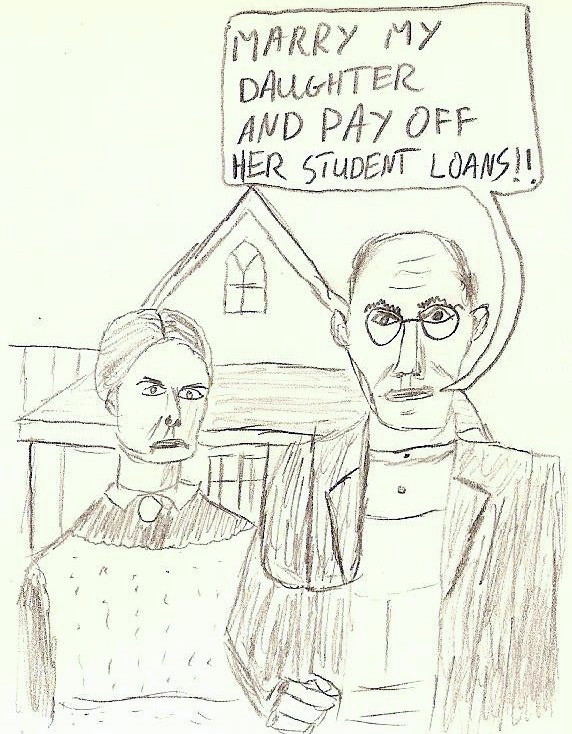
In Japan, young people who’ve been having a tough time finding work are criticized as “parasite singles” or “herbivores,” regardless of whether there actually are living wage jobs for them. The same thing is happening in the U.S., but to make things worse, $850 billion dollars in student debt is hidden from calculations of income inequality, meaning young people are unemployed and not making families, AND America is also less egalitarian a society than people might think.
WIT Life #140: Hibakusha Stories
Translating/Interpreting, Uncategorized, WIT Life Comments Off on WIT Life #140: Hibakusha Stories
WITLife is a periodic series written by professional Writer/Interpreter/Translator Stacy Smith (Kumamoto-ken CIR, 2000-03). She starts her day by watching Fujisankei’s newscast in Japanese, and here she shares some of the interesting tidbits and trends together with her own observations.
This week I had the unique opportunity to work as a volunteer interpreter for a project called Hibakusha Stories. Hibakusha (被爆者) is the official designation for atomic bomb victims, and this is the second time this organization has invited them to come to America to tell about their experiences. The program involves visits to NYC high schools, where groups of students gather to hear what these amazing survivors have to say. I had the honor of working with a beautiful woman from Hiroshima, 72-year old Toshiko Tanaka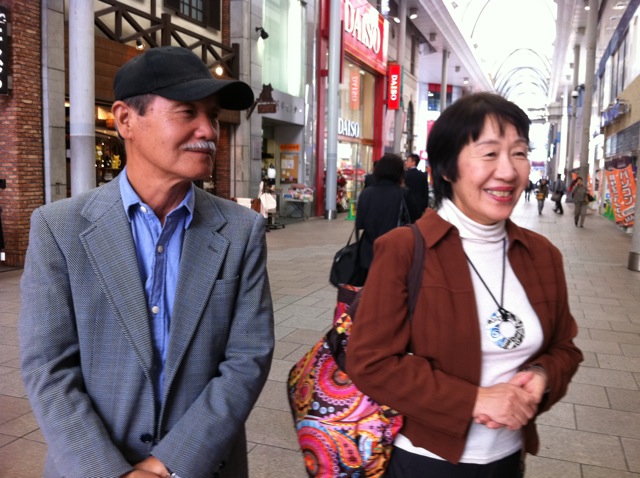 , who was generous enough to share her story.
Toshiko was almost 7 when the bomb was dropped and managed to make her way home. Her own mother didn’t recognize her, and she was in a coma for a week but somehow miraculously survived. Besides burns throughout her body, she experienced Read More
 This edition of Japan Fix actually happened when I emailed JETAA Florida’s Tampa Subchapter rep John McGee (Nagano-ken, 2004-05) to let him know that I would be visiting family in Tampa over Christmas and asked him for the most authentic Japanese experiences in the Tampa area, i.e., where the JET alums go. What he wrote back was perfect for Japan Fix.
1. Yoko’s Japanese Restaurant is in South Tampa (3217 South McDill Ave.) It’s owned by the mother of a JET from years ago. (http://www.yokosrestaurant.com/Pages/about.htm)
2. Kaisen Sushi in Northdale. (http://kaisensushitampa.com/) (14841 North Dale Mabry Highway) This is owned by a locally famous character…he’s a bit of a rocker and a good sushi chef. He made some waves when Hideki Matsui’s press guy asked if he would rent the place out for Matsui to make an appearance since he’d heard about the place and wanted to try it. But he told them that Matsui was welcome to eat, but he wouldn’t shut out his regulars on one of his best nights because they would keep coming back while Matsui would only be there once.
3. Wasabi Japanese Steak & Sushi in New Tampa. (http://www.japanesesteakandsushi.com/) (19601 Bruce B. Downs Boulevard) This is a Japanese owned steakhouse with sushi. The owner is Fumi Doi. He hosted one of our Tampagumi Pre-Departure Q&A’s for new JETs and is a likely sponsor for Tampa Natsumatsuri in 2011. (Apparently his wife encouraged him to sponsor the matsuri when she saw our sad little hand-cranked kakigori maker.) It’s definitely the fanciest and most expensive of the three I’ve mentioned.
Outside of food, perhaps, the best way to get your Japan Fix in Tampa may be to simply attend the Tampa Tsudoi Japanese language meet-up which meets the first Friday of every month from 7pm to 8pm at the Panera in the Brandon Town Center Mall.
Tell us where JETs should go in your area to get their Japan Fix. E-mail jetwit [at] jetwit.com.
Justin’s Japan: Carnegie Hall to Kick Off JapanNYC 2010 Concert Week
Article/Journalism, Justin's Japan, Music Comments Off on Justin’s Japan: Carnegie Hall to Kick Off JapanNYC 2010 Concert Week
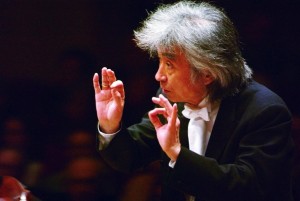
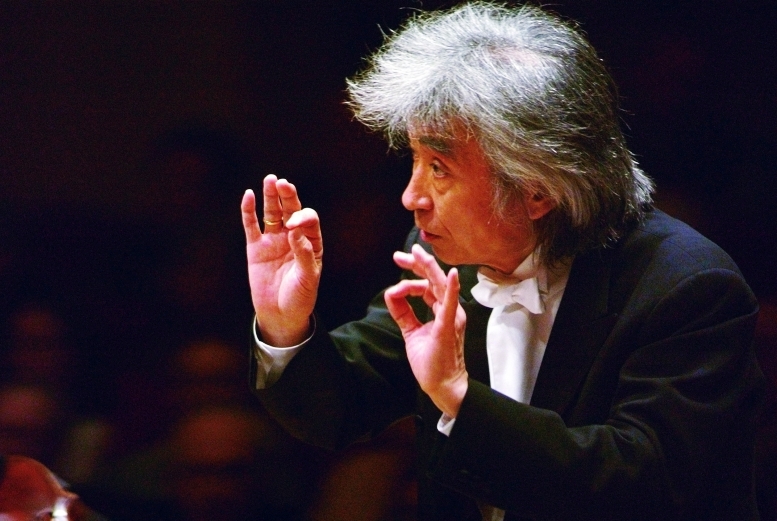
- Maestro Seiji Ozawa, artistic director of Carnegie Hall’s JapanNYC festival. (Mark Corke/New York Observer)
By JQ magazine’s Justin Tedaldi (CIR Kobe-shi, 2001-02) for Examiner.com. Visit his NY Japanese Culture page here to subscribe for free alerts on newly published stories.
Starting this Saturday, Carnegie Hall’s JapanNYC festival will unveil its first citywide series of musical performances. Led by artistic director Seiji Ozawa, who is best known for his record-setting 29-year career as music director of the Boston Symphony Orchestra, the festival’s musical highlights next week will see Maestro Ozawa helming rare overseas concerts by the Saito Kinen Orchestra with conductor Tatsuya Shimono, pianist Mitsuko Uchida and others, plus tributes to the legendary late composer Tōru Takemitsu, considered by many to be Japan’s greatest composer.
Additionally, as part of the Works & Process series at the Guggenheim Museum, a series of performances of Prokofiev’s Peter and the Wolf—performed by the Juilliard Ensemble and George Manahan with visual art by Rei Sato of Kaikai Kiki and narration by fashion designer Isaac Mizrahi—will surely delight music fans of all ages.
The performances follow other city exhibitions and ongoing events under the JapanNYC banner that run through next year, including Yoshitomo Nara: Nobody’s Fool at Asia Society, The Sound of One Hand: Paintings and Calligraphy by Zen Master Hakuin at Japan Society, and On Becoming an Artist: Isamu Noguchi and His Contemporaries, 1922-1960 at The Noguchi Museum in Queens.
JapanNYC returns in March and April 2011 with three weeks of events across New York City, including performances of classical, jazz and traditional Japanese music; contemporary theatre and visual art; noh theater and kyogen plays; modern dance; film; taiko drumming and more.
Click here for the complete performance schedule.
Write for JETAA Pacific Northwest e-Newsletter
Uncategorized Comments Off on Write for JETAA Pacific Northwest e-Newsletter

JETAA PNW is beginning to put together our first Electronic Newsletter to distribute early next year. As we are now printing with electrons, we have loads of extra pages we can layout for you this year. (Desktop publishing based humor!?! Anyone? Bueller? Bueller? )
We welcome any submissions of pretty much anything related to JET, Japan, your experience on the program or with the alumni group. This can come in many forms, such as pictures, poetry, restaurant reviews for those of missing the taste of home: really the sky is the limit!
Please send any submissions to media [at] pnwjetaa.org. Questions? Send em’ that way too. Written submissions can be up to about 500 words, but we’re pretty flexible.
Submissions prior to December 20th greatly appreciated, but late-arrivals are A-OKAY! (I just can’t guarantee they will get in)
Yours in Electron Printing, Web-site-ing, and Tree-Skiing (VIVA LA NINA!)
–Ben Erickson
PNWJETAA Media Coordinator
Job: Cultural Assistant at Sakura Educational Exchange USA
Jobs Comments Off on Job: Cultural Assistant at Sakura Educational Exchange USA
via JETAA DC. Posted by Dipika Soni (Ishikawa-ken, 2003-06). Dipika currently works as an in-house translator for PFU (a Fujitsu company) in Kahoku-shi, Ishikawa-ken. She is also the vocalist for the Japanese hardcore punk band DEGRADE.
*Note: If you apply for this position, please let them know you learned of it from JetWit. Thanks.
—————————————————————————————————————–
Job Position: Cultural Assistant
Job Description:
Sakura Educational Exchange USA, a nonprofit international student exchange organization in Rockville, Maryland is seeking energetic, international-minded, fun-loving, dedicated people interested in working with visiting Japanese high school students in March and July 2011.
Dates:
1st Program:
Hours: vary depending on the day’s activities but basically 24/7 except occasional mornings off
2nd Program:
Salary:
Duties and Responsibilities:
Requirements:
Positions available: 13
How to Apply:
If interested, please email your resume and letter of interest to:
Attn: Stephanie Libonati, Program Manager
Sakura Educational Exchange USA
slibonati@seeusa-ryugaku.com
Job: English Instructor at Sakura Educational Exchange USA
Jobs Comments Off on Job: English Instructor at Sakura Educational Exchange USA
via JETAA DC. Posted by Dipika Soni (Ishikawa-ken, 2003-06). Dipika currently works as an in-house translator for PFU (a Fujitsu company) in Kahoku-shi, Ishikawa-ken. She is also the vocalist for the Japanese hardcore punk band DEGRADE.
*Note: If you apply for this position, please let them know you learned of it from JetWit. Thanks.
—————————————————————————————————————–
Job Position: English Instructor at Sakura Educational Exchange USA
Job Details:
Sakura Educational Exchange USA, a nonprofit international student exchange organization in Rockville, MD is seeking energetic, international-minded, fun-loving, dedicated people interested in working with visiting Japanese high school students in March 2011.
Dates and Hours: Approximately 15 total teaching hours during 6 weekday mornings in March 2011
Exact Dates: TBD
Orientation (unpaid): TBD
Location: Based out of Hotel in Rockville, MD
Salary: Hourly salary commensurate with experience
Duties and Responsibilities:
Requirements:
Positions available: 8
How to Apply:
If interested, please email you resume and letter of interest to:
Attn: Stephanie Libonati, Program Manager
Sakura Educational Exchange USA
slibonati@seeusa-ryugaku.com
Internships for Grad Students in International Development
Graduate School Comments Off on Internships for Grad Students in International Development
 Stephanie Boegeman (ALT, Akita-ken, 2006-09) gets her kicks from finding fun crazy ways to see the world and getting paid to do it. She is constantly in search of job, internship, and travel ideas to add to her site Playing With Hire, in the hopes that more JET alumni and like-minded souls join her in her quest to find creative, inspiring, and unique ways to make ends meet.
This opportunity is tailor-made for JETs who find themselves inextricably pulled toward the world of international development after their years in Japan. If you’re a grad student looking to live abroad again while racking up some experience in service of your studies, you may want to check into doing some field work with Mercy Corps. More details on available internships can be found here.
Justin’s Japan: Interview with author Hideo Dan on ‘Lipstick Building’
Books, Interview/Profile, Justin's Japan Comments Off on Justin’s Japan: Interview with author Hideo Dan on ‘Lipstick Building’
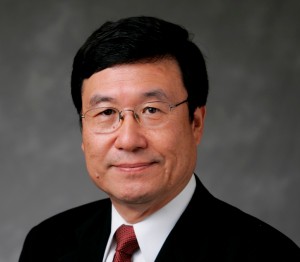
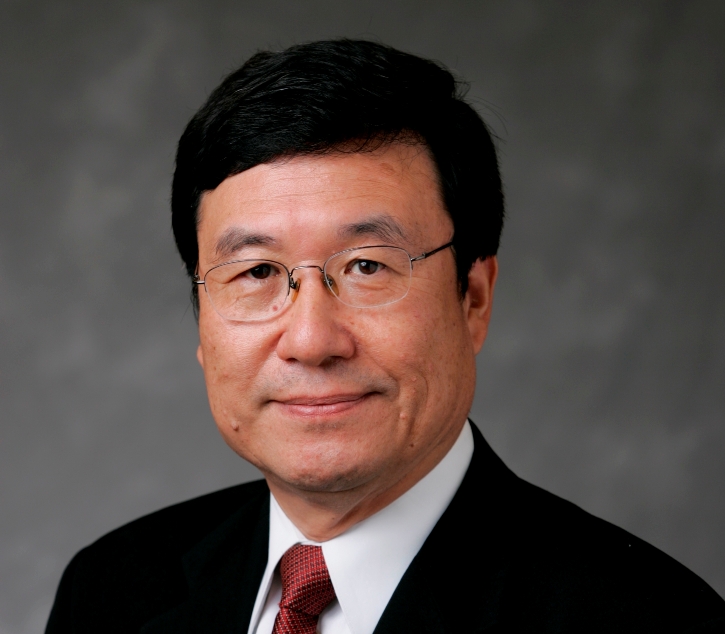
- Meet ‘Lipstick Building’ author Hideo Dan at Manhattan’s Kinokuniya Bookstore Saturday, Dec. 11. (Courtesy of Hideo Dan)
By JQ magazine’s Justin Tedaldi (CIR Kobe-shi, 2001-02) for Examiner.com. Visit his NY Japanese Culture page here to subscribe for free alerts on newly published stories.
Hideo Dan is a vice president and attorney at law of a New Jersey-based healthcare company who is now a debut author. Published by NY Seikatsu Press, Lipstick Building is a fast-paced suspense novel based on the author’s 30-year real-life experience in New York as a shosha (trading company) man and a corporate attorney with an international law firm.
Kenji Kadota, who works for a Japanese trading company in New York, is introduced at a party to Suzanna, a beautiful businesswoman from Peru. She proposes a big business opportunity to Kenji—an attractive prospect of exporting Japanese machinery to a major Peruvian construction company. Is this a great business chance, or is something ominous ahead? The story develops quickly into intrigue and adventure, with Kenji and Suzanna crisscrossing through South America and Europe, providing readers entertainment and thrills to the end.
The author will be the subject of a special talk and book signing event Saturday, Dec. 11 at Manhattan’s Kinokuniya Bookstore. I caught up with him to learn more.
How did you come to the U.S.?
The first time I came to the U.S. was in 1971, when I attended Indiana University for a year to study journalism. I could not land a job in journalism, so I started to work for Nissho-Iwai, a trading company, a.k.a. shosha, upon graduation from Osaka University with a law degree. In 1979, Nissho-Iwai sent me to its New York subsidiary as legal manager.
Lipstick Building is based on your three decades of experience at a Japanese trading company. How long did it take to write this book?
Actually, I was with the trading company for 14 years, seven years each for Japan and New York. After that, I left the company and joined a law firm in New York, having had passed the New York Bar Exam while I was with Nissho-iwai American Corporation. After almost nine years with the law firm, I joined Eisai, a Tokyo-based pharmaceutical company, as general counsel for its U.S. operations.
It took nearly one and a half years to write this book. I was able to do it since I was asked to manage Eisai USA Foundation, a charitable organization on the part-time basis, two years ago.
What is your personal experience with Peru? Are there any other international experiences that helped your writing?
Unfortunately, I have never been to Peru—I was planning to do so this year but because of the flood at Machu Picchu, my trip was cancelled. So I did lots of research on Peru on Google and at a library. I had met a very attractive Peruvian student when I was attending Indiana University, which gave me some inspirations for this book. In fact, Europe (Spain and Switzerland) plays a much larger part in this story than Peru. I have been to Spain and Switzerland on business and pleasure on numerous occasions and have been attracted by culture and scenery in those countries. Especially in Spain—I was fascinated by flamenco and its dancers. Flamenco is an important element in this novel.
What are the big differences between working at a trading company in Japan versus the U.S.? Did these differences shape the story?
At the trading company in New York and also at the law firm where I worked, naturally I interacted heavily with non-Japanese people, colleagues and clients, which constantly reminded me of cultural and linguistic differences between Japan, the U.S. and many other different cultures. As someone who is very curious about anything, I enjoyed learning those differences on daily basis. At the same time, I got impressed with striking similarities at a deep human level. My book certainly reflects those experiences and observations.
Click here for the rest of the interview.
Update 5/9/11: CLICK HERE to read “Stories from the JET-Tourist Tally Project“
Update: We’ve set up a Google Form to collect responses as an alternative to doing this via e-mail.
*******
Thanks to the Japan National Tourism Organization for its help in spreading the word about this project.
The “JET-Tourists Tally Project“
Last updated: 05/09/2011 (Thanks to JETAA UK and JETAA DC for letting its members know about the survey!)
- Tourists brought to Japan by JETs: 2,009
- Visitor Days: 22,574
- Respondents: 347
- Estimated tourism revenue (¥10,000/day): ¥225,740,000 (about $2,687,381 @ US$1=84yen)
- Estimated tourism revenue per JET respondent: ¥650,548 (about $7,745 @ US$1=84yen)
- Conclusion? At a minimum, JETs generate the equivalent of 1/5 to 1/6 of their salary for the Japanese economy. This is in addition to other returns on investment (e.g., diplomatic, financial and cultural) provided to Japan by participants in the JET Program.
(See further below for breakdown by prefecture.)
Here’s a simple way for every JET and JET alum to do their part to support the JET Programme and the JET Alumni Association.
- Just fill out this simple Google Form that we set up: https://spreadsheets.google.com/viewform?formkey=dFFPeW5zdUZjQ3RZbEJJQ2IzNHJCZHc6MQ&ifq
or, if you prefer….
- E-mail visitors [at] jetwit.com and
- Tell us how many people you are personally responsible for causing to visit Japan (both during and since JET).
Please make sure to include:
- Number of tourists (e.g., Mom + Dad + two brothers = 4 people)
- Total number of days they stayed in Japan (e.g., If Mom & Dad + two brothers each stayed for 10 days, that’s 40 total days of tourist travel)
- Your name + position on JET (ALT/CIR/SEA)
- Your Prefecture + city/town and years on JET (e.g., 2006-10) (this is vital info!)
- Any comments, stories or additional info you want to share
Nearly all of us had relatives and friends come and visit us in Japan. Some of us have brought student groups and organized other exchanges. All of this has provided tourism revenue for the Japanese economy. The goal of this project is to determine, at a minimum, the amount of tourism revenue for which JET is directly responsible.
This information is particularly important amidst ongoing discussions of costs associated with the JET Programme and the JET Alumni Association. Many of the short and long term benefits have simply not been factored in. So email visitors@jetwit.com with your responses and let’s make sure this info does get factored in to future discussions.
We will continue to update the numbers in this post. Please check back periodically for updates.
Note: We are assuming a rather conservative estimate of Y10,000 per day (approximately $100) for all tourism expenditures combined (e.g., lodging, travel, food, entertainment and other tourist expenditures). Some people flew Japanese airlines, others did not. Some stayed in hotels, others stayed for free on the couch. All in all, 10,000 yen/day is a very low-end estimate.
Special domo arigatou for their ongoing help with this project to Joe Silvagni (Nagasaki-ken, 2008-10), Mike Shu (Hyogo-ken, 2005-08) and Sam Lederer (Shizuoka-ken, 2005-07).
*******************
JET alums: Help AJET with “Life After JET”
Uncategorized Comments Off on JET alums: Help AJET with “Life After JET”
Share Your Expertise with Current JETs
The National Association of Japan Exchange and Teaching is hoping to make the transition from JET to…whatever comes next just a little less daunting. Our new monthly column, “Life After JET,” will feature former-JETs now working in a wide range of fields and share how they found a job, what they’re doing now and any advice they may have for current JET Programme participants.
Now we just need a few willing former-JETs. ..please contact Kathryn Kovacs at pr@ajet.net if that’s you! You’ll just have to answer a few questions about your JET and work experience via email to be featured in “Life After JET” in the AJET e-Bulletin, website and facebook page.
For more information about National AJET, please check our website: http://ajet. net or follow us on Facebook: www. facebook. com/AJETJapan
Japan America Society Round-up 12.7.10
Japan Society Round-up Comments Off on Japan America Society Round-up 12.7.10
JET alum Gail Cetnar Meadows (ALT, Hiroshima-shi 2007-10), co-founder of Hiroshima JET webzine the Wide Island View, shines a light on some of the upcoming events of Japan America Societies…
 Hatsuharu no Kai (New Year’s Celebration) — Don’t forget to eat your mochi! (Who needs Ovaltine, anyway?) Join students from the Japanese School of Denver as they greet 2011 by pounding rice into mochi, practicing calligraphy and demonstrating a tea ceremony.
- Date: Sunday, Jan. 9
- Time: Noon to 3 p.m.
- Place: Arapahoe Community College, Littleton campus
- For more information, click here.
 Outdoor Film Series — Check out this series of free events in Japantown Peace Plaza over the next few months. Events include film screenings and karaoke contests. December’s film presentation is Tokyo Godfathers, a film set in Tokyo at Christmas. Three homeless friends—a young girl, a transvestite, and a middle-aged bum—are foraging through some trash when they find an abandoned newborn. Hana, the transvestite with delusions of being a mother, convinces the others to keep it overnight. The next day, using a key found with the baby, they start tracking down the parents, with many adventures along the way.
- Date: Saturday, Dec. 11
- Time: 7 p.m.
- Place: Peace Plaza in Japantown, Post Street at Buchanan Street, San Francisco
- For more information, click here.
Does your Japan America Society have an upcoming event that you’d like to share with JetWit readers? Email Gail the info.
New LinkedIn group for JET Alum HR Professionals (and those interested)
Career, Networking Comments Off on New LinkedIn group for JET Alum HR Professionals (and those interested)
I’ve set up a new LinkedIn group for JET Alum HR Professionals:
http://www.linkedin.com/groups?mostPopular=&gid=3709611
The purpose is to enable those JET alums and Friends of JET in the field to connect. And also to provide a resource for JETs and JET alums interested in the field.
Paul Benson (Fukui-ken, 2006-08) is a New York-based freelance translator who has handled assignments ranging from securities laws to cook books. A Translator’s Life follows some of Paul’s experiences as he makes his way in the J->E translation world.

On Monday afternoon I had the pleasure of attending a small informal interview–all in Japanese–hosted by Shūkan NY Seikatsu (週刊NY生活), a free, weekly Japanese newspaper available in New York. They wanted to get a few JETs together to talk about our experiences for a special New Year’s issue to be published in a few weeks.
A little background: I was in Japan (Fukui-ken) for two years and returned in 2008 to immediately enter graduate school for Japanese at the University of Massachusetts Amherst. While many returnees feel the need to constantly talk about their incredible experiences, I could not have felt more differently. In my first year I was surrounded by students interested in applying for JET (they didn’t want to talk about anything else) and in my second year I was so busy researching and writing I didn’t really think about my time on JET. In some ways this had the disservice of leading me to devalue my time in Japan, to shelve it and move on.
There were six JET alums in total at the interview: Steven Horowitz, Kia Cheleen, Jon Hills (who provided the venue at his company, Hills Learning), Tamar Entis, Stacy Smith and myself. Shūkan NY Seikatsu‘s Publisher & CEO Ryoichi Miura and and reporter Kaoru Komi asked us what we learned from Japan, what we loved about our areas, what we thought was cool about Japan, and what are reactions were to some of the criticisms Japanese teachers have of JETs (all of which you can read about in their upcoming free publication).
I found myself pleasantly surprised at how unique and special each JET’s experience was. I also recalled what I was told countless times before I went: “ESID” (Every Situation Is Different), and it’s still true. Time passing hasn’t made my JET experience any less unique. The only difference is that now I like it that way.
I hope many of you get the chance to check out the article in Shūkan NY Seikatsu when it comes out December 28. (I’ll be sure to post a summary translation of it on the JetWit site for those who need it.)
Design the Nengajo New Year’s Postcard for JETAA Northern California
Contest, JETAA Chapters Comments Off on Design the Nengajo New Year’s Postcard for JETAA Northern California
 Via JETAA Northern California:
JETAANC is looking for one of our talented alumni to design our 2011 Nengajo New Year’s postcard.
The card will be sent out to all of our members later this month, so alumni across two states will enjoy your work. Put your creativity to good use and add a piece to your portfolio!
Send your conceptual design in PDF format to communications [at] jetaanc.org by this Friday, December 10.
We will select a design this weekend and ask the designer to finalize it early next week for print.
Design in black & white for the front of a standard sized postcard.
2011 is the Year of the Rabbit, so make sure this lucky animal is the focus of your design!”
