




WIT Life #248: Ralph Carr’s Fight for Japanese-American Justice
 Translating/Interpreting, WIT Life, Writers
  Comments Off on WIT Life #248: Ralph Carr’s Fight for Japanese-American Justice
WIT Life is a periodic series written by professional Writer/Interpreter/Translator Stacy Smith (Kumamoto-ken CIR, 2000-03). She starts her day by watching Fujisankei’s newscast in Japanese, and here she shares some of the interesting tidbits and trends along with her own observations.
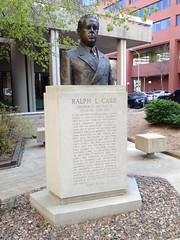
The bust in Sakura Square of former CO governor Ralph Carr, who fought for Japanese-American civil rights
My interpreting for a State Department energy-themed delegation brings me to Denver, Colorado. In the past I’ve written here about the Japanese connection at Sakura Square, where former governor Ralph Carr who took a stance against internment camps during WWII was honored with a bust in 1976. He also was named “Person of the Century” by the Denver Post in 1999. Most recently, his contributions have been recognized by naming the new Colorado Judicial Center after him. This is a 695,767 square-foot building housing the Colorado Supreme Court, Court of Appeals, Supreme Court Law Library, the State Court Administrator, the Colorado Attorney General and the Colorado Public Defender. It seems like the perfect tribute to a past politician who sacrificed his political career rather than betray the rule of law.
Carr was the 19th governor of Colorado who served from 1939 to 1943. He was in office when FDR forcibly resettled residents of Japanese descent from the West Coast to a camp at Amache near Granada, Colorado. The relocation included Nisei who were U. S. citizens by virtue of being born in this country. While many politicians Read More
Around Japan in 47 Curries: Tottori nashi pear
Food & Drink, Writers Comments Off on Around Japan in 47 Curries: Tottori nashi pear
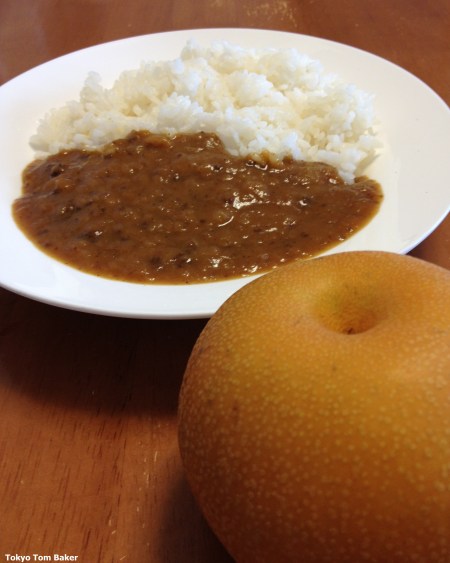
Tom Baker (Chiba, 1989-91) is writing a 47-part series of posts on his Tokyo Tom Baker blog, in which he samples and comments on a curry from a different prefecture almost every week. Here’s an excerpt from his 13th installment, in which he reveals that Tottori Prefecture nashi pear curry has a cinematic connection:
 In 1990, I went to the theater to see the movie “Ghost.” Patrick Swayze plays a murder victim, and Demi Moore plays his grieving girlfriend. The villain who arranged the murder wants to find out how much she knows, so he sets out to seduce her. In the most shocking scene I saw on film that year, the actor Tony Goldwyn pulled out a crumpled paper bag and presented Demi Moore with some delectable “Japanese apple pears” – a rare, expensive and little-known treat in America, a gift meant to show his generosity and savoir-faire.
I was aghast. My beloved nashi had been introduced to the American public at last – but as a tool of seduction in the hands of a cold-blooded killer. Oh, the injustice! They might as well have taken those pears, chopped them into tiny pieces and made them into curry!
Well, 23 years later, I have learned that someone did just that.
CLAIR Magazine “JET Plaza” series: Ari Kaplan (Hyōgo)
Books, LifeAfterJET, Notable JET Alums, Return on JET-vestment, Writers Comments Off on CLAIR Magazine “JET Plaza” series: Ari Kaplan (Hyōgo)
Each month, current and former JET participants are featured in the “JET Plaza” section of the CLAIR Forum magazine. The September 2013 edition includes an article by JET alumn Ari Kaplan. Posted by Celine Castex (Chiba-ken, 2006-11), currently programme coordinator at CLAIR Tokyo.
*******

“I still remember the ceremony […] held for departing JET participants when I left my position as an ALT. […] I distinctly recall advising the audience members that I was leaving so that I could return someday.”
Originally from the US, Ari Kaplan (Hyogo-ken, Suzurandai, 1993-94) came to Japan upon graduating from Boston University. He is now a business consultant in New York City and the author of Reinventing Professional Services: Building Your Business in the Digital Market Place (Wiley, 2011), which Akishobo recently released in Japan as ハスラー――プロフェッショナルたちの革新. Learn more at AriKaplanAdvisors.com.
JET Perspective
I still remember the ceremony that the Hyogo Prefectural Board of Education held for departing JET participants when I left my position as an ALT at Kobe Kohoku High School in 1994. The host asked each of us to line up facing the audience, pass a microphone to one another, and share our reason for leaving. I distinctly recall advising the audience members that I was leaving so that I could return someday.
When Akishobo translated my second book, Reinventing Professional Services: Building Your Business in the Digital Workplace (Wiley 2011), into Japanese and released it in Japan last fall, I felt like I had somehow kept my promise. I was also excited to have the opportunity to publicly dedicate it to the JET Programme and the Hyogo Prefectural Board of Education.
I was only 20 years old when in July 1993, following my graduation from Boston University, I took that Japan Airlines flight from New York to Tokyo. Jetlagged the day after I arrived, I went on an early-morning walk into the Tokyo Metro to explore and noticed that there were a few homeless individuals living in refrigerator boxes down below.
As a resident of a major metropolitan city, this sight in Shinjuku station did not surprise me. What struck me, however, was that outside of each box sat a pair of shoes, presumably worn by the occupant inside, highlighting the individual’s personal respect and the extraordinary nature of the place to which I had traveled. Read More
I’ll Make It Myself!: Kitchen Library, 2013.8.29: Japanese Food
Blogs, Food & Drink, I'll Make It Myself, Writers Comments Off on I’ll Make It Myself!: Kitchen Library, 2013.8.29: Japanese Food
L.M. Zoller (CIR Ishikawa-ken, Anamizu, 2009-11) is the editor of The Ishikawa JET Kitchen: Cooking in Japan Without a Fight. The Japan and International Programs Coordinator for NorthWest Student Exchange, ze also writes I’ll Make It Myself!, a blog about food culture in Japan and the US; curates The Rice Cooker Chronicles, a series of essays by JETs and JET alumni on the theme of cooking/eating and being alone in Japan; and admins The JET Alumni Culinary Group on LinkedIn.
Putting the focus on links about Japanese food, I submit for your approval adorable animal doughnuts, what is and isn’t healthy about “the Japanese diet,” wagashi, and more!

Image via Kotaku.
WIT Life #247: Takao Osawa bonanza!
Film, Translating/Interpreting, Uncategorized, WIT Life, Writers Comments Off on WIT Life #247: Takao Osawa bonanza!
WIT Life is a periodic series written by professional Writer/Interpreter/Translator Stacy Smith (Kumamoto-ken CIR, 2000-03). She starts her day by watching Fujisankei’s newscast in Japanese, and here she shares some of the interesting tidbits and trends along with her own observations.
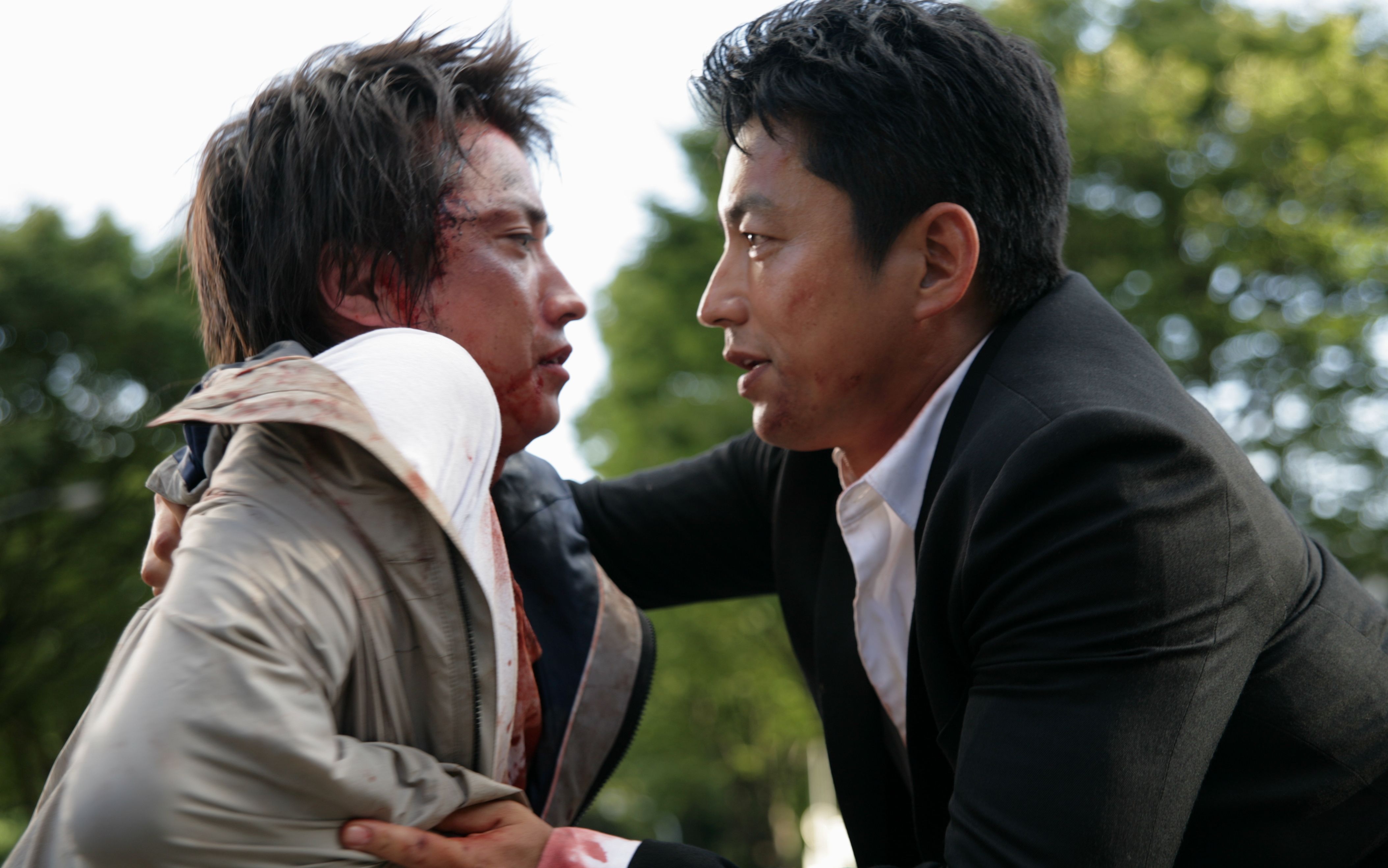
Two of Japan’s best current actors, Tatsuya Fujiwara and Takashi Osawa, in Takashi Miike’s Shield of Straw
I’m interpreting for a client in L.A. this week, and on the cross-country flight I had the chance to watch two interesting Japanese movies that were just released this year, making the long journey pass by much more quickly (Thank you Delta!). They both starred one of my favorite Japanese actors, the always かっこいい Takao Osawa. In this blog I have mentioned his appearances in other films, such as in 終の信託 (Tsui no Shintaku or A Terminal Trust) as the intimidating prosecutor. Osawa’s work never disappoints, and even though these particular movies were not necessarily of a genre I would usually opt to watch, he made sticking with them to the end worth it.
The first film was 藁の楯 (Wara no Tate or Shield of Straw), directed by the legendary Takashi Miike and based on the eponymous book by Kazuhiro Kiuchi. It features another one of my favorite performers, the fabulous Tatsuya Fujiwara who I recently highlighted from the film I’M FLASH! which debuted at this year’s Japan Society Japan Cuts film festival. Fujiwara plays a serial killer named Kiyomaru who targets young children, and Osawa is in the role of one of the Special Police assigned to safely escort him from Fukuoka to Tokyo (with Nanako Matsushima as his cracker jack partner). The grandfather of Kiyomaru’s most recent victim offers 1 billion yen to Read More
Let’s Talk Japan Podcast, Episode 15 – JET Alumni Bike Shikoku’s 88 Temple Pilgrimage
Books, Interview/Profile, JET Alum Artist Beat, JETs in the News, Photography, Travel/Tourism, Uncategorized, Writers Comments Off on Let’s Talk Japan Podcast, Episode 15 – JET Alumni Bike Shikoku’s 88 Temple Pilgrimage
Let’s Talk Japan is a monthly, interview format podcast covering a wide range of Japan-related topics. Host Nick Harling (Mie-ken, 2001-03) lived in Japan from 2001 until 2005, including two great years as a JET Program participant in Mie-Ken. He practices law in Washington, D.C., and lives with his wife who patiently listens to him talk about Japan . . . a lot.
In this episode, Nick speaks with JET Program alumni Chelsea Reidy and Elayna Snyder about their upcoming 900-mile bicycle tour of Shikoku’s famous 88 temple pilgrimage.
Listen to hear them describe their creative “Temple by Temple Project,” which they are funding through Kickstarter, and how they plan to share their adventure with others.
To learn more, check out their website, www.bigricefield.com, and the Temple by Temple Project on Kickstarter.
Enjoy!
Nick

Life After JET: The Write Stuff by Ashley Thompson
Career, LifeAfterJET, Notable JET Alums, Return on JET-vestment, Writers Comments Off on Life After JET: The Write Stuff by Ashley Thompson
Recently posted to the JETAA Oceania Facebook group by Eden Law:
The JET Programme has led to many opportunities and careers, sometimes rather unexpectedly. This is the first in a series of articles by former JETs about their lives after participating on the programme, and how it has shaped their careers and paths. We hope that it will prove useful as an insight for potential applicants into what we as ex-JETs got from our experience, and maybe provide some nostalgic memories for others. Please feel free to contact us if you want to write about your own experience!
Our article comes to us courtesy of Ashley Thompson, who was a former JET in Shizuoka-ken (2008-10). Since leaving JET she has built up a writing career which includes being an editor of Surviving in Japan, a popular blog for expats in Japan; and as a Community Manager for Nihongo Master, an online Japanese language learning site. Many thanks to Ashley for her time and support!
I never expected that going to Japan with JET would launch my writing career or bring about the opportunities it has. And fainting at school was the catalyst. It happened on a cool October day, just over a year after I arrived in Japan. A student had come to the door of the staff room to ask me something, and after standing up from seat my vision started fading and my head was cloudy. I lowered myself to the floor before I lost consciousness. I was rushed to the nurse’s room on a stretcher and sent home for a few days.
The first day back at school I developed a fever and was promptly sent home. The light-headedness returned stronger at that point, followed by motion sickness and constant nausea. I was forced to take a longer sick leave, month after month, as I visited various doctors in an attempt to get a diagnosis. They either found nothing or told me it was “all in my head”. I knew they were wrong, but in Japan a doctor’s word is like God’s. Read More
WIT Life #246: Of employment and emoji
Translating/Interpreting, WIT Life, Writers Comments Off on WIT Life #246: Of employment and emoji
WIT Life is a periodic series written by professional Writer/Interpreter/Translator Stacy Smith (Kumamoto-ken CIR, 2000-03). She starts her day by watching Fujisankei’s newscast in Japanese, and here she shares some of the interesting tidbits and trends along with her own observations.
There were two interesting Japan-related articles in the NYT recently, about divergent topics that both reflect the country’s modernization. The first discusses Japan’s historical lifetime employment system, and how this is no longer sustainable in today’s economy, even at a traditional company like Sony. So in typical Japanese style, instead of addressing the problem it is being worked around. These unneeded workers are being placed in 追い出し部屋 (oidashibeya) or “chasing-out rooms,” where there is no work to do and they must fight their boredom, making it a test of wills. When the economy was faltering in the 1990’s, a similar concept of 窓際族 (madogiwazoku) or “window seat tribe” emerged, as the unnecessary workers who couldn’t be downsized were left with nothing to do but stare out the window. As corporations that want to remain profitable are increasingly relying on temporary workers, this has the potential to bring about a sea change in Japanese business practices over time.

The first line of “Emoji Dick,” the story of Moby Dick told entirely in emoji.
The second article discusses how Japanese emoji have been adopted here in the States, though their interpretation is sometimes different than the original intended meaning. It starts with a humorous anecdote about an American couple in a long distance relationship, who initially have some misunderstandings due to emoji misuse. I was amused to find out about the existence of “Emoji Dick,” a recreation of the Herman Melville’s classic novel “Moby Dick” told entirely in emoji. Happy reading!
Local Japan: Ehime JET alums to publish illustrated book of their 88 temple pilgrimage
Art, Books, Cultural Outreach, Japan Local, JET Alum Author Beat, Return on JET-vestment, Travel/Tourism, Writers Comments Off on Local Japan: Ehime JET alums to publish illustrated book of their 88 temple pilgrimage
Maryland-based Ehime-ken JET alums Elayna Snider and Chelsea Reidy have put together an illustrated book of their “88 temple pilgrimage” by bicycle in Shikoku. They now have a Kickstarter page to help them raise funds to publish it and a wonderful video that explains what this is all about. Definitely worth a look. It’s hard to do justice in my own words, so click the link and watch and read for yourself:
http://www.kickstarter.com/projects/1042996508/temple-by-temple
Excerpts from the Kickstarter site:
There are 88 temples on Japan’s 88 temple pilgrimage. With two bicycles, a tent, notebooks and pens, plus a Rolleiflex, we will go to all of them. While we travel the 900-mile route, we’ll be collecting the materials needed to make 88 hand-bound versions of our illustrated book, Temple by Temple.
Elayna does the art, Chelsea does the words. A children’s book? It can be. A coffee table book? Sure. A book you have around and pick up from time to time? Yes! The idea and project did not come from any prescribed place of “Let’s make a kids book.” We are two people with varying ideas and skills and we combined them to make a book that describes the route, the temples, and this 1,200 year old pilgrimage which draws people of all different faiths and from all over the world.
JET alum set to publish new book “Three Scenarios in Which Hana Sasaki Grows a Tail”
Books, JET Alum Author Beat, Return on JET-vestment, Writers Comments Off on JET alum set to publish new book “Three Scenarios in Which Hana Sasaki Grows a Tail”
 JET alum Kelly Luce (Kawasaki/Tokushima, 2002-04) will publish her debut collection of fiction this fall titled Three Scenarios in Which Hana Sasaki Grows a Tail. The book is a collection of ten stories set in Japan, and many of her stories are characterized by magical realism. According to A Strange Object, the book’s indie publisher, “Hana Sasaki will introduce you to many things—among them, an oracular toaster, a woman who grows a tail, and an extraordinary sex-change operation. These stories tip into the fantastical, plumb the power of memory, and measure the human capacity to love.” The cover was designed and illustrated by Yuko Shimizu.
Luce’s work has appeared in the Chicago Tribune, Crazyhorse, Kenyon Review, The Southern Review, New England Review, and other magazines. Her short story “Yamada-san’s Toaster” was included in the Tomo: Friendship Through Fiction anthology, (reviewed on JETwit last year.) She lives in Santa Cruz, California, and Austin, Texas, where she is a fellow at the Michener Center for Writers.
A little bit about Kelly: After graduating from Northwestern University with a degree in cognitive science, Luce spent three years in Japan. During her time there, she became the first non-Japanese to join a professional Awa Odori dance team (ren), starred in an English conversation video series for children, and spent a week in a women’s prison in Yokohama.
WIT Life #245: Count Down My Life
Translating/Interpreting, WIT Life, Writers Comments Off on WIT Life #245: Count Down My Life
WIT Life is a periodic series written by professional Writer/Interpreter/Translator Stacy Smith (Kumamoto-ken CIR, 2000-03). She starts her day by watching Fujisankei’s newscast in Japanese, and here she shares some of the interesting tidbits and trends along with her own observations.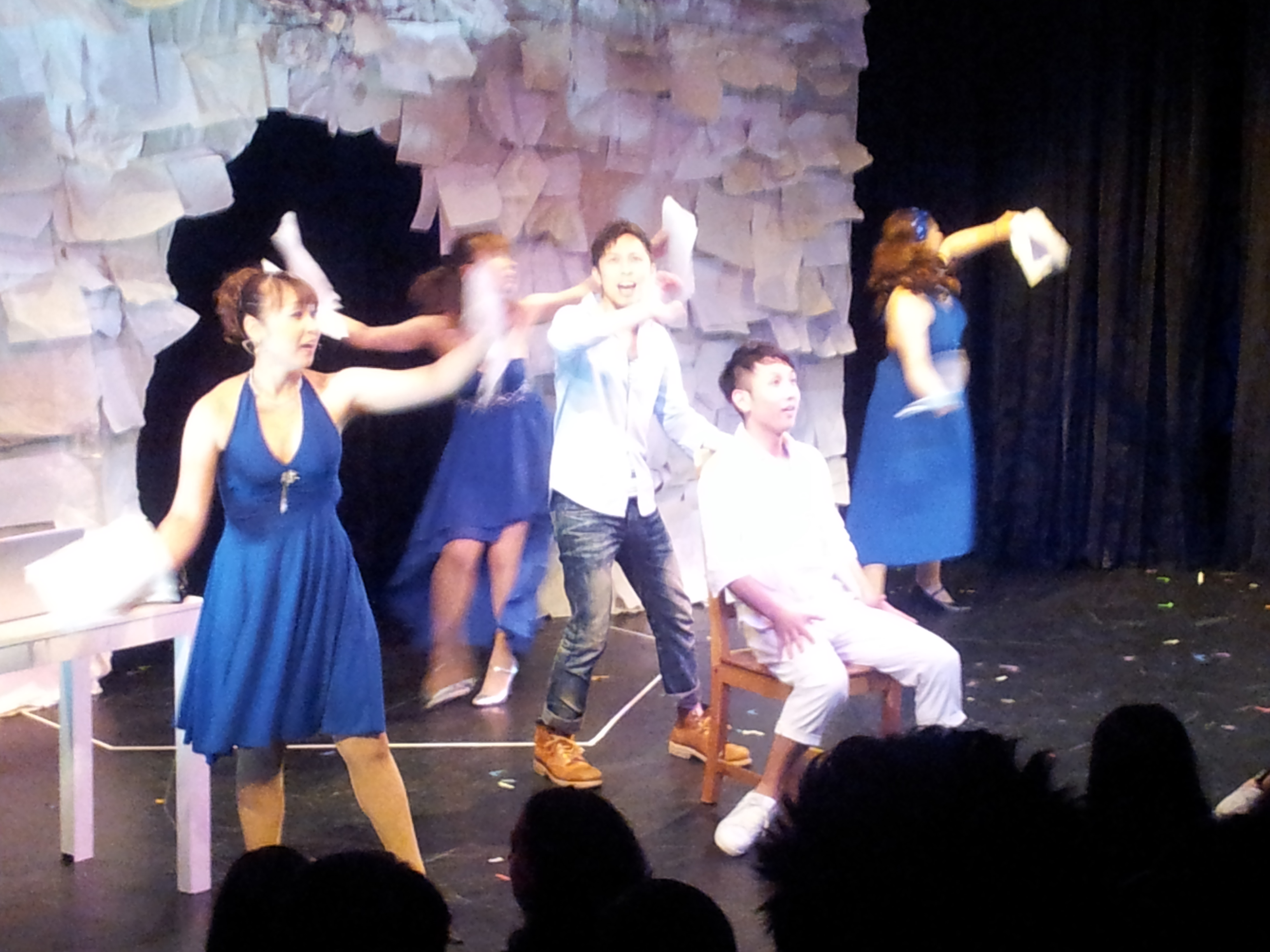
Last night I went to go see the US premiere of the Japanese rock musical Count Down My Life, which was featured as part of the 17th New York International Fringe Festival. I was especially excited to check this show out as I had heard that the director and playwright, Ikko Ueda, is from Kumamoto, which is where I spent my time on JET. 28-year old Ueda has created a partially autobiographical play that tells the story of a playwright (referred to only as “a man”) who is striving to win an award those younger than 30 are eligible for. It begins with him turning 29 and realized that gives him exactly a year, after which point he will give up on his dream of becoming a success and return to his hometown. In his struggle to write an award-winning play, the man is visited by several people, including a mysterious fan, who help him in his endeavors. Through these encounters, he begins thinking about Read More
WIT Life #244: Japan’s 活 boom
Translating/Interpreting, WIT Life, Writers Comments Off on WIT Life #244: Japan’s 活 boom
WIT Life is a periodic series written by professional Writer/Interpreter/Translator Stacy Smith (Kumamoto-ken CIR, 2000-03). She starts her day by watching Fujisankei’s newscast in Japanese, and here she shares some of the interesting tidbits and trends along with her own observations.
Recently on the Japanese morning news there was an interesting “Saki Tsubu” segment which highlighted the Japanese phenomenon of using the character 活 (katsu) to describe various activities. Many of you are probably familiar with the original combination of 就活 (shuukatsu), introduced in 2000. This phrase, comprised of the characters for work and activity, is an abbreviation for 就職活動 (shuushoku katsudou) and refers to being engaged in job searching.
This coinage was followe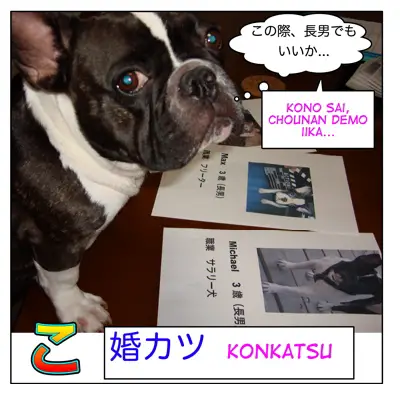 d in 2007 by 婚活 (konkatsu), which puts together the characters for marriage and activity to describe young men and women trying to meet each other with the goal of getting married (and is an abbreviation for 結婚活動 (kekkon katsudou)). Little did the world know that over the next couple of years there would be an explosion in katsu expressions, covering things ranging from the mundane to the morbid. The following is an outline of several katsu expressions that can be commonly heard in Japan these days. Read More
Let’s Talk Japan is a twice monthly, interview format podcast covering a wide range of Japan-related topics. Host Nick Harling (Mie-ken, 2001-03) lived in Japan from 2001 until 2005, including two great years as a JET Program participant in Mie-Ken. He practices law in Washington, D.C., and lives with his wife who patiently listens to him talk about Japan . . . a lot.
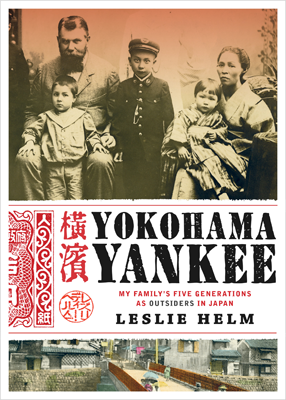 In this episode, Nick speaks with Leslie Helm, author of Yokohama Yankee: My Family’s Five Generations As Outsiders In Japan.
The Helm family’s connection with Japan begins with Mr. Helms’ German great grandfather, Julius, who traveled to Japan as a young man in 1869, looking to make his way in the world. Julius would go on to found Helm Brothers, a company with diverse interests related to what would become Yokohama’s booming port economy. From there, the book’s narrative winds its way through four further generations of the Helm family. Mr. Helm recounts not only the family’s participation in major historical events, but also offers a frank assessment of the personal and intra-family struggles each generation faced while living in Japan. Together, these two aspects make for a compelling read.
Mr. Helm was born and raised in Yokohama and left Japan in the early 1970s to attend university before returning as a journalist to cover Japan for Business Weekand the Los Angeles Times. He currently lives in Seattle, where he is the editor ofSeattle Business magazine.
Also, there is a JET alumni connection. Joshua Powell (Saitama-ken, 2005-07), is responsible for the book’s award-winning design. JETwit previously highlighted his work HERE.
Enjoy!
Nick
If you have not already done so, be sure to “Like” the podcast on Facebook, and follow the podcast on Twitter @letstalkjapan. Additionally, please consider leaving a positive rating and/or review in iTunes.
I’ll Make It Myself!: The Best Sakura Soft Cream in Town: Kyokusuien
Blogs, Food & Drink, I'll Make It Myself, Writers Comments Off on I’ll Make It Myself!: The Best Sakura Soft Cream in Town: Kyokusuien
L.M. Zoller (CIR Ishikawa-ken, Anamizu, 2009-11) is the editor of The Ishikawa JET Kitchen: Cooking in Japan Without a Fight. Ze also writes I’ll Make It Myself!, a blog about food culture in Japan and the US; curates The Rice Cooker Chronicles, a series of essays by JETs and JET alumni on the theme of cooking/eating and being alone in Japan; and admins The JET Alumni Culinary Group on LinkedIn.
New Rice Cooker Chronicles submissions always welcome. Just e-mail it to jetwit [at] jetwit.com.

Around Japan in 47 curries: Miyazaki air base curry
Food & Drink, Writers Comments Off on Around Japan in 47 curries: Miyazaki air base curry
Tom Baker (Chiba, 1989-91) is writing a 47-part weekly series of posts on his Tokyo Tom Baker blog, in which he samples and comments on a curry from a different prefecture each week. Here’s an excerpt from his tenth installment, about Miyazaki Prefecture.
To set the scene, Miyazaki is on the east coast of Kyushu, the southernmost of Japan’s four main islands. In recent years, this prefecture made national news quite often. Partly this was because a famous television comedian named Hideo Higashikokubaru was its governor from 2007 to 2011. And partly it was because during his term outbreaks of bird flu and foot-and-mouth disease led to strict quarantines and massive culls of chicken, cattle and pigs. Nearly 200,000 chickens and more than 200,000 head of livestock had to be killed and disposed of, in a severe blow to the prefecture’s farmers, especially those who produce Miyazaki’s famous beef.
But in addition to agriculture, Miyazaki’s economy also includes the activities of Nyutabaru Air Base. And those activities include making curry. This weekend I picked up some Nyutabaru Air Base curry at the Miyazaki antenna shop in Shinjuku, Tokyo.
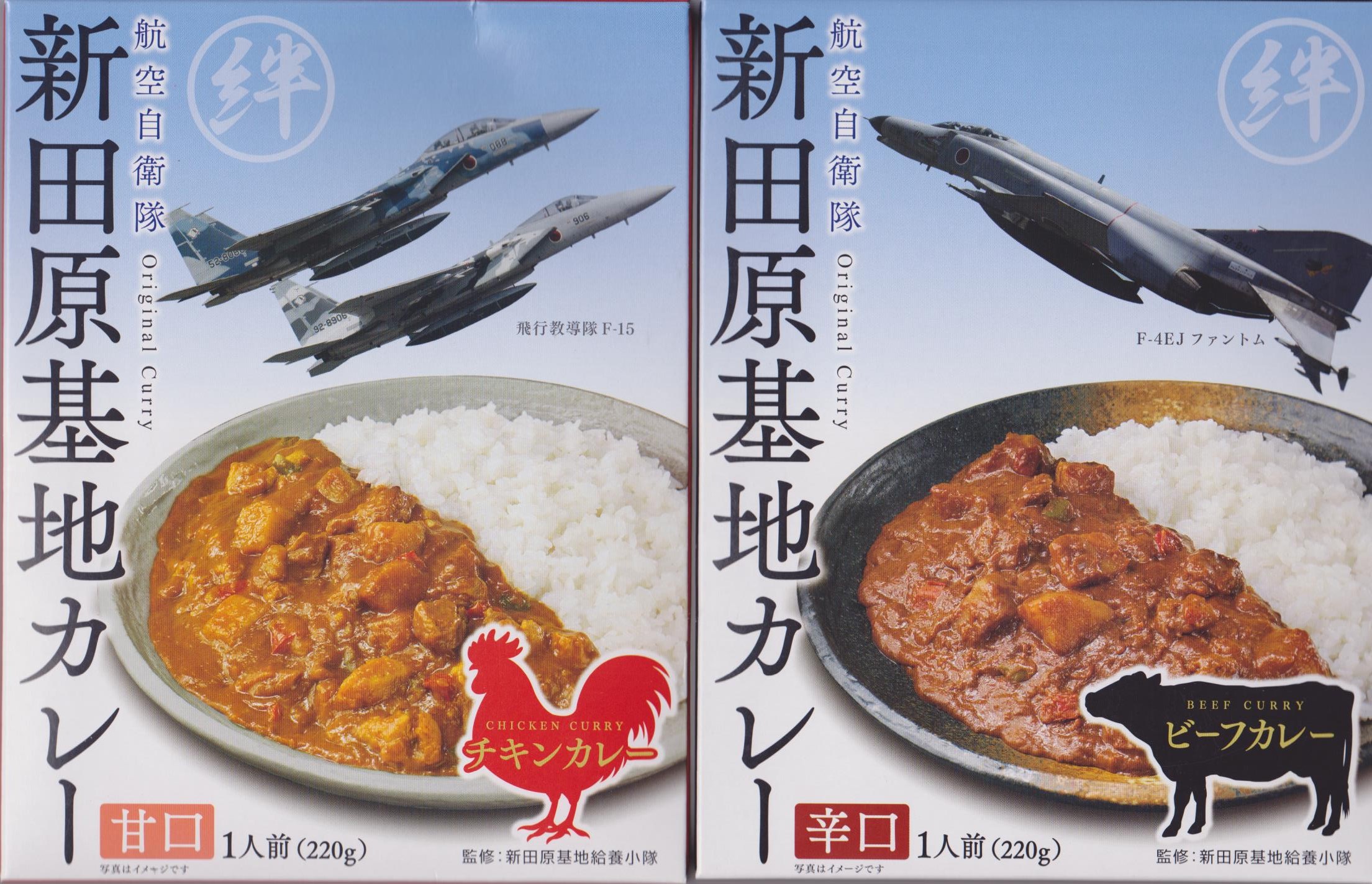
The curry I tried came in two flavors: spicy beef and mild chicken. The beef has a photo of an F-4EJ Phantom jet on the box, while the chicken is adorned with a pair of F-15s.
