




WIT Life #82: 春分の日
 Anecdote Article, Japan Trends, Translating/Interpreting, WIT Life
  Comments Off on WIT Life #82: 春分の日
WITLife is a periodic series written by professional Writer/Interpreter/Translator Stacy Smith (Kumamoto-ken CIR, 2000-03). She starts her day by watching Fujisankei’s newscast in Japanese, and here she shares some of the interesting tidbits and trends together with her own observations.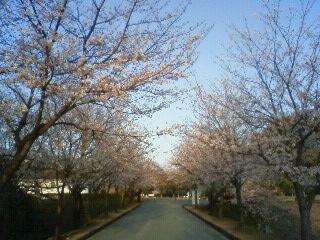
Happy 春分の日 (shunbun no hi) or Spring Equinox Day! Like as with the autumnal equinox, on this occasion the day and the night should be of equal length. The mere mention of spring makes me feel like I should be seeing flowers popping their heads out of the ground. Unfortunately, here in Michigan where I’m translating at a local law firm there is no sign of greenery, although the snow flurries we had all day yesterday were quite a sight! I heard we’re getting much better weather back home in NYC, and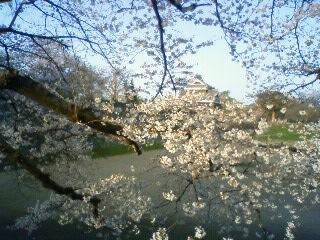 all I can say is I’m jealous…
In Japan spring seems to have sprung, as I have gotten reports of the sakura beginning to bloom around the Imperial Palace. I also just received an email from my former co-worker at the Kumamoto International Center who was kind enough to send pictures of the sakura down south (you can see Kumamoto Castle in the background). Enjoy and happy spring!
Jamie Graves: Food translator and waiter at Kajitsu NYC
Food & Drink, Reviews, Translating/Interpreting, Uncategorized Comments Off on Jamie Graves: Food translator and waiter at Kajitsu NYC
 By Steven Horowitz (Aichi-ken, 1992-94)
Just wanted to share that I had a really terrific dinner the other night at Kajitsu (www.kajitsunyc.com), a new and very unique Japanese restaurant on E. 9th Street in NYC, thanks to professional translator Jamie Graves (Saitama-ken, 2002-03) who not only waits tables in the intimate establishment but also translates the menu and other texts for Kajitsu and interprets for important clients.
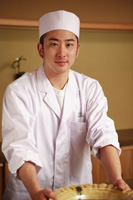
Kajitu's Chef Masato Nishihara
Jamie, who specializes in translations relating to food and cooking, explained to me a few months ago at a JETAA NY gathering that he was working at a restaurant that specializes in shojin cuisine, which as a non-foodie I can best describe as a sort of high-end, vegan kaiseki. The chef, Masato Nishihara, had worked at Kitcho, a very prestigious kaiseki cuisine restaurant in Kyoto before coming to New York to open Kajitsu.
I can’t remember exactly what I ate, but each course did really blow me away in terms of both flavors and creativity. Plus the soba dipping noodles may be the best in NYC. The menu changes every month, so apparently a number of regulars come back each month to sample the new menu.
The fare is not inexpensive. But it’s well worth it if you have a special occasion to celebrate (which I did!) Especially if you get a seat at the counter where you can watch Chef Nishihara prepare each course right front of you, including his zen-like tea ceremony approach to making the macha at the end of the meal. (According to Jamie, all chefs at Kitcho must study tea ceremony.)
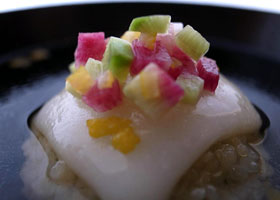
From the March "Spring" menu: Clear Soup with Sticky Rice Ball Mugwort, Rice Crackers.
Here’s a little additional background on Kajitsu from it’s website:
Kajitsu – “Fine Day”
Kajitsu means “fine day”, or “day of celebration” in Japanese. We have chosen the name Kajitsu hoping that a visit here will always be a special occasion for our guests.Shojin Cuisine
Shojin cuisine refers to a type of vegetarian cooking that originates in Zen Buddhism. Even though it does not use meat or fish, shojin is regarded as the foundation of all Japanese cuisine, especially kaiseki, the Japanese version of haute cuisine.
If you decide you have your own special occasion, make sure to say hi to Jamie and ask him all of your questions about the restaurant and the food. There’s lots to tell and lots to learn.
Kajitsu (www.kajitsunyc.com) is on E. 9th St between 1st Ave & Avenue A in New York City.
WIT Life #81: Japanese high school tuition
Anecdote Article, Article/Journalism, Japan Trends, Translating/Interpreting, WIT Life Comments Off on WIT Life #81: Japanese high school tuition
WITLife is a periodic series written by professional Writer/Interpreter/Translator Stacy Smith (Kumamoto-ken CIR, 2000-03). She starts her day by watching Fujisankei’s newscast in Japanese, and here she shares some of the interesting tidbits and trends together with her own observations.
There is a bit of a controversy brewing over implementation of one aspect of the DPJ’s Manifesto. This is the proposal of free tuition for high schools currently being debated in the Diet. Students have to pay to attend high school as Japanese education is only compulsory through junior high. The question here is whether North Korean schools in Japan (of which there are 10 and where about 2,000 students of both North Korean and South Korean nationality are enrolled) should be similarly subsidized considering that Japan imposes economic sanctions on North Korea and in light of the yet unresolved abduction issue.
PM Hatoyama is waffling on this issue, with him initially Read More
WITLife is a periodic series written by professional Writer/Interpreter/Translator Stacy Smith (Kumamoto-ken CIR, 2000-03). She starts her day by watching Fujisankei’s newscast in Japanese, and here she shares some of the interesting tidbits and trends together with her own observations.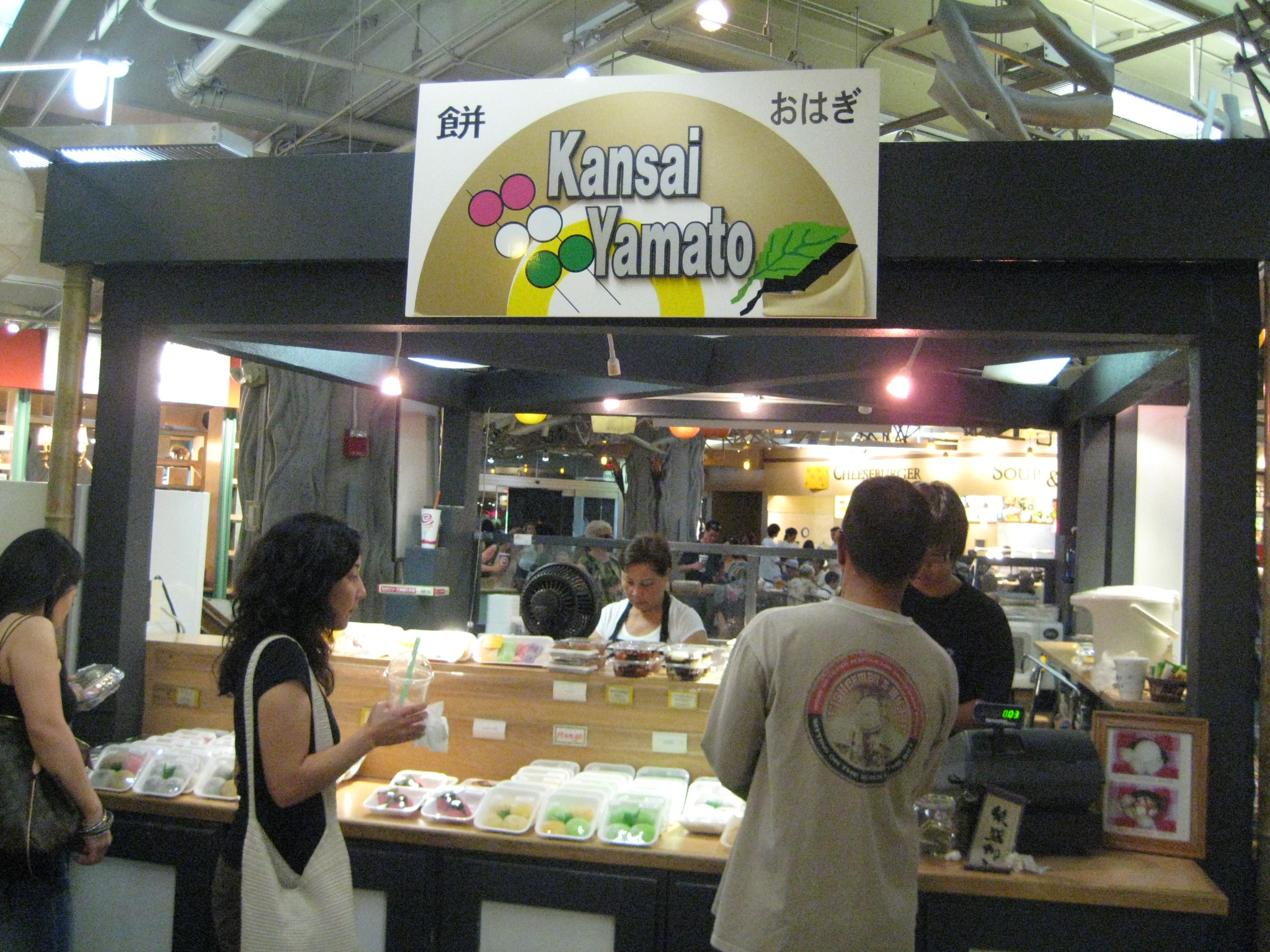
The group I was interpreting for this time returned to Japan yesterday, and I have been enjoying the last destination on our program: Hawaii! After a week of surf and sun I can’t say that I am particularly looking forward to leaving, but I suppose all good things must come to an end. One stop I knew I had to make while here was Kansai Yamato, a mochi maker located in the Ala Moana mall. It’s fun to watch them make and pack the mochi before your eyes at their small stall. Like the stores profiled in my recent writeup about wagashi in LA’s Little Tokyo, this establishment also has some pretty funky mochi flavors. When I went today, I counted 12 atypical varieties in addition to the standard ohagi, sakura mochi, kinako mochi, etc.
Some of the more un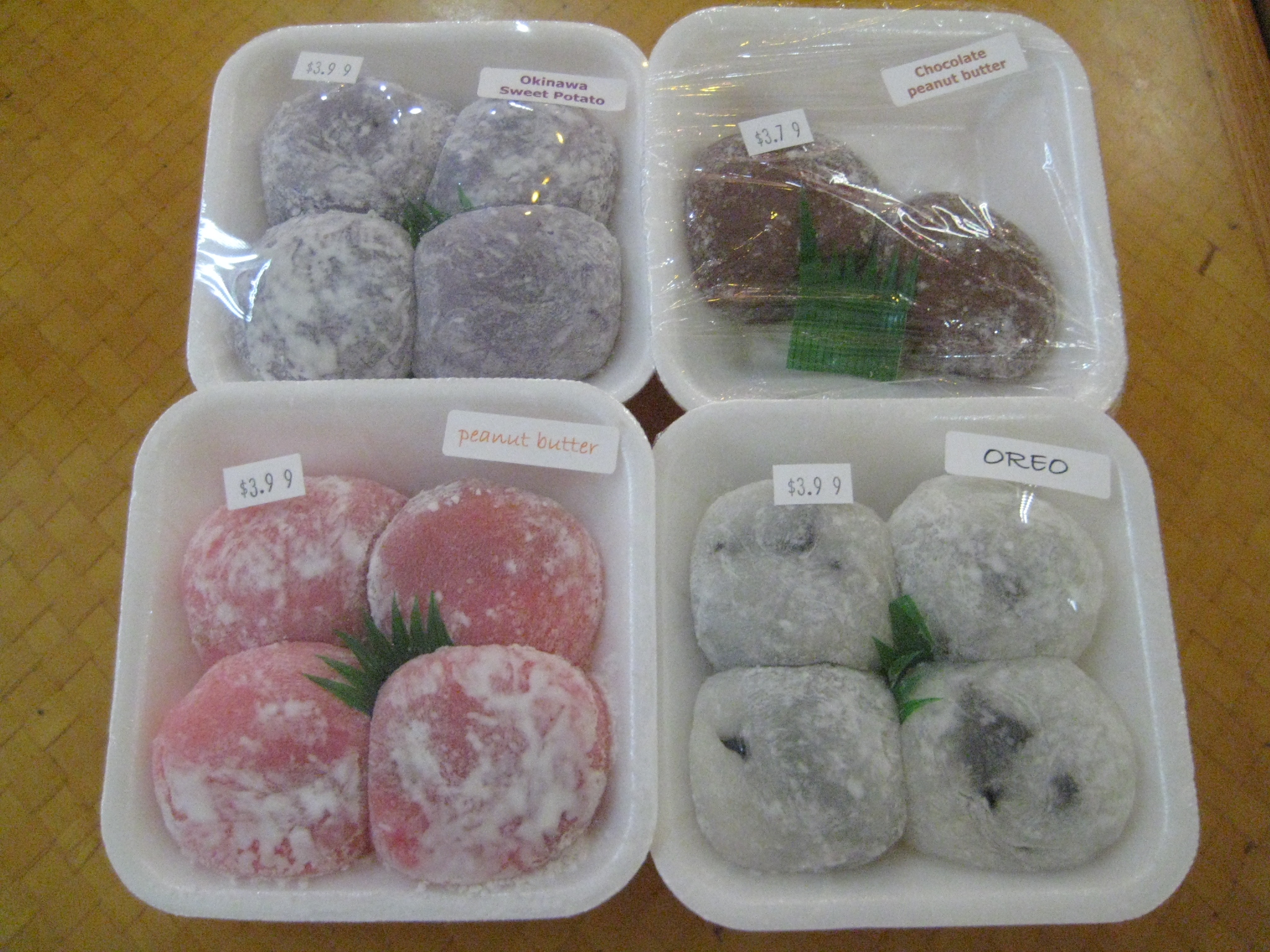 usual types were mango, honeydew and Hawaii gentei Kona coffee daifuku, but I wasn’t brave enough to try any of those. Instead I stuck with Read More
JET alum Chris Kennedy helps launch Tokyo branch of translation and localization co. Keywords Int’l
Career, Translating/Interpreting Comments Off on JET alum Chris Kennedy helps launch Tokyo branch of translation and localization co. Keywords Int’l
JET alum Chris Kennedy recently helped his company, translation and localization specialist Keywords International, set up a Tokyo branch.
Here’s the press release: http://www.gamasutra.com/view/pressreleases/55566/Keywords_International_Limited_Launches_Branch_Office_inTokyo.php
Chris added that, “Translation and localization are definitely fields that former JETs can get involved with, so if there is anything I could do to provide some information about the field, or anything similar, just let me know.”
Events: Translation Workshop in Japan
Translating/Interpreting, Writers Comments Off on Events: Translation Workshop in Japan
Are you living in Japan and looking to get into the translation and editing industry? The Society of Writers, Editors & Translators (SWET), a thirty-year old community of English wordsmiths in Japan, is hosting an event on art translation in March. If you’d like more information about SWET, please click here.
WHEN: Sunday, March, 7 2010 – 3:00~5:00 p.m.
WHERE: Kobe Centre Plaza Nishi-kan, 6F, Room 11 / http://www.kscp.co.jp/map/map.html
FEE: SWET & JAT members 1,000 yen/non-members 1,500 yen
RESERVE: kansai@swet.jp
ABOUT:
Translating literature related to Japanese art presents unique challenges. Not only are there issues of origin, as in the case of Buddhist deities, but
the presentation of traditional Japanese art has been targeted at a specific audience up to now, namely one that is educated and Japanese. Since the
language used to describe art can be difficult to read—as can the exhibition title itself at times—an English translation may be helpful not only to English readers but also to some native Japanese. Seen in this light, English translation in the art field can be invaluable tool to reach
new audiences, both domestic and international. This presentation will focus on technical issues related to translation, as well as the wider social
implications surrounding them.
Eric Luong is a full-time instructor at the Kyoto University of Art and Design, teaching English, art, and comparative culture. Originally from
Toronto, Canada, he works as a translator for the Hosomi Museum in Kyoto and as a freelancer specializing in Japanese art history.
WIT Life #79: After the testimony
Anecdote Article, Japan Trends, Translating/Interpreting, WIT Life Comments Off on WIT Life #79: After the testimony
WITLife is a periodic series written by professional Writer/Interpreter/Translator Stacy Smith (Kumamoto-ken CIR, 2000-03). She starts her day by watching Fujisankei’s newscast in Japanese, and here she shares some of the interesting tidbits and trends together with her own observations.
A thought-provoking article in Salon regarding Japanese reactions at home to President Akio Toyoda’s Congressional testimony and apology to dealers. It describes how the populace was moved by him getting choked up when addressing the latter, but also that the Japanese can be fickle in their acclaim for someone. I found it interesting as I am currently traveling as an interpreter for a seven-person group of political aides, and they are overwhelming in their opinion that Japan is getting the short end of the stick regarding this situation.
At one dinner they expressed difficulty in understanding Read More
New England JETAA Career Workshop: “Marketing Yourself in a Tough Economy” – March 2
Career, Events, JETAA Chapters, Networking, Translating/Interpreting Comments Off on New England JETAA Career Workshop: “Marketing Yourself in a Tough Economy” – March 2

New England JETAA Career Workshop: “Marketing Yourself in a Tough Economy”
Make sure to RSVP to president [at] nejetaa.com!
When: Tuesday, March 02, 3:00PM – 6:00PM (This coming week!)
Where: Downtown Crossing, Borders Bookstore, Robert M. Morgan Conference Room
Map: Borders Boston Map (near Downtown Crossing T station): http://bit.ly/%20BordersDTX
Cost: Free! (There will also be some free food)
Highlights:
We will get a pep talk from Professor Ian Condry of MIT about how to use your JET experience to further your career.
We will have a discussion with people in several different industries in which you may have interest:
*Translation
*Academia
*Teaching
*Entrepreneurial/ Non-profit
*Biotechnology
There will be a resume workshop. Bring some copies of your resume to trade with others and help each other out! The more eyes you have looking at your resume, the more ways you’ll be able to improve it. We will also have a discussion on resume dos and don’ts.
We will adjourn to a nearby bar/restaurant afterward for informal networking and relaxing. This is a great way to meet new people and
discuss your career.
Finally, for those who cannot attend the event but have some career-related wisdom/advice they would like to pass on, please send an email to webmaster [at] nejetaa.com. We’ll make sure to share your comments with our attendees at the end of the workshop.
Here’s your chance to get some JET-specific advice in your quest to career-up!
Thanks for your attention, and we look forward to seeing you there!
*************************
WITLife is a periodic series written by professional Writer/Interpreter/Translator Stacy Smith (Kumamoto-ken CIR, 2000-03). She starts her day by watching Fujisankei’s newscast in Japanese, and here she shares some of the interesting tidbits and trends together with her own observations.
I just started an assignment as an interpreter for a delegation of young political leaders from Japan, divided about evenly between members of the LDP and the DPJ as well as one journalist. Over our first dinner tonight it was interesting to hear their respective viewpoints regarding various issues, especially ones that are personal to them. For example, one DPJ rep and one LDP rep were having a friendly debate regarding day care. Both of these men have wives who work and 3-year old daughters, and as they live in the Tokyo area child care options are limited. There are not enough facilities to meet current needs, and those that exist are deluged by requests leading to long waiting lists.
As part of the Manifesto, the DPJ has proposed the implementation of a 子供手当て (kodomo teate) of 26,000 yen per month to provide financial aid to those who have a child. The LDP, on the other hand, does not advocate this and thinks this money should instead be put toward Read More
WIT Life #77: Breakdown of the bow
Anecdote Article, Japan Trends, Translating/Interpreting, Uncategorized, WIT Life Comments Off on WIT Life #77: Breakdown of the bow
WITLife is a periodic series written by professional Writer/Interpreter/Translator Stacy Smith (Kumamoto-ken CIR, 2000-03). She starts her day by watching Fujisankei’s newscast in Japanese, and here she shares some of the interesting tidbits and trends together with her own observations.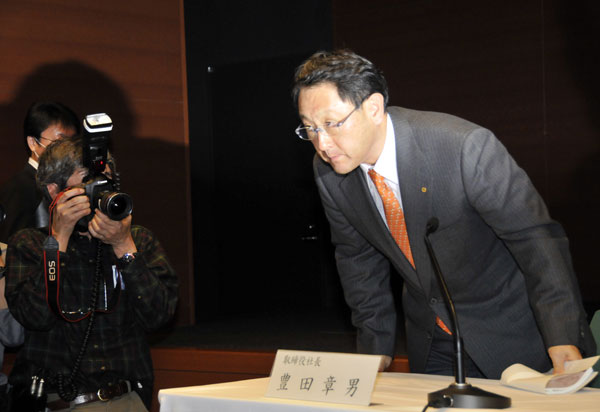
An interesting article this week in Slate analyzed the intricacies of the Japanese bow and its various gradations. It was in reference to the apology by Toyota President Akio Toyoda at a press conference last week regarding the company’s massive vehicle recall. His chosen bow was a keirei, or 30-degree tilt to show respect, though some say he should have opted for a saikeirei, or full 45- to 90-degree bow intended to show the greatest veneration or humility.
With the amount of damage control that Toyota needs at this point, perhaps it is true that Toyoda should have overshot with a deeper bow. However, critics were likely placated by yesterday’s news that Toyoda will testify before Congress regarding the recalls, something he had previously said he had no intention of doing. The threat of being subpoenaed by investigators seemed to have persuaded him to accept the formal invitation issued by the House Oversight and Government Reform Committee that followed an informal one. It remains to be seen how reassuring his testimony will be to the American public.
Translation question: “Pocket dial” in Japanese?
Translating/Interpreting Comments Off on Translation question: “Pocket dial” in Japanese?
Does a term in Japanese exist for “pocket dial”? (i.e., to accidentally dial someone because a button is inadvertently pushed while your cell phone is in your pocket)
You can share any responses to the comments section of this post.
WIT Life #76: Mochi mochi appeal and V-Day marketing
Anecdote Article, Article/Journalism, Japan Trends, Translating/Interpreting, WIT Life Comments Off on WIT Life #76: Mochi mochi appeal and V-Day marketing
WITLife is a periodic series written by professional Writer/Interpreter/Translator Stacy Smith (Kumamoto-ken CIR, 2000-03). She starts her day by watching Fujisankei’s newscast in Japanese, and here she shares some of the interesting tidbits and trends together with her own observations.
Recently the news ran a piece about the popularity of Japanese foods that are mocchiri, meaning heavy in a way similar to mochi. Evidently it is a Kansai-ben term that combines mochi mochi shita, sticky or springy, and dosshiri shita, heavy or solid. The top three reasons consumers cited for liking mocchiri goods were their texture, the ability to make them feel full and the attraction to items with mocchiri or mochi mochi in the name. In addition, they seem to provide a sense of comfort.
Many manufacturers are capitalizing on this mood by increasing their products that contain such descriptors. For example, a taiyaki maker with Read More
****************************
WITLife is a periodic series written by professional Writer/Interpreter/Translator Stacy Smith (Kumamoto-ken, 2000-03). She starts her day by watching Fujisankei’s newscast in Japanese, and here she shares some of the interesting tidbits and trends together with her own observations.
In Japan measures are being taken to address the phenomenon of 畳離れ (tatami banare), or moving away from tatami. Many of us probably saw it when we lived over there, as friends’ houses were largely Western style except for the token 和室 (washitsu), or Japanese style-room. In order to make sure this integral part of the culture does not disappear, a certification has been created for eligible tatami craftsman which gives them the title of “doctor.”
One such craftsman in the prefecture of Tochigi, who estimates that over the last 29 years he has worked on  more than 120,000 mats, received his certification just last year. He is now called a 「畳ドクター」 (tatami doctor), a designation that he admits he is not quite used to. However, like an MD he Read More
WIT Life #74: Japan Society Food Forum
Anecdote Article, Article/Journalism, Japan Trends, Translating/Interpreting, WIT Life Comments Off on WIT Life #74: Japan Society Food Forum
WITLife is a periodic series written by professional Writer/Interpreter/Translator Stacy Smith (Kumamoto-ken, 2000-03). She starts her day by watching Fujisankei’s newscast in Japanese, and here she shares some of the interesting tidbits and trends together with her own observations.
Last night I went to an event at Japan Society entitled “Wasabi on a Hot Dog?” which discussed the incorporation of Japanese ingredients and cooking styles into non-Japanese food. The speakers were Michael Anthony, executive chef of Gramercy Tavern, and Craig Koketsu, Executive Chef at Park Avenue Autumn/Winter, and the discussion was moderated by NYT Dining section reporter Julia Moskin. They both spoke of the importance of seasonality as a Japanese concept that they have introduced, which is said to be revolutionary but really is at the root of all cooking. It was interesting to hear about Anthony’s time training with a female chef at a French bistro in Tokyo, and of Koketsu growing up in California as a third-generation Japanese-American and how this has affected his work.
However, by far the greatest contribution of the evening was the off the cuff remarks Read More
WITLife is a periodic series written by professional Writer/Interpreter/Translator Stacy Smith (Kumamoto-ken, 2000-03). She starts her day by watching Fujisankei’s newscast in Japanese, and here she shares some of the interesting tidbits and trends together with her own observations.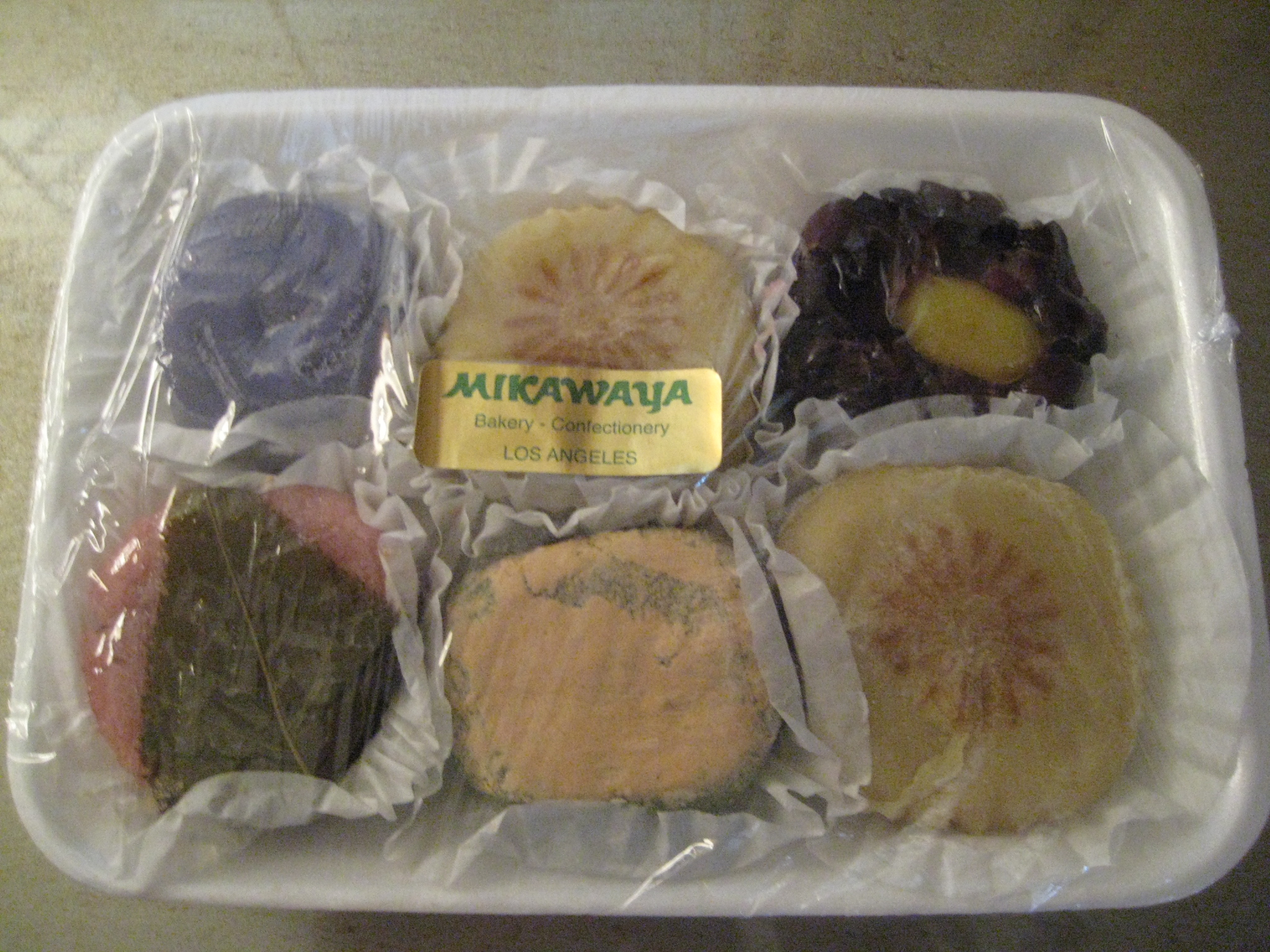
Nice to be back in chilly New York, but a bit of an adjustment after the final stop on my business trip last week being balmy LA. I always love going to this southern California destination for the chance to visit Little Tokyo! Besides great cultural institutions such as the Japanese American National Museum and the Geffen MOCA, it has delicious mochi flavors that I am yet to find here in the city. My first two stops when in town are always the sweet shops carrying these creations, Mikawaya in the Japanese village and Fugetsu-do on the main drag.
The more expansive Mikawaya carries a greater selection of mochi, including Read More
