




JQ Magazine: ‘Angel’s Egg’ 4K Restoration: A Reverie Reborn in Dolby Cinema
 Uncategorized
  Comments Off on JQ Magazine: ‘Angel’s Egg’ 4K Restoration: A Reverie Reborn in Dolby Cinema
By JQ magazine editor Justin Tedaldi (CIR Kobe-shi, 2001-02) for JQ magazine. Justin has written about Japanese arts and entertainment for JETAA since 2005. For more of his articles, click here.
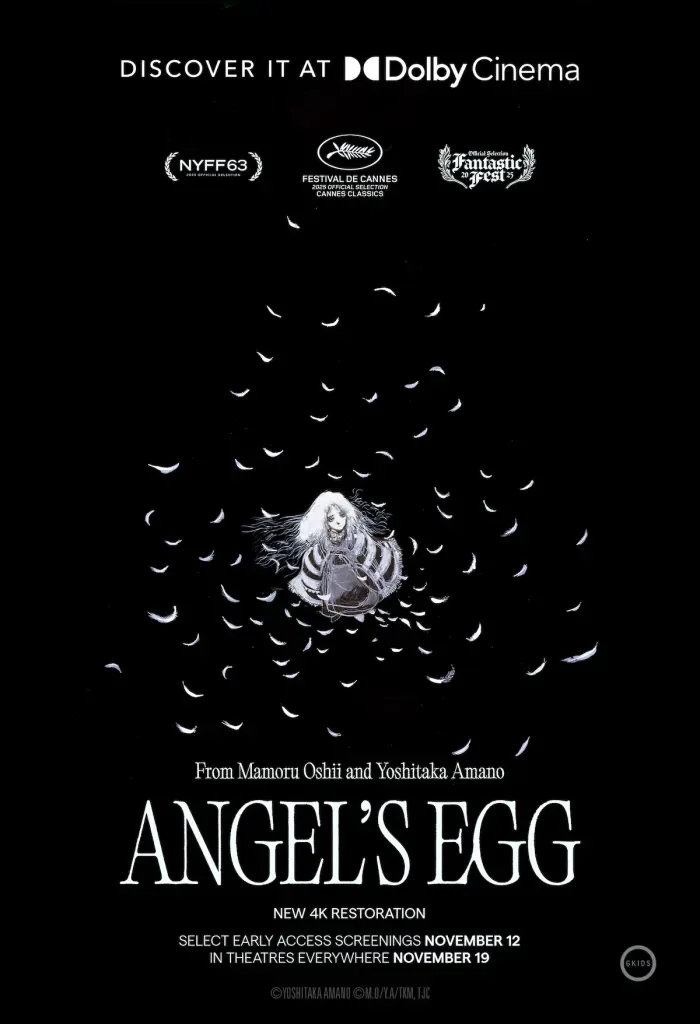
Mamoru Oshii’s Angel’s Egg is one of those films that people talk about in a lowered voice, as if it were a mystery that might vanish if confronted too directly. It is a film of austere beauty and radical quiet—70-odd minutes of shadowed corridors, abandoned cathedrals, fossilized leviathans, and two nameless travelers: a girl who cradles a giant egg as if it were her entire future, and a boy who cannot stop asking what’s inside.
Released in 1985 and long unavailable through official channels in North America, Angel’s Egg has gathered its legend through bootleg tapes, festival whispers, and the occasional late-night screening. Now, four decades on, it returns today (Nov. 19) in theaters nationwide in a new 4K restoration supervised by Oshii and presented nationwide by GKIDS, which included Dolby Cinema early access engagements before the general theatrical rollout. For a film that has lived so much of its life in the margins, the chance to experience it in a calibrated premium room with Dolby Vision and Atmos support feels almost paradoxical—and absolutely right.
This anniversary run isn’t just a new coat of paint. The restoration—which debuted on the 2025 festival circuit and now arrives coast to coast—was reconstructed from the original 35mm materials, with a Dolby Cinema version created alongside a rebuilt soundtrack that expands the original mono presentation into 5.1 and Dolby Atmos options. That last detail may raise eyebrows for purists, but in practice the approach respects the film’s fundamental quietude; it simply gives the silence more dimensions.
To remember Angel’s Egg in the context of anime history is to remember how unstandardized the medium felt in the mid-1980s. It premiered in a decade when the OVA market was exploding and when directors like Oshii and artists like Yoshitaka Amano (Final Fantasy, Vampire Hunter D) were testing the boundaries of animation’s visual grammar. The film’s surface—textured stone, dripping water, the faint pulse of bio-mechanical curiosities—speaks in symbols rather than exposition. There is barely any dialogue. The camera (or rather, Oshii’s implied lens) prefers long lateral moves, as if pacing the nave of an endless church, and the compositions are arranged like prints: light carved out of darkness, characters dwarfed by architecture, the egg always nestled in white cloth at the frame’s center.

When viewers call the film “obscure,” they don’t just mean it’s hard to find; they mean it resists the usual ways we talk about plots. If Oshii’s Ghost in the Shell (1995) became the textbook for cyber-philosophy in animation, Angel’s Egg is the poem scrawled in the margins. The imagery anticipates later techno-gothic strains of anime, but without the anchor of a conventional narrative. In this sense, its return to theaters matters historically: one rarely sees repertory engagements for 1980s anime outside of a handful of well-known titles, and the film’s own distributors underscore how rarely screened it’s been in any official capacity. Seeing it at scale isn’t a curiosity; it’s an act of historical restoration.
Oshii’s collaboration with Amano yields a film that looks simultaneously medieval and futuristic. Statues of saints are strapped to rolling platforms and carted through fog-wet streets; hunters hurl harpoons at shadow-fish that pass across stone facades like projected ghosts; the girl and the boy ride a gargantuan, half-submerged machine that could be a cathedral or a vessel or a fossilized beast. The film’s religious aura—crosses, chalices, a literal ark—threads through its central question: does faith require the egg to remain closed, or the courage to break it? The boy, carrying a rifle and speaking in riddles, keeps needling: “What’s inside?” The girl maintains her vigil.
What’s remarkable, especially on a big screen, is how the movie makes time feel tactile. Shots hold until your breathing matches the drip of water; the rhythm of footsteps through an empty hall becomes as musical as Kenji Kawai’s glassy, ascetic score. And then, at intervals, Oshii punctures the stillness with kinetic episodes: a barrage of thrown spears; a dissolve-drunk montage of monuments and bones; an unforgettable nocturne of the boy swinging the egg like a hammer. These moments carry a kind of moral vertigo that’s hard to feel at home; they need the dark, the scale, the sense that the film surrounds you.
Read MoreJQ Magazine: Nippon in New York – ‘Ninja Scroll’ Revival, ‘Cowboy Bebop,’ ‘Demon Slayer’ In Concert
Article/Journalism, Events, Film, JQ Magazine, Music Comments Off on JQ Magazine: Nippon in New York – ‘Ninja Scroll’ Revival, ‘Cowboy Bebop,’ ‘Demon Slayer’ In Concert
By JQ magazine editor Justin Tedaldi (CIR Kobe-shi, 2001-02). Justin has written about Japanese arts and entertainment for JETAA since 2005. For more of his articles, click here.
As the summer winds fade into fall colors, the weeks ahead are shaping up with these exciting events, ready to be enjoyed after Labor Day.
This month’s highlights include:
Sept. 11-12, 15-17
Various theaters
Various prices
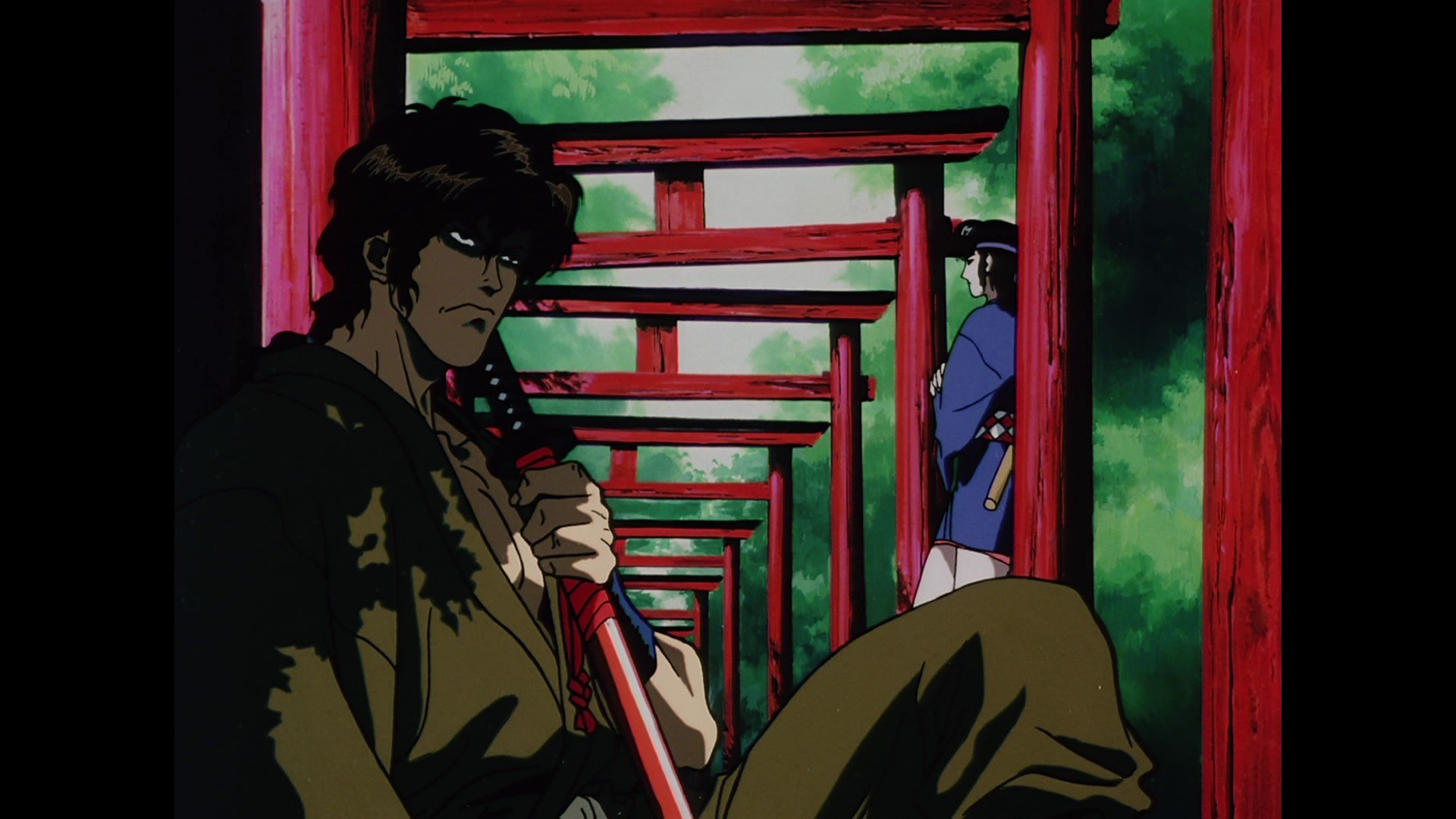
Anime Expo Cinema Nights Presents the classic anime Ninja Scroll’s 30th anniversary with an all-new exclusive interview with director Yoshiaki Kawajiri! A mysterious vagabond sets out on a journey to confront his past. Little does he know he is up against a demonic force of killers, with a ghost from his past as the leader. When Jubei saves a young ninja woman from the unthinkable, he assumes that’s the end of it. To his surprise, it’s only just the beginning. Together, the two investigate the mysterious deaths of an entire village which uncovers a conspiracy of demonic proportions! Getting closer to the truth, the demonic forces will stop at nothing to silence Jubei and his companion for good!

Sept. 11-15, 17-19
Japan Society, 333 East 47th Street
$44, $58
Dogugaeshi, the award-winning phenomenon by genius puppeteer Basil Twist, is back! Born as a Japan Society commission, this ever-innovative piece now celebrates its 20th anniversary. Enter a mystical world, where a mysterious white fox shepherds you through past and present Japan. Inspired by a disappearing traditional stage mechanism from Japan’s Awa region called dogugaeshi, Twist has created fusuma screens with stunning painted imagery that dance, slide, flip, conceal and reveal to pull audiences deeper into a brain-bending optical illusion. Dogugaeshi is a cross-cultural collaboration with master shamisen player and experimental musician Yumiko Tanaka, whose multi-layered music collage embraces everything from traditional tunes to popular songs.

Sept. 12-13, 7:00 p.m.
Cowboy Bebop LIVE Presented by Bebop Bounty Big Band
Gramercy Theatre, 127 East 23rd Street
From $71.55
Cowboy Bebop LIVE is a complete multimedia experience highlighting the story of critically acclaimed anime, Cowboy Bebop, on the big screen accompanied by live music from the soundtrack performed by the Bebop Bounty Big Band. This 14-piece jazz ensemble features world-class musicians with members from the world famous Glenn Miller Orchestra, the Jazz Orchestra at Dr. Phillips Center, and the Walt Disney Company. This show is a completely one-of-a-kind production specifically designed to deliver an experience anime fans have never had before. Travel the solar system with anime’s most iconic soundtrack at Cowboy Bebop LIVE!
Read MoreKrewe of Japan Podcast E16 – The Greatest Anime of All-Time pt. 2: The Golden Age (1990-2010)
Audio Comments Off on Krewe of Japan Podcast E16 – The Greatest Anime of All-Time pt. 2: The Golden Age (1990-2010)
Posted by: Doug Tassin (Fukushima-Ken ALT, 2007-2010 & Krewe of Japan Podcast Co-Host)
This week on the Krewe of Japan Podcast…
The Krewe takes a trip down memory lane to reminisce about what many consider to be the “Golden Age” of Japanese animation, 1990-2010. Nigel, Jennifer, & Doug talk some prolific titles like Dragon Ball Z, Sailor Moon, Naruto, & One Piece, while paying respects to some non-mainstream (but popular) shows. Packed to the brim with loves, hates, and hot takes, they take you on a fun audio journey exploring shows they loved growing up and how the ingestion and perception of anime changed with the world around it.
The Krewe of Japan Podcast is a weekly episodic podcast sponsored by the Japan Society of New Orleans. Check them out every Friday afternoon around noon CST on Apple, Google, Spotify, Amazon, and Stitcher. Want to share your experiences with the Krewe? Or perhaps you have ideas for episodes, feedback, comments, or questions? Let the Krewe know by e-mail at kreweofjapanpodcast@gmail.com or on social media (Twitter: @kreweofjapan, Instagram: @kreweofjapanpodcast, Facebook: Krewe of Japan Podcast Page, & the Krewe of Japan Youtube Channel). Until next time, enjoy!
I’ll Make It Myself!: Katsudon Fatale for Two
Food & Drink, I'll Make It Myself, Writers Comments Off on I’ll Make It Myself!: Katsudon Fatale for Two
LM (CIR Ishikawa-ken, Anamizu, 2009-11) is the editor of The Ishikawa JET Kitchen: Cooking in Japan Without a Fight. Ze works in international student exchange; writes I’ll Make It Myself!, a blog about food culture in Japan and the US; curates The Rice Cooker Chronicles, a series of essays by JETs and JET alumni on the theme of cooking/eating and being alone in Japan; and admins The JET Alumni Culinary Group on LinkedIn.

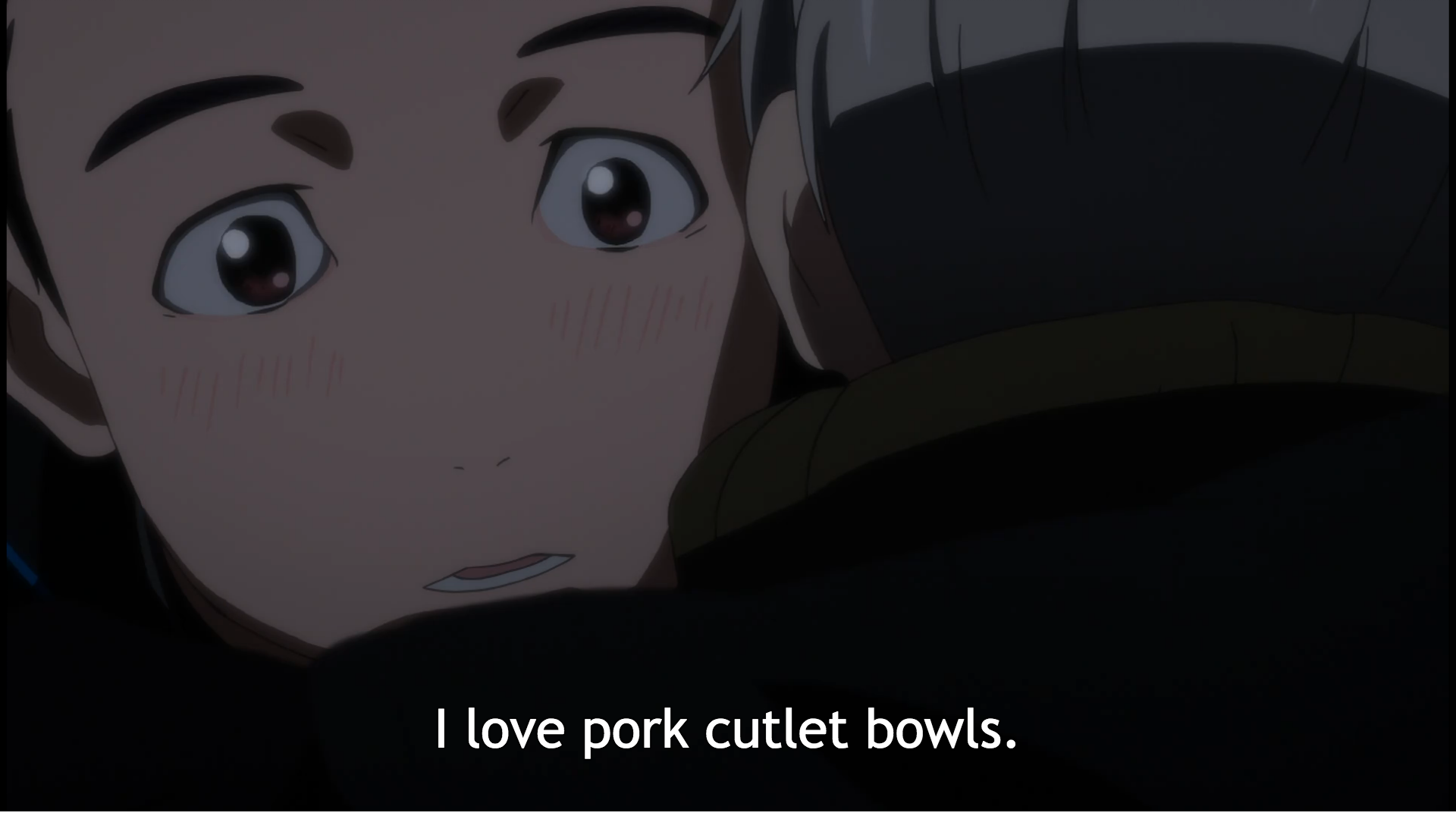
Channel your inner katsudon fatale with this recipe, plus a review of hit anime Yuri!!! on Ice.
I’ll Make It Myself!: Uranus Planet Power, Make Up! (Sailor Moon Cake)
Blogs, Food & Drink, I'll Make It Myself, Writers Comments Off on I’ll Make It Myself!: Uranus Planet Power, Make Up! (Sailor Moon Cake)
L.M. Zoller (CIR Ishikawa-ken, Anamizu, 2009-11) is the editor of The Ishikawa JET Kitchen: Cooking in Japan Without a Fight. Ze works in international student exchange; writes I’ll Make It Myself!, a blog about food culture in Japan and the US; curates The Rice Cooker Chronicles, a series of essays by JETs and JET alumni on the theme of cooking/eating and being alone in Japan; and admins The JET Alumni Culinary Group on LinkedIn.
The 2014 Fandom Birthday Cake Season kicks off with a little something from Sailor Moon:

Ghibli’s 借りぐらしのアリエッティ (aka “The Secret World of Arrietty”) being released in US Feb 2012!
Events, Film, Uncategorized, Video Comments Off on Ghibli’s 借りぐらしのアリエッティ (aka “The Secret World of Arrietty”) being released in US Feb 2012!
Carolyn Brooks (Ishikawa-ken, Kanazawa, 2006-11) is co-author of the blog MadSilence–a cross-cultural blog written with her father–and a current culture/education related job-seeker in the NY area available for full-time or consulting work.
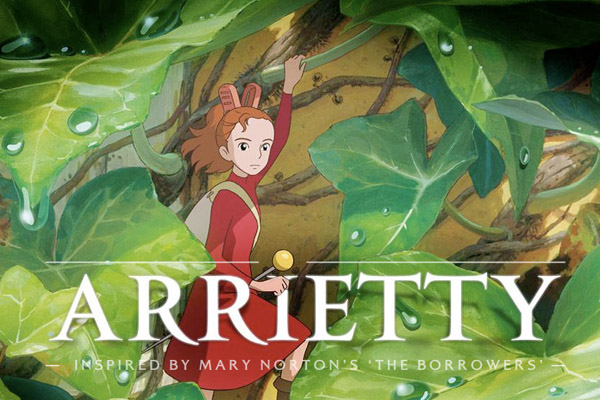
I was so excited when I saw a friend post on Facebook this morning that the most recent Hayao Miyazaki and Studio Ghibli film, “The Secret World of Arrietty” will be in theaters in the US in February of 2012! I was lucky enough to see it in theaters in July of 2010, and I was blown away. You can watch the Japanese trailer here.
The story is based off the classic children’s novel “The Borrowers” by Mary Norton. Essentially, the Borrowers are kobito, literally “tiny people,” who live by borrowing the things they need from humans. They live under the floorboards or close to human’s houses so they can sneak in when no-one’s around to borrow what they need. The main characters are Arrietty and her family, the last remaining Borrower family in their area. One day, while borrowing sugar from the house, Arrietty is seen by the sick boy who’s come to visit the house for the summer. What will happen now that a human has seen her? The adventure begins!
Studio Ghibli films are always beautifully produced, but I thought that Arrietty was even a step above their normal production. The scenery from the garden around the house was exquisite… every leaf, flower and dew drop was so fresh and colorful that when you watch it on the big screen you truly feel you are the size of a Borrower, walking though the jungle of an overgrown garden. The soundtrack was equally amazing – ethereal and quirky, performed by the immensely talented French singer and harpist Cecile Corbel. I’m not one for buying movie soundtracks, but after I saw the movie I immediately went to the closest Tower Records and bought the “Kari-gurashi SONGBOOK” soundtrack, which has all of the best themes and songs from the movie on it. Check out the main theme here.
Disney will be releasing Arrietty in February. Although I’m a die-hard subtitle fan, I’ve been really impressed by Disney’s translation and dubbing for the other Ghibli movies. They bring in top-notch actors and really smooth out the dialogue while keeping close to the original meaning and feeling of the Japanese. Translation of movies has got to be one of the hardest jobs ever – it’s not just language but a whole different set of cultural cues that you’re translating for another audience. Arrietty will be voiced by Bridget Mendler and supported by a great cast including Carol Burnett, Amy Poehler, and Will Arnet.
I know that most of us have seen or heard of Miyazaki’s movies before – perhaps Studio Ghibli’s movies are part of what drew us to Japan. Movies, anime, and traditional artwork were the things that got me interested in Japan in the first place! What are some of your favorite Ghibli movies? Mine include:
Porco Rosso (紅の豚 Kurenai no Buta), the Casablanca-esque story of a mysteriously enchanted pig-cum-bounty hunter who swoops around the Adriatic saving school children and the hearts of beautiful cafe owners…
My Neighbor Totoro (となりのトトロ Tonari no Totoro), a story of two little girls who move to a new house in the country with their father. Strangely enough, the house is inhabited by an amazing array or spirits that can only be seen by children, including the large, fuzzy, and toothy monster called Totoro and his friend the Cat Bus.
Howl’s Moving Castle (ハウルの動く城 Hauru no Ugoku Shiro), based on the Diana Wynne Jones YA book of the same name, is a light tale of love and magic with a twist of Miyazaki’s anti-war messages…
