




I’ll Make It Myself! — Travel Checklist: Local Foods in Hida-Takayama, Part 2
 Blogs, Food & Drink, I'll Make It Myself, Travel/Tourism, Writers
  Comments Off on I’ll Make It Myself! — Travel Checklist: Local Foods in Hida-Takayama, Part 2
L.M. Zoller (CIR Ishikawa-ken, Anamizu, 2009-11) is the editor of The Ishikawa JET Kitchen: Cooking in Japan Without a Fight. A writer and translator for The Art of Japan: Kanazawa and Discover Kanazawa, ze also writes I’ll Make It Myself!, a blog about food culture in Japan.
Travel Checklist: Local Foods in Hida-Takayama, Part 2
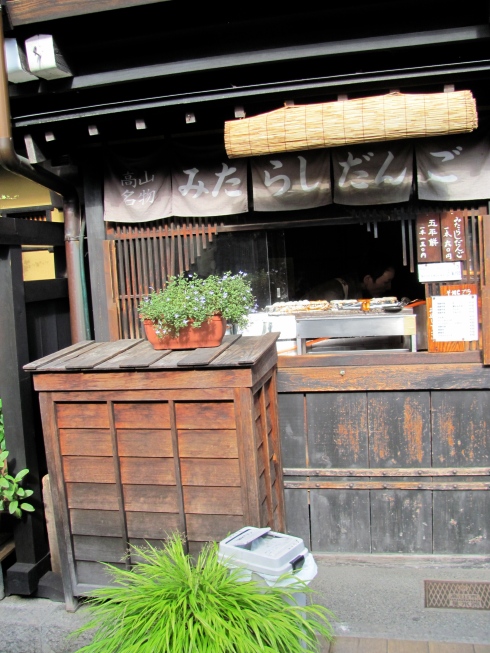
To recap– In September, a friend and I traveled to Takayama, about 3 hours from Kanazawa. Located in Gifu near the border of Nagano, the old towns of Hida (飛騨) and Takayama (高山) are a food tourist’s paradise. Since the town is quite small, most of these foods can be found in stands or restaurants near Takayama Station and nearby morning markets.
CLICK HERE to read the full post.
The Rice Cooker Chronicles: “My Rice Ball World” by Meredith Hodges-Boos
Anecdote Article, Food & Drink, Rice Cooker Chronicles, Writers Comments Off on The Rice Cooker Chronicles: “My Rice Ball World” by Meredith Hodges-Boos
The Rice Cooker Chronicles is a series of essays by JETs and JET alumni on the theme of cooking/eating and being alone in Japan. The brain-child of JETwit founder Steven Horowitz (Aichi-ken, Kariya-shi, 1992-94) (and inspired by the book Alone in the Kitchen with an Eggplant), this series is curated by L.M. Zoller (CIR Ishikawa-ken, Anamizu, 2009-11), the editor of The Ishikawa JET Kitchen: Cooking in Japan Without a Fight. A writer and translator for The Art of Japan: Kanazawa and Discover Kanazawa, ze also writes I’ll Make It Myself!, a blog about food culture in Japan.
New submissions always welcome. Just e-mail it to Leah at jetwit [at] jetwit.com.
******
“My Rice Ball World”
by Meredith Hodges-Boos (ALT, Ehime-ken, 2003-2005). Please visit http://meredithhodgesboos.blog.com/ for more essays on her time in Japan and current literary projects.
I dragged my tired body into the entryway and found just enough energy to pry off my shoes. The door rattled on the track as I slumped into the main room of the house my husband and I shared as Assistant Language Teachers. “I’m home,” I muttered to Greg and I blinked into the bright light of the room. The glare and blare of the used Playstation we’d bought at Hard Off lit up the tatami in a rainbow of colors.
I’ll Make It Myself – Travel Checklist: Local Foods in Hida-Takayama, Part 1
Blogs, Food & Drink, I'll Make It Myself, Writers Comments Off on I’ll Make It Myself – Travel Checklist: Local Foods in Hida-Takayama, Part 1
L.M. Zoller (CIR Ishikawa-ken, Anamizu, 2009-11) is the editor of The Ishikawa JET Kitchen: Cooking in Japan Without a Fight. A writer and translator for The Art of Japan: Kanazawa and Discover Kanazawa, ze also writes I’ll Make It Myself!, a blog about food culture in Japan.
Travel Checklist: Local Foods in Hida-Takayama, Part 1
In September, a friend and I traveled to Takayama, about 3 hours from Kanazawa. Located in Gifu near the border of Nagano, the old towns of Hida (飛騨) and Takayama (高山)are a food tourist’s paradise. Since the town is quite small, most of these foods can be found in stands or restaurants near Takayama Station and nearby morning markets.
Hôba Yaki Miso (朴葉味噌)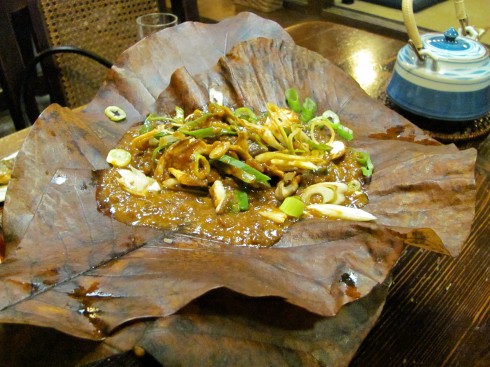
CLICK HERE to read the full post.
Sushi and Sake Magazine seeks JET writing
Writers Comments Off on Sushi and Sake Magazine seeks JET writing
Via JET alum Audrey Shiomi (CIR Miyagi-ken, Sendai-shi, 1999-2001):
“Are you a former/current JET with a story to tell a greater audience? Here’s your opportunity! Sushi & Sake is a monthly publication which circulates throughout Southern California. Space in the magazine is reserved each month for an article written by a JET (past or present) about his/her experiences in Japan.
The article should be 450-500 words on any topic you choose. Ideally, it’s best to focus on a particular topic as opposed to doing one big summary of your life in Japan. If you’re interested, email Audrey at pirikara [at] gmail.com Thanks!”
WIT Life #184: NYT mag Haruki Murakami profile and yaeba
Translating/Interpreting, Uncategorized, WIT Life, Writers Comments Off on WIT Life #184: NYT mag Haruki Murakami profile and yaeba
******************************
WIT Life is a periodic series written by professional Writer/Interpreter/Translator Stacy Smith (Kumamoto-ken CIR, 2000-03). She starts her day by watching Fujisankei’s newscast in Japanese, and here she shares some of the interesting tidbits and trends together with her own observations.
This weekend’s NYT featured two interesting Japan articles in the magazine and Sunday Styles section. The former features the country’s living cultural treasure novelist Haruki Murakami, whom the article’s author spends time with in Tokyo to dissect his newest book 1Q84 as well as his older works.

The latter article discusses the popularity of 八重歯 (yaeba), or double teeth that look that fangs (aka “snaggleteeth”). Apparently this fashion calls not for perfect smiles, but unstraight teeth. Women are asking dentists to affix plastic fronts to their real teeth to create artificial yaeba, as shown here in the picture.
Upon asking two young Japanese women who were visiting the city about yaeba, they said it was the first they had heard of it. I’ll see what further informal surveys reveal about whether this is a real trend, or just something being sensationalized by the media.
Articles by JET journalist Patrick St Michel featured in The Atlantic
Article/Journalism, Cultural Outreach, Japan Trends, Music, Notable JET Alums, Writers Comments Off on Articles by JET journalist Patrick St Michel featured in The Atlantic
Current Mie JET Patrick St. Michel has two articles currently featured in The Atlantic online.
- “The 48 Japanese Schoolgirls Aiming to Take Over the World” – The global ambitions of J-Pop group AKB48
- “How Korean Pop Conquered Japan”
Click here to read other writings by Patrick featured on JETwit.
Return to Tohoku: Update 10.24.11
Article/Journalism, Blogs, Earthquake Tsunami, Japan Local, Notable JET Alums, Return on JET-vestment, Travel/Tourism, Writers Comments Off on Return to Tohoku: Update 10.24.11
***************
Here are updates from a few more of the 20 Tohoku region JET alumni selected by the Ministry of Foreign Affairs (MOFA) to return to their town to both engage in volunteer efforts and also help document and share what’s going on there.
- “Back to Iwate“ by Alan Mockridge (Iwate-ken, Ohtsuchi, 1992) – http://alanmockridge.com/ (Lots of excellent photos.)
- Here’s a schedule of Alan’s trip:
Visit schedule
19 Sep (Mon) Depart San Francisco
20 Sep (Tue) Arrive Tokyo
21 Sep (Wed) Briefing at Min. Foreign Affairs. Bullet train to Iwate
22 Sep (Thur) Hiraizumi (UNESCO World Heritage Site) & Morioka
23 Sep (Fri) To Kamaishi via Miyako, Yamada & coast road
24 Sep (Sat) Kamaishi
25 Sep (Sun) Ohtsuchi
26 Sep (Mon) Ohtsuchi High School (cultural exchange)
27 Sep (Tue) Kamaishi to Narita. Depart Japan
**************
The Rice Cooker Chronicles is a series of essays by JETs and JET alumni on the theme of cooking/eating and being alone in Japan. The brain-child of JETwit founder Steven Horowitz (Aichi-ken, Kariya-shi, 1992-94) (and inspired by the book Alone in the Kitchen with an Eggplant), this series is curated by L.M. Zoller (CIR Ishikawa-ken, Anamizu, 2009-11), the editor of The Ishikawa JET Kitchen: Cooking in Japan Without a Fight. A writer and translator for The Art of Japan: Kanazawa and Discover Kanazawa, ze also writes I’ll Make It Myself!, a blog about food culture in Japan.
New submissions always welcome. E-mail us at jetwit [at] jetwit.com.
**********
“Nattode”
By JQ magazine editor Justin Tedaldi (CIR Kobe-shi, 2001-02). Visit his Examiner.com page for related Japanese culture stories.
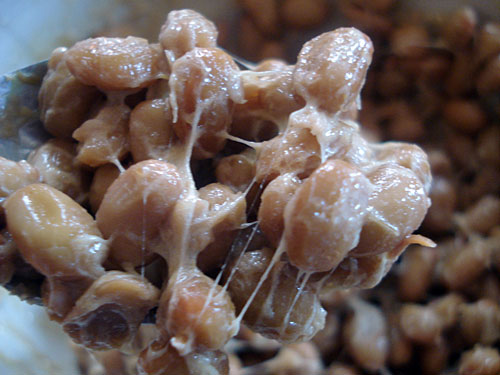
I’m at a restaurant that bleeds sophistication. Seated across from me is a stunning member of the opposite sex, joining me for the sole purpose of sampling the house’s signature dish, a personal favorite of mine.
Tender music swells in the background. The lighting is perfect, with the glow of candlelight on the table framing my partner’s irresistible charms as a celebrated bon vivant holds court four tables over. Spirits are high, and we’re high on spirits. The mood is ripe.
I snap my fingers to cue the waiter, who gracefully sets two silver trays before us. “Enjoy,” he says dryly. I look him straight in the eye and grin, signaling as I have many times before that I fully intend to.
It’s time. Gloved hands raise the lids, revealing…a small pair of Styrofoam trays with thin sheets of plastic on top. My date is puzzled.
Return to Tohoku: Alma Jennings goes back to Iwaki City in Fukushima
Article/Journalism, Earthquake Tsunami, Japan Local, Japan Society Round-up, Notable JET Alums, Return on JET-vestment, Travel/Tourism, Volunteer, Writers Comments Off on Return to Tohoku: Alma Jennings goes back to Iwaki City in Fukushima
***************
Thanks to JET alum Christy Jones of the Japan Society in New York for letting JETwit know about fellow JET alum and Japan Society colleague Alma Jennings (Fukushima-ken, Iwaki-shi) who has written about her return to Iwaki City in Fukushima where she went to volunteer and reconnect with old friends and colleagues.
Here’s a link to Alma’s writing on the Japan Society website: http://www.japansociety.org/page/earthquake/updates_from_japan
Here’s the intro from the Japan Society website:
“Like many young Americans interested in Japan, Alma Jennings, a Development Assistant at Japan Society, participated in the JET Programme and lived and taught English in Iwaki City on the southern coast of Fukushima Prefecture between 2008 and 2010. In September 2011, Alma returned to Iwaki City to visit her friends, former colleagues and students. She also went to the Iwaki City Volunteer Center to volunteer. Here is the first-part of a three-part series on her experience.
CLICK HERE to read more Return to Tohoku posts by other JET alums.
WIT Life #183: 10,000 Free Flights to Japan! (and the best bonsai I’ve ever had)
Earthquake Tsunami, Food & Drink, Translating/Interpreting, Travel/Tourism, WIT Life, Writers Comments Off on WIT Life #183: 10,000 Free Flights to Japan! (and the best bonsai I’ve ever had)
************************************************
WIT Life is a periodic series written by professional Writer/Interpreter/Translator Stacy Smith (Kumamoto-ken CIR, 2000-03). She starts her day by watching Fujisankei’s newscast in Japanese, and here she shares some of the interesting tidbits and trends together with her own observations.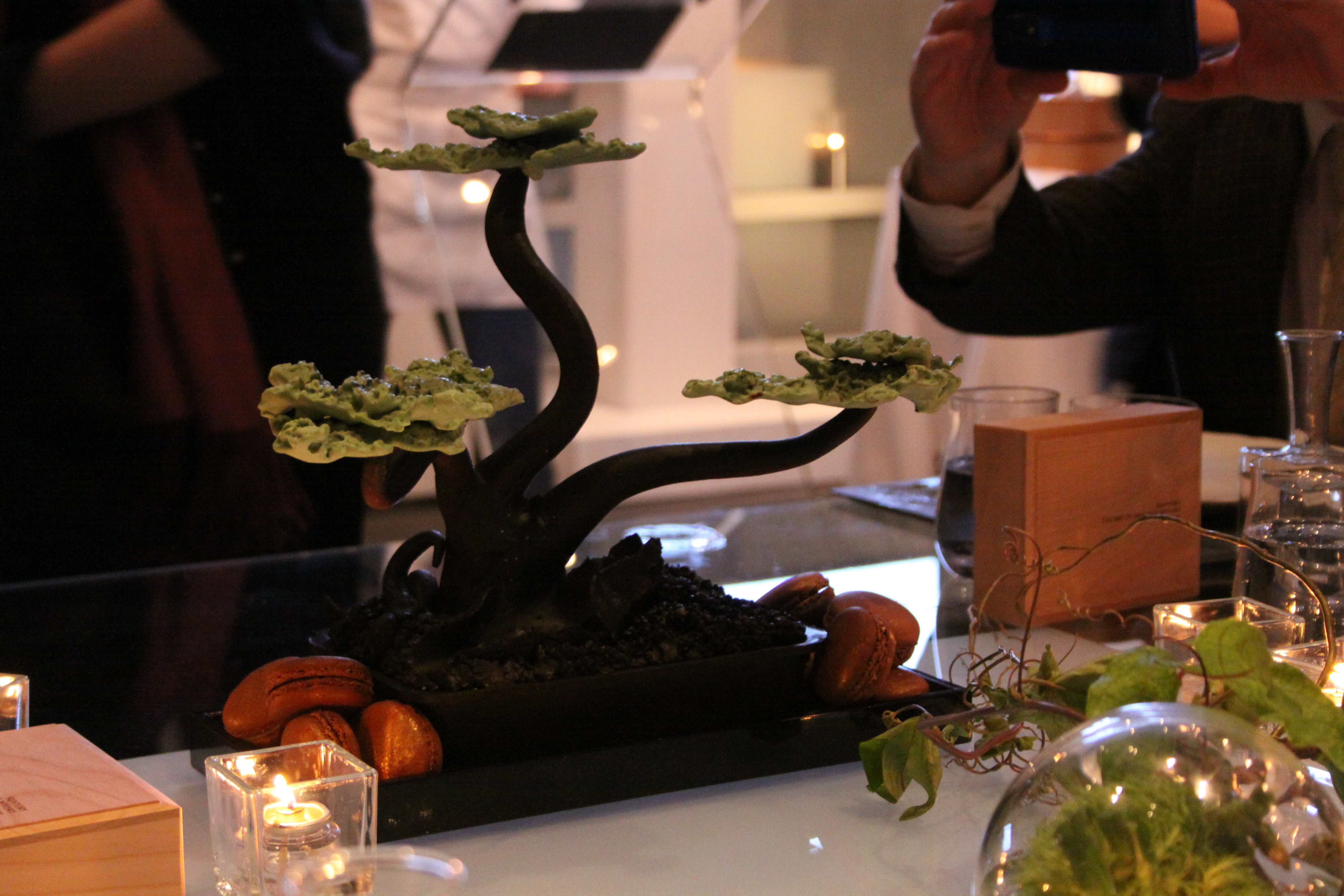
Last night I had the chance to attend an event at the Modern sponsored by the Japanese beverage company Suntory, for the unveiling of their newest whiskey here in the States, Hakushu. We first enjoyed a tasting of this offering, along with samples of favorites Yamazki and Hibiki. Chef Gabriel Kreuther prepared an amazing menu to pair with these whiskeys, featuring such treats as foie gras and caviar.
However, for me the best part of the meal was the Read More
JETAA British Columbia September/Fall Newsletter
Article/Journalism, JETAA Chapters, Writers Comments Off on JETAA British Columbia September/Fall Newsletter
The JETAA British Columbia Newsletter September/Fall Newsletter is hot off the presses!
- PDF version: http://jetaabc.ca/uploads/Main/NewsletterV16N2.pdf (6MB)
- Online version (via Issuu.com): http://issuu.com/jetaabc/docs/newsletterv16n2?mode=embed&layout=http%3A%2F%2Fskin.issuu.com%2Fv%2Flight%2Flayout.xml&showFlipBtn=true

PNW JETAA’s meeting with Hyogo Governor Ido and Ryan Hart’s speech
Cultural Outreach, Earthquake Tsunami, Events, Fundraising, Japan Local, JETAA Chapters, Local Government, Notable JET Alums, Return on JET-vestment, Volunteer, Writers Comments Off on PNW JETAA’s meeting with Hyogo Governor Ido and Ryan Hart’s speech
On Friday August 26, we had the great honor of giving a presentation about the Pacific Northwest JET Alumni Association at the Hyogo Seminar, which was hosted by Hyogo Prefecture (coordinated by theHyogo Business and Cultural Center) and the Council of Local Authorities for International Relations (CLAIR). The Governor of Hyogo Prefecture, Toshizo Ido, gave a comprehensive presentation on the many great qualities of Hyogo. Consul General Kiyokazu Ota, Masaaki Akagi, the Executive Director of The Japan Local Government Center (CLAIR New York), and Ginn Kitaoka, the Executive Director of the Hyogo Business and Cultural Center all gave warm opening remarks.
During our presentation, we highlighted the great things our chapter does. Ryan Hart (Chiba-ken, Ichihara-shi, 1998-99) (former PNW JETAA President, JETAA USA Country Representative and JETAA International Vice-Chair) shared what JETAA and current JETs are doing on the national and international level, Karin Zaugg-Black shared how her JET experiences shaped her career and her personal involvement with Japan, and Erin Erickson explained how we have supported Japan Relief efforts. Leela Bilow, Jana Yamada, and Casey Mochel shared their memories of Japan and how they continue to be involved with the Japanese community after JET.
Ryan Hart very generously allowed us to share his speech with you. Below is a brief excerpt, and his full speech is below the cut.
From its inception, the JET Alumni Association has helped former participants of the JET Program “Bring Japan Back Home.” What does this mean? We help former participants network, make new friends and transition their careers. We help the JET Program by recruiting, interviewing and training new teachers for their journey. We also help our communities we live in to support Japanese culture and raise awareness of the strong ties between our countries.
On March 11, 2011, like so many other things in our lives, this changed. Instead of “Bringing Japan Back Home”, our chapters and membership have rallied not only to raise money for immediate earthquake and tsunami relief, but also to strengthen the value of our relationship with local communities and organizations in Japan.
The JET Program, since 1987, has grown into the largest and most successful work exchange program in the world. Each year, the program brings thousands of teachers to Japan to promote language education and to strengthen Japan’s relationship with a number of countries. Since 1989, our Alumni Association of former program participants, has mirrored that growth and has steadily grown as a true grassroots organization, built from our individual members up. JETAA is now 53 chapters in 18 countries. As a former chapter president here in Seattle, a former Country Representative for JETAA USA’s 19 chapters and as former Vice Chair for JETAA International, I have been truly blessed to have had the chance to work and be a part of this growth.
From its inception, the JET Alumni Association has helped former participants of the JET Program “Bring Japan Back Home.” What does this mean? We help former participants network, make new friends and transition their careers. We help the JET Program by recruiting, interviewing and training new teachers for their journey. We also help our communities we live in to support Japanese culture and raise awareness of the strong ties between our countries.
On March 11, 2011, like so many other things in our lives, this changed. Instead of “Bringing Japan Back Home”, our chapters and membership have rallied not only to raise money for immediate earthquake and tsunami relief, but also to strengthen the value of our relationship with local communities and organizations in Japan.
- Immediately following the earthquake and tsunami, JETAA USA started raised money as a national organization and chapters voted to allocate this money directly to the affected local communities. We have formed a national advisory committee for the relief fund, of which I am proudly serving as a member. To date, the JET alumni have raised over $60k in funds and we are exploring continued fundraising efforts to make an even bigger impact.
- AJET, as an organization of current JETs living and teaching in Japan, has been partnering with organizations such as Peace Boat, Second Harvest, Foreign Buyers Club and 5toSurvive to raise money and awareness of recovery efforts. The Osaka AJET Chapter has worked on food drives with Kozmoz International of Kyoto, and have driven food and supplies themselves to Tohoku from Osaka.
- Mike Maher-King, a Fukui JET, formed Smile Kids Japan, a program of visiting orphanages throughout Japan. After March 11, he partnered with an organization in Tokyo called Living Dreams to start the Smile & Dreams project for Tohoku children to make sure the needs of the orphanages and the needs of the children who rely on them are met. He recently presented at TED Talks in Tokyo.
- Paul Yoo, an Akita JET, founded the Fruit Tree Project (delivering $23,571 worth and 38,612 items of fresh fruit to Tohoku) and VolunteerAkita, which was the backbone of the BIG CLEAN project that was directly involved in the cleanup of Kessenuma. He is now working as the Home Communication Manager for two orphanages in Sendai to ensure their needs are communicated with organizations involved with relief efforts.
- Hotdogs and Hugs was an aid organization of JETs from Saga-ken, who traveled from Saga Prefecture in western Kyushu, all the way to Tohoku, raising awareness and funds for relief efforts along the way.
- Save Miyagi was founded by Canon Purdy, a JET Alumni who was in Miyagi-ken.
- Billy McMicheal, a CIR in Fukushima, has formed Hearts for Haragama, which is raising funds for the Haragama Youchien Kindergarten in Soma, Fukushima.
- Kat Geeraert, an alumnus who also lived in Soma, has started Friends of Soma to raise money for relief efforts.
These are just a few examples of the direct impact JETs and JET alumni have had. Given the number of teachers who have taught in Japan since 1985, there probably are many more individual efforts out there that we don’t know about.
What we do know is that, in light of what happened on March 11, JET alumni around the world are not only focused on “Bringing Japan Home”, but also “Bringing Home to Japan.” Collectively, we have a renewed focus not only on strengthening US/Japan relations, but also the ties with the communities we once lived, worked, and taught in. We know that our contracts we were given to us by local governments and boards of education throughout Japan, weren’t just annual contracts, they were invitations to a legacy. It should be very clear to the many communities across Japan who have invested in the JET Program since 1987 that there is a long-term value in the relationships that have been formed with the many JET Program participants that have come and gone. Whether it be through media campaigns, tourism promotion, school exchange programs, or relief and fundraising efforts, JETAA is now looking to continue our legacy in “Bringing Home Back to Japan.”
Thank you.
Ryan Hart, Ichihara City, Chiba Prefecture, 1998-99
Posted by Ashley Thompson (Shizuoka-ken, 2008-2010) of Surviving in Japan: without much Japanese and Lifelines columnist for The Japan Times.

Ashley Thompson is "Surviving in Japan (Without Much Japanese)"
6 weeks. I can’t believe it has already been about 6 weeks since our dear daughter Ai-chan joined us in world. It’s mostly been a blur of sleep, insomnia, diaper changes, incessant feeding, incredible soreness and lots of baby time. But, reality shows up sooner or later and it’s time for me to try and start adjusting back into some sort of routine (while I hope that our child also figures out some sort of routine in the coming weeks).
I’ve mulled over sharing this experience many times, as I want to present it as objectively as possible, because to be honest I came away from the experience completely traumatized. NOT because of the fact I gave birth in Japan, just the labor and childbirth process itself. So, I’ll do the best I can here, and please understand that this is only my experience. Everyone has completely different birthing experiences, no matter where they are in the world, and even in Japan, your experience may differ depending on your doctor or midwife, and various other factors.
However, I don’t believe there is any reason to fear giving birth in Japan (and I do speak from personal experience now!), so rest assured that as long as you find a doctor or midwife you like and (hopefully) trust, you should be fine (well, as fine as you can be going through this kind of experience…)
*******
Our daughter was due on August 22nd, but the day came and went rather uneventfully. No baby.
I was tired of being a giant whale in the ridiculous heat of summer, so was eager for the baby to hurry up and come out. My husband and I did what we could to “prepare” (although in hindsight it was worthless – how can you “prepare” if you’ve never given birth before? You have no idea what it’s going to be like or feel like), and basically waited, while visiting the doctor twice that week for fetal monitoring. [Side note: After 40 weeks in Japan you typically visit the doctor twice a week.]
On Friday, the 26th, we were at the clinic again for another heart rate test of the baby in the early afternoon, and the doctor said I was 2 cm dilated and that I would likely go into labor within the next couple days.
Later that evening, as my husband and I ran errands, I started getting random contractions. I’d never felt a contraction before, and the doctor had asked me at the past few appointments if I had felt any contractions yet, but my answer was always “no.”
I figured the contractions I was having were just the practice kind preparing my body for labor, so didn’t worry too much. We ate dinner at home, watched some TV and went to bed (I was still having irregular contractions).
The contractions continued over the next couple hours, though I just kept trying to sleep, as I was incredibly tired. My husband, on the other hand, was wide awake during all this and timed the contractions. They actually became regular, and went from 10 minutes to 5 minutes apart in the course of a few hours. I also started bleeding a little, and so after calling the clinic, the nurses told us to come in. — CLICK HERE to read the rest of the post.
WIT Life #182: Japan Connections where you Least Expect them
Translating/Interpreting, WIT Life, Writers Comments Off on WIT Life #182: Japan Connections where you Least Expect them
***************************
WITLife is a periodic series written by professional Writer/Interpreter/Translator Stacy Smith (Kumamoto-ken CIR, 2000-03). She starts her day by watching Fujisankei’s newscast in Japanese, and here she shares some of the interesting tidbits and trends together with her own observations.
My latest International Visitor Leadership Program travels bring me to Riverside, California for the first time, host of the recent Sister Cities International conference highlighted here in JetWit. My group and I are staying in the lovely Mission Inn (referenced in the Sister City write-up), a national historical landmark established in 1876. Today we took part in a tour of the facility, and I was surprised to find out about its Japan connection!
Founder Frank Miller wanted to create a resort hotel for Riverside, which by the 1890s was Read More
*****************
With increased potential for budget cuts to the JET Programme and to JETAA and additional prefectures opting to use private ALTs rather than JETs, it’s good to see an example of a prefecture making effective use of JETs to provide significant Return on JET-vestment.
Toyama Prefecture has for the past two years been using its CIRs & ALTs to promote tourism through their Twitter and FB accounts or other means. More explanation is available in Japanese at: http://www.pref.toyama.jp/cms_press/2011/20110915/00007707.pdf
This year, according to this notice, they were planning to take their six ALTs (4 Americans) and two CIRs (both Americans) around to the big tourist attractions and then have them put out word-of-mouth to promote them, through Facebook, Twitter, blogs, or actual word-of-mouth after they go home.
There’s no reason other prefectures can’t adopt similar programs with their JETs and CIRs and why JETs and JET alums themselves can’t initiate this kind of activity.
While it’s relatively easy for local governments to find native English speakers to teach in their schools, it’s much harder to bring in teachers who will feel a connection to the community that lasts a lifetime and continues to provide tangible and intangible benefits over the long term. And that is the power of the JET Programme.
