




Surviving in Japan: A Guide to Sunscreen in Japan
 Advice, Blogs, Japan Local, Writers
  Comments Off on Surviving in Japan: A Guide to Sunscreen in Japan
Posted by Ashley Thompson (Shizuoka-ken, 2008-2010) of Surviving in Japan: without much Japanese and Lifelines columnist for The Japan Times.

Ashley Thompson is "Surviving in Japan: without much Japanese"
Just in time for summer (despite some of the gray days during the rainy season): an overview of sunscreen (or sunblock) in Japan.
I should note that I’ve heard various complaints about sunscreen tubes and bottles being relatively small here, and in many cases, this tends to be true. In my experience, women here often seem to prefer covering up their skin with clothing, hats, scarves, etc., carrying around an umbrella, and/or just avoiding being outside during the peak times of day. It’s not uncommon when stopped at an intersection to see pedestrians waiting under store eaves in the shade until the light turns green (though this is also just to get out of the heat). So I think one possible reason the quantities may be smaller is simply because they are primarily used on the face, neck, hands, and/or arms. Their small size also makes them easier to carry around.
As for men in Japan, it doesn’t seem that protecting their skin from the sun is as popular as it is with women. I’m sure some do, but women seem to be more concerned about this (in general, of course does not apply to everyone) and in general, sunscreen in Japan seems to be marketed more towards women.
First of all, sunscreen or sunblock in Japanese is: 日焼け止め (ひやけどめ, hiyakedome)
Other words to know:
紫外線 しがいせん ultraviolet rays
耐水性 たいすいせい water resistant
ウォータープルーフ waterproof
無香料 むこうりょう unscented
無着色 むちゃくしょく no coloring
Understanding UVA/UVB protection
Every country has its own form of indicating a sunscreen’s effectiveness against UVA and UVB rays, though the use of “SPF” is fairly standard.
Japan uses SPF to measure protection against UVB rays. You’ll see standard numbers such as 15, 30, 50, etc.
Protection against UVA rays is indicated in Japan as “PA” with a plus sign (+). There are no numbered measurements for this; more pluses equals more protection. You’ll find 3 versions: — CLICK HERE to read the rest of the post.
WIT Life #173: Homeless by mandate
Earthquake Tsunami, Translating/Interpreting, Uncategorized, WIT Life, Writers Comments Off on WIT Life #173: Homeless by mandate
WITLife is a periodic series written by professional Writer/Interpreter/Translator Stacy Smith (Kumamoto-ken CIR, 2000-03). She starts her day by watching Fujisankei’s newscast in Japanese, and here she shares some of the interesting tidbits and trends together with her own observations.
Almost four months have passed since the earthquake/tsunami hit Japan, and one might think that after this amount of time things have gotten back to some semblance of normal. That seems to be the case for the most part in Tokyo, where except for limited electricity usage and the omnipresent uncertainty regarding radation levels, it is back to business as usual. However, for those who lived in the disaster area, it is a different story. I recently spoke to a close friend over Skype, who told me about her brother who had lived with his family in Tohoku.
They, like many others from the disaster zone, cannot be cleared to return home due to restrictions on entering areas that exceed a certain level of radiation. Instead, they have spent the last few Read More
Harper Collins set to publish a new book by JET alum Bruce Feiler
Books, Celebrity, Notable JET Alums, Writers Comments Off on Harper Collins set to publish a new book by JET alum Bruce Feiler
JET alum Bruce Feiler (Tottori-ken, 1989-90), author of Learning to Bow, The Council of Dads, and several books on the Middle East including Walking the Bible, Abraham and Where God Was Born, has a new book to published by Harper Collins soon titled Generation Freedom: The Middle East Uprisings and the Remaking of the Modern World.

From the Harper Collins website:
At a time when the world is asking how the Arab Spring and the death of Osama bin Laden will reshape our times, Bruce Feiler, bestselling author of Walking the Bible and Abraham, offers a vivid behind-the-scenes portrait of history in the making. He marches with the daring young organizers in Liberation Square, confronts the head of the Muslim Brotherhood, and witnesses the dramatic rebuilding of a church at exactly the moment sectarian violence threatens the peaceful movement. Drawing on fifteen years of travels across the region, from Egypt to Israel, Iraq to Iran, Feiler brings his unprecedented experience to the most pressing questions: how the rise of freedom will affect terrorism; Middle East peace; and relations among Jews, Christians, and Muslims worldwide. Eloquent and thoughtful, Generation Freedom offers a hopeful vision of how this unrivaled upheaval will transform the world.
Surviving in Japan: How to Send Your (Extra) Luggage to the Airport
Advice, Blogs, Japan Local, Writers Comments Off on Surviving in Japan: How to Send Your (Extra) Luggage to the Airport
Posted by Ashley Thompson (Shizuoka-ken, 2008-2010) of Surviving in Japan: without much Japanese and Lifelines columnist for The Japan Times.
Ashley Thompson is "Surviving in Japan: without much Japanese"
Heading home for the summer? Going somewhere exotic for vacation? If you are leaving Japan, and many of you may already know this, did you know you can have your luggage delivered straight from your home to the airport? The cost is actually quite reasonable (depending on how far you are from the airport, how much luggage you have, how heavy it is, how big it is, etc.)
There are various delivery companies in Japan, but Yamato (Kuroneko) is my favorite. They have an English version of their site with instructions on how to deliver your luggage to the airport, otherwise known as “Airport takkyubin.” (Takkyubin is Yamato’s special term for delivery.)
When I sent our luggage (two large suitcases weighing somewhere between 15-20 kg) off to Narita Airport, I simply called Yamato about 2 days before our flight, gave them my home address, told them how much luggage I had to send, and they asked for the best time to send someone for pick-up. I believe they came by that same day, and when the delivery guy arrived at the door, he gave me two slips of paper (the address labels) for each piece of luggage, on which I wrote our address, phone number, contents (i.e., clothes, etc.) and our flight information (don’t worry, you can do this in English/romaji).
The woman I spoke to on the phone when I called Yamato spoke English, though I may have had to ask for an English speaking person (it was a year ago so I don’t really remember that part). You can just ask, “Eigo ii desu ka?” (Is English ok?) or “Eigo o hanasu hito imasen ka?” (Is someone there who speaks English?) or something similar, if/when someone answers in Japanese. — CLICK HERE to read the rest of the post.
WIT Life #172: Global Justice
Academic, Earthquake Tsunami, Translating/Interpreting, WIT Life, Writers Comments Off on WIT Life #172: Global Justice
WITLife is a periodic series written by professional Writer/Interpreter/Translator Stacy Smith (Kumamoto-ken CIR, 2000-03). She starts her day by watching Fujisankei’s newscast in Japanese, and here she shares some of the interesting tidbits and trends together with her own observations.
Last week New York Times columnist Thomas Friedman profiled the Harvard University political philosopher Michael J. Sandel. This professor’s classes were picked up by PBS and made into a television program that has attracted worldwide attention. Last year, Japan’s NHK TV broadcast a translated version of the series, which sparked a philosophy craze in Japan and prompted the University of Tokyo to create a course based on Sandel’s.
As Friedman details, the PBS series is now available at http://www.justiceharvard.org, and here you can find a thought-provoking discussion of the ethical and global implications of the 2011 Japanese earthquake and nuclear disaster among students in Tokyo, Shanghai, and at Harvard.
It is interesting to see Japanese students voicing their opinions in a proactive way, and I am curious to see what kind of feedback the university course has received since being introduced.
Subscribe to the JETAA Sydney (Australia) Newsletter
Writers Comments Off on Subscribe to the JETAA Sydney (Australia) Newsletter
Here’s the link for anyone who’s interested in subscribing to the JETAA Sydney Newsletter:
http://sydneyjetaa.us1.list-manage.com/subscribe?u=074f1003f7e0dbeb3de9861cc&id=8cc42074cb
Surviving in Japan: How to find Tylenol in Japan
Advice, Blogs, Japan Local, Writers Comments Off on Surviving in Japan: How to find Tylenol in Japan
Posted by Ashley Thompson (Shizuoka-ken, 2008-2010) of Surviving in Japan: without much Japanese and Lifelines columnist for The Japan Times.
I’ve previously showed you how to find ibuprofen in Japan, but what about acetaminophen? Otherwise known as Tylenol. Though Tylenol itself is a bit more difficult to find in Japan than ibuprofen (I can’t find it in my local drugstore but I can find it in the drugstore in the closest major train station in my area). You can also find it online quite easily. Though, keep in mind that other brands of medicine in Japan also contain acetaminophen, but many of those brands also contain caffeine (カフェイン), occasionally aspirin (アスピリン), and some other active ingredients, which may or may not be exactly what you want.

First things first: acetaminophen in Japanese is アセトアミノフェン.
And, Tylenol is — CLICK HERE to read the rest of the post.
MEF Bruce Rutledge article on CNN: Japan’s post-quake kawaii cute movement
Article/Journalism, Cultural Outreach, Earthquake Tsunami, Japan Trends, Notable JET Alums, Return on JET-vestment, Writers Comments Off on MEF Bruce Rutledge article on CNN: Japan’s post-quake kawaii cute movement
**********
MEF Bruce Rutledge, founder of Seattle-based independent book publisher Chin Music Press and editor of Ibuki magazine, has an article on CNN GO titled:
“Japan’s post-quake kawaii cute movement: Harajuku’s colorful street-styles used to combat the quake crisis.”

JET Alum Launches Cross-Cultural Business Consulting and Training Service
Cultural Outreach, Notable JET Alums, Return on JET-vestment, Translating/Interpreting, Writers Comments Off on JET Alum Launches Cross-Cultural Business Consulting and Training Service
**********
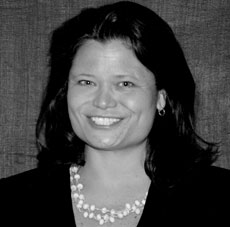
Jennifer Jakubowski (Hokkaido, 1995-97), founder of Bridges To Japan
JET alum Jennifer Jakubowski (Hokkaido, 1995-97) has launched Bridges To Japan, a cross-cultural business consulting and training firm.
Jennifer has been engaged in Japanese-American cross-cultural business consulting and training for a number of years, including work for the Nagano Winter Olympic Committee and cross-cultural training for numerous Japanese and American executives. She is also the author of Executive Guide to Japan: The ABCs of Japanese Culture & Business Etiquette.
For more information:
- Bridges to Japan website: www.bridgestojapan.com
- Jennifer Jakubowski bio
WIT Life #171: Radiation fallout (both literal and emotional)
Translating/Interpreting, Uncategorized, WIT Life, Writers Comments Off on WIT Life #171: Radiation fallout (both literal and emotional)
WITLife is a periodic series written by professional Writer/Interpreter/Translator Stacy Smith (Kumamoto-ken CIR, 2000-03). She starts her day by watching Fujisankei’s newscast in Japanese, and here she shares some of the interesting tidbits and trends together with her own observations.
As more information comes out regarding the lack of disclosure as well as intentional cover-up that took place regarding Japan’s nuclear crisis, people are becoming more and more empowered. This article from Sunday’s New York Times details how citizens have begun protesting, a relatively rare action in Japan. This longer article from this morning’s NYT discusses how little PM Kan knew about what was actually happening.
Media reporting on this issue tends to be either sensational or opaque, so I really value the “on the ground” reports I periodically receive from friends in Tokyo. Here’s an excerpt from a recent mail (long but worth reading) from a close friend describing the continually changing information being provided to them, as well as her thoughts regarding the situation going forward. It provides a backdrop that illuminates why the normally docile Japanese have been taking to the streets:
“Here life is slowly returning to “normal,” but still lots of worries about the radiation affecting Tokyo and outlying areas. There are new setbacks to the nuclear plant situation each day and we wonder Read More
Essay: JET alum volunteers for Tsunami Relief in Northeastern Japan
Earthquake Tsunami, Volunteer, Writers Comments Off on Essay: JET alum volunteers for Tsunami Relief in Northeastern Japan
Posted by JET alum Mark Flanigan to the JETwit Facebook wall:
Hello from Tokyo! I wrote this article (see pages 14-15) for the Japan Commerce Association of Washington, DC. I focused on my recent volunteer experiences as a former JET (Nagasaki 2000-04) working on Tsunami Relief in Northeastern Japan. Please consider sharing this article with your JET friends and colleagues!
http://jcaw.org/main/wp-content/uploads/2011/06/NewsLetter_0611_secured_revised.pdf
Surviving in Japan: How To Find Ibuprofen in Japan
Advice, Blogs, Japan Local, Writers Comments Off on Surviving in Japan: How To Find Ibuprofen in Japan
Posted by Ashley Thompson (Shizuoka-ken, 2008-2010) of Surviving in Japan: without much Japanese and Lifelines columnist for The Japan Times.
 This is for all those die-hard Advil fans out there, like myself. Though I try to use any kind of drug sparingly, at least once a month I find myself growling for drugs (I’m sure you can guess which “once” I’m referring to, ladies). And then I take two. Sometimes three. No matter how tough I am the rest of the month, I run to the drug cupboard with my proverbial tail between my legs.
Yes, I admit, I did bring a large bottle of Advil with me when I first came to Japan, and last time my mom sent me a care package I asked for some Advil. It’s almost like a comfort drug – you know, comfort food. The very sound of it just puts you at ease. Advil. No pain. Ahhh…
Anyway! What if you have no Advil, because you’ve completely emptied your bottle, and in extreme I-NEED-DRUGS pain? Fear not, you (or someone in your place if you’re unable to move due to said pain) can find ibuprofen in Japan. Probably most, if not all, drug stores and pharmacies will carry it. The amount of ibuprofen in each pill is typically the same as regular Advil. Although, be forewarned, they often put caffeine in the pills too. Why, I don’t know. Perhaps they think a boost of energy will somehow kick the pain out of you. In any case, it’s not less effective, but keep in mind gel caps are harder to come by, if that’s your thing.
The word to look (or ask) for is — CLICK HERE to read the rest of the post.
Sake World e-Newsletter by John Gauntner (June 2011)
Celebrity, Cultural Outreach, Food & Drink, Notable JET Alums, Writers Comments Off on Sake World e-Newsletter by John Gauntner (June 2011)
 The June 2011 issue of the Sake World e-newsletter by JET alum and the leading non-Japanese sake expert in the world, John Gauntner (a.k.a. “The Sake Guy”), is now available online.
Go to John’s Sake World website for more information as well: www.sake-world.com
Japan Local: JET blog on Aomori sightseeing
Blogs, Japan Local, Local Government, Return on JET-vestment, Travel/Tourism, Writers Comments Off on Japan Local: JET blog on Aomori sightseeing
Here’s a really nice JET blog on sight seeing in the Tsugaru region of Aomori by Aomori JETs Emma Sayers, Mike Moses and Kelly Isom:
Let’s Go Tsugaru: http://letsgotsugaru.blogspot.com.
*If you’re aware of any other JET blogs about sightseeing and tourism in Japan, please let us know at jetwit [at] jetwit.com. Yoroshiku.
JETAA USA seeks Web Content Editor (volunteer)
JETAA Chapters, Jobs, Volunteer, Writers Comments Off on JETAA USA seeks Web Content Editor (volunteer)
Via JETAA USA:
JETAA USA is looking for an enthusiastic volunteer web content editor to help on some short and long term-projects.
With the roll-out of the new JETAA USA website at last year’s National Conference, our goal is to improve the website so that it becomes a central hub and resource which will serve all US Chapters.
Our wish list is:
● Migrate any information from other online platforms we have previously used, organize it, and make it available on the US website; in a sense- creating a virtual file cabinet for storing resources and documents.
● Create ideas for installing new resource sections, and improvements on what we’ve currently got established (such as a current national projects section and conference section).
We expect the bulk of the workload to be in the next 3 months as we jump start this, upload content, push forward with the JETAA USA Earthquake Fund and bracket the National Conference. After that time period, we anticipate the workload to decrease to ongoing maintenance, occasional projects and helping Country Representatives (CRs) to trouble shoot any potential issues with the website on an “as needed” basis. We would like this position to be an integrated part of the JETAA USA national team.
The workload of this position will vary depending on the time of year and the level of experience of the web editor. Although this is a volunteer position we would like someone who is willing to dedicate their time and be accountable for project completion. The US CRs will work with the web editor at a pace that is comfortable and reasonable, but also impactful.
We are looking for an applicant who:
● Has experience troubleshooting and responding to organizational needs and has previously managed content.
● Knowledge of WordPress, HTML, CSS, and/ or Java is a plus!
● Has a proven track record and experience with web related projects.
● Experience working with JET affiliated organizations (i.e. JETAA, AJET) is beneficial.
● Is a JET Program alumnus.
If you’re interested, please contact any (or all) of us with a brief description of your experience and desire to be a part of the team. Thank you!
- us1.jetaausa@gmail.com (Mike Shu)
- us2.jetaausa@gmail.com (Megan Miller-Yoo)
- us3.jetaausa@gmail.com (Jessyca Wilcox)
