




I’ll Make It Myself!: “Japanese Street Food and Foodpia Land 2012 (フードピアランド2012)”
 Blogs, Food & Drink, I'll Make It Myself, Travel/Tourism, Writers
  Comments Off on I’ll Make It Myself!: “Japanese Street Food and Foodpia Land 2012 (フードピアランド2012)”
L.M. Zoller (CIR Ishikawa-ken, Anamizu, 2009-11) is the editor of The Ishikawa JET Kitchen: Cooking in Japan Without a Fight. A writer and web administrator for The Art of Japan: Kanazawa and Discover Kanazawa, ze also writes I’ll Make It Myself!, a blog about food culture in Japan, and curates The Rice Cooker Chronicles, a series of essays by JETs and JET alumni on the theme of cooking/eating and being alone in Japan.
New submissions always welcome. Just e-mail it to jetwit [at] jetwit.com.
I’ve noticed an increased interest by foreign bloggers and media regarding Japan’s (read: Tokyo, Kyoto) street food culture in the last month, and as I was at a large food fair in Kanazawa, I figured it was time to add my comments and photos to the table.

CLICK HERE to read the full post.
WIT Life #192: New York Boom in Japan
Food & Drink, Translating/Interpreting, WIT Life, Writers Comments Off on WIT Life #192: New York Boom in Japan
WIT Life is a periodic series written by professional Writer/Interpreter/Translator Stacy Smith (Kumamoto-ken CIR, 2000-03). She starts her day by watching Fujisankei’s newscast in Japanese, and here she shares some of the interesting tidbits and trends together with her own observations.
I am heading home after spending two glorious weeks in Japan enjoying delicious food, soakin g in multiple onsens, meeting up with natsukashii friends and running two marathons! Needless to say I feel a bit sabishii about leaving, but I am already looking forward to my annual visit next year.
One thing I noticed more than before was an increase in advertising that utilizes the concept of “New York” to appeal to customers. In many cases this seemed to be a very loose correlation, but nonetheless effective. I first spotted the “Big America” burger being advertised at McDonalds. Pictured here, you can see that in katakana it says “Broadway Burger.” I’m not sure what qualifi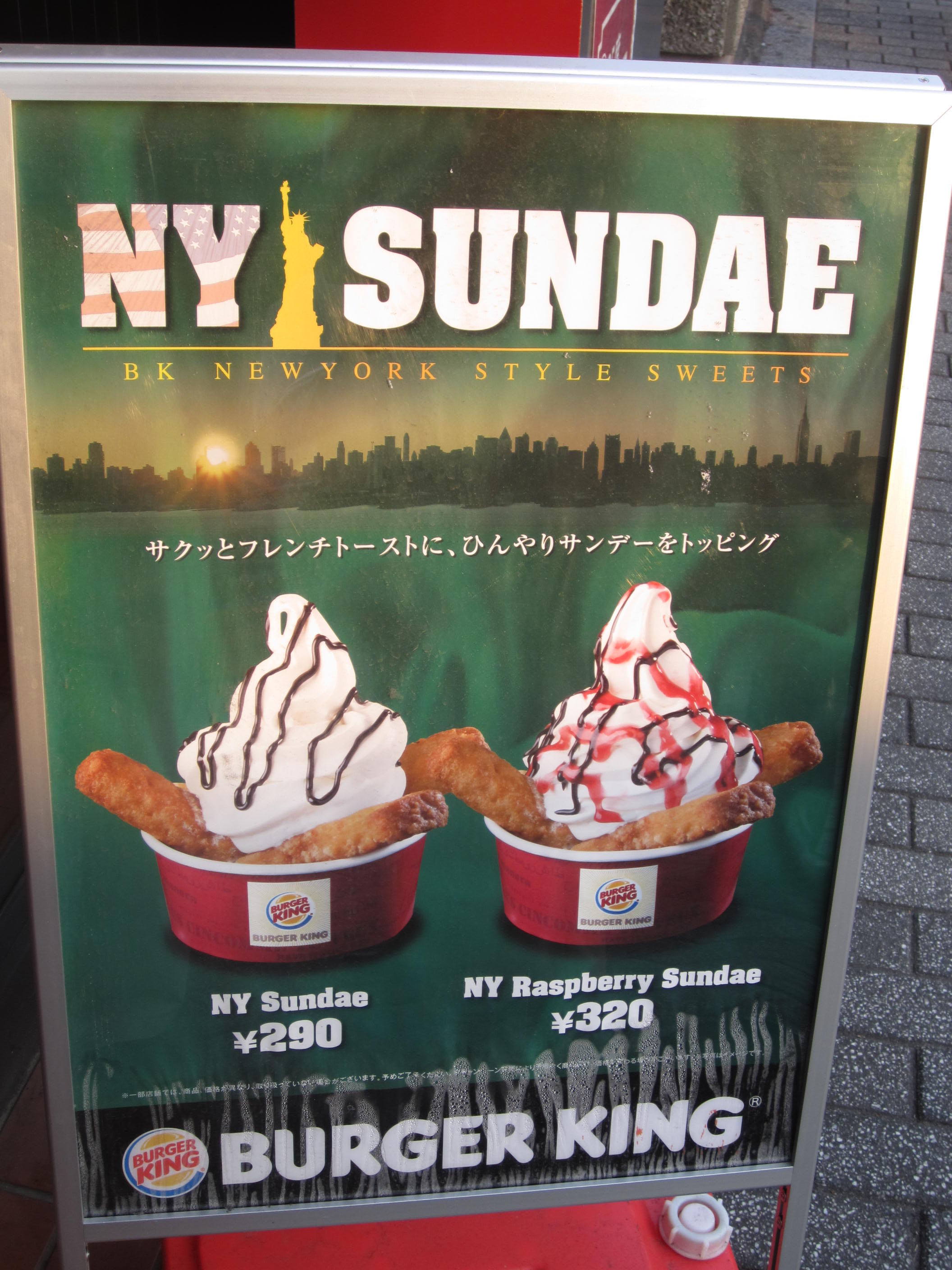 es it as such, but the size is definitely larger than your standard Japanese burger.
My next sighting was at Burger King, which is offering the NY Sundae (BK New York Style Sweets). This sundae, which comes in regular and raspberry, features crunchy French toast with ice cream on top. I don’t know what about this sundae makes it “New York Style” and didn’t have a chance to sample it, but I could see that being a delicious combination. I love how they put a mini Statue of Liberty in the middle of the product name to enhance its authenticity. 
However, I will take Japanese style sweets over New York ones any day, and certainly enjoyed my share of wagashi on a daily basis during this trip. I am always sure to leave Japan with some of its various KitKat flavors, and this time I found both green tea and cherry blossom green tea (limited edition for sakura season) at the airport. I also searched for azuki which is one of my favorites, but didn’t have any luck. I saw wasabi but opted to pass on that one…
Kameoka Diaries #6 by Lars Martinson
Cartoon/Illustration, Japan Local, Notable JET Alums, Writers Comments Off on Kameoka Diaries #6 by Lars Martinson
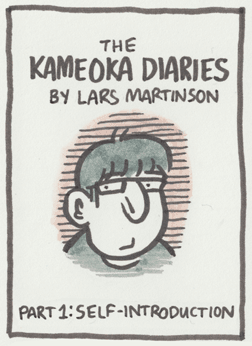
Lars Martinson (Fukuoka-ken 2003-2006), author of the graphic novels Tonoharu: Part Two andTonoharu: Part 1, has just just published the latest edition of his new cartoon series called“Kameoka Diaries“ about his return to teaching English, this time in Kameoka, Kyoto.
Click here to read the Kameoka Diaries #6.
http://larsmartinson.com/kameoka-diaries-6/
WIT Life #191: Multiple marathons and Honolulu highlights
Earthquake Tsunami, Food & Drink, Translating/Interpreting, Travel/Tourism, WIT Life, Writers Comments Off on WIT Life #191: Multiple marathons and Honolulu highlights
*************************************************************************************
WIT Life is a periodic series written by professional Writer/Interpreter/Translator Stacy Smith (Kumamoto-ken CIR, 2000-03). She starts her day by watching Fujisankei’s newscast in Japanese, and here she shares some of the interesting tidbits and trends together with her own observations.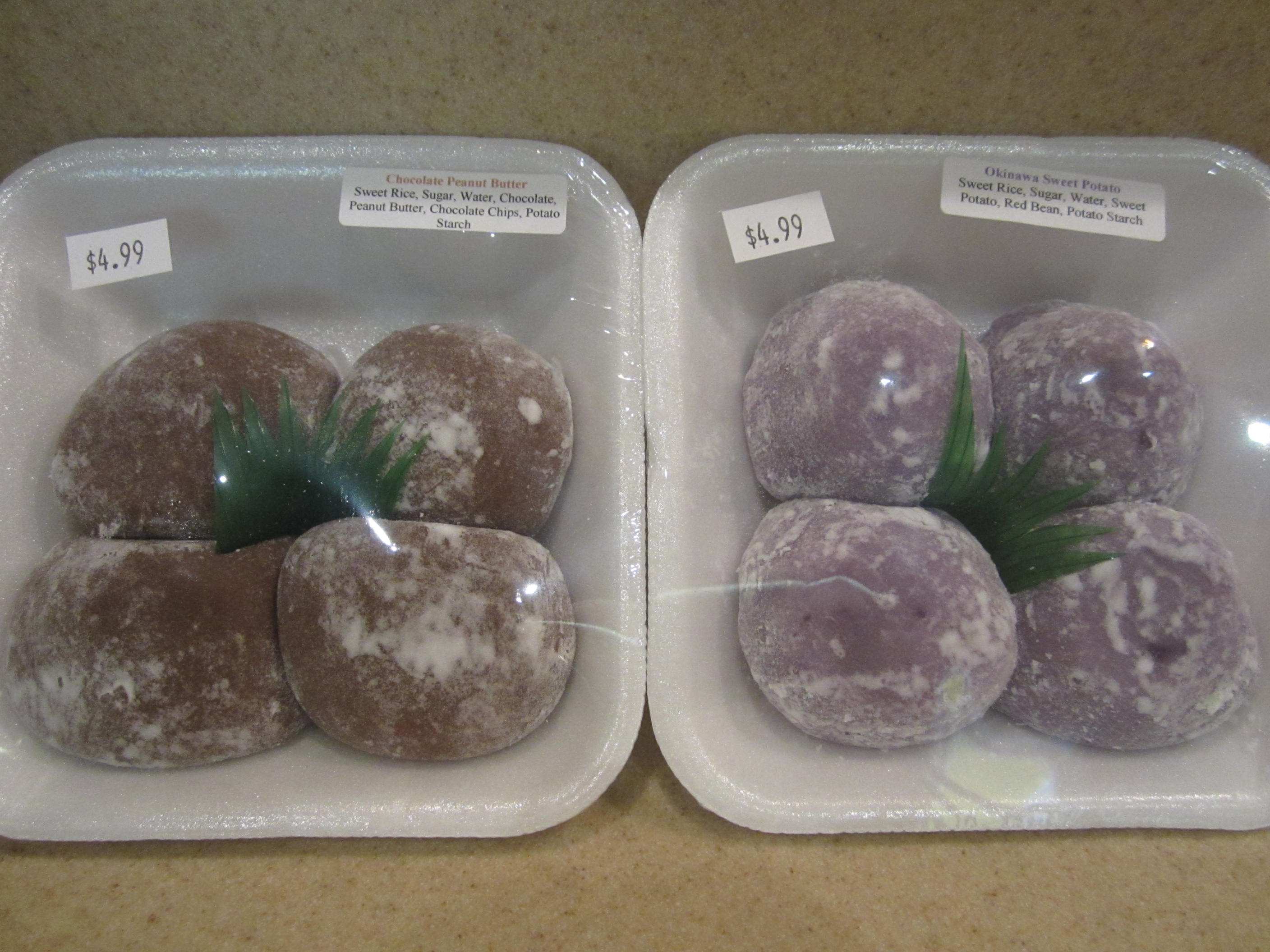
Tomorrow I head to Kumamoto, my home for three years during JET, to participate in the inaugural Kumamoto Marathon which will be held next weekend. The following weekend I will go up to Tokyo to participate for the fifth time in their amazing marathon. I’m looking forward to not only the running, but catching up with natsukashii friends, eating oishii food and most of all onsen!!!
Speaking of oishii food, 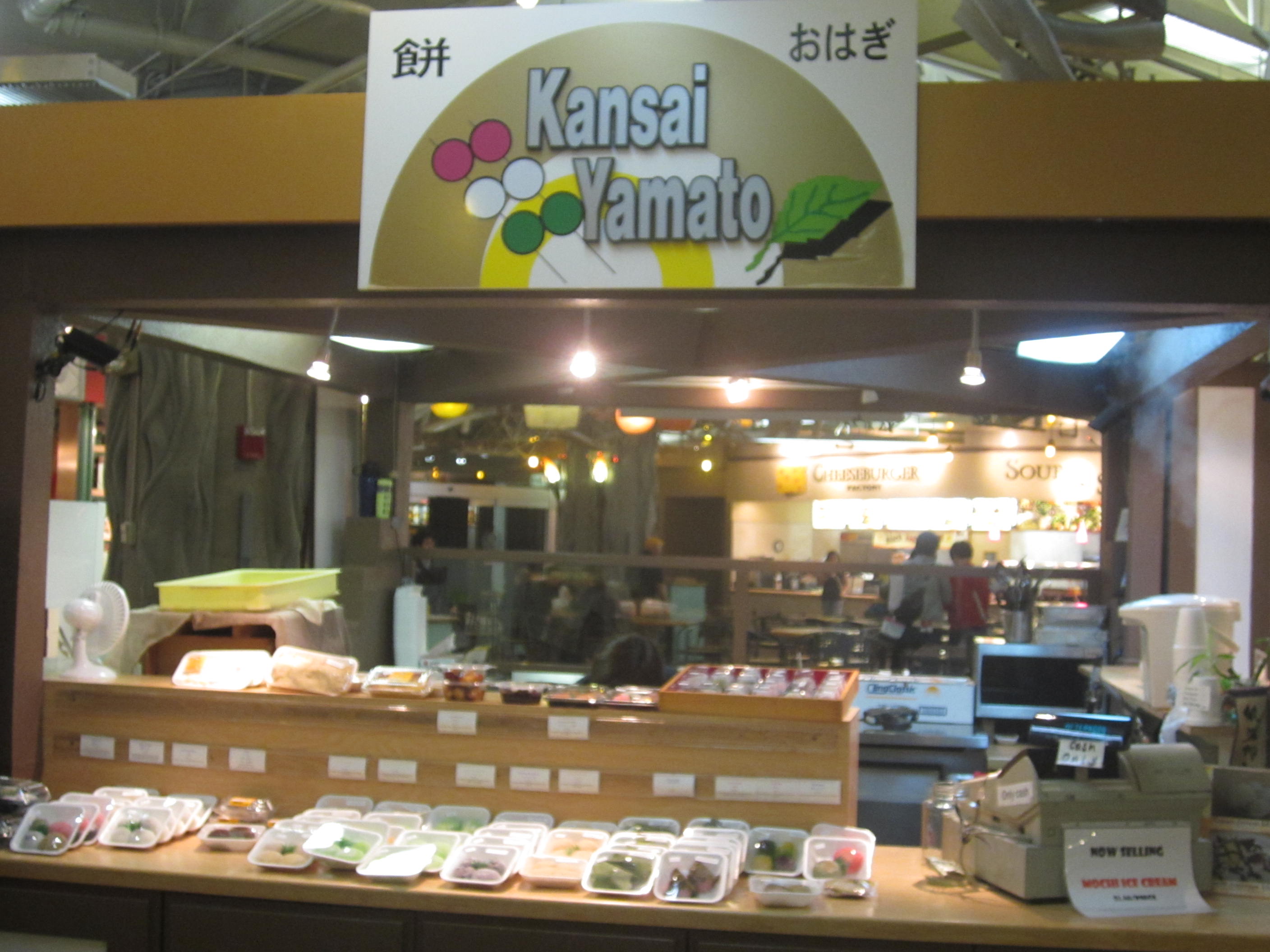 I recently enjoyed the Hawaiian version of wagashi at my favorite shop in Honolulu, Kansai Yamato. This small stall in the food court of the fantastic Ala Moana mall sells handmade mochi in funky flavors like Kona coffee, mango and Oreo as well as Read More
I’ll Make It Myself: “Kabocha-Stuffed Okonomiyaki”
Blogs, Food & Drink, I'll Make It Myself, Writers Comments Off on I’ll Make It Myself: “Kabocha-Stuffed Okonomiyaki”
L.M. Zoller (CIR Ishikawa-ken, Anamizu, 2009-11) is the editor of The Ishikawa JET Kitchen: Cooking in Japan Without a Fight. A writer and web administrator for The Art of Japan: Kanazawa and Discover Kanazawa, ze also writes I’ll Make It Myself!, a blog about food culture in Japan.

Every food blogger with an interest in Japanese food is required by law to have a post on okonomiyaki, so today, I’m going to show you how to make my favorite version, which is stuffed with my favorite vegetable, kabocha squash.
Okonomiyaki (henceforth not italicized) is sometimes described as a savory pancake or as a Japanese pizza. What it actually entails is a batter made mainly of flour, egg, water, and baking powder, which is mixed with finely chopped cabbage and seasonings. To this batter, one adds meat or vegetable “toppings” (hence the pizza comparison) to one’s liking (hence the name, which could be translated as the “As You Like It Cooked Item”). This mixture is cooked in a frying pan or on a griddle and topped with okonomi sauce, mayonnaise, nori (seaweed), and bonito flakes.
CLICK HERE to read the full post.
Kameoka Diaries #5 by Lars Martinson
Cartoon/Illustration, Celebrity, Humor, Notable JET Alums, Writers Comments Off on Kameoka Diaries #5 by Lars Martinson
Lars Martinson (Fukuoka-ken 2003-2006), author of the graphic novels Tonoharu: Part Two andTonoharu: Part 1, has just just published the latest edition of his new cartoon series called“Kameoka Diaries“ about his return to teaching English, this time in Kameoka, Kyoto.
Click here to read the Kameoka Diaries #5.
http://larsmartinson.com/kameoka-diaries-5/
Why Japan does not celebrate the Lunar New Year to the extent of its Asian neighbors
By Jessica Kennett Cork (CIR, 1997-2000, Hiroshima-ken)
With the large number of Asians in the U.S., it was hard to overlook the fact that the Year of the Dragon by the lunar calendar began on January 23. But had we been in Japan, January 23 would have passed quite uneventfully. Have you ever wondered why Japan does not recognize the lunar New Year to the extent of its Asian neighbors? And as we approach the Doll Festival (Hina Matsuri), has it ever struck you as odd that this festival is also called the Peach Festival, and yet March 3 is way too early for peach blossoms? The explanation is actually quite fascinating. Read More
I’ll Make It Myself!: “Flexitarian: Spicy Fava Beans and Pork Stir-fry”
Blogs, Food & Drink, I'll Make It Myself, Writers Comments Off on I’ll Make It Myself!: “Flexitarian: Spicy Fava Beans and Pork Stir-fry”
L.M. Zoller (CIR Ishikawa-ken, Anamizu, 2009-11) is the editor of The Ishikawa JET Kitchen: Cooking in Japan Without a Fight. A writer and web administrator for The Art of Japan: Kanazawa and Discover Kanazawa, ze also writes I’ll Make It Myself!, a blog about food culture in Japan.
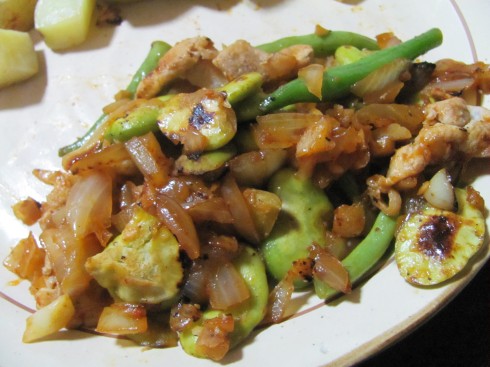
Ishikawa is a good source of locally-raised pork, which I discovered when I set out to make today’s recipe. Fava beans, sora mame(空豆), are all over Kanazawa right now (though my vegetable almanac says they are a late spring bean), and they really compliment the sweet onions and spicy pork in this stir-fry.
CLICK HERE to read the full post.
I’ll Make It Myself!: “Hîragi, Shirakawa-go”
Blogs, Food & Drink, I'll Make It Myself, Travel/Tourism, Writers Comments Off on I’ll Make It Myself!: “Hîragi, Shirakawa-go”
L.M. Zoller (CIR Ishikawa-ken, Anamizu, 2009-11) is the editor of The Ishikawa JET Kitchen: Cooking in Japan Without a Fight. A writer and web administrator for The Art of Japan: Kanazawa and Discover Kanazawa, ze also writes I’ll Make It Myself!, a blog about food culture in Japan.

When I visited Shirakawa-go over the long weekend in January, I found Hîragi, a cute restaurant along the snow-covered the vehicle-access road to the lookout point in Ogimachi, Shirakawa-go. I was intrigued, of course, because one of my favorite kanji is 柊 (hîragi), holly, because the radicals mean tree-winter. What sealed the deal was the menu: I wanted to introduce my friends to hôba miso yaki(朴葉味噌焼き), and they wanted to try Hida beef (飛騨牛).
CLICK HERE to read the full post.
WIT Life #190: Air Kei’s Historic Run to Australian Quarters!
Translating/Interpreting, WIT Life, Writers Comments Off on WIT Life #190: Air Kei’s Historic Run to Australian Quarters!
********************************************************************
WIT Life is a periodic series written by professional Writer/Interpreter/Translator Stacy Smith (Kumamoto-ken CIR, 2000-03). She starts her day by watching Fujisankei’s newscast in Japanese, and here she shares some of the interesting tidbits and trends together with her own observations.
Kudos t o 22-year old tennis pro Kei Nishikori for being the first Japanese man in 80 years to reach the quarterfinals of the Australian Open! Unfortunately, once there he was vanquished in straight sets by Scot Andy Murray, but his impressive showing in his previous five-set win over France’s Jo-Wilfred Tsonga bumps his world ranking up to 20 from 26.
Nishikori, who currently lives and trains in Florida, is known as “Air Kei” for his leaping groundstrokes. I can attest to the fact that watching his play is thrilling. A few years ago I caught a match of his at the US Open that turned into a nail-biting five-setter, and was hooked.
Here’s hoping he can build on this impressive showing in Australia and have further success in 2012!
WIT Life #189: Elizabeth Andoh’s 希望 project
Earthquake Tsunami, Food & Drink, Translating/Interpreting, WIT Life, Writers Comments Off on WIT Life #189: Elizabeth Andoh’s 希望 project
WIT Life is a periodic series written by professional Writer/Interpreter/Translator Stacy Smith (Kumamoto-ken CIR, 2000-03). She starts her day by watching Fujisankei’s newscast in Japanese, and here she shares some of the interesting tidbits and trends together with her own observations.

I recently received an email newsletter from acclaimed Japanese food writer Elizabeth Andoh regarding her newest book project, 希望 (Kibo or “Brimming With Hope”). It will be released on February 28th and features recipes and stories from the Tohoku area, where last year’s earthquake and tsunami hit. Andoh wanted to do her part to help the region recover, and the creation of this book is what she came up with (click on the link below for purchase information). This March, she also plans to launch a new website called Kibo cooking which will be dedicated to Tohoku cookery. See below for a description of Andoh’s project in her own words.
I’ll Make It Myself!: “Minoh Brewery and Beer Belly, Osaka”
Blogs, Food & Drink, I'll Make It Myself, Travel/Tourism, Writers Comments Off on I’ll Make It Myself!: “Minoh Brewery and Beer Belly, Osaka”
L.M. Zoller (CIR Ishikawa-ken, Anamizu, 2009-11) is the editor of The Ishikawa JET Kitchen: Cooking in Japan Without a Fight. A writer and web administrator for The Art of Japan: Kanazawa and Discover Kanazawa, ze also writes I’ll Make It Myself!, a blog about food culture in Japan.
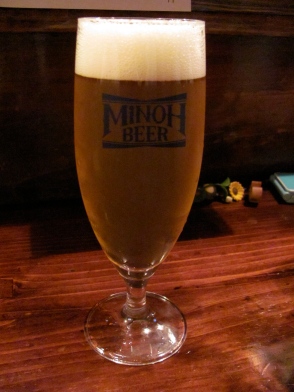
After several trips to the brewpub Beer Belly and to the actual Minoh Brewery, it’s about time I got around to reviewing my absolute favorite beer in Japan: Minoh Beer (箕面ビール), which operates from Minoh, Osaka. Readers of my blog know that I love craft beers, and also that finding a really good dark beer in Japan is a huge challenge.
CLICK HERE to read the full post.
The Rice Cooker Chronicles: “Broccoli Lover Learns to BBQ, Part 2″ by Clara Solomon
Anecdote Article, Cultural Outreach, Food & Drink, Rice Cooker Chronicles, Writers Comments Off on The Rice Cooker Chronicles: “Broccoli Lover Learns to BBQ, Part 2″ by Clara Solomon
The Rice Cooker Chronicles is a series of essays by JETs and JET alumni on the theme of cooking/eating and being alone in Japan. The brain-child of JETwit founder Steven Horowitz (Aichi-ken, Kariya-shi, 1992-94) (and inspired by the book Alone in the Kitchen with an Eggplant), this series is curated by L.M. Zoller (CIR Ishikawa-ken, Anamizu, 2009-11), the editor of The Ishikawa JET Kitchen: Cooking in Japan Without a Fight. A writer and web administrator for The Art of Japan: Kanazawa and Discover Kanazawa, ze also writes I’ll Make It Myself!, a blog about food culture in Japan.
New submissions always welcome. Just e-mail it to jetwit [at] jetwit.com.
*****
Broccoli Lover Learns to BBQ
Part 2
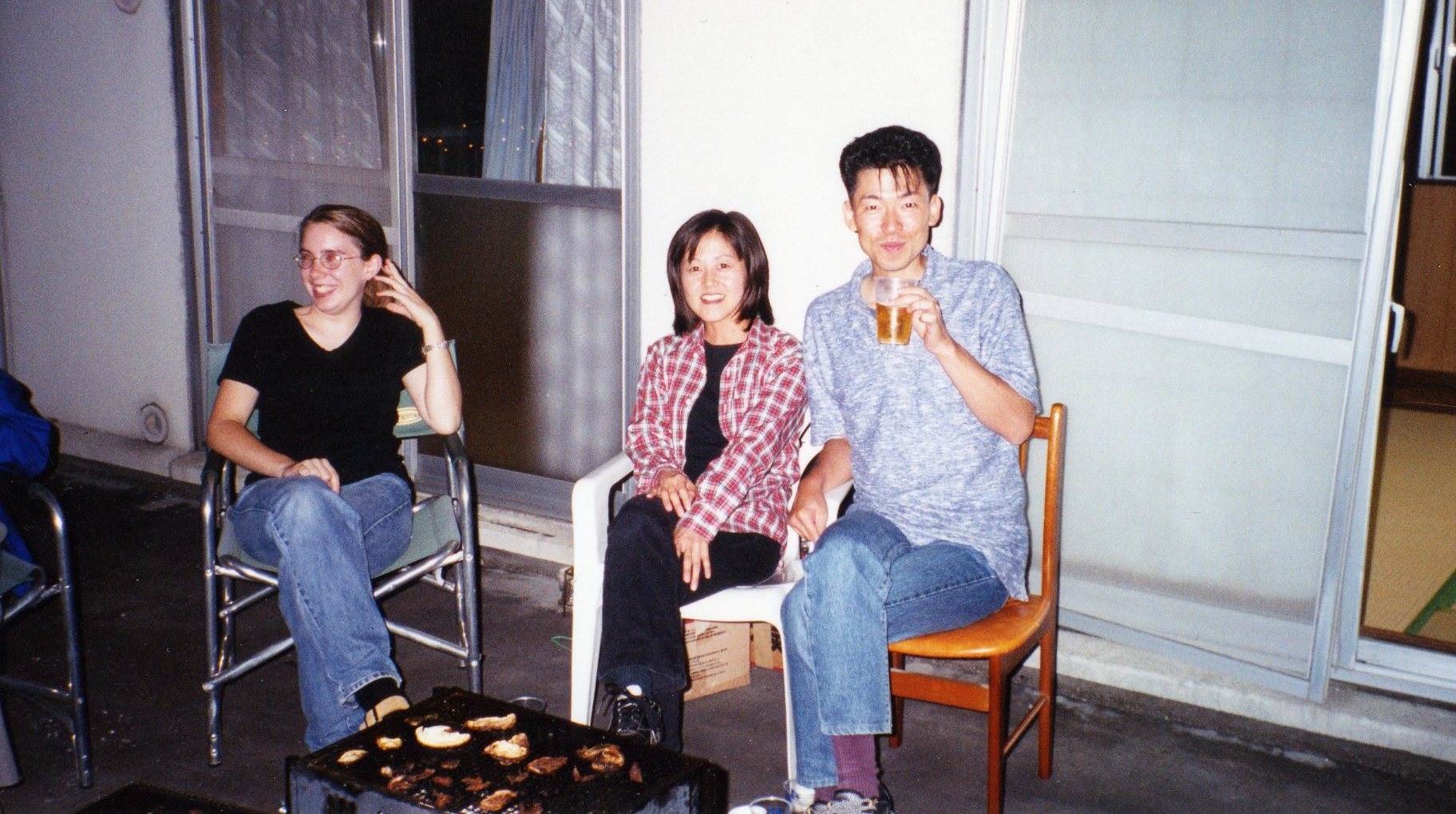
by Clara Solomon (CIR, Nichinan-cho, Tottori-ken; 1999-2001), the Director of Counseling & Career Development at the Office of Career Services at New York University School of Law. She previously worked for the Japan External Trade Organization, specializing in trade relations between Japan and Latin America. She lives in Queens with her husband and twin daughters.
Living in a small farming community has a lot of advantages, I soon learned. For example, I was at the town festival in August shortly after arriving, and casually mentioned to one of my farmer neighbors that I liked sweet corn. I woke up the next day to find about 15 ears of freshly-picked sweet corn on my doorstep. Even when I didn’t particularly like something, I would often find that a kind neighbor, perhaps worried about my over-consumption of broccoli, had left bushels of it at my front door. I guess they’d heard that Americans eat a lot, because they would leave bags stuffed with enough eggplant, cabbage, and carrots to feed a small army. (Why, I often wondered, had I not moved to rural Tuscany, where I could have gotten donations of sun-ripened tomatoes, basil, and fresh bufala mozzarella?).
Read More
#188: Happy New Year and Meeting Yoko K. in DC!
Events, Music, Translating/Interpreting, WIT Life, Writers Comments Off on #188: Happy New Year and Meeting Yoko K. in DC!
WIT Life is a periodic series written by professional Writer/Interpreter/Translator Stacy Smith (Kumamoto-ken CIR, 2000-03). She starts her day by watching Fujisankei’s newscast in Japanese, and here she shares some of the interesting tidbits and trends together with her own observations.
ちょっと遅くなりましたが、明けましておめでとうございます! I hope that your 2012 has gotten off to a good start, and that the year of the dragon is a fortuitous one for everyone.
I’m down in DC with a new group of International Visitors invited by the State Department to study U.S. energy policy. In light of the Fukushima accident nuclear is obviously a big focus, but we are also looking at renewable energy options like solar and wind (as well as geothermal which will take us to a plant on the Big Island of Hawaii!). As part of our cultural activities outside of the professional program, the other night we attended Millennium Stage at the Kennedy Center where a Japanese artist was featured.
Her name is Yoko K. and she hails from Nagano, and she is an electronic musician, producer, engineer and vocalist. I was not very familiar with that genre of music, but her performance kept me entertained throughout. She incorporates various tools in her sound creation, and you can see Read More
Rikuzentakata, Iwate: 9 months after the tsunami by Alison Brown
Article/Journalism, Earthquake Tsunami, Japan Local, Notable JET Alums, Return on JET-vestment, Writers Comments Off on Rikuzentakata, Iwate: 9 months after the tsunami by Alison Brown
******************
Thanks to Vancouver-based JET alum Alison Dacia Brown (Iwate-ken, Rikuzentakata-shi, 2005-08) for sharing this article she wrote with JETwit, which also appears (with photos) on page 8 of the latest issue of the JETAA British Columbia Newsletter. It is a follow-up to a previous article she wrote titled “Rikuzentakata.”
Rikuzentakata, Iwate: 9 months after the tsunami
The last article I wrote for JETAABC was just a few weeks after the tragedy happened. I lived in Rikuzentakata, a small city in Iwate prefecture on the coast, whose location and landscape could not have been worse on March 11th. Over nine months has passed, and even though Rikuzentakata, or Takata for short, is far from being fully healed, it’s unbelievable what has been accomplished to make the city liveable again in such a short period of time.
Temporary housing has been built. Grass has begun to grow again. Debris has been cleared. The Tanabata festival has been celebrated. A Lawson has been opened. Possessions have been returned to their owners. Possessions thought to have been lost forever. As an example of this, could you imagine losing your home and possessions and barely escaping with your child and a few clothes? Could you imagine the happiness you would feel when a volunteer is able to give you a memory card with pictures on it you thought were lost forever? There was one volunteer department responsible for this ‘Photo Recovery Project’. In an online video, I smiled when I saw those blue laundry hangers with the clips holding photos that had been recovered and carefully cleaned.
I was devastated when I saw the images of the destruction in the days that followed the tragedy. What was worse was seeing a video taken of the city from a helicopter. It wasn’t just destruction; it looked apocalyptic. I recognized about three buildings which were some of the biggest: The Capital Hotel, City Hall and the building that housed Daiso and the town supermarket, Maiya. Even though they were spared from the waves which swept mostly everything away, they seemed to stand there like ruins, completely gutted from the inside. In the days that followed, a closer look at these buildings showed trapped trees, cars, and probably people which were swept into their paths. Boats on top of buildings seemed commonplace.
I keep in regular contact with my friends in Rikuzentakata and Ofunato, the city next door. In addition, I do some volunteer editing on the Save Takata website. I feel like doing all these things is keeping my spirits up. What also keeps my spirits up is hearing all the stories about my town from volunteers and friends. The day-to-day activities that show that life really does go on are amazing. One of humankind’s best qualities is the ability to adapt, and the residents of Rikuzentakata have certainly adapted and carried on. Enzo Caffarelli, a good friend and former ALT from Takata, has since returned with the volunteer group All Hands. I remember messaging him back and forth on Facebook after he arrived and he told me was doing some work at a rice harvest cooperative, and being managed by a dirty old Japanese man who loved women and sexual innuendos. Awesome. Read More
