




Good analysis of the LDP return to power from The Monkey Cage
 Academic, Japan Trends
  Comments Off on Good analysis of the LDP return to power from The Monkey Cage
This post from The Monkey Cage by political science professor Joshua Tucker citing Christina Davis is the most in-depth and current piece I’ve seen explaining what the LDP re-election is really all about and putting Japan’s current situation in perspective.
Here are some excerpts:
Despite electoral victory, the LDP did not receive a strong mandate. In a post-election poll conducted by the Asahi Shimbun, respondents asked to explain the LDP victory cited “disappointment of the DPJ government” (81 percent) rather than “support for the LDP’s policies” (7 percent).
…….
In what could be seen as a profile in courage or political suicide, Prime Minister Noda made a deal with the LDP in August that in exchange for their support to pass an unpopular tax increase, he would agree to call for an early election.
The DPJ’s ability to allocate pork barrel policies as the incumbent party made it hard for the LDP to differentiate itself on bread and butter issues, and it instead had to rely on nationalism to mobilize a new policy frame.
……..
Going forward, it is probable that the LDP will deliver what Noda could not and bring Japan into the TPP negotiations. Despite the party’s tepid stance toward the trade talks during the election, in order to deliver on its promise to revitalize the economy the party cannot only cater to rural interests in protection.
……..
China has viewed the election with alarm as sign of movement toward resurgent nationalism and anti-China sentiment in Japan. This fear is misplaced given that the electoral politics reflected rejection of DPJ more than endorsement of LDP…… Chinese leaders are equally committed to economic growth and must recognize that efforts to coerce Japan through economic policies may backfire as did the embargo on rare earth mineral exports imposed in October 2010. The key will be to avoid misunderstandings and accidents through clear diplomacy on both sides to assure that posturing for domestic audiences does not aggravate relations.
CLICK HERE to read the full article.
Rikuzentakata now a hit on Facebook
Earthquake Tsunami, Japan Local, Japan Trends, Local Government, Return on JET-vestment Comments Off on Rikuzentakata now a hit on Facebook
Thanks to Vancouver-based JET alum Alison Dacia Brown (Iwate-ken, Rikuzentakata-shi, 2005-08) for posting about this to Facebook. From a JET perspective, it seems to offer a communications model for Japanese local governments in which perhaps JETs and JET alumni could play a helpful role:
Update: Here’s the Rikuzentakata Facebook Page
Saturday, Nov. 24, 2012
Tsunami-hit city a hit on Facebook
Kyodo
MORIOKA, Iwate Pref. — The coastal city of Rikuzentakata, Iwate Prefecture, devastated by last year’s earthquake and tsunami, has gotten global attention thanks to its use of Facebook.
In July, the city set up an official page in both Japanese and English on Facebook, the first municipality to do so among those on the northeast coast that bore the full brunt of the March 2011 catastrophe.
Since then, officials have been updating the page to display and keep the world updated on the reconstruction process, an unusual move for a municipal government. The posts, mostly written in Japanese, include articles on Rikuzentakata from Japan and around the world, advisories on earthquakes and floods, and the mayor’s participation at a local festival.
When Rikuzentakata’s officials made a fundraising page in English to help preserve the city’s famed “miracle pine tree,” donations came in from around the world. Read More
New Ambassadors Appointed to Japanese Embassies in the U.S. and China
Japan Trends Comments Off on New Ambassadors Appointed to Japanese Embassies in the U.S. and China
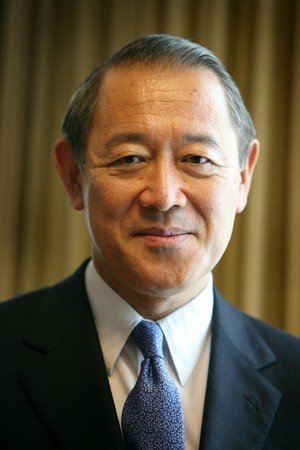
File photo of Ambassador Fujisaki
According to this recent Mainichi article (Japanese) and this Bloomberg/Businessweek article (English), Ambassador Ichiro Fujisaki will be leaving his post at the Japanese Embassy in Washington, D.C. His successor is reported to be Kenichiro Sasae, the current Vice Minister for Foreign Affairs. Also, Shinichi Nishimiya, the former Ambassador in New York until 2010, will be the new Ambassador to China.
Here’s the link to the Japanese article in the Mainichi: http://mainichi.jp/select/news/20120820k0000m010095000c.html
Here’s the link to a Bloomberg/Businessweek article in English: http://www.businessweek.com/news/2012-08-19/japan-to-replace-envoys-to-u-dot-s-dot-s-dot-korea-yomiuri-says
Read an exclusive interview JQ magazine conducted with Ambassador Fujisaki at the 2010 JETAA National Conference: http://jetaany.org/magazine_files/JQ_SeptemberOctober2010.pdf
Japanese Education Ministry OK’s textbook written by American
Japan Trends Comments Off on Japanese Education Ministry OK’s textbook written by American
Thanks to JET alums Melissa Chan and Eroll Packard for alerting me to this via Facebook posts:
Ministry OK’s textbook written by American
http://www.yomiuri.co.jp/dy/national/T120423003701.htm
Sachiko Asakuno / Yomiuri Shimbun Staff Writer
An English textbook written by an American teacher in Japan has passed a screening by the Education, Culture, Sports, Science and Technology Ministry.
Although it is rare to see the publication of a school textbook that was authored by an individual in a core subject, the textbook “Atlantis” is the third such volume Steven Mitchell, 40, has authored since his first was published three years ago.
His previous two textbooks have been adopted by 34 high schools in Miyagi Prefecture. Read More
************
Pretty amazing and I assume extremely unusual tale captured by the Japan Times (and forwarded to me by former JETAANY President and current JETAA USA Country Rep Megan Miller (Hyogo-ken). On one hand, it sounds like a combination of cultural differences plus some people with bad ethical judgment. On the other hand, perhaps it’s indicative of some of the financial pressures affecting small (or relatively small) towns in the current economy in Japan.
Teacher outfoxes board, exposes bid to fleece JETs
http://www.japantimes.co.jp/text/fl20120228a1.html
By PATRICK BUDMAR
English teachers on the JET program are often faced with the bittersweet moment when they realize their contract is ending and they will soon be returning to their home country.
However, for one former JET teacher, that moment turned out to be a poisonously sour one as he became embroiled in a conflict with the board of education (BOE) that employed him. Read More
Jewpanese – Where Jewish and Japanese converge
Japan Trends, Networking Comments Off on Jewpanese – Where Jewish and Japanese converge
 For any Jewish and Jewpanese JETs and alums out there, you may be interested in the “Jewpanese“ Facebook group started by my friend Paul Golin, who serves as Associate Director for the Jewish Outreach Institute and whose wife happens to be Japanese (and an active member of NY de Volunteer!)
Here’s the link to “Jewpanese – Where Jewish and Japanese converge“: https://www.facebook.com/JewishJapanese
Articles by JET journalist Patrick St Michel featured in The Atlantic
Article/Journalism, Cultural Outreach, Japan Trends, Music, Notable JET Alums, Writers Comments Off on Articles by JET journalist Patrick St Michel featured in The Atlantic
Current Mie JET Patrick St. Michel has two articles currently featured in The Atlantic online.
- “The 48 Japanese Schoolgirls Aiming to Take Over the World” – The global ambitions of J-Pop group AKB48
- “How Korean Pop Conquered Japan”
Click here to read other writings by Patrick featured on JETwit.
JNTO seeks to offer 10,000 free tickets to Japan to help jumpstart tourism
Japan Trends, Travel/Tourism Comments Off on JNTO seeks to offer 10,000 free tickets to Japan to help jumpstart tourism
Still pending final approval by the Diet, but pretty amazing opportunity for anyone who wants to visit Japan. Seems like it’s modeled on the MOFA Return to Tohoku program that 20 Tohoku area JET alumni have participated in.
Here’s a link to the article: http://news.yahoo.com/blogs/abc-blogs/10-000-free-round-trip-tickets-japan-134142507.html
If you’ve ever wanted to visit Japan, this may be your chance.
In a desperate attempt to lure tourists back to a country plagued by radiation fears and constant earthquakes, the Japan Tourism Agency’s proposed an unprecedented campaign – 10,000 free roundtrip tickets.
The catch is, you need to publicize your trip on blogs and social media sites.
The number of foreign visitors to Japan has dropped drastically, since a catastrophic earthquake and tsunami triggered a nuclear disaster at the Fukushima Dai-ichi Power plant in March. Nearly 20,000 people have been confirmed dead, while more than 80,000 remain displaced because of radiation concerns. In the first three months following the triple disasters, the number of foreign visitors to Japan was cut in half, compared with the same time in 2010. The strong Japanese currency has made matters worse.
The tourism agency says it plans to open a website to solicit applicants interested in the free tickets. Would- be visitors will have to detail in writing their travel plans in Japan, and explain what they hope to get out of the trip. Successful applicants would pay for their own accommodation and meals. They would also be required to write a review their travel experiences, and post it online.
“We are hoping to get highly influential blogger-types, and others who can spread the word that Japan is a safe place to visit,” said Kazuyoshi Sato, with the agency.
The agency has requested more than a billion yen to pay for the tourism blitz. If lawmakers approve the funding, Sato says visitors could begin signing up as early as next April.
JET Symposium to be televised on NHK September 8
Japan Trends, Return on JET-vestment Comments Off on JET Symposium to be televised on NHK September 8
Posted to the JETAANY Facebook group by JET alum Ayelet Fogel (Miyagi-ken, Sendai-shi):
“JET Symposium to celebrate 25 years of JET will be televised on NHK in Japan on Thursday 8th of September. Channel BS1 10pm-11pm Japan time. :) – if you can watch it please enjoy! Read about it at http://jetwit.com/wordpress/2011/08/17/jet-programme-25th-anniversary-symposium-to-be-held-by-japanese-government/“
And if you do happen to watch it, please feel free to e-mail a summary or any observations or comments about it to jetwit [at] jetwit.com.
Slate.com series: “Can Japan Recover?”
Article/Journalism, Earthquake Tsunami, Japan Local, Japan Trends, Travel/Tourism, Writers Comments Off on Slate.com series: “Can Japan Recover?”
There’s an excellent ongoing series on Slate.com titled “Can Japan Recover?” by Daisann McLane as she travels through various areas of Tohoku. McLane is traveling and writing about Japan as a guest of the Japan National Tourism Organization (JNTO).
“I’m exploring recovering Japan as a guest of the Japan National Tourism Organization. Tourism here dropped through the floor in the first three months after what’s now being called the “Triple Disaster”—earthquake, tsunami, Fukushima. The tourism board was so eager for upbeat stories they offered to send me anywhere I wanted over the course of a week. I emailed them a decidedly non-upbeat itinerary: Sendai, Fukushima, Tokyo. To my surprise, and to their credit, they said no problem. A few weeks later, in July, I was on a Shinkansenspeeding north from Tokyo to Sendai.”
To read more of McLane’s writing about Japan on her travel blog, go to www.therealtravelblog.com.
“A Perspective on Helping Japan Disaster Victims” by ex-JET Jeannie McKinney
Article/Journalism, Blogs, Earthquake Tsunami, Japan Local, Japan Trends, Notable JET Alums, Writers Comments Off on “A Perspective on Helping Japan Disaster Victims” by ex-JET Jeannie McKinney
This article titled “A Perspective on Helping Japan Disaster Victims“ recently appeared on the CleanEnergy.org website, written by Jeannie McKinney (Hokkaido, 2010-11) who is currently doing an internship for the Knoxville, TN office of the Southern Alliance for Clean Energy (SACE).
Link to original post: http://blog.cleanenergy.org/2011/08/30/helping-japan-disaster-victims/
Here’s an excerpt:
“Post-March 11th, the amount of willingness and enthusiasm, good will and generosity that came from abroad as well as at home, was honestly overwhelming. I was living in a small town in Hokkaido, the northernmost island and prefecture of Japan, at the time of the disaster, in an area that experienced nothing but a few tremors and shakes. But somehow, my community of 13,000 generated so many donation packages within the first few weeks after the disaster that our three little post offices had trouble handling the increased mail traffic. Instead, postal workers had to set out collection bins in their lobbies for the Japan Red Cross to come and pick up on their own.”
***********
“The problem is that there is only so much individuals can do on their own, without any direction or instruction from organized groups – especially without advice from the country’s government. Post-Katrina, the biggest complaints here in the U.S. were the slow reactions of the local and federal government to respond. Though nonprofits and volunteer groups were first on the scene, there was only so much they could do without bureaucratic support.”
“The same can be said for Japan right now, both in disaster areas as well as radiation areas.”
Former Yankee pitcher Hideki Irabu dies in apparent suicide; JET alum served as his translator
Celebrity, Japan Trends, Notable JET Alums, Translating/Interpreting Comments Off on Former Yankee pitcher Hideki Irabu dies in apparent suicide; JET alum served as his translator
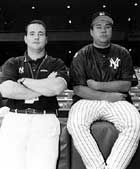
JET alum George Rose (left) in his role as translator for Hideki Irabu (right).
**************
Former star pitcher Hideki Irabu was apparently found dead in his apartment by friends.
Notably, former JETAA New York President George Rose had served as Irabu’s translator during his time with the Yankees when they won the World Series.
Rest in peace, Irabu-san. Thanks for the memories and for doing your part to bridge the culture gap.
Tohoku update and perspectives by Japan Society of Boston President Peter Grilli
Earthquake Tsunami, Fundraising, Japan Society Round-up, Japan Trends, Writers Comments Off on Tohoku update and perspectives by Japan Society of Boston President Peter Grilli
If you’ve been looking for good sources of on the ground reporting in Tohoku, you may appreciate the writing of Japan Society of Boston President Peter Grilli who just returned from three weeks in Tohoku. After March 11, JSB teamed up with The Boston Foundation and the Fish Family Foundation to create the Japan Disaster Relief Fund Boston.
Below are two reports by Peter for JSB as well as two for JDRFB.
- http://www.japansocietyboston.org/Tohoku
- http://www.japansocietyboston.org/Onagawa
- http://jdrfb.squarespace.com/blog/2011/7/19/transition-rescue-and-reconstruction-peter-grilli.html
- http://jdrfb.squarespace.com/blog/2011/7/12/report-from-onagawa.html
Japan Society (NY) Focuses on Healthcare, Children’s Needs in 2nd Round of Allocations from the Japan Earthquake Relief Fund
Earthquake Tsunami, Fundraising, Japan Society Round-up, Japan Trends, Volunteer Comments Off on Japan Society (NY) Focuses on Healthcare, Children’s Needs in 2nd Round of Allocations from the Japan Earthquake Relief Fund
I saw the below press release from the Japan Society in New York just before attending the Japan Foundation and JCIE/USA gathering aimed at helping Japanese NPOs and U.S. organizations better collaborate and share information for disaster relief support. Listening to the discussion helped me appreciate even more the tremendous effort that the Japan Society in New York–not traditionally a grant-making organization–has made and continues to make in providing disaster relief support. The list of grantees also gives some sense of the key needs in Japan right now.
Via Shannon Jowett, Director of Communications for Japan Society in New York.
“In the second round of funding relief and recovery efforts in Japan, Japan Society is supporting NPOs and NGOs focusing on healthcare, mental health and children’s needs among others. Please find full details below, and let me know if you would like further information. I look forward to hearing from you.”
–Shannon
For Immediate Release
Japan Society Focuses on Healthcare, Children’s Needs in 2nd Round of Allocations from the Japan Earthquake Relief Fund
New York, NY – Japan Society announced six organizations working in relief and recovery in Japan to receive $2.1 million in the second round of funding from the Society’s Japan Earthquake Relief Fund (JERF).
The organizations–AFS Intercultural Programs Japan, Care Center Yawaragi, Japanese Medical Society of America, Japan Primary Care Association, Supporting Union for Practical-Use of Educational Resources, and the Tokyo Volunteer Network for Disaster Relief–will receive grants to strengthen their relief and recovery efforts in the aftermath of the earthquake and tsunamis that struck northeastern Japan on March 11, 2011.
“As we announced earlier, Japan Society has made it a priority to support NGOs and other organizations that focus on healthcare, including mental health services, as well as the needs of children,” Japan Society President Motoatsu Sakurai said. “After intensive research and lengthy discussions, we are pleased to announce our support of these six organizations.”
In addition to providing healthcare for the most in need—including the elderly, ill, disabled and pregnant—programs and services range from long-term support for local physicians to creating mental health clinics, serving those suffering from post-traumatic or pre-existing conditions. Additionally, organizations are setting up summer camp programs for children from Fukushima Prefecture. The six organizations to receive funds are as follows:
- AFS Intercultural Programs Japan is a non-profit international exchange organization for students and adults. AFS Japan provides a wide range of programming, including summer camp programs, and school-based exchange and shorter summer programs for high school students. With support from JERF, AFS Japan will provide scholarships for students from the Tohoku region for long-term exchange programs to the United States.
- Care Center Yawaragi is a non-profit organization in Tokyo that offers personalized home care services for the elderly, including group homes, short-stay services, day services, and home help services. In response to the March 11 disaster and with support from JERF, the organization will provide healthcare kits, including bicycles, ponchos, gloves, masks, and antiseptic, among other essentials necessary for healthcare providers in the region who care for the elderly, ill, disabled or pregnant. The healthcare workers will focus on those outside of the shelters who lack mobility or means and require home care.
- Japanese Medical Society of America (JMSA) is a professional medical association of Japanese speaking doctors in New York. In partnership with the Fukushima Prefectural University Medical Center, it supports the Medical Center’s “Kokoro no Care” program, a project to create community-based multidisciplinary mental health clinics. These clinics will provide mental healthcare to patients with symptoms resulting from the March 11 disaster, as well as those with pre-existing conditions.
- Japan Primary Care Association is a professional society of medical practitioners, researchers and students that promotes best practices in the medical and health and welfare fields. In response to the Tohoku earthquake, the Japan Primary Care Association established the Primary Care for All Team (PCAT) to undertake medical relief work in the region. JERF supports PCAT teams–multidisciplinary healthcare teams headed by doctors–who provide medical care to evacuees in shelters and temporary housing, and to those in need in their homes. The healthcare teams also provide long-term support for local physicians in the region to ensure that patients have access to continued primary care, including a specialized team in obstetrics.
- Supporting Union for Practical-Use of Educational Resources, in partnership with Abukuma NS Net, both of which run summer camps for children all over Japan, started the Fukushima Kids Summer Camp for first through ninth graders from Fukushima Prefecture who cannot enjoy the outdoors this summer due to radiation concerns. With support from JERF, an additional 200 students will participate in the Fukushima Kids Summer Camp in Hokkaido. The Supporting Union for Practical-Use of Educational Resources provided summer camp opportunities to children after the Hanshin Awaji and the Chuetsu earthquakes.
- Additionally, Japan Society extended another round of funding to the Tokyo Volunteer Network for Disaster Relief, which is collecting and distributing emergency relief goods, setting up a base in Tome, Miyagi Prefecture, and is coordinating the work of approximately 3,000 volunteers who distribute emergency relief supplies and aid clean-up efforts.
The Japan Earthquake Relief Fund, launched on March 12, 2011, has received over $10 million from over 21,000 donors, including individuals, corporations and foundations. One hundred percent of the tax-deductible contributions to the Relief Fund go to organizations that directly help victims.
On March 30, Japan Society announced its first round of funding of $1 million to four Japanese nonprofit organizations on the front line of relief and recovery. In addition to the Tokyo Volunteer Network for Disaster Relief, they are JEN, Entrepreneurial Training for Innovative Communities (ETIC), and the Japan NPO Center.
“We have been rigorously monitoring the work of the fund recipients from the first round, and we are pleased with the progress these organizations are making,” Mr. Sakurai said. Updates from the Relief Fund recipients can be found on the Society’s website, www.japansociety.org/earthquake.
Japan Society Vice President of External Relations Daniel Rosenblum said the Society continues to explore opportunities to fund the work of organizations that benefit children affected by the March 11 disaster, as well as organizations involved in long-term reconstruction efforts.
“We are working on the selection process for a third round of funding and will be making an announcement sometime in the fall,” he said.
The recovery and reconstruction process is likely to take five or even ten years, Mr. Sakurai said. “We are looking at a long-term process, and there is much uncertainty. But we are confident in the final analysis Japan will recover and thrive,” he said.
Those wishing to donate to the fund can go to www.japansociety.org/earthquake or mail a check to Japan Society, 333 East 47th Street, New York, New York 10017; Attn: Japan Earthquake Relief Fund. Checks should be made payable to “Japan Society” and indicate “Japan Earthquake Relief Fund” on the memo line of the check. For additional information, email japanrelief@japansociety.org.
In a previous announcement, Japan Society pledged half of all admission sales made March 14 through June 30, 2011 (totaling $50,000) to the fund. In addition, the Society organized the April 9 CONCERT FOR JAPAN, which drew 2,400 visitors, was viewed by over 200,000 people live on Ustream, and raised over $88,000 for the fund.
Japan Society is an American nonprofit committed to deepening mutual understanding between the United States and Japan in a global context. Now in its second century, the Society serves audiences across the United States and abroad through innovative programs in arts and culture, public policy, business, language, and education. For more information, visit www.japansociety.org or call 212-832-1155
# # #
_____
Shannon Jowett, Director of Communications
(p) 212-715-1205 (f) 212-715-1262 (e) sjowett@japansociety.org
Japan Society | 333 E. 47th St. | New York, NY 10017 | www.japansociety.org
Donate Japan Earthquake Relief Fund
View Japan Society’s full Calendar of Events
Join Japan Society on Facebook
Follow Japan Society on Twitter
Visit About Japan: A Teacher’s Resource
A New York Times article today titled “Radiation-Tainted Beef Spreads Through Japan’s Markets” paints a worrisome picture of the radiation situation in Japan. Or does it?
It’s hard for JET alums outside of Japan to know what to think all the time. I suppose it’s just as hard for JETs in Japan to know what to think. But you guys have to actually do–or not do–something about it. So I thought it might be helpful to get a sense of how much or little the radiation issue is affecting the lives of JETs (and JET alums) in Japan.
How are JETs in Japan reacting? Are you worried? Is the NY Times article too alarmist? Are you changing eating and travel behaviors in any way?
Please share any thoughts in the comments section, or e-mail them to jetwit [at] jetwit.com if you prefer to post anonymously.
Thanks.
