




WIT Life #389: 今年の漢字 and galloping into 午年
 Translating/Interpreting, Uncategorized, WIT Life
  Comments Off on WIT Life #389: 今年の漢字 and galloping into 午年
Interpreter/Translator/Writer Stacy Smith (Kumamoto-ken CIR, 2000-03) presents WIT Life, a periodic series about aspects of Japanese culture such as art, film, food and language. Stacy starts her day by watching Fujisankei’s newscast in Japanese, and here she offers some interesting tidbits and trends along with her own observations.
We are quickly coming to the end of another year; where does the time go? I hope everyone had a lovely holiday season and is looking forward to what 2026 will bring. I’m particularly excited as next year is 午年 (うまどし, umadoshi or year of the horse), which is my animal year. If I get lucky, perhaps it will be an 当たり年 (あたりどし, ataridoshi or banner year). Funnily enough, one of my first memories from when I started to study Japanese in high school was learning how to say what our animal years were. 「午年です」will forever be inscribed on my brain (arigatou Sensei Watson!).
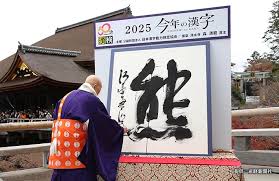
Speaking of other (non-zodiac) animals, 熊 (kuma or bear) was selected as 今年の漢字 (kotoshi no kanji, or kanji of the year). This was due to the extraordinary number of bear appearances this year, especially in places like cities where they don’t usually go. A record-breaking 13 people died in unprecedented bear attacks, and there was even a case of a cub who climbed a persimmon tree where it remained for hours. Thankfully it was safely captured, but experts hypothesized that it had strayed from its family and had not been taught about hibernation. Bears are being spotted most frequently in northern areas like Hokkaido and Tohoku. The reason for their expanded range of movement is thought to be a lack of staple diet items such as acorns, causing them to look in residential areas for food like walnuts and chestnuts. Another reason for the selection of 熊 was the premature return of four giant pandas to China amidst a chilling in China-Japan relations. This strain between the two countries is due to Prime Minister Takaichi’s recent comments about potential Japanese military involvement in a Taiwan conflict and other prominent tensions.
Runner-up candidates for this year’s kanji were #2 米 (kome, or rice), and #3 高 (taka, or high/expensive). 熊 beat out 米 with an only 180-vote margin, and the latter referred to the ongoing domestic rice shortage and resulting skyrocketing prices of this product. 高 referred to the first kanji in the PM’s last name 高市 (Takaichi), as well as rising prices of other commodities that have been plaguing Japanese consumers.
Wishing everyone a wonderful end to the year and all the best in 2026. 良いお年をお迎えください!

Comments are closed.