




Michelle Lynn Dinh (Shimane-ken, Chibu-mura, 2010–13) is an editor and writer for RocketNews24, a Japan-based site dedicated to bringing fun and quirky news from Asia to English speaking audiences.
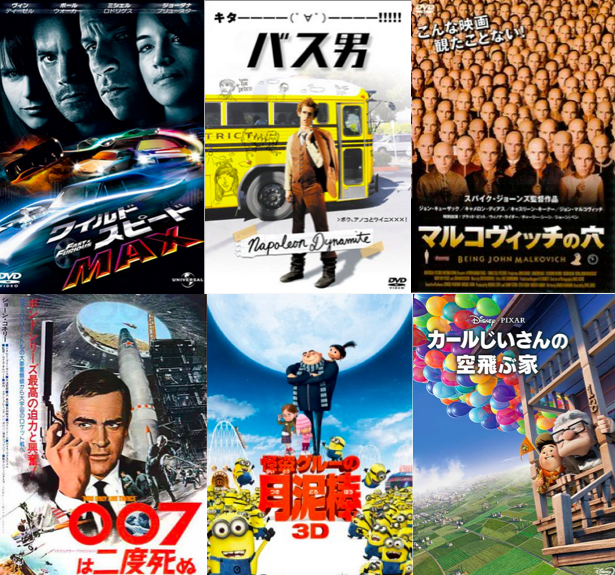
Hollywood films are popular around the world and Japan gets its fair share of dubbed and subtitled blockbusters. But sometimes things get a little mixed up when changing words from English to Japanese. This gives rise to translated titles that come in a wide range of strange from unintended sexual innuendos to spoilertastic summaries.
Let’s take a look at 13 weird Japanese movie titles that make you wonder what the translators were thinking.
【RocketNews24】7 things you should know before moving abroad
 Article/Journalism, Writers
  Comments Off on 【RocketNews24】7 things you should know before moving abroad
Posted by Michelle Lynn Dinh (Shimane-ken, Chibu-mura, 2010–13), editor and writer for RocketNews24. The following article was written by Jessica, a writer and translator for RocketNews24, a Japan-based site dedicated to bringing fun and quirky news from Asia to English speaking audiences.

I’ve lived abroad three times in my life. Once was a homestay in France, once was a semester studying in Germany, and now I live and work in Japan. I don’t expect that I will ever move back to the States. I love Japan and have wanted to live abroad almost as long as I can remember. Even so, it has sometimes been challenging for a girl from suburban Arizona who didn’t even get a passport until she was 18, and lately I’ve been wondering what I would tell my younger self to better prepare her for this crazy expat life.
With the help of our globetrotting friends, we’ve come up with this list of seven things you should know before moving abroad.
*****
Writer, researcher, and ex-JET Matt Leichter (Saitama-ken ’03-’05) will be presenting “College Education: Certain Debt, Uncertain Income” at the Henry George School of Social Science in New York City on Friday, December 20, at 6:30 PM. Here is the abstract:
Soaring costs for education, together with limited job opportunities and stagnant wage growth, place substantial financial and psychological burdens on students.
Noted columnist and researcher Matt Leichter reviews tuition inflation, cuts in public funding and the business of lending to students. Mr. Leichter will also propose reforms to the system of financing college education.
The school is located in Manhattan on East 30th Street between Park Avenue and Lexington Avenue.
WIT Life #256: Seattle’s Katsu Burger!
Travel/Tourism, Uncategorized, WIT Life, Writers Comments Off on WIT Life #256: Seattle’s Katsu Burger!
WIT Life is a periodic series written by professional Writer/Interpreter/Translator Stacy Smith (Kumamoto-ken CIR, 2000-03). She starts her day by watching Fujisankei’s newscast in Japanese, and here she shares some of the interesting tidbits and trends along with her own observations.
I spent the weekend here in Seattle for the purpose of running the local marathon, which I successfully completed this afternoon! Due to Seattle’s large Japanese-American population and their great influence, on previous visits I have taken advantage of cultural offerings such as the Uwajimaya shopping center (similar to our Mitsuwa), but I was excited to discover a new Japan-related restaurant this time around. I was pretty ravenous after running and craving something substantial, so on the way to the airport I found myself at Katsu Burger. It is in an area surrounded by several fast-food teriyaki joints, but not much else. However, once stepping into the shop you are greeted by a wide variety of Japanese memorabilia, as well as a map adorned with push pins indicating where customers have visited from. As you would expect of Chikyu no Arukikata bearing Japanese tourists, Japan was full from Hokkaido to Okinawa!
Katsu Burger bills itself as serving “Japanese-style burgers and beyond,” and all items Read More
WIT Life #255: San Francisco’s Xanadu Gallery
Art & Design Observer, Translating/Interpreting, WIT Life, Writers Comments Off on WIT Life #255: San Francisco’s Xanadu Gallery
WIT Life is a periodic series written by professional Writer/Interpreter/Translator Stacy Smith (Kumamoto-ken CIR, 2000-03). She starts her day by watching Fujisankei’s newscast in Japanese, and here she shares some of the interesting tidbits and trends along with her own observations.
My current three-week business trip finishes on the West Coast, with Thanksgiving in San Francisco and the weekend here in Seattle. When I am in the former city, one of my favorite places to visit is the Asian antique art themed Xanadu Gallery. I was first drawn to visiting this location as its architect was Frank Lloyd Wright, who I love. Interesting fact is that he used this building to practice how to incorporate curves into his designs, and five years later went on to create the Guggenheim with its distinctive spiral.
Xanada features a permanent jewelery collection upstairs as well as rotating exhibits, and I was nicely surprised to find that this time Japanese items were being showcased. As seen in the picture, the main display is of exquisitely detailed Noh robes. They have typical Japanese patterns such as Read More
【RocketNews24】Why does the fifty yen coin have a hole? And other fun facts about Japanese coins
Article/Journalism, Writers Comments Off on 【RocketNews24】Why does the fifty yen coin have a hole? And other fun facts about Japanese coins
Posted by Michelle Lynn Dinh (Shimane-ken, Chibu-mura, 2010–13), editor and writer for RocketNews24. The following article was written by Master Blaster, writing team for RocketNews24, a Japan-based site dedicated to bringing fun and quirky news from Asia to English speaking audiences.
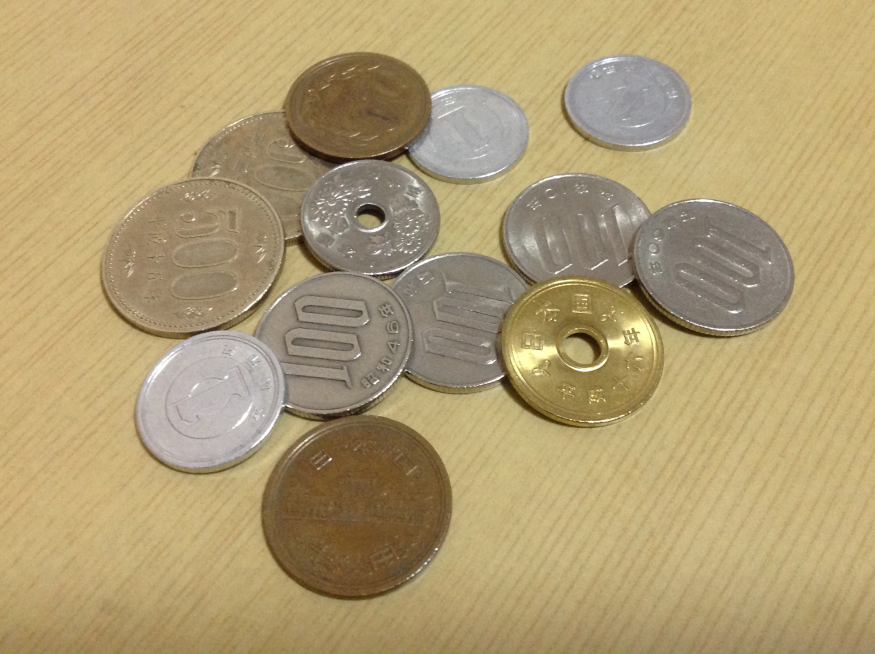
A fun way to get a perspective on another country’s history and culture is by looking at the currency used. The materials and design that go into making them can say a lot about what a country holds dear.
So, why don’t we take a quick look through the modern coins used in Japan and learn a little about why they look the way they do and some other tidbits along the way such as what happens when you microwave a one-yen coin and why you shouldn’t do it.
I’ll Make It Myself!: Japan-Friendly Thanksgiving Recipe Ideas
Blogs, Food & Drink, I'll Make It Myself, Writers Comments Off on I’ll Make It Myself!: Japan-Friendly Thanksgiving Recipe Ideas
Leah Zoller (CIR Ishikawa-ken, Anamizu, 2009-11) is the editor of The Ishikawa JET Kitchen: Cooking in Japan Without a Fight. She works in international student exchange; writes I’ll Make It Myself!, a blog about food culture in Japan and the US; curates The Rice Cooker Chronicles, a series of essays by JETs and JET alumni on the theme of cooking/eating and being alone in Japan; and admins The JET Alumni Culinary Group on LinkedIn.
Hosting two Thanksgivings in Japan taught me to love the holiday and its food again. My friends are amazing cooks, and the sheer sense of community, of getting together to remake a tradition in our own way really made the holiday feel special.
Last year, I did a recipe-roundup of our meal. This year, I’d like to offer more recipes and suggestions for making Thanksgiving special in Japan or wherever you are.

WIT Life #254: Denver’s Japanese influence
Food & Drink, Translating/Interpreting, Uncategorized, WIT Life, Writers Comments Off on WIT Life #254: Denver’s Japanese influence
WIT Life is a periodic series written by professional Writer/Interpreter/Translator Stacy Smith (Kumamoto-ken CIR, 2000-03). She starts her day by watching Fujisankei’s newscast in Japanese, and here she shares some of the interesting tidbits and trends along with her own  observations.
My interpreting travels bring me again to Denver, and earlier in the fall I posted here about the city’s amazing History Colorado Center, currently showing an exhibit about Japanese American internment during the war. It is still running, so make sure to check it out if you are in town! My clients and I spent the first week of our three-week journey in DC, as these Department of State programs always do. There I spent some time at the Memorial to Japanese-American Patriotism in World War II. It features two Japanese cranes caught in barbed wire on top of a tall marble pedestal, and it was created by Japanese-American sculptor Nina Akamu in 2000. It sits in a landscaped plaza surrounded by a granite wall with inscriptions of the battles that Japanese Americans fought in, as well as the names of Read More
【RocketNews24】Japanese elementary school teachers may tell you “5 x 100 = 500” is wrong
Article/Journalism, Writers Comments Off on 【RocketNews24】Japanese elementary school teachers may tell you “5 x 100 = 500” is wrong
Posted by Michelle Lynn Dinh (Shimane-ken, Chibu-mura, 2010–13), editor and writer for RocketNews24. The following article was written by Master Blaster, writing team for RocketNews24, a Japan-based site dedicated to bringing fun and quirky news from Asia to English speaking audiences.
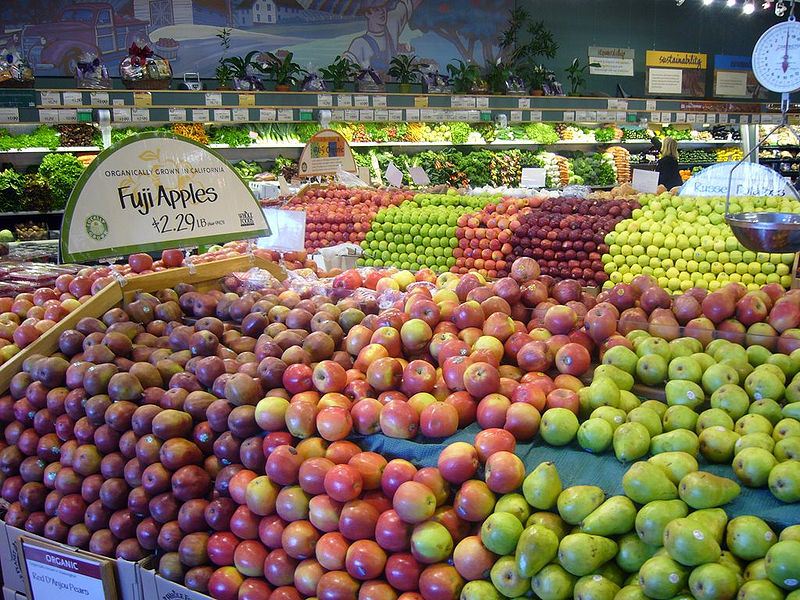
Here’s an elementary school math question for you all:
Apples are sold for 100 yen each. If you buy 5 what is the total amount?
If you said “5 × 100 = 500” then I’m sorry but you just flunked second grade math in Japan… if there were only one question all year. The reason is an old teaching method that is employed in elementary and middle schools throughout the country. It’s also a method that many, such as a blogger by the name of Uncorrelated, want stopped as it leads to strange logic where six times seven does not always equal 42 and five times 100 might not equal 500.
I’ll Make It Myself!: Millet Muffins
Blogs, Food & Drink, I'll Make It Myself, Writers Comments Off on I’ll Make It Myself!: Millet Muffins
L.M. Zoller (CIR Ishikawa-ken, Anamizu, 2009-11) is the editor of The Ishikawa JET Kitchen: Cooking in Japan Without a Fight. Ze works in international student exchange; writes I’ll Make It Myself!, a blog about food culture in Japan and the US; curates The Rice Cooker Chronicles, a series of essays by JETs and JET alumni on the theme of cooking/eating and being alone in Japan; and admins The JET Alumni Culinary Group on LinkedIn.
Check out the rice section in your local supermarket in Japan for other grains, and you’re often find zakkoku (雑穀) / kokumotsu (穀物), mixed grains and beans, which often includes millet. Millet is called awa (粟) or kibi (キビ) and is often sold by itself as uruchikibi (うるちキビ ) or mochi kibi (モチキビ).

【RocketNews24】10 things Japan gets awesomely right
Article/Journalism, Writers Comments Off on 【RocketNews24】10 things Japan gets awesomely right
Posted by Michelle Lynn Dinh (Shimane-ken, Chibu-mura, 2010–13), editor and writer for RocketNews24. The following article was written by Philip Kendall (Fukushima-ken, Shirakawa-shi, 2006–11), senior editor and writer for RocketNews24, a Japan-based site dedicated to bringing fun and quirky news from Asia to English speaking audiences.
At the end of our recent article listing the 10 things that we think Japan gets horribly wrong, we assured you that we’d be back soon to focus on some of the positives and introduce the things that we really, truly love about living in Japan. True to our word, we sat down and decided on what we as (mostly) foreigners most love about this great little collection of islands, and it turned out to be a lot of fun.
Although Japan is not without its faults, it is nevertheless an incredibly efficient and easy-to-live-in country, and we’ve discovered that there are numerous things that the Japanese get not just right, but awesomely right.
Join us after the jump for our top 10 things we love about Japan.
WIT Life #253: Preserving Japanese Traditional Arts
Art, Events, Translating/Interpreting, WIT Life, Writers Comments Off on WIT Life #253: Preserving Japanese Traditional Arts
WIT Life is a periodic series written by professional Writer/Interpreter/Translator Stacy Smith (Kumamoto-ken CIR, 2000-03). She starts her day by watching Fujisankei’s newscast in Japanese, and here she shares some of the interesting tidbits and trends along with her own observations.
This week I had the opportunity to interpret for a Japanese delegation comprised of two groups who traveled to New York to receive the annual Tiffany Foundation Award. This award was created by the Tiffany Foundation in collaboration with the Japan Center for International Exchange (JCIE), and it recognizes non-profits that are preserving Japanese traditional arts at the national and regional community levels. This year’s recipients were the Association for the Promotion of Ipponsugi Street, located in Ishikawa Prefecture, and envisi, located in Miyagi Prefecture. They were the 6th round of winners since the award’s establishment in late 2007.
The Association for the Promotion of Ipponsugi Street, whose members are featured here wearing the happi coats, preserves their city Nanao’s unique custom of 花嫁のれん (hanayome noren). Noren are long curtains that hang in the entrances to Japanese restaurants and traditional Japanese rooms, and the special bridal ones are dyed using the Kaga yuzen technique. Hanayome noren are hung in the doorway leading to the butsuma (a small room holding sacred objects) for the bride to walk through when she gets married, a ritual that Read More
【RocketNews24】10 things Japan gets horribly wrong
Article/Journalism, Writers Comments Off on 【RocketNews24】10 things Japan gets horribly wrong
Posted by Michelle Lynn Dinh (Shimane-ken, Chibu-mura, 2010–13), editor and writer for RocketNews24. The following article was written by Philip Kendall (Fukushima-ken, Shirakawa-shi, 2006–11), senior editor and writer for RocketNews24, a Japan-based site dedicated to bringing fun and quirky news from Asia to English speaking audiences.

It should come as no surprise to our readers to hear that we’re big fans of Japan. Pretty much everything here works as it should, the food is amazing, the culture rich, and people are on the whole likeable and friendly. But there are times when Westerners, and Japanese who have spent any amount of time abroad for that matter, realise that Japan gets some things not just wrong but horribly wrong. So join us after the jump as we redress the balance no doubt offset by our constant admiration of Japan by discussing the 10 little things that drive us nuts in this otherwise great country.
【RocketNews24】Acronyms and in-jokes: The origins of your favourite Japanese video game companies’ names
Article/Journalism, Writers Comments Off on 【RocketNews24】Acronyms and in-jokes: The origins of your favourite Japanese video game companies’ names
Posted by Michelle Lynn Dinh (Shimane-ken, Chibu-mura, 2010–13), editor and writer for RocketNews24. The following article was written by Philip Kendall (Fukushima-ken, Shirakawa-shi, 2006–11), senior editor and writer for RocketNews24, a Japan-based site dedicated to bringing fun and quirky news from Asia to English speaking audiences.

As much as we like to think of ourselves as free thinkers and immune to corporate advertising, there’s no denying that brand names have found their way into pretty much every facet of our daily lives. Many North Americans routinely use “Kleenex” in place of the word tissue; in the UK it’s not unusual to hear people say that they’re about to “hoover up” when referring to running a vacuum cleaner; and in its heyday pretty much any portable gaming device was casually referred to as a Gameboy.
The likes of Nintendo and Sony have been household names for years, but did you ever wonder where these names come from and what they might mean in their native language? Author of Japanmanship and game developer James Kay sheds some light on the origins of the names Japan’s biggest video game companies use, from Capcom to SNK, and has generously shared a few snippets of info with RocketNews24 for our enjoyment and nerdy enlightenment.
Find out where those world-famous names really come from after the jump.
WIT Life #252: Ivan Ramen
Food & Drink, Translating/Interpreting, Uncategorized, WIT Life, Writers Comments Off on WIT Life #252: Ivan Ramen
WIT Life is a periodic series written by professional Writer/Interpreter/Translator Stacy Smith (Kumamoto-ken CIR, 2000-03). She starts her day by watching Fujisankei’s newscast in Japanese, and here she shares some of the interesting tidbits and trends along with her own observations.
I can’t believe it’s been over a month since I’ve written here, but during that time I’ve traveled from Hawaii to LA to NY and then to Japan for various interpreting gigs. Needless to say, there were many adventures along the way! A particular highlight was getting to interpret for my favorite Japanese director, Hirokazu Kore-eda, when his fabulous new film Like Father Like Son (そして父になる) debuted at the New York Film Festival last month. It will have its widespread release here in the States early next year, and I will write more about it and meeting the director then…
It’s always great to be home again, and one of the best parts is being able to enjoy the many events taking place on a daily basis here in th e city. Last night I was able to check out one at Strand Books, which hosted the author Ivan Orkin to talk about his experiences running a ramen shop in Tokyo, his new memoir/cookbook, and the opening of his upcoming ramen shop here in NY. I was looking forward to meeting Orkin as he graduated from Read More
