




【RocketNews24】Ninja life skills: 7 tips to make learning Japanese that little bit easier
 Article/Journalism, Language Study, Writers
  Comments Off on 【RocketNews24】Ninja life skills: 7 tips to make learning Japanese that little bit easier
Posted by Michelle Lynn Dinh (Shimane-ken, Chibu-mura, 2010–13), editor and writer for RocketNews24. The following article was written by Philip Kendall (Fukushima-ken, Shirakawa-shi, 2006–11), senior editor and writer for RocketNews24, a Japan-based site dedicated to bringing fun and quirky news from Asia to English speaking audiences.
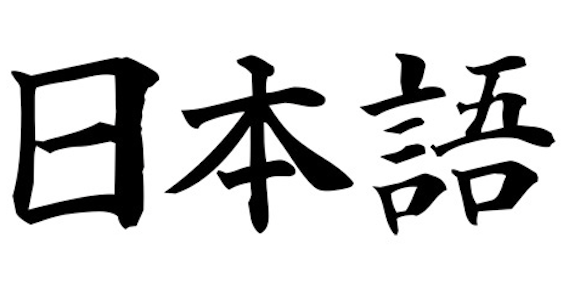
Despite its apparent difficulty, Japanese is fast becoming one of the world’s most desirable languages to learn, with more and more Westerners studying it every day. Eventually, though, we all hit a wall with our studies and feel like we’re not making any progress. The books you threw yourself into with such enthusiasm start to become a chore to open, the army of kanji characters you have yet to study stare back at you with mocking disdain, and despite all the hours you put in you still can’t quite keep up with that anime you were determined to watch without subtitles. It happens to the best of us, but there are ways to break out of this rut, not to mention rekindle that love for studying Japanese, or any other language for that matter.
So today we’d like to bring you our short list of tips and tricks for boosting your Japanese language ability and make studying less of a chore. The following is a combination of both tips and experiences of foreigners who have achieved varying degrees of fluency in the language and our combined knowledge. It’s by no means the final word in language study, but give some of these a try and we’re sure you’ll be surprised at how quickly your Japanese proficiency improves.
I’ll Make It Myself!: Mister Donut Halloween Donuts 2013
Blogs, Food & Drink, I'll Make It Myself, Writers Comments Off on I’ll Make It Myself!: Mister Donut Halloween Donuts 2013
L.M. Zoller (CIR Ishikawa-ken, Anamizu, 2009-11) is the editor of The Ishikawa JET Kitchen: Cooking in Japan Without a Fight. Ze works in international student exchange; writes I’ll Make It Myself!, a blog about food culture in Japan and the US; curates The Rice Cooker Chronicles, a series of essays by JETs and JET alumni on the theme of cooking/eating and being alone in Japan; and admins The JET Alumni Culinary Group on LinkedIn.

Last year’s Halloween-themed pumpkin-flavored Mister Donuts doughnuts were delicious. This year, they’ve added a ghost and Hello Kitty shapes, and it appears that the batter is normal but the icing is kabocha-chocolate flavored.
【RocketNews24】Feel better fast: Eight home remedies from the little old ladies of Japan
Article/Journalism, Food & Drink, Writers Comments Off on 【RocketNews24】Feel better fast: Eight home remedies from the little old ladies of Japan
Michelle Lynn Dinh (Shimane-ken, Chibu-mura, 2010–13) is an editor and writer for RocketNews24, a Japan-based site dedicated to bringing fun and quirky news from Asia to English speaking audiences.

The only thing worse than catching a cold is feeling like you’re about to catch a cold. That achiness you can feel in your bones, followed by dread, worry and the thought, “I’m too busy to get sick now!” It’s enough to make you sick on the spot.
But fear not, the grandmothers of Japan have a plethora of home remedies that’ll get you feeling better in no time. Some may be little more than old wives’ tales, but when you’re feeling under the weather, why not drink hot onion water or smear ginger on your forehead. It actually might be good for what ails you.
I’ll Make It Myself!: Halloween Kit Kats 2013: Where’s the Pumpkin?
Blogs, Food & Drink, I'll Make It Myself, Writers Comments Off on I’ll Make It Myself!: Halloween Kit Kats 2013: Where’s the Pumpkin?
L.M. Zoller (CIR Ishikawa-ken, Anamizu, 2009-11) is the editor of The Ishikawa JET Kitchen: Cooking in Japan Without a Fight. Ze works in student exchange; writes I’ll Make It Myself!, a blog about food culture in Japan and the US; curates The Rice Cooker Chronicles, a series of essays by JETs and JET alumni on the theme of cooking/eating and being alone in Japan; and admins The JET Alumni Culinary Group on LinkedIn.

Halloween Kit Kats in Japan and US.
Let’s enjoy Halloween!
A standard Halloween dessert, pumpkin pudding has a sweet and gentle flavor that fills the mouth. Enjoy Halloween even more with pumpkin-pudding flavor Kit Kats. (Nestle Kit Kats Mini Pumpkin Pudding Flavorネスレ キットカット ミニ パンプキンプリン味)
【RocketNews24】Possibly the greatest textbook doodles of all time
Article/Journalism, Writers Comments Off on 【RocketNews24】Possibly the greatest textbook doodles of all time
Michelle Lynn Dinh (Shimane-ken, Chibu-mura, 2010–13) is an editor and writer for RocketNews24, a Japan-based site dedicated to bringing fun and quirky news from Asia to English speaking audiences.

Remember back in high school when you’d opened up your textbook to find George Washington picking his nose and Joseph Stalin with a peg leg and eye patch. It was enough to make you bow down and thank the graffiti gods for giving you a much needed distraction from the incessant ramblings of your instructor.
Textbook doodles seem to transcend national borders and bored students from all over the world appear to have a penchant for defiling educational tools. We’ve already shown you some from Asia, a continent that seems to be home to an abundance of bored students with idle hands. Now let’s take a look at textbook doodles from Twitter user and Japanese high school student, Chanta, who takes it to a whole other level, actually erasing parts of his textbook to create entirely different, albeit twisted, pictures. Former and current JETs might appreciate Chanta’s preference for using his English textbook as his canvas.
Get the latest issue of the JETAA Ottawa Newsletter
Article/Journalism, Cartoon/Illustration, JET Alum Author Beat, LifeAfterJET, Writers Comments Off on Get the latest issue of the JETAA Ottawa Newsletter
Via JETAA Ottawa. Posted by Gemma Villanueva (Fukushima 2008-11), the editor for the JETAA Ottawa Newsletter.
Download your digital copy of the JETAA Ottawa Newsletter now!
What’s inside this issue?
Happy reading!
【RocketNews24】How to survive an earthquake (or zombie outbreak): Expert advice and items to prepare
Article/Journalism, Writers Comments Off on 【RocketNews24】How to survive an earthquake (or zombie outbreak): Expert advice and items to prepare
Posted by Michelle Lynn Dinh (Shimane-ken, Chibu-mura, 2010–13), editor and writer for RocketNews24. The following article was written by Philip Kendall (Fukushima-ken, Shirakawa-shi, 2006–11), senior editor and writer for RocketNews24, a Japan-based site dedicated to bringing fun and quirky news from Asia to English speaking audiences.

Anyone living in Japan for any length of time would be mad not to spend an hour throwing a bag together.
Being the most earthquake-prone country in the world, earthquake drills are as common in schools in Japan as fire drills are in the West. Knowledge of what to do and how to prepare for big quakes is essential, but many foreigners visiting or living in Japan are simply not used to larger tremors and have little or no idea how to respond should the earth start to rumble. Thankfully, even in Japan the chances of being hurt or killed in an earthquake are relatively slim, but it’s important to know what you can do to prepare. Combining our own first-hand experience with the expert advice of a seismologist from the California Institute of Technology, the following article not only discusses how best to respond in the event of an earthquake, but also lists the essential items that anyone living in Japan or any other earthquake-prone country should have stowed away in their earthquake preparedness kit.
Talking safety is never the most exciting subject, and no one’s asking you to go all Dwight Schrute and build a nuclear fallout shelter here, but it pays to be ready. And if the thought of tooling up in the name of earthquake preparedness fails to get your heart pumping, simply substitute the word “earthquake” for “zombie outbreak” and the process will become infinitely more fun.
JQ Magazine Seeks Writers for Fall 2013!
Books, Events, Film, Food & Drink, Japan Local, JETAA Chapters, JQ Magazine, Volunteer, Writers Comments Off on JQ Magazine Seeks Writers for Fall 2013!

Visit JQ magazine online at http://jetaany.org/magazine.
As we head into fall, JETAA New York’s JQ magazine continues to provide content with an ever-expanding array of articles, interviews and features (see our recent stories here). We’re now looking for new writers, including recent returnees and JET vets, from all JETAA chapters worldwide for posting stories via our host at the global JET alumni resource site JETwit.com. (Scribes are also encouraged to join the JET Alumni Writers group on LinkedIn.)
Below are story ideas grouped by JET participants and alumni (JET World) and those more on Japanese culture (Japan World). And if you’re a JET or JETWit contributor from anywhere in the world with a story idea of your own, let us know!
Click “Read More” below for our fall 2013 ideas pitch package, and contact JQ editor Justin Tedaldi (magazine [at] jetaany [dot] org) to sign up for stories.
Now, JQ is looking for additional help behind the scenes! Our editor (celebrating his fifth anniversary at the helm in November) is seeking a capable assistant to help with the posting, social media sharing and story assigning across all JETAA chapters. If you’re a wiz with WordPress, Facebook and Twitter, and enjoy all forms of Japanese arts, events and media, reach out to Justin. Thanks and yoroshiku!
Percival Constantine at the Japan Writers Conference
Books, JET Alum Author Beat, Notable JET Alums, Writers Comments Off on Percival Constantine at the Japan Writers Conference
Percival Constantine (Kagoshima 2008-2013) is a writer for GaijinPot and the Pulp Ark Award nominated author of several New Pulp novellas, including “The Myth Hunter” and “Love & Bullets.” He is also an editor at Pro Se Productions and resides in Kagoshima. At the Japan Writers Conference this year, he’s going to give a presentation titled “Self-Publishing: The Pros and Cons of Bypassing Traditional Publishing.” Here’s the official description.
 With the advent of new technology such as print-on-demand services and ebooks, the market has opened for authors who wish to go it alone and publish their books without the use of an agent or publisher. There are both positives and negatives to this approach.
In the past, if one wished to publish a book, it required finding an agent and the agent locating a publisher for the product. Thanks to print-on-demand and ebook publishing, self-publishing has become easier than ever for aspiring authors. There are both positive and negative aspects to this. On the plus side, there is no need to write a number of query letters and send out submissions to agents or for the long wait before a book ends up on the market, as well as an increased share of the royalties. On the downside, the self-published author is responsible for all aspects of the production process, from editing the manuscript, laying out the book, creating a cover, and promotion. And though there is a larger share of royalties, the amount of copies sold can be far fewer. This presentation will examine the pros and cons of self-publishing.
To learn more about the Nov. 2-3 Japan Writers Conference, visit the official website HERE.
To learn more about Percival, visit his site HERE.
WIT Life #251: Honolulu’s Byodo-in
Translating/Interpreting, WIT Life, Writers Comments Off on WIT Life #251: Honolulu’s Byodo-in
WIT Life is a periodic series written by professional Writer/Interpreter/Translator Stacy Smith (Kumamoto-ken CIR, 2000-03). She starts her day by watching Fujisankei’s newscast in Japanese, and here she shares some of the interesting tidbits and trends along with her own observations.
Every time I come to Honolulu I try to find a new place to explore that I haven’t tried before, and during this trip my discovery was the Byodo-in Temple in Kaheohe. This is the city where my local JET friend lives, who said it was a must see. For me this was a particularly special spot, as the temple is a replica of the original Byodo-in in Kyoto Prefecture’s Uji-shi, where I first lived in Japan as an exchange student. The Hawaiian version did not disappoint, as it is located at the foot of the 2,000 foot tall Koʻolau Mountains which provide breathtaking background scenery.
Honolulu’s Byodo-In was built in the 1960’s to commemorate the 100th anniversary of the arrival of the first Japanese immigrants to Hawaii, who came to work in the sugar plantation fields. In consultation with Hawaiian religious representatives, the developer of the park chose to Read More
Book: “This Japanese Life” published by JET alum blogger Eryk Salvaggio
Blogs, Books, JET Alum Author Beat, JETs in the News, LifeAfterJET, Notable JET Alums, Return on JET-vestment, Writers Comments Off on Book: “This Japanese Life” published by JET alum blogger Eryk Salvaggio
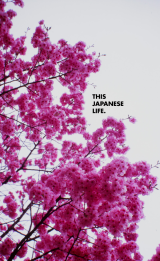 Thanks to AJET Chair Kay Makishi for the heads up on Fukuoka JET alum Eryk Salvaggio who writes the blog “This Japanese Life” and recently published a book by the same name. You can read more about Eryk in this Japan Times interview with him from 2012.
About the book: http://thisjapaneselife.org/this-japanese-life-the-book/
Most books about Japan can tell you how to use chopsticks or say “konnichiwa.” Few tackle the real stress of life in a radically different culture.
The author, a three-year resident and the writer and researcher behind one of the best Japan blogs, tackles the thousand tiny uncertainties of life abroad with honesty and wit.
Perfect for anyone about to leave home for Japan or elsewhere, This Japanese Life will deepen any reader’s understanding of Japanese culture as it’s fused into a method of dealing with the hardships of working and living there.
About Eryk:
Eryk Salvaggio was an American newspaper editor in Bangor, Maine before teaching English in Japan with the JET Program. He lived in Fukuoka City from 2010-2013, writing a blog, This Japanese Life, about Japanese culture and the tiny anxieties of being an expatriate.
The site was named one of the best Japan Blogs by Tofugu and was spotlighted by The Japan Times. Salvaggio has written for McSweeney’s, The Japan Times, Tofugu and Kulturaustausch.
His work as a visual artist has been covered in The New York Times and elsewhere.
He currently lives in London.
WIT Life #250: Mochi, mochi and more mochi!
Food & Drink, Translating/Interpreting, WIT Life, Writers Comments Off on WIT Life #250: Mochi, mochi and more mochi!
WIT Life is a periodic series written by professional Writer/Interpreter/Translator Stacy Smith (Kumamoto-ken CIR, 2000-03). She starts her day by watching Fujisankei’s newscast in Japanese, and here she shares some of the interesting tidbits and trends along with her own observations.
I am at the tail end of my State Department interpreting gig here in Hawaii, and was glad to find that even when you are far from home you are never far from other JETs. I sat down to breakfast the other morning in my hotel, and who did I see but fellow NY JET alum Mark Flanigan! He was here on ICU business, and I was lucky enough to catch him before he flew back to NY that night. Small world! Tomorrow when work ends I’m planning on Read More
JET alum publishes new book on corporal punishment and discipline in Japan’s schools
Academic, Books, JET Alum Author Beat, LifeAfterJET, Notable JET Alums, Return on JET-vestment, Writers Comments Off on JET alum publishes new book on corporal punishment and discipline in Japan’s schools
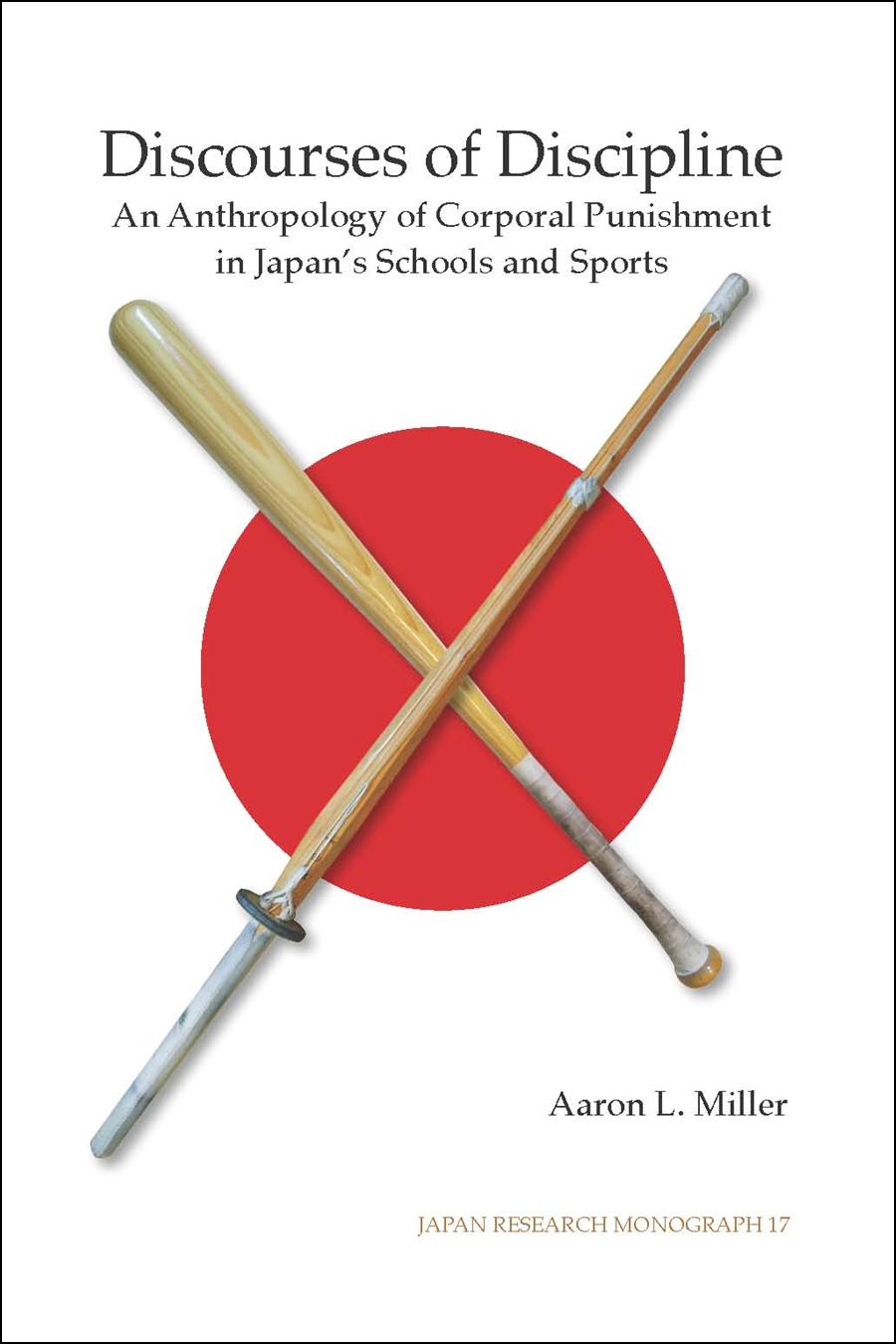 Thanks to AJET Chair Kay Makishi for passing along info about this interesting new book by Aaron Miller (Ehime-ken, 2002-04).
About the Author (via Amazon.com):
Aaron L. Miller, PhD is Assistant Professor and Hakubi Scholar at Kyoto University, affiliated with the Graduate School of Education, and Visiting Scholar, Stanford University Center on Adolescence. His academic research explores the relationships between education, sports, discipline and culture. His website is www.aaronlmiller.com.
About the Book:
This book is about the many “discourses of discipline” that encircle the issue of “corporal punishment” (taibatsu). These discourses encompass the ways that people discuss discipline and the patterns of rhetoric of what discipline should be, as well as what discipline signifies. By scrutinizing these discourses of discipline, this work disentangles the allegedly intimate ties between culture, discipline, and pedagogy in Japanese schools and sports.
For more information on this monograph, including how to order it,please visit http://ieas.berkeley.edu/publications/jrm17.html
Full IEAS catalogue: http://ieas.berkeley.edu/publications/catalogue.html
Amazon: http://www.amazon.com/Discourses-Discipline-Anthropology-Punishment-Monograph/dp/1557291055
Reviews (via Amazon)
Corporal punishment of children by teachers and coaches is a widespread practice in many countries, but especially in Japan, where it has become a front-page issue involving Olympic athletes. Miller explores this issue both historically and in contemporary practices and analyzes how various discourses regrading disciplinary actions have shaped Japanese understandings of their ‘educational reality.’ To understand this phenomenon, Miller rejects Ruth Benedict’s culturalist theory and, instead, places physical discipline (taibatsu) in the contect of Michel Foucault’s theory of violence and power, offering an incisive analysis of a complex issue. —Harumi Befu, professor emeritus, Stanford University
An intriguing and well-written analysis on molding character in Japanese schools and sports through the widespread use of corporal punishment. Miller frames his discussion in the contexts of Japanese cultural ideals about discipline, toughness, and self-improvement, as well as in Japanese perceptions of such forms of discipline as something uniquely Japanese. This book is an important contribution to understanding the social and cultural dynamics of core institutions in contemporary Japan. —Theodore C. Bestor, Harvard University
Corporal punishment as a discipline of pain and an abuse of adult authority is a troubling presence in Japanese classrooms and sports fields. This is an insightful and wide-ranging analysis that overturns simple judgments with a nuanced exploration of the historical development, sociocultural locations, and heated national discourse on corporal punishment in modern Japan. It is a significant contribution to our understanding of Japanese education and sports, and it is an original anthropological perspective on how we might theorize power in Japanese society. – —William W. Kelly, Yale University
I’ll Make It Myself: New Resource: Food Substitutions for Cooking and Baking in Japan
Blogs, Food & Drink, I'll Make It Myself, Writers Comments Off on I’ll Make It Myself: New Resource: Food Substitutions for Cooking and Baking in Japan
L.M. Zoller (CIR Ishikawa-ken, Anamizu, 2009-11) is the editor of The Ishikawa JET Kitchen: Cooking in Japan Without a Fight. Ze also writes I’ll Make It Myself!, a blog about food culture in Japan and the US; curates The Rice Cooker Chronicles, a series of essays by JETs and JET alumni on the theme of cooking/eating and being alone in Japan; and admins The JET Alumni Culinary Group on LinkedIn.

Throughout my four years in Japan, I had to figure out solutions to issues with ingredient availability and cooking equipment to be able to eat the food I wanted. I’ve just started a new resource with some of my tips for what to substitute and what to make at home. Some of them seem really obvious, but they weren’t to me at the time.
【RocketNews24】Ninja language skills: Boost your Japanese with the power of onomatopoeia
Article/Journalism, Writers Comments Off on 【RocketNews24】Ninja language skills: Boost your Japanese with the power of onomatopoeia
Posted by Michelle Lynn Dinh (Shimane-ken, Chibu-mura, 2010–13), editor and writer for RocketNews24. The following article was written by Philip Kendall (Fukushima-ken, Shirakawa-shi, 2006–11), senior editor and writer for RocketNews24, a Japan-based site dedicated to bringing fun and quirky news from Asia to English speaking audiences.

There are in fact three distinct types of onomatopoeia in the Japanese language: 擬声語 giseigo, 擬音語 giongo and 擬態語 gitaigo.
It rarely appears in beginner or intermediate textbooks, but spend a day with any native Japanese speaker and you’ll soon realise that onomatopoeia is a vital part of the language. Utterances such as, “The rain fell like ‘pssshaaaa’” and, “My heart was going ‘boom boom boom’ the whole time!” may come across as a little ineloquent when said in English, but in Japanese these kinds of mimetic words are not only considered perfectly acceptable, but pop up absolutely everywhere.
So if you’ve ever wondered what sound a Japanese pig makes, how best to describe a rolling boulder as opposed to a tiny marble, or would be perplexed if a doctor asked whether the pain you’re feeling is more shikushiku than kirikiri, now’s your chance to hone your language skills and add a few new words to your Japanese vocabulary!
