




【RocketNews24】10 weird and funny things Japanese people do
 Article/Journalism, Writers
  Comments Off on 【RocketNews24】10 weird and funny things Japanese people do
Posted by Michelle Lynn Dinh (Shimane-ken, Chibu-mura, 2010–13), editor and writer for RocketNews24. The following article was written by Philip Kendall (Fukushima-ken, Shirakawa-shi, 2006–11), senior editor and writer for RocketNews24, a Japan-based site dedicated to bringing fun and quirky news from Asia to English speaking audiences.
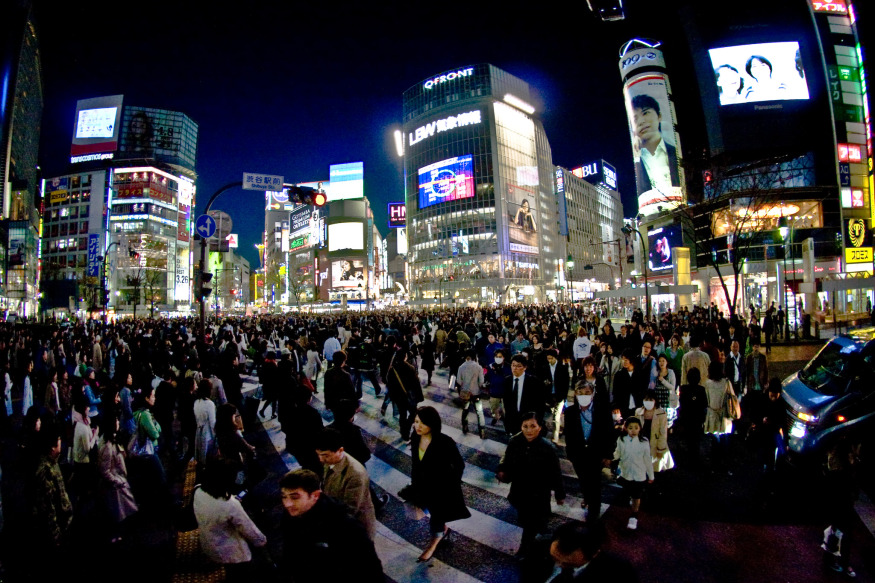
Not so long ago, a friend of mine from the UK came to visit me here in Japan. After showing him around town and making sure to take him to all of the most popular tourist spots, he remarked that quite a few of the subtle behaviours Japanese people exhibit seemed, while in no way offensive, remarkably different to those of our own countrymen. As we worked through a couple of the more unusual customs and behaviours that my friend had noticed, it struck me that at some point during my eight years of living here I had come to accept the everyday quirks of the people around me as entirely normal and not in the slightest bit odd.
Last year, we discussed the 10 things that we love and the 10 things we just can’t stomach about Japan, but today we at RocketNews24 felt it was time to present you with a list of random but genuine observations, from the peculiar to the downright endearing, about the Japanese people themselves. Enjoy!
【RocketNews24】Grated radish art from Japan brings the cute to your favourite dishes
Article/Journalism, Writers Comments Off on 【RocketNews24】Grated radish art from Japan brings the cute to your favourite dishes
Posted by Michelle Lynn Dinh (Shimane-ken, Chibu-mura, 2010–13), editor and writer for RocketNews24. The following article was written by Oona McGee, a writer and translator for RocketNews24, a Japan-based site dedicated to bringing fun and quirky news from Asia to English speaking audiences.
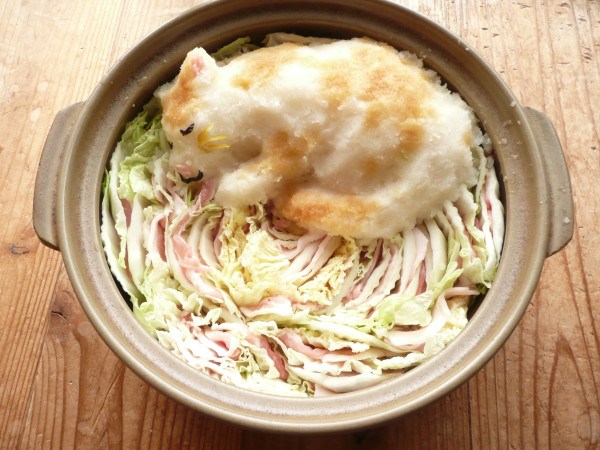
If you’ve been keeping up with the amazing 3-D latte art trends going on in Japan’s barista world right now, then you might want to take a look at their savoury counterparts popping up in grated radish form. Instead of swimming in cups of coffee, these adorable home-made creations are taking dips in winter hot pots and stews. Join us as we take a look at some of the cutest critters on offer, from Ghibli characters to sleeping cats, and see just how easy it is to cook up some edible cuteness at home.
WIT Life #260: Shohei Imamura Film Festival at Asia Society
Events, Film, Translating/Interpreting, Uncategorized, WIT Life, Writers Comments Off on WIT Life #260: Shohei Imamura Film Festival at Asia Society
WIT Life is a periodic series written by professional Writer/Interpreter/Translator Stacy Smith (Kumamoto-ken CIR, 2000-03). She starts her day by watching Fujisankei’s newscast in Japanese, and here she shares some of the interesting tidbits and trends along with her own observations.
First of all, a belated 明けましておめでとうございます! It’s been a busy start to 2014, but I’m happy to be blogging again in the year of the horse (午年 or umadoshi). It being umadoshi is good news for people like me whose animal sign is the horse, as one is said to have good luck when the zodiac sign for the current year is the same as the one from the year when you were born. This makes me what is called a 年女 (toshi onna), and I’m hoping this year of the horse gives me faster feet in the many marathons I run…
In conjunction with the Japan Foundation, the Asia Society is currently featuring the Vengeance is Shohei Imamura film series from January 17-February 1. I have been a fan of Imamura’s ever since seeing The Eel (「うなぎ」, with Yakusho Koji playing a former convict) in 1997, and was glad to have the opportunity to check out some of his other flicks. He was the first Japanese director to win two Palme d’Or awards, one for Unagi, and one for The Ballad of Narayama (「楢山節考」) in 1983, screened this past Saturday night as part of the Imamura film festival.
Set in the 19th century, the movie takes place in a small rural Japanese village where they have Read More
【RocketNews24】10 everyday English words that were originally Japanese
Article/Journalism, Writers Comments Off on 【RocketNews24】10 everyday English words that were originally Japanese
Michelle Lynn Dinh (Shimane-ken, Chibu-mura, 2010–13) is an editor and writer for RocketNews24, a Japan-based site dedicated to bringing fun and quirky news from Asia to English speaking audiences.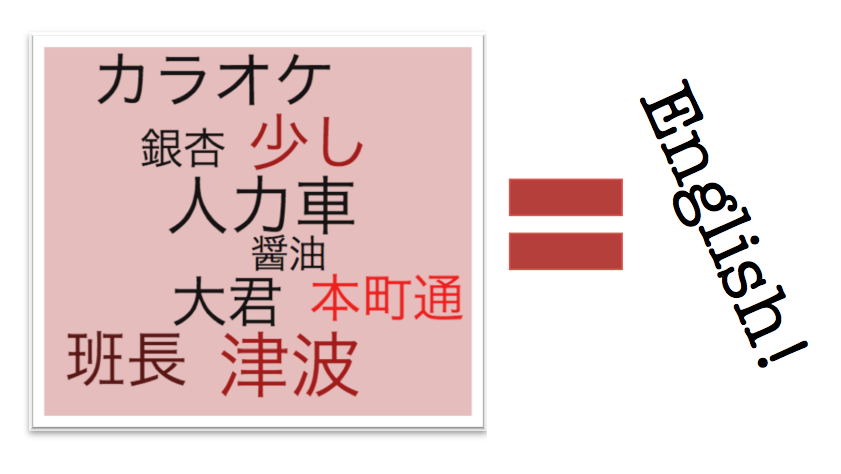
While Japan’s bank of English loan words has grown to the point where “context” and even “paradigm” can be understood by most people, there seems to be only a handful of Japanese words that have been sprinkled into the modern English vocabulary. Of course, there’s things like “manga”, “sushi,” and “karate,” which English speakers can instantly recognize as comics, a Japanese food, and a way to kick ass (in that respective order), but there are also some sleeper agent Japanese words traipsing about our English conversations. Let’s take a look at Japanese words, like “honcho” (as in “head honcho”) and “tycoon” (as in “oil tycoon”), that we use in English.
*****
Writer, researcher, and JET alumnus Matt Leichter (Saitama-ken ’03-’05) will give an encore performance of his lecture, “College Education: Certain Debt, Uncertain Income.” It will again be hosted by the Henry George School of Social Science in New York City. The event date is Wednesday, January 29, at 6:30 PM. The location is not the school’s normal address; instead it will be at:
NYC Seminar and Conference Center
71 West 23rd Street (corner of 6th Ave.)
New York, NY 10010
Here is the lecture’s abstract:
Soaring costs for education, together with limited job opportunities and stagnant wage growth, place substantial financial and psychological burdens on students.
Noted columnist and researcher Matt Leichter reviews tuition inflation, cuts in public funding and the business of lending to students. Mr. Leichter will also propose reforms to the system of financing college education.
Space is limited; please register to attend by emailing hgs.billy@gmail.com.
JET Talks: Temple by Temple Sneak Peek
Art, Events, Uncategorized, Writers Comments Off on JET Talks: Temple by Temple Sneak Peek
JET Talks is JETAADC’s speaker series modeled after TED Talks that features dynamic and interesting individuals to inspire innovative ideas and conversation on Japan within the DC community.
Chelsea is from Guam. Elayna is from Michigan. In 2009, they both moved to Japan with the JET Programme to teach English in Ehime Prefecture. While there, they traveled the 900-mile pilgrimage route in Shikoku visiting 88 temples in 15 days. With so many stories from the trip, they began looking for a way to combine their talents (Elayna illustrates; Chelsea writes) to tell these stories. Using Kickstarter, they successfully funded their project and returned to Shikoku to travel the pilgrimage route once more — this time creating illustrated hand-bound books, postcards, bracelets and more for the 270 donors that made their trip possible.
On Wed., Jan. 29, Chelsea Reidy and Elayna Snyder of bigricefield.com will make a TED Talks-style presentation at Georgetown University in Washington, DC (register today!) telling their story — from their time on JET through their book project, crowdfunding, and the relationships they built along the way. Until then, Chelsea and Elayna have shared some pictures from their journey…

Coming down from temple 24 we found a cat curled up on our packs.

Chelsea paused on the way down from temple 60. After biking up numerous hills, the road became to steep and we had to leave our bikes and finish the trek on foot.

This illustration was inspired by all of the help we received along the way. Here, a woman offers the girl fresh spring water.
You can find more pictures of their journey and illustrations from their book on the JETAADC blog.
【RocketNews24】Five of Japan’s best locations to ski and snowboard
Article/Journalism, Website, Writers Comments Off on 【RocketNews24】Five of Japan’s best locations to ski and snowboard
Posted by Michelle Lynn Dinh (Shimane-ken, Chibu-mura, 2010–13), editor and writer for RocketNews24. The following article was written by Philip Kendall (Fukushima-ken, Shirakawa-shi, 2006–11), senior editor and writer for RocketNews24, a Japan-based site dedicated to bringing fun and quirky news from Asia to English speaking audiences.
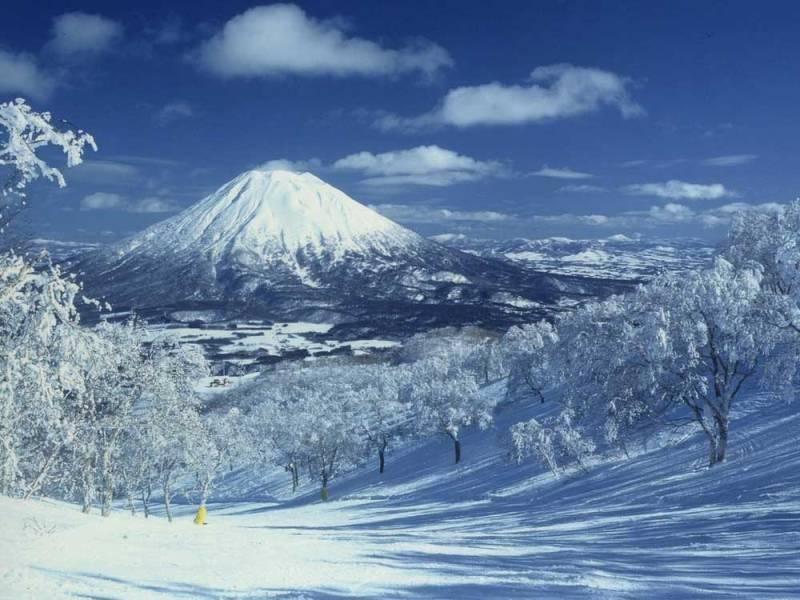
For those of us up in the northern hemisphere, winter is already in full swing. And for skiers and snowboarders, that can mean only one thing: the snow-covered mountains are calling and it’s a race against the clock to get the most out of them.
Treated to generous snow dumps each winter and coupled with the fact that so much of the country is mountainous, Japan is one of the best locations in the world for ski and snowboarding fun, not to mention some of the best powder snow in the world. But which resorts should you be sure to visit before the powder turns to slush? Check out this list of five of Japan’s greatest, and our favourite, places to ski and snowboard!
Posted by Albert David Valderrama (Ibaraki-ken, 2010-present), JET Programme ALT/PA, co-founder and National Co-Representative of API AJET, and Chief Editor of @API.
_______________________________
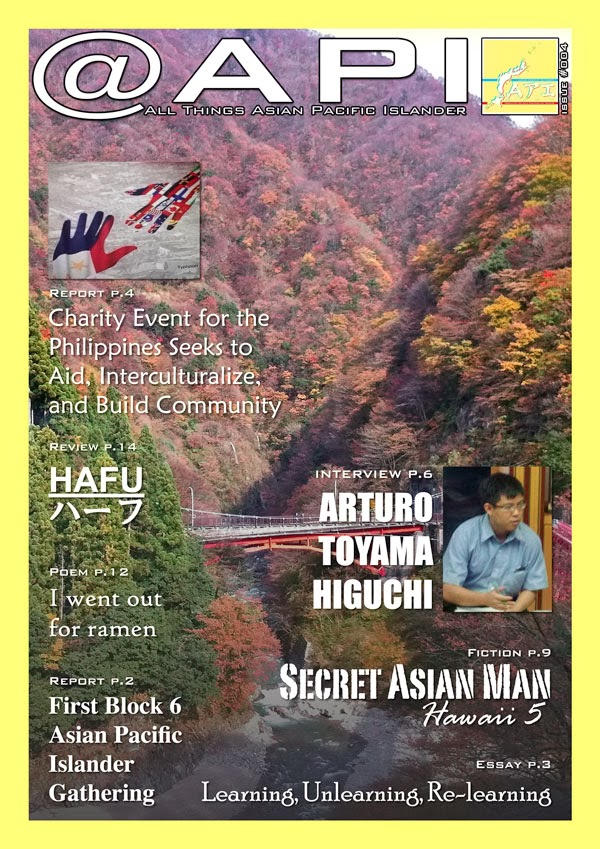
@API Issue #004 is out now! Read the full issue at goo.gl/NDIFEs or click the image below.
@API Issue #004
Inside this issue:
- A reflective essay by JET alumna, Melody Wong, API AJET co-founder and former National Co-Representative.
- A report on the “Ganbappe Philippines Charity Event” in Fukushima.
- A bilingual interview with Arturo Toyama Higuchi, CIR from Peru (courtesy of the CIR Network).
- And many more!
What is @API?
“@API” is a web-based magazine put together by contributors and members of the Asian Pacific Islander Association for Japan Exchange and Teaching (API AJET).
What is API AJET?
Asian Pacific Islander AJET (API AJET) was created during the summer of 2012 following many talks about the specific issues the API community faces.
This special interest group (SIG) aims to create a supportive environment for all APIs living in Japan. We also hope to increase awareness about API issues and incite dialogue among curious JETs and non-JETs. Furthermore, API AJET hopes to act as a tangible resource for anyone interested in understanding an API’s unique perspective (as a foreigner) in Japan.
The group is open to all. Join to share, discuss, and learn about the API experience. Membership is free!
For more information go to our website at api.ajet.net, email us at api[at]ajet.net, or find API AJET on Facebook and Google+.
I’ll Make It Myself!: The Rosette of Versailles: Apple Custard Tart with Walnut Crust
Blogs, Food & Drink, I'll Make It Myself, Writers Comments Off on I’ll Make It Myself!: The Rosette of Versailles: Apple Custard Tart with Walnut Crust
L.M. Zoller (CIR Ishikawa-ken, Anamizu, 2009-11) is the editor of The Ishikawa JET Kitchen: Cooking in Japan Without a Fight. Ze works in international student exchange; writes I’ll Make It Myself!, a blog about food culture in Japan and the US; curates The Rice Cooker Chronicles, a series of essays by JETs and JET alumni on the theme of cooking/eating and being alone in Japan; and admins The JET Alumni Culinary Group on LinkedIn.

I’m a huge fan of Ikeda Riyoko’sThe Rose of Versailles (Beru Bara) fan, so how could I pass up a version of tarte bouquet de roses? You’ll need a lot of walnuts, some maple syrup, and some elbow grease, but this elegant tart can be made in your Japanese kitchen, too!
【RocketNews24】Yes, Mountain Dew flavoured corn chips are a thing in Japan – and they taste…
Article/Journalism, Writers Comments Off on 【RocketNews24】Yes, Mountain Dew flavoured corn chips are a thing in Japan – and they taste…
Posted by Michelle Lynn Dinh (Shimane-ken, Chibu-mura, 2010–13), editor and writer for RocketNews24. The following article was written by Philip Kendall (Fukushima-ken, Shirakawa-shi, 2006–11), senior editor and writer for RocketNews24, a Japan-based site dedicated to bringing fun and quirky news from Asia to English speaking audiences.
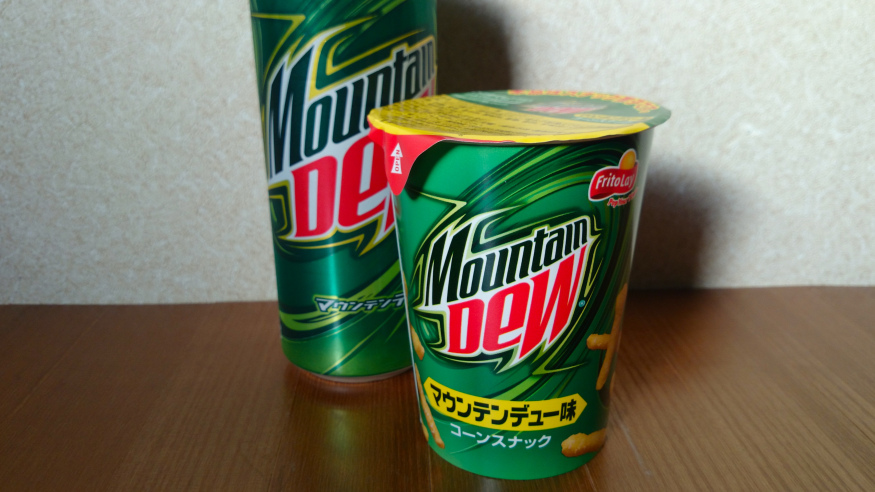
We see a lot of weird stuff on the internet, but corn snacks made to taste – and fizz, no less – like the carbonated soft drink Mountain Dew are undoubtedly the oddest thing to happen since millions of adults across the globe simultaneously lied to their children about a bearded man sneaking into their home and leaving gifts for having refrained from murdering anyone or punching an otter since the previous December.
Nevertheless, as the internet chatter suggests, Mountain Dew corn snacks really do exist here in Japan, and so despite imagining that they’d taste about as good as minty orange juice, we tracked some down and, along with a can of actual Mountain Dew (or “Mtn Dew” as it’s now being branded in the US, because who has time fr vwls?) for comparison, conducted a little taste test of our own.
Full impressions after the jump.
JETAA Ottawa Newsletter – December 2013
Anecdote Article, Article/Journalism, Events, Interview/Profile, JETAA Chapters, Notable JET Alums, Writers Comments Off on JETAA Ottawa Newsletter – December 2013
Via JETAA Ottawa. Posted by Gemma Villanueva (Fukushima 2008-11), the past editor for the JETAA Ottawa Newsletter.
The latest digital issue of the JETAA Ottawa Newsletter can be viewed here: http://us4.campaign-archive2.com/?u=4d0d4aa436ad87ff44921adec&id=80f9a73363
What’s in this issue?

Download past issues here:
http://us4.campaignarchive2.com/home/?u=4d0d4aa436ad87ff4492
1adec&id=13d4251245
WIT Life #259: 右傾化 & スメハラ
Translating/Interpreting, Uncategorized, WIT Life, Writers Comments Off on WIT Life #259: 右傾化 & スメハラ
WIT Life is a periodic series written by professional Writer/Interpreter/Translator Stacy Smith (Kumamoto-ken CIR, 2000-03). She starts her day by watching Fujisankei’s newscast in Japanese, and here she shares some of the interesting tidbits and trends along with her own observations.
As Japan enters its last day of 2013, the Abe administration is demonstrating a drift to the right which is alarming to some. The PM recently made news with his official visit to Yasukuni Shrine, where the almost 2.5 million Japanese who perished during conflicts spanning from 1867 to WWII are enshrined. The reason this is so inflammatory to neighboring Asian countries, as well as the rest of the world, is that those buried there include convicted war criminals and it seems to indicate a flaunting of nationalistic views. This tendency is what got PM Abe into trouble during his first time in office, and once again there is nervous commentary regarding his 右傾化 (ukeika or conservative swing), which some say supercedes his three-arrowed Abenomics economic revival efforts.
This weekend the NYT highlighted this issue with an article on a local battle regarding textbooks being fought on the eight-island township of Taketomi in Okinawa. Here you can see a side by side Read More
【RocketNews24】10 little-known rules for eating Japanese food
Article/Journalism, Writers Comments Off on 【RocketNews24】10 little-known rules for eating Japanese food
Michelle Lynn Dinh (Shimane-ken, Chibu-mura, 2010–13) is an editor and writer for RocketNews24, a Japan-based site dedicated to bringing fun and quirky news from Asia to English speaking audiences.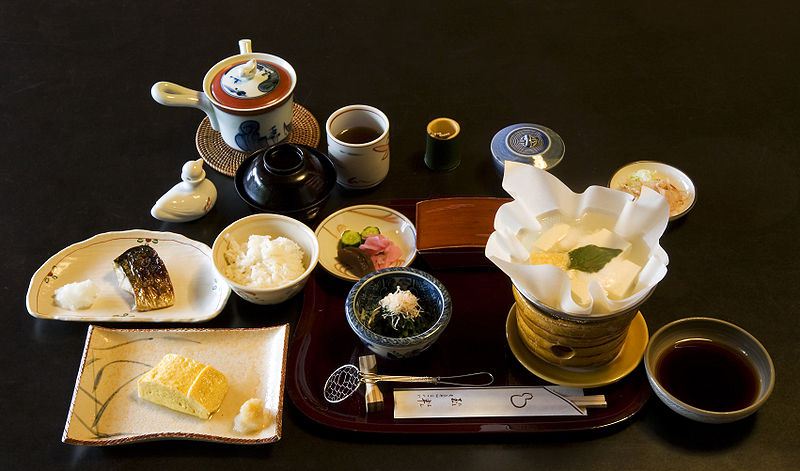
Japanese food, called washoku in Japan, has just been registered as a UNESCO Intangible Cultural Heritage, but you didn’t need an official declaration to know that sushi and tempura are absolutely delicious. But while enjoying Japanese food, have you ever mixed wasabi and soy sauce as a dip for your sushi? Or how about using your bowl as a chopstick rest? If so, you’ve committed an etiquette faux pas. Take a look at our list of 10 little-known rules for eating Japanese food and save yourself some embarrassment while enjoying a traditional Japanese meal.
WIT Life #258: Ivan Ramen debut!
Food & Drink, Translating/Interpreting, WIT Life, Writers Comments Off on WIT Life #258: Ivan Ramen debut!
WIT Life is a periodic series written by professional Writer/Interpreter/Translator Stacy Smith (Kumamoto-ken CIR, 2000-03). She starts her day by watching Fujisankei’s newscast in Japanese, and here she shares some of the interesting tidbits and trends along with her own observations.
The recent addition of Japanese food or 和食 (washoku) to UNESCO’s Intangible Cultural Heritage list is something that warmed the hearts of all of us Japanophiles out there. Although sushi gets more attention, ramen is what is considered to be Japan’s soul food and is increasing its presence here in the city at a rapid rate. I previously wrote about the impending arrival of Ivan Ramen to the New York scene, and his slurp shop has now set up camp in the new Gotham West Market. I finally had the chance to try it out the other day, and really enjoyed the meal even though I am not a huge ramen lover to begin with. My friend and I shared a bowl each of the roasted garlic mazemen and the chili eggplant mazemen (pictured here), both featuring rye noodles and minimal broth. I liked the powerful punch of the garlic version with its chicken and dashi double soup, whereas my friend preferred the milder vegetarian version.
Besides three other types of regular ramen, there are two kinds of donburi and curry rice. To hear more about Ivan Orkin and his path to becoming a ramen restauranteur, check out this profile in today’s NYT.
WIT Life #257: 今年の漢字
Art, Translating/Interpreting, Uncategorized, WIT Life, Writers Comments Off on WIT Life #257: 今年の漢字
WIT Life is a periodic series written by professional Writer/Interpreter/Translator Stacy Smith (Kumamoto-ken CIR, 2000-03). She starts her day by watching Fujisankei’s newscast in Japanese, and here she shares some of the interesting tidbits and trends along with her own observations.
It was recently announced that the kanji representing 2013 would be 輪 (rin or wa). It means ring, circle, or wheel, and refers to different aspects that have converged this year. This was the most popular submission in the public contest run by the Japan Kanji Aptitude Testing Foundation, and there were several explanations for why. One idea came from the five rings symbolizing the Olympics, in regard to the September announcement that Tokyo would host the Summer Olympics in 2020. Another was the coming together of citizens in a circle of recovery from the Great East Japan Earthquake (Thanks to this rebuilding, construction and real estate related stocks have been booming on the Nikkei Stock Average). Yet another interpretation was the private/public cooperation that led to the recent registration of Mt. Fuji on the World Heritage List. 輪 received 9518 votes, and second-place  楽 (raku) which received 8562 votes referred to the Tohoku Rakuten (楽天) Golden Eagles’ victory in the Nippon Series baseball championship.
For those who are interested in kanji and Japanese calligraphy, I would highly recommend the current exhibit at the Metropolitan Museum of Art entitled Brush Writing in the Arts of Japan. It was interesting to learn about Read More
