




Dan’s Slice of Culture 06.30.12
 Food & Drink, Writers
  Comments Off on Dan’s Slice of Culture 06.30.12
By Japanese cultural blogger Dan Moeller (Hiroshima-ken, 2009-11). Through blogging, staying active with Philly JETAA, and being married to his wife, Dan tries to stay connected to the Japanese world. Check out this piece and more of his thoughts at American Accent.

Tomato juice may cure hangovers, or by saying so, make Kagome rich…
According to a recent study by Kagome and Asahi Group Holdings, drinking tomato juice will help you sober up faster (source). Apparently, the tomato juice helps to cleanse your liver by making it secrete more of the enzymes needed to break down alcohol.
The study included an experiment of people given about two shots of shochu (焼酎, a Japanese liquor similar to vodka). After the two shots of shochu, the control group was given a pint of water while the experimental group was given a pint of tomato juice. Those drinking the tomato juice sobered up an average of 50 minutes faster than those drinking water.
Kagome and Asahi agree that a tomato would most likely work the same way, although it was not studied.
This is great news considering Japan loses Read More
WIT Life #205: Lunch Hour NYC
Food & Drink, Translating/Interpreting, WIT Life, Writers Comments Off on WIT Life #205: Lunch Hour NYC
WIT Life is a periodic series written by professional Writer/Interpreter/Translator Stacy Smith (Kumamoto-ken CIR, 2000-03). She starts her day by watching Fujisankei’s newscast in Japanese, and here she shares some of the interesting tidbits and trends together with her own observations.
Yesterday I had the chance to check out the NYC lunch exhibit at the New York Public Library. It offers fascinating tidbits regarding the origins of the meal we now know as lunch, as well as how has evolved over the years here in the city. The aspect that interested me the most was the discussion of the first Japanese restaurant here in the city, dating back to 1932. It was called Yoshino-ya and located at 76 West 47th Street. Although it is often thought that Read More

JETProgram.ME – a new unofficial JET community site
Aloha! My name is Beau Mueller (Miyazaki-ken, 2009-11) and I am the founder of JETProgram.ME — a new unofficial community site catering to those in all stages of the JET process. With the site, we are hoping to be able to help promote the positive qualities of the JET Programme and of JETs, while fostering a sense of community and facilitating exchange. Being quite fed up with some of the other JET community sites that can be snarky and downright unpleasant, we put together the site aiming for it to be a diverse, friendly, productive and useful resource.
To kickstart the site, we have put together an essay contest for current, former and prospective JETs. Basically, writers have to put together a 400-800 word essay on one of the given topics. After submitting the essay, the goal is to get as many Facebook likes as possible. The writers who get the most likes will win cash prizes (first place is $150).
I hope many of JETwit’s readers will consider participating. The current deadline to pick a topic is 11:59 PM on June 30th, JST. That said, if you are interested in the contest, it is highly recommended you pick your topic soon! Currently, only about 10 people are signed up, so there are lots of great topics left to choose from.
If you are at all interested in or have questions about the site or contest, check out the links below or feel free to contact me at contact (at) jetprogram.me. Note that I am in Hawaii and timing might be a little funny ;)
JETAA Southern Alberta Newsletter – Spring 2012
Article/Journalism, JETAA Chapters, Writers Comments Off on JETAA Southern Alberta Newsletter – Spring 2012
 Thanks to JETAA Southern Alberta Media Coordinator John Nguyen (Hokkaido, 2008-10) for sharing the Spring 2012 issue of “Express Shinkansen,” the very excellent JETAA Southern Alberta Newsletter:
- Spring 2012 JETAA Southern Alberta Newsletter (PDF): http://jetaasa.ca/newsletter/Shinkansen_Express_v4.1.pdf
- You can find links to all current and past issues of JETAA Southern Alberta’s “Express Shinkansen” at: http://www.jetaasa.ca/media/newsletter/
WIT Life #204: Enka Sensation Jero
Events, Music, Translating/Interpreting, WIT Life, Writers Comments Off on WIT Life #204: Enka Sensation Jero
WIT Life is a periodic series written by professional Writer/Interpreter/Translator Stacy Smith (Kumamoto-ken CIR, 2000-03). She starts her day by watching Fujisankei’s newscast in Japanese, and here she shares some of the interesting tidbits and trends together with her own observations.
I never thought I would say this, but last night I was captivated by the strains of enka. However this was not your typical enka, it was this style of Japanese music performed by none other than Pittsburgh-born singer Jero. This 30-year old celebrity in Japan learned enka thanks to his maternal Japanese grandmother. As early as five he began singing ballads to entertain her, and from this young age he had a dream of becoming an enka singer. He has achieved this success in spades, debuting with his hit single 「海雪」 (Umiyuki, or Ocean Snow) four years ago. He went on to create numerous other hits, including an original one dedicated to his mother who raised him on her own.
The event I attended took place at Japan Society and was entitled “Let’s Enka! with Jero.” It began with an interview where Jero shared how his childhood dream had became a reality, including how at one point he contemplated Read More
JET alum James Kennedy curates Second Annual 90-second Newbery Film Festival
Cultural Outreach, Notable JET Alums, Return on JET-vestment, Writers Comments Off on JET alum James Kennedy curates Second Annual 90-second Newbery Film Festival
This just in from the so-original-you-have to see/meet/read-him-to-believe-him James Kennedy (Nara-ken, 2004-06), author of the acclaimed young adult novel The Order of Odd-Fish. Make sure to watch the “Heart of a Samurai” video below–one more example of a JET alum generating interest in Japanese language and culture in ways the Japanese government could never have possibly imagined. (See explanation further below.)
Preparations for the Second Annual 90-Second Newbery Film Festival are underway! The 90-Second Newbery is a film festival I curate in which filmmakers of any age are challenged to make movies that tell the story of a Newbery award-winning book in 90 seconds or less.Full details here. The deadline for video submission is October 29, 2012. Details about screenings in New York and Chicago—including special celebrity guests—below!
But first, check out the latest submission above! It’s of Margi Preus’ fantastic 2011 Newbery Honor book, Heart of a Samurai. The movie is by Alex, Amy, Izzy, Asher, and Zach from Burley Elementary in Chicago. Full disclosure: I helped with this one! And here’s our twist: we did the film in Japanese, even though the students, er, don’t know Japanese. I helped with the script and pronunciation. There are storms at sea! Whales! Burning beards! Fistfights! It’s also slightly longer than 90 seconds. Oh well. ENJOY! Read More
WIT Life #203: Super Cool Biz/Cool Share
Events, Translating/Interpreting, WIT Life, Writers Comments Off on WIT Life #203: Super Cool Biz/Cool Share
WIT Life is a periodic series written by professional Writer/Interpreter/Translator Stacy Smith (Kumamoto-ken CIR, 2000-03). She starts her day by watching Fujisankei’s newscast in Japanese, and here she shares some of the interesting tidbits and trends together with her own observations.
As early summer heats up in Japan, the country is trying to figure out how it will satisfy its energy needs now that all 50 of its nuclear reactors have been taken offline to be checked. With expected cutbacks in electricity consumption, some supermarkets have adjusted their operating hours to open two hours early for consumers who want to shop in the cooler morning hours.
Another idea is the implementation of Super Cool Biz, building on Japan’s previous Cool Biz boom. This fashion trend was created in response to the decreased use of air conditioning in Japanese offices for the purpose of energy conservation, and enabled employees to eschew ties and jackets. However, Super Cool Biz takes it a step further and also allows them to wear things like polo and Hawaiian shirts, chino pants and sneakers. The icon on the right also suggests beating the heat with things like fans and sun umbrellas.
Building on this concept is Cool Share, an idea that took shape in Saitama. “Share” refers to Read More
WIT LIfe #202: I Wish (奇跡)
Film, Translating/Interpreting, WIT Life, Writers Comments Off on WIT LIfe #202: I Wish (奇跡)
WIT Life is a periodic series written by professional Writer/Interpreter/Translator Stacy Smith (Kumamoto-ken CIR, 2000-03). She starts her day by watching Fujisankei’s newscast in Japanese, and here she shares some of the interesting tidbits and trends together with her own observations.
Over the weekend I finally got to see I Wish (奇跡), the newest English release from my favorite Japanese director, Hirokazu Kore-eda (是枝裕和). This movie is set in Kyushu, and tells the story of two brothers separated due to their parents’ divorce (one up north in Fukuoka, one down south in Kagoshima). Now that all of Kyushu is connected by bullet train, the older brother had heard it said that if you are there at the moment when two shinkansen cross (in Kumamoto, where I was a JET), you can make a wish and it will come true.
The brothers (the talented Maeda siblings, pictured here with Kore-eda) come up with wishes of their own and are accompanied by friends when they make the journey for this purpose. The original Japanese title can also be translated as “miracle”, and for many of these wishes to be realized Read More
JapanLocal: Yunohama Beach in Tsuruoka
Japan Local, Return on JET-vestment, Travel/Tourism, Writers Comments Off on JapanLocal: Yunohama Beach in Tsuruoka
JETAA Philadelphia Subchapter rep Rashaad Jorden recently wrote the following article for the Japan Tourist website (a great example of JETs helping to promote “local” tourism for Japan):
Yunohama Beach in Tsuruoka: Sand in the Land of Snow
While Yamagata Prefecture is famous for skiing and snowboarding, its mountains definitely don’t hold a monopoly on providing outdoor fun. Come July and August, the prefecture’s sand gets its turn to woo tourists.
Located within the Tsuruoka City limits on the Sea of Japan coast, Yunohama is Yamagata Prefecture’s most popular beach locale.
Each summer thousands of people descend upon it, albeit really only for the month-long swimming season, which starts on Marine Day weekend (Marine Day is celebrated on the third Monday of July). The roughly one kilometer beach does contain large stretches of empty sand as most beachgoers are confined to the space near the lifeguards’ chairs.
Although Yunohama doesn’t seem too different from many other beaches—big crowds on the weekend, plenty of swimmers and surfers, and lots of athletic types playing soccer and volleyball—it does offer beachgoers the convenience of not having to step off the sand in order to replenish burned calories. Stands selling, among other things, fish, takoyaki, and French fries in addition to plenty of sports drinks and soda are on the premises.
If you’re looking for something more than a suntan—or shelter from the sun in a tent (a common sight in Yunohama)—the area has more to offer. A short bicycle ride from the beach takes you to Kamo Aquarium. If dolphins don’t interest you, maybe hot water does. Yunohama is actually most famous for its onsen, as numerous signs in the Tsuruoka city center direct motorists to the popular onsen resort.
However, you can hit up the onsen any time of year. Do your best to take advantage of the limited time in summer when you can fully enjoy Yunohama.
Pratical information:
– There’s no entry fee for the beach at Yunohama, but it costs at least 800 yen to park in the nearby lots.
– Swimming season at Yunohama lasts for about only a month, starting Marine Day weekend.
CLICK HERE to read the full article on Japan Tourist and see photos.
WIT Life #201: Comfort Women (慰安婦) Controversy
Translating/Interpreting, Uncategorized, WIT Life, Writers Comments Off on WIT Life #201: Comfort Women (慰安婦) Controversy
WIT Life is a periodic series written by professional Writer/Interpreter/Translator Stacy Smith (Kumamoto-ken CIR, 2000-03). She starts her day by watching Fujisankei’s newscast in Japanese, and here she shares some of the interesting tidbits and trends together with her own observations.
A few days ago the New York Times featured an article about a monument in Palisades Park, New Jersey, an area populated largely by Korean Americans, dedicated to comfort women. The amount is disputed, but “comfort women” (慰安婦 or ianfu) refers to the at least tens of thousands of women and girls, many Korean, who were forced into sexual slavery by Japanese soldiers before and during World War II (Some counts put their numbers as high as 410,000).
The Palisades Park monument, built in 2010, is the only known tribute in the United States to the comfort women (Last year one was erected in Seoul, South Korea, in front of the Japanese Embassy). This picture shows three Korean Congressman who placed bouquets of white chrysanthemums at the stone monument last week.
According to the article, a delegation of four officials from Japan’s Liberal Democratic Party recently visited Palisades Park Mayor James Rotundo in order to urge him to get rid of the memorial. During this meeting they disputed Read More
I’ll Make It Myself!: Whole-Wheat Pitas (Bread Revolution Series)
Blogs, Food & Drink, I'll Make It Myself, Writers Comments Off on I’ll Make It Myself!: Whole-Wheat Pitas (Bread Revolution Series)
L.M. Zoller (CIR Ishikawa-ken, Anamizu, 2009-11) is the editor of The Ishikawa JET Kitchen: Cooking in Japan Without a Fight. A writer and web administrator for The Art of Japan: Kanazawa and Discover Kanazawa, ze also writes I’ll Make It Myself!, a blog about food culture in Japan, and curates The Rice Cooker Chronicles, a series of essays by JETs and JET alumni on the theme of cooking/eating and being alone in Japan.
New Rice Cooker Chronicles submissions always welcome. Just e-mail it to jetwit [at] jetwit.com.

More Bread Revolution and Guide to Flour.
“Pita pockets” didn’t excite me as a kid. Toted as a kid-friendly food, the charm of stuffing sandwich fillings into a bread with a pocket was lost on me. I rediscovered pita–fresh pita–in university at Middle-Eastern diners and as (store-bought) hummus became more mainstream. In Japan, I sometimes bought stacks of pita from the import store, but after preparing for an international cooking lesson, I discovered pita are really simple to make, and more importantly, make a great bread substitute for proper sandwiches in Japan. Save the trip to the import store for chickpeas–you don’t even need to make hummus to go with it!*
I’ll Make It Myself!: My Favorite Bamboo-Shoot (Takenoko) Recipes
Blogs, Food & Drink, I'll Make It Myself, Writers Comments Off on I’ll Make It Myself!: My Favorite Bamboo-Shoot (Takenoko) Recipes
L.M. Zoller (CIR Ishikawa-ken, Anamizu, 2009-11) is the editor of The Ishikawa JET Kitchen: Cooking in Japan Without a Fight. A writer and web administrator for The Art of Japan: Kanazawa and Discover Kanazawa, ze also writes I’ll Make It Myself!, a blog about food culture in Japan, and curates The Rice Cooker Chronicles, a series of essays by JETs and JET alumni on the theme of cooking/eating and being alone in Japan.
New Rice Cooker Chronicles submissions always welcome. Just e-mail it to jetwit [at] jetwit.com.

Early May means fresh bamboo shoots are in season again here in Ishikawa, and I received not one but three lovely shoots from my friends and coworkers this year! 2012 is apparently a bumper year for bamboo in the forests and in my kitchen.
Whether you purchased or received fresh bamboo, one large shoot can seem like a lot to cook up. The best English-language resource for cooking bamboo is, in my opinion, Makiko Itoh’s Just Hungry. The reason why I have only one bamboo recipe on this site is because I always use hers! What I do have to offer is how to cook raw bamboo, my master list of bamboo recipes, comments, and my own photos. Enjoy!
WIT Life #200: Panama Hotel
Translating/Interpreting, Travel/Tourism, Uncategorized, WIT Life, Writers Comments Off on WIT Life #200: Panama Hotel
WIT Life is a periodic series written by professional Writer/Interpreter/Translator Stacy Smith (Kumamoto-ken CIR, 2000-03). She starts her day by watching Fujisankei’s newscast in Japanese, and here she shares some of the interesting tidbits and trends together with her own observations.
I’m here in Seattle wrapping up the last leg of my ACYPL interpreting trip. After recently reading Jamie Ford’s “Hotel On the Corner of Bitter and Sweet”, I was compelled to visit the Panama Hotel which plays a pivotal role in the book. Located in the International District close to the Japanese supermarket Uwajima and bookstore Kinokuniya, this hotel with a rich history is still operating today.
It contains the only remaining Japanese public bathhouse (sento) intact in the U.S. In addition, the basement where the baths are located also houses Read More
Lars Martinson’s “Kameoka Diaries” e-comic now available on iTunes
Books, Cartoon/Illustration, Celebrity, Humor, Japan Local, Notable JET Alums, Return on JET-vestment, Writers Comments Off on Lars Martinson’s “Kameoka Diaries” e-comic now available on iTunes
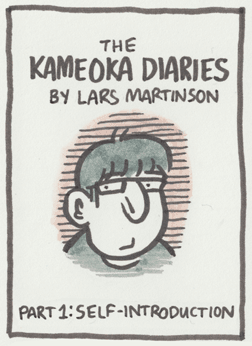 *************
Lars Martinson (Fukuoka-ken 2003-2006), author of the graphic novels Tonoharu: Part Two andTonoharu: Part 1, has just announced the “Kameoka Diaries“, Lars’ e-comic about his return to teaching English, this time in Kameoka, Kyoto, is now available on iTunes.
More info here and below: http://larsmartinson.com/my-first-two-e-comics-now-available/
The Kameoka Diaries: Volume One [ Direct iBookstore Link ]
The Kameoka Diaries: Volume One is a humorous (?) account of my experiences living and working in Central Japan, told over eight chapters. It includes an exclusive chapter not available anywhere else!
JETwit Note: I just downloaded a copy onto my iPhone. 250 pages for only $0.99, and I always love Lars’ work. Plus, it’s my first time using iBook which it turns out is pretty nifty. :-)
Job: Seeking a Japanese native-speaker/collaborator on book project 05.01.12
Jobs, Translating/Interpreting, Writers Comments Off on Job: Seeking a Japanese native-speaker/collaborator on book project 05.01.12
Thanks to JET Alum Justin Moy for passing on this interesting opportunity about a unique book project. Posted by Kay Monroe (Miyazaki-shi, 1995 -97).
————————————————————————————————————
Position: Japanese Collaborator for ESL Book
Posted by: Daniel Gauss
Type: Full-time
Location: N/A
Salary: Deferred pay
Start Date: N/A
Author of an ESL book to be published in the Spanish-speaking world is seeking a Japanese collaborator to tailor the book for Japanese English-learners. The purpose of the book is for learners to acquire English idioms and vocabulary through reading English instead of relying heavily on line translations. For more information about the book on Amazon, click on the following link:
Job Responsibilities:
– Write chapter introductions in Japanese
– Add introductions in Japanese to the vocabulary sections
– Write up short explanations or translations of difficult English words in the text
– Aid in changing the main character of the book to a Japanese hero or heroine (Main character is currently
a young woman from Spain studying English in New York.)
– Aid in communication with Japanese publishers to publish book in Japan
Job Requirements:
– At least a bachelor’s degree
– Proficient in written Japanese
– English teaching experience in Japan (preferred)
Compensation:
– Deferred pay (If the book is published in Japan and earns a profit, you will receive 50% of the cut.)
Note: This can be discussed, but a percentage of the profit can be donated to a charity supporting Japan.
Contact: Please send credentials to the author, Daniel Gauss, by e-mailing him at djg51qu@gmail.com.
