




WIT Life #199: Young Japanese Politician Power
 Translating/Interpreting, WIT Life, Writers
  Comments Off on WIT Life #199: Young Japanese Politician Power
WIT Life is a periodic series written by professional Writer/Interpreter/Translator Stacy Smith (Kumamoto-ken CIR, 2000-03). She starts her day by watching Fujisankei’s newscast in Japanese, and here she shares some of the interesting tidbits and trends together with her own observations.
I am currently in DC interpreting for a six-person delegation that is here on a two-week program with the American Council for Young Political Leaders (ACYPL). Group members represent both the DPJ and LDP, as well as one participant from the New Komeito Party. Our other destinations are Tennessee and Washington State, so despite their short stay my group will have the opportunity to experience different parts of the U.S.
Speaking of young politicians, last week the New York Times profiled Japan’s youngest mayor, 31-year old Naomichi Suzuki of Yubari, Hokkaido. Yubari is known for Read More
I’ll Make It Myself: Flour Tortillas (Bread Revolution Series)
Blogs, Food & Drink, I'll Make It Myself, Writers Comments Off on I’ll Make It Myself: Flour Tortillas (Bread Revolution Series)
L.M. Zoller (CIR Ishikawa-ken, Anamizu, 2009-11) is the editor of The Ishikawa JET Kitchen: Cooking in Japan Without a Fight. A writer and web administrator for The Art of Japan: Kanazawa and Discover Kanazawa, ze also writes I’ll Make It Myself!, a blog about food culture in Japan, and curates The Rice Cooker Chronicles, a series of essays by JETs and JET alumni on the theme of cooking/eating and being alone in Japan.
New Rice Cooker Chronicles submissions always welcome. Just e-mail it to jetwit [at] jetwit.com.
More Bread Revolution and Guide to Flour.
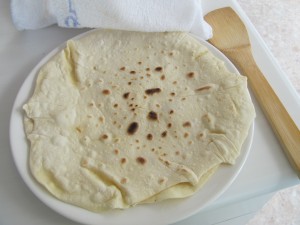
TexMex/Southwestern/Mexican foods were something I purchased from the grocery or at restaurants in the US, missed sorely in Japan, and was convinced I couldn’t make it myself. If I found salsa in a jar, I couldn’t find chips, so what was the point? Avocados weren’t something I could get my town easily, and forget cilantro or jalapeños. I gave up on my dream of enjoying these foods in Japan, but luckily Cheruko didn’t and put together a fantastic fajita spread for an international cooking lesson.
Posted by Ashley Thompson (Shizuoka-ken, 2008-2010) of Surviving in Japan: without much Japanese and Lifelines columnist for The Japan Times.
Cherry blossoms are blooming, depending on where you are in Japan, and various other types of trees and flowers are starting to show their spring colors. Graduation ceremonies are being held (or have already happened) all over Japan, as one year ends and another is about to begin.
Then there’s the pollen. Hay fever season in Japan has also arrived. And if you have allergies, it might have already hit you hard (or will…). How do you get through allergy season in Japan? You’ll find some ideas below.
A few words to know:
花粉症 かふんしょう kafunshou hay fever
花粉 かふん kafun pollen
アレルギー arerugii allergy
Now, a few ideas to help you survive hay fever season in Japan:
1. Wear a mask outside. Even if you didn’t wear one in your home country, “do as the locals do” or “when in Rome…” or something like that. I personally can’t stand wearing them, but I know some people who now like wearing them.
2. Use a mask spray. Apparently if you spray your mask with this stuff it makes the mask more effective at keeping unwanted particles out.
3. Try a “nose mask” – (pictured below) It’s basically something that you attach to the underside of your nose and each side goes in a nostril. It acts as a filter for pollen and other airborne particles.

4. Refill those allergy medicine prescriptions. It is possible to get Claritin, Allegra, Zyrtec and Flonase (フルナーズ) in Japan – consult a doctor about possibilities. You could also try contacting Japan Healthcare Info if you’re not sure where to look or who to ask. Some possible prescription non-drowsy or “mostly” non-drowsy meds in Japan include: Allegra (アレグラ), Claritin (クラリチン), Alesion (アレジオン), エバステル, Talion (タリオン), and Zyrtec (ジルテック). [Source]
You can get some over-the-counter anti-allergy medication, but most, if not all, are drowsy, and probably not as effective as those you can get by prescription. (Let us know, though, if you’ve found something that works well and isn’t too sleep-inducing). Mmmfruit mentioned Zaditen as an option. David and I have both used Stonarhini (ストナリニ), and while David didn’t get too drowsy, I felt like I had just taken a Benadryl (it knocked me out for hours). It claims to use less of the ingredients that make you drowsy, but it may be best to try it on a day you don’t have to go out and do anything, just to see how your body reacts first. — CLICK HERE to read 11 more ways to defeat hay fever this year.
 Australian JET alum Pepi Ronalds (Miyagi-ken, Sendai Shi, 2010-11) recently published an essay on Amazon titled “After Shock: Experiencing the 2011 Japanese Earthquake.” Below is a bit of context from Ronalds along with an extract from the essay:
About Pepi
Pepi is a freelance writer, ghostwriter and researcher based in Melbourne, Australia. On any given day she is found writing, researching and craving sakuranbo soft-cream from the Omiyage shop below Yamadera. While working as an ALT in Sendai Shi, Miyagi prefecture she experienced the Great East Japan Earthquake first hand. She writes about the experience in her long-form article After Shock: Experiencing the 2011 Japanese Earthquake, which can be downloaded via Amazon or Pepi’s website http://www.pepironalds.com.
“After finishing JET I returned to the freelance writing career that I had begun in late 2009. As a writer of non-fiction, I was keen to write about my experience of the triple disaster in Sendai. I knew that many people outside of Japan had a limited understanding of what had happened. – Yes, I was caught up in a natural disaster as a foreigner, and yes it was scary. But there was (and continues to be) so much more to my experience (and those of my fellow JETs and gaijins). I was astounded by the incredible generosity of my Japanese friends and colleagues, and the work they’ve done (and are doing) to rebuild.”
As publishing paradigms change, I there are fewer venues for long-form articles like mine. So in publishing this article I made my first foray into ‘entrepreneurial journalism’. That is, I am selling direct to readers. Below is an extract. If you want to read the whole thing (6,500 words) you can either download the article via Amazon, or buy direct from me using Paypal.”
Extract from After Shock: Experiencing the 2011 Japanese Earthquake
“We started the heaters,” my friend Yuriko writes, “but we are trying not to use them often to save them in case of an emergency.” I know the school in Sendai to which she refers. Winter is marked by a meter of snow on the baseball field. It’s sustained by snowflakes the size of marshmallows that seem to fall horizontally. The winds wheeze and rattle at loose windows. When I was there last year, I was constantly dabbing my nose with a tissue. And when my friend writes this from Sendai eight months after the earthquake, winter in Japan has barely begun.
I read her email and think back to that frigid Friday, March 11, 2011. My students and I were decorating the walls of the school with a mosaic of origami-paper blossoms. It was so cold in the unheated hallway that my fingers seemed to move in slow motion. We worked with a feeling of purpose and excitement. Then there was a long, deep, foreboding yawp. An announcement from the earth beneath us that everything was about to change. Read More
I’ll Make It Myself!: Easy Whole-Wheat Pizza Dough (Bread Revolution Series)
Food & Drink, I'll Make It Myself, Writers Comments Off on I’ll Make It Myself!: Easy Whole-Wheat Pizza Dough (Bread Revolution Series)
L.M. Zoller (CIR Ishikawa-ken, Anamizu, 2009-11) is the editor of The Ishikawa JET Kitchen: Cooking in Japan Without a Fight. A writer and web administrator for The Art of Japan: Kanazawa and Discover Kanazawa, ze also writes I’ll Make It Myself!, a blog about food culture in Japan, and curates The Rice Cooker Chronicles, a series of essays by JETs and JET alumni on the theme of cooking/eating and being alone in Japan.
New Rice Cooker Chronicles submissions always welcome. Just e-mail it to jetwit [at] jetwit.com.
One thing that always amazes me when I return to the US is the sheer amount of choice one has about food. Order a pizza in the US and you can usually choose whole-wheat or white crust (sometimes even gluten-free); thick or thin crust; marinara sauce or white sauce; any combination of toppings. With the sheer amount of kinds of pizzerias in towns like Ann Arbor–everything from national chains to Silvio’s organic pizza–the sky was the limit.

I know most of my posts start with me gushing about Ann Arbor, then complaining about Japan, then resolving into my resolution to make it myself, but going from choosing the tiniest details of my pizza to angrily eyeing the corn-and-mayo pizza on a rare trip to Coco’s actually wasn’t that shocking until I came back to the US on business in the winter.
WIT Life #198: Japan’s Economic Woes
Translating/Interpreting, WIT Life, Writers Comments Off on WIT Life #198: Japan’s Economic Woes
WIT Life is a periodic series written by professional Writer/Interpreter/Translator Stacy Smith (Kumamoto-ken CIR, 2000-03). She starts her day by watching Fujisankei’s newscast in Japanese, and here she shares some of the interesting tidbits and trends together with her own observations.
Today’s New York Times features two article regarding Japan’s economic doldrums. The one from Martin Fackler talks about Japan’s decline as a manufacturer, and what direction the new course the country should take will be. The other by Hiroko Tabuchi discusses the fate of one of the manufacturers mentioned in Fackler’s article, Sony. Kazuo Hirai joined as the new CEO at the beginning of this month, and it remains to be seen what path he is planning to take the company on. Many commentators throughout say that Sony has failed to differentiate itself, and the article closes with the quote, “The tarnish on their brand has definitely begun.” Happy reading!
Surviving in Japan: The Ultimate Guide to Reading Food Labels
Advice, Blogs, Food & Drink, Writers Comments Off on Surviving in Japan: The Ultimate Guide to Reading Food Labels
Posted by Ashley Thompson (Shizuoka-ken, 2008-2010) of Surviving in Japan: without much Japanese and Lifelines columnist for The Japan Times.
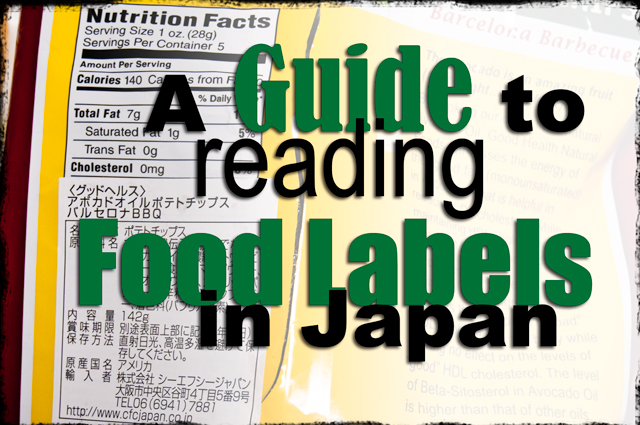
When I first came to Japan, attempting to read food labels and understand what things were and what was IN what I was buying and eating was a huge obstacle. I could read hiragana, katakana and some kanji, but the majority of the food labels were confusing and I spent extensive amounts of time at the supermarket, smartphone in hand with a Japanese-English dictionary open, trying to decipher ingredients and information. I’d also use the smartphone app, ShinKanji, to search for various kanji and words I couldn’t read.
The work paid off, and though now I can’t read every single Japanese word without consulting a J-E dictionary or looking up certain kanji, I can usually quickly scan most labels to find what I want to know.
A guide to reading food labels in Japan is also one of the most popular post topic requests I’ve received. It’s something most of us struggle with when we first arrive, and I’d imagine even some of those who are fluent may not have known every word or kanji at first. Deciphering Japanese food labels, the entirety of them anyway, isn’t particularly easy, but I’ve attempted to break them down for you here. Note that I have not covered various ingredients aside from common allergens, as that’s something to cover in a separate post (or more than one). This one is already long!
I should note that food labels in Japan aren’t always consistent, as you’ll see below, and although, for example, you’ll usually see information about the total calories, protein, fat, carbohydrates and similar main nutrients, you won’t always see much about other minerals or vitamins (though things like fortified cereals, breads, etc., often list these).
I’ve also tried to include a variety of words you’ll see, but some terms/phrases are worded slightly different, although the meaning is generally the same, e.g., “賞味期限” and “消費期限” both mean “best before; best eaten by” or the expiration date.
Also note that throughout the post I have not broken down kanji and words as I normally do – instead, the vocabulary charts break them down, so please reference the charts for a breakdown. (You can also use the “find” feature on your browser and copy/paste a word you want to see in the chart to find it quickly.)
So let’s get on with it: how do you read food labels in Japan?
— CLICK HERE for the following:
Japanese Food Label Vocabulary Chart
Japanese Nutritional Information Vocabulary Chart
How to Understand the Nutritional Information List on a Food Label
How to Understand the Rest of the Food Label
How to Read Food Labels on Imported Goods
Meat and Seafood Labels
Fruit and Vegetable Labels
Allergy Information on Food Labels
WIT Life #197: DC Sakura Matsuri, Part 2
Art, Food & Drink, Travel/Tourism, WIT Life, Writers Comments Off on WIT Life #197: DC Sakura Matsuri, Part 2
WIT Life is a periodic series written by professional Writer/Interpreter/Translator Stacy Smith (Kumamoto-ken CIR, 2000-03). She starts her day by watching Fujisankei’s newscast in Japanese, and here she shares some of the interesting tidbits and trends together with her own observations.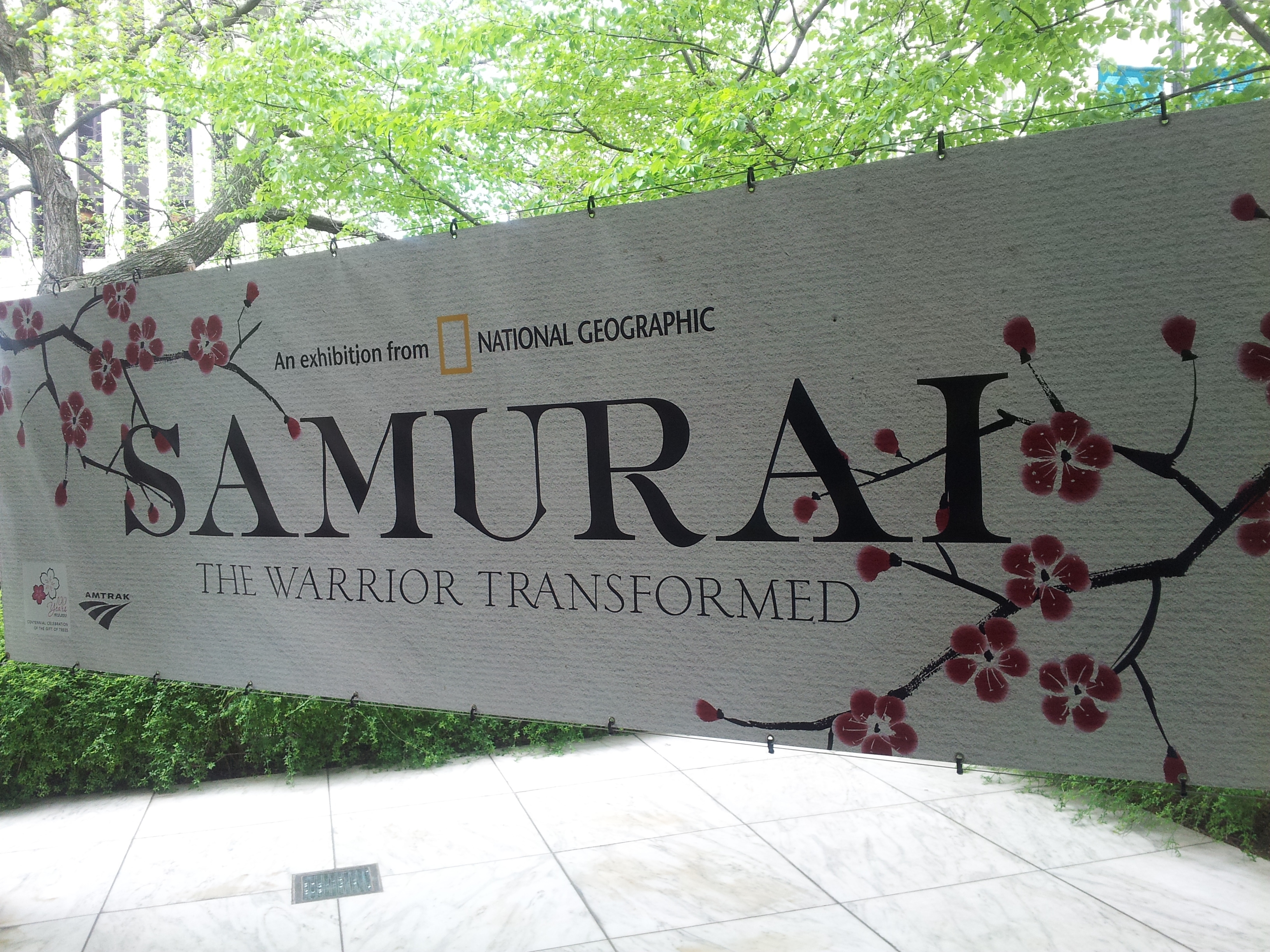
Today is the big parade to celebrate the centennial sakura matsuri, but unfortunately all the blooms are long gone. However, the festival goes through the end of the month, so for those who find themselves in DC there are plenty of Japan-related activities to keep you entertained. I had a chance to sample many of them this week, the first of which I’d recommend being the National Geographic Museum’s samurai exhibit running through early September.
It shares the history of how the now legendary cherry trees made their way to DC, as well as displays unique items such as swords and armor that were gifted from Read More
WIT Life is a periodic series written by professional Writer/Interpreter/Translator Stacy Smith (Kumamoto-ken CIR, 2000-03). She starts her day by watching Fujisankei’s newscast in Japanese, and here she shares some of the interesting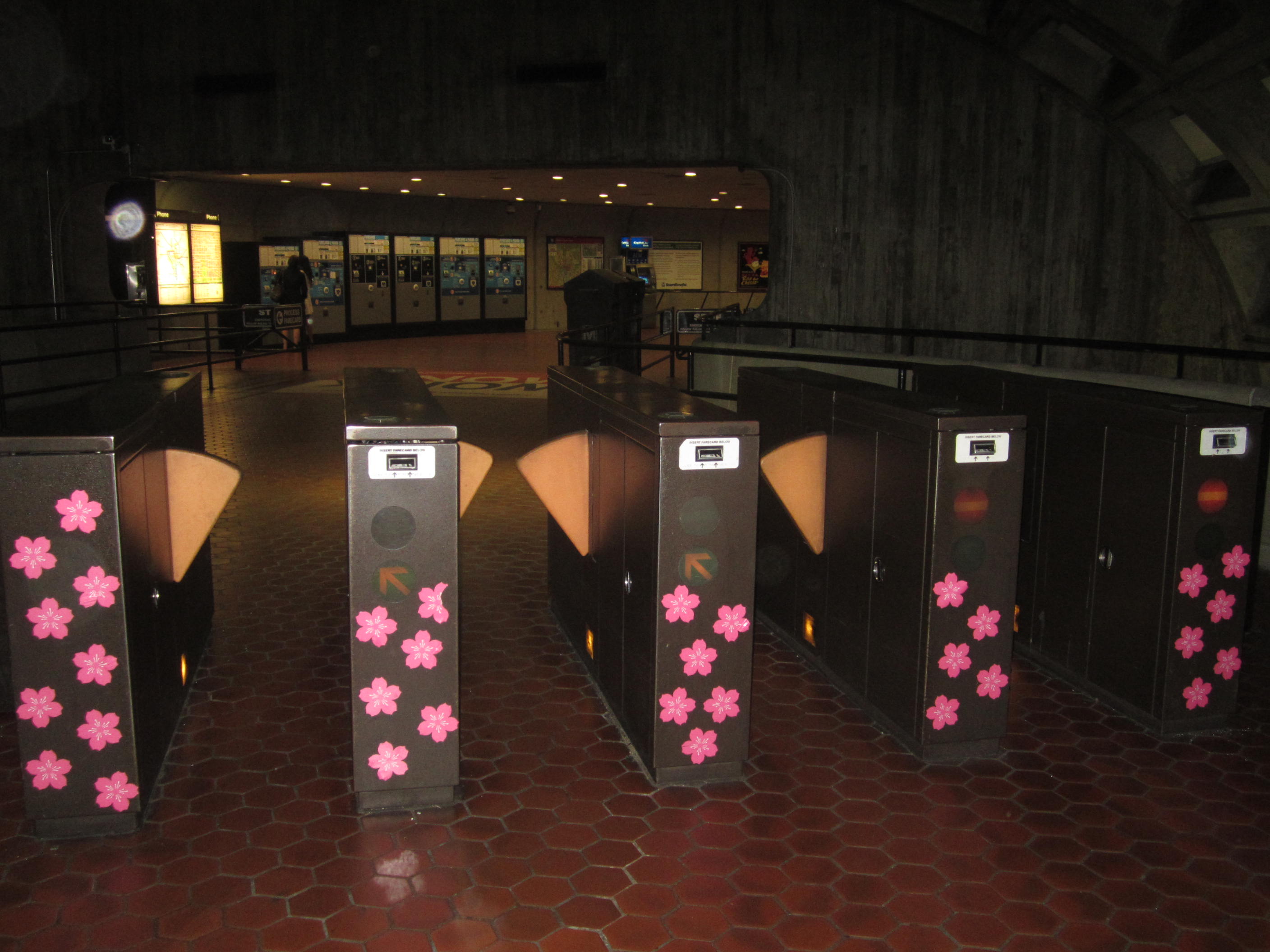 tidbits and trends together with her own observations.
I’m down in DC to begin a new business trip, and was thrilled when I found out my assignment would coincide with the famous Sakura Matsuri. This year is extra special as it marks the 100th anniversary since the 3000+ trees were gifted from Japan to the U.S. Even the Metro gets into the spirit, as you can see with their turnstile decorations. Due to the warm weather it is doubtful that the blossoms will last until the conclusion of the festival at the end of the month, but I’m hoping to do some hanami while I’m here.
On another Japa n-related note, today I went to see an interesting exhibit at the National Portrait Gallery entitled “Asian American Portraits of Encounter.” It features several different Asian American artists, including three Japanese. One is Satomi Shirai based in New York, the second is Shizu Saldamando based in California, and the last is Roger Shimomura based in Read More
WIT Life #195: Jiro Dreams of Sushi
Film, Food & Drink, Translating/Interpreting, WIT Life, Writers Comments Off on WIT Life #195: Jiro Dreams of Sushi
WIT Life is a periodic series written by professional Writer/Interpreter/Translator Stacy Smith (Kumamoto-ken CIR, 2000-03). She starts her day by watching Fujisankei’s newscast in Japanese, and here she shares some of the interesting tidbits and trends together with her own observations.
This weekend I finally had the chance to see the much-hyped documentary Jiro Dreams of Sushi. It made a splash at last year’s Tribeca Film Festival and had been on my radar ever since, so I was happy to see it playing at local theaters (currently at IFC Center, Lincoln Plaza Cinema and Kew Gardens Cinema). Director David Gelb is a New Yorker who has loved sushi since he was a kid, and his film faithfully follows 85-year-old sushi chef Jiro Ono, proprietor of the renowned restaurant Sukiyabashi Jiro. Its humble location inside the Ginza subway station belies Read More
I’ll Make It Myself!: “Bread Revolution: Flour”
Food & Drink, I'll Make It Myself, Writers Comments Off on I’ll Make It Myself!: “Bread Revolution: Flour”
L.M. Zoller (CIR Ishikawa-ken, Anamizu, 2009-11) is the editor of The Ishikawa JET Kitchen: Cooking in Japan Without a Fight. A writer and web administrator for The Art of Japan: Kanazawa and Discover Kanazawa, ze also writes I’ll Make It Myself!, a blog about food culture in Japan, and curates The Rice Cooker Chronicles, a series of essays by JETs and JET alumni on the theme of cooking/eating and being alone in Japan.
New Rice Cooker Chronicles submissions always welcome. Just e-mail it to jetwit [at] jetwit.com.
One of the biggest challenges–and triumphs– for me during these 2.5 years living in Japan has been creating bread products I could easily purchase back in the US: pitas, tortillas, flatbread, pizza dough. I experimented (usually disastrously) with a few things in year 1, namely pizza dough, which was passable but not fantastic, and tea bread, which refused to cook through no matter how I reduced the recipe or what device in which I baked it.

My first success was whole-wheat soda bread. Pizza dough took two years and five different recipes. Tortillas and pitas, which I was stupidly convinced couldn’t be made at home until Cheruko of Hokuriku Expat Kitchen decided they could, turned out to be incredibly simple. I, like many Americans, thought bread-making was some sort of epic process, a choice between hours of kneading and rising and punching dough or investing in a breadmaker that would take up precious storage space. It’s really not that bad. I’ll speak more on this later with each recipe’s time-commitment information, but I full work-time, work out, have an active social life and hobbies, and I still have time for bread-making. The rising time, depending on the recipe, is often ideal for cooking the rest of a meal, enjoying a TV show or book, or even an evening trip to the gym for the longer risers.
So, now that you’re less worried about OMG BREAD, let’s get started on building your expat bread factory. First, we need to have a chat about types of flour.
Article: Yamabushi Onsen Yupoka in Tsuruoka
Article/Journalism, Japan Local, Return on JET-vestment, Travel/Tourism, Writers Comments Off on Article: Yamabushi Onsen Yupoka in Tsuruoka
JETAA Philadelphia Subchapter rep Rashaad Jorden wrote the following article for the Japan Tourist website (a great example of JETs helping to promote “local” tourism for Japan):
Most people feel tired after climbing Mount Haguro, one of the Three Mountains of Dewa (also known as Dewa Sanzan). However, a short drive away, Haguro (the village where Mount Haguro is located) offers a nice place where you can relax your body and mind—and have a beer or two.
Yamabushi Onsen Yupoka—better known as simply Yupoka—is a popular gathering spot for locals and some yamabushi, Japan’s mountain ascetics, who come to Dewa Sanzan to embark on a mountain pilgrimage and venerate their deities.
Yupoka is an insider’s tip as there is no mention of the place in the English-language tourism brochure of Haguro but those who find it will be treated to a majestic setting for a dip in hot water, which is what most people come to Yupoka for.
WIT Life #194: L’Arc en Ciel MSG Debut!
Events, Music, Translating/Interpreting, WIT Life, Writers Comments Off on WIT Life #194: L’Arc en Ciel MSG Debut!
WIT Life is a periodic series written by professional Writer/Interpreter/Translator Stacy Smith (Kumamoto-ken CIR, 2000-03). She starts her day by watching Fujisankei’s newscast in Japanese, and here she shares some of the interesting tidbits and trends together with her own observations.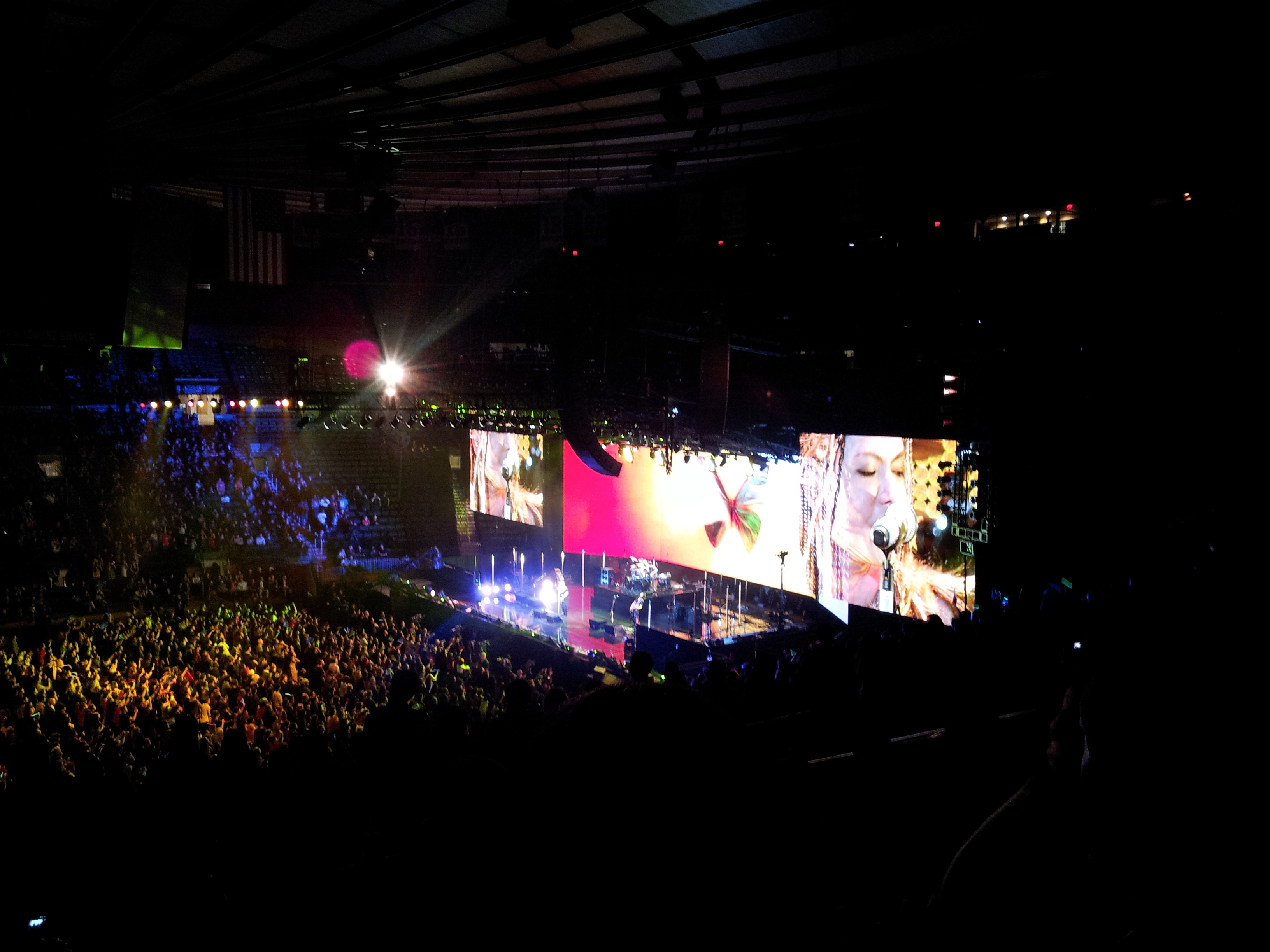
Last night I had fun rocking out at the concert of L’Arc en Ciel, one of Japan’s most popular bands. They were the first Japanese group to perform at Madison Square Garden, and they put on an amazing show! For me it was largely natsukashii, as I discovered L’Arc (or ラルク) as an exchange student in Kyoto my first time in Japan. During the weekly karaoke outings that I used to work on my kanji, ラルク soon became a regular part of my repertoire and for a while their song Honey was my #18 (specialty or favorite).
So I was super excited when I heard ラルク front man Hyde belt out the first 「ずっと」 that begins the song, and was happy to find that I still remembered most of the lyrics. I enjoyed other old favorites like Read More
WIT Life #193: Spending Time in Ichiro-Land, aka Seattle
Translating/Interpreting, WIT Life, Writers Comments Off on WIT Life #193: Spending Time in Ichiro-Land, aka Seattle
WIT Life is a periodic series written by professional Writer/Interpreter/Translator Stacy Smith (Kumamoto-ken CIR, 2000-03). She starts her day by watching Fujisankei’s newscast in Japanese, and here she shares some of the interesting tidbits and trends together with her own observations.
I am wrapping up a business trip here in Seattle, where the Japanese influence is huge. Not only do they have great Japanese shopping centers like Uwajimaya, located in the International District area, but they have Ichiro! The man himself is not here at the moment, having headed to Japan with the Mariners to play two exhibition games against Japanese teams before opening up the Major League season in two games against the Oakland A’s. All four games will be played in Tokyo. Today’s Seattle Times features an article highlighting Read More

****************
Thanks to Lindsay Tsuji for this write-up and thanks to Nadine Bukhman for the photos.
A chilly Toronto’s eve didn’t stop friends and fans of one artistically inclined JET alum from dropping by the Goodfellas Gallery in Toronto to celebrate the launch of his new book Life After the B.O.E. JETAA Toronto’s David Namisato (Aomori-ken CIR, 2002-04) was the cause of some serious hurrah on February 8.
Most JETs are no stranger to David’s comics. Started back in 2005, they chronicle the ins and outs of what life is like as a foreigner on the JET Programme. The enkais, the onsens, the team teaching…it’s all in there. Read More
