




Job: Business Development Executive – Quick USA (Dallas, TX, USA)
 Jobs
Jobs  Comments Off on Job: Business Development Executive – Quick USA (Dallas, TX, USA)
Posted by Sydney Sparrow. Click here to join the JETwit Jobs Google Group and receive job listings even sooner by email.
Position: Business Development Executive
Posted by: Quick USA
Location: Dallas, TX, USA
Contract: Full-Time
Thanks to JET alum Carlos Medina (Oita, Japan, 2019-2022) for passing along the following job opening.
A Japanese Industrial Optics company is currently looking for a full time, fully onsite Business Development Executive to join their Dallas, TX location.
As a Business Development Executive at an international organization, you will support the company’s growth across the United States. This role combines business development, account management, and market research within a highly technical B2B environment. Working closely with the existing sales and technical team, you will develop new opportunities, support existing accounts, and expand into new markets.
Candidates new to the industry or in the early stages of their career are highly encouraged to apply. You will receive comprehensive training on product knowledge, sales operations, and team culture, with a clear pathway to advance into senior positions.
DOE and skills, the base range salary for this opportunity would be between the 50k-75k + commission/ bonus. This position comes with great benefits.
USJF-USJLP: Earthquake Relief and Recovery (A fundraiser by US-Japan Foundation/US-Japan Leadership Program)
Uncategorized Comments Off on USJF-USJLP: Earthquake Relief and Recovery (A fundraiser by US-Japan Foundation/US-Japan Leadership Program)

The 6.8 magnitude earthquake that struck Kumamoto on July 28, 2026 seems to have been particularly damaging since it was such a shallow one. Peace Wind’s ARROWS disaster medical team dispatched immediately, and the first three doctors and nurses arrived in Kumamoto at 2 am on July 29, 2026 and currently are are part of search-and-rescue efforts at Aeon Mall.
Other Peace Winds staff have been arriving at other area locations throughout the night to take part in rescue activities, some with search dogs. The initial days are likely to be rough for evacuees with forecasted high temperatures and power outages, and Peace Windes suspects they’ll be there for an extended period through the relief and recovery stages.
The US-Japan Foundation has been kind enough to set up a matching donation fundraiser for Peace Winds’ efforts. Please consider donating if you can at the link below.
https://www.globalgiving.org/fundraisers/usjf-usjlp-earthquake-relief-and-recovery-3
Job: Japanese Bilingual Sales Assistant – Quick USA (Illinois, USA)
Jobs Comments Off on Job: Japanese Bilingual Sales Assistant – Quick USA (Illinois, USA)
Posted by Sydney Sparrow. Click here to join the JETwit Jobs Google Group and receive job listings even sooner by email.
Position: Japanese Bilingual Sales Assistant
Posted by: Quick USA
Location: Schaumburg, IL, USA
Contract: Full-Time
Thanks to Carlos Medina (Oita, Japan, 2019-2022) for passing along the following job opening.
A Japanese Trading Company is currently looking for a full time, fully onsite Japanese Bilingual Sales Assistant to join their Schaumburg, IL location.
In this role, you will coordinate customer and supplier transactions, prepare sales documentation, support import/export operations, and provide overall administrative support to the sales team.
DOE and skills, the pay range for this position would be between the 60k-70k mark with amazon benefits.
Beyond the Human Tape Recorder: What JET Taught Me About Reclaiming My Voice
Career Comments Off on Beyond the Human Tape Recorder: What JET Taught Me About Reclaiming My Voice
****************
By Valerie Hwang Beck (ALT, Hyogo, 2009-2012)
Almost every ALT on JET has some version of this story. Being used as a human tape recorder. Being put in a position where your input on how the English lessons should go was dismissed, or just ignored.
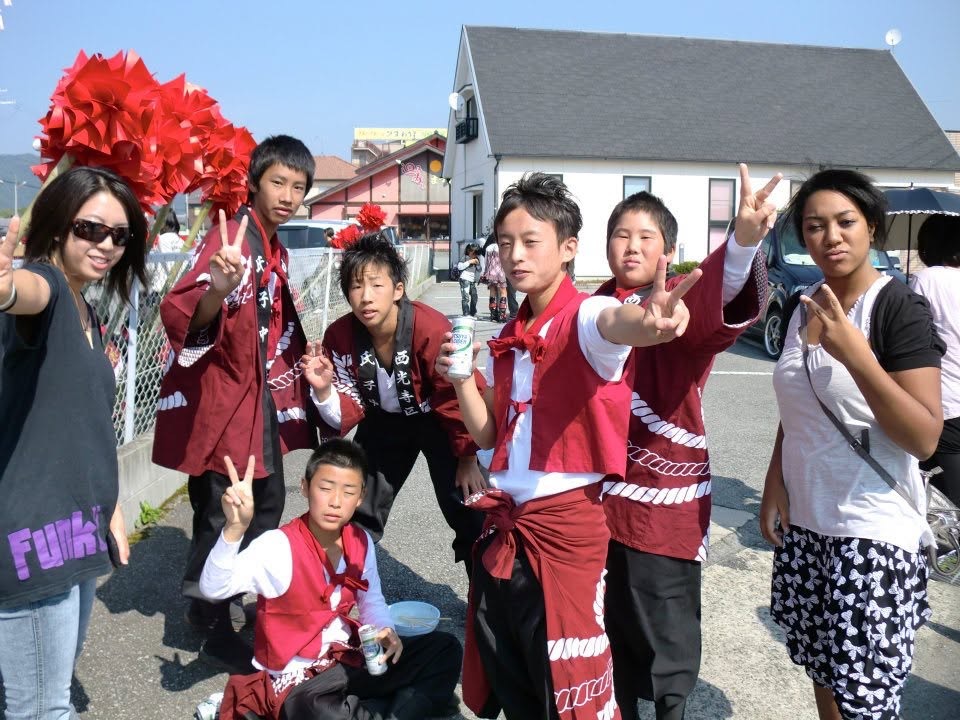
I remember one curriculum meeting for my town’s elementary and junior high English teachers. Typical Japanese school meeting room: fold-out tables arranged in a makeshift U so everyone could see each other, stacks of lesson plans on the tables, a whiteboard behind us. I’d already been there over a year by then. I’d worked hard on my lessons, coming up with the content, the activities, making sure they were fun and interesting for the kids, who looked forward to me coming every month.
In my town, I had a co-ALT. We never worked in the same school; he covered one side of the river, I covered the other, and we’d switch. He had a year of seniority on me, but we never competed, never tried to teach each other’s content. In fact, the whole point of the town hiring the two of us was so the kids could have two different perspectives, two different flavors of foreigner, not just one version of what a foreign teacher looked like.
In that meeting, with both of us sitting at the same table, in front of the entire town’s English teachers, one of the supervisors, anxious about managing two different foreign teachers, said dismissively, in Japanese: “Maybe we can just have Valerie teach everything Philip-sensei’s way.”
Have you ever had someone cut you so deep, everything just goes black for a second?
I don’t remember what happened in the room after that. I don’t remember if it went quiet, or if anyone shifted, or how long the pause was. That’s the thing about a moment like that; everything goes black except the gut-punch of it. I don’t think it even hit me consciously that I’d been insulted. I felt it at a visceral level. I could feel myself shrink. The tears came before I understood why.
As someone who didn’t grow up with a lot of self-esteem, that moment could have destroyed something in me. It almost did.
Here’s the thing though. I probably wouldn’t have advocated for myself that day. I didn’t know how yet. But I didn’t have to. My main supervisor, the meeting leaders, Philip himself, they all knew exactly what had just happened, and they defended me. Right after the meeting ended, the man who’d said those words came and sat down next to me and apologized.
That moment planted something. The seeds of the work I do today: deep, introspective coaching on mindset, self-esteem, learning to stand up for yourself and advocate for yourself in environments that were never built for you to be heard.
I think that’s actually the real inheritance of JET, more than any single skill on a resume. We moved to a foreign country, most of us right at the start of adulthood. We were handed jobs with loosely defined responsibilities and told, essentially, every situation is different, figure it out. Some of us also learned, the hard way, what it costs to not be heard, and what it takes to find your voice anyway, or to be lucky enough to have people around you who defend it before you know how to defend it yourself.
That’s real training. And yet look at most of the programming built for JET alumni. It’s aimed almost entirely at traditional paths: corporate, government, education, economics. We’re still shaped by a culture where the people who get honored are the ones in suits, the ones in government positions, not the ones doing something creative, something harder to categorize.
I’ve had the honor of meeting JETs across a huge range of paths since. Movie directors. Writers. Community organizers. Lawyers. Coaches. People building things that don’t fit neatly into a program pamphlet. Every time, I notice the same thing: they’re not succeeding despite what JET gave them. They’re succeeding because of it. The willingness to sit in ambiguity. The muscle of figuring out your own value in a system that didn’t hand it to you.
What actually binds this community isn’t the job title anyone picked afterward. It’s something harder to name and worth naming anyway. A shared 懐かしさ, a nostalgia, for something deeper than the two years abroad. Cross-cultural connection. Real community bonds. An appreciation for difference most people never get handed so early in life. A compassion that comes from being the outsider and the teacher at once. A sense of belonging that doesn’t respect borders.
I’ve built my career around one core belief: that people’s unique voices, their gifts, their own way of doing things, matter. The unique energy you brought into your classroom, whatever town or village you were teaching in, the thing that lit up your students’ eyes when you walked in, that same light is still in you today.
What a blessing it would be if we kept cultivating it, long after the program ends.
******************************
Valerie Hwang Beck (Hyogo, 2009-2012) is the founder of The Vibrant Visionary, where she works as a Vitality and Vision Mentor using her background as a holistic health professional, educator and movement artist to help people reclaim the parts of themselves they learned to hide in order to be acceptable. Her work centers on restoration, not reinvention: uncovering who you already are beneath the years of conditioning, and building a life that actually reflects your passion, values, and unique self-expression. If any of this resonated and you’d like to connect as fellow JET alumni, she’d love to hear from you: book a peer connect chat or find her at thevibrantvisionary.com. For more reflections on the JET Program, check out Valerie’s interview with fellow alumni Rikio Inouye on her podcast From the Ashes.
JQ Magazine: YOASOBI, yama @ Anime NYC, ‘Blank Canvas’ Premiere
Art, Article/Journalism, Celebrity, Cultural Outreach, Events, Film, Food & Drink, Japan Local, JQ Magazine, Music Comments Off on JQ Magazine: YOASOBI, yama @ Anime NYC, ‘Blank Canvas’ Premiere
By JQ magazine editor Justin Tedaldi (CIR Kobe-shi, 2001-02). Justin has written about Japanese arts and entertainment for JETAA since 2005. For more of his articles, click here.
In the dog days of summer, it’s best to escape the heat in a place that’s cozy and cool. For those into both cutting-edge and classic anime, this month offers a diverse trio of theatrical revivals—all in the comfort of indoor air conditioning.
This month’s highlights include:

July 31-August 2, August 6, 8:00 p.m.
Bob James Quartet featuring special guest Christian McBride
Blue Note New York, 131 West Third Street
$45 bar, $55 table
The career of multi-Grammy winner Bob James is long, varied and continues to evolve at every turn as he continues to captivate audiences throughout the world for more than 50 years, 58 albums, and innumerable awards. While James is recognized as one of the progenitors of smooth jazz, his music has also had a profound effect on the history of hip-hop, having been sampled frequently since the early days of the genre. A longtime star in Japan, he has recorded a piano duet album with Keiko Matsui, and worked with Seiko Matsuda as a guest vocalist on “Put Our Hearts Together,” written by James and his daughter Hilary in response to the Great East Japan Earthquake of 2011. Christian McBride is an eleven-time Grammy-winning bassist, composer, and bandleader. From jazz to R&B, and pop/rock and hip-hop/neo-soul to classical, he is a luminary with one hand ever reaching for new heights—inviting us to join him.

Thursday, August 6, 8:00 p.m.
YOASOBI – Never Ending Stories Tour
Barclays Center, 620 Atlantic Avenue (Brooklyn)
From $63.25
Japanese pop phenomenon YOASOBI has redefined the global reach of J-pop by transforming acclaimed short stories into emotionally resonant, genre-blending anthems that have captivated audiences around the world. Formed in 2019 by composer and producer Ayase and vocalist ikura (Lilas Ikuta), the duo exploded onto the international stage with the record-breaking hit “Yoru ni Kakeru” before following with worldwide successes including “Gunjō,” “Kaibutsu,” “Shukufuku,” and the chart-topping “Idol,” which became the first Japanese-language song to reach No. 1 on the Billboard Global Excl. U.S. chart. Their cinematic live performances, dazzling visuals, and seamless blend of pop, rock, electronic music, and storytelling have earned them a devoted international following, culminating with their first-ever U.S. arena tour launched in tandem with their latest album, THE BOOK for,. Their previous New York appearance (two years ago to the day) was a sold-out debut at the legendary Radio City Music Hall, demonstrating the group’s remarkable global appeal and setting the stage for their continued rise as one of Japan’s most celebrated contemporary musical exports.

August 8 & 10
Tales from Earthsea 20th Anniversary
Various theaters
Various prices
Part of Fathom Entertainment’s Studio Ghibli Fest! From the legendary creators of Spirited Away and Howl’s Moving Castle, and the director of From Up on Poppy Hill, comes an animated fantasy epic based on the classic book series by Ursula K. Le Guin! As crops dwindle and dragons reappear, mankind stands on the verge of total chaos. Lord Archmage Sparrowhawk, a powerful wizard, and Arren, a troubled young prince, search for the force behind this mysterious imbalance that threatens to destroy the land of Earthsea, in a tale of redemption and self-discovery that will take your breath away. Featuring the voices of Timothy Dalton, Willem Dafoe, Cheech Marin, and Mariska Hargitay.
Read MoreJob: Social Media Specialist – Consulate-General of Japan in Nashville (Nashville, TN)
Jobs Comments Off on Job: Social Media Specialist – Consulate-General of Japan in Nashville (Nashville, TN)
Posted by Sydney Sparrow. Click here to join the JETwit Jobs Google Group and receive job listings even sooner by email.
Position: Social Media Specialist
Posted by: Consulate-General of Japan in Nashville
Location: Nashville, TN, USA
Contract: Full-Time
Thanks to Cameron Clemons for passing along the following job opening.
Responsibilities
We are looking for an organized team player who can manage a variety of tasks and assume the following responsibilities:
- Manage the Consulate’s official social media accounts, including creating and posting Japan-related content
- Conduct regular analysis of the Consulate’s social media account performance
- Create informative graphics, edit photos, and film and/or produce videos
- Monitor and report on Japan-related activities conducted by external organizations
- Provide research and technical support for presentations
- Assist with various administrative tasks related to the Consulate’s public relations efforts and cultural events
- Perform other duties as deemed necessary
Job: Fall 2026 Intern, Japan Chair – CSIS (Washington, DC, USA)
Internship Comments Off on Job: Fall 2026 Intern, Japan Chair – CSIS (Washington, DC, USA)
Posted by Sydney Sparrow. Click here to join the JETwit Jobs Google Group and receive job listings even sooner by email.
Position: Fall 2026 Intern, Japan Chair
Posted by: CSIS
Location: Washington, DC, USA
Contract: Full-Time
Thanks to Lauren Mosely (Hyogo Prefecture, 2017-2019) for passing along the following job opening.
The CSIS Japan Chair program was established in 1981 with the mission to be the leading source of policy-relevant research on Japan, the U.S.-Japan alliance, and Japan’s leadership on the global stage. It conducts wide-ranging research on challenges facing the U.S. and Japan and opportunities for the two countries to cooperate bilaterally and with other regional and global partners to find shared solutions. The program’s current research agenda covers Japanese domestic politics and foreign policy and U.S.-Japan cooperation on issues related to defense, trade, investment, and economic security, as well as U.S.-Japan engagement with Indo-Pacific and European partners.
The hired candidate will be paid hourly, commensurate with experience ($18.40/hour for current undergraduate hires, $19.40/hour for hires with a bachelor’s degree, and $20.40/hour for hires with a master’s degree).
Read MoreJob: Communications Assistant – Peace Winds America (Washington DC, USA, or Remote)
Jobs Comments Off on Job: Communications Assistant – Peace Winds America (Washington DC, USA, or Remote)
Posted by Sydney Sparrow. Click here to join the JETwit Jobs Google Group and receive job listings even sooner by email.
Position: Communications Assistant
Posted by: Peace Winds America
Location: Washington DC, USA, or Remote
Contract: Part-Time
Thanks to James Gannon (Ehime, 1992-1994) for passing along the following job opening.
Peace Winds America is hiring a part-time Communications Assistant to support our international humanitarian assistance and disaster response programs. Peace Winds—with headquarters in the United States, Japan, Korea, and Taiwan—serves refugees, disaster survivors, and other vulnerable communities in 30+ countries around the world. Our small US office works closely with colleagues in Japan and in countries where we have programming to fundraise for and manage lifesaving activities to provide food assistance, shelter, water, sanitation, protection, and livelihood support for communities in need.
Duties will include helping project teams communicate effectively about Peace Winds’ work, with a special focus on informing and engaging donors and other supporters. The position will also support project management tasks and grant reporting. This is a part-time position, starting at 20 hours/week (50%). It will be largely remote, with an option of working several days a week out of our Washington DC coworking office.
Read MoreJob: Bilingual US Business Manager – Manpower
Jobs Comments Off on Job: Bilingual US Business Manager – Manpower
Posted by Sydney Sparrow. Click here to join the JETwit Jobs Google Group and receive job listings even sooner by email.
Position: Bilingual US Business Manager Japanese/English
Posted by: Manpower
Location: Parsippany, NY, USA/hybrid
Contract: Full-Time
Thanks to Friend of JET, Tanya Lewis for passing along the following job opening.
Our client, a global pharmaceutical wholesaler, is seeking a U.S. Business Manager to join their team. As a U.S. Business Manager, you will be part of the Operations Department supporting the Executive Leadership Team in Hong Kong and the local U.S. startup. The ideal candidate will have entrepreneurial initiative, cultural adaptability, and discreet professional judgment, which will align successfully in the organization.
What’s the Job?
- Lead the initial build-out of the first U.S. office and warehouse, including vendor management and facility setup.
- Act as the primary bridge between U.S. operations and the Japanese headquarters to ensure seamless communication and alignment.
- Coordinate pharmaceutical wholesale licensing, regulatory compliance, and state-level registrations.
- Manage day-to-day business operations including basic accounting, payroll coordination, and HR administration for the U.S. entity.
- Support the President with executive-level administrative tasks, scheduling, and high-level business reporting.
Job: Economy, Culture & Information Affairs Assistant – Consulate-General of Japan in Seattle (Seattle, WA, USA)
Jobs Comments Off on Job: Economy, Culture & Information Affairs Assistant – Consulate-General of Japan in Seattle (Seattle, WA, USA)
Posted by Sydney Sparrow. Click here to join the JETwit Jobs Google Group and receive job listings even sooner by email.
Position: Economy, Culture & Information Affairs Assistant
Posted by: Consulate-General of Japan in Seattle
Location: Seattle, WA, USA
Contract: Full-Time
Thanks to Lynn Miyauchi (Obama, Fukui, 1990-1993) for passing along the following job opening.
The Consulate is seeking a well-qualified individual to serve as Economy, Culture and Information Affairs Assistant. This individual will support the Consulate’s cultural activities through a variety of tasks, including liaison and coordination with local cultural organizations and educational institutions, administrative support for Consulate-hosted events, appointment scheduling, and report drafting, and management of Consulate cultural materials.
Excellent command of written and spoken English, strong office software skills, flexibility, and the ability to collaborate in response to a variety of complex assignments are required. This individual will also be expected to draft, edit, and proofread English-language content, including correspondence, social media posts, and website materials. Japanese language ability and experience with Japanese culture are preferred but not required.
Application Process: For more information and to apply, please click here – https://www.seattle.us.emb-japan.go.jp/itpr_ja/11_000001_00745.html
Job: Boarding Assistant in Boys’ Residence Hall Position – PASONA (Purchase, NY, USA)
Jobs Comments Off on Job: Boarding Assistant in Boys’ Residence Hall Position – PASONA (Purchase, NY, USA)
Posted by Sydney Sparrow. Click here to join the JETwit Jobs Google Group and receive job listings even sooner by email.
Position: Boarding Assistant in Boys’ Residence Hall Position
Posted by: PASONA
Location: Purchase, NY, USA
Contract: Full-Time
Thanks to Maho Yamamoto (PASONA) for passing along the following job opening.
Position Summary
This full-time, live-in Boarding Assistant role supports high school boys (grades 9–12) in a residential setting. The position plays a vital role in student life, providing supervision, pastoral care, and student development support. The role includes evening and early morning duties on weekdays, rotating weekend shifts, and holiday coverage as needed. The Boarding Assistant will reside in a private dorm apartment and act as a key point of support during non-academic hours.
Key Responsibilities
- Supervise and support daily dorm life and student behavior.
- Provide pastoral care (e.g., health monitoring, emotional support, emergencies).
- Support 1–2 weekly Independent Living Skills (ILS) classes.
- Assist in planning and leading events (on/off campus).
- Enforce safety, cleanliness, and community standards.
- Serve as emergency contact during on-call hours (overnight).
- Coordinate with healthcare providers, faculty, and parents.
- Participate in school-wide duties, including committee and student activity roles.
Job: Financial Assistant – PASONA (New York, NY, USA)
Jobs Comments Off on Job: Financial Assistant – PASONA (New York, NY, USA)
Posted by Sydney Sparrow. Click here to join the JETwit Jobs Google Group and receive job listings even sooner by email.
Position: Financial Assistant
Posted by: PASONA
Location: New York, NY, USA
Contract: Full-Time; Temporary
Thanks to Maho Yamamoto (PASONA) for passing along the following job opening via PASONA.
Position Summary
We are seeking a detail-oriented Financial Assistant to support the Treasury team with daily cash management and financial operations. This role involves payment processing, cash flow monitoring, bank reconciliations, and various treasury-related administrative functions.
We are looking for someone with strong analytical skills, advanced Excel proficiency, and the ability to identify opportunities for process improvement. Candidates who enjoy working with data, solving problems, and improving operational efficiency are encouraged to apply.
Key Responsibilities
Read MoreJQ Magazine: JAPAN CUTS, Joe Hisaishi at Carnegie Hall, Mets vs. Dodgers
Article/Journalism, Celebrity, Events, Film, Japan Local, JQ Magazine, Music Comments Off on JQ Magazine: JAPAN CUTS, Joe Hisaishi at Carnegie Hall, Mets vs. Dodgers
By JQ magazine editor Justin Tedaldi (CIR Kobe-shi, 2001-02). Justin has written about Japanese arts and entertainment for JETAA since 2005. For more of his articles, click here.
After the outdoor fireworks, enjoy some summer events in the cool indoors, whether it’s taking in North America’s largest annual Japanese film festival, checking out a Studio Ghibli classic, or enjoying a ballgame Japanese heritage-style!
This month’s highlights include:

July 8-18
Japan Society, 333 East 47th Street
$16-$35
North America’s largest festival of contemporary Japanese film returns for its 19th year this summer at Japan Society! Featuring over 30 curated films from across Japan featuring major award-winners, indie darlings, up-and-coming filmmakers, restorations, documentaries, short films, anime and more. JAPAN CUTS Powered by Canon is a showcase of the latest in Japanese cinema, featuring both today’s most popular actors and directors as well as tomorrow’s pioneering talent. Become part of our passionate filmgoer community for premieres, parties and celebrity guests in the heart of America’s biggest city! Leading this year’s highlights, JAPAN CUTS will present lauded actress Suzu Hirose with the CUT ABOVE Award for Outstanding Achievement in Film and host the New York Premiere of A Pale View of Hills starring Hirose as our Centerpiece Film, and the festival will conclude with legendary director Hirokazu Koreeda appearing in-person for the North American Premiere of Sheep in the Box, the Closing Film.
July 10-11
Carnegie Hall, 881 7th Avenue
From $95.25
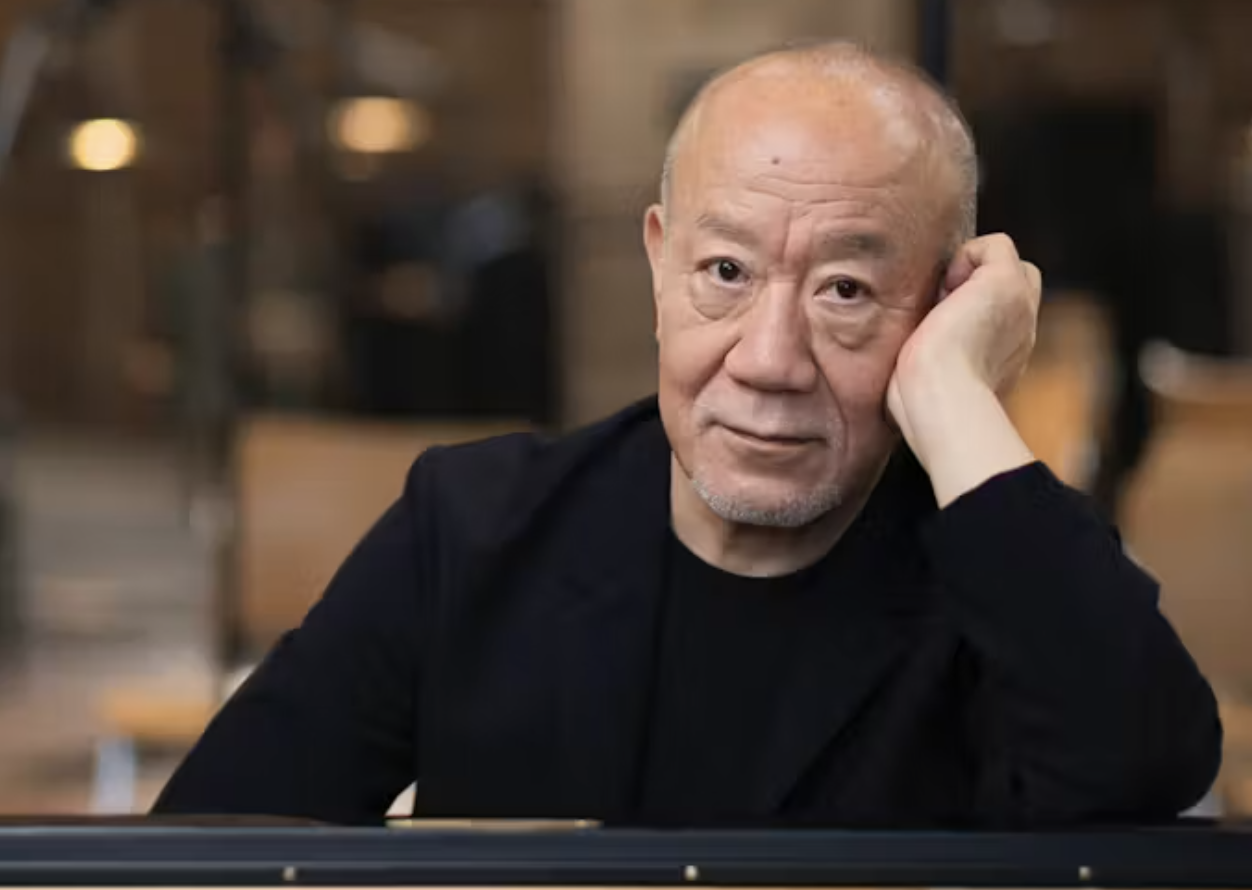
Renowned composer Joe Hisaishi of Studio Ghibli fame returns to Carnegie Hall for a pair of classical performances leading the Orchestra of St. Luke’s following the release of his most recent album Joe Hisashi Conducts performed with Steve Reich. The program opens with Philip Glass’s Symphony No. 1, “Low,” inspired by David Bowie’s groundbreaking album. In the second half, Hisaishi conducts his major new work, co-commissioned by Carnegie Hall, in its New York premiere. In a compelling dialogue between two minimalist masters, Hisaishi explores the depth and expressive power of the modern orchestra.

July 11-15
Various theaters
Various prices
The latest selection from Fathom Entertainment’s Studio Ghibli Fest! From the legendary Studio Ghibli, creators of Spirited Away and Ponyo, and Academy Award-winning director Hayao Miyazaki, comes a classic tale of magic and adventure for the whole family. When Satsuki and her sister Mei move with their father to a new home in the countryside, they find country life is not as simple as it seems. They soon discover that the house and nearby woods are full of strange and delightful creatures, including a gigantic but gentle forest spirit called Totoro, who can only be seen by children. Totoro and his friends introduce the girls to a series of adventures, including a ride aboard the extraordinary Cat Bus, in this all-ages animated masterpiece featuring the voices of Tim Daly, Lea Salonga, and real-life sisters Dakota and Elle Fanning, in early roles.
Read MoreJob: Study Abroad Advisor – Kansas State University (Manhattan, KS, USA)
Jobs Comments Off on Job: Study Abroad Advisor – Kansas State University (Manhattan, KS, USA)
Posted by Sydney Sparrow. Click here to join the JETwit Jobs Google Group and receive job listings even sooner by email.
Position: Study Abroad Advisor
Posted by: Kansas State University
Location: Manhattan, KS, USA
Contract: Full-Time
Thanks to Savannah Maynard (Nara, 2022-2025) for passing along the following job opening.
About This Role
The Study Abroad Advisor provides guidance and outstanding professional service to students before, during, and after their educational experience abroad. The Advisor informs students, parents, faculty, and staff about various study, internship, service, and research opportunities abroad, while also coordinating program and application processes, participates in campus recruitment and promotion, and communicates with relevant academic and administrative offices. The Advisor position is student orientated, helping expand student access to and participation in global applied learning experiences that support student success and career readiness.
The Study Abroad Advisor works with overseas partners to obtain information regarding application processes, course selection, arrival information, accommodation, and other relevant information. Some national and international travel is expected.
About Us
Education Abroad falls within the Office of International Programs (OIP) at Kansas State University and advances the university’s global mission by connecting students, faculty, staff, and partners through meaningful international education, collaboration, and engagement. OIP supports a vibrant global community by overseeing Education Abroad, the English Language Program, and International Student and Scholar Services, while fostering international research partnerships, academic exchanges, and cross-cultural initiatives. Through comprehensive programs, resources, and support services, we empower students to develop global perspectives, help international students and scholars thrive at K-State, and strengthen the university’s impact in Kansas and around the world.
Job: Japanese Bilingual Showroom Customer Service & Luxury Goods Valuer – Quick USA (West Hollywood, CA, USA)
Jobs Comments Off on Job: Japanese Bilingual Showroom Customer Service & Luxury Goods Valuer – Quick USA (West Hollywood, CA, USA)
Posted by Sydney Sparrow. Click here to join the JETwit Jobs Google Group and receive job listings even sooner by email.
Position: Japanese Bilingual Showroom Customer Service & Luxury Goods Valuer
Posted by: Quick USA
Location: West Hollywood, CA, USA
Contract: Full-Time
Thanks to Carlos Medina (Oita, Japan, 2019-2022) for passing along the following job opening.
Description:
A Japanese Luxury Retailer is currently looking for a full time, fully onsite Japanese Bilingual Showroom Customer Service & Luxury Goods Valuer to join their West Hollywood, CA location.
This role involves delivering high-quality customer service, maintaining showroom presentation, and assisting with inventory management and stock organization.
The position also supports the luxury goods valuation process, including item intake, basic authenticity and condition checks, and preparation for appraisal decisions under supervisor guidance.
The ideal candidate is comfortable handling high-value items, has strong English communication skills, and possesses basic to intermediate Japanese proficiency (JLPT N4 or above; fluency not required) for internal communication.|
An interest in learning luxury goods appraisal and market-based pricing is highly valued.
DOE and skills, the pay range for this position would be between the 48k-54k mark
