




****************
James Kennedy (Nara-ken, 2004-06), author of the acclaimed young adult novel The Order of Odd-Fish, will be curating the 90-Second Newbery Film Festival with the New York Public Library around November 5 and with the Harold Washington Library in Chicago around November 16. And he has a special request for JET alumni who are into film making:
There are some Newberry award winners that are about Japan and the Japanese, and nobody has done a 90-Second Newbery film of them yet!
Off the top of my head, I can think of:
(1) Heart of a Samurai by Margi Preus, which is about John Manjiro (2011 Honor Winner)
(2) Kira-Kira by Cynthia Kadohata, which is about WWII Japanese-American experience (2005 Medal Winner).
(3) Commodore Perry In the Land of the Shogun by Rhoda Blumberg. (1986 Honor Winner)
So, as for JET alumni:
(1) I’d love to put the call out to the JET alumni community, which surely must include filmmakers, to make 90-second films based on those books for the film festival. (It would be even better if they were totally in Japanese, with subtitles!)
(2) The film festival at the NYPL on November 5 will be not only films, but also live acts between the films — a kind of cabaret atmosphere — live 90-second Newbery reenactments, or songs, etc. So this is also a call out to any arts groups / comedy teams / bands / etc. who would be interested in doing something as a between-film live segment for the 90-Second Newbery film festival?
Here’s a little more info from James about the 90-Second Newbery Festival: Read More
JET alum James Kennedy reviews “Super Mario” for WSJ Book Review
 Article/Journalism, Books, JETs in the News, Notable JET Alums, Return on JET-vestment, Reviews, Writers
  Comments Off on JET alum James Kennedy reviews “Super Mario” for WSJ Book Review
 James Kennedy (Nara-ken, 2004-06), author of the acclaimed young adult novel The Order of Odd-Fish, just did a Wall Street Journal book review of SUPER MARIO, Jeff Ryan’s history of Nintendo.
In the article, James apparently also had the chance to correct some bad Japanese in his book. (Who says the JET program doesn’t teach marketable skills?)
“Errors crop up. Speculating on the name of Mario’s evil twin, Wario, Mr. Ryan claims that “in Japanese, wariu means bad.” Actually, the Japanese is warui.”
The book review was in Friday’s print WSJ, and here it is online: http://on.wsj.com/paNu5f
Another Canadian JET to visit Tohoku via the MOFA program
Article/Journalism, Blogs, Earthquake Tsunami, Japan Local, JETAA Chapters, Notable JET Alums, Return on JET-vestment, Travel/Tourism, Volunteer, Writers Comments Off on Another Canadian JET to visit Tohoku via the MOFA program
Turns out the Ottowa Citizen article was not entirely correct about Brent Stirling (Fukushima-ken, Fukushima-shi, 2006-10) being the only Canadian among the 20 ex-JETs selected for the MOFA program to go back to their town/city in Tohoku, help with volunteering and write about and share their experience.
But the post on JETwit about the article did help generate a response from Toronto-based JET alum Tanya Gardecky (Miyagi-ken, Shiogama-shi) who will also be participating and whose travel blog you can follow here: http://www.travelblog.org/Bloggers/ShiogamaJET/
********************
Here are a few JET-related articles and radio piece written and produced in the past month by JET Alum Bluegrass Subchapter member Graham Shelby (Fukushima-ken). (Thanks to Graham for sharing the info.)
- Graham went to Nashville at the end of July to interview some of the new JETs about to depart from the consulate there. Here’s a radio piece he produced that aired this past week on the public radio station here in Louisville. (It’s short.)
http://www.wfpl.org/2011/08/15/audio-new-teachers-prepare-for-life-in-japan/
- Graham also put together a quick piece focusing on one of new JETs who happens to be headed to Fukushima. It aired a few times on NPR’s national newscasts during Morning Edition on August 1. They don’t archive the newscasts online, the newscaster’s intro sounded something like this:
“While many people are struggling to find jobs, hundreds of Americans, many of them recent college graduates, have found an employer eager to hire them – in Japan. From member station WFPL, Graham Shelby has more.”
- Lastly, Graham did another short piece that was Kentucky-specific that was picked up by a few stations here.http://www.wfpl.org/2011/07/30/kentuckians-prepare-for-japanese-teaching-assignments/
As Graham’s work demonstrates, there are clearly opportunities to find and tell compelling stories from the world of JETs and former JETs. If you have any ideas, angles, upcoming events or possible outlets in mind, please feel free to contact Graham gshelby3 [at] gmail.com.

Brent Stirling (Fukushima-ken, Fukushima-shi, 2006-10)
***************
Ottawa based JET alum Brent Stirling (Fukushima-ken, Fukushima-shi, 2006-10) is one of only 2 Canadians out of 20 JET alumni selected to return to the Tohoku region to volunteer, engage and share their experience for the benefit of others, according to an article in the Ottawa Citizen.
(Note: This post previously repeated the error in the Ottawa Citizen article that Brent was the only Canadian participating. But it turns out that Toronto-based Tanya Gardecky (Miyagi-ken, Shiogama-shi) will also be participating.)
Stirling, who writes on his blog ForYourBrentertainment and was actively involved in the creation of Quakebook following the Tohoku Earthquake and Tsunami, submitted a proposal which was accepted by the program established by the Ministry of Foreign Affairs together with the Japan Tourism Agency to bring 20 Tohoku-area JET alums back to Tohoku to play a role in helping their communities and then spread word of their experience afterwards.
Read the full Ottawa Citizen article here: “Months of blogging leads to trip to Japan: Kanata teacher will help with disaster relief in the country he writes about”
Tsunami: JET alum Harvard professor Ian Miller’s NY Times article
Academic, Article/Journalism, Earthquake Tsunami, Japan Local, JETs in the News, Notable JET Alums, Return on JET-vestment, Writers Comments Off on Tsunami: JET alum Harvard professor Ian Miller’s NY Times article

Harvard history professor Ian Miller (Miyagi-ken, Miyako-shi)
*************
Thanks to a recent conversation with Peter Kelley, President of the National Association of Japan-America Societies, I just learned of this New York Times article by Harvard history professor and JET alum Ian Miller (Miyagi-ken, Miyako-shi) which ran March 19, 2011.
Bitter Legacy, Injured Coast
http://www.nytimes.com/2011/03/20/opinion/20miller.html?_r=1&pagewanted=1
By IAN JARED MILLER
Cambridge, Mass.
THE rugged Sanriku Coast of northeastern Japan is among the most beautiful places in the country. The white stone islands outside the port town of Miyako are magnificent. The Buddhist monk Reikyo could think of nothing but paradise when he first saw them in the 17th century. “It is the shore of the pure land,” he is said to have uttered in wonder, citing the common name for nirvana.
Reikyo’s name for the place stuck. Jodogahama, or Pure Land Beach, is the main gateway to the Rikuchu Kaigan National Park, a crenellated seashore of spectacular rock pillars, sheer cliffs, deep inlets and narrow river valleys that covers 100 miles of rural coastline. It is a region much like Down East Maine, full of small, tight-knit communities of hardworking people who earn their livelihoods from tourism and fishing. Sushi chefs around the country prize Sanriku abalone, cuttlefish and sea urchin.
Today that coast is at the center of one of the worst disasters in Japanese history. Despite the investment of billions of yen in disaster mitigation technology and the institution of robust building codes, entire villages have been swept out to sea. In some places little remains but piles of anonymous debris and concrete foundations.
I taught school in Miyako for more than two years in the 1990s, and it was while hiking in the mountains above one of those picturesque fishing villages that I came across my first material reminder of the intricate relationship between the area’s breathtaking geography, its people — generous and direct — and powerful seismic forces.
On a hot summer day a group of middle-school boys set out to introduce me to their town, a hamlet just north of Pure Land Beach. While I started up the steep mountainside the children bounced ahead of me, teasing me that I moved slowly for someone so tall. “Are you as tall as Michael Jordan, Miller-sensei?” yelled one boy as he shot past me up the trail.
“Not quite,” I told him, pausing on a spot of level ground to look out over the neat collection of tile roofs and gardens that filled the back of a narrow, high-walled bay.
“What is this?” I asked, pointing to a mossy stone marker that occupied the rest of the brief plateau. A chorus of young voices told me that it was the high-water mark for the area’s biggest tsunami: more than 50 feet above the valley floor.
“When was that?” I asked, but the boys couldn’t say. Read More
WIT Life #178: Fukushima Fallout, Nuclear and Bureaucratic
Earthquake Tsunami, Translating/Interpreting, WIT Life, Writers Comments Off on WIT Life #178: Fukushima Fallout, Nuclear and Bureaucratic
WITLife is a periodic series written by professional Writer/Interpreter/Translator Stacy Smith (Kumamoto-ken CIR, 2000-03). She starts her day by watching Fujisankei’s newscast in Japanese, and here she shares some of the interesting tidbits and trends together with her own observations.
Interesting article from today’s NYT about the government’s (mis)handling of the post-Fukushima disaster, specifically not providing information when it was available regarding potential radiation levels. The public is now not only fearful but outraged, claiming that the government cared more about covering up than about its own citizens. One notable aspect of the article appeared on the last page, discussing a group lawsuit being carried out by Read More
WIT Life #177: 子ども手当から児童手当へ
Translating/Interpreting, WIT Life, Writers Comments Off on WIT Life #177: 子ども手当から児童手当へ
WITLife is a periodic series written by professional Writer/Interpreter/Translator Stacy Smith (Kumamoto-ken CIR, 2000-03). She starts her day by watching Fujisankei’s newscast in Japanese, and here she shares some of the interesting tidbits and trends together with her own observations.
It’s been a bit of hisashiburi since I’ve written here, but it’s nice to be back. Recently our government has seen its share of wrangling regarding the debt ceiling issue, and there has been similar discord among Japan’s political parties regarding the 子ども手当 (こどもてあて, kodomo teate)or child allowance. Originally one of the DPJ’s key campaign pledges and put into law in April 2010, it granted a uniform 13,000 yen per month to parents with children up to the age of fifteen. However, it has just been announced that in order to prioritize financial resources for the country’s recovery, it will be eliminated in October when it expires.
Next April, this allowance will be replaced by Read More
Surviving in Japan: What is “Calorie Off” and Why Should You Care?
Advice, Blogs, Food & Drink, Writers Comments Off on Surviving in Japan: What is “Calorie Off” and Why Should You Care?
Posted by Ashley Thompson (Shizuoka-ken, 2008-2010) of Surviving in Japan: without much Japanese and Lifelines columnist for The Japan Times.
My time in Japan so far has seen many changes, as to be expected, and most have been gradual. One such change has been the increasing prevalence of “calorie off” drinks. When I first arrived I remember this option being available, but as the years have gone by some of my favorite beverages converted completely to “calorie off”, including my beloved lemon Mitsuya Cider… (I like CC Lemon too, but I prefer Mitsuya Cider).
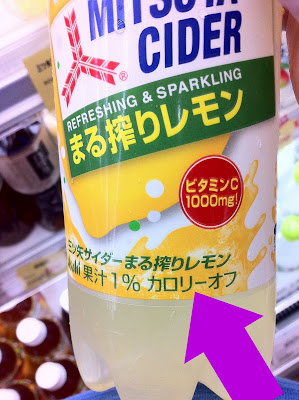
Now, just browsing at the local コンビニ (convenience store), it is more difficult to find carbonated (and some non-carbonated) beverages that aren’t “calorie off.” Not that I drink much else aside water in general (and occasionally 100% juice or tea), but even if some new, “limited edition” beverage looks interesting to try I often don’t because it is, of course, “calorie off.”
So, what is “calorie off”? — CLICK HERE to read the rest of the post.
Tohoku update and perspectives by Japan Society of Boston President Peter Grilli
Earthquake Tsunami, Fundraising, Japan Society Round-up, Japan Trends, Writers Comments Off on Tohoku update and perspectives by Japan Society of Boston President Peter Grilli
If you’ve been looking for good sources of on the ground reporting in Tohoku, you may appreciate the writing of Japan Society of Boston President Peter Grilli who just returned from three weeks in Tohoku. After March 11, JSB teamed up with The Boston Foundation and the Fish Family Foundation to create the Japan Disaster Relief Fund Boston.
Below are two reports by Peter for JSB as well as two for JDRFB.
- http://www.japansocietyboston.org/Tohoku
- http://www.japansocietyboston.org/Onagawa
- http://jdrfb.squarespace.com/blog/2011/7/19/transition-rescue-and-reconstruction-peter-grilli.html
- http://jdrfb.squarespace.com/blog/2011/7/12/report-from-onagawa.html
WIT Life #176: 悪人
Events, Film, Translating/Interpreting, Uncategorized, WIT Life, Writers Comments Off on WIT Life #176: 悪人
WITLife is a periodic series written by professional Writer/Interpreter/Translator Stacy Smith (Kumamoto-ken CIR, 2000-03). She starts her day by watching Fujisankei’s newscast in Japanese, and here she shares some of the interesting tidbits and trends together with her own observations.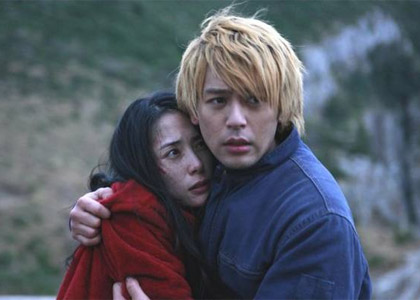
First off a huge OMEDETOU to the Japanese women’s soccer team for winning the World Cup over the weekend! I watched the game with the Japanese delegation I have just begun interpreting for, and needless to say it made our night. The victory has been a nice boost of encouragement for the country, and is something all of its citizens can take pride in.
The Japan Cuts film festival at Japan Society is going strong in its second and final week, and in my next few entries I hope to discuss some of the great movies I’ve been seeing. But today I’d like to talk about another interesting film that made its New York premiere when it was screened last week as part of the Nippon Eiga series sponsored by ANA. It was 悪人 (Akunin) or Villain, and featured the two amazing actors Satoshi Tsumabuki (as the villain) and Eri Fukatsu (as the woman who falls in love with him). It was directed by Sang-il Lee who also made Hula Girls, another movie that was screened as part of ANA’s series a few years back.
Fukatsu received the Best Actress award at the Montreal World Film Festival last year for playing this role, a worthy performance. She and Tsumabuki always have great chemistry (I loved them in Read More
Surviving in Japan: How to stay cool without air conditioning
Advice, Blogs, Japan Local, Writers Comments Off on Surviving in Japan: How to stay cool without air conditioning
Posted by Ashley Thompson (Shizuoka-ken, 2008-2010) of Surviving in Japan: without much Japanese and Lifelines columnist for The Japan Times.
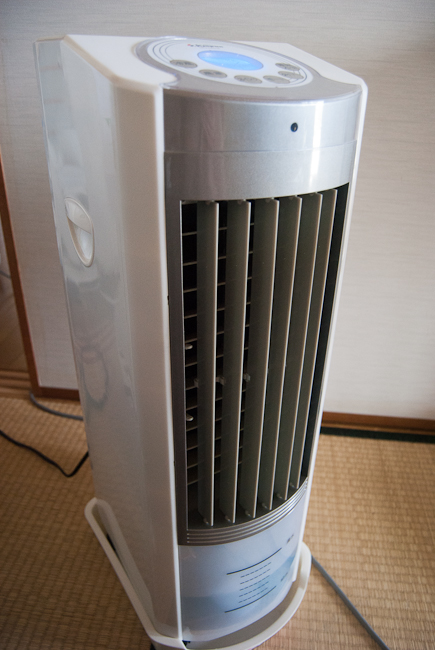
冷風扇 or "cool air fan"
The last week or so has been rather hot (in central Japan at least), with temps here in Shizuoka hovering around 30 Celsius and up (high 80s to 90s Fahrenheit). My husband and I still don’t own an air conditioner, simply due to the costs involved with buying and installing one, and then periodic cleaning. Yet, being 33 weeks pregnant, I’ve been finding myself desperate for some kind of cooling alternative the past week or so.
I never really felt like I needed an aircon since arriving in Japan three years ago. I was happy to experience nice, hot summers. People tend to complain a lot about the summer heat in Japan (unless they live in Hokkaido), but I hate the cold so much that I’m usually relieved when summer comes around.
Until last summer anyway, when we had a record-breaking heat wave that lasted until October. Sitting and working at home was mostly tortuous, so I trekked to the nearest Starbucks a few times a week just so I could get some work done in an air-conditioned, non-smoking, wi-fi equipped environment.
And now we’re into summer 2011. Temperatures are already mirroring those of last year on some days. I’m making due the best I can, but all this extra blood running through my body and 10 extra kilograms seems to make me feel hotter than I felt even last year.
After feeling sick the other day from trying to work inside (and I do still try to get out in the afternoon and at least run errands to air-conditioned places), I was about ready to build my own air conditioner.
I found this article on how to construct a makeshift one with a fan, styrofoam box cooler, and ice, and was seriously planning to go find the materials. Regular electric fans weren’t working, even with multiple ones blowing from all directions to circulate air. Drinking ice water helped only a little, and I was hopping in the shower every so often for a quick spray of cold water.
And then my husband mentioned he’d heard about some kind of machine that blows cool air (no, not an aircon), known as 冷風扇 (れいふうせん, reifuusen), or 冷風機 (れいふうき, reifuuki), or “cool air fan/machine” as a loose translation.
Essentially, you put cold water and ice–CLICK HERE to read the rest of the post.
New Bruce Feiler column in the New York Times
Article/Journalism, Books, Celebrity, JETs in the News, Notable JET Alums, Writers Comments Off on New Bruce Feiler column in the New York Times
Attached is a new New York Times column (“The Life (and Death) of the Party: Mastering the Art of Dinner Party Conversation“) by JET alum Bruce Feiler (Tottori-ken, 1989-90), author of Learning to Bow, The Council of Dads, and several books on the Middle East including Walking the Bible, Abraham and Where God Was Born.
To read prior columns, please click here.
Bruce’s new book GENERATION FREEDOM: The Middle East Uprisings and the Remaking of the Modern World has just been published. You can see some of his recent media appearances by visiting www.brucefeiler.com.
***************
This Life
The Life (and Death) of the Party
By BRUCE FEILER
Published: July 8, 2011
I CALL it my insufferability test. It came about like this: A number of years ago, I was seated at a dinner party next to the celebrated C.E.O. of an American brewery. I was the lesser player here, so I began asking him questions about his beer. Fifteen minutes passed, then 30. He didn’t ask me a single question.
As dessert approached, I began slumping in my chair from trying to come up with query after query about organic hops and fluctuating wheat futures. Finally, I started dropping in teasers from the year I spent as a circus clown. “My friend the human cannonball …”; “That reminds me of the time I once got into a cage with nine tigers.” Surely these would pique his curiosity. Needless to say, I never told a story about the circus that night.
To me that encounter was a warning shot. I was like a rookie pitcher being plastered in his opening outing in the big leagues. If I hoped to avoid similar dinner party fiascoes in the future, I had to raise my game. So what is the best formula for handling a loudmouth, know-it-all, bore or clam?
With summer entertaining season upon us, it seemed like a good time to brush up on my techniques, and perhaps pick up some new tricks. So with the help of some veterans of the tablecloth trenches, here are some tips for navigating dinner party pitfalls.
EAT AND GREET In ancient Rome, senators hired nomenclatorsto follow them around and introduce them to people. These days, each of us has to be his own nomenclator. A good host often performs this role. “A lot of dinners I throw often have a specific point to them,” said Sunny Bates, a former Silicon Alley headhunter turned networking guru. “I make everyone go around and say who they are, where they’re from and what they most need.” Other starter questions I’ve seen work: “If you could change one thing about the human body, what would it be?” and “What about you, physically, is perfect?” Knowing something about all the other guests is more than good manners; it can also come in handy if you’re seated next to a dud and need to seek relief in someone a few seats away. If I’m at an event with no host at the table, I’ll go so far as to walk around and briefly introduce myself to the other guests. Think of a dinner party as being like a crime scene: plan your escape route. Read More
Sake World e-Newsletter by John Gauntner (July 2011)
Cultural Outreach, Food & Drink, Notable JET Alums, Writers Comments Off on Sake World e-Newsletter by John Gauntner (July 2011)
 The July 2011 issue of the Sake World e-newsletter by JET alum and the leading non-Japanese sake expert in the world, John Gauntner (a.k.a. “The Sake Guy”), is now available online.
Go to John’s Sake World website for more information as well: www.sake-world.com
WIT Life #175: Japan Cuts 2011
Film, Translating/Interpreting, Uncategorized, WIT Life, Writers Comments Off on WIT Life #175: Japan Cuts 2011
WITLife is a periodic series written by professional Writer/Interpreter/Translator Stacy Smith (Kumamoto-ken CIR, 2000-03). She starts her day by watching Fujisankei’s newscast in Japanese, and here she shares some of the interesting tidbits and trends together with her own observations.
The 2011 Japan Cuts Film Festival at Japan Society is back and better than ever, with a lineup of 32 films and 33 screenings in total. Like last year, I decided to volunteer in various roles such as ushering and ticket taking, as that allows you to stick around and enjoy the movies. The first movie I worked at was Love & Loathing & Lulu & Ayano (名前のない女たち) which was screened this past Friday night.
Director Hisayasu Sato, known as one of the “Four Heavenly Kings of Pink” for his work in ピンク映画 (pinku eiga) or soft-core porn films, incorporated his background into this movie released in Japan last year. It tells the story of a meek OL who is scouted in Shibuya to work in Read More
