




***********************
WIT Life is a periodic series written by professional Writer/Interpreter/Translator Stacy Smith (Kumamoto-ken CIR, 2000-03). She starts her day by watching Fujisankei’s newscast in Japanese, and here she shares some of the interesting tidbits and trends together with her own observations.
Time truly flies, as I can’t believe it has been so long since I’ve been here. At any rate, tadaima!
Although almost nine months have passed since the earthquake/tsunami in Fukushima, and I am glad to say that the recovery effort is still on people’s minds. Last night I went to the Artist Showcase and Fundraiser for Japan held at Ambassador Shigeyuki Hiroki’s Residence. The event featured a reception honoring a visiting Fukushima prefectural government delegation to New York, along with artwork (some from JET alumni!) available for silent auction purchase.
Ambassador Hiroki offered his comments, and a representative of the Fukushima prefectural governor read a letter from him on his behalf. On display were Fukushima goods, and guests partook of Fukushima sake as well as Read More
L.M. Zoller (CIR Ishikawa-ken, Anamizu, 2009-11) is the editor of The Ishikawa JET Kitchen: Cooking in Japan Without a Fight. A writer and translator for The Art of Japan: Kanazawa and Discover Kanazawa, ze also writes I’ll Make It Myself!, a blog about food culture in Japan.

Despite my oft-mentioned love of turkey, I had actually never cooked one until this year. In between being a super serious high-school student buried in a stack of books during the holidays and being a super-serious undergrad/grad student visiting from out of state, still buried in a stack of books and often rushing to get back home in time for holiday meals, I somehow seemed to have missed participating in the time-honored ritual of roasting a whole bird. This year marked my third consecutive Thanksgiving missed because I live in Japan, so rather than cry over my twitter feed of satisfied turkey-eaters in the US, I decided that my upgraded oven range was going to good use this year: we would host Thanksgiving, and, moreover, we would cook the turkey.
CLICK HERE to read the full post.
I’ll Make It Myself– ベーガル革命: Whole-Wheat Bagels
 Blogs, Food & Drink, I'll Make It Myself, Writers
  Comments Off on I’ll Make It Myself– ベーガル革命: Whole-Wheat Bagels
L.M. Zoller (CIR Ishikawa-ken, Anamizu, 2009-11) is the editor of The Ishikawa JET Kitchen: Cooking in Japan Without a Fight. A writer and translator for The Art of Japan: Kanazawa and Discover Kanazawa, ze also writes I’ll Make It Myself!, a blog about food culture in Japan.
もちもち (mochimochi): springy (texture)
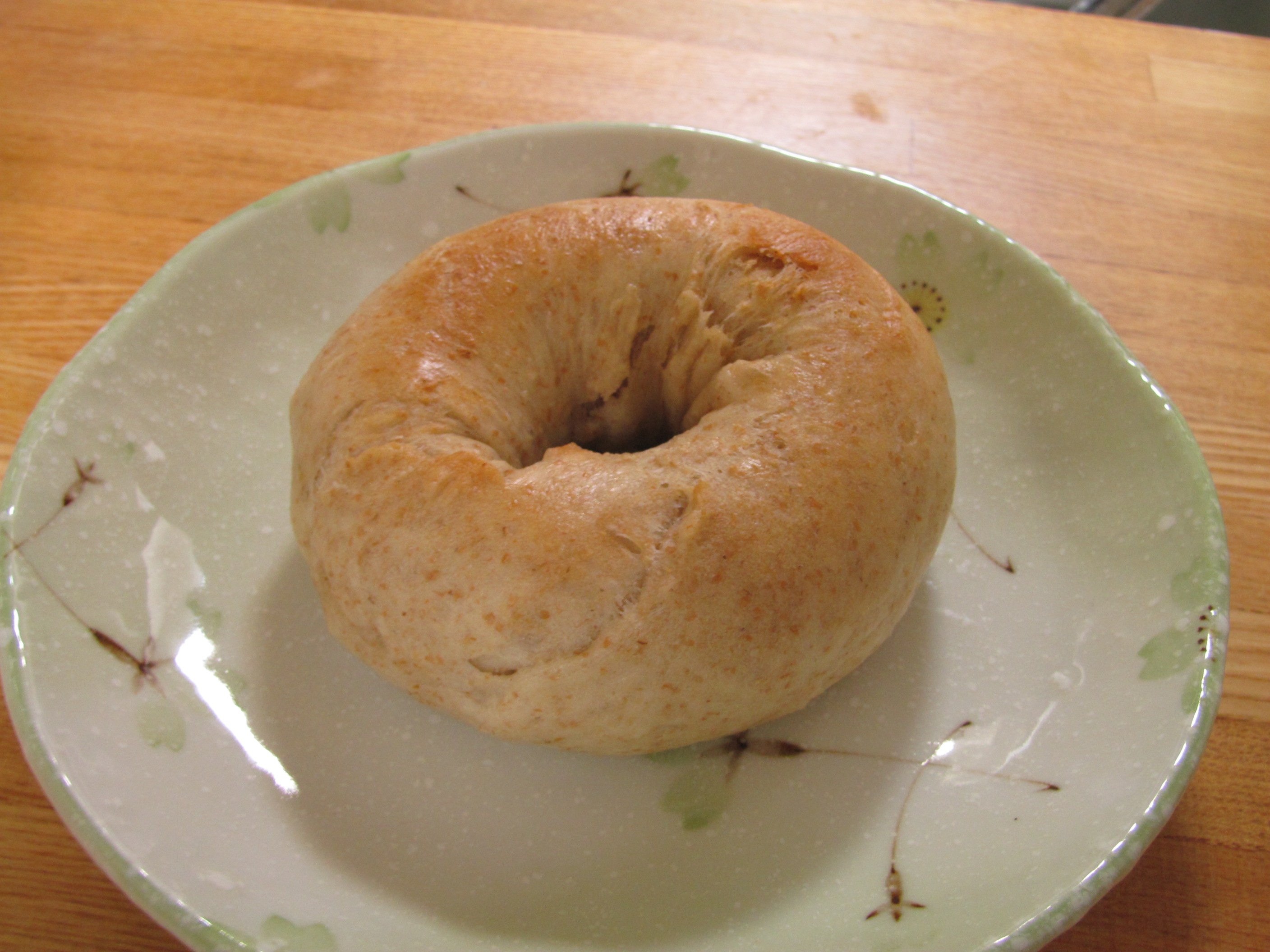
Back in my language-school days at Midd, a New-Yorker foodie friend got on my case for eating the dining-hall bagels, telling me, “That’s not a bagel. That’s a piece of bread shaped like a bagel.” It’s probably for the best that he doesn’t find out what sort of things pass for “bagels” in Japan–it’s more like “cake shaped like a bagel.” Sometimes you can get passable bagels in the chain bakeries of Kanazawa, and Kaldi Coffee sometimes has imported frozen bagels, but they’re a bit pricey. Either way, it’s not just like popping over to Espresso Royale for a fresh Barry’s Bagel during an intense paper-writing session.
Bagels are one of those foods that seem very intimidating in part because of the multi-step process of making them: using yeast, letting the dough rise, shaping, boiling, and then finally baking; and in part because you really never need to make them in the US when they’re so widely available.
CLICK HERE to read the full post.
Posted by Ashley Thompson (Shizuoka-ken, 2008-2010) of Surviving in Japan: without much Japanese and Lifelines columnist for The Japan Times.
Most homes in Japan aren’t equipped with central heating, so people typically rely on space heaters and similar items. Now, we all know that wearing some extra clothes and warm fleece is a good way to avoid turning the heat all the way up, but most likely you will need (or desperately want) a heater at some point.
And, just to note, I am not an expert on heaters, so if you are curious about how a heater works a certain way, go ahead and google that.
Also, most of the heaters below have timers and auto-turnoff options in addition to running constantly. They also often have automatic shutoff features such as if the heater fell over.
*Keep in mind another way heater might be written is 電気ストーブ (denki stobu).
*The word used for “heating” is 暖房 (だんぼう, danbou).
A guide to heaters in Japan
1. Aircon – エアコン
The air conditioner is commonly known as an aircon in Japan, and most aircons are equipped with a heating function. So, if you have an aircon, you may want to check that out (look for “暖房”). From experience I know it does a pretty good job heating a room, although I found that all the heat rose to the ceiling which was somewhat pointless if you spend most of your time sitting on the floor and don’t have a ceiling fan.
I also found that running the aircon was incredibly expensive. Some are much more energy efficient (look for 省エネ on the outside or description). Aircons are also one of the more expensive options, considering that most will be ¥30,000 – 40,000 and up, depending on the size.
2. Oil heater – オイルヒーター
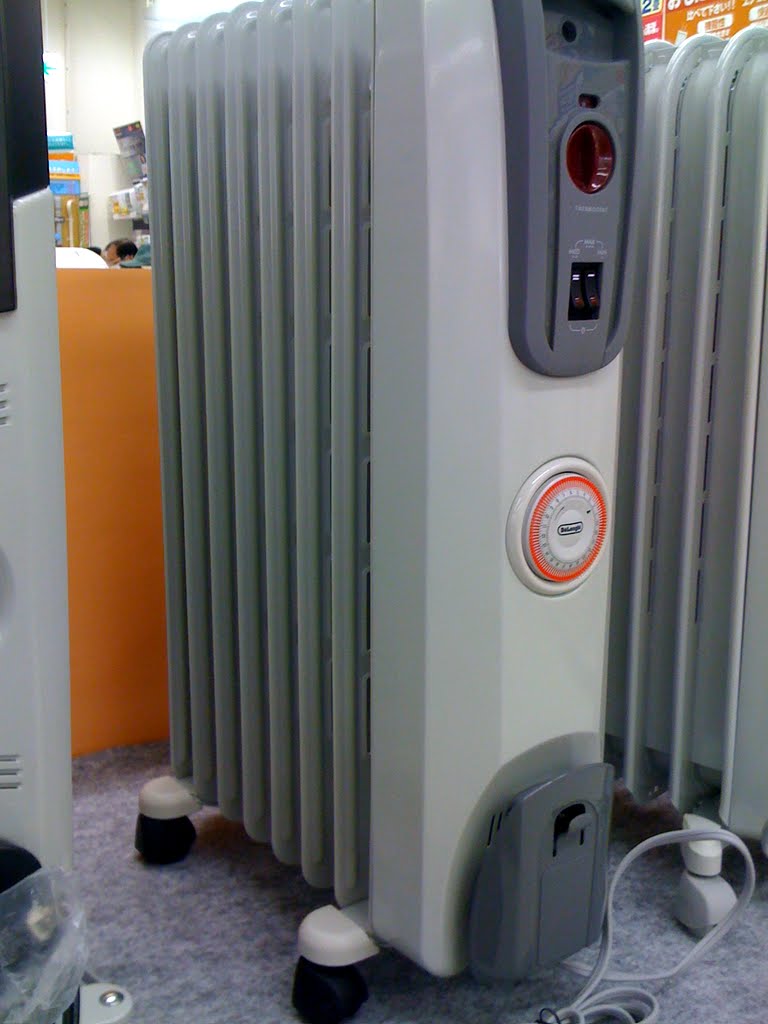
This heater is the one that looks like a radiator, and some of you may be familiar with already. My family used these when I was a kid, and though they work really well, they are typically energy hogs. Some are better than others though, so it’s best to compare when looking at energy usage. Some of the ones I looked at operate at 1200 watts at the highest level, with an estimated ¥15-20/hour cost to operate (though this varies). Price may range from ¥5,000 – 30,000, though it’s possible to find cheaper options at a recycle shop (this goes for all of the following options as well).
3. Panel heater – パネルヒーター
CLICK HERE to read the rest of the post.
Posted by Ashley Thompson (Shizuoka-ken, 2008-2010) of Surviving in Japan: without much Japanese and Lifelines columnist for The Japan Times.
I wrote Part 1 of this “Giving Birth in Japan” series last week, so if you haven’t read that already, you may want to before reading Part 2 below.
********

Ashley Thompson is "Surviving in Japan (Without Much Japanese)"
As I was being stitched up, I started shivering uncontrollably. Of course, the temperature in the room had been pretty low as I was sweating and hot throughout the labor and delivery. My husband changed the temp while the nurses helped me change out of my sweaty long t-shirt. (Note: this particular clinic, and probably many others, provide hospital gowns that women typically wear throughout their stay. However, the gowns at this clinic were really uncomfortable and stiff-feeling, so I brought my own clothes to wear for the birth and for the stay. We discussed this with one of the midwives at the clinic beforehand so it wasn’t an issue.)
The nurses also had to put these giant pads on me that were sort of like a diaper as all of the blood came out (sorry, graphic I know), which they changed several times right after I had given birth.
After all this, baby was cleaned up and I got to hold her, and also try nursing her. One important thing I should point out is that depending on where you deliver, the midwives or nurses may have different ideas on the best way to breastfeed. We had been warned beforehand that this clinic wasn’t that great with breastfeeding support, and it seemed like almost every nurse/midwife had a different idea about how it should be done. Initially, they only had the baby feed for a few minutes on each side, and then took her away for some tests. One of the nurses explained that the baby should only eat for 5 minutes on each side and then switch, and many of the others nurses also reemphasized this, but some of them didn’t care about the length of time. And everyone had different ideas of how to manually express milk as well, but a pump was frowned upon).
I was still exhausted and a little out of it for that part, but if I went through this process again I probably would have requested to let her feed longer if she was willing to, instead of just pulling her off after less than 10 minutes. I also would have wanted more skin-to-skin time with the baby, since I was fully clothed again (like I mentioned in the previous post, modesty is preferred) and baby was bundled up as well.
I had to go to the bathroom around this time (it had been a while since I last peed), so asked if I could go. The nurse gave me some cleansing wipes, a pad, etc., and walked with me to the bathroom. I have to tell you, I was so weak at this point, and sore, that it was difficult just getting there. As I was going about my business, I became really faint and lightheaded. My head felt heavy and I had to lean over between my knees.
I should make a brief note that I’ve had various instances happen in my life when I’ve become very lightheaded and faint, and I either nearly pass out or actually do. Usually I try to lay down before I pass out completely, but sometimes it’s been hard to avoid.
So I told the nurse I was lightheaded, and she said we should walk back to the room. I tried standing up, but I found it difficult to stay standing and fell over the sink, grabbing the counter. I willed myself to stay conscious enough to walk back so I could lay down.
That didn’t happen. The nurse called another nurse and they both held onto me as I stumbled my way down the hall. I ended up falling to the floor since I completely lost strength and neither of them could hold me up. There I was laying on the floor in the hallway, just outside the LDR room as one of the nurses called for my husband. The last thing I remember before I blacked out was my husband wrapping his arms around me to pull me up. –– CLICK HERE to read the rest of the post.
I’ll Make It Myself! — Travel Checklist: Local Foods in Hida-Takayama, Part 2
Blogs, Food & Drink, I'll Make It Myself, Travel/Tourism, Writers Comments Off on I’ll Make It Myself! — Travel Checklist: Local Foods in Hida-Takayama, Part 2
L.M. Zoller (CIR Ishikawa-ken, Anamizu, 2009-11) is the editor of The Ishikawa JET Kitchen: Cooking in Japan Without a Fight. A writer and translator for The Art of Japan: Kanazawa and Discover Kanazawa, ze also writes I’ll Make It Myself!, a blog about food culture in Japan.
Travel Checklist: Local Foods in Hida-Takayama, Part 2
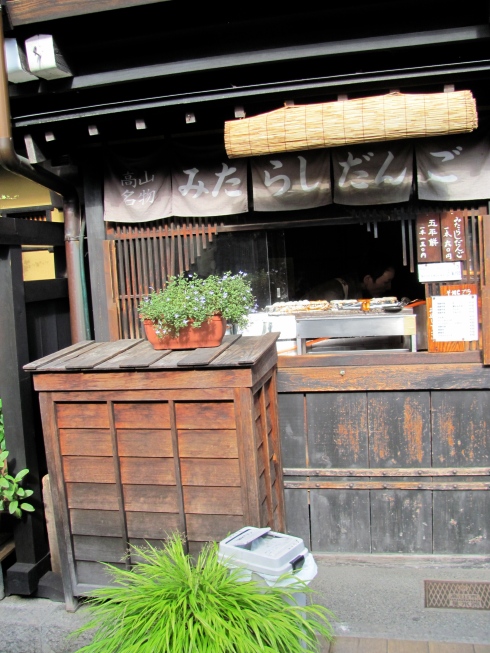
To recap– In September, a friend and I traveled to Takayama, about 3 hours from Kanazawa. Located in Gifu near the border of Nagano, the old towns of Hida (飛騨) and Takayama (高山) are a food tourist’s paradise. Since the town is quite small, most of these foods can be found in stands or restaurants near Takayama Station and nearby morning markets.
CLICK HERE to read the full post.
The Rice Cooker Chronicles: “My Rice Ball World” by Meredith Hodges-Boos
Anecdote Article, Food & Drink, Rice Cooker Chronicles, Writers Comments Off on The Rice Cooker Chronicles: “My Rice Ball World” by Meredith Hodges-Boos
The Rice Cooker Chronicles is a series of essays by JETs and JET alumni on the theme of cooking/eating and being alone in Japan. The brain-child of JETwit founder Steven Horowitz (Aichi-ken, Kariya-shi, 1992-94) (and inspired by the book Alone in the Kitchen with an Eggplant), this series is curated by L.M. Zoller (CIR Ishikawa-ken, Anamizu, 2009-11), the editor of The Ishikawa JET Kitchen: Cooking in Japan Without a Fight. A writer and translator for The Art of Japan: Kanazawa and Discover Kanazawa, ze also writes I’ll Make It Myself!, a blog about food culture in Japan.
New submissions always welcome. Just e-mail it to Leah at jetwit [at] jetwit.com.
******
“My Rice Ball World”
by Meredith Hodges-Boos (ALT, Ehime-ken, 2003-2005). Please visit http://meredithhodgesboos.blog.com/ for more essays on her time in Japan and current literary projects.
I dragged my tired body into the entryway and found just enough energy to pry off my shoes. The door rattled on the track as I slumped into the main room of the house my husband and I shared as Assistant Language Teachers. “I’m home,” I muttered to Greg and I blinked into the bright light of the room. The glare and blare of the used Playstation we’d bought at Hard Off lit up the tatami in a rainbow of colors.
I’ll Make It Myself – Travel Checklist: Local Foods in Hida-Takayama, Part 1
Blogs, Food & Drink, I'll Make It Myself, Writers Comments Off on I’ll Make It Myself – Travel Checklist: Local Foods in Hida-Takayama, Part 1
L.M. Zoller (CIR Ishikawa-ken, Anamizu, 2009-11) is the editor of The Ishikawa JET Kitchen: Cooking in Japan Without a Fight. A writer and translator for The Art of Japan: Kanazawa and Discover Kanazawa, ze also writes I’ll Make It Myself!, a blog about food culture in Japan.
Travel Checklist: Local Foods in Hida-Takayama, Part 1
In September, a friend and I traveled to Takayama, about 3 hours from Kanazawa. Located in Gifu near the border of Nagano, the old towns of Hida (飛騨) and Takayama (高山)are a food tourist’s paradise. Since the town is quite small, most of these foods can be found in stands or restaurants near Takayama Station and nearby morning markets.
Hôba Yaki Miso (朴葉味噌)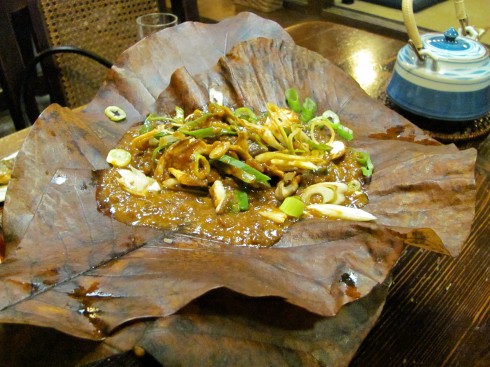
CLICK HERE to read the full post.
Sushi and Sake Magazine seeks JET writing
Writers Comments Off on Sushi and Sake Magazine seeks JET writing
Via JET alum Audrey Shiomi (CIR Miyagi-ken, Sendai-shi, 1999-2001):
“Are you a former/current JET with a story to tell a greater audience? Here’s your opportunity! Sushi & Sake is a monthly publication which circulates throughout Southern California. Space in the magazine is reserved each month for an article written by a JET (past or present) about his/her experiences in Japan.
The article should be 450-500 words on any topic you choose. Ideally, it’s best to focus on a particular topic as opposed to doing one big summary of your life in Japan. If you’re interested, email Audrey at pirikara [at] gmail.com Thanks!”
WIT Life #184: NYT mag Haruki Murakami profile and yaeba
Translating/Interpreting, Uncategorized, WIT Life, Writers Comments Off on WIT Life #184: NYT mag Haruki Murakami profile and yaeba
******************************
WIT Life is a periodic series written by professional Writer/Interpreter/Translator Stacy Smith (Kumamoto-ken CIR, 2000-03). She starts her day by watching Fujisankei’s newscast in Japanese, and here she shares some of the interesting tidbits and trends together with her own observations.
This weekend’s NYT featured two interesting Japan articles in the magazine and Sunday Styles section. The former features the country’s living cultural treasure novelist Haruki Murakami, whom the article’s author spends time with in Tokyo to dissect his newest book 1Q84 as well as his older works.

The latter article discusses the popularity of 八重歯 (yaeba), or double teeth that look that fangs (aka “snaggleteeth”). Apparently this fashion calls not for perfect smiles, but unstraight teeth. Women are asking dentists to affix plastic fronts to their real teeth to create artificial yaeba, as shown here in the picture.
Upon asking two young Japanese women who were visiting the city about yaeba, they said it was the first they had heard of it. I’ll see what further informal surveys reveal about whether this is a real trend, or just something being sensationalized by the media.
Articles by JET journalist Patrick St Michel featured in The Atlantic
Article/Journalism, Cultural Outreach, Japan Trends, Music, Notable JET Alums, Writers Comments Off on Articles by JET journalist Patrick St Michel featured in The Atlantic
Current Mie JET Patrick St. Michel has two articles currently featured in The Atlantic online.
- “The 48 Japanese Schoolgirls Aiming to Take Over the World” – The global ambitions of J-Pop group AKB48
- “How Korean Pop Conquered Japan”
Click here to read other writings by Patrick featured on JETwit.
Return to Tohoku: Update 10.24.11
Article/Journalism, Blogs, Earthquake Tsunami, Japan Local, Notable JET Alums, Return on JET-vestment, Travel/Tourism, Writers Comments Off on Return to Tohoku: Update 10.24.11
***************
Here are updates from a few more of the 20 Tohoku region JET alumni selected by the Ministry of Foreign Affairs (MOFA) to return to their town to both engage in volunteer efforts and also help document and share what’s going on there.
- “Back to Iwate“ by Alan Mockridge (Iwate-ken, Ohtsuchi, 1992) – http://alanmockridge.com/ (Lots of excellent photos.)
- Here’s a schedule of Alan’s trip:
Visit schedule
19 Sep (Mon) Depart San Francisco
20 Sep (Tue) Arrive Tokyo
21 Sep (Wed) Briefing at Min. Foreign Affairs. Bullet train to Iwate
22 Sep (Thur) Hiraizumi (UNESCO World Heritage Site) & Morioka
23 Sep (Fri) To Kamaishi via Miyako, Yamada & coast road
24 Sep (Sat) Kamaishi
25 Sep (Sun) Ohtsuchi
26 Sep (Mon) Ohtsuchi High School (cultural exchange)
27 Sep (Tue) Kamaishi to Narita. Depart Japan
**************
The Rice Cooker Chronicles is a series of essays by JETs and JET alumni on the theme of cooking/eating and being alone in Japan. The brain-child of JETwit founder Steven Horowitz (Aichi-ken, Kariya-shi, 1992-94) (and inspired by the book Alone in the Kitchen with an Eggplant), this series is curated by L.M. Zoller (CIR Ishikawa-ken, Anamizu, 2009-11), the editor of The Ishikawa JET Kitchen: Cooking in Japan Without a Fight. A writer and translator for The Art of Japan: Kanazawa and Discover Kanazawa, ze also writes I’ll Make It Myself!, a blog about food culture in Japan.
New submissions always welcome. E-mail us at jetwit [at] jetwit.com.
**********
“Nattode”
By JQ magazine editor Justin Tedaldi (CIR Kobe-shi, 2001-02). Visit his Examiner.com page for related Japanese culture stories.
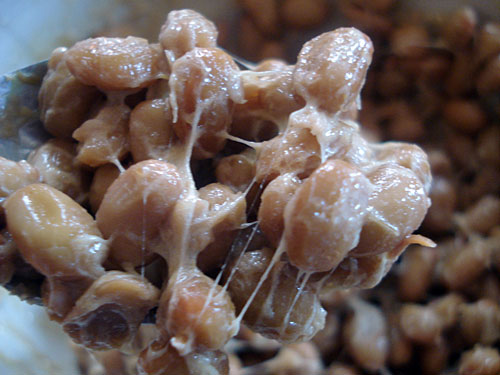
I’m at a restaurant that bleeds sophistication. Seated across from me is a stunning member of the opposite sex, joining me for the sole purpose of sampling the house’s signature dish, a personal favorite of mine.
Tender music swells in the background. The lighting is perfect, with the glow of candlelight on the table framing my partner’s irresistible charms as a celebrated bon vivant holds court four tables over. Spirits are high, and we’re high on spirits. The mood is ripe.
I snap my fingers to cue the waiter, who gracefully sets two silver trays before us. “Enjoy,” he says dryly. I look him straight in the eye and grin, signaling as I have many times before that I fully intend to.
It’s time. Gloved hands raise the lids, revealing…a small pair of Styrofoam trays with thin sheets of plastic on top. My date is puzzled.
Return to Tohoku: Alma Jennings goes back to Iwaki City in Fukushima
Article/Journalism, Earthquake Tsunami, Japan Local, Japan Society Round-up, Notable JET Alums, Return on JET-vestment, Travel/Tourism, Volunteer, Writers Comments Off on Return to Tohoku: Alma Jennings goes back to Iwaki City in Fukushima
***************
Thanks to JET alum Christy Jones of the Japan Society in New York for letting JETwit know about fellow JET alum and Japan Society colleague Alma Jennings (Fukushima-ken, Iwaki-shi) who has written about her return to Iwaki City in Fukushima where she went to volunteer and reconnect with old friends and colleagues.
Here’s a link to Alma’s writing on the Japan Society website: http://www.japansociety.org/page/earthquake/updates_from_japan
Here’s the intro from the Japan Society website:
“Like many young Americans interested in Japan, Alma Jennings, a Development Assistant at Japan Society, participated in the JET Programme and lived and taught English in Iwaki City on the southern coast of Fukushima Prefecture between 2008 and 2010. In September 2011, Alma returned to Iwaki City to visit her friends, former colleagues and students. She also went to the Iwaki City Volunteer Center to volunteer. Here is the first-part of a three-part series on her experience.
CLICK HERE to read more Return to Tohoku posts by other JET alums.
WIT Life #183: 10,000 Free Flights to Japan! (and the best bonsai I’ve ever had)
Earthquake Tsunami, Food & Drink, Translating/Interpreting, Travel/Tourism, WIT Life, Writers Comments Off on WIT Life #183: 10,000 Free Flights to Japan! (and the best bonsai I’ve ever had)
************************************************
WIT Life is a periodic series written by professional Writer/Interpreter/Translator Stacy Smith (Kumamoto-ken CIR, 2000-03). She starts her day by watching Fujisankei’s newscast in Japanese, and here she shares some of the interesting tidbits and trends together with her own observations.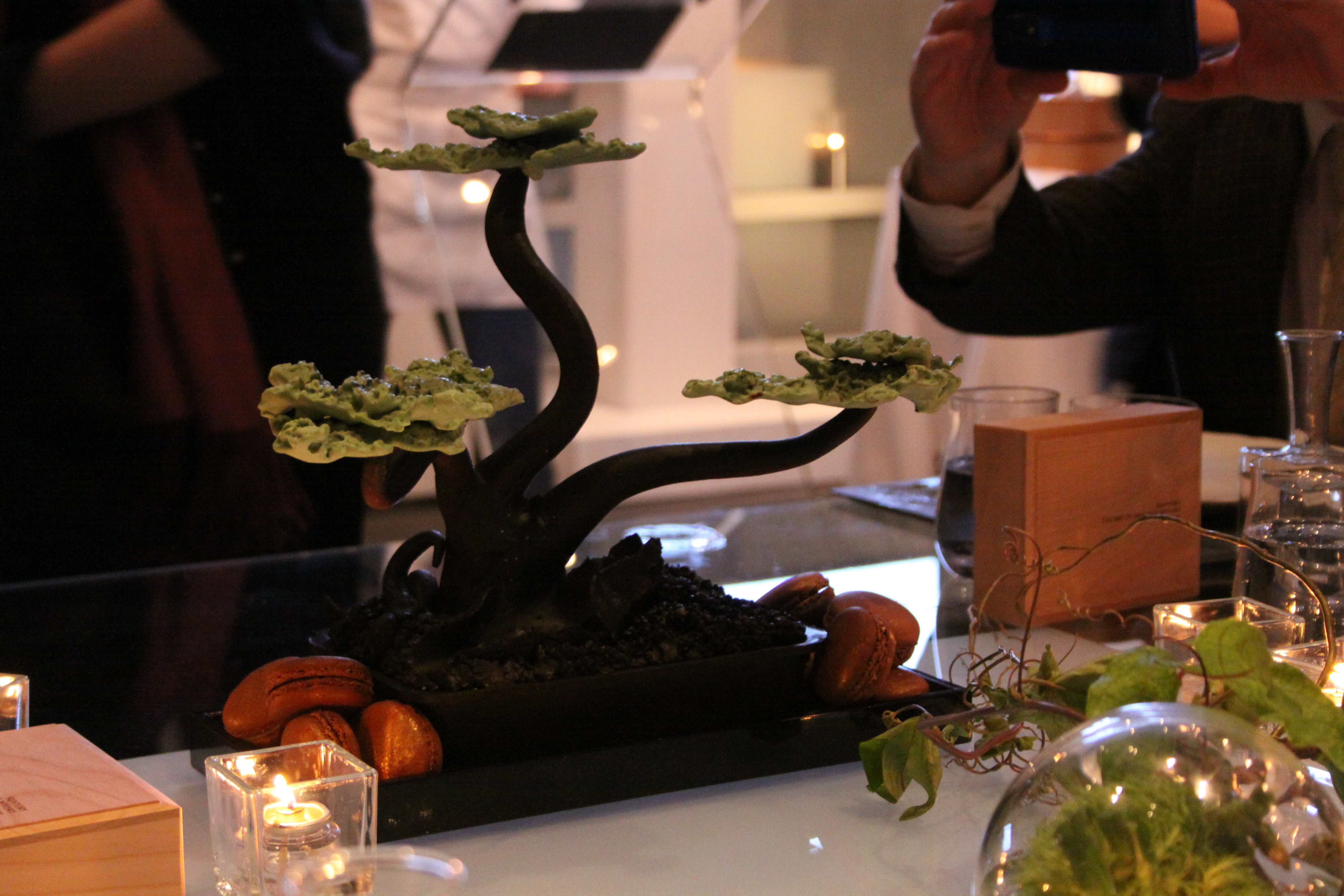
Last night I had the chance to attend an event at the Modern sponsored by the Japanese beverage company Suntory, for the unveiling of their newest whiskey here in the States, Hakushu. We first enjoyed a tasting of this offering, along with samples of favorites Yamazki and Hibiki. Chef Gabriel Kreuther prepared an amazing menu to pair with these whiskeys, featuring such treats as foie gras and caviar.
However, for me the best part of the meal was the Read More
