
JETAA British Columbia September/Fall Newsletter
 Article/Journalism, JETAA Chapters, Writers
  Comments Off on JETAA British Columbia September/Fall Newsletter
The JETAA British Columbia Newsletter September/Fall Newsletter is hot off the presses!
- PDF version: http://jetaabc.ca/uploads/Main/NewsletterV16N2.pdf (6MB)
- Online version (via Issuu.com): http://issuu.com/jetaabc/docs/newsletterv16n2?mode=embed&layout=http%3A%2F%2Fskin.issuu.com%2Fv%2Flight%2Flayout.xml&showFlipBtn=true

PNW JETAA’s meeting with Hyogo Governor Ido and Ryan Hart’s speech
Cultural Outreach, Earthquake Tsunami, Events, Fundraising, Japan Local, JETAA Chapters, Local Government, Notable JET Alums, Return on JET-vestment, Volunteer, Writers Comments Off on PNW JETAA’s meeting with Hyogo Governor Ido and Ryan Hart’s speech
On Friday August 26, we had the great honor of giving a presentation about the Pacific Northwest JET Alumni Association at the Hyogo Seminar, which was hosted by Hyogo Prefecture (coordinated by theHyogo Business and Cultural Center) and the Council of Local Authorities for International Relations (CLAIR). The Governor of Hyogo Prefecture, Toshizo Ido, gave a comprehensive presentation on the many great qualities of Hyogo. Consul General Kiyokazu Ota, Masaaki Akagi, the Executive Director of The Japan Local Government Center (CLAIR New York), and Ginn Kitaoka, the Executive Director of the Hyogo Business and Cultural Center all gave warm opening remarks.
During our presentation, we highlighted the great things our chapter does. Ryan Hart (Chiba-ken, Ichihara-shi, 1998-99) (former PNW JETAA President, JETAA USA Country Representative and JETAA International Vice-Chair) shared what JETAA and current JETs are doing on the national and international level, Karin Zaugg-Black shared how her JET experiences shaped her career and her personal involvement with Japan, and Erin Erickson explained how we have supported Japan Relief efforts. Leela Bilow, Jana Yamada, and Casey Mochel shared their memories of Japan and how they continue to be involved with the Japanese community after JET.
Ryan Hart very generously allowed us to share his speech with you. Below is a brief excerpt, and his full speech is below the cut.
From its inception, the JET Alumni Association has helped former participants of the JET Program “Bring Japan Back Home.” What does this mean? We help former participants network, make new friends and transition their careers. We help the JET Program by recruiting, interviewing and training new teachers for their journey. We also help our communities we live in to support Japanese culture and raise awareness of the strong ties between our countries.
On March 11, 2011, like so many other things in our lives, this changed. Instead of “Bringing Japan Back Home”, our chapters and membership have rallied not only to raise money for immediate earthquake and tsunami relief, but also to strengthen the value of our relationship with local communities and organizations in Japan.
The JET Program, since 1987, has grown into the largest and most successful work exchange program in the world. Each year, the program brings thousands of teachers to Japan to promote language education and to strengthen Japan’s relationship with a number of countries. Since 1989, our Alumni Association of former program participants, has mirrored that growth and has steadily grown as a true grassroots organization, built from our individual members up. JETAA is now 53 chapters in 18 countries. As a former chapter president here in Seattle, a former Country Representative for JETAA USA’s 19 chapters and as former Vice Chair for JETAA International, I have been truly blessed to have had the chance to work and be a part of this growth.
From its inception, the JET Alumni Association has helped former participants of the JET Program “Bring Japan Back Home.” What does this mean? We help former participants network, make new friends and transition their careers. We help the JET Program by recruiting, interviewing and training new teachers for their journey. We also help our communities we live in to support Japanese culture and raise awareness of the strong ties between our countries.
On March 11, 2011, like so many other things in our lives, this changed. Instead of “Bringing Japan Back Home”, our chapters and membership have rallied not only to raise money for immediate earthquake and tsunami relief, but also to strengthen the value of our relationship with local communities and organizations in Japan.
- Immediately following the earthquake and tsunami, JETAA USA started raised money as a national organization and chapters voted to allocate this money directly to the affected local communities. We have formed a national advisory committee for the relief fund, of which I am proudly serving as a member. To date, the JET alumni have raised over $60k in funds and we are exploring continued fundraising efforts to make an even bigger impact.
- AJET, as an organization of current JETs living and teaching in Japan, has been partnering with organizations such as Peace Boat, Second Harvest, Foreign Buyers Club and 5toSurvive to raise money and awareness of recovery efforts. The Osaka AJET Chapter has worked on food drives with Kozmoz International of Kyoto, and have driven food and supplies themselves to Tohoku from Osaka.
- Mike Maher-King, a Fukui JET, formed Smile Kids Japan, a program of visiting orphanages throughout Japan. After March 11, he partnered with an organization in Tokyo called Living Dreams to start the Smile & Dreams project for Tohoku children to make sure the needs of the orphanages and the needs of the children who rely on them are met. He recently presented at TED Talks in Tokyo.
- Paul Yoo, an Akita JET, founded the Fruit Tree Project (delivering $23,571 worth and 38,612 items of fresh fruit to Tohoku) and VolunteerAkita, which was the backbone of the BIG CLEAN project that was directly involved in the cleanup of Kessenuma. He is now working as the Home Communication Manager for two orphanages in Sendai to ensure their needs are communicated with organizations involved with relief efforts.
- Hotdogs and Hugs was an aid organization of JETs from Saga-ken, who traveled from Saga Prefecture in western Kyushu, all the way to Tohoku, raising awareness and funds for relief efforts along the way.
- Save Miyagi was founded by Canon Purdy, a JET Alumni who was in Miyagi-ken.
- Billy McMicheal, a CIR in Fukushima, has formed Hearts for Haragama, which is raising funds for the Haragama Youchien Kindergarten in Soma, Fukushima.
- Kat Geeraert, an alumnus who also lived in Soma, has started Friends of Soma to raise money for relief efforts.
These are just a few examples of the direct impact JETs and JET alumni have had. Given the number of teachers who have taught in Japan since 1985, there probably are many more individual efforts out there that we don’t know about.
What we do know is that, in light of what happened on March 11, JET alumni around the world are not only focused on “Bringing Japan Home”, but also “Bringing Home to Japan.” Collectively, we have a renewed focus not only on strengthening US/Japan relations, but also the ties with the communities we once lived, worked, and taught in. We know that our contracts we were given to us by local governments and boards of education throughout Japan, weren’t just annual contracts, they were invitations to a legacy. It should be very clear to the many communities across Japan who have invested in the JET Program since 1987 that there is a long-term value in the relationships that have been formed with the many JET Program participants that have come and gone. Whether it be through media campaigns, tourism promotion, school exchange programs, or relief and fundraising efforts, JETAA is now looking to continue our legacy in “Bringing Home Back to Japan.”
Thank you.
Ryan Hart, Ichihara City, Chiba Prefecture, 1998-99
Posted by Ashley Thompson (Shizuoka-ken, 2008-2010) of Surviving in Japan: without much Japanese and Lifelines columnist for The Japan Times.

Ashley Thompson is "Surviving in Japan (Without Much Japanese)"
6 weeks. I can’t believe it has already been about 6 weeks since our dear daughter Ai-chan joined us in world. It’s mostly been a blur of sleep, insomnia, diaper changes, incessant feeding, incredible soreness and lots of baby time. But, reality shows up sooner or later and it’s time for me to try and start adjusting back into some sort of routine (while I hope that our child also figures out some sort of routine in the coming weeks).
I’ve mulled over sharing this experience many times, as I want to present it as objectively as possible, because to be honest I came away from the experience completely traumatized. NOT because of the fact I gave birth in Japan, just the labor and childbirth process itself. So, I’ll do the best I can here, and please understand that this is only my experience. Everyone has completely different birthing experiences, no matter where they are in the world, and even in Japan, your experience may differ depending on your doctor or midwife, and various other factors.
However, I don’t believe there is any reason to fear giving birth in Japan (and I do speak from personal experience now!), so rest assured that as long as you find a doctor or midwife you like and (hopefully) trust, you should be fine (well, as fine as you can be going through this kind of experience…)
*******
Our daughter was due on August 22nd, but the day came and went rather uneventfully. No baby.
I was tired of being a giant whale in the ridiculous heat of summer, so was eager for the baby to hurry up and come out. My husband and I did what we could to “prepare” (although in hindsight it was worthless – how can you “prepare” if you’ve never given birth before? You have no idea what it’s going to be like or feel like), and basically waited, while visiting the doctor twice that week for fetal monitoring. [Side note: After 40 weeks in Japan you typically visit the doctor twice a week.]
On Friday, the 26th, we were at the clinic again for another heart rate test of the baby in the early afternoon, and the doctor said I was 2 cm dilated and that I would likely go into labor within the next couple days.
Later that evening, as my husband and I ran errands, I started getting random contractions. I’d never felt a contraction before, and the doctor had asked me at the past few appointments if I had felt any contractions yet, but my answer was always “no.”
I figured the contractions I was having were just the practice kind preparing my body for labor, so didn’t worry too much. We ate dinner at home, watched some TV and went to bed (I was still having irregular contractions).
The contractions continued over the next couple hours, though I just kept trying to sleep, as I was incredibly tired. My husband, on the other hand, was wide awake during all this and timed the contractions. They actually became regular, and went from 10 minutes to 5 minutes apart in the course of a few hours. I also started bleeding a little, and so after calling the clinic, the nurses told us to come in. — CLICK HERE to read the rest of the post.
WIT Life #182: Japan Connections where you Least Expect them
Translating/Interpreting, WIT Life, Writers Comments Off on WIT Life #182: Japan Connections where you Least Expect them
***************************
WITLife is a periodic series written by professional Writer/Interpreter/Translator Stacy Smith (Kumamoto-ken CIR, 2000-03). She starts her day by watching Fujisankei’s newscast in Japanese, and here she shares some of the interesting tidbits and trends together with her own observations.
My latest International Visitor Leadership Program travels bring me to Riverside, California for the first time, host of the recent Sister Cities International conference highlighted here in JetWit. My group and I are staying in the lovely Mission Inn (referenced in the Sister City write-up), a national historical landmark established in 1876. Today we took part in a tour of the facility, and I was surprised to find out about its Japan connection!
Founder Frank Miller wanted to create a resort hotel for Riverside, which by the 1890s was Read More
*****************
With increased potential for budget cuts to the JET Programme and to JETAA and additional prefectures opting to use private ALTs rather than JETs, it’s good to see an example of a prefecture making effective use of JETs to provide significant Return on JET-vestment.
Toyama Prefecture has for the past two years been using its CIRs & ALTs to promote tourism through their Twitter and FB accounts or other means. More explanation is available in Japanese at: http://www.pref.toyama.jp/cms_press/2011/20110915/00007707.pdf
This year, according to this notice, they were planning to take their six ALTs (4 Americans) and two CIRs (both Americans) around to the big tourist attractions and then have them put out word-of-mouth to promote them, through Facebook, Twitter, blogs, or actual word-of-mouth after they go home.
There’s no reason other prefectures can’t adopt similar programs with their JETs and CIRs and why JETs and JET alums themselves can’t initiate this kind of activity.
While it’s relatively easy for local governments to find native English speakers to teach in their schools, it’s much harder to bring in teachers who will feel a connection to the community that lasts a lifetime and continues to provide tangible and intangible benefits over the long term. And that is the power of the JET Programme.
Return to Tohoku: “Don’t Speak, Just Move On” by Audrey Shiomi
Article/Journalism, Earthquake Tsunami, Japan Local, Notable JET Alums, Return on JET-vestment, Travel/Tourism, Volunteer, Writers Comments Off on Return to Tohoku: “Don’t Speak, Just Move On” by Audrey Shiomi
*******************
The following is a personal essay by Audrey Shiomi (CIR Miyagi-ken, Sendai-shi, 1999-2001). Through generous sponsorship by Japan’s Ministry of Foreign Affairs, she spent a week in September visiting her former residence in Sendai City, one of the areas affected by the March 11 earthquake. In lieu of volunteering in disaster-stricken regions, she spent each day meeting with friends and former coworkers to listen to their stories.
Click here to read other Return To Tohoku updates on JETwit. You can also check the JETAA USA website post (“JET Alums Return to Tohoku”) for additional information.
Don’t Speak, Just Move On
By Audrey Shiomi (CIR Miyagi-ken, Sendai-shi, 1999-2001)
I couldn’t believe how normal it all felt to spend each day hanging out with old friends in Sendai. They hardly talked about what had happened six months ago, and if they did, they were calm, reflective and grateful. They didn’t suffer the way they did in the north, along the Pacific coast.
Within city limits, homes were damaged and people were left without running water, electricity and heat soon after the earthquake. It was late winter, and they had no clue when things they’d taken for granted—warmth, hot food and information—would be readily available. The minute it looked like a market was about to re-open, people formed long lines out the door. Luckily, by Day 5, water and electricity had been restored.
Now, six months later, my friends are with me, laughing, drinking and eating like there’s no tomorrow. We were doing everything but dwelling on March 11 and for good reasons. For one, it was simply time to more forward. For another, talking about your own situation made it seem like you were complaining about it, and—as my friend explained—the only people who are socially allowed to lament are those whose loved ones died in the tsunami.
Another reason few people talk about the events of March is that if someone were to mention they temporarily fled the prefecture after the nuclear reactor meltdown, they’d face the silent scorn of their peers. For some, leaving town was a logical safety measure. For others, leaving town was the moral equivalent of abandoning your family. It’s these opposing schools of thought that make it difficult to openly talk to one another. “It’s like in the U.S. where people don’t bring up religion,” said one Japanese friend. “People don’t talk about certain parts of their experiences after the disaster.”
So instead of dwelling in the past, my friends have no option but to move forward. For many of them, March 11 instilled a newfound reason for living. Many have taken up new hobbies and started traveling more. My friend, Nanae, has been making a living by holding private cooking classes at her home. March 11 fueled her to hold more classes. The way she sees it, she’s lucky to be alive, so not living life would be like besmirching the memory of all those who’d died.
I’m glad my friends have emerged from this tragedy with their heads held high. It would have been a sad reunion if they’d greeted me with distressed tears. If they’d told me, “Take me back to the U.S. with you!” I would have stowed them all away in my suitcase. But, no, instead we’re able to share a drink, enjoy great izakaya food and laugh about old times.
That’s the Japan I know.
JET Alum Author Beat 10.05.11
Article/Journalism, Books, Cartoon/Illustration, JET Alum Author Beat, JQ Magazine, Notable JET Alums, Writers Comments Off on JET Alum Author Beat 10.05.11
JET Alum Author Beat is a new feature by Ling Tran (Saga-ken, 2009-11) intended to keep readers informed of what various JET alum authors are up to. Contact Ling at jetwit [at] jetwit.com if you’d like to see something included in upcoming posts. She is also interested in providing exposure for aspiring authors/writers among alumni and current JETs – excerpts and updates are all welcome.
- Suzanne Kamata (Tokushima-ken, 1998-90), author of Losing Kei and fiction editor for Literary Mama, reflects on the recent loss of a dear friend through a post about her first sushi experience on Gaijin Mama (a personal blog). Check it out and give some JET support.
- Sam Baldwin Ono (Fukui-ken, 2004-06) hails from the UK and made a life altering decision when he decided to move to Fukui-ken through the JET Program. The quiet facade of inaka Japan gradually revealed its colorful nature, eventually leading Sam to share stories and insights in For Fukui’s Sake: Two years in rural Japan. Whether for reference (newbie JETs, holla!), nostaliga, or reflection – ESID aside – this book is available electronically. If you want to be notified of its hard copy release, click here. Visit the website For Fukui’s Sake for details. (Fukui t-shirts are also available for purchase.)
- Author of The Order of Odd-Fish James Kennedy (Nara-ken, 2004-06) recently did a Q&A with JQ magazine as he will be curating the 90-Second Newbery Film Festival (Nov. 5 @New York Public Library | Nov. 16 @Harold Washington Library, Chicago). Read here.
- Robert Paul Weston’s (Nara-ken, 2002-04) Zorgamazoo will be honored at the Author Banquet of the California Library Association Conference for a California Young Reader Medal on Nov. 12. Details of the upcoming event are available on Weston’s blog. Congratulations!
- What is Japanamerica blogger Roland Kelts (Osaka-shi, 1998-99) reading these days?
- Cartoonist Lars Martinson (Fukuoka-ken, 2003-06) has been busily settling into his new home and schedule in Kameoka, Kyoto. He managed to fit in a brief post after a short hiatus. Eager followers can see how he is doing here – more substantial updates to come!
Return to Tohoku Update 10.04.11
Article/Journalism, Blogs, Earthquake Tsunami, Japan Local, Notable JET Alums, Return on JET-vestment, Travel/Tourism, Writers Comments Off on Return to Tohoku Update 10.04.11
***************
Here are updates from a few more of the 20 Tohoku region JET alumni selected by the Ministry of Foreign Affairs (MOFA) to return to their town to both engage in volunteer efforts and also help document and share what’s going on there.
- Audrey Shiomi (CIR Miyagi-ken, Sendai-shi, 1999-2001) has had some of her excellent writing and observations published in a series titled Tohoku Travelogue (http://rafu.com/news/tag/tohoku-travelogue/) including:
- “Moving On From Tragedy” (Oct 1)
- “Scenes from an Izakaya” (Sept 15)
- “Nearly Swept Away” (Sept 14)
- “Ah Matsushima!” (Sept 11)
- “Signs, Signs, Everywhere!” (Sept 10)
- “Gambarimasu” (Sept 9)
- “The Telephone Booth” (Sept 8)
- “Letters to Sendai” (Sept 8)
- “Ganbarou Nihon!” (Sept 7)
- “Omiyage 101” (Sept 6)
- “To Be Afraid or Not To Be Afraid….” (Sept 2)
- Brent Stirling (Fukushima-ken, Fukushima-shi, 2006-10) – “Why This is Only Blog #3.5” – Brent tries to explain the overwhelmingness of visiting Soma and how it has affected his approach to blogging about his trip. He shares photos and questions why he has taken them.
- Sharon Van Etten (CIR Iwate-ken), President of JETAA Sydney, has blogged about her trip here: Revisiting Iwate: http://revisitingiwate.blogspot.com/ Here are some recent posts:
Click here to read other Return To Tohoku updates on JETwit. You can also check the JETAA USA website post (“JET Alums Return to Tohoku”) for additional information.
WIT Life #181: Volunteer interpreter in Tohoku
Earthquake Tsunami, Translating/Interpreting, WIT Life, Writers Comments Off on WIT Life #181: Volunteer interpreter in Tohoku
WITLife is a periodic series written by professional Writer/Interpreter/Translator Stacy Smith (Kumamoto-ken CIR, 2000-03). She starts her day by watching Fujisankei’s newscast in Japanese, and here she shares some of the interesting tidbits and trends together with her own observations.
For those want to help out with Japan’s recovery effort and have Japanese language skills, here’s a great way. Please see below message regarding details of a 6-week volunteer interpreting opportunity in the disaster area, and contact Laura/Jiella directly if you are interested. For those who want to help but aren’t able to make it over, think about picking up the new Travel Guide to Aid Japan. It features some fabulous sites in Japan, some of which you might not be aware, written up by an interesting mix of celebrity contributors. All proceeds from its sales (minus expenses) will be donated to the Japan Red Cross for use toward disaster recovery efforts.
———-
Dear all,
Many of you have heard of the group All Hands Volunteers, an American
NGO that has been working in Ofunato and Rikusentakata in Iwate
Prefecture doing tsunami relief since right after the March 11
disaster. This is an amazing organization that harnesses the power of
volunteers in disaster response. For those of you who were on the
USJLP Japan trip this year, you heard about them in my presentation.
Spencer and I were up in Ofunato again last weekend volunteering with
All Hands and we continue to be very impressed – there were over 90
Japanese and international volunteers working together to clear
highway ditches and rice field drainage systems, to clean and retouch
damaged photographs, and to remove damaged materials from homes
devastated by the tsunami. This organization has made a huge
difference to the people of Ofunato and Rikusentakata, and there were
posters all over town thanking All Hands for their efforts.
All Hands is continuing their project in Tohoku until November 12 and
they are in urgent need of an interpreter for these next 6 weeks of
the project.
Food, lodging and a (small) salary will be provided, and this
interpreter will be heavily involved in the day to day management of
the project, alongside an American Project Director. The interpreter
needs to speak very good English and Japanese, and will need to
relocate to Ofunato right away for the next 6 weeks.
This is a great opportunity to make a big difference and contribute to
the recovery of Japan. Please see this link for more information
about the project: http://hands.org/projects/project-tohoku/
Please let me and Jiella Esmat (jiella@hands.org) if you or anyone you
know is interested. Feel free to pass this around.
Thanks so much for your help,
Laura (USJLP ’11, ’12, and Board Member of All Hands Volunteers)
From: Laura Winthrop Abbot
Date: September 30, 2011 20:43:01 CDT
To: usjlp@listserve.com
Subject: [Usjlp] Interpreter needed urgently: All Hands Volunteers Project Tohoku
I’ll Make It Myself! – Mini Okara Gateaux Chocolat
Blogs, Food & Drink, I'll Make It Myself, Writers Comments Off on I’ll Make It Myself! – Mini Okara Gateaux Chocolat
L.M. Zoller (CIR Ishikawa-ken, Anamizu, 2009-11) is the editor of The Ishikawa JET Kitchen: Cooking in Japan Without a Fight. A writer and translator for The Art of Japan: Kanazawa and Discover Kanazawa, ze also writes I’ll Make It Myself!, a blog about food culture in Japan.
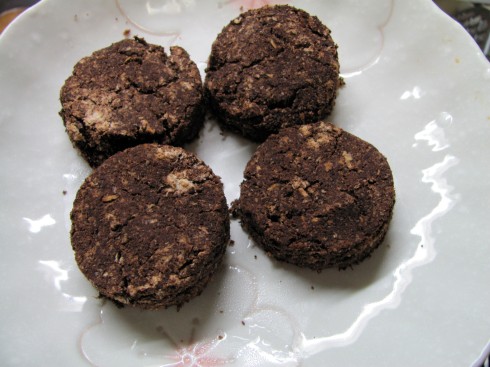
Mini Okara Gateaux Chocolat
While looking for recipes the first time I bought okara, I had found several for okara gateaux. This recipe is the result of experimenting with a number of these, particularly with the amount of sugar and cocoa. The texture is quite different than a traditional chocolate gateau, but if you like desserts that have been remade with healthier ingredients (tofu, soy milk, etc.), this is bound to be a hit.
CLICK HERE to read the full post.
I’ll Make It Myself! – Aka-Zuiki Quick Pickles
Blogs, Food & Drink, I'll Make It Myself, Writers Comments Off on I’ll Make It Myself! – Aka-Zuiki Quick Pickles
Editor’s Note: I’ll Make It Myself is a blog about food culture and cooking for yourself in Japan by Ishikawa-based JET alum L.M. Zoller. We’re very pleased to share selected posts on JETwit as well.
L.M. Zoller (CIR Ishikawa-ken, Anamizu, 2009-11) is the editor of The Ishikawa JET Kitchen: Cooking in Japan Without a Fight. A writer and translator for The Art of Japan: Kanazawa and Discover Kanazawa, ze also writes I’ll Make it Myself!, a blog about food culture in Japan.
Hello, JETwit! I’m pleased to introduce my food blog I’ll Make it Myself: An Expat Career Woman’s Love Affair with Things Culinary. I cover a wide range of topics on this blog, including Japanese recipes, recipes adapted for Japan, local food culture, and restaurant reviews. A little about me: I’m obsessed with kabocha and oatmeal; I go through cinnamon like a champ; and I’m constantly on the hunt for good microbrews–the darker, the better. Many of my recipes and reviewed restaurants are vegetarian-friendly, and I try to keep things fairly healthy. Today, I’m posting a recent entry about Kaga heirloom vegetables, a recipe for gorgeous, quick, and delicious Japanese-style pickles.
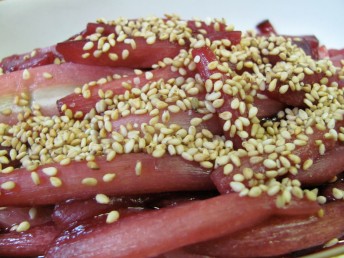
Aka-Zuiki Quick Pickles (Red-Taro-Stem Vinegar Pickles)
Japanese food traditionally includes a lot of tsukemono (漬け物), or pickles. The first thing most Americans will think of when you say pickles is dill (cucumber) pickles that go with sandwiches; however, pickles are any vegetable that has been preserved with brining. Japanese pickles cover a wide range of base ingredients, including carrots, cucumbers, ginger, and plums; as well as a wide variety of pickling styles: salt, miso, vinegar, nuka (rice bran), and more. Some recipes call for the pickling mixture and vegetables (or fruit) to be aged overnight or for several months, but this recipe can be consumed right after cooking!
CLICK HERE to read the full post.
JET alum author Bruce Feiler’s latest NYTimes column
Article/Journalism, Books, Celebrity, Notable JET Alums, Writers Comments Off on JET alum author Bruce Feiler’s latest NYTimes column
September 23, 2011
By BRUCE FEILER
I RECENTLY attended a chaotic, kid-friendly gathering at the home of a friend. On my way to the bathroom to seek some solace, I decided to indulge in one of my favorite antisocial activities: scrutinizing someone else’s bookshelf. For a veteran sleuth, a bookshelf can offer a trove of insights worthy of any Freudian’s couch. Does a person alphabetize the books or clump them? Do they arrange their books by genre, order in which they were purchased, or color? Are these books unopened hardcovers or dog-eared paperbacks?
I was several minutes into my investigation (Bill Clinton’s memoir; “The DaVinci Code”), when I had a heart-sinking realization: Read More
WIT Life #180: 節電の夏
Earthquake Tsunami, Translating/Interpreting, WIT Life, Writers Comments Off on WIT Life #180: 節電の夏
WITLife is a periodic series written by professional Writer/Interpreter/Translator Stacy Smith (Kumamoto-ken CIR, 2000-03). She starts her day by watching Fujisankei’s newscast in Japanese, and here she shares some of the interesting tidbits and trends together with her own observations.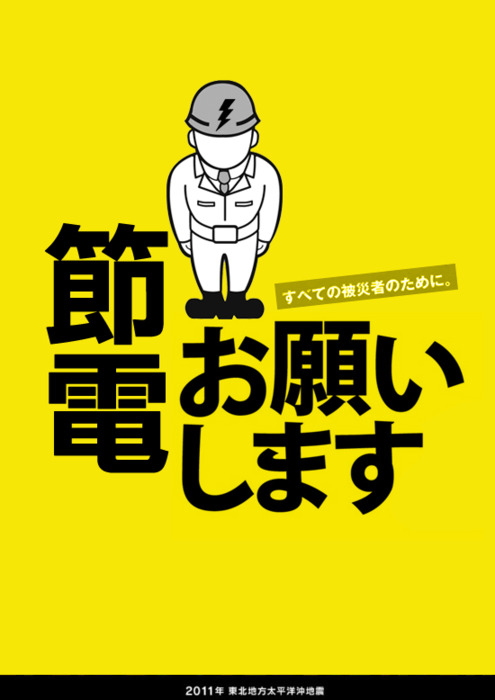
Hisashiburi and following the celebration of 秋分の日 (shubun no hi, or Autumnal Equinox Day) this past weekend, welcome to fall! Commemorating the passing of the season is an editorial from this morning’s NYT, which discusses the 節電 (setsuden, or energy saving) measures the Japanese undertook this summer and their success.
Also, make sure to check out this series of setsuden posters mentioned in the article. They were created by a community of graphic designers in response to a call to arms on Twitter. The one pictured here is a spoof on the ubiquitous construction poster and reads, “Please save energy,” and in smaller lettering on the side, “For all of the disaster areas.”
Media Outlets Claiming ‘Law Is no Longer a Golden Ticket’ Conceal Decades of a Profession in Decline
Academic, Advice, Blogs, Career, Graduate School, Notable JET Alums, Writers Comments Off on Media Outlets Claiming ‘Law Is no Longer a Golden Ticket’ Conceal Decades of a Profession in Decline
**********
Matt Leichter (matt [dot] leichter [at] gmail [dot] com) (Saitama-ken 2003-05) is a renegade attorney who plays by his own rules. He operates a think tank of one, The Law School Tuition Bubble, where he archives, chronicles, and analyzes the rising cost and declining value of legal education in the United States.
The popular lawyer periodical, the Am Law Daily, ran an article I wrote, titled, “Media Outlets Claiming ‘Law Is no Longer a Golden Ticket’ Conceal Decades of a Profession in Decline.” In it I use Bureau of Economic Analysis data, charts, and animations to demonstrate that the legal sector of the U.S. economy stagnated about 20 years ago, and along with increasing law school tuition creates a crisis for legal education in the United States.
Ishikawa AJET publishes digital cookbook for charity
AJET, Books, Earthquake Tsunami, Food & Drink, Fundraising, Japan Local, Notable JET Alums, Return on JET-vestment, Writers Comments Off on Ishikawa AJET publishes digital cookbook for charity
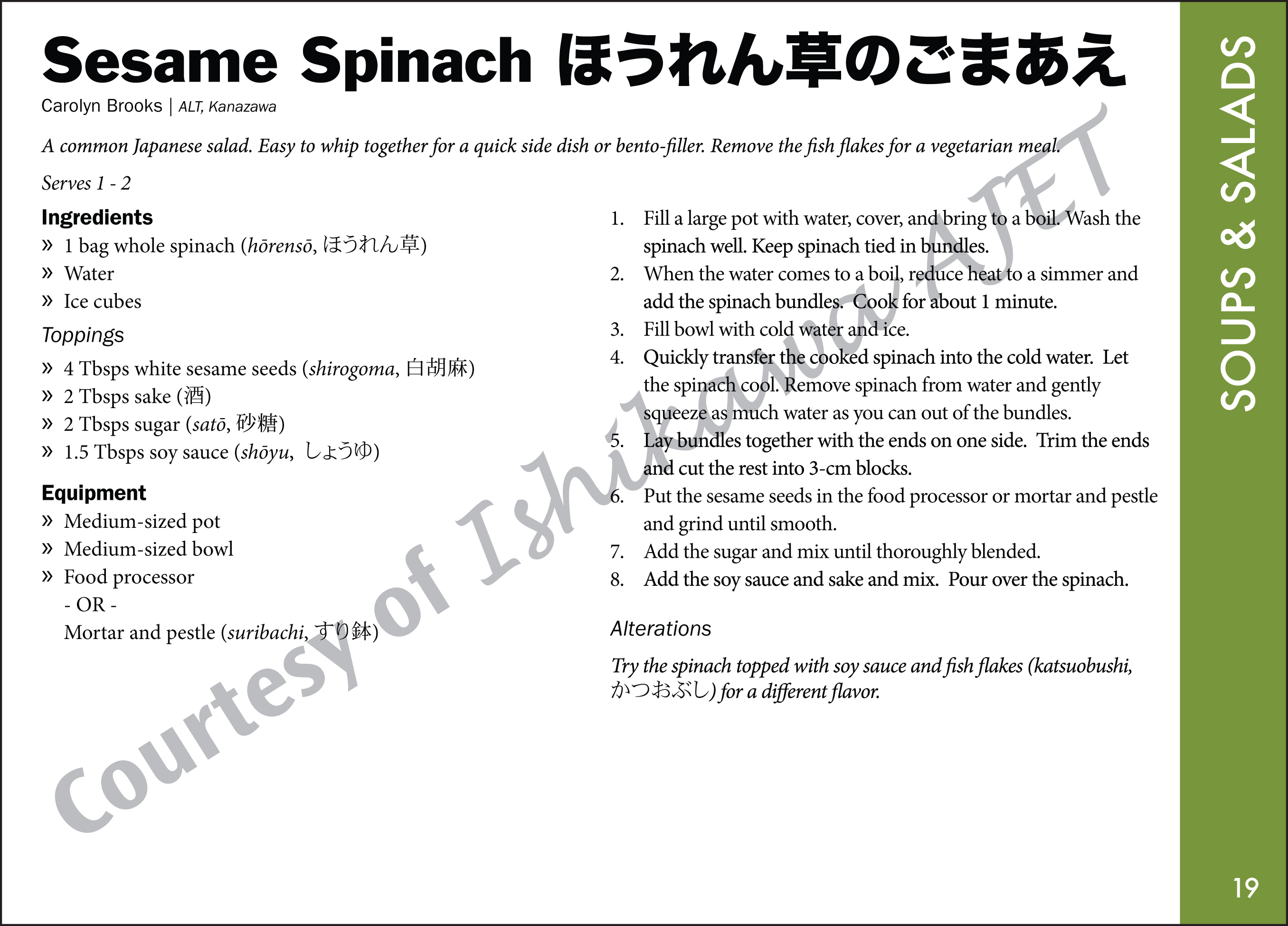
Thanks to Leah Zoller (CIR Ishikawa-ken, Anamizu, 2009-11) for sharing the below. Leah is currently a writer and translator for The Art of Japan: Kanazawa, an art-based tourism project via a METI grant to the Cooperative Association for the Promotion of Kanazawa-Kaga Maki-e in Kanazawa, Ishikawa.
Ishikawa AJET has just published a digital cookbook for charity. The book is designed for the English-speaking expat in Japan.
CLICK HERE for details and to purchase the Ishikawa AJET Digital Cookbook.
When I moved to rural Ishikawa in 2009, I had to entirely revamp my philosophy on cooking: how to work with the ingredients I had available in my small town; how to cook without a full-size oven; how to deal with metric measurements; and how to cook for one. I started this project with the hope that any JET, regardless of cooking skill or Japanese language ability, could arrive in Japan and immediately have a guide to simple home-cooking and be able to make the food s/he wants to eat.
The recipes are written in English with the Japanese terms for the ingredients right on the page, along with helpful hints for navigating the grocery store. Measurements are in metrics, and the recipes are meant for Japanese kitchen equipment, so you never have to worry about recipes not fitting in the oven range or not cooking through. Furthermore, 30 JETs and friends and I did extensive testing on the recipes to make sure they all were easy to understand and actually worked correctly. The recipes are a mixture of Japanese, foreign, and fusion food, and include a large number vegetarian, vegan, and gluten-free recipes.
Because this is a pdf, we were able to save on printing costs and keep things more environmentally friendly. The pdf is interactive: there are hotlinks to recipes from the indices, and the document is searchable. Our design team did a fantastic job, and it’s a very useful friendly layout.
The cookbook costs 1000 yen, and all proceeds go to Second Harvest Japan, a charity that brings food and supplies to food banks, orphanages, single mothers, immigrants, et al. This charity has been critical in the relief efforts after the Tohoku Earthquake.
The original post on the Ishikawa JET Blog is here: http://ishikawajet.wordpress.com/2011/09/07/master-cooking-in-japan-with-the-ishikawa-kitchen/
Payment options include using paypal for a downloadable pdf (see link) or contacting AJET directly at ishikawaajet@gmail.com to pay via furikomi and receive the document by email.