




WIT Life #245: Count Down My Life
 Translating/Interpreting, WIT Life, Writers
  Comments Off on WIT Life #245: Count Down My Life
WIT Life is a periodic series written by professional Writer/Interpreter/Translator Stacy Smith (Kumamoto-ken CIR, 2000-03). She starts her day by watching Fujisankei’s newscast in Japanese, and here she shares some of the interesting tidbits and trends along with her own observations.
Last night I went to go see the US premiere of the Japanese rock musical Count Down My Life, which was featured as part of the 17th New York International Fringe Festival. I was especially excited to check this show out as I had heard that the director and playwright, Ikko Ueda, is from Kumamoto, which is where I spent my time on JET. 28-year old Ueda has created a partially autobiographical play that tells the story of a playwright (referred to only as “a man”) who is striving to win an award those younger than 30 are eligible for. It begins with him turning 29 and realized that gives him exactly a year, after which point he will give up on his dream of becoming a success and return to his hometown. In his struggle to write an award-winning play, the man is visited by several people, including a mysterious fan, who help him in his endeavors. Through these encounters, he begins thinking about Read More
WIT Life #244: Japan’s 活 boom
Translating/Interpreting, WIT Life, Writers Comments Off on WIT Life #244: Japan’s 活 boom
WIT Life is a periodic series written by professional Writer/Interpreter/Translator Stacy Smith (Kumamoto-ken CIR, 2000-03). She starts her day by watching Fujisankei’s newscast in Japanese, and here she shares some of the interesting tidbits and trends along with her own observations.
Recently on the Japanese morning news there was an interesting “Saki Tsubu” segment which highlighted the Japanese phenomenon of using the character 活 (katsu) to describe various activities. Many of you are probably familiar with the original combination of 就活 (shuukatsu), introduced in 2000. This phrase, comprised of the characters for work and activity, is an abbreviation for 就職活動 (shuushoku katsudou) and refers to being engaged in job searching.
This coinage was followe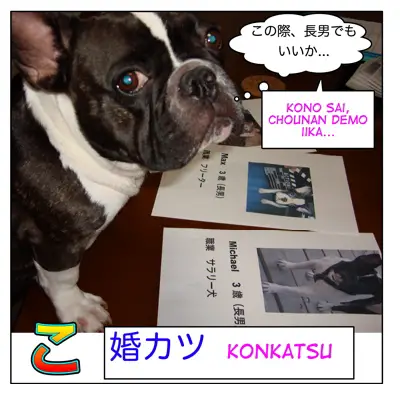 d in 2007 by 婚活 (konkatsu), which puts together the characters for marriage and activity to describe young men and women trying to meet each other with the goal of getting married (and is an abbreviation for 結婚活動 (kekkon katsudou)). Little did the world know that over the next couple of years there would be an explosion in katsu expressions, covering things ranging from the mundane to the morbid. The following is an outline of several katsu expressions that can be commonly heard in Japan these days. Read More
Let’s Talk Japan is a twice monthly, interview format podcast covering a wide range of Japan-related topics. Host Nick Harling (Mie-ken, 2001-03) lived in Japan from 2001 until 2005, including two great years as a JET Program participant in Mie-Ken. He practices law in Washington, D.C., and lives with his wife who patiently listens to him talk about Japan . . . a lot.
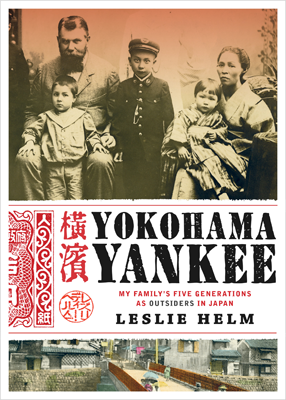 In this episode, Nick speaks with Leslie Helm, author of Yokohama Yankee: My Family’s Five Generations As Outsiders In Japan.
The Helm family’s connection with Japan begins with Mr. Helms’ German great grandfather, Julius, who traveled to Japan as a young man in 1869, looking to make his way in the world. Julius would go on to found Helm Brothers, a company with diverse interests related to what would become Yokohama’s booming port economy. From there, the book’s narrative winds its way through four further generations of the Helm family. Mr. Helm recounts not only the family’s participation in major historical events, but also offers a frank assessment of the personal and intra-family struggles each generation faced while living in Japan. Together, these two aspects make for a compelling read.
Mr. Helm was born and raised in Yokohama and left Japan in the early 1970s to attend university before returning as a journalist to cover Japan for Business Weekand the Los Angeles Times. He currently lives in Seattle, where he is the editor ofSeattle Business magazine.
Also, there is a JET alumni connection. Joshua Powell (Saitama-ken, 2005-07), is responsible for the book’s award-winning design. JETwit previously highlighted his work HERE.
Enjoy!
Nick

If you have not already done so, be sure to “Like” the podcast on Facebook, and follow the podcast on Twitter @letstalkjapan. Additionally, please consider leaving a positive rating and/or review in iTunes.
I’ll Make It Myself!: The Best Sakura Soft Cream in Town: Kyokusuien
Blogs, Food & Drink, I'll Make It Myself, Writers Comments Off on I’ll Make It Myself!: The Best Sakura Soft Cream in Town: Kyokusuien
L.M. Zoller (CIR Ishikawa-ken, Anamizu, 2009-11) is the editor of The Ishikawa JET Kitchen: Cooking in Japan Without a Fight. Ze also writes I’ll Make It Myself!, a blog about food culture in Japan and the US; curates The Rice Cooker Chronicles, a series of essays by JETs and JET alumni on the theme of cooking/eating and being alone in Japan; and admins The JET Alumni Culinary Group on LinkedIn.
New Rice Cooker Chronicles submissions always welcome. Just e-mail it to jetwit [at] jetwit.com.

Around Japan in 47 curries: Miyazaki air base curry
Food & Drink, Writers Comments Off on Around Japan in 47 curries: Miyazaki air base curry
Tom Baker (Chiba, 1989-91) is writing a 47-part weekly series of posts on his Tokyo Tom Baker blog, in which he samples and comments on a curry from a different prefecture each week. Here’s an excerpt from his tenth installment, about Miyazaki Prefecture.
To set the scene, Miyazaki is on the east coast of Kyushu, the southernmost of Japan’s four main islands. In recent years, this prefecture made national news quite often. Partly this was because a famous television comedian named Hideo Higashikokubaru was its governor from 2007 to 2011. And partly it was because during his term outbreaks of bird flu and foot-and-mouth disease led to strict quarantines and massive culls of chicken, cattle and pigs. Nearly 200,000 chickens and more than 200,000 head of livestock had to be killed and disposed of, in a severe blow to the prefecture’s farmers, especially those who produce Miyazaki’s famous beef.
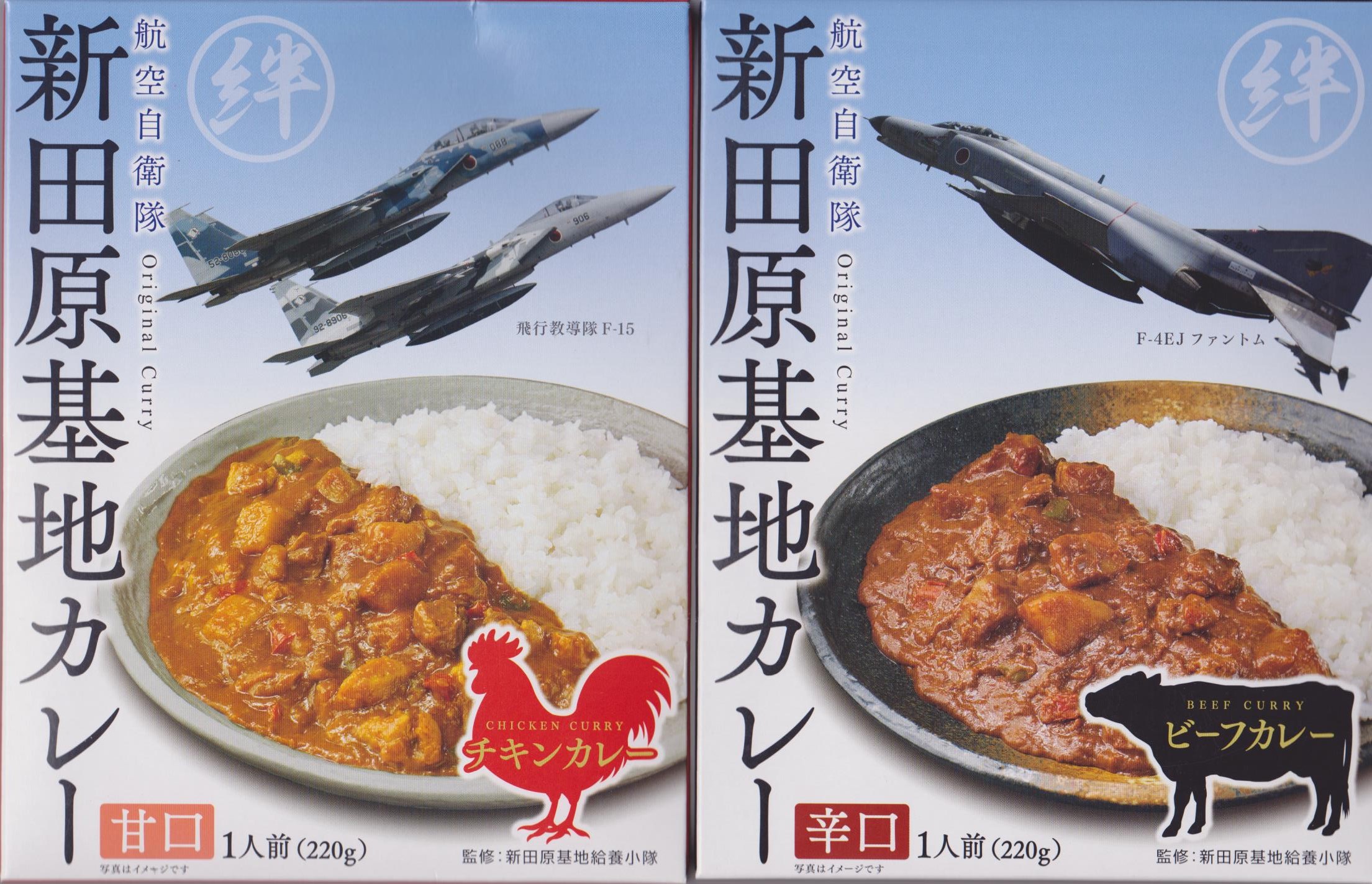
But in addition to agriculture, Miyazaki’s economy also includes the activities of Nyutabaru Air Base. And those activities include making curry. This weekend I picked up some Nyutabaru Air Base curry at the Miyazaki antenna shop in Shinjuku, Tokyo.
The curry I tried came in two flavors: spicy beef and mild chicken. The beef has a photo of an F-4EJ Phantom jet on the box, while the chicken is adorned with a pair of F-15s.
WIT Life #243: Effect of Internet on Japanese elections
Translating/Interpreting, WIT Life, Writers Comments Off on WIT Life #243: Effect of Internet on Japanese elections
WIT Life is a periodic series written by professional Writer/Interpreter/Translator Stacy Smith (Kumamoto-ken CIR, 2000-03). She starts her day by watching Fujisankei’s newscast in Japanese, and here she shares some of the interesting tidbits and trends along with her own observations.
This past Sunday’s election for the Upper House of Japan’s Parliament provided an overwhelming victory to PM Abe’s Liberal Democratic Party. As the New York Times noted, “His conservative coalition now seems assured a working parliamentary majority through 2016, which would end the trend of weak revolving-door governments, which saw six successive prime ministers over the past six years.”
The results also seem to be a vote of confidence for Abenomics, the Prime Minister’s economic plan comprised of the three arrows of monetary easing, fiscal stimulus and pro-growth strategy. While these reforms seem to have been beneficial so far, there are voices of concern regarding Abe’s nationalistic views and their impact on Asian neighbors.
Another interesting aspect of the election was how it was affected by the introduction of Read More
WIT Life #242: End of Japan Cuts 2013
Earthquake Tsunami, Events, Film, Translating/Interpreting, Uncategorized, WIT Life, Writers Comments Off on WIT Life #242: End of Japan Cuts 2013
WIT Life is a periodic series written by professional Writer/Interpreter/Translator Stacy Smith (Kumamoto-ken CIR, 2000-03). She starts her day by watching Fujisankei’s newscast in Japanese, and here she shares some of the interesting tidbits and trends along with her own observations.

Author with the venerable Tatsuya Nakadai at a recent screening of Ran
Yesterday Japan Cuts 2013 came to a successful close, with a jam-packed schedule of four films in a row. I only caught the middle two, Japan’s Tragedy and Dearest, both of which deal with the theme of death (like the earlier screened I’M FLASH, and they all do this deftly in their own unique ways). Japan’s Tragedy stars the amazing Tatsuya Nakadai, an 80-year old actor who I had the honor to interpret for at an event last month at the Museum of the Modern Image when his film Ran (directed by Akira Kurosawa) was featured and he participated in a Q&A following the film.
Nakadai’s downtrodden character in Japan’s Tragedy is in direct contrast to his genkiness in real life. The father he plays has recently lost his wife and has also been diagnosed with lung cancer on the morning of 3/11. After going through one operation he decides that he doesn’t want any more treatment, and furthermore that he will board himself up in his room and die beside the altar for his late wife. His son who is living with him since leaving his wife and daughter, as well as his job, is surviving on his father’s pension and taking care of him. Unsure of how to react to his father’s pronouncement, he initially tries to Read More
WIT Life #241: The Ravine of Goodbye
Events, Film, Translating/Interpreting, WIT Life, Writers Comments Off on WIT Life #241: The Ravine of Goodbye
WIT Life is a periodic series written by professional Writer/Interpreter/Translator Stacy Smith (Kumamoto-ken CIR, 2000-03). She starts her day by watching Fujisankei’s newscast in Japanese, and here she shares some of the interesting tidbits and trends along with her own observations.
Last night’s Japan Cuts feature film was Tatsushi Omori’s The Ravine of Goodbye, which just received the Special Jury Prize at the Moscow International Film Festival. This movie is based on the book by Shuichi Yoshida (who also wrote the chilling Villain, later made into a 2010 movie), and depicts the life of a couple whose next door neighbor’s young son was found murdered. As the police begin their investigation and reporters start gathering facts for their stories, it becomes revealed that the husband was involved in a gruesome gang rape when he was a college student. As more information is found, the deeper layers are peeled back to reveal the truth of the incident’s aftermath.
There were several scenes that were left a bit vague and I had some unanswered questions while watching, though I have a hunch they could be cleared up by reading the original source material. I thought the movie was really engaging in the first half, but later on as the truth was being uncovered things seemed to slow down almost uncomfortably. I found Omori’s work reminiscent of the recent Sundance miniseries “Top of the Lake,” both theme and pacing wise. Although much of Ravine was disturbing, it is without a doubt a polarizing film that will lead to much discussion, as I heard many disparate reactions from viewers exiting the theater. And for that alone, perhaps it is worth seeing.
WIT Life #240: Japan Cuts 2013: Week 2
Events, Film, Translating/Interpreting, Uncategorized, WIT Life, Writers Comments Off on WIT Life #240: Japan Cuts 2013: Week 2
WIT Life is a periodic series written by professional Writer/Interpreter/Translator Stacy Smith (Kumamoto-ken CIR, 2000-03). She starts her day by watching Fujisankei’s newscast in Japanese, and here she shares some of the interesting tidbits and trends along with her own observations.
The amazing lineup at Japan Society’s Japan Cuts 2013 continues, and last night I had the chance to catch two films with the themes of loneliness and love. The first movie was I Have to Buy New Shoes, which is set in Paris and features a three-day romance between the main characters Aoi and Sen. The film’s title comes from their initial encounter, in which Aoi tripping over Sen’s passport causes the heel to come off her shoe and his passport to be ripped. She is a longtime resident of France, and he is visiting for the first time with his sister (who has abandoned him to find her boyfriend who is living there). Reminiscent of Celine and Jesse from Richard Linklater’s Before trilogy, Aoi and Sen fall into an easy rhythm as they find themselves spending all their moments together.
But with Sen’s departure three days away, there is a deadline to their relationship. Over this short period of time, they become close enough to confide in each other about Read More
I’ll Make It Myself!: Baudrillard and the Food Truck: Dragon Fest 2013
Blogs, Food & Drink, I'll Make It Myself, Writers Comments Off on I’ll Make It Myself!: Baudrillard and the Food Truck: Dragon Fest 2013
L.M. Zoller (CIR Ishikawa-ken, Anamizu, 2009-11) is the editor of The Ishikawa JET Kitchen: Cooking in Japan Without a Fight. Ze also writes I’ll Make It Myself!, a blog about food culture in Japan and the US; curates The Rice Cooker Chronicles, a series of essays by JETs and JET alumni on the theme of cooking/eating and being alone in Japan; and admins The JET Alumni Culinary Group on LinkedIn.
New Rice Cooker Chronicles submissions always welcome. Just e-mail it to jetwit [at] jetwit.com.

One of the aspects I hadn’t anticipated as much regarding my culture shock expectations was adjusting to Americanized- and fusion Japanese food, especially for foods that I encountered for the first time in Japan. This isn’t to say that American-Japanese food isn’t delicious–quite the contrary–but it can be a bit alarming at times to see sushi rolls cooked tempura-style (why?) or cilantro in your temaki (YES). If nothing else, it serves as a reminder of my relative inexperience with the Japanese home cooking when I left to study abroad in university and the problematic nature of the idea of a food’s authenticity.
Dragon Fest is an annual celebration of pan-Asian cultures held in Seattle’s International District.
I’ll Make It Myself!: Raspberry-Almond Mini Baked Oatmeals
Blogs, Food & Drink, I'll Make It Myself, Writers Comments Off on I’ll Make It Myself!: Raspberry-Almond Mini Baked Oatmeals
L.M. Zoller (CIR Ishikawa-ken, Anamizu, 2009-11) is the editor of The Ishikawa JET Kitchen: Cooking in Japan Without a Fight. Ze also writes I’ll Make It Myself!, a blog about food culture in Japan and the US; curates The Rice Cooker Chronicles, a series of essays by JETs and JET alumni on the theme of cooking/eating and being alone in Japan; and admins The JET Alumni Culinary Group on LinkedIn.
New Rice Cooker Chronicles submissions always welcome. Just e-mail it to jetwit [at] jetwit.com.

Note: if you’re in Japan and sans raspberries, never fear! There are plenty of seasonal and local adaptations.
One of my go-to breakfast recipes is Heidi Swanson’s baked oatmeal (via Lottie & Doof). Extremely versatile, you can swap in any seasonal local fruit you like–in Japan, I often used persimmons, apples, or figs instead of bananas on the bottom; diced apples, raisins, or mikan mixed in when blueberries were out of season; and, best of all, it fit in a moven in a 20×20 cm (8×8 in) pan. The recipe will always remind me of my Kanazawa kitchen.
Around Japan in 47 curries: Iwate cheese
Blogs, Food & Drink, Writers Comments Off on Around Japan in 47 curries: Iwate cheese
Tom Baker (Chiba, 1989-91) is writing a 47-part weekly series of posts on his Tokyo Tom Baker blog, in which he samples and comments on a curry from a different prefecture each week. Here’s an excerpt from his ninth installment, about Iwate Prefecture.

The Choshu Five in London, with Masaru Inoue at center (Public domain photo via Wikimedia Commons)
When I first came to Japan, I found some Koiwai cheese in a supermarket and mistook it for an American product. After all, Kiowa – as I initially misread the name – has an American ring. (The Kiowa are a Native American tribe.)
However, I now know the history of Koiwai cheese – and its unusual name – goes all the way back to the adventures of the Choshu Five, a group of young men who secretly left Japan in 1863 to study in Britain. After their return, they became leading figures in the country’s rapid modernization. One of them, Masaru Inoue, is remembered as “the father of the Japanese railways.”
In 1888, Inoue visited Iwate to inspect the progress of railway construction there. According to the Koiwai website, the volcanic soil and barren-looking windswept terrain struck him as a promising area for ranching…
WIT Life is a periodic series written by professional Writer/Interpreter/Translator Stacy Smith (Kumamoto-ken CIR, 2000-03). She starts her day by watching Fujisankei’s newscast in Japanese, and here she shares some of the interesting tidbits and trends along with her own observations.

Director Toshiaki Toyoda (center) with Japan Society Senior Film Program Officer Samuel Jamier (left).
Japan’s Society fabulous film festival Japan Cuts is back and better than ever! The 2013 lineup includes 24 films, some new and some older, all depicting Japanese society in the way that only Japanese cinema can. This year’s festival kicked off last Thursday night with the movie I’M FLASH from Japan Cuts favorite Toshiaki Toyoda. This director has attended previous festivals (2010’s Hanging Garden, 2012’s Monster’s Ball), and he was on hand this year as well to receive an award from Japan Society Senior Film Program Officer, Samuel Jamier (who announced this will be his last year with the festival. His unique, witty introductions to each film will be missed).
Toyoda’s film stars Tatsuya Fujiwara, who appeared in the film Parade featured at Japan Cuts 2010, as the leader Rui of a religious sect called “Life is Beautiful.” Rui has inherited the family business but is becoming disenchanted with it, and his bad behavior leads to a wild night with grave consequences. The film takes place in Okinawa, and the presence of the sea is so prominent that it is almost an additional character. Aside from Rui, we get to know Read More
Job: SNYS Editor (NYC)
Article/Journalism, Jobs, Uncategorized, Writers Comments Off on Job: SNYS Editor (NYC)
Thanks to JET alum Paul Benson for sharing this jet-relevant job listing. Posted by Kim ‘Kay’ Monroe (Miyazaki-shi, 1995 -97). Click here to join the JETwit Jobs Google Group and receive job listings even sooner by email.
————————————————————————————————————
Position: SNYS English Page Editor
Posted by: Shukan NY Seikatsu (週刊NY生活)
Type: N/A
Location: New York City
Salary: See below
Start Date: N/A
Overview:
JET alum freelance translator and journalist Paul Benson is seeking a replacement for himself at Shukan New York Seikatsu as he prepares to move on to grad school.
New York Seikatsu Press is looking for an English page editor. The Shukan NY Seikatsu (週刊NY生活) paper has broad readership in the United States and Japan. This position is ideal for someone interested in journalism, editing, and Japanese-English translation. The applicant must be able to commute into New York City once per week.
* Prior professional translation and journalism experience is recommended, but not required. Read More
Posted by Ashley Thompson (Shizuoka-ken, 2008-10), Community Manager for Nihongo Master and editor of Surviving in Japan.
Japan is home–the place I got engaged, married, and gave birth to my daughter. It’s the birthplace of my husband. I never expected Japan to become so special to me six years ago, let alone that the most important events of my life would happen there. It isn’t a perfect county–no country is–but I love many of its quirks, traits and customs.
We didn’t know what the future held and we had set up a life there.
A sudden turn of events and circumstances forced us to move back to the US in January of this year. We made the decision to move only two months before, as financially and emotionally we weren’t in a place to stay.
I’ve been struggling with reverse culture shock since coming back. I’m not sure I’ve ever felt like I “fit in” here in the States, but I feel it even less so now. I’m trying to adjust while pining for Japan, despite the fact we had plenty of reasons to move back. Read More
