




JQ Magazine: Book Review – ‘Heart of a Samurai’
 Article/Journalism, Books, JQ Magazine, Reviews
  Comments Off on JQ Magazine: Book Review – ‘Heart of a Samurai’

“Many people join the JET Program looking to form international bonds between their home countries and Japan, but Manjiro Nakahama faced bigger challenges into trying to end Japan’s isolationist policy. ‘Heart of a Samurai’ gives you a fun glimpse of one of Japan’s most important historical figures.” (Abrams)
By Rashaad Jorden (Yamagata-ken, 2008-2010) for JQ magazine. Rashaad worked at four elementary schools and three junior high schools on JET, and taught a weekly conversion class in Haguro (his village) to adults. He completed the Tokyo Marathon in 2010, and was also a member of a taiko group in Haguro.
You might know that under the policy of sakoku, no Japanese were permitted to leave the country. So when Japanese people were finally able to do so, it must have been a fascinating story. And thanks to Margi Preus, people have an easy-to-read tale about one of the first Japanese to venture outside of the country’s borders.
Preus’ book Heart of a Samurai offers a look into the life of Manjiro Nakahama, a fisherman-cum-aspiring samurai whose life is turned upside down when his boat is shipwrecked during an 1841 fishing trip. He and his four comrades are stranded on a remote island until members of an American whaling vessel arrive.
It was aboard the John Howland that Manjiro first learned about a world previously foreign to him. Unlike his comrades, the ever-inquisitive Manjiro is not scared of “butter stinkers” (a derogatory term for foreigners) and he learns English so quickly, he forms a bond with ship captain William Whitfield. Whitfield eventually takes Manjiro back to the United States, where the young man lives with the captain’s family. After spending several years exploring the world by sea, Manjiro eventually returns to Japan to accomplish his goal.
This book will resonate with people because it addresses the theme of being shocked at the world’s differences—some of which are hilarious (Aboard the John Howland, Manjiro is stunned by the existence of buttons, pockets, forks and knives while later expressing similar astonishment by seeing men wearing watches) and some that are not so funny (Manjiro is stunned to see segregation in a church). And in addition to adjusting to a culture where everything seemed to changing, Manjiro must also tackle racism and a new language while working to prove himself to people in a new country.
Justin’s Japan: Interview with ‘Speed Tribes’ Author/JET Alum Karl Taro Greenfeld
Article/Journalism, Books, Interview/Profile, Justin's Japan Comments Off on Justin’s Japan: Interview with ‘Speed Tribes’ Author/JET Alum Karl Taro Greenfeld

“From being born in Kobe and spending time in Japan as a child, I had a decent feel for Japanese culture and even a little bit of the language. But what best prepared me for the JET Program was living in Paris during my junior year in college; that familiarized me with living in a foreign country and how one had to adapt, especially back then in pre-Internet times.” (Esmee Greenfeld)
By JQ magazine editor Justin Tedaldi (CIR Kobe-shi, 2001-02) for Examiner.com. Visit his Japanese culture page here for related stories.
Born in Kobe and raised in America, Karl Taro Greenfeld (Kanagawa-ken, 1988-89) is the author of six books, and over the past two decades his writing has graced everything from the Paris Review to Playboy to Time Asia (where he served as editor for two years). His first book was Speed Tribes: Days and Nights with Japan’s Next Generation, a gritty, true-life portrait of Tokyo’s urban underground. Published in 1994, it exposed a fascinating side of post-bubble Japan rarely seen (or reported by) foreigners.
Now living in Tribeca with his wife and two daughters, Greenfeld has recently penned his debut novel, Triburbia, which once again finds a muse in his current milieu. The New York Times calls it “an artful and casually cohesive work of fiction imbued with anthropological insight,” and Greenfeld will be appearing at an author event at (where else?) Barnes & Noble Tribeca on Sept. 5.
In this exclusive interview, I spoke with Greenfeld about his early days in Japan during its economic peak, his highlights as a journalist covering the nation’s subculture, and a never-before-told story about the fate of a planned Japanese-language release of Speed Tribes.
Triburbia is a story about Tribeca fathers at the end of the last decade facing a changing neighborhood, which is similar to your own life. What made you to decide to write a novel about this?
I was living in Tribeca and then we moved to Pacific Palisades, California for a few years, and that caused me to look back at Tribeca and think about that time and place. It’s very similar to how I wrote Speed Tribes after moving from Japan back to the U.S. Somehow, when I am living in a place the intensity of experience makes it hard to write about. But with the perspective of distance, ideas come into focus and I can get a better idea of what I want to say about a place.
At 23, you served on the JET Program in Kanagawa Prefecture from 1988-89. How did JET come on your radar, and what kinds of jobs did you have before that?
I don’t remember how I heard about JET. I think it was something my mother found out about and passed on to me through her contacts at the Japanese Consulate in Los Angeles. Before that I was working in a clothing store and was just starting to write for magazines. I’d had small stories in the New York Times and Harper’s Bazaar and I already knew that’s what I wanted to do. But then I was accepted into the JET Program, which turned out to be a lucky break because it got me to Japan, though further from Tokyo than I would have liked.
You were born in Kobe, grew up in Los Angeles and went to college in New York. How did this exposure to different cultures and lifestyles prepare you for your time on JET?
From being born in Kobe and spending time in Japan as a child, I had a decent feel for Japanese culture and even a little bit of the language. But what best prepared me for the JET Program was living in Paris during my junior year in college; that familiarized me with living in a foreign country and how one had to adapt, especially back then in pre-Internet times. I remember getting theJapan Times every day and that was my only connection to what was going on in America, a few baseball results—they didn’t print box scores—and maybe a few AP stories picked up about Bush or Dukakis. That was it!
How about being perceived as “half-Japanese” or “Asian” during your time in Kanagawa?
I think being half-Japanese was actually a disadvantage in the JET Program. For one thing, when Japanese kids hear they are getting a foreign teacher, they want a foreign teacher: A tall, strapping, blonde, preferably female, would be ideal. When I showed up, looking Japanese, I think it was a little bit of a disappointment. Never mind how lousy a teacher I actually was.
What were the biggest life lessons you picked up from JET? How about from that first year from working in Japan?
I learned a few things: For one, I learned that I shouldn’t confuse loneliness and happiness. That sometimes, I could be very lonely, and for the first six months or so in Kugenuma, where I lived in Kanagawa, I was intensely lonely. But I was strangely productive. I wrote a novel (never published), read a few hundred books, and had a lot of time to think about writing and what I wanted to say. It was the first time in my life that I wrote every day for a year.
For the complete interview, click here.
JQ Magazine: Book Review – ‘Orchards’ Is Elegant, Powerful, Profound
Article/Journalism, Books, JQ Magazine, Reviews Comments Off on JQ Magazine: Book Review – ‘Orchards’ Is Elegant, Powerful, Profound

“‘Orchards’ is at once a celebration of life and a somber reflection on the choices we make and their often irrevocable consequences.” (Random House)
By Sharona Moskowitz (Fukuoka-ken, 2000-01) for JQ magazine. Sharona is interested in fresh, new voices in fiction and creative nonfiction.
Meet Kanako Goldberg. Half Japanese, half Jewish, the teenage narrator of Holly Thompson’s breathtaking 2011 novel Orchards is more bagels and lox than natto and rice. After the suicide of her classmate in New York, Kanako is sent by her Japanese mother to spend the summer with her relatives on their mikan farm in a rural village tucked beneath the shadows of Mount Fuji. The trip to Japan is not only a chance to bond with her Japanese kin, it’s something of a temporary exile, a time to reflect on her life and her classmate’s untimely death at a safe geographical remove.
The victim’s name was Ruth and she is evoked repeatedly throughout the novel in the second person, as if to haunt the reader as much as she seems to be haunting Kanako’s conscience. Who was Ruth? What exactly was the extent of her suffering and how long did she have to endure before making the desperate decision to take her own life? Slowly we learn about Ruth’s battle with bipolar disorder and the unfortunate events that prompted her to do the unthinkable.
Despite her remorse, Kanako was not exactly the bully. She was more of a neutral bystander neither provoking nor defending the tortured teen, though in retrospect she feels just as culpable as Lisa, Ruth’s lead tormentor. (Lisa’s own fate, which I won’t give away here, adds an unexpected twist to the story.)
The tragic event took place in an apple orchard, a place where the cycle of death and rebirth is in plain, colorful view. While this metaphor might seem forced or terribly obvious, so elegant is Thompson’s language and so powerful and gentle her analogies that the overall effect is profound and genuinely moving.
JET alum Lars Martinson publishes “Kameoka Diaries Volume 2” e-comic
Books, Cartoon/Illustration, Humor, Japan Local, JET Alum Author Beat, Language Study, Notable JET Alums, Writers Comments Off on JET alum Lars Martinson publishes “Kameoka Diaries Volume 2” e-comic
 *************
Lars Martinson (Fukuoka-ken 2003-2006), author of the graphic novels Tonoharu: Part Two andTonoharu: Part 1, has just published the Kameoka Diaries Volume 2. This is a follow-up to Kameoka Diaries Volume 1, Lars’ insightful and entertaining (especially to any JETs) e-comic about his return to teaching English, this time in Kameoka, Kyoto.
Notably, you can purchase a copy for $0.99 for iPhone/iPad/iPodTouch or pay $1 for a PDF version for Mac/PC/Android/whatever.
More info here and below: http://larsmartinson.com/kameokadiaries2-now-available/
In Lars’ words:
When I submitted my first e-comics to Apple, ( The Kameoka Diaries: Volume One and Young Men of a Certain Mind ) it took one month for them to get approved, so I’m surprised & delighted it only took two days this time. But hey, I’m not going to look a gift horse in the mouth!
I’ll write more about the new volume of The Kameoka Diaries soon; I just wanted to get this announcement blog entry out right-away.
So please check it out. And if you enjoy it, please consider writing a review on iBooks, and/or telling your friends, and/or tweeting about it, and/or “liking” it on Facebook. Thanks a bunch!
JETwit Note: I just downloaded a copy onto my iPhone as soon as I saw the announcement. Volume 1 was great, even on an iPhone screen.
NY Times reviews “Triburbia” by JET alum Karl Taro Greenfeld
Books, Celebrity, JETs in the News, Notable JET Alums, Writers Comments Off on NY Times reviews “Triburbia” by JET alum Karl Taro Greenfeld
 *******************
JET alum Karl Taro Greenfeld (Kanagawa-ken, 1988-89), author of Speed Tribes: Days and Nights With Japan’s Next Generation), has a new book out titled Triburbia: A Novel which was recently reviewed by the New York Times (“Bobos in Paradise“). Here’s the link to the review: http://www.nytimes.com/2012/08/05/books/review/triburbia-by-karl-taro-greenfeld.html?_r=1&pagewanted=all
- For more information about Karl Taro Greenfeld, go to his website or read the Wikipedia entry about him.
- To purchase the book on Amazon, go here: http://www.amazon.com/Triburbia-Novel-Karl-Taro-Greenfeld/dp/0062132393
JQ Magazine: Book Review – ‘Monkey Business Volume 2’
Article/Journalism, Books, JQ Magazine, Reviews, Roland Kelts Comments Off on JQ Magazine: Book Review – ‘Monkey Business Volume 2’

“Anyone can read this book and appreciate it. It provides a window into the heart, mind, and soul of the Japanese people following the tsunami, earthquake and nuclear disaster.” (A Public Space)
By Greg Anderson, (Fukuoka-ken, 1990-1992) for JQ magazine. Greg is part of the fourth class of the JET Program, which began in 1987. He is currently employed as an auditor with the U.S. Treasury Department and is a new member of the JETAA New York book club.
Monkey Business: New Writing from Japan is an anthology of opinions, thoughts, and stories written by some of the most prominent writers from the past and present on the subject of Japan and co-edited by Japanamerica author Roland Kelts (Osaka-shi, 1998-99). I love this book!
Why? Because anyone can read this book and appreciate it. You do not have to be an aficionado of Japan or, frankly, be able to locate it on a map. This book provides a window into the heart, mind, and soul of the Japanese people following the tsunami, earthquake and nuclear disaster. Just as in the United States following the events of September 11, 2001, Americans were forced to pause and consider American values, the American way of life and America’s relationship with rest of the world, along with what it means to be an American.
The events of March 11, 2011 were a watershed moment for the people of Japan. Nothing will ever be as it once was in Japan. The loss of life, failed technology, and deceit/lies are themes that are all addressed in this issue of Monkey Business, released earlier this year. What’s great about this book is that there are two ways that it can be read: You can read it chronologically from page one through page 210, you can browse the index to find an interesting story, or you can simply thumb through the book (like I did), find a story that strikes your fancy, and begin reading (I assure you that you will not be disappointed).
JapanLocal: Promotional Video for JET alum book “For Fukui’s Sake”
Books, Japan Local, Notable JET Alums, Return on JET-vestment, Video Comments Off on JapanLocal: Promotional Video for JET alum book “For Fukui’s Sake”
Below is a promotional video for the book For Fukui’s Sake: Two Year’s In Rural Japan by JET alum Sam Baldwin (Fukui-ken, 2004-06) (who also created the video). The video does a great job of capturing the images and essence Fukui through Sam’s eyes. Read more about Sam in the book review Tim Martin (Fukui-ken, 2006-08) did for JQ magazine.
SCBWI Tokyo Illustration Day with John Shelley
Art, Books, Cartoon/Illustration, Events Comments Off on SCBWI Tokyo Illustration Day with John Shelley
SCBWI-Tokyo Publicity Assistant Suzanne Kamata (Tokushima 1988-90) shares the following:
Sunday August 19, 2012
SCBWI Tokyo Illustration Day with John Shelley:
Breathing Life Into Your Pictures
Power up your pictures! Give your illustrations vitality and zest! This SCBWI Tokyo Illustration Day featuring illustrator John Shelley will focus on techniques that children’s illustrators use to create resonance in their work and will explore how visual psychology works to convey mood, emotion, and movement. The Action and Emotion Illustration Assignment to be completed in advance of the workshop provides an opportunity for illustrators to develop their craft through open critiques at the event.
Time: Sunday, August 19, 2012, 9:00 am-5:00 pm
Place: Tokyo Women’s Plaza, Audiovisual Room, A & B
5-53-67 Jingumae, Shibuya-ku, Tokyo (by the Children’s Castle and United Nations University). For a map see www.scbwi.jp/map.htm Read More
JQ Magazine: Book Review – ‘Project Japan: Metabolism Talks’
Books, JQ Magazine, Reviews Comments Off on JQ Magazine: Book Review – ‘Project Japan: Metabolism Talks’

"What’s most striking about 'Project Japan' is the text itself, a frenetic landscape of drawings, photographs and textual tidbits both fluid and choppy. The book is also a portrait of a moment; once futuristic, now historical, yet still as influential as ever." (Taschen America)
By Sharona Moskowitz (Fukuoka-ken, 2000-01) for JQ magazine. Sharona is interested in fresh, new voices in fiction and creative nonfiction.
What does it mean to be a Japanese architect, and is this distinction even worth making? According to Rem Koolhaas, the legendary architect and co-author of the book Project Japan: Metabolism Talks, the answer is unequivocally yes. As he puts it, “The Japanese are a group of modernists that never entirely cut connections with the past. That is probably still something one intuitively senses when they look at Japanese architecture.”
Project Japan (co-written with Hans Ulrich Obrist) offers a documentary-style look at the avant-garde Metabolism movement that flourished in Japan after World War II. While the country was recovering from the war and reinventing its image, the Metabolists strived to make architecture “a public rather than a private affair,” designing for a widescale shift from the rural to the urban.
What’s most striking about Project Japan is the text itself, a frenetic landscape of drawings, photographs and textual tidbits both fluid and choppy. It’s essentially a reference book, reading like a series of presentations whose format begs audience interaction. The book offers an intimate glimpse into the lives of the men responsible for propelling the movement forward and the processes involved. The book is also a portrait of a moment; once futuristic, now historical, yet still as influential as ever.
Lars Martinson’s “Kameoka Diaries” e-comic now available on iTunes
Books, Cartoon/Illustration, Celebrity, Humor, Japan Local, Notable JET Alums, Return on JET-vestment, Writers Comments Off on Lars Martinson’s “Kameoka Diaries” e-comic now available on iTunes
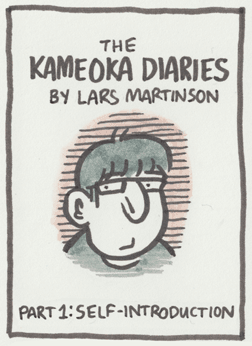 *************
Lars Martinson (Fukuoka-ken 2003-2006), author of the graphic novels Tonoharu: Part Two andTonoharu: Part 1, has just announced the “Kameoka Diaries“, Lars’ e-comic about his return to teaching English, this time in Kameoka, Kyoto, is now available on iTunes.
More info here and below: http://larsmartinson.com/my-first-two-e-comics-now-available/
The Kameoka Diaries: Volume One [ Direct iBookstore Link ]
The Kameoka Diaries: Volume One is a humorous (?) account of my experiences living and working in Central Japan, told over eight chapters. It includes an exclusive chapter not available anywhere else!
JETwit Note: I just downloaded a copy onto my iPhone. 250 pages for only $0.99, and I always love Lars’ work. Plus, it’s my first time using iBook which it turns out is pretty nifty. :-)
Justin’s Japan: Roland Kelts Makes New ‘Monkey Business’ at Japan Night @ Joe’s Pub
Article/Journalism, Books, Events, Justin's Japan, Roland Kelts Comments Off on Justin’s Japan: Roland Kelts Makes New ‘Monkey Business’ at Japan Night @ Joe’s Pub

JET alum and ‘Monkey Business’ editor Roland Kelts will appear at Japan Night @ Joe’s Pub in New York May 6. (Kaz)
By JQ magazine editor Justin Tedaldi (CIR Kobe-shi, 2001-02) for Examiner.com. Visit his Japanese culture page here for related stories.
Regular visitors to NoHo’s St. Mark’s Place are known to enjoy many of the Japanese pubs and eateries that dot the street down to Avenue A. This Sunday (May 6), neighbor Joe’s Pub will host live music and the latest English release of a notable Nippon-centric literary anthology.
Japan Night @ Joe’s Pub, held at the eponymous nightclub a stone’s throw below Astor Place, promises an unforgettable night of transcultural readings, music and live performances. On tap for Sunday: revered Japanese writers Masatsugu Ono, Tomoko Shibasaki, and award-winning author and translator Motoyuki Shibata will arrive from Tokyo to share the stage with American authors Stuart Dybek, Kelly Link, and Canadian translator, scholar and editor Ted Goossen.
The scriveners’ summit will celebrate the second Issue of Monkey Business International, the latest English-language edition of the acclaimed Japanese literary magazine that Pulitzer-winning author Junot Díaz calls “one of the year’s best publications” and Luna Park Review dubbed “one of the seven best literary magazines of 2011.”
Emceeing is JET alum (Osaka-shi, 1998-99), Japanamerica author and Monkey Business contributing editor Roland Kelts (click here for an exclusive interview conducted with Kelts last year), who describes the literary project as “all about dear friends calling upon me to be a bridge between the worlds I inhabit, write about and know best—giving me an enormous opportunity to feel a momentary spurt of self-worth.”
For the complete story, click here.
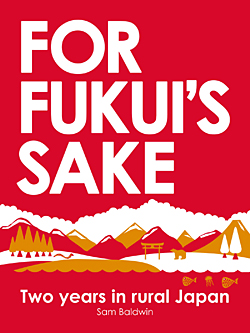
"The author's final thoughts about his stay in Japan struck a chord with me. Though many people seek adventures in foreign lands, if they stay in one place long enough, they often find it's the people they befriended that end up meaning the most to them upon their departure." (Baka Books)
By Tim Martin (Fukui-ken, 2006-08) for JQ magazine. Tim works as a research assistant in a neuroscience lab, and is an avid swing and blues dancer in New York City. He runs a humanist/atheist blog, The Floating Lantern, and is looking for ways to make a difference in people’s lives.
Fukui is a rural, out-of-the-way prefecture, relatively unfamiliar even to the Japanese. It boasts the largest number of nuclear reactors in the country, but only a single Starbucks. It’s home to a Buddha statue larger than the one in Nara, which, curiously, very few tourists come to visit. Fukui also has an amusing reputation for getting terrible reviews from authors who’ve passed through—in his book Hitching Rides with Buddha (aka Hokkaido Highway Blues), fellow JET alumni author Will Ferguson (Nagasaki-ken, 1991-94) describes it, only half-jokingly, as “a hole.”
So it’s an interesting place.
It’s also where Sam Baldwin (Fukui-ken, 2004-06) ended up when he applied to teach English in Japan as a member of the JET Program. In For Fukui’s Sake, Baldwin recounts tales from his two-year stay in this quirky rural backwater, weaving together the varied strands of his experience to form a continuous narrative of adventure and personal growth.
While working a monotonous job as a “research lab technician” in the UK, Baldwin decided he needed to broaden his horizons. Looking to discover what else life could offer, he set his sights on Japan, which, according to a friend who had visited, was a place where Baldwin could indulge in his love of snow and mountains. This may be a casual way to make the decision to start a new job in a strange country, but the required spontaneity and openness to new experiences may be what ultimately allowed the author to glean so much from his time in Japan.

****************
Thanks to Lindsay Tsuji for this write-up and thanks to Nadine Bukhman for the photos.
A chilly Toronto’s eve didn’t stop friends and fans of one artistically inclined JET alum from dropping by the Goodfellas Gallery in Toronto to celebrate the launch of his new book Life After the B.O.E. JETAA Toronto’s David Namisato (Aomori-ken CIR, 2002-04) was the cause of some serious hurrah on February 8.
Most JETs are no stranger to David’s comics. Started back in 2005, they chronicle the ins and outs of what life is like as a foreigner on the JET Programme. The enkais, the onsens, the team teaching…it’s all in there. Read More
JQ Magazine: Book Review – ‘Tomo: Friendship through Fiction: An Anthology of Japan Teen Stories’
Article/Journalism, Books, JQ Magazine, Reviews Comments Off on JQ Magazine: Book Review – ‘Tomo: Friendship through Fiction: An Anthology of Japan Teen Stories’

“Reading ‘Tomo’ is a reminder that even in the most desperate straits, friendship and personal relationships have the power to nourish and sustain us.” (Stone Bridge Press)
By Sharona Moskowitz (Fukuoka-ken, 2000-01) for JQ magazine. Sharona is interested in fresh, new voices in fiction and creative nonfiction.
If you could know your future cause of death, would you choose to know? This is the question posed by “Yamada-san’s Toaster,” one of the short stories in the new fiction anthology Tomo: Friendship through Fiction: An Anthology of Japan Teen Stories. As the title suggests, the collection is geared toward adolescents and dedicated to the youth of Tohoku, though it undoubtedly has— in the parlance of publishing— tremendous crossover appeal. There is plenty for adults to enjoy here, too. Edited and with a foreword by Holly Thompson, this collection features 36 stories—including 10 in translation—contributed by several JET alums from around the world, all of whom share a connection to Japan. Proceeds from its sale will go directly to the continued relief efforts.
In Kelly Luce (Kawasaki/Tokushima, 2002-04)’s story, Yamada-san’s toaster burns into each slice of bread a Chinese character supposedly predicting one’s cause of death. The tale’s young narrator observes the effects of the toaster on the townspeople as news spreads and they become stirred into a ridiculous pandemonium. There’s a great element of humor to the story though it also reveals a universal human folly: the vulnerability towards superstition. People try desperately to find order and make sense of a chaotic and random world, even if it means looking for burnt kanji of the toast on a breakfast plate.
The stories are grouped thematically, represented by “Shocks and Tremors,” Friends and Enemies,” “Ghosts and Spirits,” Powers and Feats,” Talents and Curses,” Insiders and Outsiders” and “Families and Connections.” (The final story, the poignant “Peace on Earth,” is penned by Suzanne Kamata (Tokushima-ken, 1988-90), whose own book of short stories, The Beautiful One Has Come, was released last year.
JQ Magazine: Book Review – ‘Life After the B.O.E. the Book’
Article/Journalism, Books, JQ Magazine, Reviews Comments Off on JQ Magazine: Book Review – ‘Life After the B.O.E. the Book’

"This whimsical compilation of cartoons that appeared previously in JETAA publications worldwide is likely to hit the funny bone of both former and current program participants alike."
By Sharona Moskowitz (Fukuoka-ken, 2000-01) for JQ magazine. Sharona works at a literary agency in New York City. She is interested in fresh, new voices in fiction and creative nonfiction.
Flexibility and a sense of humor have long been predictors of a successful JET participant. And with good reason. After all, let’s face it: life in Japan for a gaijin can range from the frustrating to the absurd to the downright hilarious, often within the same day.
The malleable young JET is expected to smile and wear a variety of hats placed upon his or her head in the name of “international exchange.” For most JETs, it’s what happens in between the lines of the job description that makes the experience so meaningful.
Who better to capture the flexible thinking and sheer comedy of the JET experience than a former participant himself? JET alum and professional illustrator David Namisato (Aomori-ken CIR, 2002-04) showcases some of the more memorable aspects in his new book Life After the B.O.E. This whimsical compilation of cartoons that appeared previously in JETAA publications worldwide is likely to hit the funny bone of both former and current program participants alike.
Each cartoon presents a different familiar scenario. There is the moment of sudden awareness when it becomes all too clear to the ALT that he or she is more of an exotic show-and-tell object than a real teacher, a realization that can be disappointing, underwhelming, or just a huge relief, depending on who you ask. Read More
