




JQ Magazine: Book Review – ‘Amorous Woman’
 Books, JQ Magazine, Reviews
  Comments Off on JQ Magazine: Book Review – ‘Amorous Woman’

“Amorous Woman is well written—especially the vibrant, vivid sexual acts—and you get the feeling that this would make a great film (If nothing else, there would be some hilarious scenes).” (Iro Books)
By Rashaad Jorden (Yamagata-ken, 2008-2010) for JQ magazine. Rashaad worked at four elementary schools and three junior high schools on JET, and taught a weekly conversion class in Haguro (his village) to adults. He completed the Tokyo Marathon in 2010, and was also a member of a taiko group in Haguro.
If you were to tell stories centering on the most memorable aspects of your stay in Japan, what would you focus on?
Donna George Storey tackled the erotic. Her autobiographic eBook, Amorous Woman, brings out a side of Japan that many might not see. Inspired by Ihara Saikaku’s novel, The Life of an Amorous Woman, Storey brings to life the kinkiest aspects of her nine years in Japan, where she worked as an English teacher and a bar hostess, in addition to enjoying the company (to say the least) of countless Japanese men.
Amorous Woman actually doesn’t start in Japan but in San Francisco, where the novel’s protagonist Lydia is teaching Japanese business etiquette (despite the fact she knows little of it) to businessmen en route to the Land of the Rising Sun. But she’s actually planning to do a 180 from her life in Japan—Lydia has decided to model her life on a Japanese courtesan-turned-nun, a character that only lives in the fantasies of Ihara Saikaku. She even tells herself upon leaving Japan that she will never have sex again.
If only if it weren’t that easy to get the subject off her mind. Since she knows “plenty about picking up strangers in hot spring baths, handcuffing guys to beds in tacky love hotels,” among other things, she decides to tell the real story of her stay in Japan to two students over dinner. That’s when Amorous Woman really heats up.
Books: An English Language Guide to Crafting in Tokyo
Books, Interview/Profile, Japan Local, Reviews, Travel/Tourism Comments Off on Books: An English Language Guide to Crafting in Tokyo
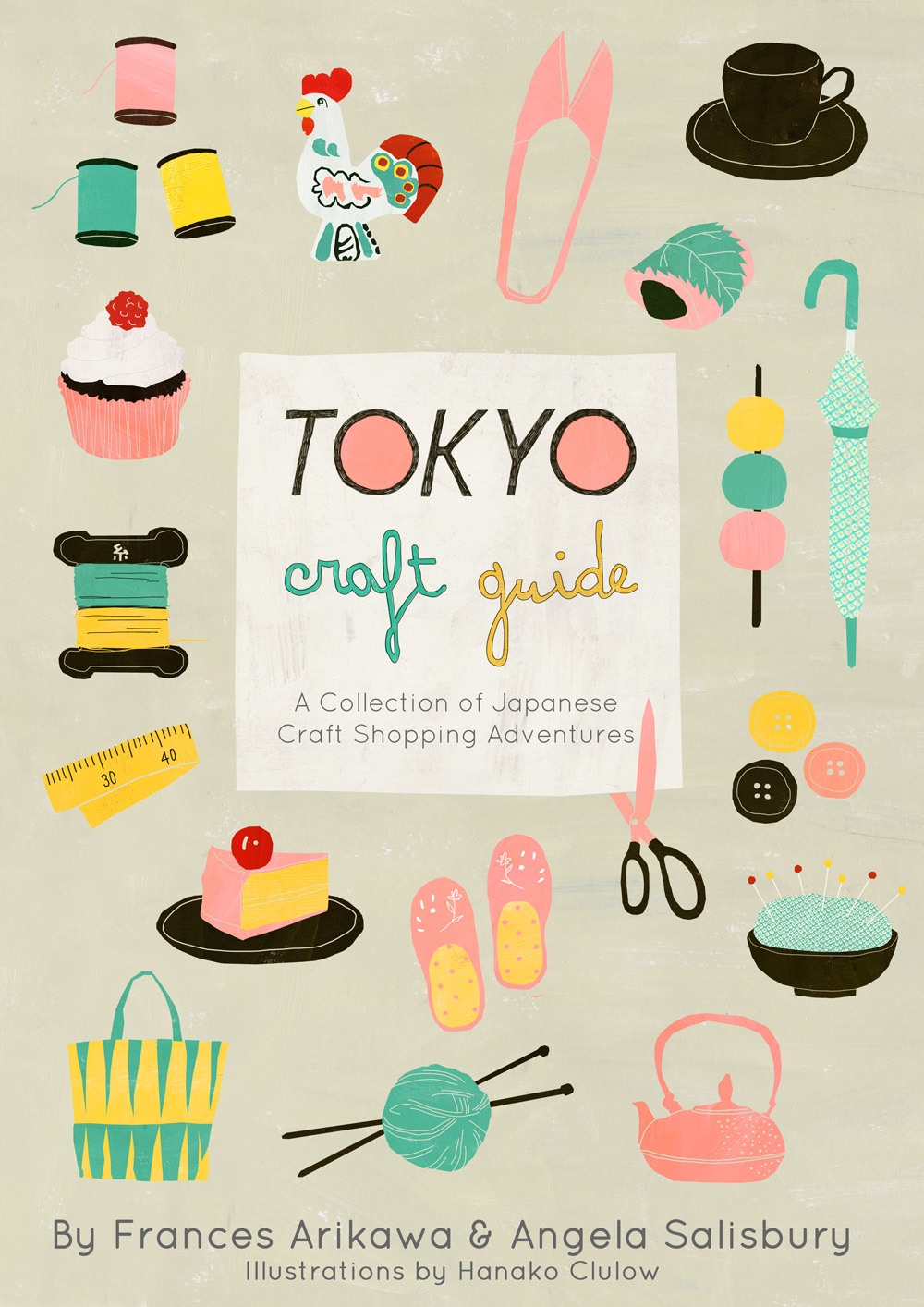 Interview by Rose Symotiuk (Hokkaido 2003-2005) with Angela Salisbury, author of the Tokyo Craft Guide:
As a JET, I keep track of my friends from my Japan days on Facebook. I started seeing posts by my fellow JETs for this cool e-book about crafting in Tokyo. Imagine my surprise when I realized that one of the authors, Angela Salisbury, was an old friend from high school!
I reached out to her to find out more about the book, crafting in Japan, and the JET crafting scene….
Rose: So, how long have you lived in Japan?
Angela: 3 years
Rose: Why did you move to Japan?
Angela: Adventure! The real answer? My husband’s job needed him in Asia, and we decided Tokyo was the place for us.
Rose: Is there an expat crafting scene in Tokyo? If so, can you tell me a little bit about it? Read More
JQ Magazine: Book Review – ‘From Postwar to Postmodern, Art in Japan 1945-1989: Primary Documents’
Art, Article/Journalism, Books, JQ Magazine, Reviews Comments Off on JQ Magazine: Book Review – ‘From Postwar to Postmodern, Art in Japan 1945-1989: Primary Documents’

“What emerges from the multitude of ideas here is that art in Japan from this period is a visual record of repercussions that are still being felt today.” (Duke University Press)
By Jessica Sattell (Fukuoka-ken, 2007-08) for JQ magazine. Jessica is a freelance writer and a graduate student in arts journalism. She was previously the publicist for Japan-focused publishers Stone Bridge Press and Chin Music Press.
The abstract and avant-garde sculptor, painter and all-around revolutionary Japanese artist Tarō Okamoto famously said, “Art is an explostion” (geijutsu wa bakuhatsu da).
“Explosive” barely describes the energy and innovation in Japanese art in the latter half of the twentieth century. As From Postwar to Postmodern, Art in Japan 1945-1989: Primary Documents discusses, the decades between the end of World War II and the end of the Cold War marked an intensely fruitful period of groundbreaking creativity in Japan. The excitement, anxiety, and electricity that surged against the rigidity of old structures propelled Japanese art and artists into a much greater international conversation.
Published earlier this year by the Museum of Modern Art in New York and distributed by Duke University Press, this hefty tome accompanied the fall 2012-winter 2013 MoMA exhibition Tokyo 1955-1970: A New Avant Garde. There’s been a huge wave of both popular and scholarly interest in Japanese modern and contemporary art and dozens of high-profile shows at major North American museums and galleries, but the MoMA exhibit was the first to examine the “postwar” period that had been previously underrepresented. Part of this may be that the term “postwar” is tricky to define; the effects of WWII are undoubtedly still felt today and many argue that Japan is still “postwar.”
This book provides a solid foundation for an exploration of the issues and precedents leading up to the transformation of “postwar” art into the “postmodern” time. But, rather than simply rehash existing scholarship about Japanese history from 1945-1989, the book’s co-editors allow the artists, philosophers, critics and curators of this historical time to speak for themselves. The bulk of From Postwar to Postmodern includes a huge and multifaceted collection of primary source materials—personal essays, artist statements, interviews, magazine articles, interviews, critiques and manifestos—many of which have been translated into English for the very first time.
JQ Magazine: Book Review – ‘Persona’ and the Muddy, Dark Spiritualism of Yukio Mishima
Books, JQ Magazine, Reviews Comments Off on JQ Magazine: Book Review – ‘Persona’ and the Muddy, Dark Spiritualism of Yukio Mishima

“Starting with an almost psychoanalytic exploration of Mishima’s childhood and on to the evolution of his sexuality, political beliefs and varied artistic influences, Persona tries as much as possible to demystify the man himself and his personal contradictions.” (Stone Bridge Press)
By Sharona Moskowitz (Fukuoka-ken, 2000-01) for JQ magazine. Sharona is interested in fresh, new voices in fiction and creative nonfiction.
Who was Yukio Mishima? Persona, the lengthy new tome by Naoki Inose (the current Governor of Tokyo) and Hiroaki Sato, seeks to answer that question with the use of a comprehensive set of primary resources such as interviews, unpublished writings and personal records. Kimitake Hiraoka was on track to follow in his father and grandfather’s footsteps as a career bureaucrat at the Ministry of Finance.
In addition to his favorable lineage, he had an impressive education and just the analytical mind such a career would have required. However, he decided to turn his back on the path he had paved for himself and instead try his hand at writing a novel. And so, Yukio Mishima was born and Confessions of a Mask would become the first literary gift he conferred on Japan and eventually the world.
One of Japan’s most famous authors and infamous icons is widely remembered for his dramatic public suicide by disembowelment in downtown Tokyo, though the authors of Persona make all attempts to explore every possible aspect of Mishima’s identity without letting his sensational death overshadow his life. Starting with an almost psychoanalytic exploration of his childhood and on to the evolution of his sexuality, political beliefs and varied artistic influences, Persona tries as much as possible to demystify the man himself and his personal contradictions; he was a stickler for convention with a penchant for taboo, fiercely Japanese with an affinity for western cultures, a man both highly disciplined and simmering with unchecked passion. Read More
Let’s Talk Japan is a twice monthly, interview format podcast covering a wide range of Japan-related topics. Host Nick Harling (Mie-ken, 2001-03) lived in Japan from 2001 until 2005, including two great years as a JET Program participant in Mie-Ken. He practices law in Washington, D.C., and lives with his wife who patiently listens to him talk about Japan . . . a lot.
Looking for a good summer read? Check out Episode 12 of the Let’s Talk Japan podcast to hear recommendations from members of the J Book Club of Washington, DC. Enjoy!
Nick
If you have not already done so, be sure to “Like” the podcast on Facebook, and follow the podcast on Twitter @letstalkjapan. Additionally, please consider leaving a positive rating and/or review in iTunes.
CLAIR Magazine “JET Plaza” series: David Namisato (Aomori)
Books, Humor, JETAA Chapter Beat, LifeAfterJET, Notable JET Alums, Return on JET-vestment Comments Off on CLAIR Magazine “JET Plaza” series: David Namisato (Aomori)
Each month, current and former JET participants are featured in the “JET Plaza” section of the CLAIR Forum magazine. The June 2013 edition includes an article by JET alumn David Namisato. Posted by Celine Castex (Chiba-ken, 2006-11), currently programme coordinator at CLAIR Tokyo.
***********
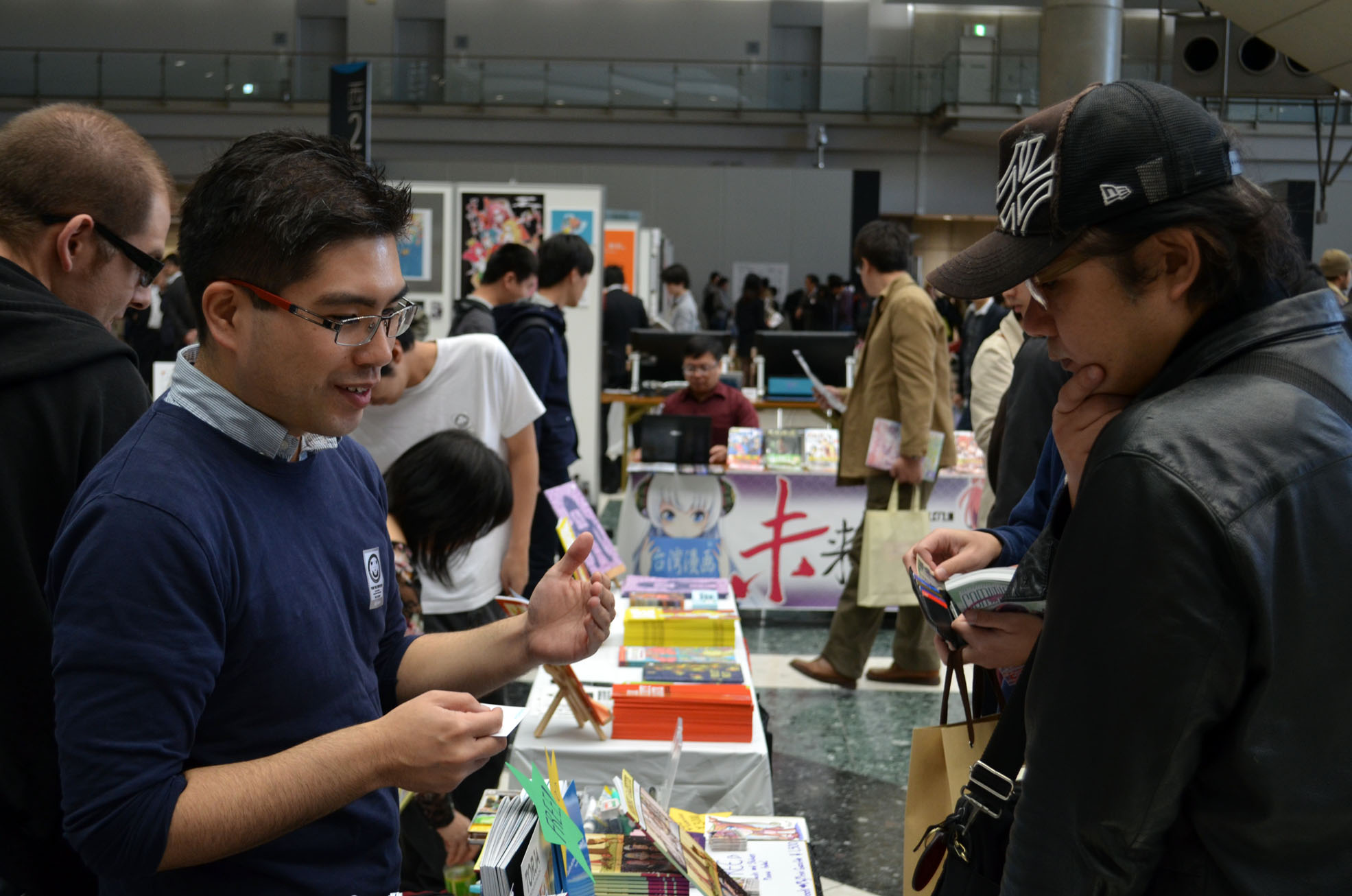
“I went on the JET Programme because I had quit art, but I returned to art because I went on the JET Programme, and thanks to that, here I am, over a decade later, an illustrator and comic book creator, with my JET experience influencing many of my works.”
David Namisato (Aomori-ken, Ajigasawa Town, 2002-04), is from Toronto, Ontario, Canada. He came to Japan on the JET Programme looking for a different career path after animation school, and spent two years in a rural town of Aomori as a CIR. Back in Canada, he started a comic series about the JET Programme experience for the JETAA Toronto Newsletter. Life After the B.O.E. quickly gained popularity inside and outside the JET community, to become a book in 2011. David is now a professional illustrator and has just released his new fantasy comic The Long Kingdom #1.
My Long Journey to the Beginning
In October of 2001, having become disillusioned with art, I decided to drop out of animation school, and to try something completely different and applied to the JET Programme.
Fluent in Japanese and looking for translation and interpretation experience as well as to transition in to a more planning and administrative career, I thought the position of Coordinator of International Relations (CIR) would be a good fit.
I was admitted to the JET Programme in 2002 as a CIR, and went to Japan. However, my contracting organization, Ajigasawa Town in Aomori Prefecture, used CIRs as elementary school English instructors. I had no planning or administrative duties beyond curriculum design and lesson planning, nor did I have translation or interpretation work. Rather, I was entrusted to teach English to children grades one through six at six of the town’s elementary schools.
As an elementary school English instructor, my art skills that I had abandoned were quickly resurrected and came in quite handy as I would use drawings to explain difficult vocabulary and grammar to my students. Slowly my joy of drawing returned, and as it returned, I also began contributing covers to the Aomori AJET newsletter.
In the spring of 2005, six months after my two years as a CIR ended, I decided to give art another try, and I started work as an illustrator creating illustrations and comics for children’s science, and history magazines in Canada. Read More
I’ll Make It Myself!: What I Ate in Nagano, Day 2: Yamanouchi
Books, Food & Drink, I'll Make It Myself, Writers Comments Off on I’ll Make It Myself!: What I Ate in Nagano, Day 2: Yamanouchi
L.M. Zoller (CIR Ishikawa-ken, Anamizu, 2009-11) is the editor of The Ishikawa JET Kitchen: Cooking in Japan Without a Fight. A writer and web administrator for The Art of Travel, ze also writes I’ll Make It Myself!, a blog about food culture in Japan; curates The Rice Cooker Chronicles, a series of essays by JETs and JET alumni on the theme of cooking/eating and being alone in Japan; and admins The JET Alumni Culinary Group in LinkedIn.
New Rice Cooker Chronicles submissions always welcome. Just e-mail it to jetwit [at] jetwit.com.
Day 1: On the Road to Yudanaka Onsen (長野の名産を食べる旅:第一日)
On our second day in Nagano, we headed to Yamanouchi to see the snow monkeys at the Jigokudani Monkey Park. We kind of took the long way around, but eventually we got on the right path.

JET alum children’s book author Rob Weston keeps producing
Books, JET Alum Author Beat, Notable JET Alums, Writers Comments Off on JET alum children’s book author Rob Weston keeps producing
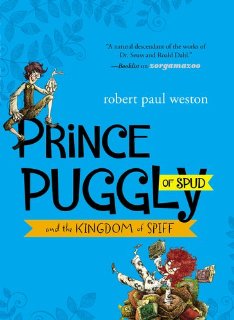 Rob Weston (Nara-ken, 2002-04), author of the one-of-a-kind children’s novel Zorgamazoo, continues his uniquely rhyming ways. In February, he published Prince Puggly of the Spiff and the Kingdom of Spud. And in November he will be publishing a phosphorescent children’s book–The Creature Department.
About Prince Puggly:
Prince Puggly of Spud and the Kingdom of Spiff is the story of Puggly, a commoner chosen to be the prince—not the king, definitely not the king—of the extremely unfashionable Kingdom of Spud.
The newly-crowned Puggly is surprised to receive an invite to a party in the kingdom next door, the painfully chic Kingdom of Spiff. When Puggly shows up in plaid trousers and a polka-dot cape, the stylish Spiffians are not amused—especially when when it turns out Puggly’s invite is a forgery.
But hark! All is not lost. Puggly soon discovers an unexpected ally in Francesca, the bookish Princess of Spiff. Together, the two friends set out to teach the Spiffs an absurd lesson in style…
For more info, go to: http://robertpaulweston.com/
Here are clips of Rob from the 2009 JETAA NY JET Alumni Author Showcase.
JQ Magazine: Book Review – ‘Yoko Ono: Collector of Skies’
Article/Journalism, Books, JQ Magazine, Reviews Comments Off on JQ Magazine: Book Review – ‘Yoko Ono: Collector of Skies’

“The book’s release is timed to coincide with Ono’s 80th birthday on February 18, and provides readers snippets of info on some tumultuous periods during her lifetime.” (Amulet Books)
By Rashaad Jorden (Yamagata-ken, 2008-2010) for JQ magazine. Rashaad worked at four elementary schools and three junior high schools on JET, and taught a weekly conversion class in Haguro (his village) to adults. He completed the Tokyo Marathon in 2010, and was also a member of a taiko group in Haguro.
“Everybody knows her name, but nobody knows what she does.”
That line—uttered by the most famous of her three husbands—could accurately sum up Yoko Ono for a long time. But that shouldn’t be the case. Fortunately, thanks to a new book co-written by Nell Beram and Carolyn Boriss-Krimsky, readers have insight into this remarkable woman’s life.
Yoko Ono: Collector of Skies—so titled because Ono has always looked to the sky for inspiration—delves into the life of the famous avant-garde artist and musician, from her childhood in Japan and the U.S. to her chart-topping success in her seventies. The book’s release is timed to coincide with Ono’s 80th birthday on February 18, and provides readers snippets of info on some tumultuous periods during her lifetime.
Ono’s journey is presented in an easy-to-read format geared toward young adults. Unlike many other biographies, where all the photographs tend to be lumped together in a couple of sections, the photos in Collector of Skies are spread throughout the book, and they range from one in which Ono is wearing a kimono at the age of two to another taken at the inaugural lighting of the Imagine Peace Tower in Reykjavik in 2007. The authors also use quotes from Ono to expound upon certain periods and moments of her life.
Of course, any story about Yoko Ono has to make heavy mention of her relationship with John Lennon, and the middle of the book is largely devoted to her life with the former Beatle. While Collector of Skies might not reveal anything earth shattering for hardcore Lennon and Beatles fans, younger readers (or those unfamiliar with the Beatles) will learn not just the real story of the group’s breakup, but more importantly, the duo’s activism.
JQ Magazine: JQ&A with Bruce Feiler on ‘The Secrets of Happy Families’
Article/Journalism, Books, Celebrity, Events, Interview/Profile, JQ Magazine Comments Off on JQ Magazine: JQ&A with Bruce Feiler on ‘The Secrets of Happy Families’

“One big idea in my book is that families should adapt all the time. The single best thing we’ve done is to add a weekly family meeting. We ask three questions, based on a popular program called ‘agile families.’ And no surprise: that idea was born in Japan in the culture of real-time change.” (Courtesy of HarperCollins Publishers)
By Sharona Moskowitz (Fukuoka-ken, 2000-01) for JQ magazine. Sharona is interested in fresh, new voices in fiction and creative nonfiction.
New York Times bestselling author and columnist Bruce Feiler (Tochigi-ken, 1987-88) has written a range of books dealing with topics as varied as life in Japan (depicted in 1991’s Learning to Bow), religion, and his own diagnosis with cancer.
His latest book, The Secrets of Happy Families, is a playbook for today’s family with tips and advice for increasing overall happiness and strengthening the family unit. Unlike other family-related books, Feiler does not advocate one particular method or philosophy over another; rather, he has done a thorough investigation of what happy families have in common and offers readers a slice of the pie.
In this exclusive interview, Feiler shares how his experience in Japan has given him insight into family life across cultures, as well as his take on the modern family’s trials and tribulations.
It seems the book market is already glutted with all sorts of self-help books about families. What sets your book apart and why do you feel that it is particularly timely?
In many ways, I was motivated by the deluge of self-help books. They’re boring, tried, and out of fresh ideas. As a parent, I was completely frustrated and had tons of questions about how to make my family function more effectively, and the only books out there were from “family experts.” Meanwhile, in every other arena of contemporary life—from Silicon Valley to elite peace negotiators, from championship sports teams to the Green Berets—there are proven new ways to make teams and groups run more smoothly. I wanted to know what those people were doing with their own families, then test their ideas with mine. Not every idea worked. That’s why I put over 200 new ones in the book, because what clicks with your family may be different from what clicked with mine. But my hope is that if you take three ideas, you’ll have a happier family in a week.
In the chapter about the agile manifesto, you talk about the importance of “being part of the family team.” In writing about the importance of teamwork within the family, were you inspired at all by your experience in Japan, a culture which valorizes the group above all else?
I think it may be more the other way around, in that I was attracted to Japan because I’ve always been interested in tight groups and well-run teams. At the time I lived in Japan, in the late 1980s, Americans still believed that the individual mattered above all else. But one thing we’ve learned from the Internet is that we all have a natural inclination toward groups, social networks, and other gatherings of people. The first generation of happiness research has shown us that relationships matter above all else. Happiness is other people. And the people who matter most to us are our family. Yet there have been almost no books that tell us how to do that.
Are there other cultural practices you observed in your time in Japan which you believe could benefit American families?
One I learned while in Japan is that being part of a group doesn’t just happen. Japanese schools, in particular, work on it. I remember a school trip I went on where classes were divided into small groups. The number one rule was, don’t be late. The number two rule was, only one person in each group was allowed to have a watch. Guess what! You better stick together. Having a close family doesn’t just happen, either—you have to work on it. Fortunately, there are lots of new ideas out there to do that, which I’ve tried to gather.

“J-Boys is a historical lesson for readers of all ages. Although the story takes place 20 years after World War II, Japan is still very much scarred by the war and Oketani mentions how it affected the mindsets of the country’s people.” (Stone Bridge Press)
By Rashaad Jorden (Yamagata-ken, 2008-2010) for JQ magazine. Rashaad worked at four elementary schools and three junior high schools on JET, and taught a weekly conversion class in Haguro (his village) to adults. He completed the Tokyo Marathon in 2010, and was also a member of a taiko group in Haguro.
The 1960s were a decade of enormous change around the world. Although Japan didn’t experience the upheaval some other countries did during that period, for one teenager, the mid-1960s were shaping up to be a different era.
Shogo Oketani’s novel J-Boys: Kazuo’s World, Tokyo, 1965 takes readers into the lives of young Kazuo Nakamoto and, to a lesser extent, his friends—younger brother Yasuo, his friend Nobuo, Nobuo’s older brother Haruo, and Kazuo’s classmate Minoru. As steeped in tradition as Japan is (and continues to be), Oketani paints a picture of a society beginning to be seriously touched by foreign influences. Inspired by the 1964 Olympics in their hometown, Kazuo and Haruo usually head to an empty lot after school to emulate 100-meter champion Bob Hayes (It was Kazuo’s dream to be an Olympic sprinter). And like many young people across the world, Haruo went crazy for a quartet from Liverpool, often singing “A Hard Day’s Night.”
Essentially, J-Boys (which was based on Oketani’s childhood)serves a journey through the ups-and-downs of adolescence while introducing younger readers to Japanese culture and the changing landscape of the country. Kazuo’s father speaks about the rise in TV’s popularity with an air of sadness, blaming it for the loss of a nearby cinema. Likewise, Kazuo feels the new Tokyo (much of it fueled by Olympic-related construction) he sees during his Saturday afternoon walks is not necessary an improved one. Kazuo develops a crush on a girl he’s known for quite a while, but sees a couple of close friends move just prior to the start of a new school year. So he realizes he’s about to embark on an unpredictable journey.
JET Alum Author Beat 1.20.13
Books, Career, JET Alum Author Beat, Roland Kelts, Writers Comments Off on JET Alum Author Beat 1.20.13
Gemma Vidal (Okayama-ken, 2010-12) is a recently returned JET seeking work in product licensing and copyright (if it’s within the publishing industry, even better!). You can usually find her in her little web spaces Gem in the Rough and Peachy Keen (her JET adventures) or training with San Jose Taiko. If you know of any authors/aspiring writers you’d like to see featured in JET Alum Author Beat, just contact Gemma at gem.vidal [at] gmail.com.
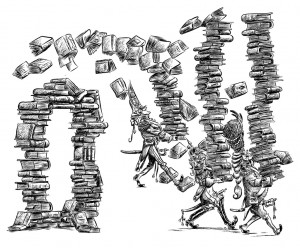
- It’s less than a month until Robert Weston’s (Nara-ken, 2002-04) release of his new book, Prince Puggly of the Spiff and the Kingdom of Spud, and to mark the countdown he posted some of the artwork for the book. Victor Rivas is also behind the illustrations of Robert’s previous book, Zorgamazoo. Speaking of Zorgamazoo, it seems like we might be seeing this on the big screen! By the producers of Shrek no less! Congratulations on the film option Robert!
- What’s going on in the Japanese pop culture arena? Take a look at Roland Kelt’s (Osaka-shi, 1998-99) blog on his brief picture post on Japan’s Comiket, the mecca of all things self-published. Looking at his website made me realize that it was Hayao Miyazaki’s 72nd birthday this month. Shame on me, I know.
- Ari Kaplan, JET Alumni and author of Reinventing Professional Professional Services: Building Your Business in the Digital Marketplace, recently had his book translated into Japanese, which is under the title ハスラー プロフェッショナルたちの革新 . The translated book can be found at the publisher’s website. Here is what Ari had to say about his book being translated:
The publication of the Japanese edition offered me the opportunity to express my gratitude for the remarkable experience I had almost two decades ago. I dedicated this version to the Hyogo Prefectural Board of Education, Kobe Kohoku High School (where I taught), and the head of the English department at my school, among others.
Until next time JET alumni!
JET alum Bruce Feiler set to publish latest book: The Secrets of Happy Families
Books, Celebrity, LifeAfterJET, Notable JET Alums, Writers Comments Off on JET alum Bruce Feiler set to publish latest book: The Secrets of Happy Families
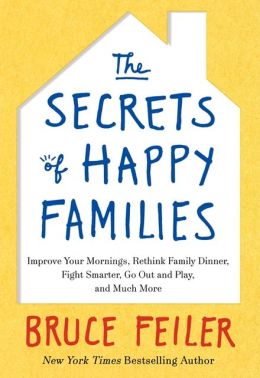 The latest from JET alum Bruce Feiler (Tochigi-ken, 1989-90), author of Learning to Bow, The Council of Dads, and, most recently, The Secrets of Happy Family, as well as several books on the Middle East including Walking the Bible, Abrahamand Where God Was Born. To read prior columns, please click here.
In a few weeks Harper Collins will publish Bruce’s new book, THE SECRETS OF HAPPY FAMILIES: Improve Your Mornings, Rethink Family Dinner, Fight Smarter, Go Out and Play, and Much More.
From Bruce: “Like many people we know, my wife, Linda, and I felt squeezed between aging parents and rising children. So over several years, I set out to find the smartest ideas and cutting-edge techniques to make our family happier. Avoiding the usual “experts,” I sought out creative minds from Silicon Valley to the set of “Modern Family” to the country’s top negotiators, asked what they were doing with the families, then tested their ideas at home with Linda and our girls. Some of these solutions failed, but many more improved our lives deeply and brought us all a lot closer.”
The book will be excerpted in the New York Times and appear on the cover of PARADE. Bruce will be featured on Good Morning America, Katie Couric, and other shows. Bruce will also be touring around the country.
There will also be an event in NYC at the Barnes & Noble on 86th Street on the East Side on February 20. (Stay tuned for a JETAANY announcement about going to the event followed by a happy hour.)
Learn more here: http://amzn.to/QwQxP5.
For more regular updates, follow Bruce on Facebook: www.facebook.com/brucefeilerauthor.
And Twitter: www.twitter.com/brucefeiler.
JQ Magazine: Book Review – ‘Samurai Awakening’
Article/Journalism, Books, JQ Magazine, Reviews Comments Off on JQ Magazine: Book Review – ‘Samurai Awakening’
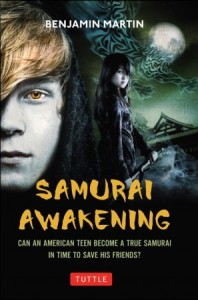
“Ultimately, Samurai Awakening is a fun read that makes you think you’re watching a movie.” (Tuttle)
By Rashaad Jorden (Yamagata-ken, 2008-2010) for JQ magazine. Rashaad worked at four elementary schools and three junior high schools on JET, and taught a weekly conversion class in Haguro (his village) to adults. He completed the Tokyo Marathon in 2010, and was also a member of a taiko group in Haguro.
For those who have lived in Japan, there were probably times when nothing seemed to be going right while struggling to get adjusted to a new culture. But eventually—or maybe miraculously—things take a 180 degree turn.
Well, that happened in Samurai Awakening, Benjamin Martin‘s work of fiction for young adults. Martin—currently a fifth year Okinawa Prefecture JET—tells the story of David Matthews, an exchange student spending the year in Japan. David is frustrated and unhappy due to the fact he can’t speak Japanese well and hasn’t made any close friends. Fittingly, very early in the story, he is bloodied in a fight with students at Nakano Junior High School.
But after attending a local temple ceremony, David learns a new god has created special powers in him. He is now able to speak Japanese fluently, fight incredibly well and turn into a cat. However, those are not the only surprises in the book. His host family the Matsumotos, who are famous sword makers, are also keeping a secret handed down to their ancestors by the Emperor of Japan. And it is with the Matsumotos that he must work to save his host sister Rie, as wolves have taken up residence in her body.
JQ Magazine: Book Reviews – ‘Belka, Why Don’t You Bark?’ and ‘The Future Is Japanese’
Article/Journalism, Books, JQ Magazine, Reviews Comments Off on JQ Magazine: Book Reviews – ‘Belka, Why Don’t You Bark?’ and ‘The Future Is Japanese’
A pair of this year’s releases from Haikasoru.
Belka, Why Don’t You Bark?

“As a writer, Furukawa is possessed of a kinetic voice that seems to teeter on the edge of insanity. The hyperactive prose is sometimes poetic, sometimes sharp like a stinging slap in the face. Often, it’s both.” (Haikasoru)
By Sharona Moskowitz (Fukuoka-ken, 2000-01) for JQ magazine. Sharona is interested in fresh, new voices in fiction and creative nonfiction.
War: It’s a Dog’s Life. Battle Is a Bitch. War and Fleas.
These were just a few of the potential titles I had streaming through my mind as I sat down to write the review of Belka, Why Don’t you Bark?, the newly translated novel by Hideo Furukawa. But the truth is, love it or hate it (and you very well may hate it, but more on that later), Belka is far too original to be reduced to silly catchphrases or bromides.
At the very start of the novel, readers are met with a detailed canine family tree complete with the dogs’ names and nationalities. In looking back, this might as well have been a de facto warning: if anthropomorphism is not your thing, put this book down immediately.
The story begins in 1943 on the Aleutian Island of Kiska where four military dogs are left by the Japanese and then claimed by U.S. troops after the Japanese retreat. One dog dies and the other three go on to produce the offspring that populate the novel and occupy the branches of the family tree. Belka chronicles the lives of the military dogs who trace their roots back to Kiska, intertwined with the story of the young daughter of a yakuza boss who is kidnapped in the USSR and has a psychic connection to dogs. Belka is a book about history through canine eyes, namely the wars of the 20th century, as Furukawa tells us “history is moved, rolled this way and that, so simply. The twentieth century was a pawn, as were the dogs.”
