




JQ Magazine: Book Review – ‘Three Scenarios in Which Hana Sasaki Grows a Tail’
 Books, JET Alum Author Beat, JQ Magazine, Reviews
  Comments Off on JQ Magazine: Book Review – ‘Three Scenarios in Which Hana Sasaki Grows a Tail’

JET alum Kelly Luce’s first published collection of fiction, Three Scenarios often utilizes magic realism to tell stories that take place in Nippon. (A Strange Object)
By Rashaad Jorden (Yamagata-ken, 2008-10) for JQ magazine. A former head of the JETAA Philadelphia Sub-Chapter, Rashaad currently studies responsible tourism management at Leeds Metropolitan University. For more on his life in the UK and enthusiasm for taiko drumming, visit his blog at www.gettingpounded.wordpress.com.
As mysterious as Japan seems to be, there are numerous occurrences in the country that leave you amazed.
Enter Kelly Luce (Kawasaki/Tokushima-ken, 2002-04). The JET Program alum’s first published collection of fiction, Three Scenarios in Which Hana Sasaki Grows a Tail (which is also the title of one of Luce’s stories) often utilizes magic realism to tell stories that take place in Nippon.
Three Scenarios contains ten stories and the first one, titled “Ms. Yamada’s Toaster” (which previously appeared in the anthology Tomo), tells the tale of a toaster that can predict one’s death (the toaster even predicted the death of Ms. Yamada’s husband by popping out a piece of bread three days before he suffered a heart attack). In other stories in Three Scenarios, a teenage girl disappears during karaoke and a stone is haunted by a demon.
While there may be times in Luce’s stories that Japan may seem inconsequential, the “it could only happen in Japan” moments make her stories came alive. For example, in “The Blue Demon of Ikumi,” a foreigner woman who was considered a demon because a child died under her care is set to be executed (she eventually escapes). In “Wisher,” people make seasonal wishes at a fountain’s stone steps, such as students and parents praying before entrance exams in autumn and during summer for travel. And in the above-mentioned “Ms. Yamada’s Toaster,” some villagers wish to make the toaster a deity.
JQ Magazine – Book Review: ‘The Way of Taiko’
Article/Journalism, Books, JQ Magazine, Music Comments Off on JQ Magazine – Book Review: ‘The Way of Taiko’

“Those who want to learn more about taiko, whether they are novices in Japanese drumming or have been playing for several years, will be amazed by the rich history and culture of the genre.” (Stone Bridge Press)
By Rashaad Jorden (Yamagata-ken, 2008-10) for JQ magazine. A former head of the JETAA Philadelphia Sub-Chapter, Rashaad currently studies responsible tourism management at Leeds Metropolitan University. For more on his life in the UK and enthusiasm for taiko drumming, visit his blog at www.gettingpounded.wordpress.com.
Many JETs—myself included—have been drawn to taiko because we love the sound emanating from the drums and want to partake in something traditionally Japanese. But what do we really know about taiko?
For those looking to expand their knowledge of Japanese drumming, Heidi Varian’s The Way of Taiko (now available in a new edition from Stone Bridge Press) is a great way to go. Varian, a member of the San Francisco Taiko Dojo, introduces readers to the history and contemporary culture of the music that is a symbol of Japan to many.
Varian calls taiko the “heartbeat of Japan,” and that’s appropriate because the drum was a method of gathering townspeople or letting them know about any impending danger, in addition to being used to celebrate festivals. Like seemingly everything that’s considered an integral part of Japan, taiko has an enormously long history clouded in mystery (it actually may not have originated in Japan), but Varian explores it.
She not only examines taiko’s beginning and its importance in ancient Japan, but how taiko appeared in traditional Japanese theatrical forms like noh and kabuki. She also writes about how taiko gained a foothold in the United States—the first documented taiko drum appeared in San Francisco in 1910—and its pioneers (such as Seiichi Tanaka and Kenny Endo) on this side of the Pacific. Varian also doesn’t also live in the past when talking about taiko, as she raises important issues about its future.
JQ Magazine Seeks Writers for Fall 2013!
Books, Events, Film, Food & Drink, Japan Local, JETAA Chapters, JQ Magazine, Volunteer, Writers Comments Off on JQ Magazine Seeks Writers for Fall 2013!

Visit JQ magazine online at http://jetaany.org/magazine.
As we head into fall, JETAA New York’s JQ magazine continues to provide content with an ever-expanding array of articles, interviews and features (see our recent stories here). We’re now looking for new writers, including recent returnees and JET vets, from all JETAA chapters worldwide for posting stories via our host at the global JET alumni resource site JETwit.com. (Scribes are also encouraged to join the JET Alumni Writers group on LinkedIn.)
Below are story ideas grouped by JET participants and alumni (JET World) and those more on Japanese culture (Japan World). And if you’re a JET or JETWit contributor from anywhere in the world with a story idea of your own, let us know!
Click “Read More” below for our fall 2013 ideas pitch package, and contact JQ editor Justin Tedaldi (magazine [at] jetaany [dot] org) to sign up for stories.
Now, JQ is looking for additional help behind the scenes! Our editor (celebrating his fifth anniversary at the helm in November) is seeking a capable assistant to help with the posting, social media sharing and story assigning across all JETAA chapters. If you’re a wiz with WordPress, Facebook and Twitter, and enjoy all forms of Japanese arts, events and media, reach out to Justin. Thanks and yoroshiku!
Percival Constantine at the Japan Writers Conference
Books, JET Alum Author Beat, Notable JET Alums, Writers Comments Off on Percival Constantine at the Japan Writers Conference
Percival Constantine (Kagoshima 2008-2013) is a writer for GaijinPot and the Pulp Ark Award nominated author of several New Pulp novellas, including “The Myth Hunter” and “Love & Bullets.” He is also an editor at Pro Se Productions and resides in Kagoshima. At the Japan Writers Conference this year, he’s going to give a presentation titled “Self-Publishing: The Pros and Cons of Bypassing Traditional Publishing.” Here’s the official description.
 With the advent of new technology such as print-on-demand services and ebooks, the market has opened for authors who wish to go it alone and publish their books without the use of an agent or publisher. There are both positives and negatives to this approach.
In the past, if one wished to publish a book, it required finding an agent and the agent locating a publisher for the product. Thanks to print-on-demand and ebook publishing, self-publishing has become easier than ever for aspiring authors. There are both positive and negative aspects to this. On the plus side, there is no need to write a number of query letters and send out submissions to agents or for the long wait before a book ends up on the market, as well as an increased share of the royalties. On the downside, the self-published author is responsible for all aspects of the production process, from editing the manuscript, laying out the book, creating a cover, and promotion. And though there is a larger share of royalties, the amount of copies sold can be far fewer. This presentation will examine the pros and cons of self-publishing.
To learn more about the Nov. 2-3 Japan Writers Conference, visit the official website HERE.
To learn more about Percival, visit his site HERE.
Book: “This Japanese Life” published by JET alum blogger Eryk Salvaggio
Blogs, Books, JET Alum Author Beat, JETs in the News, LifeAfterJET, Notable JET Alums, Return on JET-vestment, Writers Comments Off on Book: “This Japanese Life” published by JET alum blogger Eryk Salvaggio
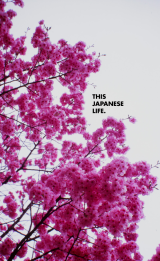 Thanks to AJET Chair Kay Makishi for the heads up on Fukuoka JET alum Eryk Salvaggio who writes the blog “This Japanese Life” and recently published a book by the same name. You can read more about Eryk in this Japan Times interview with him from 2012.
About the book: http://thisjapaneselife.org/this-japanese-life-the-book/
Most books about Japan can tell you how to use chopsticks or say “konnichiwa.” Few tackle the real stress of life in a radically different culture.
The author, a three-year resident and the writer and researcher behind one of the best Japan blogs, tackles the thousand tiny uncertainties of life abroad with honesty and wit.
Perfect for anyone about to leave home for Japan or elsewhere, This Japanese Life will deepen any reader’s understanding of Japanese culture as it’s fused into a method of dealing with the hardships of working and living there.
About Eryk:
Eryk Salvaggio was an American newspaper editor in Bangor, Maine before teaching English in Japan with the JET Program. He lived in Fukuoka City from 2010-2013, writing a blog, This Japanese Life, about Japanese culture and the tiny anxieties of being an expatriate.
The site was named one of the best Japan Blogs by Tofugu and was spotlighted by The Japan Times. Salvaggio has written for McSweeney’s, The Japan Times, Tofugu and Kulturaustausch.
His work as a visual artist has been covered in The New York Times and elsewhere.
He currently lives in London.
JET alum publishes new book on corporal punishment and discipline in Japan’s schools
Academic, Books, JET Alum Author Beat, LifeAfterJET, Notable JET Alums, Return on JET-vestment, Writers Comments Off on JET alum publishes new book on corporal punishment and discipline in Japan’s schools
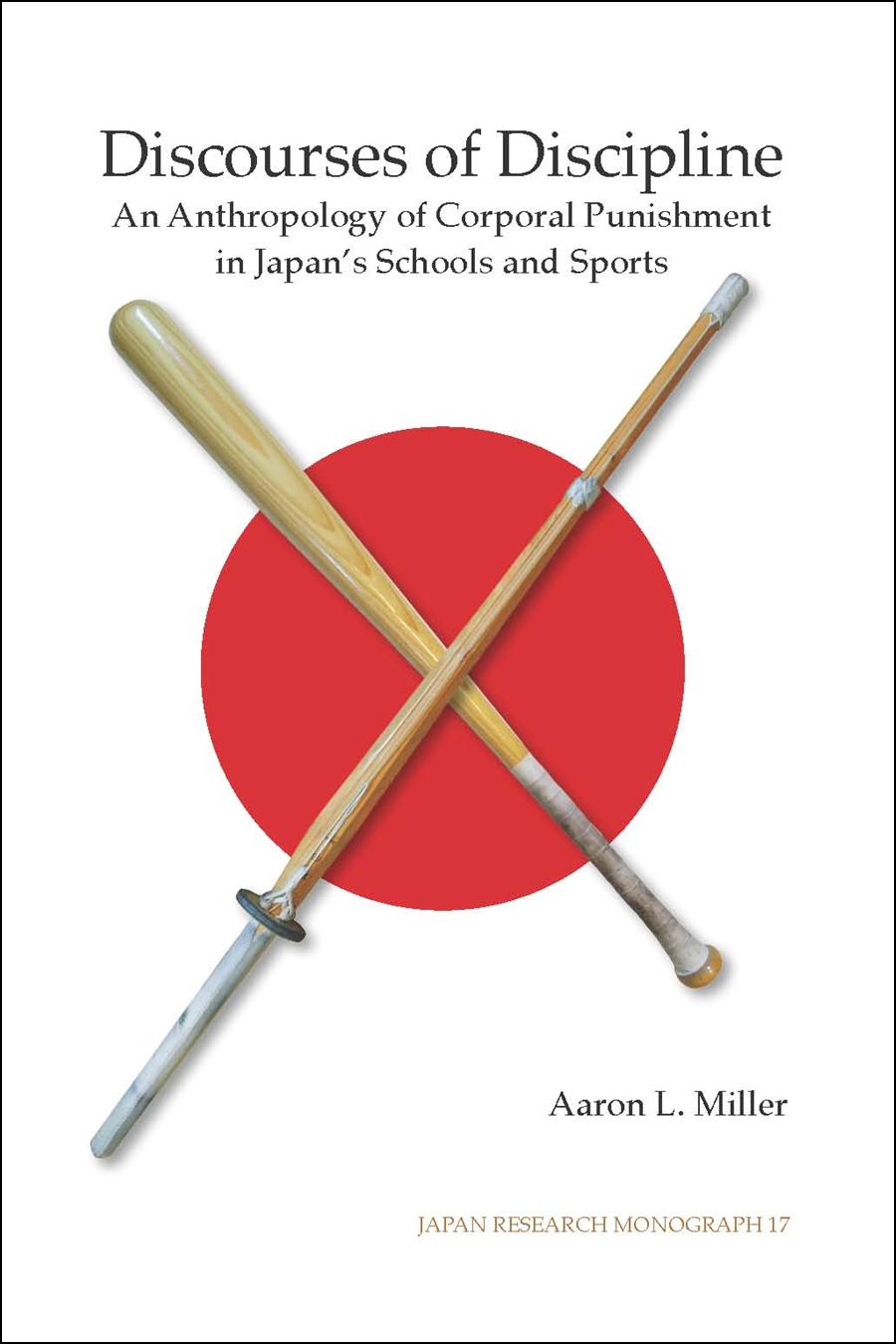 Thanks to AJET Chair Kay Makishi for passing along info about this interesting new book by Aaron Miller (Ehime-ken, 2002-04).
About the Author (via Amazon.com):
Aaron L. Miller, PhD is Assistant Professor and Hakubi Scholar at Kyoto University, affiliated with the Graduate School of Education, and Visiting Scholar, Stanford University Center on Adolescence. His academic research explores the relationships between education, sports, discipline and culture. His website is www.aaronlmiller.com.
About the Book:
This book is about the many “discourses of discipline” that encircle the issue of “corporal punishment” (taibatsu). These discourses encompass the ways that people discuss discipline and the patterns of rhetoric of what discipline should be, as well as what discipline signifies. By scrutinizing these discourses of discipline, this work disentangles the allegedly intimate ties between culture, discipline, and pedagogy in Japanese schools and sports.
For more information on this monograph, including how to order it,please visit http://ieas.berkeley.edu/publications/jrm17.html
Full IEAS catalogue: http://ieas.berkeley.edu/publications/catalogue.html
Amazon: http://www.amazon.com/Discourses-Discipline-Anthropology-Punishment-Monograph/dp/1557291055
Reviews (via Amazon)
Corporal punishment of children by teachers and coaches is a widespread practice in many countries, but especially in Japan, where it has become a front-page issue involving Olympic athletes. Miller explores this issue both historically and in contemporary practices and analyzes how various discourses regrading disciplinary actions have shaped Japanese understandings of their ‘educational reality.’ To understand this phenomenon, Miller rejects Ruth Benedict’s culturalist theory and, instead, places physical discipline (taibatsu) in the contect of Michel Foucault’s theory of violence and power, offering an incisive analysis of a complex issue. —Harumi Befu, professor emeritus, Stanford University
An intriguing and well-written analysis on molding character in Japanese schools and sports through the widespread use of corporal punishment. Miller frames his discussion in the contexts of Japanese cultural ideals about discipline, toughness, and self-improvement, as well as in Japanese perceptions of such forms of discipline as something uniquely Japanese. This book is an important contribution to understanding the social and cultural dynamics of core institutions in contemporary Japan. —Theodore C. Bestor, Harvard University
Corporal punishment as a discipline of pain and an abuse of adult authority is a troubling presence in Japanese classrooms and sports fields. This is an insightful and wide-ranging analysis that overturns simple judgments with a nuanced exploration of the historical development, sociocultural locations, and heated national discourse on corporal punishment in modern Japan. It is a significant contribution to our understanding of Japanese education and sports, and it is an original anthropological perspective on how we might theorize power in Japanese society. – —William W. Kelly, Yale University
JQ Magazine: Book Review – ‘Gadget Girl: The Art of Being Invisible’
Article/Journalism, Books, JQ Magazine, Reviews Comments Off on JQ Magazine: Book Review – ‘Gadget Girl: The Art of Being Invisible’

“As Gadget Girl is geared toward young adults (or more specifically, teenage girls), it is an easy read. But you get the sense that because of its diverse set of characters, it would make a good TV drama.” (GemmaMedia)
By Rashaad Jorden (Yamagata-ken, 2008-2010) for JQ magazine. Rashaad worked at four elementary schools and three junior high schools on JET, and taught a weekly conversion class in Haguro (his village) to adults. He completed the Tokyo Marathon in 2010, and was also a member of a taiko group in Haguro.
Sometimes, we’re just trying to find out where we belong.
That’s certainly the case with Aiko Cassidy, the teenage protagonist of JET Program alum Suzanne Kamata (Tokushima-ken, 1988-1990)’s latest novel, Gadget Girl: The Art of Being Invisible. The 15-year-old daughter of a renowned sculptor, Aiko wants to develop her own identity, instead of being known as Laina Cassidy’s muse and suffering from a disability (cerebral palsy). Aiko has been secretly working on manga titled Gadget Girl, and she dreams of becoming a world famous manga artist—which would enable her to visit her father in Japan.
But instead of heading to the Land of the Rising Sun, Aiko is off to France for several days, as Laina has won the grand prize at the prestigious Prix de Paris. Although she’s still receiving the “Laina Cassidy’s muse” treatment, the City of Light does open up a new world for Aiko. For one, she develops a crush on a waiter named Hervé at the café she frequents. Aiko is also introduced to the spot where he parents met but more importantly, she learns the reason why her father is absent from her life.
Inspired by the movie The Song of Bernadette, Aiko and Laina head to Lourdes, where Aiko dreams of being cured. Instead, she hears a woman whisper “Forgive,” and Aiko uses that as a call to repair broken relationships in her life.
JQ Magazine: Book Review – ‘The Accidental Office Lady: An American Woman in Corporate Japan’
Article/Journalism, Books, JQ Magazine, Reviews Comments Off on JQ Magazine: Book Review – ‘The Accidental Office Lady: An American Woman in Corporate Japan’

“If you are going to Japan soon, live there now, or have lived there already, this book is a survivor’s guide and tool for reflection and growth. It can help the reader better understand what to do, and what not to do.” (Tuttle)
By Lana Kitcher (Yamanashi-ken, 2010-12) for JQ magazine. Lana is the business development associate for Bridges to Japan and enjoys working as a freelance writer for a number of online publications. To read more about Lana’s adventures in Japan, visit her blog at Kitcher’s Café.
Laura Kriska’s experience as recounted in The Accidental Office Lady parallels in many ways what we as JET participants go through when we temporarily leave our lives and routines at home to pursue the “exotic” and uncertain terrain of a new culture.
Based on Kriska’s background and education, she was offered a two-year position at Honda Motor Company headquarters in Tokyo, being the first American woman to do so. She arrived in Japan equipped with her new business attire and a mind full of expectations and dreams about how the next two years of her life in Tokyo would unfold. She was soon instructed to join the secretariat—coordinating schedules and serving tea to managers in her new, polyester uniform.
Through the course of the book we get to see Kriska transform from a newly minted grad into a successful member of Japanese society. She starts out frustrated by her new environment and deeply disappointed that her job is not all that she hoped it would be. As the book progresses, you start to see that she is losing her childish tendencies to fight back, and eloquently navigating the culture with words and mannerisms instead of outbursts and small rebellions. She takes on more responsibility and in the end is able to create lasting change at Honda with a new employee manual in English and the elimination of the mandatory uniform rule.
CLAIR Magazine “JET Plaza” series: Ari Kaplan (Hyōgo)
Books, LifeAfterJET, Notable JET Alums, Return on JET-vestment, Writers Comments Off on CLAIR Magazine “JET Plaza” series: Ari Kaplan (Hyōgo)
Each month, current and former JET participants are featured in the “JET Plaza” section of the CLAIR Forum magazine. The September 2013 edition includes an article by JET alumn Ari Kaplan. Posted by Celine Castex (Chiba-ken, 2006-11), currently programme coordinator at CLAIR Tokyo.
*******
“I still remember the ceremony […] held for departing JET participants when I left my position as an ALT. […] I distinctly recall advising the audience members that I was leaving so that I could return someday.”
Originally from the US, Ari Kaplan (Hyogo-ken, Suzurandai, 1993-94) came to Japan upon graduating from Boston University. He is now a business consultant in New York City and the author of Reinventing Professional Services: Building Your Business in the Digital Market Place (Wiley, 2011), which Akishobo recently released in Japan as ハスラー――プロフェッショナルたちの革新. Learn more at AriKaplanAdvisors.com.
JET Perspective
I still remember the ceremony that the Hyogo Prefectural Board of Education held for departing JET participants when I left my position as an ALT at Kobe Kohoku High School in 1994. The host asked each of us to line up facing the audience, pass a microphone to one another, and share our reason for leaving. I distinctly recall advising the audience members that I was leaving so that I could return someday.
When Akishobo translated my second book, Reinventing Professional Services: Building Your Business in the Digital Workplace (Wiley 2011), into Japanese and released it in Japan last fall, I felt like I had somehow kept my promise. I was also excited to have the opportunity to publicly dedicate it to the JET Programme and the Hyogo Prefectural Board of Education.
I was only 20 years old when in July 1993, following my graduation from Boston University, I took that Japan Airlines flight from New York to Tokyo. Jetlagged the day after I arrived, I went on an early-morning walk into the Tokyo Metro to explore and noticed that there were a few homeless individuals living in refrigerator boxes down below.
As a resident of a major metropolitan city, this sight in Shinjuku station did not surprise me. What struck me, however, was that outside of each box sat a pair of shoes, presumably worn by the occupant inside, highlighting the individual’s personal respect and the extraordinary nature of the place to which I had traveled. Read More
Let’s Talk Japan Podcast, Episode 15 – JET Alumni Bike Shikoku’s 88 Temple Pilgrimage
Books, Interview/Profile, JET Alum Artist Beat, JETs in the News, Photography, Travel/Tourism, Uncategorized, Writers Comments Off on Let’s Talk Japan Podcast, Episode 15 – JET Alumni Bike Shikoku’s 88 Temple Pilgrimage
Let’s Talk Japan is a monthly, interview format podcast covering a wide range of Japan-related topics. Host Nick Harling (Mie-ken, 2001-03) lived in Japan from 2001 until 2005, including two great years as a JET Program participant in Mie-Ken. He practices law in Washington, D.C., and lives with his wife who patiently listens to him talk about Japan . . . a lot.
In this episode, Nick speaks with JET Program alumni Chelsea Reidy and Elayna Snyder about their upcoming 900-mile bicycle tour of Shikoku’s famous 88 temple pilgrimage.
Listen to hear them describe their creative “Temple by Temple Project,” which they are funding through Kickstarter, and how they plan to share their adventure with others.
To learn more, check out their website, www.bigricefield.com, and the Temple by Temple Project on Kickstarter.
Enjoy!
Nick

JQ Magazine: Book Review – ‘Pink Globalization: Hello Kitty’s Trek Across the Pacific’
Books, JQ Magazine, Reviews Comments Off on JQ Magazine: Book Review – ‘Pink Globalization: Hello Kitty’s Trek Across the Pacific’

“Pink Globalization is a culmination of over ten years of Yano’s fieldwork and research on the international ubiquity of Hello Kitty as an example of Japan’s actions as a tastemaker in global kawaii.” (Duke University Press)
By Jessica Sattell (Fukuoka-ken, 2007-08) for JQ magazine. Jessica is a freelance writer and a graduate student in arts journalism. She readily admits that while she is an avid Hello Kitty fan, she is always going to like Chococat more.
For many, young and old, female and male, Hello Kitty (or Kitty-chan, as her diehard fans lovingly call her) has been a lifelong friend. As I toted around my review copy of the new Pink Globalization: Hello Kitty’s Trek Across the Pacific—to my part-time job, to coffee shops, on a recent trip—strangers cooed over the cover’s soft pink color scheme and photograph of one of artist Tom Sachs’s renditions of the famous feline. Kitty led the way into my very first experiences with Japan, and her ever-presence has enriched my life in ways that I didn’t fully understand until diving in to Christine R. Yano’s research.
The wide-eyed little cat has been Japan’s acting ambassador for decades, and her global travels had (and continue to have) profound impacts on generations of consumers and culture shapers. Pink Globalization is a culmination of over ten years of Yano’s fieldwork and research on the international ubiquity of Hello Kitty as an example of Japan’s actions as a tastemaker in global kawaii.
Yano, who is Professor and Chair of Anthropology at the University of Hawai‘i at Manoa, explains that Kitty’s rise, development and continuing presence as perpetuated by both parent company Sanrio and an ever-growing fandom provides a rich text from which to examine a multitude of contemporary issues. Yano coins the term “pink globalization” here to refer to the spread of “cute” goods and images from Japan to other parts of the world, and it connects the actions of global capitalism with Japan’s “coolness” in its soft cultural products.
Local Japan: Ehime JET alums to publish illustrated book of their 88 temple pilgrimage
Art, Books, Cultural Outreach, Japan Local, JET Alum Author Beat, Return on JET-vestment, Travel/Tourism, Writers Comments Off on Local Japan: Ehime JET alums to publish illustrated book of their 88 temple pilgrimage
Maryland-based Ehime-ken JET alums Elayna Snider and Chelsea Reidy have put together an illustrated book of their “88 temple pilgrimage” by bicycle in Shikoku. They now have a Kickstarter page to help them raise funds to publish it and a wonderful video that explains what this is all about. Definitely worth a look. It’s hard to do justice in my own words, so click the link and watch and read for yourself:
http://www.kickstarter.com/projects/1042996508/temple-by-temple
Excerpts from the Kickstarter site:
There are 88 temples on Japan’s 88 temple pilgrimage. With two bicycles, a tent, notebooks and pens, plus a Rolleiflex, we will go to all of them. While we travel the 900-mile route, we’ll be collecting the materials needed to make 88 hand-bound versions of our illustrated book, Temple by Temple.
Elayna does the art, Chelsea does the words. A children’s book? It can be. A coffee table book? Sure. A book you have around and pick up from time to time? Yes! The idea and project did not come from any prescribed place of “Let’s make a kids book.” We are two people with varying ideas and skills and we combined them to make a book that describes the route, the temples, and this 1,200 year old pilgrimage which draws people of all different faiths and from all over the world.
JET alum set to publish new book “Three Scenarios in Which Hana Sasaki Grows a Tail”
Books, JET Alum Author Beat, Return on JET-vestment, Writers Comments Off on JET alum set to publish new book “Three Scenarios in Which Hana Sasaki Grows a Tail”
 JET alum Kelly Luce (Kawasaki/Tokushima, 2002-04) will publish her debut collection of fiction this fall titled Three Scenarios in Which Hana Sasaki Grows a Tail. The book is a collection of ten stories set in Japan, and many of her stories are characterized by magical realism. According to A Strange Object, the book’s indie publisher, “Hana Sasaki will introduce you to many things—among them, an oracular toaster, a woman who grows a tail, and an extraordinary sex-change operation. These stories tip into the fantastical, plumb the power of memory, and measure the human capacity to love.” The cover was designed and illustrated by Yuko Shimizu.
Luce’s work has appeared in the Chicago Tribune, Crazyhorse, Kenyon Review, The Southern Review, New England Review, and other magazines. Her short story “Yamada-san’s Toaster” was included in the Tomo: Friendship Through Fiction anthology, (reviewed on JETwit last year.) She lives in Santa Cruz, California, and Austin, Texas, where she is a fellow at the Michener Center for Writers.
A little bit about Kelly: After graduating from Northwestern University with a degree in cognitive science, Luce spent three years in Japan. During her time there, she became the first non-Japanese to join a professional Awa Odori dance team (ren), starred in an English conversation video series for children, and spent a week in a women’s prison in Yokohama.
JQ Magazine: Book Review — ‘Yokohama Yankee’
Article/Journalism, Books, JQ Magazine, Reviews Comments Off on JQ Magazine: Book Review — ‘Yokohama Yankee’

“Yokohama Yankee shows how the events that precede us—the social and political movements, wars, technological advances, and natural disasters—inform our attitudes and behaviors.” (Chin Music Press)
By Michael Glumac (Miyazaki-ken, 2008-09) for JQ magazine. Michael is currently enrolled as a graduate student in international affairs, and has been a music publicist and artist manager.
Pages of Leslie Helm‘s new book Yokohama Yankee seem as though they might be perfectly at place in a Dan Brown novel, and this I mean in the most complimentary manner possible.
Really.
Helm’s non-fiction account of his family’s five generations as outsiders in Japan possess none of the mixed metaphors or historical incongruence so mocked in the Da Vinci Code author’s oeuvre. Portions of Yokohama Yankee, though, where Helm explores remote regions of Japan to uncover the story of his ancestors, possess genuine intrigue surpassing any poorly imagined scuffle with murderous druids.
In an effort to learn about his German great-great-grandfather Julius’s Japanese wife (who once stopped a sword with her bare hands), Helm enlists the help of Buddhist priests to pore over a mountain village temple’s old rice paper scrolls. From the ruins of a Roman aqueduct-like bridge, Helm identifies a mysterious abandoned island off the coast of Kyushu. Here his father engaged in a post-World War II love affair with a woman who had rumored royal connections. His exploration concludes:
“On the way back to the boat we came upon a stone monument about twelve feet high that was all but hidden by shrubs. I held the branches back while the director read the inscription carved into the stone: ‘This is to memorialize the visit of his highness…of the Imperial family.’ The aquarium director looked at me with excitement.”
Feat not, the aquarium director doesn’t turn out to be working for a secret sect of Opus Dei.
Let’s Talk Japan is a twice monthly, interview format podcast covering a wide range of Japan-related topics. Host Nick Harling (Mie-ken, 2001-03) lived in Japan from 2001 until 2005, including two great years as a JET Program participant in Mie-Ken. He practices law in Washington, D.C., and lives with his wife who patiently listens to him talk about Japan . . . a lot.
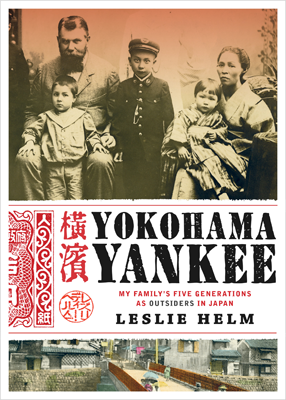 In this episode, Nick speaks with Leslie Helm, author of Yokohama Yankee: My Family’s Five Generations As Outsiders In Japan.
The Helm family’s connection with Japan begins with Mr. Helms’ German great grandfather, Julius, who traveled to Japan as a young man in 1869, looking to make his way in the world. Julius would go on to found Helm Brothers, a company with diverse interests related to what would become Yokohama’s booming port economy. From there, the book’s narrative winds its way through four further generations of the Helm family. Mr. Helm recounts not only the family’s participation in major historical events, but also offers a frank assessment of the personal and intra-family struggles each generation faced while living in Japan. Together, these two aspects make for a compelling read.
Mr. Helm was born and raised in Yokohama and left Japan in the early 1970s to attend university before returning as a journalist to cover Japan for Business Weekand the Los Angeles Times. He currently lives in Seattle, where he is the editor ofSeattle Business magazine.
Also, there is a JET alumni connection. Joshua Powell (Saitama-ken, 2005-07), is responsible for the book’s award-winning design. JETwit previously highlighted his work HERE.
Enjoy!
Nick
If you have not already done so, be sure to “Like” the podcast on Facebook, and follow the podcast on Twitter @letstalkjapan. Additionally, please consider leaving a positive rating and/or review in iTunes.
