




Interview with ‘Beetle Queen Conquers Tokyo’ Director Jessica Oreck
 Article/Journalism, Film, Interview/Profile, Uncategorized
  Comments Off on Interview with ‘Beetle Queen Conquers Tokyo’ Director Jessica Oreck
 The film Beetle Queen Conquers Tokyo explores the history and mystery of the development of Japan’s love affair with bugs, underscoring ancient philosophies that will shift Westerners’ perspectives. JQ Magazine’s Justin Tedaldi (CIR Kobe-shi, 2001-02) talked with producer/writer/director Jessica Oreck on the eve of the film’s New York premiere for Examiner.com. Visit his NY Japanese Culture page here to subscribe for free alerts on newly published stories.
Would you describe this film as a documentary, or something else?
I try not to label films too methodically. Some of my favorite “narrative” films are not “documentary” but certainly seem more honest than films based on facts. So I guess I’ll just keep it simple and call it a movie.
Have you always had an interest in insects and Japan? What made you want to go there to capture these images personally?
I have loved insects since I was a little girl, so when I stumbled onto the Japanese enthusiasm for the same ostracized order, it felt like it was meant to be. I studied filmmaking, biology and ecology in university; I knew I wanted to make films about ethnobiology, so this was the perfect film with which to start.
The Japanese concept of mono no aware (which describes the awareness in the transience of things) is invoked early on in the film. Was this the original thesis before filming, or did this thread to traditional concepts develop later in the process?
I did extensive research before traveling to Japan, and I laid out a 17-page essay that included pieces of Japanese history and philosophy I hoped to incorporate into the film. Mono no aware was just one of the many ideas that were intricately tied together within the architecture of the film as I initially envisioned it. I knew it would be part of the film’s foundation, but as the editing process progressed and I continued to refine the essay and skim off outer details, the concept of mono no aware became more and more pronounced. In this way, editing the footage and writing and editing the narration was a very organic process.
Were there any older Japanese-made films tackling this subject that you watched for reference?
As far as I know there are no other films that address this subject in particular. There are some fantastic Japanese films that have a lot of bugs in them—one of my favorites being Woman in the Dunes. But I think the Japanese film that I watched most often while making Beetle Queen was Kon Ichikawa’s Tokyo Olympiad. That movie is infinitely perfect to me.
Several scenes in the film depict Japanese children’s love of insects. Were the ones you filmed typical of that kind of interest, or were they more passionate than most about this? How would you define Japanese kids’ relationship with the insect world compared to American kids’?
A Japanese child’s relation to insects isn’t that different from an American’s child connection—if you catch them young enough. Most young children don’t have an innate fear of bugs (from my experience watching thousands of them pass through the butterfly vivarium at the American Museum of Natural History). It isn’t until they see dad flinch or mom scream that they learn disgust or fear. What’s different with a Japanese child is that they are encouraged to explore the insect world. They keep them as pets, their dads take them on insect collecting trips, and they travel halfway across the country to watch the fireflies emerge at dusk. I am generalizing, of course, but the phenomenon is, by and large, quite widespread.
In comparison, I believe that a Westerner’s view of the natural world is, in part, dictated by the cultural heritage of what I call the Judeo-Christian syndrome, through which we see the world as a linear chain of progress that culminates in the human form and bestows the power of control to the animals with the least sense of balance. However, I think an individual’s understanding of the natural world is still mostly directly absorbed through the behavior of the people they admire, and that that is why this connection to insects continues to thrive in Japanese culture.
The author and anatomist Dr. Takeshi Yoro is the only person interviewed on-camera for this film. How did you discover him, and were there any other experts or authorities whom you considered speaking with?
Dr. Yoro is a famous guy in Japan, so everywhere we went people asked if we had plans to interview him. Eventually we just decided to call him and, miraculously, he said he would be happy to be interviewed. It was never my intent to have talking heads, but so many of the things that Dr. Yoro said felt like pure poetry—he ended up being the key to some of my favorite parts in the movie.
Generally, what kind of support did you receive from the Japanese people you worked with and filmed? What was their reaction to an American filmmaker exploring what seems to be a uniquely Japanese interest?
Everyone was happy to have us, though they were often confused about why we were making this film. We got a lot of, “What? They don’t sell beetles in America?”
What should more Americans be aware of with respect to the insect world?
Well, I hate to limit the film’s impact to the insect world. To me, the film is about much more than bugs. I have had the opportunity to observe a myriad of reactions. Plenty of people have been surprised by the loss of their fear, or by newfound knowledge, or a novel appreciation for beauty in unanticipated facets of their life. But my favorite story is of a World War II veteran who approached me after a screening of Beetle Queen. He said something to the effect of, “For fifty years I have thought of the Japanese as my enemy. And in the past hour and a half, you have changed that.”
Are there any plans to screen the film in Japan?
Not yet! But we are always looking for opportunities!
Beetle Queen Conquers Tokyo runs from May 12-18 at New York’s Film Forum, with Jessica appearing at screenings on May 12, 14 and 16. Visit www.beetlequeen.com for more info, and sign up for the mailing list at info@beetlequeen.com.
JET alum Michael Auslin testifies before Congress
Academic, Japan Trends Comments Off on JET alum Michael Auslin testifies before Congress
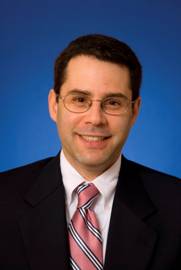 JET alum Michael Auslin testified before Congress in April about the current state of U.S.-Japan relations. Auslin is a professor of Japanese history and politics and currently the Director of Japanese Studies for the American Enterprise Institute in D.C.
http://www.aei.org/speech/100137
by JET alum Michael Auslin
Mr. Chairman, Senator Inhofe, and Members of the Committee, thank you for the opportunity to testify today on the current state of U.S.-Japan relations, and to look ahead at the role the relationship will play in future economic and security developments for both countries. Despite current difficulties in the relationship, I believe that close ties with Japan are essential for the United States to retain a credible strategic position in East Asia and for future economic prosperity in both Asia and America. Yet we must also recognize that relations between the United States and Japan will be more tenuous over the next several years, requiring close communication and a frank assessment of how the relationship benefits each partner.
This past January, Washington and Tokyo observed the 50th anniversary of the U.S.-Japan Alliance, one of the most successful bilateral agreements in recent history. Yet the past seven months of the U.S.-Japan relationship have been consumed with a growing disagreement over whether Japan will fulfill the provisions of a 2006 agreement to relocate Marine Corps Air Station Futenma from its current crowded urban location to a more remote setting on the northern part of the island. Given that the state of U.S.-Japan relations concerns not only the economic relations between the world’s two largest economies, but directly influences the larger strategic position of the United States in the Asia-Pacific region, any substantive change in the U.S.-Japan alliance or in the political relationship that undergirds it could have unanticipated effects that might increase uncertainty and potentially engender instability in this most dynamic region.
To read the whole transcript, go here: http://www.aei.org/speech/100137
WITLife is a periodic series written by professional Writer/Interpreter/Translator Stacy Smith (Kumamoto-ken CIR, 2000-03). She starts her day by watching Fujisankei’s newscast in Japanese, and here she shares some of the interesting tidbits and trends together with her own observations.
Last week there was an interesting article in the NYT about Chinese teachers who are sponsored by their  government (with additional support from local school districts) to come teach here in the States for up to three year. It reminded me of JET, as well as my own experience first learning Japanese in high school. The article featured a young woman teaching in rural Oklahoma, and the cultural roadblocks she encountered along the course of her job (American students lack of geographical knowledge, pregnant teenagers, etc.). I love the quote she provides at the end of the article regarding what she hopes to impart to her students: “I want my students to have a sweet, sweet memory of taking Chinese. They won’t remember a lot of words, but I want them to remember the beauty of the language and the culture.”
It calls to mind the power of teachers and how a good one can have a dramatic effect on your future. As for me personally, I can definitely say that I would not be where I am today without the existence of my amazing high school Japanese teacher, Sensei Watson. It was her unique teaching style and incorporation of non-traditional methods, like showing us 紅白歌合戦 (kouhaku uta gassen or New Year’s Eve Singing Content) and having us write 年賀状 (nengajou or New Year’s greeting cards) before Oshougatsu that initially made me curious about this country that seemed to be so different from my own. I am eternally grateful to her for getting me started on my lifelong journey of discovering Japan!
Job: Lodestar Language School (Nagano)
Jobs Comments Off on Job: Lodestar Language School (Nagano)
Via the naganojet yahoo group:
Lodestar Language School in Okaya is looking for qualified and motivated English Instructors to teach adults, starting in mid June 2010. Teachers will have classes at our clients’ offices in central part of Nagano prefecture.
Pay & Benefits:
- Min.250,000 yen/month (negotiable)
- Furnished private apartment provided at a reasonable rent
- Approximately 1-2 week holidays in May, August and
Xmas-New year’s period
Requirements:
- A bachelor’s degree and a perfect command of English,
- TESOL/CELTA, Japanese speaking ability, an asset
- A proper work visa. If you need sponsorship, 1-year commitment
- for full-time work agreement is required.
- Japanese or International driver’s license
To apply, please e-mail your CV with your photo and a cover letter to feline@k4.dion.ne.jp or contact Harri Satake (Ms.) at 81|266-26-1845.
Only short-listed candidate be contacted. This position is for teachers who are already in Japan.
MEGU Chefs Teach Secrets of Miso This Tuesday
Events, Food & Drink, Japan Trends Comments Off on MEGU Chefs Teach Secrets of Miso This Tuesday

By JQ Magazine’s Justin Tedaldi (CIR Kobe-shi, 2001-02) for Examiner.com. Visit his NY Japanese Culture page here to subscribe for free alerts on newly published stories.
Contrary to its most popular form, miso is not a soup, but a seasoning (usually resembling a paste) made with soybeans and rice or barley fermented for a period of time. It’s also right up there with rice as a Japanese diet staple—in Nippon’s olden days, miso was the fundamental currency exchanged in the market. Now, New Yorkers can treat themselves to a free cooking demonstration and tasting courtesy of Marukome Miso (one of the oldest miso manufactures in Japan) at the French Culinary Institute on Tuesday, May 11.
Presented as part of the Gohan Society and FCI Lecture series with Marukome USA, the demo and tasting is hosted by Chef Noriyuki Kobayashi of MEGU Midtown and Chef Katsuhisa Inoue of MEGU Downtown. The Zagat rated restaurant maestros will apply their Japanese cooking techniques to prepare Western-style dishes, all featuring Marukome Miso. (Insert your own Iron Chef zinger here.)
On the menu for the two-hour showcase: traditional grilled miso onigiri (rice ball); thickly sliced toasted white bread with miso garlic butter; cream cheese and miso egg roll; miso bagna cauda blue cheese and miso paste on baguette with honey; miso minestrone; and washu-gyu steak with miso fond de veau sauce.
Participants will learn how miso enhances foods and flavors, gleaning tips and creative ways to boost its versatility and umami (deliciousness) appeal. And just to be clear: this is good-for-you deliciousness, since miso is made from protein-rich soybeans containing amino acids, boasts a surprisingly low salt content, contains fiber, can aid in lowering cholesterol and preventing arterial blockage, and (smokers take note) is renowned for its mouth-cleansing properties.
Learn the secrets of miso at the French Culinary Institute, 462 Broadway (at Grand Street), on Tuesday, May 11, 3:30 p.m.-5:30 p.m. Admission is free. To RSVP, contact Sarah Marino or Amy Krakow at (212) 710-0529, or by e-mail at sarah.marino@agitproppr.com or amy.krakow@agitproppr.com.
Job (Part-time): Facilitator for Social Media Site
Jobs Comments Off on Job (Part-time): Facilitator for Social Media Site
Via the JETAASC newsletter:
Newly established social media site seeks a facilitator in Los Angeles.
1. Job Description
a. Create groups, upload photos/videos, write blogs and comment on other member’s activity
b. Drive new membership registration and content creation
c. Facilitate members and initiate activity within the site
d. Send/share links and post information about the site
e. Assist site development (upon request)
2. Qualifications
a. Must have more than 800 friends at Facebook and/or followers at Twitter or equivalent site
b. Have good knowledge and interest in sushi, Japanese food, cooking and dining out
c. Social media savvy and good writing skills
d. Big personal photography collection is a plus
Read More
Job: Festival & Exhibition Director at the Center for Asian American Media
Uncategorized Comments Off on Job: Festival & Exhibition Director at the Center for Asian American Media
The Center for Asian American Media (CAAM) , the organization behind the SF International Asian American Film Festival (SFIAAFF), is looking for a festival & exhibition director to lead its public programs and film festival.
The ideal candidate is an experienced manager and programmer who has a vision for Asian American media, is highly motivated and resourceful, and brings a sense of creativity and adaptability. The position requires strong management, oral and written communications skills, as well as a breadth of knowledge and experience in film, video, or media arts, exhibitions, live events, or other public engagement programs. The Festival & Exhibitions Director is part of CAAM’s program team and a larger management team for the organization.
- Duties:
- Create artistic and overall vision and plan for year-round programming
- Work with Director of Programs on vision and goals for SFIAAFF
- Hire, train, and supervise department and specific Festival seasonal staff
- Hire & supervise program curators as needed
- Develop and manage department budget
- Event scheduling and program slotting
- Cultivate and maintain effective filmmaker & distributor relations
- Manage venue and partner organization relations and contract process
- Develop relationships with key film festivals & film industry contacts
- Contribute to development of annual Festival marketing & website plan
- Work with Development & Communications Director and Publicist to generate key press messaging and releases
- Work with Development & Communications Director to identify, solicit, and maintain sponsors for SFIAAFF and other events
Desired Qualifications:
- Demonstrated success in arts programming
- At least five years of experience in management within a non-profit or event production setting
- Strong vision and strategic thinking as well as a commitment to continuous improvement
- Notable communication ability particularly in public presentations and written communications
- Excellent organizational and project management skills
- Flexible to change and resourceful in meeting challenges
- Ability to lead and thrive in fast-paced environments, managing multiple personnel and projects
- Strong managerial skills, particularly in supervision and building effective teams
- Ability to cultivate meaningful relationships with media makers, supporters, industry representatives, and funders.
- Capacity to take initiative, build consensus and to work effectively cross-departmentally
- Deep understanding of Asian American communities and media arts field
- Compensation: Salary commensurate with experience. The position is full-time, exempt, salaried, and includes excellent benefits.
Position open until filled. First round interviews to begin mid-April. Early applications encouraged.
To apply, please send résumé, cover letter, and salary history to:
Festival & Exhibitions Director Hire
Center for Asian American Media
145 Ninth Street, Suite 350
San Francisco, CA 94103-2641
Or by email: karyin [at] asianamericanmedia [dot] org
Internships: Center for Asian American Media & Korematsu Institute
Jobs Comments Off on Internships: Center for Asian American Media & Korematsu Institute
The Korematsu Institute offers internships three times a year: spring, summer and fall (exact dates are flexible). An internship at the Institute offers unique opportunities for students interested in civil rights, education, communications and media, community and youth outreach, and event planning. The program will also help students develop leadership skills in order to foster understanding among different minority communities whose rights have been threatened by religious and racial profiling.
There are many exciting internship and volunteer projects during this early, exciting period of the Institute. Some project areas include archival research, web and social media development, educational curricula, media research and communications, and coordinating fundraising, outreach and museum events.
Depending on your background and interest, we may be able to dedicate most of your internship to one or two of these project areas, however interns are expected to be flexible and willing to take on additional tasks, including administrative work.
Compensation: Our internships are unpaid, but very often, undergraduates can receive college credit or meet course requirements for volunteering.
Requirements: The internship requires a minimum of a one-semester commitment of at least 12 hours per week.
We need individuals who are passionate about our cause and committed to following through on every task to contribute to our Institute’s mission. We are looking for organized individuals who are skilled at multitasking. Web design, social networking and leadership skills are a plus.
Application: Please email the following materials to Charlene Cervantes (charlenec@asianlawcaucus.org):
1) Completed internship application form (pages 2-3). Please print, complete, scan and email the form to us, or write your answers in a Word document and email the Word document to us.
2) Resume
3) Phone numbers and email addresses for two school or work references
Deadline: The deadline for the regular summer 2010 internship has passed. We’ll be looking for fall 2010 applications in July/August.
———-
Fall 2010 Documentary Film Research Internship*
During the summer and fall of 2010, we will have a one-time opportunity for students to work on a documentary film research project at the Institute. This is an excellent chance to learn about the documentary filmmaking process, and to work closely with a highly respected director.
Description: We have access to the vast research and film archives for the Oscar-shortlisted documentary film Of Civil Wrongs and Rights: the Fred Korematsu Story, directed by Eric Fournier. Working closely with Eric and Korematsu Institute director Ling Woo Liu, the documentary film intern will research and identify archival materials (newspaper clippings, etc) and footage (ie extended interviews) that will be most useful for the Korematsu Institute’s web site and educational programs.
Requirements (in addition to those listed above): We are looking for extremely organized, detail-oriented students who are interested in documentary film, research and history, as well as civil rights issues. This position is for treasure hunters, ie people who like digging!
Deadline: The deadline for the summer 2010 documentary film internship has passed. We’ll be looking for fall 2010 applications in July/August.
———-
Internships with the Center for Asian American Media in San Francisco for Digital Media, Film Festival, and Finance/Administration.
Job: Project Associate for Japanese NPO (Maryland)
Jobs Comments Off on Job: Project Associate for Japanese NPO (Maryland)
A Japanese NPO in Annapolis, MD is looking for a project associate to market and promote Kanagawa Prefecture biotech and IT-related industries in the U.S. ($17/hr, paid vacation, sick days, etc). Japanese language skills are not required, but preferred. There is a chance for travel.
DUTIES:
Research and attending meetings, conventions around US.
REQUIREMENTS:
Fluent English
good communication skill
ability to work unsupervised
capability to go on business travels
definite must is an interest in Japan
Japanese language skill is not needed but a definite plus.
This position is a one year only position.
HOW TO APPLY: Interested in these or other Japan related job openings? Contact Interesse International at dc@ iiicareer.com or call us at 571-384-7117.
Current Hiroshima-ken JET Gail Cetnar Meadows, Editor of Hiroshima JET webzine the Wide Island View, shines a light on some of the upcoming events of Japan America Societies…
 Stories from Space: International Space Station Mission — Come hear stories that are out of this world. Koichi Wakata, an astronaut with the Japan Aerospace Exploration Agency, trained at the Johnson Space Center in 1992 and qualified as a Mission Specialist on the Space Shuttle. Dr. Wakata is a veteran of three space flights and has logged more than 159 days in space. He originally is from Saitama, Japan, and attended Kyushu University.
- Date: Saturday, June 19
- Time: 3 to 4:30 p.m.
- Place: Holiday Inn Rolling Meadows, Schaumburg Area (Main Floor), 3405 Algonquin Road, Rolling Meadows, Illinois
- For more information, click here.
- Japanese Conversation Forum — If you love football, this event’s for you. Pro- and college-level football trainer Naohisa Inoue will talk about his climb to his current profession and offer insight into what happens behind the scenes at a football game. This program will be in Japanese only, but people of all skill levels are encouraged to join.
- Date: Wednesday, May 19
- Time: 6:30 to 7:30 p.m.
- Place: Tates Creek Branch Public Library, 3628 Walden Drive, Lexington
- For more information, click here.
 Japanese Girl Stuff: Trends and Innovations in Popular Culture — We all hear a lot in the media about manga, anime and Japanese street fashion, but when it comes to Japanese girl culture, dig a little deeper and you’ll find a whole world of activities that deserve your attention. This presentation by Laura Miller, a professor from Loyola University Chicago, will highlight some of the fascinating but frequently overlooked cultural activities found in Japanese girl culture, including self photography, the divination boom and Abeno Seimei.
- Date: Friday, May 21
- Time: 5:30 p.m.
- Place: Ohio State University Jennings Hall, 1735 Neil Ave., Room 155
- For more information, click here.
- Book Reading — Join JSNC members at Noe Valley’s Omnivore Books to hear author Sarah Marx Feldner read from her new cookbook, A Cook’s Journey to Japan. Sarah spent time teaching English in Japan and later returned to explore her love of food, cooking and Japanese cuisine. In this book she recounts her adventures traveling throughout Japan, sampling home cooking and collecting recipes from everyday people.
- Date: Friday, May 21
- Time: 6 to 7 p.m.
- Place: Omnivore Books, 3885a Cesar Chavez St., San Francisco
- For more information, click here.
Does your Japan America Society have an upcoming event that you’d like to share with JetWit readers? Email Gail Meadows the info.
My wonderful wife Wynne Wu passed away on April 23, 2010 after living with metastatic breast cancer for 4 years. As a result I have not been actively managing the JetWit site recently and not consistently responding to emails (though I have been forwarding job listings I’ve received on to Machiko Yasuda who has been posting them). Additionally, other JetWit contributors have been extremely helpful in keeping the site going, and for that I am greatly appreciative.
For more information about Wynne you can read her blog, which I’ve been updating, at http://wenren.wordpress.com.
-Steven Horowitz (Aichi-ken, 1992-94)
Job: Program Assistant at the Asia Foundation (Washington DC)
Jobs Comments Off on Job: Program Assistant at the Asia Foundation (Washington DC)
The Asia Foundation is looking for a Program Assistant to in their Women’s Empowerment Programs (WEP) unit in its Washington, D.C. office.
ROLES:
- assisting WEP unit in drafting, editing, and proofreading documents and correspondence
- conducting library and internet research on selected topics
- managing and tracking correspondence, meetings, events, stewardship activities, and database for private fundraising efforts
- managing logistical arrangements for thematic activities such as conferences, workshops, meetings, and other events in Washington, New York, San Francisco
- managing accounting for thematic events including preparation of Requests for Payment
QUALIFICATIONS:
- Bachelor’s degree
- one to two years experience providing program and administrative support
- knowledge of office procedures and equipment.
- Experience related to donor relations, fundraising, and communications is preferred.
- strong research, editing, writing, and proofreading skills
- ability to take initiative and work as part of a team as well as independently with minimal supervision
- ability to prioritize responsibilities and shift focus as necessary to provide immediate assistance to team members
- strong computer skills, including knowledge of word processing, database, and spreadsheet software and the ability
- experience organizing and managing events and event follow-up, including interacting with vendors and managing billing matters
HOW TO APPLY:
Please submit your application directly by visiting our website at www.asiafoundation.org/about/employment/ and selecting “Permanent Employment.” When submitting your application please put your cover letter and resume in one document and submit it as an attachment. We will only consider applicants who provide a cover letter including salary requirements along with their resume, limit their resumes to a maximum of three pages, and submit their application prior to the deadline. Applications will be considered on a rolling basis until May 19, 2010. Neither relocation assistance nor sponsorship will be offered for this position. The Asia Foundation is an equal opportunity employer. EOE/M/F/D/V. No phone calls, please.
New online JET group: JETAA Education Professionals
Career Comments Off on New online JET group: JETAA Education Professionals
Are you on LinkedIn? For those of you who are, or might want another incentive to join, there’s a new JET Alumni Association group in the mix.
There’s already the Japan Exchange and Teaching Programme group for current and former participants with over 500 members, but now there is another especially for those looking to continue working in the education field. The JETAA Education Professionals group aims to connect those JET alums in or looking for teaching positions around the world. So if you’re looking to talk to and connect with other JETs working in schools and universities, this would be the place to start.
This Weekend at Japan Society: STEIM Electronic Music Lab
Art, Japan Society Round-up, Music Comments Off on This Weekend at Japan Society: STEIM Electronic Music Lab

By JQ Magazine‘s Justin Tedaldi (CIR Kobe-shi, 2001-02) for Examiner.com. Visit his NY Japanese Culture page here to subscribe for free alerts on newly published stories.
From Yellow Magic Orchestra to Cornelius to the current wave of chiptune artists inspired by classic 8-bit video games, Japan has a rich legacy of electronic music whose influence continues to grow in the age of globalization. Seizing this trend, New York’s Japan Society will close out its spring 2010 performing arts season with a concert by STEIM (Studio of Electro-Instrumental Music) and related events on May 7 and 8.
Based in Amsterdam, STEIM is “the natural course of what we have presented under the category of ‘music,’” said Yoko Shioya, Japan Society’s artistic director. “In fact, there are many internationally active and acclaimed Japanese musicians and composers in this area, and that is why I started to make the program of this genre several years ago.”
The envoys of this sonic summit are Takuro Mizuta Lippit, STEIM’s artistic director, originally from Japan; Yutaka Makino (Japan/Germany), a musician and artist who works in the convergence of sound, science and architecture; ABATTOIR (U.S./Netherlands), a duo comprised of American cellist/vocalist Audrey Chen and Dutch musician/composer Robert van Heumen; digital media composer Yannis Kyriakides (Netherlands) and guitarist Andy Moor (U.K./ Netherlands) of the legendary Dutch punk band The Ex; and dj sniff (Japan/Netherlands), the performer alter ego of Takuro Mizuta Lippit.
“Put it this way,” said Shioya, “the layer of the musicians and composers in electric music in Japan is very thick—therefore, many types of musicians emerge…Japanese musicians in this genre have been quite influential in the international music scene.”
The program kicks off the night of Friday, May 7 with the Artist Talk + Demo, with STEIM artists Yutaka Makino and dj sniff discussing the process of crafting their sounds and sharing their perspectives on the latest international collaborations in electronic music. Japanese sound poet Tomomi Adachi rounds out the panel. Also, a free STEIM Mobile Touch Exhibition on May 7 and 8 will allow visitors the opportunity to make music on some of the artists’ instruments.
Saturday, May 8 showcases STEIM’s Workshop for Youth for ages 10 to 18, giving them a chance to learn more about their methods and test drive some of the instruments themselves. The night’s centerpiece is the Electronic Music Lab concert, a one-time only performance.
What will it all sound like? According to Shioya, “The music you will hear in STEIM’s concert is music which may make some people wonder, ‘Do you call it “music”’…? But…the definition of ‘music’ can be varied, and many Japanese musicians are not intimidated by the conventional perception of ‘music.’
This program shows that this genre of music—improvisational and experimental—is truly borderless.”
STEIM: Electronic Music Lab takes place Friday, May 7 and Saturday, May 8, with complete schedule and ticket information here. Japan Society is located at 333 East 47th Street between First & Second Avenues. Tickets may be purchased by calling the Box Office at (212) 715-1258 or in person at Japan Society (M–F / 10 AM–4:45 PM). For more info, call (212) 832 -1155 or visit www.japansociety.org.
WIT Life #91: More than just mochi
Anecdote Article, Translating/Interpreting, WIT Life Comments Off on WIT Life #91: More than just mochi
WITLife is a periodic series written by professional Writer/Interpreter/Translator Stacy Smith (Kumamoto-ken CIR, 2000-03). She starts her day by watching Fujisankei’s newscast in Japanese, and here she shares some of the interesting tidbits and trends together with her own observations.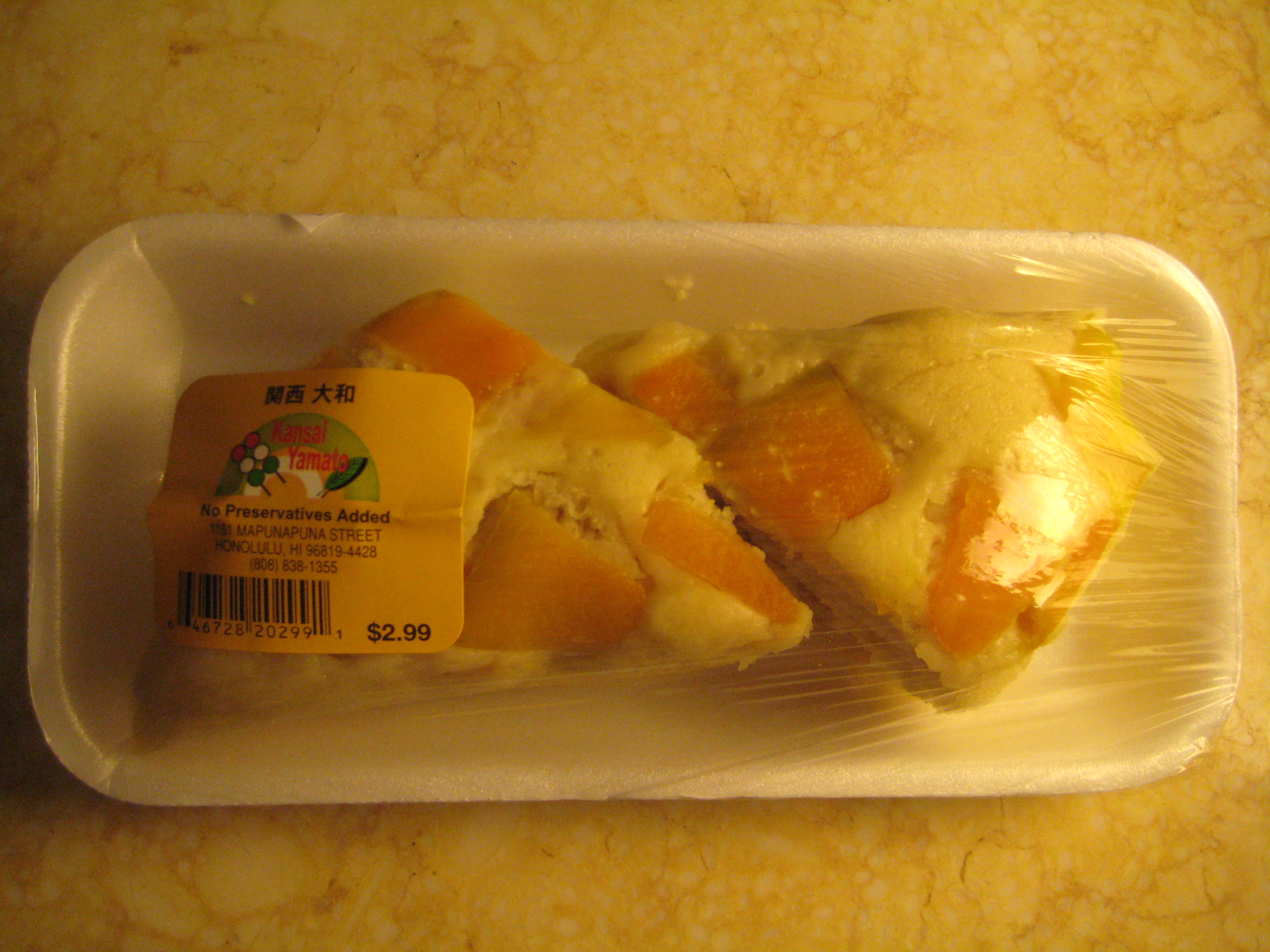
I have already written about my obsession with Kansai Yamato, an amazing mochi maker located in Honolulu’s Ala Moana mall. I am lucky enough to be back in Hawaii with my current group (someone up there likes me!), so of course I had to pay a visit as soon as I got into town. As the shelves were fully stocked, I was able to find some items I had not seen before. In addition to the wide variety of mochi, they had some other goodies like the kabocha bread in the picture on the right. As a huge pumpkin fan, I had to try it. I was expecting something along the lines of Japan’s mushi pan (steamed bread), but it was more substantial, similar to the consistency of a moist muffin (shittori shite iru). These two large piec es cost $2.99 plus tax, well worth the price.
Aside from getting some of the unusual flavors that I come to Kansai Yamato for (peanut butter & chocolate, Oreo, etc.), I got a mochi sampler ($3.99 plus tax) that included a variety of types. Shown on the left, it is comprised of (from top left clockwise) peanut butter, Okinawan sweet potato, kinako with red bean paste and what is labeled as honeydew (though it’s not very green in color). Clearly my sweet tooth will be satisfied for the next few days…
