




JET Alum Authors: Ari Kaplan – “The Opportunity Maker: Strategies for Inspiring Your Legal Career”
 Advice, Books, Career, Notable JET Alums, Writers
  Comments Off on JET Alum Authors: Ari Kaplan – “The Opportunity Maker: Strategies for Inspiring Your Legal Career”
 I recently learned of yet another JET alum author, Ari Kaplan (Hyogo-ken, 1993-94) who practiced law for nine years at a big firm before setting out on his own and, among other things, writing The Opportunity Maker: Strategies for Inspiring Your Legal Career Through Creative Networking and Business Development which became a big hit in the world of lawyers and especially among law students facing an increasingly uncertain job market and career prospects.
It turns out Ari, who speaks regularly at legal career events, has a new book coming out soon on the theme of “reinvention” intended not just for lawyers but for all professionals re-thinking their careers in a society where the ground increasingly seems to shift below our feet.
For more information about Ari, visit his website at www.arikaplanadvisors.com. You can also see media coverage of him on WGN-TV Chicago, in the Wall Street Journal’s Law Blog and in the Houston Chronicle
JQ Magazine: Book Review – “The Thousand Autumns of Jacob de Zoet”
Books, JQ Magazine, Reviews Comments Off on JQ Magazine: Book Review – “The Thousand Autumns of Jacob de Zoet”

"Brimming with potent imagery, the novel is suffused with a generous dose of personal observation and philosophical musing, much of which sounds strikingly contemporary." (Random House)
By Sharona Moskowitz (Fukuoka-ken, 2000-01) for JQ magazine. Sharona works at a literary agency in New York City. She is interested in fresh, new voices in fiction and creative nonfiction.
A former Japanese colleague of mine once described his homeland to me as an “island of repression.” He spoke with mixed emotion of the burdensome pressure Japanese feel to fulfill their cultural and societal duties and how his lifelong dream was to escape for a year and live abroad. He lamented his kinsmen’s gradual loss of “Japaneseness,” fearing that despite the superficial Westernization, or perhaps because of it, Japan was barely keeping up with the rest of the world. Interested to hear more I pressed him to elaborate. He shifted his eyes downward, paused a moment, and took a long deep breath before finally responding, “Maybe…it’s complicated.”
Complicated indeed. David Mitchell’s historical novel, The Thousand Autumns of Jacob de Zoet which takes place at the turn of the 19th century, paints a vivid portrait of a bygone Japan with its rugged landscape, samurai lords and characters who commute by horse and palanquin. Medicine is administered in the form of crude herbal concoctions and the natural world is generally viewed through a lens of superstition. Nevertheless, those who know Japan well will recognize a familiar current running throughout the narrative. To read the book is to get a feel for the seeds of what would eventually flower into the complexity of modern day Japan as we know it.
The story is set near Nagasaki on the island of Dejima where the eponymous hero lives and works for a Dutch trading company. Dejima has been designated a Dutch trading post and its foreign denizens are strictly forbidden from entering the mainland, their interactions with the Japanese governed by rigid rules and careful monitoring. Jacob’s original plan was to come to Japan for five years, accrue a nice fortune and return to Holland to marry his fianceé Anna. His plan, however, is thrown off kilter by unforeseen complications including dubious business practices, a bleak future and most profoundly, his burgeoning secret love for Orito Aibagawa, a Japanese midwife on the island. Orito is highly educated and hardy, unlike the other women we encounter in the novel. Something of a feministic anachronism, she is more concerned with scholarly pursuits than domestic life. With her ironclad will and opinions expressed without equivocation, one imagines that even today she would stand out in Japanese society. (And due to her strong character she still wouldn’t care.)
Orito’s physical appearance is marred by a burn scar on her left cheek, putting her at a considerable disadvantage in finding a suitable Japanese marriage partner. To Jacob, though, her beauty is unique; he is unfazed by her scar and perhaps even more intrigued with her because of it. Unfortunately, he knows that as a foreigner she is entirely off limits to him. Captivated by her exoticness, he ponders, “to what God would a Japanese midwife pray?”
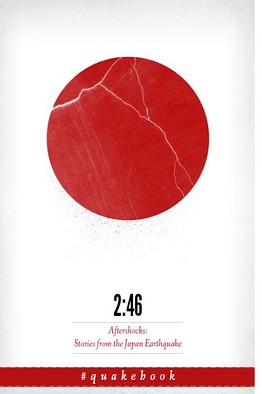 Fukushima City JET Brent Stirling recently put out word to JETAA chapters about Quakebook, “a book of stories, art and photographs that reflected first person accounts of the disaster” which will soon be available on Amazon.com with all proceeds going to benefit the Japan Red Cross. Brent contributed his own story and has also offered to help with marketing and spreading the word. Below Brent provides some insight into the unique process that led to the creation of of the project as well as his own involvement.
I lived in Fukushima City from August 2006 to August 2010 and worked as an ALT there. The recent earthquake, tsunami and nuclear crisis in Tohoku has had me glued to my computer since it began, as has probably been the case with all JET Alumni. Keeping in contact with my friends in Fukushima-ken through Facebook and Twitter, I felt helpless as far as how to help and what to do.
With limited access to news in the first days after the quake, I compiled information from friend’s Facebook status updates, Twitter and a variety of news sources. I sent these updates via Facebook to my friends who didn’t have the time to comb through the news in order to get an accurate picture of what was going on. Updates included news about transportation, gas, areas with running water, wind directions, reactor conditions and radiation levels. Facebook became a source of news for everyone in the prefecture. The current and former Fukushima JET community along with Japanese people worked together in order to get a clear picture of what was going on in Fukushima.
A week after the earthquake, I was sent a link to a blog asking for contributions about the earthquake. The blogger, OurManInAbiko, hoped to create a book of stories, art and photographs that reflected first person accounts of the disaster. He vowed to edit all the submissions and donate all of the proceeds to the Japanese Red Cross. Looking to help anyway I could, I put in a submission about my experience in Canada throughout the ordeal and how proud the JETs and Japanese community had made me throughout the crisis. My submission discusses sensationalism in the media and how the JET community worked together using social media to overcome adversity and share accurate news on the situation as it unfolded. I didn’t know that within 15 hours, OurManInAbiko had received 74 eyewitness submissions from all over Japan, as well as reactions from elsewhere in Asia, Europe and North America.
Through Twitter, the idea of #Quakebook grew. Just as the Fukushima-ken JETs had used social networks in order to keep in contact, #Quakebook was using the networks in order to promote and create a book. People joined in to spread the word and help with the logistics of publishing a book of this magnitude in such a short span of time. Soon after, writer, William Gibson wrote a piece for the book, then Jake Adelstein contributed, Yoko Ono has recently come on board, offering her own piece in Japanese and English Through the work of so many on Twitter from all over the world, #Quakebook began to take off. Articles appeared on the BBC website, the Wall Street Journal and CNN Go to name a few. Amazon has agreed to publish the book, waiving all of their fees with 100% of the money going to the Japanese Red Cross. The all-volunteer team of #Quakebook is now working at getting translations of the book into different languages so that it can be a truly worldwide phenomenon.
The group that comprises the Quakebook team is continually growing. Every person involved is using their skills and their own contacts in order to get the word out to every corner of the globe. The team, while working closely is completely anonymous as everyone is referred to by their Twitter names. My role has been very small throughout the Quakebook marketing process, but I believe in the book and I think it has the potential to bring people who are otherwise removed from the situation in Japan closer to it. In buying the book, not only are people making a donation to the Japanese Red Cross, but they’re also getting the stories of the people involved, the people that this disaster has affected.
I know that all JET Alumni are tied to Japan the same way that I am. Everyone’s time in Japan had a profound affect on where they are now and what they’ve done with their lives. I’m hoping that this connection to Japan will get JET Alumni Associations worldwide to support and promote this book as best they can. By putting a link to the Quakebook website on your blog, printing Quakebook posters for around your neighbourhood or your local library or getting it into the media wherever you are, everyone can make a difference in this project and help with the relief efforts in Japan.
- Pre-order the book at www.quakebook.org
- Excerpts from Quakebook
- Brent’s re-work of his submission
Roland Kelts helps launch debut issue of “MONKEY BUSINESS: New Voices from Japan” with April/May events in NYC
Books, Celebrity, Cultural Outreach, Events, Fundraising, JETs in the News, Notable JET Alums, Roland Kelts, Translating/Interpreting, Writers Comments Off on Roland Kelts helps launch debut issue of “MONKEY BUSINESS: New Voices from Japan” with April/May events in NYC
******************
Via Roland Kelts (Osaka-shi, 1998-99), author of Japanamerica and the contributing editor for MONKEY BUSINESS: New Voices from Japan:
A Letter from A Public Space (Brooklyn-based literary publication):
A Public Space Literary Projects announces the debut issue of MONKEY BUSINESS: New Voices from Japan, with April/May launch events in New York City.
New York City, New York, April 4, 2011—A Public Space (APS) announces publication of the first annual English language edition of Monkey Business: New Voices from Japan (MB), supported by a generous grant from the Nippon Foundation. Three launch programs in New York City in late April and early May will bring together authors, translators and editors from Japan and the US for this first-of-its-kind trans-cultural literary event. Twenty-five percent of all MB sales will go toward the Nippon Foundation/CANPAN Northeastern Japan Earthquake and Tsunami Relief Fund.
Monkey Business is a Tokyo-based Japanese literary magazine founded in 2008 by award-winning translator, scholar, editor and author Motoyuki Shibata. One of Japan’s best known and most highly regarded translators of American fiction, Shibata has won numerous accolades, most recently the 2010 Japan Translation Cultural Prize for his translation of Thomas Pynchon’s Mason & Dixon, and has introduced to Japanese readers works by Paul Auster, Steven Millhauser, Rebecca Brown, Stuart Dybek and Steve Erickson, among others.
Shibata, who was interviewed in the first issue of APS, modeled MB in part on the Brooklyn literary journal. Founded in 2006 by editor Brigid Hughes, A Public Space is devoted to cutting-edge literature—not just from American contributors, but by writers and artists spanning the globe. Each issue presents a portfolio that explores an international literary scene. The debut issue of APS featured a portfolio from Japan, curated and edited by author Roland Kelts (Japanamerica) and MB founder Shibata, and featuring contributions from Haruki Murakami, Yoko Ogawa, Kazushige Abe and others. Issue 1 was praised by readers in the US and Japan and has long been sold out.”
Read More
Event: JET alum author Roland Kelts to speak in London April 14
Books, Celebrity, Cultural Outreach, Events, Japan Trends, JETAA Chapters, Notable JET Alums, Roland Kelts, Writers Comments Off on Event: JET alum author Roland Kelts to speak in London April 14
*******
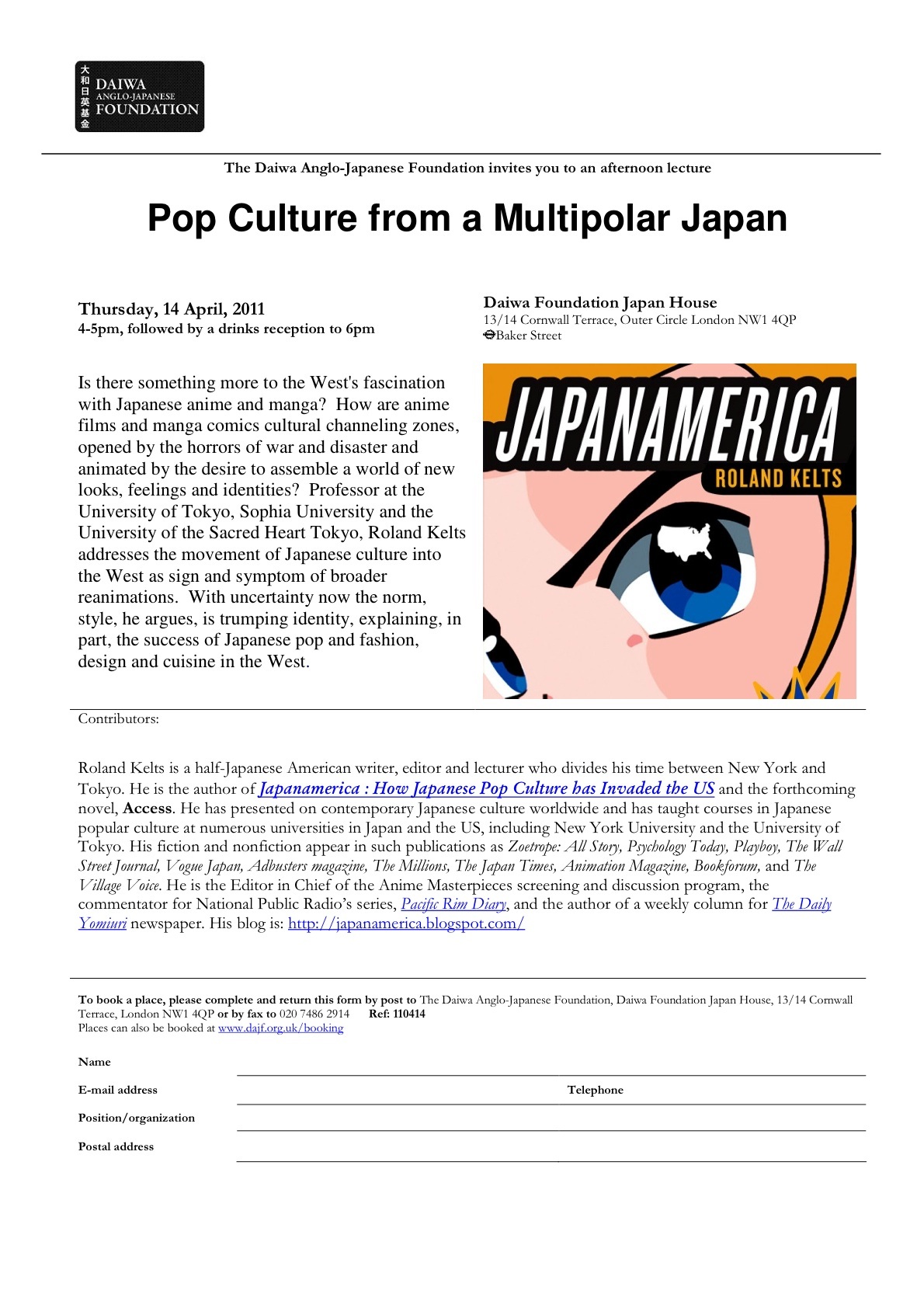
Attention JETAA UK! Join Roland Kelts (Osaka-shi, 1998-99), author of Japanamerica, at The Daiwa Anglo-Japanese Foundation in London on Thursday, April 14 for a talk on “Pop culture from a Multipolar Japan.” Talk is 4-5 pm followed by drinks reception to 6pm.
Note: If you plan on attending, please register for the event at http://www.dajf.org.uk/events/booking-form
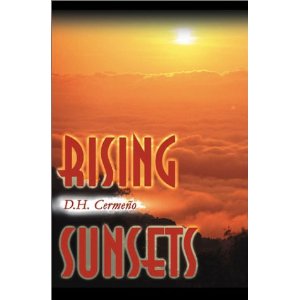
Notable JET Alums: D.H. Cermeño, author of “Rising Sunsets”
Books, Notable JET Alums, Travel/Tourism, Uncategorized, Writers Comments Off on Notable JET Alums: D.H. Cermeño, author of “Rising Sunsets”
 The below was shared by Hiroshima JET alum Angela Perrone, herself a travel writer, who recently met another JET alum book author in the course of her research for JetWit on JET local travel writing.
JET Alum Author: D.H. Cermeño (Hiroshima-ken)
Book: Rising Sunsets (click to purchase via Amazon)
Book trailer on youtube at: http://goo.gl/A4P8a
Website: www.dhcermeno.com
Below is a synopsis of the book along with Cermeno’s biography.
Synopsis:
Rising Sunsets is an enlightening journey through the mind of David Fletcher, a bright and ambitious young man who is determined to conquer the world and prove his unsupportive father wrong. When reality strikes and nothing works out as expected, an unusual opportunity to go to Japan to teach English to schoolchildren presents itself. There, he discovers his true self and finds an inner strength and independence he never knew existed. Throughout the story, David uncovers Japanese culture and easily embraces the traditions until suddenly, those age-old beliefs stand in the way of his happiness. And, through an unexpected encounter with love, the course of his life is changed forever.
 About the Author:
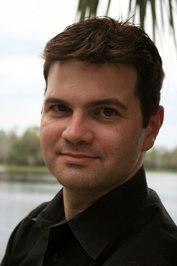
A third generation Florida native, D.H. Cermeño worked in Japan as an English teacher for a year after graduating from Loyola University in New Orleans with a degree in Broadcast Production. Upon returning to the United States, he earned his M.B.A. from Crummer Graduate School at Rollins College and is a Database Marketing Manager in the hospitality industry. In his spare time, he writes, entertains, and volunteers in the local community and supports local theatre. D.H. has traveled extensively throughout Europe, Asia, and Central America and especially loves visiting his extended family in the northern part of Spain. He currently resides in Winter Park, FL. Rising Sunsets is his first book.
Click here to see a list of other JET alum authors and their works. (If you know of others not included in the list, please email jetwit [at] jetwit.com.)
NYT Column: Take Back the Trash by JET alum Bruce Feiler
Article/Journalism, Books, Celebrity, Food & Drink, Notable JET Alums, Writers Comments Off on NYT Column: Take Back the Trash by JET alum Bruce Feiler
“Take Back the Trash“ is a thoughtful column on whether to throw out food in your refrigerator by JET alum Bruce Feiler, author of Learning to Bow, Walking the Bible and several other best-sellers including his recent book The Council of Dads:
http://www.nytimes.com/2011/03/06/fashion/06ThisLife.html?pagewanted=1&_r=2
JETs in the News: Lars Martinson featured in Japan Times article on ex-pat comics
Blogs, Books, Cartoon/Illustration, Celebrity, Interview/Profile, Japan Trends, JETs in the News, Notable JET Alums, Return on JET-vestment, Uncategorized, Writers Comments Off on JETs in the News: Lars Martinson featured in Japan Times article on ex-pat comics

JET alum and 'Tonoharu' creator Lars Martinson.
********
JET alum/cartoonist Lars Martinson (Fukuoka-ken 2003-2006), author of the graphic novels Tonoharu: Part Two and Tonoharu: Part 1, is the focus (along with Adam Pasion, author of the Sundogs anthologies) of a thoughtful Japan Times article by Gianni Simone on comics about Japan “that tell it like it is.”
Here’s the link to the article: http://search.japantimes.co.jp/cgi-bin/fl20110205a1.html
And below are a few excerpts about Martinson from the article:
The comic life of expats in Japan
Americans Lars Martinson and Adam Pasion tell it like it is with cutting-edge manga
By GIANNI SIMONE Special to The Japan Times
Tales of expat life in Japan all too often get blown out of proportion and quickly become picaresque adventures that little resemble real life.
**********
Luckily for us, many comic artists who have lived here seem to be more level-headed and have tackled the subject with a more realistic, no-nonsense approach.
**********
As the title suggests, “Tonoharu: Part Two” is not Martinson’s first foray in the field of expat comics: He self-published the first volume of this four-part saga in 2008 thanks to a grant from the prestigious Xeric Foundation.
Martinson, 33, first arrived in Japan in 2003 to work as an assistant language teacher, and spent the next three years working at a junior high school in a small town in Fukuoka Prefecture. His second stint in this country was in 2008 when he studied East Asian calligraphy under the auspices of a two-year research scholarship from the Japanese government.
Travel had played a pivotal role in his life (he had lived in Thailand and Norway as well), so when he came up with the idea of producing a graphic novel, he decided to make foreign travel a central theme.
“I planned from the start to turn my Japanese experience into a comic,” Martinson says, “even though I didn’t want it to be a mere autobiographical story. So I chose a 20-something American like me as the protagonist, but added a fictional group of eccentric expatriates living in the same rural Japanese town.”
At times living in the middle of nowhere was a challenge. Still, Martinson has no regrets about those three years spent in Kyushu.
“I’m actually a city slicker,” confesses Martinson, “and would love to live in a huge city in Japan at some point. Also, I’m sure that expat communities are awesome, but they can also separate you from the native population. When you live out in the country, you don’t have the option to just hang out with other Westerners, and this can force you to get involved in the host culture in ways you probably wouldn’t otherwise.”
Click here to read the full article: http://search.japantimes.co.jp/cgi-bin/fl20110205a1.html
Click here to read more JetWit posts about Lars Martinson:
Click here for Lars Martinson’s official blog/website: http://larsmartinson.com
NYTimes column: “Dominating the Man Cave” by JET alum Bruce Feiler
Article/Journalism, Books, Celebrity, Notable JET Alums, Writers Comments Off on NYTimes column: “Dominating the Man Cave” by JET alum Bruce Feiler
 A thoughtful column in today’s New York Times on the topic of ESPN and man culture by JET alum Bruce Feiler, author of Learning to Bow, Walking the Bible and several other best-sellers including his recent book The Council of Dads:
http://www.nytimes.com/2011/02/06/fashion/06ThisLife.html?_r=1&src=twrhp
JET alum Bruce Feiler’s TED talk on The Council of Dads (video)
Books, Celebrity, Notable JET Alums, Uncategorized, Video, Writers Comments Off on JET alum Bruce Feiler’s TED talk on The Council of Dads (video)
JET alum Bruce Feiler, author of Learning to Bow, Walking the Bible and several other best-sellers including his recent book The Council of Dads, recently spoke in connection with the TED lecture series:
Sake World e-newsletter by John Gauntner (January 2011)
Books, Celebrity, Notable JET Alums Comments Off on Sake World e-newsletter by John Gauntner (January 2011)
 The January 2011 issue of the Sake World e-newsletter by JET alum and the leading non-Japanese sake expert in the world, John Gauntner (a.k.a. “The Sake Guy”), is now available online. In this issue:
1. Greetings
2. The Suffix “-shu”
3. Announcements and Events: Sake professional course in Japan
4. Sake Education Central
Additional links:
Justin’s Japan: Interview with author Hideo Dan on ‘Lipstick Building’
Books, Interview/Profile, Justin's Japan Comments Off on Justin’s Japan: Interview with author Hideo Dan on ‘Lipstick Building’

- Meet ‘Lipstick Building’ author Hideo Dan at Manhattan’s Kinokuniya Bookstore Saturday, Dec. 11. (Courtesy of Hideo Dan)

By JQ magazine’s Justin Tedaldi (CIR Kobe-shi, 2001-02) for Examiner.com. Visit his NY Japanese Culture page here to subscribe for free alerts on newly published stories.
Hideo Dan is a vice president and attorney at law of a New Jersey-based healthcare company who is now a debut author. Published by NY Seikatsu Press, Lipstick Building is a fast-paced suspense novel based on the author’s 30-year real-life experience in New York as a shosha (trading company) man and a corporate attorney with an international law firm.
Kenji Kadota, who works for a Japanese trading company in New York, is introduced at a party to Suzanna, a beautiful businesswoman from Peru. She proposes a big business opportunity to Kenji—an attractive prospect of exporting Japanese machinery to a major Peruvian construction company. Is this a great business chance, or is something ominous ahead? The story develops quickly into intrigue and adventure, with Kenji and Suzanna crisscrossing through South America and Europe, providing readers entertainment and thrills to the end.
The author will be the subject of a special talk and book signing event Saturday, Dec. 11 at Manhattan’s Kinokuniya Bookstore. I caught up with him to learn more.
How did you come to the U.S.?
The first time I came to the U.S. was in 1971, when I attended Indiana University for a year to study journalism. I could not land a job in journalism, so I started to work for Nissho-Iwai, a trading company, a.k.a. shosha, upon graduation from Osaka University with a law degree. In 1979, Nissho-Iwai sent me to its New York subsidiary as legal manager.
Lipstick Building is based on your three decades of experience at a Japanese trading company. How long did it take to write this book?
Actually, I was with the trading company for 14 years, seven years each for Japan and New York. After that, I left the company and joined a law firm in New York, having had passed the New York Bar Exam while I was with Nissho-iwai American Corporation. After almost nine years with the law firm, I joined Eisai, a Tokyo-based pharmaceutical company, as general counsel for its U.S. operations.
It took nearly one and a half years to write this book. I was able to do it since I was asked to manage Eisai USA Foundation, a charitable organization on the part-time basis, two years ago.
What is your personal experience with Peru? Are there any other international experiences that helped your writing?
Unfortunately, I have never been to Peru—I was planning to do so this year but because of the flood at Machu Picchu, my trip was cancelled. So I did lots of research on Peru on Google and at a library. I had met a very attractive Peruvian student when I was attending Indiana University, which gave me some inspirations for this book. In fact, Europe (Spain and Switzerland) plays a much larger part in this story than Peru. I have been to Spain and Switzerland on business and pleasure on numerous occasions and have been attracted by culture and scenery in those countries. Especially in Spain—I was fascinated by flamenco and its dancers. Flamenco is an important element in this novel.
What are the big differences between working at a trading company in Japan versus the U.S.? Did these differences shape the story?
At the trading company in New York and also at the law firm where I worked, naturally I interacted heavily with non-Japanese people, colleagues and clients, which constantly reminded me of cultural and linguistic differences between Japan, the U.S. and many other different cultures. As someone who is very curious about anything, I enjoyed learning those differences on daily basis. At the same time, I got impressed with striking similarities at a deep human level. My book certainly reflects those experiences and observations.
Click here for the rest of the interview.
Sake World e-Newsletter by John Gauntner (December 2010)
Books, Celebrity, Notable JET Alums Comments Off on Sake World e-Newsletter by John Gauntner (December 2010)
The December 2010 issue of the Sake World E-mail Newsletter by JET alum and the leading non-Japanese sake expert in the world, John Gauntner (aka “The Sake Guy”), is now available online. In this issue:
1. Greetings
2. Rice to Sake: How Much?
3. Did You Know?
5. Sake Basics
6. Announcements and Events: Sake Professional Course in Japan
7. Sake Education Central
Additional Links:
James Kennedy reviews “Pluto killer” book for Wall Street Journal
Article/Journalism, Books, Notable JET Alums, Reviews, Writers Comments Off on James Kennedy reviews “Pluto killer” book for Wall Street Journal
James Kennedy (Nara-ken, 2004-06), author of the acclaimed young adult novel The Order of Odd-Fish, has a great review in the Wall Street Journal of a sugoku omoshiroi book titled, How I Killed Pluto, And Why It Had It Coming by professor of astronomy Mike Brown.
Here’s the link: http://online.wsj.com/article/SB10001424052748704243904575630683559145518.html#articleTabs%3Darticle
Lars Martinson interviewed in Hero Magazine re “Tonoharu: Part 2”
Books, Cartoon/Illustration, Humor, Interview/Profile, JETs in the News, Notable JET Alums, Writers Comments Off on Lars Martinson interviewed in Hero Magazine re “Tonoharu: Part 2”
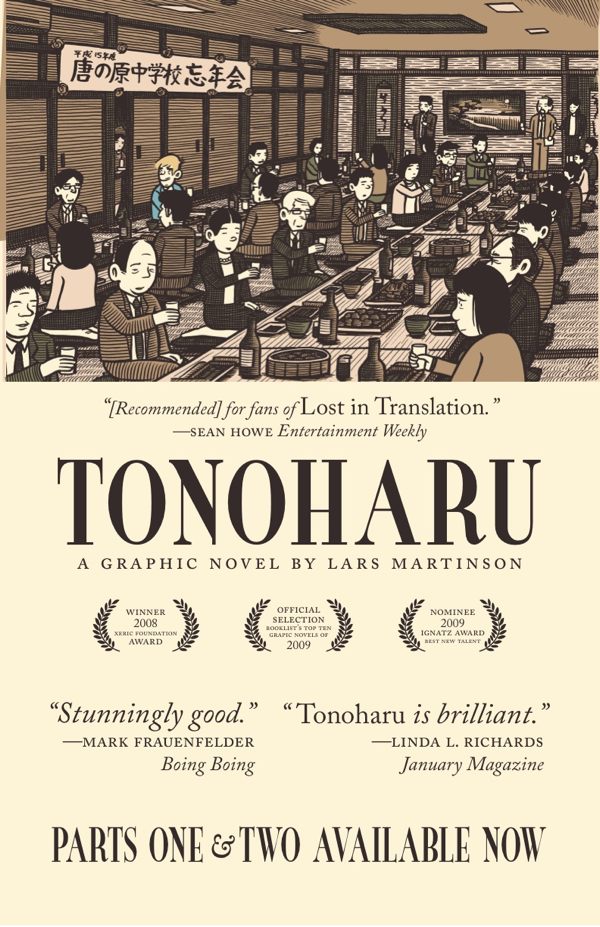 There’s a nice interview with JET alum Lars Martinson in Hero Magazine. Lars recently published Tonoharu: Part 2, a graphic novel about teaching English in Japan that follows up on the success of Tonoharu: Part 1.
Here’s the link to the article: http://heromagazine.org/?p=189
