




Justin’s Japan: Interview with NEA Jazz Master David Liebman
 Article/Journalism, Interview/Profile, Justin's Japan
  Comments Off on Justin’s Japan: Interview with NEA Jazz Master David Liebman

2011 NEA Jazz Master Dave Liebman. (Marek Lazarski, courtesy of the National Endowment for the Arts)
By JQ magazine’s Justin Tedaldi (CIR Kobe-shi, 2001-02) for Examiner.com. Visit his NY Japanese Culture page here to subscribe for free alerts on newly published stories.
Brooklyn-born saxophonist and flautist Dave Liebman is one of this year’s recipients of the NEA Jazz Master Award, which since 1982 is the highest honor the United States bestows upon living jazz musicians. Liebman is best known for his work with the legendary trumpeter Miles Davis, joining his band in 1973 for a 16-month stint and playing on two studio albums, the final ones that Davis would record for the rest of the decade, as well as several live bootleg concerts that are available.
Liebman will appear at a free panel discussion with the other 2011 NEA Jazz Mastersat New York’s Jazz at Lincoln Centeron Jan. 10. (Doors open at 12:45 p.m.)The following night, he will perform at the annual NEA Jazz Masters Awards Ceremony and Concert. For those who can’t attend the sold out show, therewill be a live broadcast on the Newark-based WBGO Jazz 88.3 FM and their website, and Sirius/XM Satellite Radio’s Real Jazz Channel 70. I spoke with the artist about his thoughts on winning this award, his history in Japan, and his intriguing relationship with Miles.
How is one picked to be an NEA Jazz Master?
This is a very good question, which I hope to find out at the ceremony [laughs]…I think past inductees are a part of it—I have no idea. I can’t wait to know, assuming they will tell me the process.
Did you have to campaign for it?
Absolutely not; this was a phone call that came out of nowhere. I think my boss at the Manhattan School of Music, Justin DiCioccio, said he recommended [me], but the truth is, if you go to the site right now, you can put yourself in…the public is free to nominate anybody on the website. So that’s all I know about the process. How it goes from there to deciding [the inductees], I don’t really know, and I’m curious to find out.
You’ve played with Japanese artists and appeared on their albums since the early ’70s. How did that come about, and what were your impressions from visiting Japan through the years?
Of course, I had a lot of action in the ’70s and into the ’80s, but not so much in the last 10 to 15 years. First of all, the Japanese audience at that time was fantastic, and of course Miles Davis was a gigantic hero. The fact that I was with Miles put me right away into a special arena, and sure enough as soon as I got there I recorded. When I was on my first tour with Miles in Japan—it was the only time I went with Miles to Japan—I recorded my first record as a leader [First Visit, with Jack DeJohnette, Richie Beirach and Dave Holland], because Stan Getz’s group was there and the rhythm section was ready to go. I recorded with Abbey Lincoln also that week. In those days, when you went to Japan somehow you ended up with record dates. They were very, very enthusiastic, and business was good.
And then I had, of course, a long-term relationship with Terumasa Hino, the trumpet player, and drummer Motohiko, his brother who passed away a few years ago. I worked many times with the Hinos in Japan at a lot of festivals. Most notably there were two big concerts that I did in the ’80s—one for John Coltrane with Wayne Shorter and then in the ’90s with Michael Brecker, again for Trane ten years later. But as I said, not so much in the last ten to fifteen years. It was fascinating how deep the Japanese audience got into the music and how enthusiastic they were. But it seems to have faded, from what I understand. This generation is not as interested as before. So I can’t speak about the present jazz situation there, but I certainly enjoyed my visits.
Why do you think the Japanese had such an interest and enthusiasm for jazz?
I don’t know. I think they were fascinated by anything American, first of all. They probably loved Dolly Parton, or Sting, or whomever. I think they really liked Western culture. They were fairly prosperous during that period and when prosperity comes, people have more time to do leisure activities, enjoy culture and arts and so forth.
I think the Japanese temperament in general, the arts of Japan—everything from the sword stuff to the tea ceremony to the kimonos to the shakuhachi—they’re a really high class, sophisticated culture; that’s part of their being. And jazz, being as sophisticated as it is appealed to them. I think that’s part of what made them like it more than other cultures in Asia for example. I don’t see China—although we don’t know yet—embracing it the way Japan did, just from the difference of their M.O., the way they are as people. Japan is culturally kind of like the equivalent in Europe of the Germans, who are also very musically sophisticated and are really the best audience to play for as far as educated goes.
When was the last you played in Japan?
I think 2004 or ’05, we did a festival in Kyoto celebrating the history of the city; it was a special festival and I played with my regular working group of the last twenty years. I think that was the last time. You know, in general they just really appreciate art.
Read the rest of the interview here.
Justin’s Japan: Interview with Video Games Live Icon Tommy Tallarico
Article/Journalism, Interview/Profile, Justin's Japan Comments Off on Justin’s Japan: Interview with Video Games Live Icon Tommy Tallarico

See Tommy Tallarico with Video Games Live at the New Jersey Performing Arts Center in Newark Dec. 29 and 30. (Videogameslive.com)
By JQ magazine’s Justin Tedaldi (CIR Kobe-shi, 2001-02) for Examiner.com. Visit his NY Japanese Culture page here to subscribe for free alerts on newly published stories.
Tommy Tallarico is the co-founder and CEO of Video Games Live, a touring showcase that for over five years has combined the excitement of a rock concert with the power of a symphonic orchestra featuring the music of the some of the most memorable video games in history. As the show’s lead guitarist, Tallarico is also the producer of the Video Games Live: Level 2 Blu-ray and soundtrack album, which made history last October by landing on Billboard’s Classical Crossover chart and earning a Grammy nomination for the Civilization IV song “Baba Yetu,” the first video game song ever to be nominated. I spoke with Tallarico prior to VGL’s upcoming shows this week at the New Jersey Performing Arts Center, which will feature special guest performances by legendary female Japanese composer Kinuyo Yamashita (Castlevania).
This year’s VGL tour played around the world to new countries and fans. What were the biggest similarities and differences that you noticed among the crowds and the overall reception you received?
Each country we go to is different. They love different games; they play their favorite different systems. For example, when you’re paying in Japan, World of Warcraft isn’t really popular over there, because there’s not a lot of PC gaming. But when you play in China, World of Wacraft is like the biggest thing ever of all time. [laughs] So, crowds react to different things, and it’s always my challenge to create a set list and find out what the local gamers love and are into. But when you go to places like China and Taiwan and, most specifically, Brazil, the folks down there go absolutely nuts. I mean, they lose their minds. They’re so passionate and so appreciative that something like this exists and would come to their countries. It really shows.
Were there any things that really surprised you when visiting and performing in these new countries?
When we played to over 100,000 people in Taipei in one show, and we showed up at the airport, there’s literally hundreds of people there with signs greeting us at the airport and everything. That was pretty surprising.
Tell us about VGL’s Japan debut at Tokyo International Hall last fall. Which of your idols were you most excited about meeting and working with?
I had worked with everybody before the show, but what was really special about that show was the Koji Kondo performance. Of course, Koji Kondo is the composer of Mario and Zelda. This was the very first time, believe it or not, that Koji Kondo actually performed live in Japan at a video game covert. I found that to be unbelievable, so that was very special. Having both of the women who composed the Castlevania music there on stage was also pretty special as well, but I’d have to say that providing Koji Kondo with his first ever live performance in his home country of Japan was unbelievable. He played a solo piano piece of Mario, and he went into Mario Galaxy as well. It was really incredible.
Each VGL concert is performed by a local orchestra and professional musicians. Besides special guest appearances, are there any twists depending on where you play, or do the musicians understand what you’re trying to express as easily in places like Portugal and Poland as they do in the U.S.?
I think it’s more age delineated as opposed to area. Any young person in the orchestra—and when I say young, I’m talking maybe 45 and under—any young person in the orchestra for the most part knows a lot of the material, is really happy, and they understand it; they know what’s going on. And then some of the older people in the orchestra—not all, but there’s a smaller percentage of people, no matter what country we go to—they’re a little apprehensive at first; they don’t quite understand [it], playing this music that they’ve never heard, yet thousands of young people are screaming and cheering and clapping like it’s the second coming of Elvis Presley or the Beatles or something. And so, they’re confused by the end of it: “What’s all this stuff? World of Warcraft? Sonic the Hedgehog? This isn’t Stravinsky!”
These are classically trained musicians, but once they see the reaction of the crowd and hear the music and how it is, you know, legitimate music, they have a greater understanding and appreciation for video game music. So, what starts out maybe for some of the older, traditional people as apprehension at the beginning of the day, turns into adoration by the end of it. I’ll get people coming up to me during the intermission, and they’ll say, “I’ve been playing the oboe for over 40 years, and I’ve never heard a crowd response like this. When are you guys coming back?” [laughs] So, it’s pretty cool to be able to give that to them.
As musical director, do you always do a full run-through with the orchestra prior to every night’s performance?
For sure. We also send the musicians the music months ahead of time.
When the show was performed in Brazil, it was subsidized by the government for getting young people involved in the arts. How did you arrange that, and what was the public’s reaction to that performance?
It was something that the promoters down in Brazil and myself worked on with the ministry of culture down there, and this is our fifth year back—it was our fifth year in a row down there. It’s something that I wish more governments could see the benefit of this, because we’re looking at tons of people and e-mails or people talking to us at the meet and greet, who all say things like, we brought our daughter to the show last night and we were all sitting around the breakfast table this morning and my daughter said, “Mom, I’d like to start taking violin lessons so I can learn the music to Zelda” or Kingdom Hearts or Final Fantasy or whatever, you know. So those are real stories, and, again, the Brazilian ministry of culture is fantastic to realize that and to say we want young people to be interested in the arts and culture, and what better way than to give them a presentation of something that they know and love and enjoy, and are passionate about. I wish other countries did that; I wish our country did that! [laughs]
Click here for the rest of the interview.
JetWit Writing Opportunities: 12/27/10
Article/Journalism, Volunteer Comments Off on JetWit Writing Opportunities: 12/27/10
 Starting in 2011, JetWit will be teaming up with JETAA New York’s JQ magazine to feature JET alum and Japan-related feature stories! Much like JQ’s Brainstorm Crew postings featuring story ideas, we would like to present the below JetWit Writing Opportunities for real-time instant story posting. This means no more waiting for the publication of seasonal issues! Below are story ideas grouped by JET participants and alumni (JET World) and those more on Japanese culture (Japan World). If you’re a JET or JetWit contributor, we welcome your interest or additional story ideas! Contact JQ editor Justin Tedaldi at justintedaldi [at] jetwit.com to sign up and for more info.
Also, we are now looking for a volunteer who’s skilled in graphic design to help us create a modified JetWit logo! Anyone who wants to get in touch on this can also do so at the e-mail above.
***JET WORLD***
JET ALUM IN UPCOMING DOCUMENTARY ON JAPANESE VIDEO ARCADES
Casey Novotny (Kochi-ken, CIR and Prefectural Advisor) now works at Asia University, and was interviewed as a talking head for the upcoming documentary film 100 Yen: The Japanese Arcade Experience. The film is currently in production, and Casey is happy to share his experiences of being contacted for this unique film for a feature story or interview.
JET ALUMS DEVELOP JAPANESE FLASH APP
Mark Makdad, founder of software company Long Weekend Mobile, has developed with his partner Ross Sharrott the Japanese Flash vocabulary builder app for iPhone, as well as the Rikai Browser for iPad for reading Japanese. Interested in giving these products a spin and writing about them?
JET ALUM MICHAEL JIM GANNON PROFILE
Jim Gannon (Ehime 1992-94) has been the executive director of the Japan Center for International Exchange (JCIE/USA) in New York since 2002. Headquartered in Tokyo, JCIE is one of the leading international affairs organizations in Japan. Jim was also the writer of the “JET Program on the Chopping Block” article published last summer. Talk to him about his work, Japan, and the continuing efforts to support JET in light of what’s happening in Tokyo.
PROFILE A SEATTLE-AREA JET ALUM
Kirsten Henning, Vice President of the Japanese Cultural & Community Center of Washington, is a senior project manager at Pyramid Communications and serves as an active volunteer for the Girl Scouts and Densho. Prior to joining Pyramid, Kirsten worked at the Seattle Mariners as media liaison and interpreter for Ichiro Suzuki and the Japanese press corps and then went on to manage media relations for Team Japan, champions of the inaugural World Baseball Classic. She spent the previous six years in Japan as a JET Program participant and later as special VIP liaison at Park Hyatt Tokyo. She holds a B.A. in East Asian Studies from Barnard College of Columbia University and also studied at the Stanford University Japan Center in Kyoto, Japan.
JET INSTANT NOODLE COMICS
Profile of JET alum artist Shun Endo and his “JET Instant Noodle Comics.” Read samples at https://jetwit.com/wordpress/2010/10/25/instant-noodle-comics-i-wish-facebook-had-the-boss-filter.
JET ALUM/SAKE EXPERT JOHN GAUNTNER
John Gauntner is a JET alum and noted lecturer on sake who travels the world to speak all about this appealing beverage. He has published a score of books on the topic and spoke at Japan Society last May. Visit his website www.sake-world.com.
ISSHONI LONDON – JET ALUM BLOG
London JET alum Vanessa Villalobos writes about Japan-related events, news, review and interviews. This would be a good Q&A piece for any JETs wanting to learn more about how our alumni groups operate overseas. Learn more at:
www.facebook.com/pages/Isshoni-London/119415767689
www.twitter.com/IsshoniVanessa
An innovative telecommunications site for Team Teaching, founded by a JET. www.teamteachers.com
JETSET – CANADIAN JETS IN JAPAN
Melissa C. runs JETset, a site for Canadian JETs in Japan and a well-known resource center for JET participants. See more for a profile at http://www.jetsetjapan.com.
***JAPAN WORLD***
WHERE DO YOU GET YOUR JAPAN FIX?
In an effort to revive the “Japan Fix” posts, we’d like to share a recent discoveries to help readers find a little piece of Japan close to home. How do you get your Japan fix wherever you live? Write it down and send it to Gail Cetnar Meadows (Hiroshima-shi, 2007-10), co-founder of Hiroshima JET webzine the Wide Island View, at gail [at] jetwit.com for the entertainment and benefit of the JET alum community.
ROBIN SAKAI OF GAIJIN POT
Gaijin Pot is a site that offers jobs, apartments and classifieds in Japan. Run by Robin Sakai, it strives to bring the Japanese and expat community together.
REVIEW OF JAPANESE LANGUAGE STUDY OPTIONS IN THE NY AREA
JetWit would like to add a listing as well as a possible review of Japanese language study options in the New York area. One of these is Hills Learning, founded by Jon Hills, who works with JETs in New York to promote his learning center, which teaches four languages to children and adults. Jon also co-presents monthly Asian networking events. Jon is open to a profile. Learn more at www.hillslearning.com.
RESTAURANT REVIEWS
JetWit is accepting reviews on any Japanese restaurant that you’d like to spread the word about. (Even better if they’re run by JETs.) JET alum Jamie Graves runs Kajitsu, an East Village restaurant in New York specializing in shojin cuisine, an ancient Japanese culinary practice developed in Zen Buddhist monasteries.
FILM/BOOK REVIEW
We are also accepting reviews or books and movies (past and present) related to Japan or the JET experience. Whether you’re checking out the theatrical release of a new anime film or digging into new translations of Natsume Soseki’s classics Kokoro and Sanshiro (coming this February), let us be your sounding board.
GOHAN SOCIETY OF NEW YORK
Profile. Based in New York, Gohan Society’s mission is to foster an understanding and appreciation of Japan’s culinary heritage in the United States through outreach to chefs, culinary arts professionals and all who admire and enjoy Japanese culture.
Gohan Society serves as a resource center for knowledge of traditional Japanese ingredients, techniques and food-related products, and as a catalyst for the expansion of that knowledge in the United States.
CONSULATE GENERAL SCHOOL CARAVAN
This is a decade-plus program run by New York’s Consulate General of Japan that sends consulate staff (American and Japanese) to New York high schools and junior high schools to introduce students to Japanese culture, and JET alums have even served as presenters! The purpose of this article will be to increase awareness of the program so more JETAA members can get involved.
KEIO ACADEMY OF NEW YORK
Based in Purchase, NY, Keio Academy is a school for bilingual and bicultural education established by its Tokyo namesake. Besides the various activities the school offers, it also seeks to recruit JET alums for potential work opportunities. We can put you in touch with their business officer, who is happy ro speak with more JETs about the subject.
ASIA SOCIETY OF NEW YORK
In Jan. 2010, NYC’s Asia Society held a concert called “Hogaku,” or Japanese folk instruments played with modern flair. We’ve never profiled Asia Society, so this would be a great time to find out more about how they select their Japanese attractions and exhibitions.
JAPAN INFORMATION CENTER OF NEW YORK
Profile. Take advantage of Japan Information Center to promote Japan!
The Japan Information Center (JIC) is the cultural and public affairs section of the Consulate General of Japan in New York. The JIC’s Services:
– Distributes educational materials, posters and pamphlets on Japan
– Provides speakers on various aspects of Japan to the schools throughout
this region
– Provides information on the Japanese Government Scholarships & the JET
Program
– Distributes the e-newsletter Japan Info
– Loans videos/DVDs and cultural artifacts
Please sign up to subscribe the Japan Info newsletter at www.ny.us.emb-japan.go.jp/en/c/ji_subscription.html.
For more information and to contact JIC, visit their website at www.ny.us.emb-japan.go.jp/en/b/01.html.
Justin’s Japan: An Origami Tree Grows in Rockefeller Center
Article/Journalism, Japan Fix, Justin's Japan Comments Off on Justin’s Japan: An Origami Tree Grows in Rockefeller Center

Minamoto Kitchoan's origami Christmas tree. (Courtesy of Yasushi Sasaki/Two Rivers Associates)
By JQ magazine’s Justin Tedaldi (CIR Kobe-shi, 2001-02) for Examiner.com. Visit his NY Japanese Culture page here to subscribe for free alerts on newly published stories.
Minamoto Kitchoan, the Midtown Japanese wagashi (confectionery) shop with over 150 locations worldwide, is currently sporting a Christmas tree made up of 3,000 origami cranes, or orizuru.
According to store management, “The orizurus symbolize peace. They were made by kindergarten and elementary students in Japan and sent to New York as a tribute to the WTC Visitor Center.” This special Christmas tree was unveiled earlier this month at Minamoto Kitchoan’s Fifth Avenue store in the heart of Manhattan.
“We’ve decided to create an orizuru Christmas Tree in remembrance of tragic events of February 26, 1993 and September 11, 2001,” management explains. “Each orizuru comes with heartfelt hopes for peace.”
This sweet gesture is complemented by Minamoto Kitchoan’s own mission, which management says is to expand their business to every country in the world so that all can further experience and understand the beauty of Japanese culture through traditional Japanese wagashi, whether it’s Fukuwatshi Senbei (Japanese style vanilla cream filled cookie), the savory Benihana Ringo (apple cinnamon flavored bean jelly), or the delectable Kurizutsumi (red Bean paste and large piece of chestnut wrapped and baked in pie crust, topped with black sesame).
Click here to read the rest of the story.
Op-ed on natural gas development by JET alum
Academic, Article/Journalism, JETs in the News, Notable JET Alums, Writers Comments Off on Op-ed on natural gas development by JET alum
 JET alums continue to make their voices heard. Here’s a recent opinion article by New York-based alum Sam Lederer (Shizuoka-ken, 2005-07), a Contributor at Americans for Energy Leadership, on the importance of better regulation over natural gas exploration in the U.S.
CLICK HERE to read some of Sam’s other writings on Japanese energy and environmental policy.
Sam can be reached via his LinkedIn profile and can be followed via Twitter @samlederer
Justin’s Japan: Interview with ‘Fried Chicken and Sushi’ Cartoonist/JET Alum Khalid Birdsong: Part 2 of 2
Article/Journalism, Justin's Japan, Notable JET Alums Comments Off on Justin’s Japan: Interview with ‘Fried Chicken and Sushi’ Cartoonist/JET Alum Khalid Birdsong: Part 2 of 2
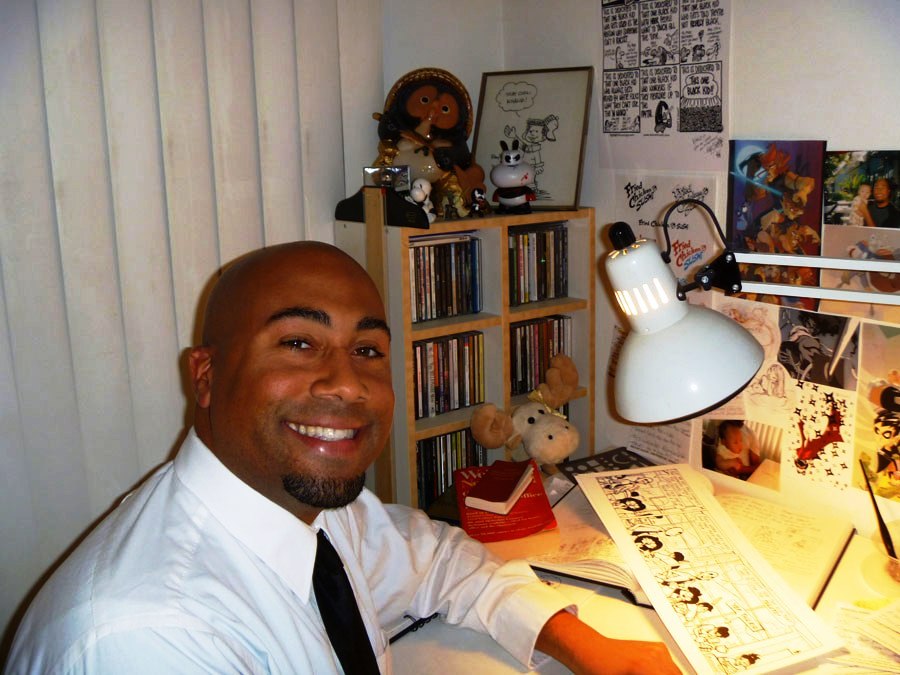
Khalid Birdsong at work. (Courtesy of K. Birdsong)
By
JQ magazine’s Justin Tedaldi (CIR Kobe-shi, 2001-02) for Examiner.com. Visit his NY Japanese Culture page here to subscribe for free alerts on newly published stories.
For Fried Chicken and Sushi, was it a conscious decision to make the lead character black?
Of course, definitely. I’m obviously an African American, and I think that I was concerned because I thought, is anybody going to want to read about this black guy going to Japan? I felt like I wanted to be true to who I am, and there’s a certain kind of way of being able to comment on race, the way that we perceive and look at people. When you go to Japan, they don’t really care who you are, you’re just a foreigner. So it’s a different kind of perception, and I really like that idea. If I keep Karl as black, I can have things that I think about that can be a whole lot easier to write, but I think it would be an interesting thing that you don’t see very often.
What kinds of crazy situations did you observe in Japan regarding Japanese people’s impression of you?
Where do I start? One thing in general is that everyone would ask me questions about America as if everyone in America does the same thing, you know? Since the Japanese people have a shared history and are all kind of the same race, they say, “Well, what is it like in America?” and “What do families eat for dinner in America?”, and it’s always so difficult to answer those questions because I have to say, well, it depends—we have a lot of cultures and so everybody’s different, and people celebrate different things. So that always would frustrate me because they want to generalize and put us all into one box, and it was hard to do. I always found that to be funny and I would start laughing when they would ask me those questions and look at me strangely: “Why are you laughing? This is a very serious question!”
What were some of the funnier or grossly inappropriate things that you experienced there that may or may not make the cut for future episodes of Fried Chicken and Sushi?
Maybe I’ll put this one in there—I don’t know if I’m the only one where this happened—but a lot of students always are asking if you have a girlfriend or something like that. But I would have several students come up to me and ask if I had a lover, like, “Do you have a lover?” And I always would say, “Uhh…well, no.” It was just the kind of English that they would use. I’m sure that you remember that there were just certain words that were always just a little different, and it would make me laugh all the time when they asked me that question, which I would always get.
Did you find yourself in the situation of having to educate your students on certain cultural things?
All the time. About America, and talking about holidays and what people do, just like the whole Christmas thing, like, “How do you celebrate Christmas?”, you know? “Christmas is not for lovers in America and we have family over.” That kind of explanation would go on and on. Certain things, even racial issues—they would learn about Martin Luther King and then they felt like there were no problems for black people in America anymore because of Martin Luther King, and everyone’s treated equally all the time in America. So there are a lot of cultural issues that I would try to discuss and help them to understand. Also, even though we have things that are different, there’s things that are the same, too. They always wanted to know what’s different, but I tried to say that things are still the same. We have families that we love and we like to celebrate and laugh and eat, and so I think that was allowed because they want to act like we’re so different and no one’s like Japanese people, but we actually do share things in common just as people.
How about race-related questions?
Just being tall and getting the students who were just shocked at how tall I was, I got that all the time: “Oh, dekai! Se ga takai!”, “you’re so tall,” and everything. They thought that I played basketball, and I really, really suck at basketball [laughs]; it’s really embarrassing. So I was leaving school one day and the kids were out playing basketball, so of course they called me over, “Oh, Birdsong-sensei, please shoot the basket.” So I thought, okay, sure—I knew I was going to miss, and they’ll see how much I suck, and it’ll be great. So of course I shoot it, and of course I make it, and they’re all like, “WOAH! You’re the greatest!” [laughs] Here we go, living up to the stereotype. Those things didn’t happen much, but they would happen on occasion, that’s for sure.
Click here for the rest of the interview.
Report: “Reinvigorating US-Japan Policy Dialogue and Study” and implications for JET
Academic, Article/Journalism, Japan Trends, JetWit Diary, Return on JET-vestment, Writers Comments Off on Report: “Reinvigorating US-Japan Policy Dialogue and Study” and implications for JET
 There’s a very JET-relevant report just published by the Japan Center for International Exchange titled “Reinvigorating US-Japan Dialogue and Study.” (Notably, JET alum Jim Gannon (Ehime-ken, 1992-94), Executive Director for the US office of JCIE, was involved in the drafting of the report.)
Though the report only mentions the JET Program once (on page 33 of the report), it’s clear that the still largely untapped resource that is the JET alumni community of over 50,000 worldwide (25,000+ in the US) has the potential and the ability to play a significant role in US-Japan relations going forward given the decline in energy and resources devoted to US-Japan policy dialogue and study cited in the report.
The gist of the report is that “the institutional base of US-Japan policy dialogue and study has started to erode in recent years.” However, the report also “finds fertile ground to deepen bilateral dialogue and better leverage the extensive human networks that have developed between the two societies.”
The main obstacles to reversing this trend appear to be:
- a shrinking institutional base for US-Japan relations and failure to fully take advantage of available resources (e.g., the JET alum community);
- reduced funds available in Japan to support these activities (due in a large part to a down economy); and
- to some extent, increased interest in and focus on China
As JET alums, the above trends may be beyond our control. But we are a big part of that extensive human network that needs to be leveraged. And regardless of the obstacles, the ball is in our court to be part of the solution. Tough times call for innovative solutions.
Gambarimashou.
Justin’s Japan: Carnegie Hall to Kick Off JapanNYC 2010 Concert Week
Article/Journalism, Justin's Japan, Music Comments Off on Justin’s Japan: Carnegie Hall to Kick Off JapanNYC 2010 Concert Week
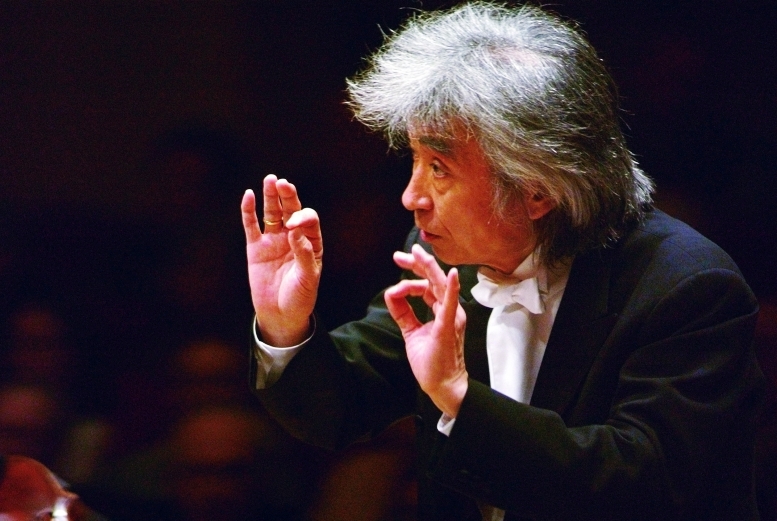
- Maestro Seiji Ozawa, artistic director of Carnegie Hall’s JapanNYC festival. (Mark Corke/New York Observer)
By JQ magazine’s Justin Tedaldi (CIR Kobe-shi, 2001-02) for Examiner.com. Visit his NY Japanese Culture page here to subscribe for free alerts on newly published stories.
Starting this Saturday, Carnegie Hall’s JapanNYC festival will unveil its first citywide series of musical performances. Led by artistic director Seiji Ozawa, who is best known for his record-setting 29-year career as music director of the Boston Symphony Orchestra, the festival’s musical highlights next week will see Maestro Ozawa helming rare overseas concerts by the Saito Kinen Orchestra with conductor Tatsuya Shimono, pianist Mitsuko Uchida and others, plus tributes to the legendary late composer Tōru Takemitsu, considered by many to be Japan’s greatest composer.
Additionally, as part of the Works & Process series at the Guggenheim Museum, a series of performances of Prokofiev’s Peter and the Wolf—performed by the Juilliard Ensemble and George Manahan with visual art by Rei Sato of Kaikai Kiki and narration by fashion designer Isaac Mizrahi—will surely delight music fans of all ages.
The performances follow other city exhibitions and ongoing events under the JapanNYC banner that run through next year, including Yoshitomo Nara: Nobody’s Fool at Asia Society, The Sound of One Hand: Paintings and Calligraphy by Zen Master Hakuin at Japan Society, and On Becoming an Artist: Isamu Noguchi and His Contemporaries, 1922-1960 at The Noguchi Museum in Queens.
JapanNYC returns in March and April 2011 with three weeks of events across New York City, including performances of classical, jazz and traditional Japanese music; contemporary theatre and visual art; noh theater and kyogen plays; modern dance; film; taiko drumming and more.
Click here for the complete performance schedule.
US media coverage of Japan’s economy overly negative?
Article/Journalism, Return on JET-vestment Comments Off on US media coverage of Japan’s economy overly negative?
There’s an excellent letter in the New York Times from Yasuhisa Kawamura of the Consulate General of Japan in New York in which he makes the case that U.S. media coverage of Japan’s economy has been overly negative. The gist of it is, Sure, times are tough in Japan. But they’re also tough in the U.S. and elsewhere. Nonetheless, there’s still a vibrant economy and significant innovation and other activity going on in Japan.
If any JETs or JET alums or Friends of JET would like to weigh in on this, it would be nice to hear some first-hand perspectives from people who are currently living in Japan or travel back and forth frequently.
Here’s a link to the letter: http://www.nytimes.com/2010/11/03/opinion/lweb03japan.html?scp=1&sq=kawamura&st=cse
And here’s the full text of the letter:
To the Editor:
By oversimplifying and exaggerating certain socioeconomic aspects at the expense of the broader picture, “Japan Goes From Dynamic to Disheartened” (“The Great Deflation” series, front page, Oct. 17) depicts some interesting “trees” but misses the “forest” that is Japan today.
Unfortunately, the story’s few anecdotal views do not accurately reflect a diverse nation of 120 million people and one of the world’s largest economies. During these times of severe economic challenges around the globe, similarly pessimistic views about the future could surely be found in almost any Group of 8 country.
Far from being an “afterthought” weary of its global role, Japan remains committed to active leadership in the world. This international outlook is best reflected in Japan’s policies and the vibrancy of its young people. Take Afghanistan, where a $5 billion aid commitment supports 96,000 local policemen, has built 650 schools and has provided polio and other essential vaccines to 47 million children.
Additionally, Japanese youngsters, supported by the affluence of the past decades, enjoy diverse career choices, and, according to recent surveys, the most desirable job for Japanese university graduates remains working in the field of international trade.
Yasuhisa Kawamura
Director, Japan Information Center
Consulate General of Japan
New York, Oct. 29, 2010
Justin’s Japan: Interview with ‘Hiroshima in the Morning’ Author Rahna Reiko Rizzuto
Article/Journalism, Interview/Profile, Justin's Japan Comments Off on Justin’s Japan: Interview with ‘Hiroshima in the Morning’ Author Rahna Reiko Rizzuto

- ‘Hiroshima in the Morning’ author Rahna Reiko Rizzuto. (John Searcy)
By JQ magazine’s Justin Tedaldi (CIR Kobe-shi, 2001-02) for Examiner.com. Visit his NY Japanese Culture page here to subscribe for free alerts on newly published stories.
In June 2001, award-winning Japanese American author Rahna Reiko Rizzuto went to Hiroshima on a six-month fellowship to interview the hibakusha, or remaining survivors of the atomic bomb. Three months later, the September 11 attacks on the U.S. changed everything, from the recollections of the survivors to Rizzuto’s own relationship with her family back in America, including her husband and two young sons in New York.
The result was Hiroshima in the Morning, a memoir released last fall in which the author weaves these threads into a deeply personal story of awakening about how we choose our identities, how we view history, and how we use memory as a story we tell ourselves to explain who we are. I caught up with Rizzuto to discuss her emotional journey and impressions of Japan.
What was the most interesting thing about talking with the atomic bomb survivors in Hiroshima?
I went to Hiroshima initially because I knew so little—almost nothing—about the atomic bomb and its effects. I arrived more than 55 years after the bombing, so I expected memories to be a little hazy. When I first arrived, I met people who were very committed to telling their stories in the interest of peace. They wanted to testify about the power of the atomic bomb and the devastation of war in general in hopes that there would be no more war. That would make their sacrifices worth it.
I was there to write a novel, though, not a factual piece, so what I was looking for was textures and details about what it was like to live in those times, and how one survived war. So what I was getting was not exactly what I was looking for. Their stories were very complete and rehearsed. What happened then, though, was after three months of listening to these testimonies, the September 11th attacks happened within sight of my Brooklyn home. The world changed. And so did their stories.
In hindsight, how different did the interview project turn out because of 9/11?
I don’t think anyone can underestimate the effects of those attacks. They reverberated immediately, all the way to Japan, and we all suddenly felt the world was not safe. We were not safe. And if we weren’t safe, there was no peace, and if there was no peace, the hibakusha realized, then their sacrifice was for nothing.
Almost immediately, this destabilization affected their stories. They began to feel more, and to remember more. Moments and people they had blocked out came back to them. They remembered heat, and color and sound. And they remembered what it felt like to go back to their homes and find their mothers’ bones.
Which of the testimonials affected you the most? Why?
The most unbearable stories were often about children. Children who died; children who tried to save their brothers or parents; children who cremated their parents, at age six, because that was what their parents would have wanted. In the months after 9/11, though, something happened which was very moving and powerful. A number of people came to me to tell their stories. Before then, I had been finding my own interviewees with the help of my translators, but after September 11th, I found out that many people actually knew I was there, listening, and they sought me out because they needed a witness. They needed a safe place to relive, and purge, their memories. And then, it wasn’t just the sad moments. It was also the happy memories of life before, and their family members before. They needed to share those, too, and they gave them to me so their loved ones would not fade away.
Click here for the rest of the interview.
James Kennedy reviews “Pluto killer” book for Wall Street Journal
Article/Journalism, Books, Notable JET Alums, Reviews, Writers Comments Off on James Kennedy reviews “Pluto killer” book for Wall Street Journal
James Kennedy (Nara-ken, 2004-06), author of the acclaimed young adult novel The Order of Odd-Fish, has a great review in the Wall Street Journal of a sugoku omoshiroi book titled, How I Killed Pluto, And Why It Had It Coming by professor of astronomy Mike Brown.
Here’s the link: http://online.wsj.com/article/SB10001424052748704243904575630683559145518.html#articleTabs%3Darticle
Op-ed on U.S. energy policy by JET alum
Academic, Article/Journalism, JETs in the News, Notable JET Alums, Writers Comments Off on Op-ed on U.S. energy policy by JET alum
JET alums are indeed everywhere. Here’s a recent opinion article by New York-based alum Sam Lederer (Shizuoka-ken, 2005-07), a Contributor at Americans for Energy Leadership, on potential directions in U.S. energy policy for the “lame-duck” session of the U.S. Congress.
CLICK HERE to read some of Sam’s other writings on Japanese energy and environmental policy.
Sam can be reached via his LinkedIn profile and can be followed via Twitter @samlederer
Justin’s Japan: ‘Summer Wars’ Anime Aims for Oscar (Film Review)
Article/Journalism, Film, Justin's Japan Comments Off on Justin’s Japan: ‘Summer Wars’ Anime Aims for Oscar (Film Review)
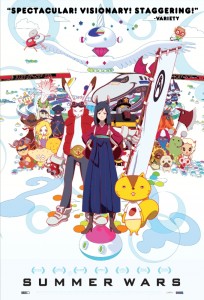
- ‘Summer Wars’ comes to New York’s IFC Center Dec. 29.

By JQ magazine’s Justin Tedaldi (CIR Kobe-shi, 2001-02) for Examiner.com. Visit his NY Japanese Culture page here to subscribe for free alerts on newly published stories.
The opening scene of Mamoru Hosoda’s animated film Summer Wars transports us to the virtual world of OZ, a place where hundreds of millions of users chat, shop and play via customized avatars in a breathtakingly trippy space that owes much to contemporary Japanese pop artist Takashi Murakami and Mamoru Oshii’s Ghost in the Shell movies. But it’s in rural Nagano where most of Summer Wars occurs, and this setting gives it a heart in a world that’s becoming increasingly addicted to online social networks and mobile devices.
The film enjoyed a sold-out reception of its English language premiere at Asia Society yesterday as part of distributor GKIDS’ annual New York International Children’s Film Festival. Fueled by Internet buzz and rapturous word of mouth upon its initial release in Japan last year, the film won a clutch of awards and is an official entry for Best Animated Feature at the 2011 Academy Awards.
The plot: teenage OZ moderator Kenji (voiced by Michael Sinterniklaas) agrees to a “job” escorting his popular schoolmate Natsuki (Brina Palencia) to her great-grandmother’s upcoming 90th birthday celebration at the family’s enormous estate in Ueda. The catch: he’s asked by his secret crush to pose as her fiancé, which hits complications as her crazed extended family enters the picture. To make matters worse, Kenji unwittingly triggers a malicious AI program called Love Machine that threatens not just the existence of OZ, but the rest of the real world with its interdependence on technology. It’s up to the boy—a girl-phobic math prodigy—to gain new confidence in himself in order to right OZ and win his dream girl’s heart.
Click here for the rest of the review.
WIT Life #137: Tokyo Sky Tree
Article/Journalism, Japan Trends, Translating/Interpreting, Uncategorized, WIT Life, Writers Comments Off on WIT Life #137: Tokyo Sky Tree
WITLife is a periodic series written by professional Writer/Interpreter/Translator Stacy Smith (Kumamoto-ken CIR, 2000-03). She starts her day by watching Fujisankei’s newscast in Japanese, and here she shares some of the interesting tidbits and trends together with her own observations.
Very interesting article in yesterday’s NYT about how efforts are being made to reduce the presence of yakuza in various business transactions. The story focuses on the recent construction project of Tokyo Sky Tree, a communications tower. This is a huge change as traditionally yakuza have been an integral part of this industry, often seeking “protection money” from developers. Developers might also call on the yakuza to give an extra push to people unwilling to give up their land. I liked Jake Adelstein‘s quote calling the yakuza “Goldman Sachs with guns.” Check out the adjoining picture to see a comparison between Tokyo Tower and the “new Tokyo Tower,” what Sky Tree was called before decided on its official name. Other candidates were Tokyo Edo Tower, Mirai (Future) Tree, Yume Miyagura (Dreamwatching Tower), Rising East Tower and Rising Tower. It is due to be completed next year.
Interview with Guitar God John McLaughlin
Article/Journalism, Celebrity, Music Comments Off on Interview with Guitar God John McLaughlin
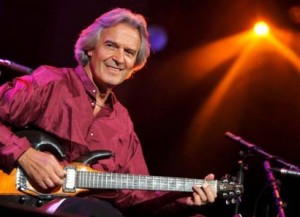
- Grammy-winning musician John McLaughlin. (Absolutely Live Entertainment)

By JQ magazine’s Justin Tedaldi (CIR Kobe-shi, 2001-02) for Examiner.com. Visit his NY Japanese Culture page here to subscribe for free alerts on newly published stories.
Whether you call it electric jazz, fusion, or just good old music, John McLaughlin is the forefather of this style on the six string. From his contributions on classic albums by Miles Davis starting with the landmark In a Silent Way in 1969 to his own work with the massively influential Mahavishnu Orchestra and as a solo artist, McLaughlin is a legend who has continued to record with no signs of slowing down.
His 2009 collaboration with Chick Corea, Five Peace Band, won the Grammy Award for Best Jazz Instrumental Album earlier this year, and in April McLaughlin then released his new disc with the 4th Dimension, To the One (Abstract Logix). Following a concert at New York’s Town Hall last weekend, the artist graciously took the time to answer some questions.
Tell us about your history with Japan. What attracted you most to the culture?
I’ve been studying the cultures of Asia for many years, and I’m very attracted to the culture of Japan, in particular to the impact Zen has had on the Japanese mind and spirit. That said, any in depth study of Zen will bring you to China and the culture of Chan, the forerunner of Zen. In my opinion, there is one singular problem with religions in general: they are exclusive. To me, this exclusivity is not right. Zen and Chan’s “ways” of discovery are non-exclusive. They speak about the reality of everyone having Buddha nature, and the potential of realizing it. This is the aspect of Zen and Chan that appeals to me strongly: the non-discrimination and inclusivity of everyone.
Are there any Japanese musicians of whom you’re a fan? What other kinds of Japanese performing arts do you enjoy?
I am less of a fan of Japanese music than I am to the poetry of haiku strangely enough, though I do enjoy the koto and shakuhachi music. The Zen calligraphy is something for which I have a great admiration.
Why do you think the Japanese possess such a great interest in jazz?
For sure the answer lies in the culture of the Japanese mind. Perhaps because the spontaneity of jazz appeals to their innate sense of honesty. In improvisation, jazz or otherwise, there’s no room to lie.
Click here to read the rest of the interview.
