




Memorial ride for Nagano JET alum Kimberly Hull, killed in car accident in Minnesota
 JETs in the News
  Comments Off on Memorial ride for Nagano JET alum Kimberly Hull, killed in car accident in Minnesota
Very sorry to report that Nagano JET alum Kimberly (Audrey) Yeong Sil Hull (25) was recently killed in a car accident. There will be a memorial bike ride for her on Wednesday, April 27. Details on the Facebook page set up in her honor.
Thoughts and prayers for Kimberly’s family and friends.
Japan Society Presents Hikashu & Tomoe Shinohara in Concert
Audio, Earthquake Tsunami, Japan Fix, Japan Society Round-up, Music, Video Comments Off on Japan Society Presents Hikashu & Tomoe Shinohara in Concert
The Japan Society will be hosting an upcoming concert featuring J-techno pop band Hikashu & Tomoe Shinohara on May 13. 50% of all ticket sales from this event will go to Japan Society’s Earthquake Relief Fund.
Click Here to find out more information about the show.
Posted by Sam Frank, an ALT who taught English in Hiraizumi-Cho, Iwate Prefecture from 2002-2004 and worked in Shirahama-cho, Wakayama Prefecture as a JET from 2004-2006. He currently manages the New York Division of UnRated Magazine and works as a Project Manager/Web Producer at Arrow Root Media.
2 Jobs: Sales rep (NYC) and Admin Asst/Service Coord. (NJ)
Jobs, Uncategorized Comments Off on 2 Jobs: Sales rep (NYC) and Admin Asst/Service Coord. (NJ)
Important: Please make sure to indicate that you learned of these job listings via JETwit if you apply for them. Thanks.
1. Japanese Hair Care Product company in NY is looking for Inside Sales Representative. ASAP!
Location: Downtown NY
Position: Inside Sales
Salary: 30K-40K
Job Description: Read More
JET Alum Terry Vo named Arkansas Cherry Blossom Princess
Cultural Outreach, JETs in the News, Notable JET Alums Comments Off on JET Alum Terry Vo named Arkansas Cherry Blossom Princess
 JET alum and President of Music City JETAA Terry Vo (2007-09, Kumamoto-ken) has been named Arkansas’ Cherry Blossom Princess by the Arkansas State Society in Washington, D.C., and represented the state during the recent 99th National Cherry Blossom Festival, a major annual event in the nation’s capital.
Vo took part in the Cherry Blossom Princess Program, which ran from April 2-9, 2011. The Cherry Blossom Princess Program offers cultural and educational opportunity for young women from across the U.S. and around the world. They are selected by a state society or an embassy based on their leadership, academic achievements, interest in social, civic, community and world affairs. Over 3,000 women have participated in this program since 1948. Princess alumni include Congresswoman Shelley Moore Capito of West Virginia and U.S. Senator Lisa Murkowski of Alaska.
The 2011 Cherry Blossom Princess Program included an array of activities and cultural events requiring the princesses to perform a variety of public relations and diplomatic duties during the week. All of the activities lead to the Grand Ball where the crowning of the U.S. Cherry Blossom Queen takes place and a princess will be selected by chance with the spin of the infamous Wheel of Fortune.
Vo was chosen by her princess class as Miss Congeniality at the Cherry Blossom Grand Ball and Sushi Reception.
Terry-san omedetou gozaimashita!
WIT Life #163: Two Japanese recognized by Time’s Top 100
Translating/Interpreting, Uncategorized, WIT Life, Writers Comments Off on WIT Life #163: Two Japanese recognized by Time’s Top 100
WITLife is a periodic series written by professional Writer/Interpreter/Translator Stacy Smith (Kumamoto-ken CIR, 2000-03). She starts her day by watching Fujisankei’s newscast in Japanese, and here she shares some of the interesting tidbits and trends together with her own observations.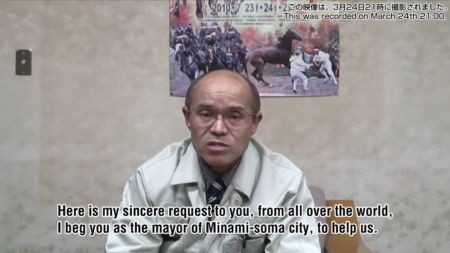
Two Japanese men were selected to be on Time magazine’s annual list of the 100 most influential people worldwide. Both received recognition in regard to their handling of the recent earthquake/tsunami. The first is Mayor Katsunobu Sakurai of Minami Soma, a town 15 miles from the Fukushima nuclear power plant. In an earlier post I highlighted an article about his Read More
Minamisanriku photo blog
Earthquake Tsunami Comments Off on Minamisanriku photo blog
http://msf.ca/blogs/photos/2011/04/05/japan/
Fundraising event: JETAA Music City to co-host Top Chef Tsunami Relief Sake Dinner – 4/21
Earthquake Tsunami, Events, Food & Drink, Fundraising, JETAA Chapters, Networking Comments Off on Fundraising event: JETAA Music City to co-host Top Chef Tsunami Relief Sake Dinner – 4/21
Via JETAA Music City:
JETAA Music City and the Japan-America Society of Tennessee (JAST) will co-host the Top Chef Tsunami Relief Sake Dinner on Thursday, April 21st at Cha Chah in Nashville, TN. Top Chef DC’s Arnold Myint and Top Chef All Star’s Tiffany Derry will be preparing a 5-course meal with sake pairings with proceeds going to the JETAA USA Fund and the Tennessee Tomodachi Fund. The event will also include a Silent Auction.
We are so excited to share that no more reservations are being taken for the event! We are going to have a packed house on this evening for Japan. If you have additional questions, contact Terry Vo at president@mcjetaa.org.

2011 National AJET Awards Nominations!
Contest, Local Government, Notable JET Alums, Return on JET-vestment, Volunteer Comments Off on 2011 National AJET Awards Nominations!

Via AJET:
Every year National AJET recognises some of the outstanding contributions JET participants have made to their local communities. If you know an individual or prefectural AJET chapter that fits this profile, please nominate them for one of the categories listed. Self-nomination is encouraged, so don’t be shy – go for it!
For more info about how to nominate somebody go here:
http://ajet.net/lang/en/2011/04/18/2011-national-ajet-awards-nominations/
Posted by Sam Frank, an ALT who taught English in Hiraizumi-Cho, Iwate Prefecture from 2002-2004 and worked in Shirahama-cho, Wakayama Prefecture as a JET from 2004-2006. He currently manages the New York Division of UnRated Magazine and works as a Project Manager/Web Producer at Arrow Root Media.
Surviving in Japan: How to do a Furikomi (Bank Transfer)
Advice, Blogs, Japan Local, Writers Comments Off on Surviving in Japan: How to do a Furikomi (Bank Transfer)
Posted by Ashley Thompson (Shizuoka-ken, 2008-2010) of Surviving in Japan: without much Japanese and Lifelines columnist for The Japan Times.

Ashley Thompson is "Surviving in Japan: without much Japanese"
I’m going to assume you already have a bank account in Japan. And perhaps you signed up with GoLloyds to transfer money to your bank accounts in your home country, or you made some online purchases, or even have a bill that needs to be paid by furikomi (bank transfer). So now you are at the bank, panicking in realization that the stupid ATM doesn’t have a “transfer” button in English (usually only withdrawal, balance inquiry and deposit). I’ve been there, too.
You can of course, ask the bank employees to help you, but they are only available during business hours, which often end at 3 p.m. Not the best news for those of you (probably most of you) who are working during the day. Or you could take someone with you who can read kanji. But what if those said kanji-readers start to passive-aggressively hint that they are busy and would just love to help but don’t know if they can? Ok…. you think. I guess I’ll try to do it myself. After my constant barrage of questions within a two week duration, I decided to figure out the transfer thing myself – even if it took me ages. Two days and two ATM visits later, I succeeded.
Oh, and try not to sit in front of the ATM the first time you try this with a long line of folks waiting behind you for their turn with the machine. (Avoid after-work rush hour). They may not show it, but they are burning with rage inside, thinking you are clueless, and why would you be so stupid as to do this by yourself?, and that they have families and dinner and shopping and things to get to. And yet, soon enough you will be impressing the socks off all of them, and standing behind them in line thinking the very same thing.
*Note: Some of the information here may not display on the ATM you use, although most of it should at some point. The placement may vary slightly, as may the color and size of buttons. Just look for the particular kanji here, and you’ll be all right.
**Remember to bring along the information from GoLloyds, or the online retailer, or the bill, or whatever it is you have furikomi information for.
Some of this information may or will include:
Account/beneficiary name (for GoLloyds type transfers): 受取人 (うけとりにん, uketorinin)
Financial Institution (the “receiving” bank, or recipient): 振込先 (ふりこみさき, furikomi saki)
Bank name: 銀行名 (ぎんこうめい, ginkoumei)
Branch name: 支店名 (してんめい, shitenmei)
Account Number: 口座番号 (こうざばんごう, kouza bangou)
Remitters/payers name: 振込人名 (ふりこみじんめい, furikomi jinmei)
other words to know:
furikomi (bank transfer): 振込 (ふりこみ) – sometimes this is preceded by お
bank: 銀行 (ぎんこう, ginkou)
account: 口座 (こうざ, kouza)
regular deposit: 普通預金 (ふつうよきん, futsuyokin)
confirm: 確認 (かくにん, kakunin)
correction: 訂正 (ていせい, teisei)
amount: 金額 (きんがく, kingaku)
cancel: 取り消し (とりけし, torikeshi)
go back/return: 前に戻る (まえにもどる, mae ni modoru)
cash: 現金 (げんきん, genkin)
*When doing a furikomi, keep in mind there should be a cancel button on every screen if you need to stop the process at any time (say, a line 20 people long are standing behind you, starting to invade your personal space). You’ll see confirm and correction typically when entering information.
how to do a furikomi (bank transfer)
I just want to apologize in advance for the lack of quality pictures – I had a mad horde of folks surrounding me from behind, waiting for me to hurry up and finish as I discreetly and hastily snapped photos with my iPhone.
1. Make sure to choose 日本語 (Japanese) on the main screen, instead of English (unless the ATM you use has a transfer function in English, then you won’t need to worry about the rest of this tutorial).
2. Press お振込, the polite form of “furikomi”. (Some ATMs may just say 振込). In the picture it is the button on the bottom.

CLICK HERE to read the rest of the post.
National AJET’s “Life After JET”: Sabrina Venture
Advice, Career, Interview/Profile, Uncategorized Comments Off on National AJET’s “Life After JET”: Sabrina Venture
 National AJET shares former JET participants’ experiences – and a little advice – with current JETs in their new monthly interview, Life After JET. Contact lifeafterjet [at] ajet.net to be featured in future posts.
*************
This month, we caught up with a recent JET-Alum, Sabrina Venture. Before JET, Sabrina was a painting major looking to pay off her student loans. As such, she took a job with a Police Department as a dispatcher. She “sought out that job since it had governmental security and lots of perks (never a parking ticket!), good pay, and offered an education pay program.” However, after two years, she was burnt-out — “too many people dying and too much drama and sad stories” — and looking for a break.
That’s where JET came in. Sabrina moved to Kyoto for a year in 2009. She “would have stayed on the JET program but [she] had a fiancé waiting for [her] so [she] returned to the states. [She] took a month off for [her] wedding and applied to other agencies to go back to dispatch.” By then, she was feeling less burnt-out and found a position in a quieter area. “It’s a smaller agency, quieter than New England, and [she’s] living in an adorable apartment right in downtown.”
Sabrina tells us a little bit about her transition back to her previous career in the States (and how she’s infused it with a little of her Japan-experience) and how she keeps her creative juices flowing…
NAJET: Have you experienced any reverse culture shock since coming back? (You’ve probably been keeping busy with the wedding and finding a job and everything, so maybe you haven’t had a chance to worry about that!) If you have, how did you deal with it?
Sabrina: Culture everything-is-cooler-in-Japan shock. I dunno. I really, REALLY miss the beauty of the natural surroundings. I don’t miss the crowds in downtown. I can also go back — maybe not with JET, but there are other ways to get into Japan. I don’t consider JET my one and only shot at time in Japan and knowing I can always go back helps keep any culture shock in check.
NAJET: You’ve returned to a career that you had before JET, does it feel different? I know you said your time on JET helped you get over some of your burnout — but is there anything else? A new perspective?
Sabrina: I returned to the same career — but not at the same place — and I had to take a pay cut due to financial restraints in the county. That sucked. It still sucks. But I DO have a job, and a nice place to live, and while I’m not swimming in cash, I have enough to cover my needs and still save. My time in JET helped my remember to appreciate the things I do have and relax about things I don’t.
I think that before I left I was really focused on the bottom line and early retirement — I was so focused on earning as much as possible that I worked in neighborhoods that were dangerous and dirty. After JET, I’m more focused on the non-monetary aspects to quality of life — I consider things like population, crime rate, natural beauty now instead of just money.
Click here for the rest of the interview.
Justin’s Japan: Tribeca Film Festival Q&A with director David Gelb on ‘Jiro Dreams of Sushi’
Film, Interview/Profile, Justin's Japan Comments Off on Justin’s Japan: Tribeca Film Festival Q&A with director David Gelb on ‘Jiro Dreams of Sushi’
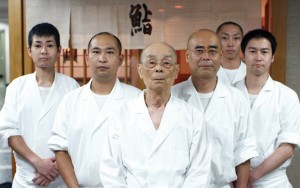
- Jiro Ono, center, with his dream team of sushi masters. (Fortissimo Films)

By JQ magazine editor Justin Tedaldi (CIR Kobe-shi, 2001-02) for Examiner.com. Visit his page here to subscribe for free alerts on newly published stories.
An indubitably delicious documentary, Jiro Dreams of Sushi follows 85-year-old master sushi chef Jiro Ono, owner of the esteemed ten-seat Sukiyabashi Jiro restaurant in Tokyo. From the ins and outs of the tuna auction to the proper way to massage an octopus, the film is a lushly photographed homage to the artisan sushi techniques that earned Jiro an elite three Michelin stars, one of just twenty-six restaurants in all of Japan to receive the honor last year.
This mouthwatering movie makes its New York bow Thursday (April 21) as part of the Tribeca Film Festival. In this exclusive interview, I caught up with director David Gelb to discuss his cinematic celebration of the art of sushi, along with its themes of family, tradition, and the value of hard work.
Tell us about your relationship and history with Japan.
When I was very young my parents took me to Japan on business trips. Even though I was only nine years old the third time I went, I already felt a tangible familiarity and affection to the food and the culture. The toys were definitely cooler. I was as fascinated by a history populated by samurai and warlords as much as the fiction with the giant robots and all that.
What else do you enjoy most about Japanese culture?
My favorite thing about the Japanese culture is the philosophy of specialization and mastery. There is a lot of value and respect for people that devote their lives to a single craft. You don’t see this as much in some Western countries.For example, in the USA, many local butchers have been driven out of business by supermarkets. Because of this, the sons of butchers are looking for other jobs to survive, and the skills they and their fathers have developed will be lost. In Japan, however, you’ll see more businesses dedicated to excellence before profits. Being a master butcher is a highly respected and potentially lucrative enterprise. Even in Japan, however, the consolidation of big business and globalization is a threat to craftsmen in small shops. According to many Japanese craftsmen that I interviewed, it has become harder to find young people that have the patience to learn a skill fully. In Japan, it takes years to become a master butcher.
What were your goals with this film? Did it turn out the way you originally anticipated, or did anything about it change during the production period?
Originally, this was going to be a much more general film that would feature many sushi chefs all over the world. In my mind it was the [celebrated BBC documentary] Planet Earth of sushi. I shot some short test segments, but then changed course and decided on a more human approach, making it just about Jiro and his family. Everything I wanted to convey about sushi was right here at Jiro’s restaurant.
How much time in all did you spend filming? Was it difficult to shoot in Japan and work around scheduling repeat visits to Tokyo?
I shot for the month of February in 2010, then returned to L.A. to work with my editor, Brandon Driscoll-Luttringer. After we spent a few months translating and reviewing the footage, we figured out what the story was about, and I returned to Japan to finish. I had some fantastic help on the ground in Tokyo—my translators Yukako Inoue and Shino Nakamura—to organize everything. Without them, it would have been extremely difficult.
What were Jiro and his family’s ground rules for making the film? Was there anything that you were forbidden from shooting?
The only rule was not to film the duo of incredibly hardworking and meticulous ladies that are in charge of cleaning and the cash register. It is a shame because one of the amazing things about Sukiyabashi Jiro is that it is probably the cleanest and most organized restaurant in the world. Literally not a spec of dust goes unchecked in the entire restaurant. The bottoms of the tables are just as clean as the tops. Women of that generation are particularly shy of cameras, and I was very careful to respect their wishes not to be filmed.
Read the rest of the interview here.
JETAA Chapter Beat 4.18.11
JETAA Chapter Beat, JETAA Chapters Comments Off on JETAA Chapter Beat 4.18.11
Jonathan Trace (Fukuoka-ken, 2005-08) takes us on a walk around the JET Alumni community for another edition of JETAA Chapter Beat.
- Nihongo Dake Dinner – Tuesday, April 26th, 7:00 at Mama Mexico on 49th St. Brush up on your Japanese with friends and alumni this month in NY.
- Japan-a-Mania – Saturday, April 30th, 12:30 to 4:30 at Big Brothers Big Sisters on 30th St. Partner with fellow JET alumns, Big Brothers Big Sisters and NY de Volunteer in teaching NYC kids about Japanese culture.
- East Bay Networking & Nomikai Happy Hour – Thursday, April 21st, 6:00 at Bijou Restaurant and Bar in Hayward. This month’s event begins at the Hayward City Hall to celebrate Shannon Honda as he is installed as Secretary of the Funabashi-Hayward Sister City Association, followed by drinks at the Bijou.
- Disaster Relief Benefit Recap – April 2nd: We had over 50 people attend – which was a great turnout considering the short notice and competing weekend events. In the end, we received over $1,900 in donations! All of which will go to the Japanese Red Cross. We would like to thank all JETAA members, family and friends, for coming out to support this cause. –JETAA Texoma
What happened at your chapter’s event? If you attend(ed) any of these exciting events, JetWit would love to hear about them. Just contact Jonathan Trace with any info, stories or comments.
Justin’s Japan: Deep Purple Guitarist Steve Morse Weighs in on the Japan Catastrophe
Interview/Profile, Justin's Japan, Music Comments Off on Justin’s Japan: Deep Purple Guitarist Steve Morse Weighs in on the Japan Catastrophe

Steve Morse, far right, with his Deep Purple bandmates. (Ellenwood Artist Group)
By JQ magazine editor Justin Tedaldi (CIR Kobe-shi, 2001-02) for Examiner.com. Visit his page here to subscribe for free alerts on newly published stories.
Throughout its career, Deep Purple–who formed in England in 1968 and released their debut album that year–has sold over 100 million albums worldwide. Revered in Japan, their iconic rock hits include “Smoke on the Water,” “Highway Star,” and “Woman from Tokyo.” After a four-year hiatus from American shores, the band’s upcoming tour, called Deep Purple: The Songs That Built Rock, finds them returning with a symphony orchestra.
In this exclusive interview, I spoke with Steve Morse, the group’s guitarist since 1994, about the tour, and his thoughts on the cataclysmic events happening in Japan.
Regarding the recent catastrophe in Japan, is the band planning to do any special shows or benefits at this point?
No, we haven’t gotten anything that we’re privy to at the moment. I think the thing in Japan is, they sort of differ from a Third World country that just totally doesn’t know what to do. The people of Japan are so incredibly organized and capable, I don’t know how anybody can help them that isn’t right there. They need all kinds of support. The logistics of getting what they need to them is obviously the problem—it’s not being able to afford it, as far as what I’ve seen. And don’t forget that at this time I’ve got a limited view, because I’m working all the time [Morse was touring with the band in Eastern Europe during this interview], and I can’t just turn on the TV and get anything set to a certain very narrow international news station.
So from my point of view, it looks like they need more logistical support than moral support to raise more money for food or anything. I could be wrong, but it looks like they’ve got that part covered, and the government is willing to do whatever it takes to get the people back on their feet and working again. But they’re handling some really amazing problems right now, and one last thing that I get from that is how incredibly dignified they are in such a time of stress.
Of course Deep Purple has a long relationship with Japan and its people, making live albums recorded there something special long before bands like Cheap Trick came along. What’s it like when you go over there as a member of the group?
Deep Purple has very old acquaintances, like promoter Mr. Udo, and everybody knows people there, so it’s a friendly, familiar place. And like I said, it’s so organized and dignified, it’s just wonderful. It’s wonderful to see a guy driving a cab that’s spotless, with white gloves on, and that’s any cab you get into.
The trains, they come exactly on time, they leave exactly on time, and they go really fast. So a lot of times we just ride the trains, because it’s the best way to go. And when you’ve got mass transit that’s that organized, even in an earthquake zone, it’s still the way to go. It beats traffic, you know? And whenever we get mass transit that’s that organized and that cool and that fast and that reliable, I think then America could really cut down on one person per Suburban, you know? (Laughs.)
Is there any place that you haven’t played yet that you’re looking forward to?
Oh, yeah. I’d like to see—and this is not a joke—Antarctica. Because I’m fascinated with technology and how people cope with things. Since I’m a member of Deep Purple, and have played outside in the snow on top of a mountain, in a desert (laughs) and in a monsoon in Korea, I think, outside, getting drenched, it seems like if we can play anywhere, we might as well go to the most extreme gig possible, and that would be Antarctica. Maybe even the North Pole, I don’t know. But there’s some parts of Africa that we haven’t been to, and that would be interesting, especially if they were able to accommodate all the power and logistics for the band. The adventure never stops.
Read the rest of the interview here.
Life After the B.O.E.: Outside of Class
Cartoon/Illustration Comments Off on Life After the B.O.E.: Outside of Class
Life After the B.O.E. is a comic series about the JET experience by David Namisato (Aomori-ken, 2002-2004), a professional illustrator currently living in Toronto.
Visit David’s website at www.namisato.org.

Justin’s Japan: New York’s Blue Note Benefit for Japan concerts to stage two-night support stand
Article/Journalism, Justin's Japan, Music Comments Off on Justin’s Japan: New York’s Blue Note Benefit for Japan concerts to stage two-night support stand
- The Blue Note Jazz Benefit for Japan concerts will be held at New York’s Highline Ballroom April 18-19. (Blue Note New York)

By JQ magazine’s Justin Tedaldi (CIR Kobe-shi, 2001-02) for Examiner.com. Visit his page here to subscribe for free alerts on newly published stories.
Japan has always been there for jazz. Now, jazz is giving back.
The Blue Note New York will host a harmonious benefit at Manhattan’s Highline Ballroom for two consecutive nights beginning Monday (April 18), with all of the ticket proceeds to be donated to the Japan Relief and Recovery Fund spearheaded by Direct Relief.
The event is being organized by talent buyer Seiko Kinoshita, who has worked at Blue Note New York since 1996. “As the details of the disaster unfolded, I felt sad and frustrated that I couldn’t do much to help, being so far away from my home country,” said the Fukuoka native. “Having worked in the jazz industry for most of my adult life, I decided to organize a benefit concert and was very encouraged by the willingness of the artists, as well as their agents and managers, to support the event. I believe that every little bit helps, and I want the Japanese people to know that New Yorkers and the jazz community care deeply about them and their country and want to do what they can to help.”
For the last 23 years, Blue Note has maintained clubs in multiple Japanese cities, with current establishments in Tokyo and Nagoya. Ron Carter, the distinguished jazz bassist who will be among the all-star musicians at Highline on April 19, wrote of his concerns and appreciation for the Japanese people: “We share the grief of the enormous loss of life and displacement of the Japanese people. I will pray for Japan’s fast recovery and will do everything in my power to help. The Japanese jazz fan is the most important supporter of my music, and I am always grateful for the years Japan has stood by my side.”
Click here for the complete story.
