




WIT Life #286: 和食
 Film, Food & Drink, Translating/Interpreting, WIT Life, Writers
  Comments Off on WIT Life #286: 和食
WIT Life is a periodic series written by professional Writer/Interpreter/Translator Stacy Smith (Kumamoto-ken CIR, 2000-03). She starts her day by watching Fujisankei’s newscast in Japanese, and here she shares some of the interesting tidbits and trends along with her own observations.
This weekend I had the chance to check out the documentary Washoku at Cinema Village, where it will be playing through the end of the month. It features interviews with sushi chefs and other Japanese food proprietors, and asks them about their philosophy, preparation and overall view of Japanese food. Many of them in talk in detail about the sacrifices they make for their craft, and how much pride they have in their work. This film is truly a must see for all washoku lovers.
One of the tidbits I found interesting was the discussion of “umami,” or the fifth taste. In one part, they were talking about the “aku” or scum that appears on the top of soup when it is being cooked, and how in Japan Read More
WIT Life #285: Japanese Stars in Recent American Cinema
Film, Translating/Interpreting, WIT Life, Writers Comments Off on WIT Life #285: Japanese Stars in Recent American Cinema
WIT Life is a periodic series written by professional Writer/Interpreter/Translator Stacy Smith (Kumamoto-ken CIR, 2000-03). She starts her day by watching Fujisankei’s newscast in Japanese, and here she shares some of the interesting tidbits and trends along with her own observations.
Lately there have been a bonanza of films being screened here in the city made by American directors starring Japanese actors.
One is Kumiko the Treasure Hunter, currently playing at IFC, Nitehawk Cinema and BAM. It features the ever fabulous Rinko Kikuchi as a discontent OL who is dealing with a harassing boss, insipid colleagues and a mother who is nagging her to get married. She is totally disconnected from the world around her, with her only salvation being her pet bunny and her worn out VHS tape of the movie Fargo.
She watches the scene where Steve Buschemi’s character buries the money over and over while taking meticulous notes, and is convinced that the treasure is still there and she is the Spanish conquistador who must find it. Kumiko eventually makes it to the Midwest, but linguistic and other challenges Read More
WIT Life #284: Durham’s Dashi Ramen & Izakaya
Food & Drink, Translating/Interpreting, WIT Life, Writers Comments Off on WIT Life #284: Durham’s Dashi Ramen & Izakaya
WIT Life is a periodic series written by professional Writer/Interpreter/Translator Stacy Smith (Kumamoto-ken CIR, 2000-03). She starts her day by watching Fujisankei’s newscast in Japanese, and here she shares some of the interesting tidbits and trends along with her own observations.
I was in Raleigh, NC this past weekend for an interpreting conference (hosted by the fabulous Carolina Association of Translators & Interpreters), and I wanted to check out the new Japanese influences as it had been a while since I had visited the area. After going to see a band in downtown Durham, I was looking for a place to grab a drink. I hoped to come across somewhere promising close to the venue, so was thrilled when I saw a sign for Dashi Ramen Shop & Izakay a.
a.
Unfortunately the downstairs ramen shop had closed at 10:30 (on Saturday night?!), but the upstairs izakaya was still open with a limited menu. I was happy to find a wide selection of Hitachino beers, including an Espresso Stout I had never tried before. Of course I needed some Read More
I’ll Make It Myself!: Recipe: Pear-Almond Cake [Dairy-Free]
Blogs, Food & Drink, I'll Make It Myself, Writers Comments Off on I’ll Make It Myself!: Recipe: Pear-Almond Cake [Dairy-Free]
L.M. (CIR Ishikawa-ken, Anamizu, 2009-11) is the editor of The Ishikawa JET Kitchen: Cooking in Japan Without a Fight. Ze works in international student exchange; writes I’ll Make It Myself!, a blog about food culture in Japan and the US; curates The Rice Cooker Chronicles, a series of essays by JETs and JET alumni on the theme of cooking/eating and being alone in Japan; and admins The JET Alumni Culinary Group on LinkedIn.
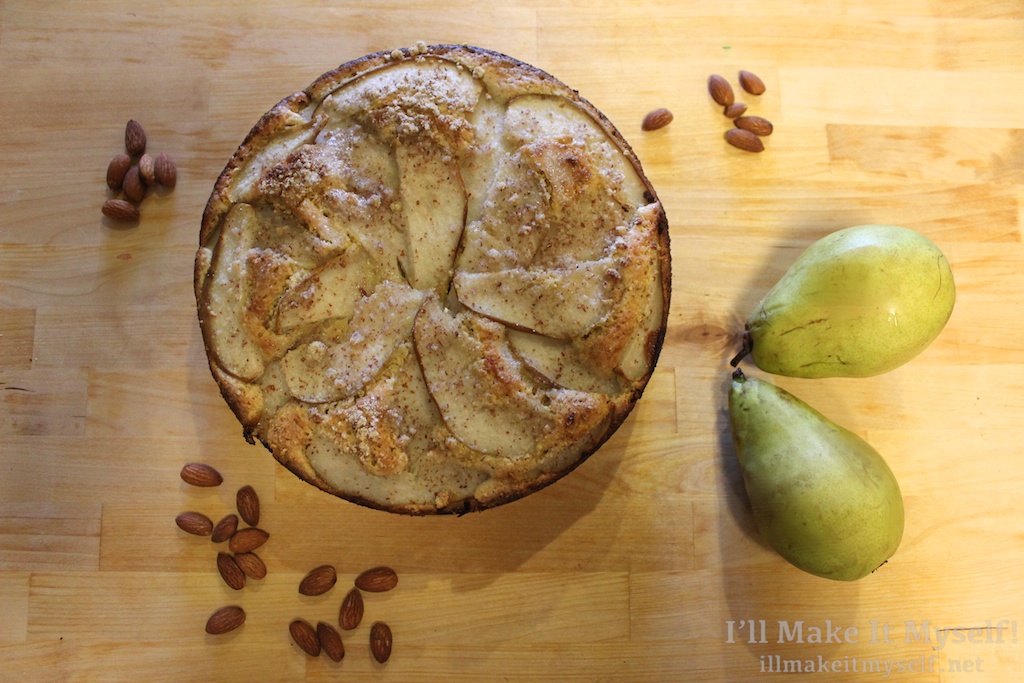
This “cake” occupies a nebulous area somewhere between dessert and cornbread. Almond meal, whole-wheat pastry flour, and cornmeal add a toothsome bite to the soft, sweet pears. I brought this to a potluck as dessert, but I liked it even better when I served it for brunch alongside a frittata and baked oatmeal.
Western pears (yônashi, 洋なし) can be a little tricky to find in certain regions and are not available year-round; the biggest producing regions are Tohoku and Koshinetsu, especially Niigata. Almond flour, whole-wheat pastry flour, corn meal are usually available in the baking section of supermarkets. (See notes for the translated ingredient list.)
I’ll Make It Myself!: Add a Dash of Cultural Imperialism: Japanese Food and Cooking (1956), Part 3
Blogs, Food & Drink, I'll Make It Myself, Writers Comments Off on I’ll Make It Myself!: Add a Dash of Cultural Imperialism: Japanese Food and Cooking (1956), Part 3
L.M. (CIR Ishikawa-ken, Anamizu, 2009-11) is the editor of The Ishikawa JET Kitchen: Cooking in Japan Without a Fight. Ze works in international student exchange; writes I’ll Make It Myself!, a blog about food culture in Japan and the US; curates The Rice Cooker Chronicles, a series of essays by JETs and JET alumni on the theme of cooking/eating and being alone in Japan; and admins The JET Alumni Culinary Group on LinkedIn.

Part 3 on a series about Stuart Griffin’s Japanese Food and Cooking (1956).
Ch. 2: Rice Dishes
Griffin’s writing style reminds me of culinary gaslighting. He bounces between extolling the deliciousness of Japanese food and calling it gross; he urges his fellow expats (or, rather, their wives) to keep an open mind and expand their palates while simultaneously telling them that foreigners don’t like this food or that food, implying that American cuisine is normal and Japanese cuisine is a curiosity.
I’ll Make It Myself!: Add a Dash of Cultural Imperialism: Japanese Food and Cooking (1956), Part 2
Blogs, Food & Drink, I'll Make It Myself, Writers Comments Off on I’ll Make It Myself!: Add a Dash of Cultural Imperialism: Japanese Food and Cooking (1956), Part 2
L.M. (CIR Ishikawa-ken, Anamizu, 2009-11) is the editor of The Ishikawa JET Kitchen: Cooking in Japan Without a Fight. Ze works in international student exchange; writes I’ll Make It Myself!, a blog about food culture in Japan and the US; curates The Rice Cooker Chronicles, a series of essays by JETs and JET alumni on the theme of cooking/eating and being alone in Japan; and admins The JET Alumni Culinary Group on LinkedIn.
Part 2 of a series on culinary cultural imperialism in Stuart Griffin’s Japanese Food and Cooking.
Yet, in the fifth paragraph, he goes right back into making the sort of judgments that put people off trying new foods:
Foreigners make wince at the first reading of the following paragraphs, but this a mistake correctable in the eating (1).
While he’s right that trying new foods prepared well is often the way to throw off squeamish assumptions about their perceived foreignness and potential unpleasantness, presenting these types of fish as “this is kinda gross but try it, you’ll like it!” a rather ineffectual way to go about it.
I’ll Make It Myself!: Add a Dash of Cultural Imperialism: Japanese Food and Cooking (1956), Part 1
Blogs, Food & Drink, I'll Make It Myself, Writers Comments Off on I’ll Make It Myself!: Add a Dash of Cultural Imperialism: Japanese Food and Cooking (1956), Part 1
L.M. (CIR Ishikawa-ken, Anamizu, 2009-11) is the editor of The Ishikawa JET Kitchen: Cooking in Japan Without a Fight. Ze works in international student exchange; writes I’ll Make It Myself!, a blog about food culture in Japan and the US; curates The Rice Cooker Chronicles, a series of essays by JETs and JET alumni on the theme of cooking/eating and being alone in Japan; and admins The JET Alumni Culinary Group on LinkedIn.
My friends, knowing I love food history, gave me a copy of an English-language Japanese cookbook as a parting gift. It’s been quite some time since I’ve written about SCAP (Supreme Commander of the Allied Powers), the US presence in Occupied Japan from 1945-52. In grad school, I wrote about SCAP decrees regarding film, and the micro-management of Japanese media to “promote democracy.” This is a bit of a different look–not a government decree from above but a cookbook created by and for the post-Occupation (1956) expat who wants to make Japanese food at home in Japan. Griffin’s cookbook is a very telling sociological text in that it captures the general colonialist attitudes of the expats toward Japan as an occupied nation and of gender norms (for both Japanese and American women). Additionally, the book provides insight into the introduction of Japanese cuisine to Americans and to the US through its explanations of ingredients and dishes as well as the translations of some of the terms used.
Join me on this multi-part descent into the bowels of cultural imperialism in the kitchen!
WIT Life #283: Cape Nostalgia
Film, Translating/Interpreting, WIT Life, Writers Comments Off on WIT Life #283: Cape Nostalgia
WIT Life is a periodic series written by professional Writer/Interpreter/Translator Stacy Smith (Kumamoto-ken CIR, 2000-03). She starts her day by watching Fujisankei’s newscast in Japanese, and here she shares some of the interesting tidbits and trends along with her own observations.
I’ve been on the road for the majority of this month, and have been glad to escape the cold weather. Now that March is around the corner, hopefully temps will warm up and we can look forward to spring and sakura season! I was lucky enough to finish my business trip in Honolulu, which as usual was flooded with Japanese tourists, and took a vacation afterwards in Kauai, which was peacefully free from them. Before that my interpreting took me to Washington, Minneapolis and Portland, and I found plenty of fun Japanese influences along the way.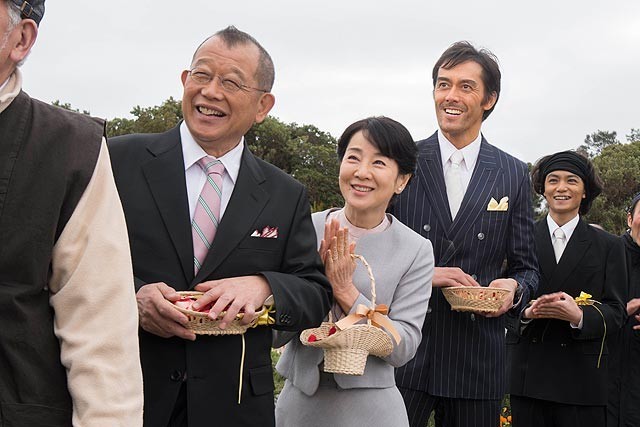
During my flight home from Hawaii I watched the film ふしぎな岬の物語 (Fushigi na misaki no monogatari) or Cape Nostalgia, which I have wanted to see since it came out at the end of last year in Japan and got rave reviews. It is based on a book by Akio Morisawa, and tells the story of a café situated along a small cape in Chiba that is run by an elderly woman named Etsuko Read More
I’ll Make It Myself!: Pumpkin-Orange Scones with Candied Ginger
Blogs, Food & Drink, I'll Make It Myself, Writers Comments Off on I’ll Make It Myself!: Pumpkin-Orange Scones with Candied Ginger
L.M. (CIR Ishikawa-ken, Anamizu, 2009-11) is the editor of The Ishikawa JET Kitchen: Cooking in Japan Without a Fight. Ze works in international student exchange; writes I’ll Make It Myself!, a blog about food culture in Japan and the US; curates The Rice Cooker Chronicles, a series of essays by JETs and JET alumni on the theme of cooking/eating and being alone in Japan; and admins The JET Alumni Culinary Group on LinkedIn.
I’ve made the chocolate-chip version of this recipe before, but I liked the second batch I made with crystallized ginger even better. The orange really makes the ginger pop without overpowering the pumpkin, and the scones are tender on the inside. They’re best fresh out of the oven –no need for jam, although clotted cream might be nice.

I’ll Make It Myself!: Vegan “Unagi” with Shiitake
Blogs, Food & Drink, I'll Make It Myself, Writers Comments Off on I’ll Make It Myself!: Vegan “Unagi” with Shiitake
L.M. (CIR Ishikawa-ken, Anamizu, 2009-11) is the editor of The Ishikawa JET Kitchen: Cooking in Japan Without a Fight. Ze works in international student exchange; writes I’ll Make It Myself!, a blog about food culture in Japan and the US; curates The Rice Cooker Chronicles, a series of essays by JETs and JET alumni on the theme of cooking/eating and being alone in Japan; and admins The JET Alumni Culinary Group on LinkedIn.
I love unagi, but with the endangerment of the glass eel population (as well as the rising cost), it might be best to cool it with the eel. Although I’ve been following the eel news for several months, I hadn’t considered alternatives, but I saw this recipe for “Mock Eel” in the latest issue of Saveur and was intrigued.

【RocketNews24】Are you smarter than a (Japanese) 5th grader? Take this mind-bending test and find out!
Article/Journalism, Writers Comments Off on 【RocketNews24】Are you smarter than a (Japanese) 5th grader? Take this mind-bending test and find out!
Posted by Michelle Lynn Dinh (Shimane-ken, Chibu-mura, 2010–13), editor and writer for RocketNews24. The following article was written by KK Miller, a writer and translator for RocketNews24, a Japan-based site dedicated to bringing fun and quirky news from Asia to English speaking audiences.

Pretty much everyone enjoys being able to help their younger siblings or kids with their elementary school homework. It’s a little piece of joy to pass on what you’ve learned and prove how cool of a mom/dad or big brother/sister you are. You impart some simple knowledge and see the little light bulb turn on in their head as they begin to understand. Then you can sit back and watch with confidence as they interact with the world around them.
But what do you do when the homework is a question that even you can’t answer? This brainteaser had everyone in one Japanese family stumped for over an hour, so they turned to Twitter for help. And then much of the Internet was stumped too. Take a look at these riddles and see how many you can get playing: What Prefecture is This?
Some brain teasers never make you feel good, and you just need to get the answer however you can. That’s probably why one girl recently tweeted her sister’s elementary school homework. But we kind of agree with her: how is this elementary school homework?!?
Are you up for the challenge? Let’s try it ourselves!

Highlight to reveal answer: Nagasaki (長崎)
Yes, that row of hiragana characters is supposed be a hint at the name of a Japanese prefecture. Any ideas?
Just as there is an order for the alphabet, there is an order for the Japanese syllabary. All characters are placed in rows by their vowels sounds in the order: [a], [i], [u], [e], [o]. In the picture above, however, the hiragana characters begin from “i”, reading: ni (に),nu (ぬ), ne (ね), no (の), with na (な) all the way at the end. To any native Japanese person, this should seem seriously strange since, as the little arrow tells us, na should be at the front! Or, in Japanese: “Na ga saki ni.” Clever!

Didn’t get this first one correct? Check out the rest of the quiz at RocketNews24!
WIT Life #282: あけおめことよろ!
Translating/Interpreting, Uncategorized, WIT Life, Writers Comments Off on WIT Life #282: あけおめことよろ!
WIT Life is a periodic series written by professional Writer/Interpreter/Translator Stacy Smith (Kumamoto-ken CIR, 2000-03). She starts her day by watching Fujisankei’s newscast in Japanese, and here she shares some of the interesting tidbits and trends along with her own observations.
Happy New Year! The greeting in the title is an abbreviation of 「明けましておめでとうございます!今年もよろしくお願いします。」 (“Akemashite omedetou gozaimasu! Kotoshi mo yoroshiku onegai shimasu.”). We all know how much the Japanese love their abbreviations! I hope everyone had a fun and relaxing 年末年始 (nenmatsu nenshi, or year-end and new year), and are ready and refreshed for 2015. We are now in the year of the sheep, so for all of you with this animal sign this is your year.
The Abe administration is also hoping it is the year for women, coming off of his disastrous efforts in this arena last year with the resigning of two female ministers and general skepticism in regard to his Womenomics agenda. There was an interesting Read More
I’ll Make It Myself!: Satsumaimo (Sweet-Potato) Pancakes
Blogs, Food & Drink, I'll Make It Myself, Writers Comments Off on I’ll Make It Myself!: Satsumaimo (Sweet-Potato) Pancakes
L.M. (CIR Ishikawa-ken, Anamizu, 2009-11) is the editor of The Ishikawa JET Kitchen: Cooking in Japan Without a Fight. Ze works in international student exchange; writes I’ll Make It Myself!, a blog about food culture in Japan and the US; curates The Rice Cooker Chronicles, a series of essays by JETs and JET alumni on the theme of cooking/eating and being alone in Japan; and admins The JET Alumni Culinary Group on LinkedIn.
I accidentally bought a white-fleshed sweet potato instead of an orange sweet potato, so I decided to make this old favorite from Japan. In the US, sweet potatoes with hard, orange flesh (annôimo, 安納芋) are more common, but in Japan, sweet potatoes with a softer, white/yellow flesh (satsumaimo, サツマイモ) are what you’ll find in the grocery store. This recipe is for satsumaimo, so make sure you have the right potato!

WIT Life #281: 今年の漢字
Translating/Interpreting, WIT Life, Writers Comments Off on WIT Life #281: 今年の漢字
WIT Life is a periodic series written by professional Writer/Interpreter/Translator Stacy Smith (Kumamoto-ken CIR, 2000-03). She starts her day by watching Fujisankei’s newscast in Japanese, and here she shares some of the interesting tidbits and trends along with her own observations.
In a follow-up to yesterday’s post about the top 10 buzzwords in Japan this year, the country’s “kanji of the year” was just announced. 税 (zei) or tax was selected, referring to the consumption tax increase from 5% to 8% in April. The last time the tax had gone up was in 1997 when it went from 3% to 5%. Prime Minister Abe had to decide by the end of the year whether it would be further increased to 10% next year as planned, but he decided to delay this course of action to a later point in time. The selection of 税, along with the other top candidates, indicates a mood of anxiety and uncertainty in Japan.
Coming in at #2 was 熱 (netsu), meaning heat, fever or passion. This points to Read More
WIT Life is a periodic series written by professional Writer/Interpreter/Translator Stacy Smith (Kumamoto-ken CIR, 2000-03). She starts her day by watching Fujisankei’s newscast in Japanese, and here she shares some of the interesting tidbits and trends along with her own observations.
Every year Japan picks the top 10 buzzwords for the year, out of an initial pool of 50 nominated phrases. You can find the list and explanation of selections in Japanese here, and below I will break them down as well. The annual grand prize was awarded to ダメよ~ダメダメ (dame yo, dame dame), a phrase popularized by the female comedy duo Nippon Erekiteru Rengo, and 集団的自衛権 (shuudanteki jieiken), or the right to collective self-defense. The former is a way of lightly turning someone down, particularly when you are asked to do something you aren’t able to do but can’t completely refuse. The latter highlights the controversial decision by Prime Minister Abe’s Cabinet to change the government’s interpretation of the pacifist Constitution to enable Japan to engage in collective self-defense. The remaining eight picks can be found below, so why not incorporate some into your conversations to impress Japanese friends?
• カープ女子 (Carp joshi): female fans of the Hiroshima Carp baseball team
• レジェンド (rejendo): refers to veteran ski jumper Noriaki Kasai, who by Read More
