




JETAA Singapore announces new board
 JETAA Chapters
  Comments Off on JETAA Singapore announces new board
Via the JETAA Singapore website:
JETAA SG Election Committee 2012 is pleased to present to you JETAA SG 2012-2013 new board members who will officialy take over from the the current board with effect from 1 April 2012! Thank you to all the voters for your support!

Tohoku tourism promotion video
Earthquake Tsunami, Japan Local, Travel/Tourism, Video Comments Off on Tohoku tourism promotion video
Thanks to JETAA Sydney’s Sharon Van Etten for sharing this video via JETAA Sydney’s Facebook group, titled “Colorful Emotions” (sassuga Japanese marketing style), put out as part of a Tohoku tourism promotional campaign:
(I would’ve posted the video, but they disabled the embed code for some reason.)
JET alum journalist Graham Shelby’s latest article on Fukushima 03.11.12
Article/Journalism, Cultural Outreach, Earthquake Tsunami, Japan Local, Notable JET Alums, Writers Comments Off on JET alum journalist Graham Shelby’s latest article on Fukushima 03.11.12
Graham Shelby (Fukushima-ken, Ishikawa-shi, 1994-97) has published a thoughtful piece on Fukushima, this one on Kentucky news site, Kentucky.com, in addition to previous radio and written pieces he has done for NPR and other news outlets.
“Quake, tsunami a year ago refreshed Kentuckian’s memories of time in Japan”
By Graham Shelby – contributing write
Posted: 12:00 AM on March 11, 2012
Twenty-three years old and eager to get out of my hometown, I left Lexington for Japan. In the summer of 1994, I took a job teaching English in Ishikawa, a small town surrounded by rice fields and forested hills in Fukushima Prefecture, about 100 miles north of Tokyo.
Click here to read the full article: http://www.kentucky.com/2012/03/11/2104978/quake-tsunami-a-year-ago-refreshed.html#storylink=misearch
The MUD Project: Update from Colin Rennie 03.13.12
Earthquake Tsunami, Japan Local, Notable JET Alums, Return on JET-vestment, Video, Volunteer Comments Off on The MUD Project: Update from Colin Rennie 03.13.12
An update from The MUD Project, an ongoing Tohoku relief effort organized by JET alum Colin Rennie (CIR Yamagata-ken, 2007-10). Click here to see previous updates by Colin on YouTube:
March 13, 2012
March 11, 2012
Kameoka Diaries #7 by Lars Martinson
Cartoon/Illustration, Humor, Japan Local, JET Alum Author Beat, Notable JET Alums, Travel/Tourism, Writers Comments Off on Kameoka Diaries #7 by Lars Martinson
Lars Martinson (Fukuoka-ken 2003-2006), author of the graphic novels Tonoharu: Part Two andTonoharu: Part 1, has just just published the latest edition of his new cartoon series called“Kameoka Diaries“ about his return to teaching English, this time in Kameoka, Kyoto.
Click here to read the Kameoka Diaries #7.
http://larsmartinson.com/kameoka-diaries-7/

LIVE YOUR DREAM: The Taylor Anderson Story
Earthquake Tsunami, Film, Fundraising, Interview/Profile, Notable JET Alums, Return on JET-vestment, Video Comments Off on LIVE YOUR DREAM: The Taylor Anderson Story
*******************
“LIVE YOUR DREAM: The Taylor Anderson Story”is a film project by documentarian Regge Life who is currently seeking support via Kickstarter to help fund the full production of the film.
ABOUT THIS PROJECT
This film is a story about Taylor Anderson and all the young people who travel the world trying to make a difference. Taylor was an extraordinary American who dedicated herself to teaching Japanese children, living her dream right up to the events of March 11, 2011. The earthquake and tsunami in Japan was a disaster that no one could have expected. In my 21 years of working on Japan based projects, I had witnessed earthquakes, but never the devastation of a tsunami.
I had just completed REASON TO HOPE, a film about the 2010 earthquake in Haiti, so I understood all of the events related to the aftermath of an earthquake, but what would be the aftermath when an earthquake was followed by a tsunami and in the case of Japan, a possible nuclear disaster.
CLICK HERE to read more on the Kickstarter site and to help support this project
JET alum recommends Meiji University “Law in Japan Program”
Academic, Career, Graduate School Comments Off on JET alum recommends Meiji University “Law in Japan Program”
Seattle-based JET alum Regina Durr (Shimane-ken, 2008-10) got in touch to let JETs and JET alums know about the Meiji University “Law in Japan Program.” Here’s what she has to say:
I participated in the 2010 Law in Japan program at Meiji University between my JET tenure and returning to the States… and LOVED, LOVED, LOVED it! There was a mix of JETs current and exiting, U.S.A. MBA students, French Master in Law students, interpreters, and ad hoc foreigners who enjoy getting out of their box and into an academic setting.
The Meiji Law in Japan Program was the perfect dive back into academia and the professional career lifestyle immediately after JET. The days are filled with lectures and trips to places such as the Supreme Court, the former Ministry of Justice, a local prison, and even enables you networking opportunities with top, international law firms in Tokyo. I took the course as a cheaper alternative of finding out whether or not I would want to specialize in Japanese Law back in the States. With a brief overview from top experts (even flown in from Washington, D.C.!), I am now finding myself applying to Law School to formalize the training began through this program.
A little background info about me: I am currently a Project Coordinator at the global headquarters of a high-tech consulting company located just outside Seattle, WA. I am active in the Pacific Northwest JET Alumni Association chapter and continue to mentor high school exchange students in the community, while also playing volleyball and completing triathlons.
About the Meiji University “Law in Japan Program”
“Law in Japan Program” is an introductory course for studying Japanese laws, at Meiji University, a private university in Tokyo.
2012 ONLINE APPLICATION FORM is NOW OPEN.
- The 2012 Summer intensive program is from July 23 to August 3, 2012. http://www.meiji.ac.jp/cip/english/programs/law/applications.html (*Application deadline to be extended; to late April*)
- For the 2011 results, please check the Past programs page. http://www.meiji.ac.jp/cip/english/programs/law/past.html
- URL: http://www.meiji.ac.jp/cip/english/programs/law/index.html
- Law in Japan PR Video: http://www.meiji.ac.jp/cip/english/programs/law/index.html
Meiji University Law in Japan Program 2012
——————————————————————————-
Law in Japan Program
Meiji University School of Law
1-1 Kanda-Surugadai, Chiyoda-ku,
Tokyo, Japan 101-8301
E-mail: law_jp@kisc.meiji.ac.jp
Note: Do you have a post-JET program that you’d like to recommend to other JETs and alums? E-mail jetwit [at] jetwit.com and tell us about it.
“American View” interview with JETwit publisher Steven Horowitz on JET involvement in Japan’s recovery efforts
Earthquake Tsunami, Interview/Profile, JETs in the News, Notable JET Alums, Return on JET-vestment Comments Off on “American View” interview with JETwit publisher Steven Horowitz on JET involvement in Japan’s recovery efforts

Update 03.13.12: Realized I neglected to mention in the interview The MUD Project, an ongoing Tohoku relief effort organized by JET alum Colin Rennie (CIR Yamagata-ken, 2007-10).
Update 03.12.12: Here’s the interview translated into Japanese
“American View,” a quarterly magazine published by the Press Office of the U.S. Embassy in Tokyo, recently interviewed JETwit publisher Steven Horowitz (Aichi-ken, 1992-94) about the role of JETs and JET alumni in connection with Japan’s recovery efforts following the 3/11 disaster.
American JETs Rally for Japan in Myriad Ways
http://amview.japan.usembassy.gov/en/jet-alumni/
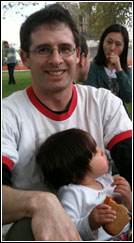 Here’s an excerpt:
American View: What is unique about disaster relief activities by JET program participants and alumni?
Steven Horowitz: The connection we have to the affected areas and to each other. And the language skills and ability to communicate directly with people in the communities. When you work for the school system, you really get connected to the community. You understand how things work, how kids evolve into adults. You’re part of the community. As a result, JETs are able to identify needs and then reach out to a global community to help fill them in unique ways. I think JETs and JET alumni in some ways were better able to identify needs on the ground than some of the larger, more removed relief organizations, and especially with regard to education-related needs.
問 現役・元JET参加者による復興支援活動にはどのような特徴がありますか。
答 被災地との絆やJET参加者同志のつながり、そして地元の人たちと直接意思を疎通できる日本語能力があります。学校制度の中で働けば地域社会と真のつながりができます。物事の仕組みや子どもが大人になっていく過程を理解するようになります。地域社会の一員となるのです。ですからJET参加者たちは、地域のニーズを見極めた上で国際社会に働きかけ、独自のやり方でそうしたニーズを満たす支援ができます。現場から遠く離れた大規模な支援団体よりも現役・元JET参加者たちの方が、いろいろな点で現場のニーズ、特に教育関係のニーズに関してより確実に把握できると思います。
*CLICK HERE to read the full interview in English
*CLICK HERE for the Japanese version
There’s so much going on in connection with 3/11 that it feels overwhelming to try and capture everything. Life has been busy with all of life’s things, and I realized that I was trying to put off thinking about 3/11 in some important ways. So I finally stopped myself and thought back to March 11, and remembered that initially I was frantically gathering information from every source I could find and trying to organize it in a way that would be helpful to JET alumni, family of JETs, and anyone else outside Japan who was seeking information on people and areas.
The post below is much of the information gathered in real time (at the time) and gradually organized into what I hoped were helpful ways. Reading through it brought back a range of challenging feelings for me as well as a comparative perspective on how things big and small felt then versus now. Feel free to read through and share your own thoughts and memories in the comments section below if you like.
One additional thought: Taylor and Monty, you are not forgotten.
************************
March 2011
************************

Map of the Tohuku region in northern Japan and its prefectures
Last update: 10:06 pm NY time March 14. Email jetwit [at] jetwit.com with any updates you’d like to share. (Apologies for delays. I’m taking care of my 14 month old daughter while trying to keep doing things on the computer.)
(10:06 pm) “I talked to a person from the US embassy today. The US has not issued any evacuation for it’s citizens. If you want to escape you have to do it on your own, but they said if we have something we need to call them. I told him food and he said he needs food himself, so everyone is in that situation. We are now strictly rationing our food. Do not expect any help from the US government.”
(9:38 pm) From JET Greg Lekich in Sendai: “Everyone, I’m heading over to the home of Iain Campbell where we will set up a system for dispatching people on the ground to check on people. Will be back online a bit later.”
(9:36 pm) “Report from Furukawa area. Northern rural areas are fine. Furukawa not too bad. Power and communication sitiation though still not reliable.”
(9:32 pm) Iwate Grass Roots Aid Facebook Group
9:05 pm “NEWS on CTV: Japanese government spokesman reporting that many northern communities are still cut off and have not been reached yet :(”
Shiogama (6:27 pm NY time): A photo of Shiogama High School and some of the survivors. http://twitpic.com/49gcsb
Shiogama (via JET alum friend’s FB) (5:53 pm NY time Monday, March 14): Read More
Foundation Center interview with JET alum James Gannon on Rebuilding After the Great Tohoku Earthquake
Earthquake Tsunami, Fundraising, Interview/Profile, JETs in the News, Notable JET Alums, Return on JET-vestment Comments Off on Foundation Center interview with JET alum James Gannon on Rebuilding After the Great Tohoku Earthquake
*******************
The below interview appeared in PhilanTopic, the Philanthropy News & Digest blog which is part of The Foundation Center. It’s a really terrific explanation of the situation in Japan from a philanthropy/fundraising/non-profit perspective by Jim Gannon (Ehime-ken, 1992-94), Executive Director of the Japan Center for International Exchange (JCIE/USA), who has become one of the experts in this field.
March 09, 2012
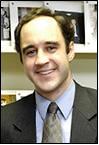
James Gannon (Ehime-ken, 1992-94)
One Year Later: Rebuilding After the Great Tōhoku Earthquake
James Gannon is executive director of the Japan Center for International Exchange/USA, which works to strengthen U.S.-Japan cooperation across a range of fields. Recently, Laura Cronin, a regular contributor to PhilanTopic, spoke with Gannon about the progress of rebuilding efforts in the quake- and tsunami-affected Tohoku region of the country.
Philanthropy News Digest: The earthquake and tsunami affected a four hundred-mile region along the northeastern coast of Japan — an area roughly comparable to the BosWash corridor in the United States. What are conditions in the region like now, a year later? And how have people in the affected region, and the country at large, been changed as a result of the disaster?
James Gannon: Even now, some communities are still disposing of rubble, while things appear almost normal in other, less-hard-hit areas. Compared to the scenes of utter devastation we saw a year ago, there has been extraordinary progress. But if you spend any time in these communities, you realize the depth of the wounds. More than three hundred thousand people are still without homes, and that is weakening traditional community ties. Many of the jobs in the fishing industry, agriculture, and small business have not returned, resulting in high unemployment and all the social problems it brings.
Meanwhile, women who lost family members, men who are ashamed that they can no longer support their families, and children traumatized by the disaster are grappling with mental health issues. The stoicism of the people in the Tōhoku region is stunning — even by Japanese standards — but most acknowledge that the road to recovery will be long.
On the other hand,
CLICK HERE to read the full interview on the PhilanTopic blog.
JETAA USA Quarterly Reports
JETAA Chapters Comments Off on JETAA USA Quarterly Reports
Via JETAA USA Country Rep Jessyca Wilcox:
“For those of you who are interested in reading the Quarterly Reports that the Country Reps produce to update you on what’s been going on, you can do so on the jetaausa.com website. Go to, About JETAA >> Quarterly Reports. You can click on the report you are interested in reading. Country Rep Megan Miller has done a nice job summarizing all the JETAA activity at the national level! All three quarters from fiscal year 2011-12 are available and we will be sure to wrap up the year with a Quarter 4 Report as well!”
Japan Society Allocates Over Half of Earthquake Relief Fund with 4th Round of Grants
Earthquake Tsunami, Fundraising, Japan Society Round-up Comments Off on Japan Society Allocates Over Half of Earthquake Relief Fund with 4th Round of Grants
Via Shannon Jowett, Director of Communications for Japan Society of New York:
For Immediate Release
Japan Society Allocates Over Half of Earthquake Relief Fund with 4th Round of Grants
Projects Support Orphan Care, Evacuee Services, Community Building, Child Welfare and More
New York, NY – Japan Society announced today an additional eight grants totaling $1.6 million from its Japan Earthquake Relief Fund(JERF). This latest announcement brings total allocations from the $12.5 million fund to $7.2 million distributed to 19 organizations representing 25 projects that directly serve people affected by the Great East Japan Earthquake on March 11, 2011.
“As we approach the one-year anniversary of the devastating earthquake and tsunami that struck Japan, we are pleased with the swift allocations and immediate use of the funds for people in need,” said Motoatsu Sakurai, President of Japan Society. “Over half of the money we’ve received has now been allocated. Moving forward, we will continue to look for opportunities to fund effective projects, including those that serve rebuilding and economic recovery in the region.”
The latest round of allocations supports six new grantees and two previous grantees. Projects range from orphan care, evacuee services and healthcare for people still living in temporary housing, to education workshops throughout Tohoku, promoting creative arts from the region, building a community center, and summer camps for children in Fukushima, which continues to cope with its nuclear crisis.
The organizations receiving grants are:
JCIE Special Report: US Giving in Response to Japan’s March 11 Disaster Tops $630 Million
Earthquake Tsunami, Fundraising, Return on JET-vestment Comments Off on JCIE Special Report: US Giving in Response to Japan’s March 11 Disaster Tops $630 Million
Thanks to Jim Gannon (Ehime-ken, 1992-94), Executive Director of the Japan Center for International Exchange (JCIE/USA), for sharing his organization’s special report, which notes the grassroot efforts of JETAA USA among others.
“JCIE Special Report: US Giving in Response to Japan’s March 11 Disaster Tops $630 Million”
“A JCIE survey of hundreds of American and Japanese organizations estimates that Americans have donated $630.2 million to aid victims of Japan’s massive March 2011 earthquake. This ranks as the largest US philanthropic outpouring ever for a disaster in another developed nation and the third most generous American charitable response in history for any overseas disaster.”
Click here to read the full the report: http://www.jcie.org/311recovery/usgiving.html
Return to Tohoku: Fukushima Update 03.07.12 by Brent Stirling
Earthquake Tsunami, Notable JET Alums, Return on JET-vestment, Travel/Tourism, Writers Comments Off on Return to Tohoku: Fukushima Update 03.07.12 by Brent Stirling
***************
Here’s another Fukushima update from JET alum Brent Stirling, one of the 20 Tohoku region JET alumni selected by the Ministry of Foreign Affairs (MOFA) to return to their town to both engage in volunteer efforts and also help document and share what’s going on there.
Click here to read other Return To Tohoku updates on JETwit. You can also check the JETAA USA website post (“JET Alums Return to Tohoku”) for additional information.
By Brent Stirling (Fukushima-ken, Fukushima-shi, 2006-10)
It’s been almost a year since the Great East Japan Earthquake and almost six months since I returned to Fukushima and this will be the first thing I have posted about it since my week long adventure into the place I called home for so long.
I have agonized over the writing of this for months now. While in Fukushima, I learned, saw and felt so many new things. The main feeling I came away with after having been there was one of inspiration. The people in Fukushima, foreigners and Japanese, were all so very inspirational. The vigor that they put into the community there and how they defend and care for Fukushima and it’s reputation was nothing short of remarkable.
I’ll be honest, while I did go back to Fukushima on the Japanese Ministry of Foreign Affairs’ dime, my main motivation for going back wasn’t …..
CLICK HERE to read the full post
JETAA International videos
JETAA Chapters, Return on JET-vestment, Video Comments Off on JETAA International videos
Here are two videos recently released by JETAA International, and put together by JETAA-I Webmaster Bob Schnyder of JETAA Portland and JETAA-I Secretary Kay Dunkley of JETAA Jamaica.
“What is JETAA International?”
“Because of JET”
