




Beyond the Human Tape Recorder: What JET Taught Me About Reclaiming My Voice
 Career
  Comments Off on Beyond the Human Tape Recorder: What JET Taught Me About Reclaiming My Voice
****************
By Valerie Hwang Beck (ALT, Hyogo, 2009-2012)
Almost every ALT on JET has some version of this story. Being used as a human tape recorder. Being put in a position where your input on how the English lessons should go was dismissed, or just ignored.
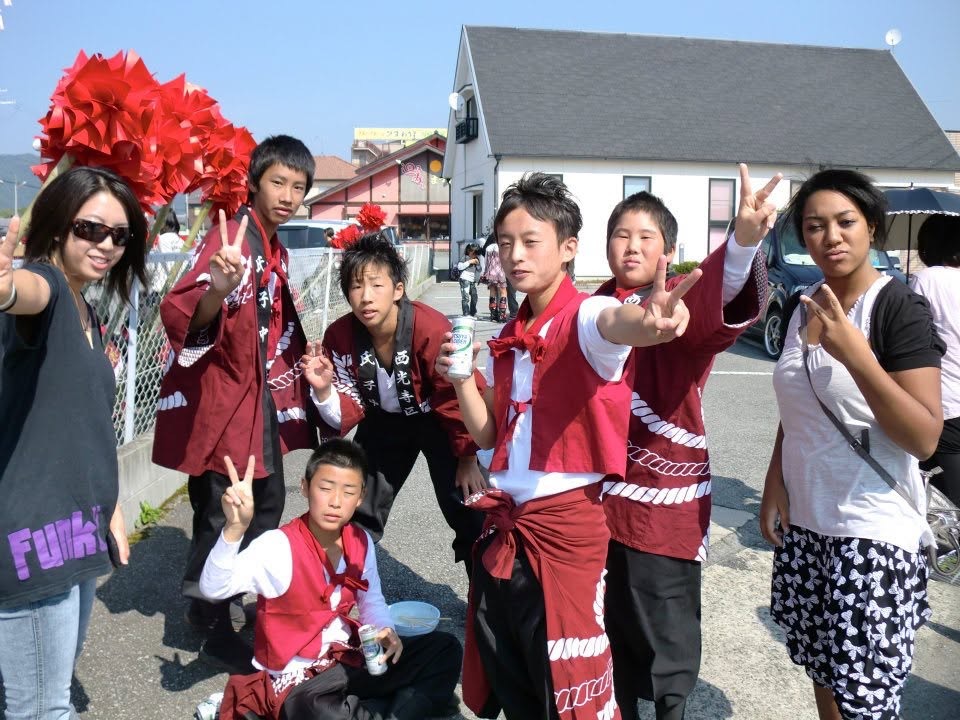
I remember one curriculum meeting for my town’s elementary and junior high English teachers. Typical Japanese school meeting room: fold-out tables arranged in a makeshift U so everyone could see each other, stacks of lesson plans on the tables, a whiteboard behind us. I’d already been there over a year by then. I’d worked hard on my lessons, coming up with the content, the activities, making sure they were fun and interesting for the kids, who looked forward to me coming every month.
In my town, I had a co-ALT. We never worked in the same school; he covered one side of the river, I covered the other, and we’d switch. He had a year of seniority on me, but we never competed, never tried to teach each other’s content. In fact, the whole point of the town hiring the two of us was so the kids could have two different perspectives, two different flavors of foreigner, not just one version of what a foreign teacher looked like.
In that meeting, with both of us sitting at the same table, in front of the entire town’s English teachers, one of the supervisors, anxious about managing two different foreign teachers, said dismissively, in Japanese: “Maybe we can just have Valerie teach everything Philip-sensei’s way.”
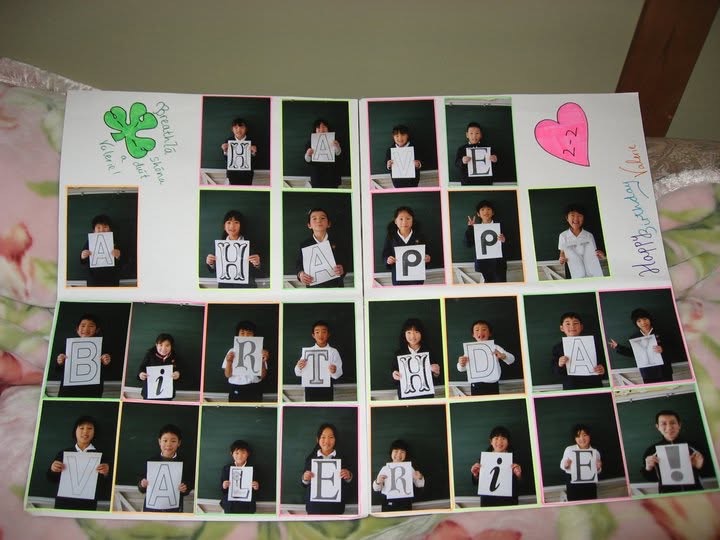
Have you ever had someone cut you so deep, everything just goes black for a second?
I don’t remember what happened in the room after that. I don’t remember if it went quiet, or if anyone shifted, or how long the pause was. That’s the thing about a moment like that; everything goes black except the gut-punch of it. I don’t think it even hit me consciously that I’d been insulted. I felt it at a visceral level. I could feel myself shrink. The tears came before I understood why.
As someone who didn’t grow up with a lot of self-esteem, that moment could have destroyed something in me. It almost did.
Here’s the thing though. I probably wouldn’t have advocated for myself that day. I didn’t know how yet. But I didn’t have to. My main supervisor, the meeting leaders, Philip himself, they all knew exactly what had just happened, and they defended me. Right after the meeting ended, the man who’d said those words came and sat down next to me and apologized.
That moment planted something. The seeds of the work I do today: deep, introspective coaching on mindset, self-esteem, learning to stand up for yourself and advocate for yourself in environments that were never built for you to be heard.
I think that’s actually the real inheritance of JET, more than any single skill on a resume. We moved to a foreign country, most of us right at the start of adulthood. We were handed jobs with loosely defined responsibilities and told, essentially, every situation is different, figure it out. Some of us also learned, the hard way, what it costs to not be heard, and what it takes to find your voice anyway, or to be lucky enough to have people around you who defend it before you know how to defend it yourself.
That’s real training. And yet look at most of the programming built for JET alumni. It’s aimed almost entirely at traditional paths: corporate, government, education, economics. We’re still shaped by a culture where the people who get honored are the ones in suits, the ones in government positions, not the ones doing something creative, something harder to categorize.
I’ve had the honor of meeting JETs across a huge range of paths since. Movie directors. Writers. Community organizers. Lawyers. Coaches. People building things that don’t fit neatly into a program pamphlet. Every time, I notice the same thing: they’re not succeeding despite what JET gave them. They’re succeeding because of it. The willingness to sit in ambiguity. The muscle of figuring out your own value in a system that didn’t hand it to you.
What actually binds this community isn’t the job title anyone picked afterward. It’s something harder to name and worth naming anyway. A shared 懐かしさ, a nostalgia, for something deeper than the two years abroad. Cross-cultural connection. Real community bonds. An appreciation for difference most people never get handed so early in life. A compassion that comes from being the outsider and the teacher at once. A sense of belonging that doesn’t respect borders.
I’ve built my career around one core belief: that people’s unique voices, their gifts, their own way of doing things, matter. The unique energy you brought into your classroom, whatever town or village you were teaching in, the thing that lit up your students’ eyes when you walked in, that same light is still in you today.
What a blessing it would be if we kept cultivating it, long after the program ends.
******************************
Valerie Hwang Beck (Hyogo, 2009-2012) is the founder of The Vibrant Visionary, where she works as a Vitality and Vision Mentor using her background as a holistic health professional, educator and movement artist to help people reclaim the parts of themselves they learned to hide in order to be acceptable. Her work centers on restoration, not reinvention: uncovering who you already are beneath the years of conditioning, and building a life that actually reflects your passion, values, and unique self-expression. If any of this resonated and you’d like to connect as fellow JET alumni, she’d love to hear from you: book a peer connect chat or find her at thevibrantvisionary.com. For more reflections on the JET Program, check out Valerie’s interview with fellow alumni Rikio Inouye on her podcast From the Ashes.
