




Job: CSI seeks bilingual location support professional (Nagoya)
 Jobs, Translating/Interpreting
  Comments Off on Job: CSI seeks bilingual location support professional (Nagoya)
Via JET alum Roy Harrison of the JETAA Bluegrass subchapter:
Another job listing from CSI, a JET alum-run company based in Kentucky. (See previousJETwit post about CSI.)
Bilingual Location Support Professional
We’re looking for a full-time bilingual location service professional with a great attitude, in-depth knowledge of office procedures, dogged persistence, expert communication skills, and the utmost discretion. From Japanese language instruction to supporting ex-pats living in the Nagoya/Toyota area, our ideal candidate will be committed to doing whatever it takes to make sure clients are successful abroad. As a facilitator of efficient and productive communication, you should be able to work both independently and as part of a team.
You’ll need a hands-on understanding of Nagoya/Toyota in order to provide the highest quality assistance. Some experience in negotiating real estate terms in Japan is beneficial. You need to be proficient in typical office software packages, have proven strong organizational skills, and be enthusiastic about working across cultural boundaries. The successful candidate will be working in a fast-paced environment with a varied workload, so we need a quick learner and great communicator who works well under pressure while being able to discern the forest from the trees.
If you’re a consummate professional with a passion for communication and a love of challenges, come join our successful team. Send a cover letter and résumé to hr@csi-ky.com.
Consultant Solutions, Inc. is an Equal Opportunity Employer. We will provide training and a support network. We will also consider relocation and/or visa support for the right candidate.
JETAA USA seeks Web Content Editor (volunteer)
JETAA Chapters, Jobs, Volunteer, Writers Comments Off on JETAA USA seeks Web Content Editor (volunteer)
Via JETAA USA:
JETAA USA is looking for an enthusiastic volunteer web content editor to help on some short and long term-projects.
With the roll-out of the new JETAA USA website at last year’s National Conference, our goal is to improve the website so that it becomes a central hub and resource which will serve all US Chapters.
Our wish list is:
● Migrate any information from other online platforms we have previously used, organize it, and make it available on the US website; in a sense- creating a virtual file cabinet for storing resources and documents.
● Create ideas for installing new resource sections, and improvements on what we’ve currently got established (such as a current national projects section and conference section).
We expect the bulk of the workload to be in the next 3 months as we jump start this, upload content, push forward with the JETAA USA Earthquake Fund and bracket the National Conference. After that time period, we anticipate the workload to decrease to ongoing maintenance, occasional projects and helping Country Representatives (CRs) to trouble shoot any potential issues with the website on an “as needed” basis. We would like this position to be an integrated part of the JETAA USA national team.
The workload of this position will vary depending on the time of year and the level of experience of the web editor. Although this is a volunteer position we would like someone who is willing to dedicate their time and be accountable for project completion. The US CRs will work with the web editor at a pace that is comfortable and reasonable, but also impactful.
We are looking for an applicant who:
● Has experience troubleshooting and responding to organizational needs and has previously managed content.
● Knowledge of WordPress, HTML, CSS, and/ or Java is a plus!
● Has a proven track record and experience with web related projects.
● Experience working with JET affiliated organizations (i.e. JETAA, AJET) is beneficial.
● Is a JET Program alumnus.
If you’re interested, please contact any (or all) of us with a brief description of your experience and desire to be a part of the team. Thank you!
- us1.jetaausa@gmail.com (Mike Shu)
- us2.jetaausa@gmail.com (Megan Miller-Yoo)
- us3.jetaausa@gmail.com (Jessyca Wilcox)
WIT Life #170: Super Cool Biz
Earthquake Tsunami, Translating/Interpreting, WIT Life, Writers Comments Off on WIT Life #170: Super Cool Biz
WITLife is a periodic series written by professional Writer/Interpreter/Translator Stacy Smith (Kumamoto-ken CIR, 2000-03). She starts her day by watching Fujisankei’s newscast in Japanese, and here she shares some of the interesting tidbits and trends together with her own observations.
Newspaper articles from this week have highlighted Japan’s handling of energy challenges in the wake of the earthquake and tsunami, and subsequently damaged nuclear power plants. The first from the Wall Street Journal talks about the development of a new summer style called “Super Cool Biz” in response to a government decree to conserve electricity (節電 or setsuden) by 15%, or setting workplace temperatures to 82 degrees!
This new effort builds on the previous “cool biz” campaign, but takes it a step further by Read More
Shimane JETs Raise Over $21,000 USD for Tohoku Disaster Relief
Earthquake Tsunami, Fundraising, Japan Local, Return on JET-vestment, Volunteer Comments Off on Shimane JETs Raise Over $21,000 USD for Tohoku Disaster Relief
From the JETAA USA website originally posted by JETAA USA Country Rep Jessyca Wilcox:
 Shimane JETs Raise Over $21,000 USD for Tohoku Disaster Relief
Shimane AJET gathered their local ALTs, CIRs and Japanese community members to join together for a charity hike. On May 15th over 60 ALTs and CIRs and 50 Japanese people took part in a sponsored “Charity Hike.”
The hike took place on Shimane’s highest mountain: Mt. Sanbe in Oda City, Shimane. It was attended by people from 14 countries: America, Ireland, France, England, Jamaica, Canada, Scotland, Kenya, China, Korea, Japan, Australia, New Zealand and South Africa.
In the weeks leading up the event particpants raised $21,023 USD (¥1,715,338) from local and international donations (via the internet). At the summit of Mt. Sanbe, the participants held a photo opportunity and called out a strong message of support for the people of Tohoku and Japan from the international community. Please see the photograph below.
In the week after the event, the money was transferred to the Japanese Red Cross (70%) and “SMILE and Dreams: Tohoku Kids Project” (30%).
Lauren Hale, a Shimane JET from Denver, CO said, “Japan has been such a great home to us all and we were so glad that we could be a part of the relief effort. We raised over twice the amount that we had originally hoped for!”
Check out the project website for video coverage and photos: www.sanbehike.com
*Shimane JET alums (and anyone else), please don’t hesitate to post words of support for the terrific work of Shimane AJET and all involved in the comments section below.
JETs with J.D.s >> A Guide to Picking a Law School
Uncategorized Comments Off on JETs with J.D.s >> A Guide to Picking a Law School
Andrew R. McCarthy (Akita-ken, 2005-08) is a recent law graduate from The Ohio State University Moritz College of Law and is packing up his bags for Houston, Texas . He currently runs the blog JETs with J.D.s, an information source for current JET alumni law students and prospective law students for career paths and approaches within the current legal market. For those considering law school and trying to comprehend the costs and the risks of such an endeavor, he also recommends The Law School Tuition Bubble.
“You’d think that with the rigors of getting through undergrad, studying for and taking the LSAT, and making sure you perfect your law school applications, picking the law school of your dreams should be the easy part. It isn’t. The advice provided below isn’t the only way to go about picking your law school, but hopefully it will show you where your priorities should be.”
The post, in full, is available here.
Japan Times: U.S. students invited in memory of JET victims
Earthquake Tsunami, Japan Trends, JETs in the News, Local Government Comments Off on Japan Times: U.S. students invited in memory of JET victims
Via Japan Times/Kyodo News Service, June 1, 2011:
U.S. students invited in memory of JET victims
Kyodo
Japan will invite 32 U.S. high school students who are studying Japanese to take part in a program in July to study the language and culture in memory of two American teachers killed in the March 11 earthquake and tsunami.
Foreign Minister Takeaki Matsumoto, during a speech at a symposium in Tokyo on Monday, referred to the program intended to nurture people who will serve as a bridge between Japan and the United States in the future.
The program is in commemoration of Taylor Anderson, 24, and Montgomery Dickson, 26, who were taking part in the Japan Exchange and Teaching Program.
Anderson of Virginia was found dead in Ishinomaki, Miyagi Prefecture, and Dickson of Alaska was found dead in Rikuzentakata, Iwate Prefecture.
According to the government-linked Japan Foundation, the organizer of the program, the 32 students selected from about 250 applicants in the United States will attend Japanese-language lessons, take part in cultural events, including a drum performance and wearing kimono, and have exchanges with high school students in Osaka.
They will stay at the homes of the Osaka high school students during the two-week program. It will run for five years starting this year, the Japan Foundation said.
Surviving in Japan: 40+5 more ways to survive the rainy season
Advice, Blogs, Japan Local, Writers Comments Off on Surviving in Japan: 40+5 more ways to survive the rainy season
Posted by Ashley Thompson (Shizuoka-ken, 2008-2010) of Surviving in Japan: without much Japanese and Lifelines columnist for The Japan Times.
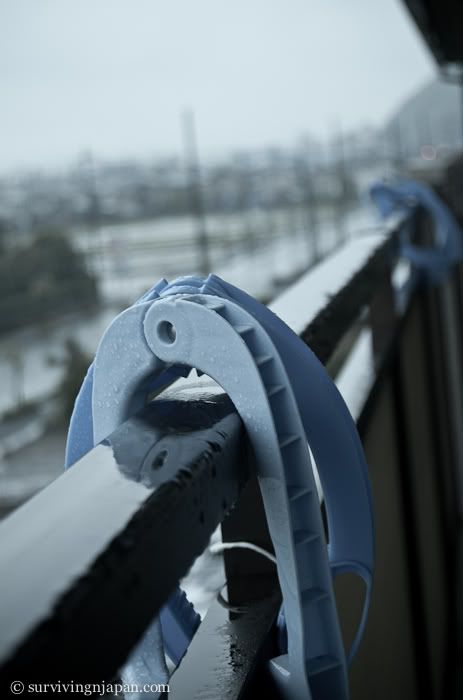
Bleak, gray, rainy season, or 梅雨
The rainy season (梅雨, つゆ) has arrived.
Apparently beginning 12 days earlier than last year in central Japan, according to tenki.jp, and also earlier than normal in southern Japan as well. Though it doesn’t feel all that humid yet. I typically associate the rainy season with tropical jungle-like humidity that makes you feel like you’re living in a sauna.
Don’t be fooled though – it will likely sneak up on us before we know it. For now, my pregnant self will enjoy the moderate temperatures and bearable humidity levels.
Oh, and for those who may not know, it doesn’t actually rain constantly during the rainy season in Japan – it will either spontaneously downpour or sometimes rain for a while in variations between sprinkling and heavier rain, with some breaks here and there.
Before coming to Japan, being from Seattle (U.S.), I rarely, if ever, used an umbrella. In fact, it’s usually quite easy to tell the difference between locals and tourists in Seattle for this very reason. (Everyone thinks it rains there all the time, but it doesn’t – it’s just cloudy most of the year).
So I came to Japan with no umbrella, figuring I could just buy one somewhere easily (but in no hurry). Except that my friend and I got caught in the rain on our second day here. Not Seattle drizzle we were familiar with. A downpour. Sheets of rain.
As we were outside with no cover, we were instantly soaked (as if we’d fallen into a pool or something), and spent the next 10 minutes or so running from building cover to building cover to the nearest convenience store to buy an umbrella. (With bystanders laughing at us good-naturedly, of course).
Of course, by the time we bought the umbrella and walked out of the store, the rain stopped. That’s Japan for you. Everyone gave us strange looks when we entered the hotel again, dripping all over the floor. Lesson learned: During the rainy season, Always. Carry. An umbrella.
So, in honor of the arrival of this year’s rainy season, I pull from the archives:
40 tips to survive the rainy season in Japan
There are also some good suggestions in the comments, so be sure to read those as well!
And of course, a few more to add:
41. Forget number 4 on the previous list – with all the energy conservation we should be doing, go out instead and share the A/C instead of using it at home. (Although with the temps the way they are right now there really isn’t much of a need for A/C…) — CLICK HERE to read the rest of the post.
Earthquake Recovery News 05.31.11
Earthquake Tsunami, Return on JET-vestment, Uncategorized, Volunteer Comments Off on Earthquake Recovery News 05.31.11

Hello, everyone! My name is Emily Duncan (Hyogo-ken, 2005-2008). Currently I live in Atlanta, Georgia and I oversee the Facebook discussion group “Japan Earthquake Disaster Relief Idea Exchange.”
Originally my friend Mellissa Takeuchi (also a former Hyogo-ken ALT) and I established this group to discuss ideas which could help Japan in the aftermath of the March 11th earthquake. In the beginning this was fairly helpful, but as time went on it became increasingly obvious that the recovery story in Japan would not stay on the front pages of newspapers and websites so I decided to share news stories that I thought would be of interest to our discussion group. My hope is that these stories will inspire other people to get involved.
Originally I was at a loss as to how I would start this series of posts for JETwit. But as yesterday was Memorial Day I thought it would be best to acknowledge the hard work of the American military during Operation Tomodachi. All branches of the American military – Army, Air Force, Navy and Marines worked together to help the region affected by the earthquake and tsunami. (See more here with a nice slideshow here).
I was really proud of the initial response and would love to have one of those patches!
Job: Preschool, Kindergarden, Elementary School Teachers (Sierra Leone)
Jobs Comments Off on Job: Preschool, Kindergarden, Elementary School Teachers (Sierra Leone)
via Pacific Northwest JETAA. Posted by Dipika Soni (Ishikawa-ken, 2003-06). Dipika has recently moved back to London as is currently looking for new work opportunities related to Japan, translation, or other fields. She is also the former vocalist for the Japanese hardcore punk band DEGRADE.
*Note: If you apply for this position, please let them know you learned of it from JETwit. Thanks.
———————————————————————————————————————————-
Job Position: Preschool, Kindergarden, Elementary School Teachers (Sierra Leone)
Job Details:
The American school in Freetown is seeking qualified pre-school, kindergarten and 1/2 Grade teachers immediately. Beautiful and safe country, world-class beaches, wonderful school community. Certification is a plus, experience can substitute.
via JETAA UK. Posted by Dipika Soni (Ishikawa-ken, 2003-06). Dipika has recently moved back to London as is currently looking for new work opportunities related to Japan, translation, or other fields. She is also the former vocalist for the Japanese hardcore punk band DEGRADE.
*Note: If you apply for this position, please let them know you learned of it from JETwit. Thanks.
———————————————————————————————————————————-
Job Position: Volunteers needed for Japan Matsuri (London, UK)
Job Details:
A number of Volunteers and Interns are required for Japan Matsuri 2011, which will take place on 18th September in London.
Period: From NOW up to 18/08/2011(Sun)
Venue: London
Language Skill required: English or Japanese (* depending on the roles)
If you join us as a volunteer we can give you:
Justin’s Japan: Loudness, Akiko Yano Perform Rare Concerts in New York
Article/Journalism, Justin's Japan, Music Comments Off on Justin’s Japan: Loudness, Akiko Yano Perform Rare Concerts in New York

Legendary Japanese metal band Loudness return to Times Square's B.B. King Blues Club & Grill June 1.
By JQ magazine’s Justin Tedaldi (CIR Kobe-shi, 2001-02) for Examiner.com. Visit his page here to subscribe for free alerts on newly published stories.
After their successful tour of Europe last year capped with a headlining gig at Germany’s prestigious Bang Your Head!!! festival, Japan’s Loudness are invading North America for the first time since their sold out 2006 tour, and only the second time since 1991!
Formed in 1981 in Osaka, vocalist Minoru Niihara, guitarist Akira Takasaki (A.K.A. the Eddie Van Halen of Japan), bassist Masayoshi Yamashita and drummer Munetaka Higuchi joined forces to become not only Japan’s premier metal band, but a world class act in their own right, releasing five English-language albums in America in their heyday.
On June 1, the group storms Times Square’s B.B. King Blues Club and Grill, where they last played five years ago in a historic gig filmed for their Loudness in America 06 DVD. (The disc doubles as an epitaph for Higuchi, who succumbed to liver cancer two years later. He was replaced in 2009 by Masayuki Suzuki.)
Metal not your cup of cha? On June 3, Japan Society presents Akiko Yano Solo: Revealing Her Magic. This one-night-only appearance is billed as a concert and talk, exploring renowned singer-songwriter Akiko Yano‘s original music, as influenced and inspired by the unique rhythm and intonation of the Japanese language. In this performance, Yano demonstrates how she bends prose, phrases and salutations into her own musical expressions.
UPDATE 9/27/11: It turns out an MEF Group on LinkedIn was previously created by Thomas Schalow. To join, go to this link: http://www.linkedin.com/groups?about=&gid=3757582
I’m going to delete the group that I created and would like to encourage MEFs, BETs and other pre-JETs to join the version of the group set up by Thomas.
Yoroshiku!
***************************
Every now and then I hear from a Monbusho English Fellow (MEF) or other person who was part of a pre-JET program in Japan. I know there are plenty more MEFs out there, and you are very much JET alums from the perspective of the JET alumni community. So I thought it would make sense to create a LinkedIn group for MEFs and others who participated in programs. (I think there was also a British English Teachers program?)
Monbusho English Fellows (MEFs) LinkedIn Group
JQ Magazine: JNTO “Meet Japan 2011” Familiarization Trip
Article/Journalism, JQ Magazine, Travel/Tourism Comments Off on JQ Magazine: JNTO “Meet Japan 2011” Familiarization Trip
 By Gil Cardon (Hiroshima-ken, 2001-04), for JQ magazine. Gil is the convention manager at the Japan National Tourism Organization in New York. He is the primary contact for promoting Japan MICE (Meetings, Incentives, Conventions, and Exhibitions) within North America.
Every year at about the same time, the Japan National Tourism Organization hosts the “Meet Japan” familiarization trip. This year, ten guests from six different countries (U.K., France, Italy, Greece, Israel, and the U.S.) participated in the trip.
The guests are representatives of international organizations and professional associations that are planning to hold a conference in Japan in the near future. Through the course of the Meet Japan trip, the representatives visit convention centers and hotels in various cities throughout Japan, as part of a study tour to learn about the many amenities that the venues have to offer. Participants also have the chance to visit “unique venues” for holding their conferences, such as traditional Japanese ryokans, historic castles, museums, and Noh theaters.
As a representative of the Japan Convention Bureau from the New York office, I had the fortunate opportunity to join the Chiba-Nagoya tour of the 2011 Meet Japan trip, from February 25–March 1, 2011. I had never been to Nagoya before, so I was looking forward to checking it out. I had been to Chiba once before, but I was sure that I would learn something new on this trip.
MEF Bruce Rutledge’s Chin Music Press launches innovative “BooksRX”
Books, Cultural Outreach, Notable JET Alums, Writers Comments Off on MEF Bruce Rutledge’s Chin Music Press launches innovative “BooksRX”
MEF Bruce Rutledge, founder of Seattle-based independent book publisher Chin Music Press and editor of Ibuki magazine, has launched an innovative new approach to independent book publishing:
 Mail-Order Medicine For Your Mind!
Announcing BooksRX In 2010, small independent publisher Bellevue Literary Press won the Pulitzer Prize for fiction with Paul Harding’s Tinkers – the first time a small press had won the award since 1981! In 2011, the media bombards us with tales of Amazon’s digital books gobbling up demand for the printed page, and yet small presses continue to pop up all over the US and Canada.
With the book business in a state of flux, we here at Chin Music Press believe that independent publishers are poised to carry the banner of the publishing world far into the 21st century. We are fortunate to find ourselves in a literal consortium of visionary presses who refuse to believe the media’s Doomsday prophecies foretelling the slow demise of the printed book. In fact, we’re convinced that our fellow indie publishers offer the perfect elixirs for eager readers and despairing booksellers alike.
Beginning June 1, Chin Music Press will offer BooksRX, a quarterly curated collection of the best that North American independent publishers have to offer. We’re excited to prescribe publishers, writers and artists whom we think should be a part of any literary medicine cabinet. BooksRX ensures that you’re getting your recommended dose of vitamin READ.
“BooksRX is undoubtedly the gateway drug for unsuspecting readers into the world of independent book publishing!”
Dr. R. Max Sneezeworthy, Literary Division, US Department of Health and Human Services
Available as a single dosage (one issue) or as a full regimen (annual subscription), each installment of BooksRX is a limited edition of 100 and arranged around a loose theme. Our first issue is inspired by our passion for finding new ways to tell stories from and about Japan.
- Monkey Business: New Voices From Japan A bold new collection including short stories, poems, an interview with author Haruki Murakami and more curated by Motoyuki Shibata and Ted Goossen, and presented by A Public Space
- An exclusive hand-numbered, signed and limited edition giclee print from L.J.C. Shimoda, fine artist and illustrator of OH! a mystery of mono no aware
- Kuhaku and Other Accounts From Japan Our first book (and manifesto to holistic book design) featuring essays and art by Roland Kelts, Craig Mod, kozyndan, Sumie Kawakami and an irreverent but highly informative glossary of Japanese terms.
BooksRX is available exclusively through the Chin Music Press online store:
- Single dose (one issue): $40 including shipping to US and Canada ($10 extra for shipping to international destinations)
- Full prescription (four quarterly issues, save $20): $140 including shipping to US and Canada, ($35 extra for shipping to international destinations)
A carefully edited selection including two dynamic books featuring new voices from Japan paired with an exclusive hand-numbered and signed art print!
More: Chin Music Press · Online Store
600 North 36th Street, #212, Seattle, WA 98103
WIT Life #169: Happy Doll Fundraiser
Events, Film, Translating/Interpreting, Uncategorized, WIT Life, Writers Comments Off on WIT Life #169: Happy Doll Fundraiser

