




WIT Life #149: 成人の日
 Japan Trends, Translating/Interpreting, Uncategorized, WIT Life, Writers
  Comments Off on WIT Life #149: 成人の日
WITLife is a periodic series written by professional Writer/Interpreter/Translator Stacy Smith (Kumamoto-ken CIR, 2000-03). She starts her day by watching Fujisankei’s newscast in Japanese, and here she shares some of the interesting tidbits and trends together with her own observations.

Yesterday Japan celebrated 成人の日 (seijin no hi) or Coming of Age Day, and 1.24 million youngsters took part in this celebration (成人式 or seijinshiki). This was the lowest number of participants ever, and the fourth straight year in which the number of 20-year olds has declined. This morning’s news interviewed the 1500 or so Chiba youths who were lucky enough to have their ceremony at Disneyland. They were asked how they felt about becoming adults, and the majority expressed uncertainty regarding their future and being able to find jobs. This year’s group was born in 1990 when the economic bubble burst, and they have Read More
WIT Life #148: Mikarimba
Events, Translating/Interpreting, WIT Life, Writers Comments Off on WIT Life #148: Mikarimba
WITLife is a periodic series written by professional Writer/Interpreter/Translator Stacy Smith (Kumamoto-ken CIR, 2000-03). She starts her day by watching Fujisankei’s newscast in Japanese, and here she shares some of the interesting tidbits and trends together with her own observations.
On Friday night I had the opportunity to see the performance of marimbist Mika Yoshida at Carnegie Hall. The program was entitled “Mikarimba Madness” and also featured drummer Steve Gadd and bassist Eddie Gomez, as well as the participation of special father/son guests clarinetist Richard Stoltzman and pianist Peter John Stoltzman. During the night Yoshida wore a wide range of expressions on her face from fierce to completely content, as she both Read More
JET alum shares perspectives of Japan in Metropolis magazine
Article/Journalism, Writers Comments Off on JET alum shares perspectives of Japan in Metropolis magazine
 JET alum Mark Flanigan (Nagasaki 2000-04) wrote to JetWit to share his writing “debut” in Tokyo, featured in Metropolis Magazine. Following his stint in Nagasaki, Mark returned to Japan as a Rotary International World Peace Fellow at International Christian University (ICU) / 国際基督教大学 in Tokyo. He says:
I am very happy and also humbled to have been selected to write for such a great magazine. In my article, I talk about some of the different impressions I have found here, as a JET and now as a Peace Fellow, and compare/contrast my feelings of my two different times spent living in Japan.
Click here to read the article, “Found and Lost: Reflections on my two Japans.”
WITLife is a periodic series written by professional Writer/Interpreter/Translator Stacy Smith (Kumamoto-ken CIR, 2000-03). She starts her day by watching Fujisankei’s newscast in Japanese, and here she shares some of the interesting tidbits and trends together with her own observations.
Last night I attended the shinnenkai for New York’s very own Battenkai, or group for Kyushu people (Batten comes from Kyushu-ben and means but, and kai means gathering). There are several kenjinkai or prefectural groups here in the city, but Kyushu has this joint group instead of individual ones for each prefecture. I have been attending their events since two summers ago, and it is always a diverse mix of people. You can find accountants, jazz singers, lawyers, graphic designers and karate instructors, all of whom have interesting stories to share.
Battenkai gatherings always include some form of entertainment, and last night’s was no exception. It featured several different acts to welcome the new year. First we were regaled by a beautiful shamisen performance by Read More
JET alum/cartoonist Lars Martinson gives radio interview
Cartoon/Illustration, Notable JET Alums, Writers Comments Off on JET alum/cartoonist Lars Martinson gives radio interview

JET alum and 'Tonoharu' creator Lars Martinson.
Check out this great radio interview with JET alum/cartoonist Lars Martinson (Fukuoka-ken 2003-2006), creator of the four-part graphic novel Tonoharu. Lars talked with radio station KFAI out Minnesota in December. Hear him talk about the creation of his book, which tells the tale of an ALT wrestling with the challenges of living in rural Japan (sound familiar, anyone?). Lars lived in rural Fukuoka for three years and spent several years post-JET crafting the novel based on his experiences.
For those who are interested, Tonoharu Part I and Part II (which just hit book shelves in November) can be found here:
Also be sure to check out JetWit’s recent interview with Lars Martinson.
WIT Life #146: 明けましておめでとうございます!
Japan Trends, Music, Translating/Interpreting, WIT Life, Writers Comments Off on WIT Life #146: 明けましておめでとうございます!
WITLife is a periodic series written by professional Writer/Interpreter/Translator Stacy Smith (Kumamoto-ken CIR, 2000-03). She starts her day by watching Fujisankei’s newscast in Japanese, and here she shares some of the interesting tidbits and trends together with her own observations.
A big akemashite omedetou gozaimasu to everyone! 今年もよろしくお願いいたします。 I hope everyone had a good end to the year and that you are feeling ready for the Year of the Rabbit that we have now entered. I spent the night of 元旦 (gantan) or New Year’s Day with co-workers from the Japanese restaurant that I used to waitress at, and we enjoyed osechi ryouri in lacquer boxes and bowls of ozouni as we watched 紅白歌合戦 (kouhaku uta gassen) or the Red and White Singing Contest. The white or men’s team won for the 6th consecutive year with a healthy margin of over 50,000 votes.
Aside from the usual vapid J-Pop and classic enka, I was really struck by singer Kana Uemura’s トイレの神様 (toire no kamisama), or The Toilet Goddess. This acoustic ballad is a whopping almost ten minutes long, and it tells the story of Read More
WIT Life #145: Manga studies
Art, Translating/Interpreting, Uncategorized, WIT Life, Writers Comments Off on WIT Life #145: Manga studies
WITLife is a periodic series written by professional Writer/Interpreter/Translator Stacy Smith (Kumamoto-ken CIR, 2000-03). She starts her day by watching Fujisankei’s newscast in Japanese, and here she shares some of the interesting tidbits and trends together with her own observations.
Coming off of yesterday’s post, I was surprised to find an article about manga and animation in this morning’s New York Times. It discusses how over the last decade, various programs that have evolved for formally studying these arts are attracting international students. The courses are offered only in Japanese which presents a bit of a challenge, but dedicated students see them as the key to advancing “their careers in animation, design, computer graphics and the business of promoting them.” The Japanese animation companies interviewed in the article said Read More
WIT Life #144: Manga restrictions and contemporary art challenges
Food & Drink, Translating/Interpreting, WIT Life, Writers Comments Off on WIT Life #144: Manga restrictions and contemporary art challenges
************************************************************************************
WITLife is a periodic series written by professional Writer/Interpreter/Translator Stacy Smith (Kumamoto-ken CIR, 2000-03). She starts her day by watching Fujisankei’s newscast in Japanese, and here she shares some of the interesting tidbits and trends together with her own observations.
I hope everyone had a nice Christmas celebration, whether it was with a strawberry shortcake or more traditional fare. Soon it will be time to get ready for Oshougatsu‘s toshikoshi soba and osechi ryouri! If you want to enjoy these holiday foods but not have to prepare them yourself, there are places around the city that will be offering free toshikoshi soba samples on New Year’s Eve (Village Yokocho is one), and osechi ryouri is being sold at Japanese supermarkets and by catering companies. I don’t know whether they are still accepting orders, but if you are interested it is worth checking o ut!
ut!
In other news, two articles in last week’s Wall Street Journal talked about aspects of Tokyo’s art and pop culture scenes. One discussed how the city government is attempting to restrict sales of manga with “extreme” depictions of sex. This ordinance originated with conservative governor Shintaro Ishihara, but has been openly opposed by Prime Minster Naoto Kan. Motivating Kan’s critical stance is the fact that several manga artists and 10 major publishers have said that they will boycott the huge Tokyo International Anime Fair scheduled to take place in March. On his blog he wrote, “Upbringing of youth is an important matter. But at the same time, it’s also important to Read More
WIT Life #143: SoHo Host Club
Food & Drink, Translating/Interpreting, WIT Life, Writers Comments Off on WIT Life #143: SoHo Host Club
WITLife is a periodic series written by professional Writer/Interpreter/Translator Stacy Smith (Kumamoto-ken CIR, 2000-03). She starts her day by watching Fujisankei’s newscast in Japanese, and here she shares some of the interesting tidbits and trends together with her own observations.
I knew that there were a few hostess clubs floating around the city, but I was not aware of the existence of any host clubs. That is until I attended the Winter Solstice Wonderland event last night hosted by none other than New York’s very own SoHo Host Club! I have never visited a host club in Japan, so was not sure what to expect, but this group is inspired by the Japanese anime Ouran High School Host Club. The six hosts present ranged in age from 18-31, and all were dressed in suits and looked quite dapper.
The host taking care of our table was 25-year old Salvatore Torres, and he impressively remembered all of our individual tea selections and kept our cups filled. Evidently in the original anime most social events revolve around tea and sweets, but the event last night was Read More
Op-ed on natural gas development by JET alum
Academic, Article/Journalism, JETs in the News, Notable JET Alums, Writers Comments Off on Op-ed on natural gas development by JET alum
 JET alums continue to make their voices heard. Here’s a recent opinion article by New York-based alum Sam Lederer (Shizuoka-ken, 2005-07), a Contributor at Americans for Energy Leadership, on the importance of better regulation over natural gas exploration in the U.S.
CLICK HERE to read some of Sam’s other writings on Japanese energy and environmental policy.
Sam can be reached via his LinkedIn profile and can be followed via Twitter @samlederer
WIT Life #142: Fair Play Committee
Translating/Interpreting, WIT Life, Writers Comments Off on WIT Life #142: Fair Play Committee
WITLife is a periodic series written by professional Writer/Interpreter/Translator Stacy Smith (Kumamoto-ken CIR, 2000-03). She starts her day by watching Fujisankei’s newscast in Japanese, and here she shares some of the interesting tidbits and trends together with her own observations.
I don’t make a habit of reading the obituaries, but one in yesterday’s NYT caught my eye as it was entitled, “Frank Emi, Defiant World War II Internee, Dies at 94.” It told about the life of this Japanese- American who was imprisoned during the war and refused to serve when drafted in 1944. He was being held at the Heart Mountain Relocation Center in the northwest Wyoming desert, and he and six other internees there formed the Fair Play Committee in response to this order. Their rally cry was “No more shikata ga nai,” which had been the prevalent attitude until that point.
This committee stated that they would serve only when their rights as American citizens were fully restored. They tried to take their case to court, but these resisters were criticized by Read More
 Did you or your friends write or hear any songs about your JET experience, your town, your region, or anything JET-related?
We know a bunch of songs have been written by some number of the 50,000+ JET alumni over the 23 years of the JET Program. Now it’s time to try and gather them together in one place.
E-mail your songs to jetwit [at] jetwit.com or input them right into the comments section of this post. Whatever works for you. And if you have a recording or a video of the song being performed, then share that as well.
To start things off, here are some song lyrics about Saga-ken by a Japanese comedian translated into English by a JET.
Report: “Reinvigorating US-Japan Policy Dialogue and Study” and implications for JET
Academic, Article/Journalism, Japan Trends, JetWit Diary, Return on JET-vestment, Writers Comments Off on Report: “Reinvigorating US-Japan Policy Dialogue and Study” and implications for JET
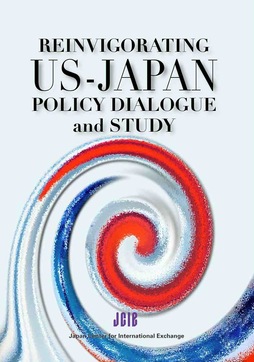 There’s a very JET-relevant report just published by the Japan Center for International Exchange titled “Reinvigorating US-Japan Dialogue and Study.” (Notably, JET alum Jim Gannon (Ehime-ken, 1992-94), Executive Director for the US office of JCIE, was involved in the drafting of the report.)
Though the report only mentions the JET Program once (on page 33 of the report), it’s clear that the still largely untapped resource that is the JET alumni community of over 50,000 worldwide (25,000+ in the US) has the potential and the ability to play a significant role in US-Japan relations going forward given the decline in energy and resources devoted to US-Japan policy dialogue and study cited in the report.
The gist of the report is that “the institutional base of US-Japan policy dialogue and study has started to erode in recent years.” However, the report also “finds fertile ground to deepen bilateral dialogue and better leverage the extensive human networks that have developed between the two societies.”
The main obstacles to reversing this trend appear to be:
- a shrinking institutional base for US-Japan relations and failure to fully take advantage of available resources (e.g., the JET alum community);
- reduced funds available in Japan to support these activities (due in a large part to a down economy); and
- to some extent, increased interest in and focus on China
As JET alums, the above trends may be beyond our control. But we are a big part of that extensive human network that needs to be leveraged. And regardless of the obstacles, the ball is in our court to be part of the solution. Tough times call for innovative solutions.
Gambarimashou.
WIT Life #141: 今年の漢字
Japan Trends, Translating/Interpreting, WIT Life, Writers Comments Off on WIT Life #141: 今年の漢字
WITLife is a periodic series written by professional Writer/Interpreter/Translator Stacy Smith (Kumamoto-ken CIR, 2000-03). She starts her day by watching Fujisankei’s newscast in Japanese, and here she shares some of the interesting tidbits and trends together with her own observations.
The end of the year is upon is, which means that it is time for 今年の漢字 (kotoshi no kanji) or the kanji of the year. It is selected by popular ballot and is supposed to represent the events of 2009. The announcement was made this weekend at Kyoto’s Kiyomizu Temple, and the winner with 14,537 votes was 暑 (sho) or hot. According to Daily Sun, the reason this character was chosen was due to average temperatures this summer hitting historical highs (and many people getting heat stroke as a result) and for the 33 Chilean miners who survived the mine’s hot conditions.
This year had the most cumulative votes ever with 285,406, and the 2nd and 3rd place picks were Read More
WIT Life #139: 60′s Japan film festival
Events, Film, Translating/Interpreting, WIT Life, Writers Comments Off on WIT Life #139: 60′s Japan film festival
WITLife is a periodic series written by professional Writer/Interpreter/Translator Stacy Smith (Kumamoto-ken CIR, 2000-03). She starts her day by watching Fujisankei’s newscast in Japanese, and here she shares some of the interesting tidbits and trends together with her own observations.
On Friday night I attended a free screening of the movie Yearning, which was being shown as part of the Japanese Cinema 1960’s film series at Asia Society. This organization is co-sponsoring the event along with Japan Foundation, and they have been offering complimentary tickets to the five films that were being shown over a span of a little over a month. You had to sign up ahead of time by indicating which film you wanted tickets for and officially you could only pick one, but when I went there was a stand-by line so if you go early on the day of the show you are likely to get in even without tickets.
Although Yearning was the English title of the movie, it came from the Japanese title of 乱れる (midareru), literally meaning Read More
