




Video: “Tonoharu” explained in unique video by creator Lars Martinson
 Books, Cartoon/Illustration, Cultural Outreach, Humor, Notable JET Alums, Uncategorized, Video, Writers
  Comments Off on Video: “Tonoharu” explained in unique video by creator Lars Martinson
****************
Lars Martinson (Fukuoka-ken 2003-2006), author of the graphic novels Tonoharu: Part Two and Tonoharu: Part 1, has put together a rather unique video that “explains” the Tonoharu series in a marvelously tongue-in-cheek way. (BTW, does anyone know if there’s a Japanese term for “tongue-in-cheek”?)
Anyway, have a look at the video. I think it’s fair to say that no one has captured the JET/living in Japan experience in as intricate a way as Lars has:
JET ROI: “The JET Program’s Finest Hour”
Article/Journalism, Blogs, Earthquake Tsunami, JETs in the News, Notable JET Alums, Return on JET-vestment, Uncategorized, Volunteer Comments Off on JET ROI: “The JET Program’s Finest Hour”
David Jacobson, a former Monbusho Scholar who now works for Seattle-based Chin Music Press (founded by former Monbusho English Fellow Bruce Rutledge), has just posted a really terrific piece titled “The JET Program’s Finest Hour“ about the role of JET and JET alumni in response to the Tohoku Earthquake Disaster. David did a particularly effective job of documenting the topic and pulling information together in a way that had not been done to date. And it demonstrates a very clear “Return on JET-vestment.”
Here’s the link: http://chinmusicpress.com/blog.php?action=display&entryID=13
David comments that the JET Program’s “support this spring, in the aftermath of the devastating March 11 Tohoku earthquake and tsunami, may have marked the program’s finest hour.” And his research helps document information such as:
“Within hours after the disaster, Eric Butler, a former JET who lives in Calgary, Alberta, created a Facebook page, Foreigners from Miyagi. He intended it as a place to discuss how to help the quake victims, but within days it attracted nearly 700 users, many in Japan, and morphed into a forum for those seeking the whereabouts of JETs or others in disaster areas.”
The article also acknowledged and put JETwit’s role in perspective in the larger context:
“Editor (and JET alumnus) Steven Horowitz began a similar effort providing up-to-the minute updates on JETwit, a blog that has evolved into the de facto central information source for the JET alumni community. But he also saw his role as helping JET alums become involved in the relief effort, listing opportunities for volunteers, translators, even offering practical advice for those in Japan. And he recommended that JETs get the word out: “Make yourself available to talk to schools, churches, companies, other organizations. Engage your grad school or college alumni offices. Wear a button that says, ‘Ask Me About Japan.’”
JET Prefecture Round-Up 07.05.11
Cultural Outreach, Earthquake Tsunami, Fundraising, Japan Local, JET Prefecture Round-up, Uncategorized Comments Off on JET Prefecture Round-Up 07.05.11
**************
Emily Lemmon, (Hyogo-ken, Shiso-shi, 2009-present), PSG volunteer, organizer of Hyogo-ken’s PEPY Ride, student of Shorinji Kempo, and editor of the Hyogo Times, gives a little taste of what JETs are doing around Japan. To submit items for future JET Prefecture Round-up posts, e-mail Emily at jetinfogather [at] gmail.com.
Events by Region
- Iwamizawa International Mini Festival was June 18th at Higashiyama Park, and included international food and drink, as well as face painting, Smores, 3 craft tables, board games from around the world, an obstacle course, salsa dancing, national anthems, Ebingo and many more great activities for everyone to enjoy.
- Leavers’ Party (“Towada Renaissance”) will be Saturday July 9th, from 1pm until everyone falls asleep.
- 2011 Tohoku Summer Retreat – JET Christian Fellowship retreat will be held from July 16th to 18th at the Aomori Christian Center in Moya Hills, Aomori City (registration required).
- Annual Cabin Sayonara Party will be July 16th at the Yakehashiri cabins.
- Iwate JETs were invited to attend the earthquake debate session on June 16th, to share stories of the March 11 disaster and how they got news or information.
- Akita JETs are lending traditional costumes from their home countries to students of the Akita University Network for their July 10th International Festival.
Chubu Region
- The Giant Jumping Monkey – a charity bash held in Myoko on July 2nd, rain or shine, features guest DJs, a monkey bounce-house, camping, and BBQ. All proceeds to Tohoku
- ZAZA Arts Festival and Charity Event presented by AJET Nagano and Arriba Arriba Cafewill be at Ikirou near Kamishiro Stationn in Hakuba on July 9-10th: an arts, music, and performance event featuring the great people of Nagano!
- Shimosuwa was one of the first towns in the prefecture to introduce a comprehensive English curriculum into elementary schools. July 18th is the 4th annual Kid’s Expo at Shimosuwa Cultural Center; This years theme is “Japan, connections to the world” . JET volunteers may showcase their countries or a cultural activity in a mini Expo style booth and give the kids a chance to interact in English.
- KoiKoi Matsumotos, a big international festival, was held on June 26th at M-Wing, Matsumoto’s chuo kominkan. About 20 countries were represented with various shows, games, presentations, kids’ activities, an international food court, and more. Entry was free, food was cheap, and profits went to help the relief effort in Tohoku area.
- Bai Bai Beach Party to be held July 24th at Uchinada Beach.
Kansai Region
- Path of Prayer continues on July 3rd; participants will walk from Nakahechi Michi-no-eki to Kobiro oji on the Kumano Kado, invoking a speedy recovery for Tohoku while experiencing this historic trail.
- Kozagawa Kayaking and Camping will take place from July 9th to the 10th on the Koza River, Wakayama.
- Nara’s farewell to leaving JETs, the Bye Bye Bash,complete with awards, was held at the Tousembou Kidaku on June 17th.
- Ultimate Frisbee practice and BBQ in the Goon on June 18th.
- Taj Ultimate, the Ultimate Frisbee Tournament, will be held July 9th and 10th.
- “There is Hope Through Music” for Tohoku – On July 9th, Ehime JET Dan will gather fellow JETs to the Asakura Kominkan in Imabari to record videos with the fireman brass band. The videos will be combined with videos from the Kurosawa Piano Music Foundation of California and broadcast both online and to the victims in refugee camps in Japan.
- Sayonara Party will be July 9th at Kashima Island.
- July 10th, Ehime JETs are invited to a tea ceremony in Imabari.
- Students now have until July 15th to apply for the Genki Scholarship for International Exchange, 2011. The Genki Scholarship hopes to assist Kochi-based students fulfil their ambitions of going on international exchange, to expand their horizons and improve their communication skills. This year’s Genki Tosaben Musical generated enough funds to provide for a scholarship of approximately 200,000 yen (exact amount depends on number of applicants, where and for how long they’re going), plus a donation of up to 100,000 yen for Tohoku’s Disaster Relief.
- The JET Farewell party and beer garden was held June 17th.
- Organic Rice Planting volunteers have been pushed back to July 2nd for lack of rain! Preparing to get muddy, JETs will assist in the labor intensive work of organic farming.
- Sayonara Party – Oita JETs say farewell on July 9th in Oita City.
- Oita JETs make a camping trip to Miyazaki Prefecture on July 23rd-24th.
- An Oita JET is organizing volunteers to help a family maintain their farm and orchard. Activities include but are not limited to: raking leaves, pruning trees, cutting grass, weeding, and setting up a wire fence.
- June 18th, the Oita International Plaza held the monthly Japanese Conversation Circle, pairing native and non-native speakers for 15 minutes and then switching partners. Participants talk freely or use materials provided based on a topic. June’s topic was talking about your hometown.
- The ‘Japan-British Society of Kumamoto’ is holding their annual ‘Tanabata “Star Festival” Party’ at 6:30PM on Friday, July 1st. This event was a huge success last year with scores of Japanese and foreigners eating, drinking and socialising in celebration of this traditional Japanese festival.
- Former Nagasaki ALT shares video from Golden Week in Tohoku here.
- This year’s international exchange party by Miyazaki City International Association (MCIA) was June 17th at the Miyazaki Shimin Plaza.
- Kagoshima’s Bon Voyage Bash will be July 9th at the Sun Royal Hotel.
WIT Life #174: Saga Setting the Nuclear Standard
Earthquake Tsunami, Translating/Interpreting, Uncategorized, WIT Life, Writers Comments Off on WIT Life #174: Saga Setting the Nuclear Standard
WITLife is a periodic series written by professional Writer/Interpreter/Translator Stacy Smith (Kumamoto-ken CIR, 2000-03). She starts her day by watching Fujisankei’s newscast in Japanese, and here she shares some of the interesting tidbits and trends together with her own observations.
Yesterday’s NYT had an interesting article about Japan’s nuclear policy going forward. Increasingly local governments are being depended on to determine this, though they believe these are decisions the central government should be making. Currently the debate is taking place in the rural prefecture of Saga located in Kyushu, where battle lines are drawn between nuclear power plant operators who insist their facilities are safe and wary citizens. In the middle is Saga governor Yasushi Furukawa who is being looked to for approval or rejection of restarting two of the four reactors at the plant. After being shut down for routine maintenance, the question is whether Read More
Job: Cultural Affairs Assistant (Houston, TX)
Uncategorized Comments Off on Job: Cultural Affairs Assistant (Houston, TX)
Via PNWJETAA. Posted by Dipika Soni (Ishikawa-ken, 2003-06). Dipika has recently moved back to London and is currently looking for new work opportunities related to Japan, translation, or other fields.
———————————————————————————————————————————-
***Note: If you apply for this position, please let them know you learned of it from JETwit. Thanks.***
Job Position: Cultural Affairs Assistant (Houston, TX)
Job Details:
Primary Duties & Responsibilities:
JET Publications
JET Prefecture Round-up, Uncategorized Comments Off on JET Publications
Check out the latest updates on the JET publications from around the country!
- Nagano‘s Yomoyama
- Spring Issue is out now; they are accepting submissions for the Summer issue!
WIT Life #173: Homeless by mandate
Earthquake Tsunami, Translating/Interpreting, Uncategorized, WIT Life, Writers Comments Off on WIT Life #173: Homeless by mandate
WITLife is a periodic series written by professional Writer/Interpreter/Translator Stacy Smith (Kumamoto-ken CIR, 2000-03). She starts her day by watching Fujisankei’s newscast in Japanese, and here she shares some of the interesting tidbits and trends together with her own observations.
Almost four months have passed since the earthquake/tsunami hit Japan, and one might think that after this amount of time things have gotten back to some semblance of normal. That seems to be the case for the most part in Tokyo, where except for limited electricity usage and the omnipresent uncertainty regarding radation levels, it is back to business as usual. However, for those who lived in the disaster area, it is a different story. I recently spoke to a close friend over Skype, who told me about her brother who had lived with his family in Tohoku.
They, like many others from the disaster zone, cannot be cleared to return home due to restrictions on entering areas that exceed a certain level of radiation. Instead, they have spent the last few Read More
Volunteer to become a Host Family for Exchange Students from China, Korea or Japan
Events, Jobs, Language Study, Networking, Uncategorized Comments Off on Volunteer to become a Host Family for Exchange Students from China, Korea or Japan
via Carleen Ben (Oita-ken 2006-2008) Carleen currently works as a Program Associate at The Laurasian Institution, a non-profit organization promoting international exchange programs between US – China, Japan, and Korea.
Volunteer Host Family:
Remember your time in Japan or as a study abroad student where you were welcomed by super amazing host families? Do you miss sharing your culture and learning about new ones??
Single parents, retirees, “empty nesters,” young couples with small children, as well as more traditional two parent families with teenagers/pets, all are currently sharing and enjoying the exchange experience!
If you are interested in hosting a student or know of someone who is interested, please email us at ayp@laurasian.org
We are looking for host families in all states throughout the US!
Students’ arrival date: August 13th 2011
End of the program: June 2012 (when host school’s term is over)
Host Families are important members of the U.S. Department of State’s citizen diplomats. If you are interested in being part of this program and the larger picture of supporting public diplomacy, please contact us! Feel free to ask us any questions. We are looking forward to hearing from you soon!
Yoroshiku oneigaishimasu!
National AJET’s Life After JET: David Leung
Uncategorized Comments Off on National AJET’s Life After JET: David Leung

National AJET
shares former JET participants’ experiences – and a little advice – with current JETs in their new monthly interview, Life After JET. Contact lifeafterjet [at] ajet.net to be featured in future posts.
*************
David Leung (Nagasaki, 2009-2010) walked us through his decision to leave JET and eventually finding his way to his current position as Graduate Policy Officer for the State Department of Further Education, Employment, Science and Technology back in Australia.
NAJET: When in the JET-year did you decide not to re-contract?
David: It was the toughest decision to make, whether or not to recontract. It is usually the worst time of the year for most JETs to carry such a heavy burden, either having just settled in, or in the most serious bouts of wintery homesickness.
For me, from the very beginning, it was always an open option to stay for as long as I could enjoy the experience and be of use to my local community on Fukue Island. The main reason I was still debating at the 11th hour wasn’t because I didn’t enjoy my work (I loved my schools, my Japanese colleagues and the kids), my social life (I had the closest network of JET teachers, who will remain some of my closest friends for the rest of my life, and was a member of the warmest Taiko Team you could imagine) or the environment (fresh local produce and delicious Goto udon that you must try, the friendliest neighbours, and the most gorgeous tropical island with beaches). It was the fact that I left the love of my life back home in Australia. When it came down to it, choosing to stay would be choosing a life for me, and choosing not to recontract meant choosing a life together with my partner.
NAJET: What’s important for JETs to do once they decide not to re-contract?
David: The two toughest things to do is to keep up the energy and try to pack in as much experience as you can in the time left. I found that I subconsciously began to distance myself from all aspects of life, I guess as a defence mechanism against the inevitable pain of leaving a year’s worth of relationships, work and stories.
Make a list of things that you want to do, either mentally or written down. This list doesn’t just include experiences that you can only do in Japan or your local community, but also making the time to say proper goodbyes with people that have become close to you over the past year(s) you may not see ever again. As time to go draws near, time speeds up; your mind will wander to the future, leaving less time and space for the present – having the list helps you keep focused and in the here and now.
Make the effort to say goodbye to your school(s) and exchange contact details with those nearest and dearest to you. You never know with whom you will want to stay in touch during a lonely moment after a few months of being back at home.
Don’t underestimate the amount of luggage you will want to bring home, and be prepared for bulky and impractical (but wonderfully sentimental and treasured) goodbye gifts from people you’d least expect.
NAJET: How did you get started on your job search when you returned home?
David: As soon as I decided to return home, I started my job search online via the numerous jobseeker support websites here in Australia. I had plenty of conversation with my partner, my family and my friends, all of whom were splendid sources of support and advice.
I had a pretty clear idea of where I wanted to be – education policy. Having worked in rural Japan, I saw areas of improvement in local government policy and funding decisions first-hand, yet could do nothing about it at the teaching level.
Click here for the rest of the interview.
WIT Life #171: Radiation fallout (both literal and emotional)
Translating/Interpreting, Uncategorized, WIT Life, Writers Comments Off on WIT Life #171: Radiation fallout (both literal and emotional)
WITLife is a periodic series written by professional Writer/Interpreter/Translator Stacy Smith (Kumamoto-ken CIR, 2000-03). She starts her day by watching Fujisankei’s newscast in Japanese, and here she shares some of the interesting tidbits and trends together with her own observations.
As more information comes out regarding the lack of disclosure as well as intentional cover-up that took place regarding Japan’s nuclear crisis, people are becoming more and more empowered. This article from Sunday’s New York Times details how citizens have begun protesting, a relatively rare action in Japan. This longer article from this morning’s NYT discusses how little PM Kan knew about what was actually happening.
Media reporting on this issue tends to be either sensational or opaque, so I really value the “on the ground” reports I periodically receive from friends in Tokyo. Here’s an excerpt from a recent mail (long but worth reading) from a close friend describing the continually changing information being provided to them, as well as her thoughts regarding the situation going forward. It provides a backdrop that illuminates why the normally docile Japanese have been taking to the streets:
“Here life is slowly returning to “normal,” but still lots of worries about the radiation affecting Tokyo and outlying areas. There are new setbacks to the nuclear plant situation each day and we wonder Read More
Local Japan: Prefecture Tourism Links
Japan Local, Local Government, Return on JET-vestment, Travel/Tourism, Uncategorized Comments Off on Local Japan: Prefecture Tourism Links
Here are the results of the “Local Japan Prefecture Tourism Websites Project.”
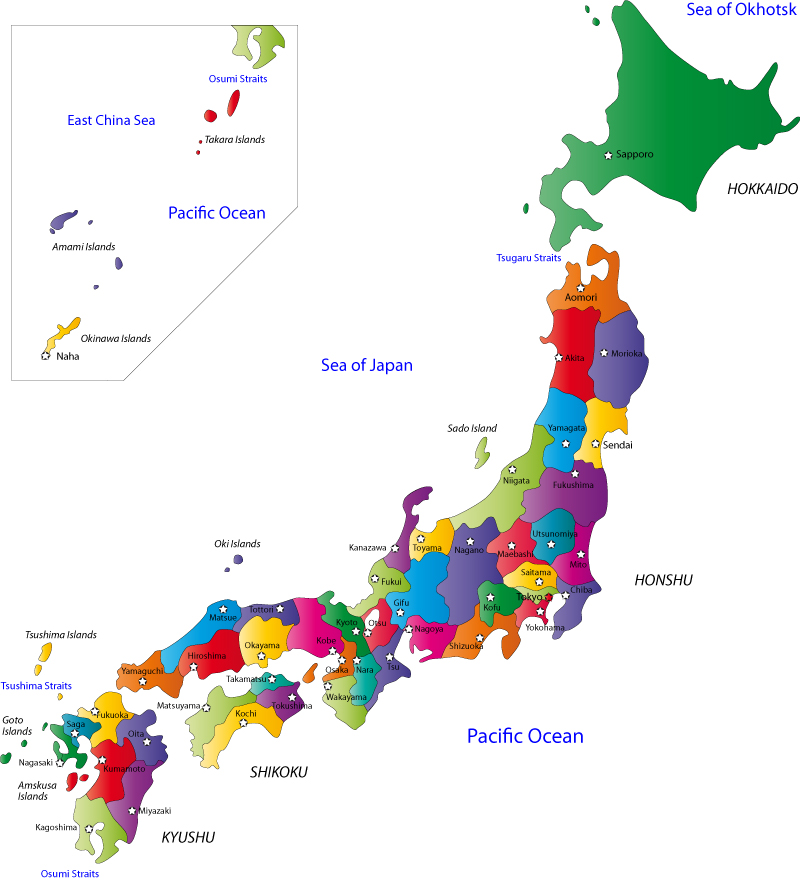 Reminder: One of the purposes of the project is to help increase the “Return on JET-vestment” for Japan by helping to promote tourism to Japan, especially to more local and regional areas. JETwit also intends to use this list so it can hyperlink to prefectures when mentioned in future JETwit posts. (e.g., “Steven Horowitz (Aichi-ken, Kariya-shi, 1992-94)”)
How you can help further:
- Build the list: If you’re aware of any additional links that might be helpful–e.g., a blog (especially by JETs) or sites for a region or a city or a town–feel free to post in the comments section or e-mail to jetwit [at] jetwit.com and I’ll add them to the appropriate section.
- Tell readers one reason why someone should visit your (former) region/prefecture/city
*Note: Where prefectures didn’t have their own tourism website or English language info guide, I’ve used the Japan National Tourist Organization’s (JNTO) reference page for that prefecture.
Regional Tourism Sites:
- Tohoku: Tohoku Tourism Promotion Organization http://www.tohokukanko.jp/english/
- Shikoku: TOURISM SHIKOKU http://www.tourismshikoku.org/
- Kyushu: http://www.kyushu-tourist.com
Prefecture Tourism Sites
Aichi
- http://www.jnto.go.jp/eng/location/regional/aichi/index.html
- Kariya City – http://www.city.kariya.lg.jp/wwwe_data/index.html (Steven Horowitz, Aichi-ken, Kariya-shi, 1992-94)
Akita
Aomori
- http://www.pref.aomori.lg.jp/foreigners/sightseeing.html
- http://www.jnto.go.jp/eng/location/regional/aomori/index.html
- http://wikitravel.org/en/Aomori
- JET blog about sight seeing in the Tsugaru region of Aomori by Aomori JETs Emma Sayers, Mike Moses and Kelly Isom: http://letsgotsugaru.blogspot.com.
- Towada and Beyond http://towada-city.blogspot.
com – Thanks to JET alum Mel Tee (Aomori-ken, Towada-shi), who still works for Towada, for sharing this. - http://www.en-aomori.com/ is another good Aomori sightseeing website in English (also has Japanese, Chinese, and Korean versions) – Thanks to Mel Tee for sharing this one as well.
- http://melt-in-japan.blogspot.com/ – And this is a blog by Mel about life in Aomori!
Chiba
Read More
JETs with J.D.s >> A Guide to Picking a Law School
Uncategorized Comments Off on JETs with J.D.s >> A Guide to Picking a Law School
Andrew R. McCarthy (Akita-ken, 2005-08) is a recent law graduate from The Ohio State University Moritz College of Law and is packing up his bags for Houston, Texas . He currently runs the blog JETs with J.D.s, an information source for current JET alumni law students and prospective law students for career paths and approaches within the current legal market. For those considering law school and trying to comprehend the costs and the risks of such an endeavor, he also recommends The Law School Tuition Bubble.
“You’d think that with the rigors of getting through undergrad, studying for and taking the LSAT, and making sure you perfect your law school applications, picking the law school of your dreams should be the easy part. It isn’t. The advice provided below isn’t the only way to go about picking your law school, but hopefully it will show you where your priorities should be.”
The post, in full, is available here.
Earthquake Recovery News 05.31.11
Earthquake Tsunami, Return on JET-vestment, Uncategorized, Volunteer Comments Off on Earthquake Recovery News 05.31.11

Hello, everyone! My name is Emily Duncan (Hyogo-ken, 2005-2008). Currently I live in Atlanta, Georgia and I oversee the Facebook discussion group “Japan Earthquake Disaster Relief Idea Exchange.”
Originally my friend Mellissa Takeuchi (also a former Hyogo-ken ALT) and I established this group to discuss ideas which could help Japan in the aftermath of the March 11th earthquake. In the beginning this was fairly helpful, but as time went on it became increasingly obvious that the recovery story in Japan would not stay on the front pages of newspapers and websites so I decided to share news stories that I thought would be of interest to our discussion group. My hope is that these stories will inspire other people to get involved.
Originally I was at a loss as to how I would start this series of posts for JETwit. But as yesterday was Memorial Day I thought it would be best to acknowledge the hard work of the American military during Operation Tomodachi. All branches of the American military – Army, Air Force, Navy and Marines worked together to help the region affected by the earthquake and tsunami. (See more here with a nice slideshow here).
I was really proud of the initial response and would love to have one of those patches!
WIT Life #169: Happy Doll Fundraiser
Events, Film, Translating/Interpreting, Uncategorized, WIT Life, Writers Comments Off on WIT Life #169: Happy Doll Fundraiser

JET Prefecture Round-Up 05.30.11
Cultural Outreach, Earthquake Tsunami, Events, Fundraising, Japan Local, JET Prefecture Round-up, Uncategorized Comments Off on JET Prefecture Round-Up 05.30.11
**************
Emily Lemmon, (Hyogo-ken, Shiso-shi, 2009-present), PSG volunteer, organizer of Hyogo-ken’s PEPY Ride, student of Shorinji Kempo, and editor of the Hyogo Times, gives a little taste of what JETs are doing around Japan. To submit items for future JET Prefecture Round-up posts, e-mail Emily at jetinfogather [at] gmail.com.
Events by Region
Hokkaido
- The Hokkaido Players present The Jungle Book, May 22nd (Sunagawa), 28th (Takinoue), and June 4th (Kutchan).
- Iwamizawa International Mini Festival will be June 18th at Higashiyama Park, (next to the sports centre)
Aomori
- On Saturday, June 5th, Aomori AJET will be holding a double-parter event, a gala dinner and a club event, in Morioka City. These events are being held to bring together JETs from all over Tohoku, and raise money for Earthquake Relief (Japan Red Cross).
- There will be an International Lunch at the Aomori City Chuo Shimin Center on Saturday, June 18th. On the menu is Thai curry! At the same time, Aomori Prefecture’s branch of UNESCO will be presenting sessions on Japanese culture, and providing free tea ceremony sessions for those who would like to try it.
- The 7th annual Akita International Sumo Basho will be held in Akita city on Sunday June 5th.
Iwate
- JETs are invited to attend a tour of Nataya-cho, led by volunteer guides, in Morioka on June 12th.
Kansai Region
- Block 6 and 7 Sayonara Formal will be held in Kobe on June 25th.
Nara
- The International Arts Festival, featuring performances in a wide range of disciplines, will be put on by the JETs of Nara prefecture on June 19th.
- Nara’s farewell to leaving JETs, the Bye Bye Bash,complete with awards, will be held at the Yagi Kintetsu Beer Garden on June 17th.
Hyogo
- 2011 Himeji Prom-stravaganza will be June 4th.
- Hyogo AJET’s Sayonara Party will be June 17th
- Taj Ultimate, the Ultimate Frisbee Tournament, will be held July 9th and 10th, 2011 (start practicing)!
Chugoku Region
Tottori
- Tottori’s Got Talent, in which participants compete to win money for charities of their choice, will be held in Tottori city on June 11th.
Shikoku Region
Ehime
- “There is Hope Through Music” for Tohoku – On July 9th, Ehime JET Dan will gather fellow JETs to the Asakura Kominkan in Imabari to record videos with the fireman brass band. The videos will be combined with videos from the Kurosawa Piano Music Foundation of California and broadcast both online and to the victims in refugee camps in Japan.
- Eight JETs will assist with the Imabari Higashi Secondary School English Camp June 11th and 12th.
- Ehime JET Melanie is planning a fundraising festival event, in conjunction with Imabari City International Exchange Association (ICIEA), to raise funds for Tohoku and Kanto region disaster relief. The event will take place on Sunday, July 24, at Saisai Kiteya in Imabari.
Kochi
- Ladies Day Spa – ladies of Kochi gather for pampering on June 4th.
- Kochi Surf Camp will be at Irino Beach July 16th – 18th.
- JETs Sam and Douglas are now teaching weekly self-defense classes in Kochi.
Kyushu Region
Oita
- A team of Oita JETs will be playing in the Mud Volleyball tournament in Nakatsu City on June 5th.
- JETs and non-JETs will mingle and show their talents at the Rotary Dinner and Talent Show in Oita City on June 18th.
- Oita JETs will assist with rice planting on to Moritas’ Organic Farm in Bungo Ono City on June 18th or 25th.
- Sayonara Party – Oita JETs say farewell on July 9th in Oita City.
- Bad weather forced the cancellation of the Oita camping trip on May 29th, so JETs went bowling instead.
Kumamoto
- Kumamoto’s Got Talent will be performed at Good Time Charlie’s on June 4th.
- KumAJET Sports Day was Saturday, May 21st, in Nimarukoen.
Nagasaki
- ALTernative Nagasaki, the photo art exhibit explores Nagasaki through the eyes of its transient population of ALTs. Opening night is June 11th
Kagoshima
- Bound in Japan is an art project promoting multicultural exchange and diversity awareness, presented by a former Kagoshima JET.
