




AJET launches “JET Community Service Tracker 2013-14”
 AJET, Return on JET-vestment, Volunteer
  Comments Off on AJET launches “JET Community Service Tracker 2013-14”
I’d heard about this great idea from AJET Chair Kay Makishi a little while ago, and now it’s up and running! A really innovative way to show another form of Return On JET-vestment:
JET Community Service Tracker 2013-2014
https://docs.google.com/forms/d/1QzQif7qeluJBzfnCgQuseZ4FVJlnMETaN65mEBYh6cA/viewform

This year, National AJET has set some very ambitious goals for JET community involvement: 1,000,000 yen raised for charity, and 10,000 volunteer hours of community service. For any volunteer event, charity event, or fundraising campaign, large or small, please fill out this form. Whether you raised 100,000 yen, or 1,000, we’d love to hear about it. Whether 100 people volunteered for 10 hours, or two people volunteered for one hour, we want to hear about it!
JET Community Service Tracker:
AJET proudly introduces JET Community Service Tracker! This form is designed to collect data on volunteer hours served and charity money raised by JETs around Japan. You can enter figures for the entire JET-year: August 1, 2013 through July 31, 2014. The information allows AJET to share the positive impact JETs make in their communities with the Japanese Ministries that support JET and with the Japanese public, and help other groups increase the success of their own volunteer and charity efforts.
Race to the Top Challenge:
AJET also proudly presents the Race to the Top Challenge. This challenge will run for six months, from November 1, 2013 through April 31, 2014. Fill out the JET Community Service Tracker and win up to 60,000 yen to support your next volunteer or charity event!
How to Win:
That’s easy! Just be the most caring, dedicated, AJET Chapter you can be! Then, log all of the awesome things you do in the JET Community Service Tracker from November through April. For any questions regarding how to record your community service (what counts/what doesn’t) please contact exec@ajet.net
The Prizes:
One prize of 30,000 yen will go to the prefecture with the largest number of community service hours. A second prize of 30,000 yen will go to the prefecture with the largest amount of charity money raised. The winners will be determined on a percentage basis in order to account for the differences in JET population from prefecture to prefecture.
Who is Eligible to Win?
Any official AJET Prefectural Chapter is eligible to win one or both of these categories for a total of up to 60,000 yen. The winning prefecture(s) will be announced in the May issue of Connect Magazine.
Disclaimer:
The AJET National Council reserves the right to revoke prize money in the case of misconduct including but not limited to inaccurate recording, intentional lying, and unethical actions as determined by the Council. This contest is sponsored by the AJET National Council, a volunteer organisation of current JET participants elected and appointed by current JET Programme participants to represent the JET community nation-wide.
JETAA Singapore’s Natsumatsuri!
Cultural Outreach, JETAA Chapters, Return on JET-vestment Comments Off on JETAA Singapore’s Natsumatsuri!

L-R: Libing, Eugene and Shane, helping out at the JETAA booth. (Click the photo to see more photos on the JETAA Singapore website.)
Thanks to JETAA Singapore’s Eugene Neubronner (Hiroshima-ken, 2010-12) for sharing this great update:
“This is Eugene Neubronner from the JETAA Singapore Chapter committee. We recently had our own Natsu Matsuri and we’ve finally gotten around to posting up pics and a writeup. Would love it if you guys could feature it and link to it as we’re always looking for more people to come on down who are ex- and interested JETs!”
Natsu Matsuri 2013
Back in August, Singaporeans, Japanese and everyone else came together to enjoy one of Japan’s favorite events during summer, the Natsu Matsuri. While it is unfortunate that Singapore has a very controlled use of fireworks and firecrackers, that didn’t mean we couldn’t have any fun. JETAA Singapore members were out in force as well, with our own booth to drum up interest in the JET Programme.
JETAA Singapore’s booth was a collective grab bag of games and information on the JET Programme, and saw a surprisingly strong interest that threatened to overwhelm our members and committee staff on hand. Many clamored for the Japanese games we had – including a haiku contest, match-the-word and more – but others were also interested to find out more about the JET Programme, something our ex-JET members were more than happy to talk about. Here’s to hoping more people apply and discover the joys of living and teaching in Japan!
Held at the Japanese Primary School in Singapore’s Changi, the annual event sees thousands of people attending – many dressed in their own yukata. The 2013 Natsu Matsuri was the 26th to be organized by The Japanese Association of Singapore. It features dozens of stalls hawking traditional Natsu Matsuri food, games and a massive stage for performances throughout the evening culminating in a Bon Odori dance everyone’s invited to join in on.
If you happen to be living in Singapore and is an ex-JET (Singaporean or otherwise) who’s somehow not on our list, do reach out to us! We’d love to get to know more of you. JETAA Singapore holds regular events and meet-ups. Do email us at secretaryjetaasingapore [at] gmail [dot] com.
お疲れさまでした〜
Click here for the full post and to see more photos from the event: http://jetaasg.wordpress.com/2013/10/18/natsu-matsuri-2013/
Help a JET alumna fight for her life
LifeAfterJET, Volunteer Comments Off on Help a JET alumna fight for her life
Thanks to JETAA Northern California’s Mark Frey (Kumamoto-ken, 2002-06) for sharing this:

One of my close friends on JET, Tonisha Bell-Alston (Kikuyo-machi, Kumamoto-ken, 2003-05) was diagnosed with a very rare cancer earlier this year and is now fighting for her life.
If you’d like to join me in helping her, her friends have started a donation site to help with her medical costs: http://www.youcaring.com/medical-fundraiser/-teamtbellalston/96899
Tonisha is a strong, cheerful, wonderful person (and loving mother of two), as those of you who know her know. She is exhibiting those same qualities as she fights this disease. Please pass this on to others who may be interested in helping.
Tonisha’s powerful blog of her experience: http://www.caringbridge.org/visit/tonishaalston Here’s an excerpt from the “My Story” section in the beginning:
“Welcome to my site. Join me in the fight of my life! Please send your prayers, thoughts, kind words, well-wishes, and jokes my way. On February 27th I was diagnosed with synovial sarcoma, a very rare soft tissue cancer. Now, I can honestly say I’m one in a million :) Since discovering the cancer in my left thigh, it has metastasized to areas of my lungs. At one point I was hoping to avoid chemotherapy with a lifestyle change, but now chemo is the best option. I’m ready to beat this thing and put this chapter of my life behind me….”
Thank you,
Mark Frey (Kumamoto, 2002-06)
The Font, a literary journal for language teachers, seeks JET submissions
Academic, Press Release Comments Off on The Font, a literary journal for language teachers, seeks JET submissions
The Font – A Literary Journal for Language Teachers
Submission Guidelines
The Font – A Literary Journal for Language Teachers welcomes submissions of short stories, articles, essays, anecdotes, poems, cartoons and other forms of creative writing which provide insight, reflection, humour, and
inspiration on the theme of language teaching or learning, at home or abroad. In other words, the theme must be in some way related to language teaching or learning, teaching abroad, or be of interest to those connected to this profession.
The Font welcomes the addition of a Visual Arts Editor in the form of Mr. Gareth Jones. And we are therefore happy to announce that The Font is now also accepting visual arts submissions.
Submissions may be sent to submissions@thefontjournal.com and should;
1. be original
2. be less than 5,000 words in length. (Poetry submissions should have no
more than 3 poems. Please include all poems in one document)
3. have pages numbered and have any subheadings in bold font
4. have a title, the author’s name, affiliation, contact details, and word
count at the top of the first page (These details don’t necessarily appear
in the journal.)
5. have any original photos or artwork attached as a separate file as well
as in the text
6. be in English and sent by email.
Previously published material will be considered as long as permission has been given by the original publisher.
Submissions are reviewed by members of The Font’s Editorial Committee and selected on relevance, and literary merit. Submissions may either be accepted or rejected as they are, or editors may make suggestions and ask
authors to rewrite and resubmit.
We strive to provide several readers for each manuscript in order to offer maximum exposure, but this takes time. We respectfully ask for your patience and forbearance in this matter. If you have not heard from us within three months, feel free to inquire about your manuscript.
The Font acquires first-time world rights. After publication, all rights revert to the author and the work may be reprinted as long as appropriate acknowledgement to The Font is made.
We will consider simultaneous submissions, but request that you inform us immediately if your work is accepted elsewhere.
Next Deadline: January 31st 2014
Publishing Spring Issue: March 2014.
 Originally posted to the JETAA DC website by JETAA DC Newsletter Editor Kathryn Kovacs: http://jetaadc.org/okaeri-volunteering-your-way-to-a-job/
Amber Liang, a former JET participant in Kochi Prefecture, shares her experience using volunteer work to boost her resume and land a job. She is now gainfully employed and serving on the JETAA New York Board of Directors.
Volunteering. What does that word conjure up? For many people, the first thing that comes to mind might be images of serving food at a soup kitchen, cleaning up the local park, or perhaps even, playing bingo at your neighborhood senior home. How does this actually lead to a job, you might ask? In the right context, volunteering can be a very effective strategy for laying the groundwork for a career, especially if you can mold the experience to suit your professional needs. To prove my point, I’m going to use my personal experience volunteering for JETAA New York (JETAANY) as a case study.
When I returned from my unforgettable two years on JET, I was remarkably optimistic that I would have no trouble finding a job in New York–naively so, because two weeks after my return, Lehman Brothers announced it was filing for bankruptcy and, well, you know the rest of the story. Needless to say, it was a rough time. I signed up with a number of temp agencies, but there wasn’t much that came my way and the jobs that did weren’t ones I could base a career off of. After weeks of doing nothing, I decided to get out of the house and went to my first JETAA event—the annual softball tournament, to be exact—where I met some awesome JET alumni, many of whom became excellent sounding boards for me; they told me about their careers and gave me some valuable advice on how to approach mine. This brings me to LESSON #1: Use your volunteering experience to build your network. Do not be afraid to speak candidly to everyone you meet. Networking with those you volunteer with is the perfect way to develop relationships in a more casual way than traditional networking avenues.
In the course of my conversations, I mentioned the fact that I had organized a number of events while on JET. I was speaking to none other than Steven Horowitz, founder of JETWit, and he invited me to help him produce an author showcase with some prominent JET alumni. Of course, having nothing better to do, I enthusiastically accepted. The event was widely successful and it confirmed that I not only enjoyed organizing events but I was also good at it. LESSON #2: Use volunteering as a way to work on your own skills and learn about your inner passions. This really gave me the confidence to run for secretary of JETAANY and continue producing events including a play reading of Sake with the Haiku Geisha, written by JET alumnus Randall David Cook.
When I went to apply for jobs, I now had substantive experience and results that I could talk about. I could also narrow down the types of jobs I wanted to that involving project management and event planning. When employers asked me what I was doing while I was unemployed, I could honestly and proudly say that I was being very productive. Lesson #3: Work your volunteering into your resume.I brought the flyers that I had created to my interviews and I showed them lists of all the events that I had organized on JETAANY. Long story short, I eventually got a job that I really wanted working in both program management and event planning, and what really brought it full circle was that my new boss knew Randall David Cook. Talk about making your network work for you!
In today’s tight job market, it’s important to stay relevant and engaged, and even more so if you are unemployed. You’d be surprised at how forgiving employers are when it comes to unconventional experiences, like volunteering, as long as you can tie it all it. So I encourage you to consider your passions, build your network, and volunteer your way to a job.
Did you volunteer your way to a job? Let us know any lessons you learned or resources in the comments.
(Hungry for more job search advice from JET alumni? Check out The Job Search section of our online Returnee Handbook).
Japan Times: “Don’t blame JET for Japan’s poor English” by Debito Arudo
Return on JET-vestment Comments Off on Japan Times: “Don’t blame JET for Japan’s poor English” by Debito Arudo
A recent Japan Times piece by long-time contributor Debito Arudo:
Don’t blame JET for Japan’s poor English
BY DEBITO ARUDOU
The Japan Exchange and Teaching Programme, touted as the world’s largest cultural exchange scheme, has brought thousands of non-Japanese into the country to teach at local boards of education. These days, with many government programs being told to justify their existence, a debate is raging over whether JET should be left as is, cut or abolished entirely.
Essentially, the two main camps argue: a) keep JET, because it gives outback schools more contact with “foreign culture” (moreover, it gives Japan a means of projecting “soft power” abroad); versus b) cut or abolish JET — it’s wasteful, bringing over generally untrained and sometimes unprofessional kids, and offers no measurable benefit (see Japan’s bottom-feeding TOEFL test scores in Asia).
The debate, however, needs to consider: 1) JET’s misconstrued mandate, and 2) Japan’s psychotic — yes, psychotic — system of language teaching. Read More
JETAA Canberra establishes Facebook group, updates website
JETAA Chapters Comments Off on JETAA Canberra establishes Facebook group, updates website
Originally posted by Eden Law to the JETAA Oceania FB group:
Recently the JETAA Canberra chapter in Australia unveiled a new-look site as well as starting up a Facebook group, joining the rest of the JETAA Oceania chapters online. While it may have been a long time in coming, the JETAA Oceania chapters had a long-term strategic plan to increase their presence and outreach through the use of social media, formulated in the 2011 regional conference on the topic.
For an Antipodean (i.e. Down Under) point of view, you might like to look at what the southern JETAA chapters have been up to:
- – JETAA Oceania: Facebook
- – JETAA Queensland: Facebook and Website
- – JETAA NSW (New South Wales): Facebook, Website, Twitter/Instagram: @jetaansw
- – JETAA Canberra: Facebook and Website
- – JETAA Vic/Tas/SA (Victoria/Tasmania/South Australia): Facebook, Website, Twitter: @JETAAVicTasSA
- – JETAA WA (Western Australia): Facebook and Website
- – JETAA Wellington (New Zealand): Facebook, Website, @JETAAWellington on Twitter
- – JETAA Auckland (New Zealand): Facebook, Website, @aucklandjetaa on Twitter
- – JETAA South Island (New Zealand): Facebook, Website, @JETAAsthisland on Twitter
CIR continues Fukushima Live blog: Stories from people living in Fukushima prefecture
Blogs, Japan Local, Return on JET-vestment, Travel/Tourism Comments Off on CIR continues Fukushima Live blog: Stories from people living in Fukushima prefecture
 Saw the link for this posted by Eden Law to the JETAA Oceania Facebook group. Here’s a sample post:
http://fukushimalive.blogspot.jp
“This blog Fukushima Live collects stories from people living in Fukushima Prefecture”
Hi everyone, my name is William. I’m one of the new CIRs here in Fukushima Prefecture, and am taking over for Lachie Tranter in the International Affairs Division. Lachie has kindly allowed me to continue his Fukushima Live blog. I hope to be able to continue to share with you all life in Fukushima, the challenges people here are facing, and many of the wonderful attractions the prefecture has to offer.
Recently I had the opportunity to travel around the Aizu Region here in Fukushima Prefecture. Aizu, the westernmost region of the three regions in Fukushima, is known for its rich history and sake-brewing industry.
The highlight of the trip was visting Ōuchi-juku. Located in the mountains of Minami-Aizu, Ōuchi-juku was a post town during Japan’s Edo period (1603 – 1868). It is famous for the traditional thatched buildings that line its main street, allowing visitors to experience the atmosphere of the Edo period here in modern day Japan.
Update 09.30.13: “Live Your Dream: The Taylor Anderson Story”
Cultural Outreach, Earthquake Tsunami, Notable JET Alums, Return on JET-vestment Comments Off on Update 09.30.13: “Live Your Dream: The Taylor Anderson Story”
 Thanks to Taylor’s father Andy Anderson for sharing the below update:
Toho-Towa Company, LTD (Godzilla, etc.) is promoting Taylor’s film throughout Japan with City halls, other NPO’s, Boards of Education, JETs, etc. JETs are good candidates to organize screenings as part of their community relations work. Towa has posted information about this at www.youtube.com/watch?v=cjUvhwX-jDQ.
Part of the proceeds from screenings will go to the Taylor Anderson Memorial Fund which is being set up as a Japanese NPO. Ambassador Fujisaki has agreed to be on the board and is helping us recruit other board members. We’re working on a new website for the fund as well. Towa would also like to have someone (such as JETs, former JETs, those associated with Taylor’s fund) speak at each screening.
Towa will launch this effort at the Yamagata film festival on 10/12/2013 www.yidff.jp/2013/program/13p7-e.html (Regge and some Taylor fund people will be there) and in Tokyo October 15th for potential screening hosts. Screening dates will start to be known about that time and we’ll keep them updated on www.thetaylorandersonstory.com and www.facebook.com/LiveYourDreamTheTaylorAndersonStory.
Book: “This Japanese Life” published by JET alum blogger Eryk Salvaggio
Blogs, Books, JET Alum Author Beat, JETs in the News, LifeAfterJET, Notable JET Alums, Return on JET-vestment, Writers Comments Off on Book: “This Japanese Life” published by JET alum blogger Eryk Salvaggio
 Thanks to AJET Chair Kay Makishi for the heads up on Fukuoka JET alum Eryk Salvaggio who writes the blog “This Japanese Life” and recently published a book by the same name. You can read more about Eryk in this Japan Times interview with him from 2012.
About the book: http://thisjapaneselife.org/this-japanese-life-the-book/
Most books about Japan can tell you how to use chopsticks or say “konnichiwa.” Few tackle the real stress of life in a radically different culture.
The author, a three-year resident and the writer and researcher behind one of the best Japan blogs, tackles the thousand tiny uncertainties of life abroad with honesty and wit.
Perfect for anyone about to leave home for Japan or elsewhere, This Japanese Life will deepen any reader’s understanding of Japanese culture as it’s fused into a method of dealing with the hardships of working and living there.
About Eryk:
Eryk Salvaggio was an American newspaper editor in Bangor, Maine before teaching English in Japan with the JET Program. He lived in Fukuoka City from 2010-2013, writing a blog, This Japanese Life, about Japanese culture and the tiny anxieties of being an expatriate.
The site was named one of the best Japan Blogs by Tofugu and was spotlighted by The Japan Times. Salvaggio has written for McSweeney’s, The Japan Times, Tofugu and Kulturaustausch.
His work as a visual artist has been covered in The New York Times and elsewhere.
He currently lives in London.
JET alum publishes new book on corporal punishment and discipline in Japan’s schools
Academic, Books, JET Alum Author Beat, LifeAfterJET, Notable JET Alums, Return on JET-vestment, Writers Comments Off on JET alum publishes new book on corporal punishment and discipline in Japan’s schools
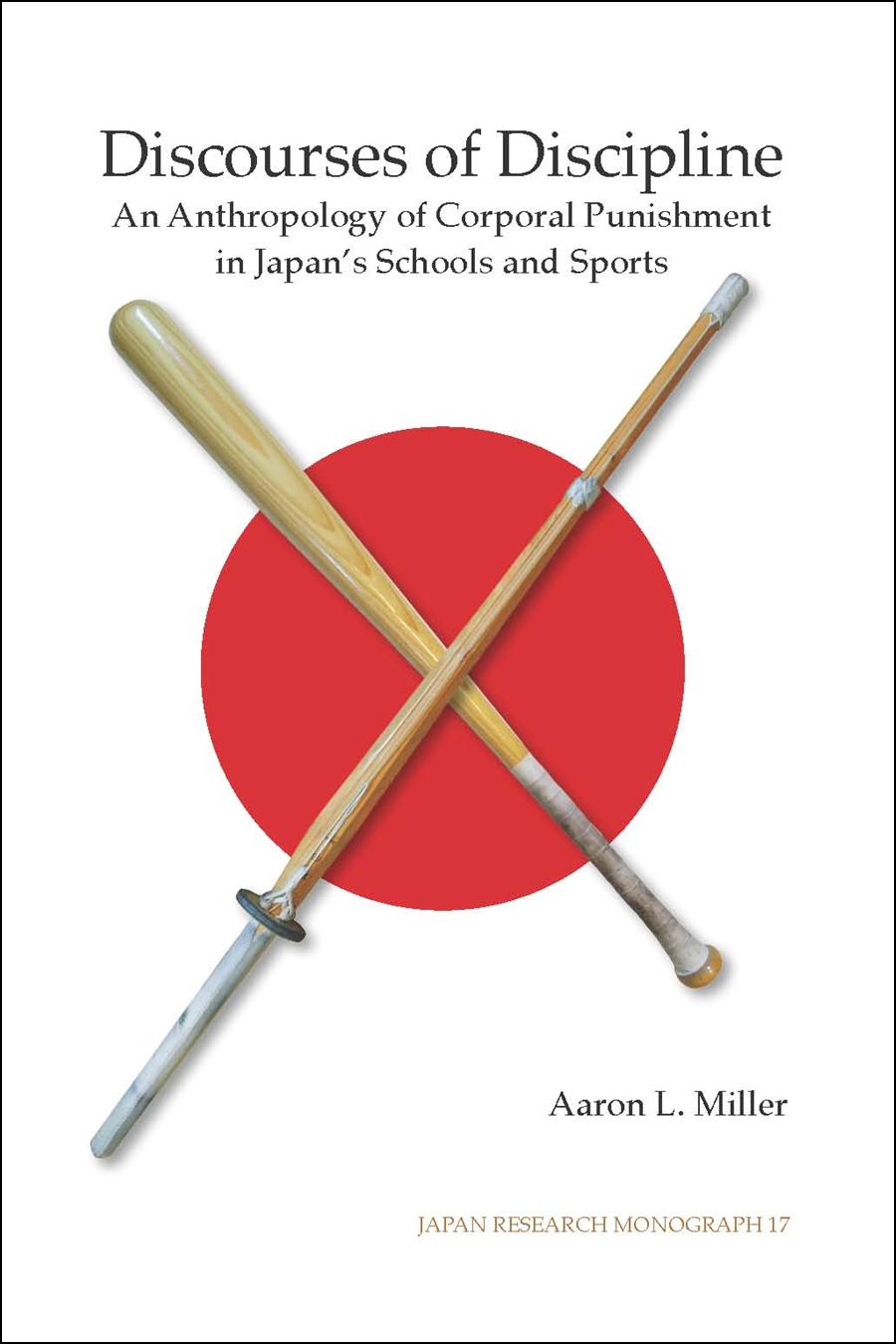 Thanks to AJET Chair Kay Makishi for passing along info about this interesting new book by Aaron Miller (Ehime-ken, 2002-04).
About the Author (via Amazon.com):
Aaron L. Miller, PhD is Assistant Professor and Hakubi Scholar at Kyoto University, affiliated with the Graduate School of Education, and Visiting Scholar, Stanford University Center on Adolescence. His academic research explores the relationships between education, sports, discipline and culture. His website is www.aaronlmiller.com.
About the Book:
This book is about the many “discourses of discipline” that encircle the issue of “corporal punishment” (taibatsu). These discourses encompass the ways that people discuss discipline and the patterns of rhetoric of what discipline should be, as well as what discipline signifies. By scrutinizing these discourses of discipline, this work disentangles the allegedly intimate ties between culture, discipline, and pedagogy in Japanese schools and sports.
For more information on this monograph, including how to order it,please visit http://ieas.berkeley.edu/publications/jrm17.html
Full IEAS catalogue: http://ieas.berkeley.edu/publications/catalogue.html
Amazon: http://www.amazon.com/Discourses-Discipline-Anthropology-Punishment-Monograph/dp/1557291055
Reviews (via Amazon)
Corporal punishment of children by teachers and coaches is a widespread practice in many countries, but especially in Japan, where it has become a front-page issue involving Olympic athletes. Miller explores this issue both historically and in contemporary practices and analyzes how various discourses regrading disciplinary actions have shaped Japanese understandings of their ‘educational reality.’ To understand this phenomenon, Miller rejects Ruth Benedict’s culturalist theory and, instead, places physical discipline (taibatsu) in the contect of Michel Foucault’s theory of violence and power, offering an incisive analysis of a complex issue. —Harumi Befu, professor emeritus, Stanford University
An intriguing and well-written analysis on molding character in Japanese schools and sports through the widespread use of corporal punishment. Miller frames his discussion in the contexts of Japanese cultural ideals about discipline, toughness, and self-improvement, as well as in Japanese perceptions of such forms of discipline as something uniquely Japanese. This book is an important contribution to understanding the social and cultural dynamics of core institutions in contemporary Japan. —Theodore C. Bestor, Harvard University
Corporal punishment as a discipline of pain and an abuse of adult authority is a troubling presence in Japanese classrooms and sports fields. This is an insightful and wide-ranging analysis that overturns simple judgments with a nuanced exploration of the historical development, sociocultural locations, and heated national discourse on corporal punishment in modern Japan. It is a significant contribution to our understanding of Japanese education and sports, and it is an original anthropological perspective on how we might theorize power in Japanese society. – —William W. Kelly, Yale University
Life After JET: Food for Thought by James Foley
LifeAfterJET, Notable JET Alums, Return on JET-vestment, Writers Comments Off on Life After JET: Food for Thought by James Foley
Recently posted to the JETAA Oceania Facebook group by Eden Law:
The JET Programme has lead to many opportunities and careers, sometimes rather unexpectedly. This is part of a series of articles by former JETs about their lives after participating on the programme, and how it has shaped their careers and paths. We hope that it will prove useful as an insight for potential applicants into what we as ex-JETs got from our experience, and maybe provide some nostalgic memories for others. Please feel free to contact us if you want to write about your own experience!
Our next article in our Life After JET series comes from James A. Foley. A former Iwaki-shi, Fukushima-ken JET (2007-2010), James met his wife (who was also a JET) on the JET Programme and has successfully carved out a career as a reviewer and critic of New York’s Japanese food scene for the famous Village Voice publication. James is also quite handy with the camera, and his blog contains his writing, articles and photography. A little known fact is that he’s totally metal on the shamisen.
This August marks the third year since I finished my time on JET; I have officially been gone from Japan for as long as I was there. Looking back now over my time on JET, the connections between the Japan experience and my work as a professional journalist are abundantly clear.
Prior to packing up life and moving from the middle of America to Iwaki City on the coast of Fukushima, I worked as a news reporter for a daily newspaper in suburban Kansas City, Mo. While I was in Japan I continued to write and hone my journalism skills, but mainly just for a blog I kept for my own records.
Towards the end of my JET tenure I had no life plan or job prospects. Read More
Welcome “Kansai JET Alumni”!
JETAA Chapters Comments Off on Welcome “Kansai JET Alumni”!

Thanks to former AJET Chair Matthew Cook (Osaka-fu, 2007-12) for sharing the good news. Great to see the JET alumni community expanding!
For more info about Kansai JET Alumni, see below:
- Website: http://kansai.jetalumni.org
- Facebook Organization Page: https://www.facebook.com/kansai.jetalumni
- Facebook Group Page: https://www.facebook.com/groups/225984954222698/
- Twitter: https://twitter.com/KansaiJETAlumni
- LinkedIn Organization page: http://www.linkedin.com/company/3306686?trk=tyah
- Linked in Group Page: http://www.linkedin.com/groups?gid=5149145&mostPopular=&trk=tyah
Australian JETAA chapters recognized for Tohoku revitalization efforts at CLAIR Sister Cities Forum
Earthquake Tsunami, JETAA Chapters, Return on JET-vestment, Sister City Comments Off on Australian JETAA chapters recognized for Tohoku revitalization efforts at CLAIR Sister Cities Forum
Via the JETAA New South Wales (Australia) website: http://www.jetaansw.org/jets-recognised-in-award/
The work and support by members and participants of the JET Programme and JETAA chapters for the revitalisation of Tohoku after the 2011 earthquake, was formally recognised in an award presentation at the 2013 CLAIR Sister Cities Forum.
Presented by Alderman William (Bill) Willson, President of Sister Cities Australia, the award was received by Ben Trumbell, president of the NSW chapter of JETAA. It was given in the presence of Ms Yoko Kimura, Chairperson of the Board of Directors of CLAIR (Council of Local Authorities for International Relations) and Dr Masahiro Kohara, Consul-General of Japan in Sydney.
“The award was presented to me as the closest president representative of JETAA. In my acceptance speech I outlined the importance of the JET Programme and the number of participants and members of JETAA, along with our objectives and a summary of our activities,” Ben said. “Australia has been fantastic in their response to the events in Tohoku. The Victorian JETAA chapter for example did fantastic work with the Big Bento Lunch initiative which raised more than $15,000 across our chapters.” The NSW chapter’s achievements should also be noted for raising awareness, starting with an exhibition of Fukushima school children’s letters at the 2011 Sydney Japan Festival, which lead to the visit of Councillor Alan de Surf of a junior high school in the city of Iwaki, Fukushima.
The 2013 CLAIR Sister Cities Forum marked the 50th Anniversary of the sister city relationship between Lismore, NSW and Yamato Takada in Nara, Japan. This was the first ever sister city relationship between Australia and Japan and was instrumental in initiating the close post-war relationship that exists between the two countries today, thanks to the efforts of Father Paul Glynn who began the first efforts in forging this link.
The subject of sister cities will continued to be explored by JETAA in the annual JETAA conference to be held later this year in Brisbane. Ben states that he hopes to share ideas and case studies including the Lismore-Yamato Takada story at the conference, as well as looking forward to sharing the award with the other chapters and presenting the certificate to the Australian country representative.
JETwit mentioned in Japan Times article “JET Alumni: Advocates for Japan”
Article/Journalism, JETs in the News, Notable JET Alums, Return on JET-vestment Comments Off on JETwit mentioned in Japan Times article “JET Alumni: Advocates for Japan”
A great Return On JET-vestment article that ran today in the Japan Times:
JET alumni: Advocates for Japan
Program lauded for continuing to bear cultural fruit, friendships
BY AYAKO MIE
STAFF WRITER
Here’s the full article: http://www.japantimes.co.jp/news/2013/09/03/national/jet-alumni-advocates-for-japan/#.UiaU_GRATv0
Here’s the quote:
Steven Horowitz, who was a JET in Aichi Prefecture from 1992 to 1994, likened his former colleagues to a global expat community of around 60,000 people in terms of their shared affection for Japan. “I think it is going to pay . . . dividends for years and years to come,” he said.
To consolidate the alumni network, Horowitz runs JETwit.com, a website that accumulates information about alumni and Japan-related jobs.
