





Interpreter/Translator/Writer Stacy Smith (Kumamoto-ken CIR 2000-03) presents WIT Life, a periodic series about aspects of Japanese culture such as art, film, food and language. She also shares her interpreting adventures and the interesting things she has encountered in the course of her work.
Those of us who have spent time in Japan are well acquainted with kei (“light”) vehicles, those cute, fuel efficient cars that enable easy navigation of the country’s narrow roads and tight spaces. Toyota wants to bring them to the U.S., and recently announced that it will be manufacturing a tiny pickup truck under its Scion brand to be sold here next year (Scion KEI-01). Like in other kei trucks, the steering wheel will be on the right side as in Japan, so it’s expected to “primarily be used by small businesses, farmers, colleges, local governments and hobbyists.” In addition, it will be restricted to just 25 miles an hour to allow use in all 50 states.
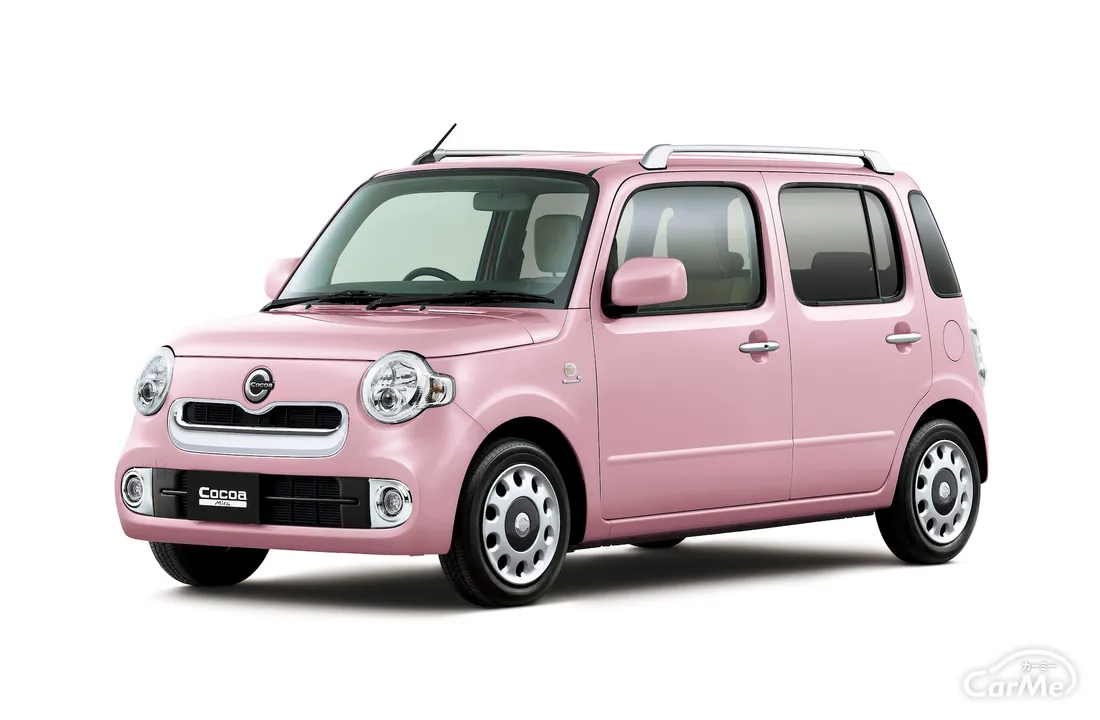
Up until now kei car fans have had to import these vehicles from Japan on their own or through businesses providing this service. Due to safety and emission regulations, cars must be 25 years or older. Most of them have manual transmissions which must be managed with the left hand, and the speedometer is in kilometers per hour so knowledge of the metric system is necessary. These aspects have not daunted ardent kei fans. They recognize kei’s limitations, such as being banned from most highways and taking 35 seconds to go from 0 to 60 miles per hour, and are playful about them with bumper stickers reading “Slow Car Club.” They are even used in places like Texas, where typically bigger is always better. In March of this year the state passed a bill that will codify into law “titling, registration and operation of so-called miniature vehicles.” With prices from $5000 to $15000, they’re a lot more affordable than the traditional U.S. pickup trucks you usually see on roads there which start at more than $40,000.
In states like New York and California, kei vehicles cannot be registered or driven on public roads as they don’t meet safety and emission standards. Often residents of states like these have taken advantage of loopholes such as registering their vehicles out of state in order to secure license plates. The New York-based group Empire State Kei Advocates recently launched an online petition to allow kei vehicle registration. So far it’s garnered 1290 signatures, and the Advocates partnered with a similar group in Texas hoping to follow in the footsteps of the state’s success earlier this year. Similar legal battles have been won in other states such as Massachusetts, Michigan, Vermont, Alaska and Colorado. An article in the Wall Street Journal this week highlighted how “some see the fight as a broader means of pushing back against the bulky, expensive cars that now dominate the American landscape.”
In other Japan news, the New York Times had an interesting article about how Nippon Steel’s takeover of U.S. Steel is progressing in Pittsburgh. Those of us who have worked in Japanese offices will resonate with a local Japanese plant employee’s mentioning his appreciation of “fewer, shorter meetings and less cumbersome decision-making processes” than in Japan. I remember laughing the first time a co-worker told me about how hou-ren-sou (報連相 or 報告 (houkoku)、連絡 (renraku)、相談 (soudan); a homonym with “spinach”) encapsulates the Japanese workplace communication framework of report, inform and consult. As an interpreter, another striking aspect of the article was the reference to “a squad of translation app-wielding Japanese engineers” descending on the plant. My heart sunk to think that apps are being used as a primary communication tool instead of on-site interpreters, but in today’s AI-dominated world who knows…

leave a reply