




JQ Magazine: Book Review – “The Thousand Autumns of Jacob de Zoet”
 Books, JQ Magazine, Reviews
  Comments Off on JQ Magazine: Book Review – “The Thousand Autumns of Jacob de Zoet”

"Brimming with potent imagery, the novel is suffused with a generous dose of personal observation and philosophical musing, much of which sounds strikingly contemporary." (Random House)
By Sharona Moskowitz (Fukuoka-ken, 2000-01) for JQ magazine. Sharona works at a literary agency in New York City. She is interested in fresh, new voices in fiction and creative nonfiction.
A former Japanese colleague of mine once described his homeland to me as an “island of repression.” He spoke with mixed emotion of the burdensome pressure Japanese feel to fulfill their cultural and societal duties and how his lifelong dream was to escape for a year and live abroad. He lamented his kinsmen’s gradual loss of “Japaneseness,” fearing that despite the superficial Westernization, or perhaps because of it, Japan was barely keeping up with the rest of the world. Interested to hear more I pressed him to elaborate. He shifted his eyes downward, paused a moment, and took a long deep breath before finally responding, “Maybe…it’s complicated.”
Complicated indeed. David Mitchell’s historical novel, The Thousand Autumns of Jacob de Zoet which takes place at the turn of the 19th century, paints a vivid portrait of a bygone Japan with its rugged landscape, samurai lords and characters who commute by horse and palanquin. Medicine is administered in the form of crude herbal concoctions and the natural world is generally viewed through a lens of superstition. Nevertheless, those who know Japan well will recognize a familiar current running throughout the narrative. To read the book is to get a feel for the seeds of what would eventually flower into the complexity of modern day Japan as we know it.
The story is set near Nagasaki on the island of Dejima where the eponymous hero lives and works for a Dutch trading company. Dejima has been designated a Dutch trading post and its foreign denizens are strictly forbidden from entering the mainland, their interactions with the Japanese governed by rigid rules and careful monitoring. Jacob’s original plan was to come to Japan for five years, accrue a nice fortune and return to Holland to marry his fianceé Anna. His plan, however, is thrown off kilter by unforeseen complications including dubious business practices, a bleak future and most profoundly, his burgeoning secret love for Orito Aibagawa, a Japanese midwife on the island. Orito is highly educated and hardy, unlike the other women we encounter in the novel. Something of a feministic anachronism, she is more concerned with scholarly pursuits than domestic life. With her ironclad will and opinions expressed without equivocation, one imagines that even today she would stand out in Japanese society. (And due to her strong character she still wouldn’t care.)
Orito’s physical appearance is marred by a burn scar on her left cheek, putting her at a considerable disadvantage in finding a suitable Japanese marriage partner. To Jacob, though, her beauty is unique; he is unfazed by her scar and perhaps even more intrigued with her because of it. Unfortunately, he knows that as a foreigner she is entirely off limits to him. Captivated by her exoticness, he ponders, “to what God would a Japanese midwife pray?”
SeattleJapanRelief.org 05/16/2011
Earthquake Tsunami, Events, Fundraising, JETAA Chapters Comments Off on SeattleJapanRelief.org 05/16/2011
Pacific Northwest JETAA has been forwarding updates from SeattleJapanRelief.org, which is a collection of Japan earthquake/tsunami-related fundraising events and activities in the Seattle area. Below is the latest, and there’s more good info here as well. These are not necessarily JETAA events, but I’m guessing various JET alums are involved in some of these.
***********
Weekly Highlights:
May 16 – 22, 2011
What’s happening around town?
Fri (5/20) 1st Annual Japan ISD Matsuri
6-8pm @ Commons- Issaquah High School (Issaquah)
Japanese clubs and classes will be presenting many family-friendly activities. Donations to Peace Winds. Contact: Tammy Haldeman 425-837-7792
Sat (5/21) Japan Relief Now: University Street Fair
4:15pm @ music stage- 42nd & University St (Seattle)
See The People Now for event details
Sat (5/21) The Sun Always Rises: Japan Relief Benefit Concert
7pm @ ACT Fall’s Theatre (Downtown, Seattle)
Artists: Sarah Rudinoff , Miss Mamie Lavona the Exotic Mullatta and Her White Boy Band, The Live Girls! Ladies Choir, Jacqueline Tabor, One World Taiko, Kaze Daiko, and Seattle Kokon Taiko. For tickets: www.acttheatre.org
Upcoming!
Thu (5/26) One Night: Relief Concert
8pm @ Neumos (Capitol Hill, Seattle)
See Nuemos for event details & tickets
Justin’s Japan: Japan Day @ Central Park Hosts Music Stars from Keiko Matsui to D.M.C.
Article/Journalism, Events, Justin's Japan Comments Off on Justin’s Japan: Japan Day @ Central Park Hosts Music Stars from Keiko Matsui to D.M.C.

This year's edition of Japan Day @ Central Park kicks off May 22 at Rumsey Playfield.
By JQ magazine editor Justin Tedaldi (CIR Kobe-shi, 2001-02) for Examiner.com. Visit his page here to subscribe for free alerts on newly published stories.
Now in its fifth year, the upcoming edition of Japan Day @ Central Park on Sunday (May 22nd) will feature a galvanizing stage performance with other family-friendly activities under the theme ”Ganbare Japan!” (You can do it, Japan!) in light of the devastating earthquake and tsunami that occurred in March.
After holding its traditional four-mile Japan Run on May 8, this year’s Japan Day Festival at Rumsey Playfield will feature stage performances and activity tents. Its special guests, introduced in three distinctly-themed acts over seven full hours, will include Circus, Senri Oe, Darryl “D.M.C.” McDaniels (of New York hip-hop legends Run-D.M.C.), AISHA, Keiko Matsui, Mai Fukui, Yuka Takara, Lainie Sakakura, and TEN-YOU. Co-hosting the event are Sandra Endo, a national correspondent for CNN Newsource and NY1 alumna, and Brian Nishii, a Tokyo native and veteran of New York City’s performing arts scene.
Matsui—whom this Examiner conducted an exclusive interview with last year—will also be headlining two concerts later that night at B.B. King Blues Club and Grill, a stone’s throw from Times Square.
Throughout the Japan Day Festival in the Naumburg Bandshell area near the stage show, there will be several activity tents for New Yorkers to experience Japanese culture firsthand—and “hands on.” A language tent will introduce key Japanese words, and other activities include origami, robot sumo battle, the Hello Kitty photo booth, and calligraphy. Patrons can also enjoy Japanese snacks, drinks and special festival food.
For the complete story, click here.
Question: Do you know of any Japanese prefectures, cities, towns, regions, etc. that have their own tourism website in English? (e.g., Shimane Prefecture: http://visitshimane.com) Or even their own English language website that might be helpful in some way to potential tourists? And if not, do you have time to look some up?
Your help needed: Please either post the locations and URLs in the comments section below. Or email the information to jetwit [at] jetwit.com.
Goal: To gather in one place a list of as many English language tourism sites for Japan as we can find.
Background: One more thing the JET alumni community can do to increase the “Return on JET-vestment” by helping to promote tourism to Japan, especially to more local and regional areas. I thought about this when I stumbled on the visitshimane.com website and realized that there must be a bunch of other Japanese prefectures and local governments that have set up sites to encourage tourism. In addition to gathering and posting them all in one place on JETwit, I thought it would also be great if every time we list a JET alum along with prefecture and years on JET (e.g., Steven Horowitz, Aichi-ken, 1992-94), we can hyperlink the prefecture and/or town to the appropriate tourism site. This will help drive more traffic to those sites and also provide additional linkbacks, which are valuable to a website with regard to search engine optimization.
Thanks for everyone’s help with this collaborative effort. Yoroshiku onegaishimasu.
p.s. I checked with Japan National Tourist Organization (JNTO) as well as CLAIR and as far as I can tell there’s no previously existing version of this kind of list.
I just set up a new LinkedIn group for JETs, JET alums and Friends of JET who work in academia or are interested in working in academia. This includes any professors, PhD candidates, masters degree students or anyone related in any way to research and academia.
CLICK HERE to join the
JET Alum Academics LinkedIn Group.
Justin’s Japan: Q&A with Grammy Winner Marcus Miller on His Concert for Japanese Tsunami Relief
Article/Journalism, Interview/Profile, Justin's Japan Comments Off on Justin’s Japan: Q&A with Grammy Winner Marcus Miller on His Concert for Japanese Tsunami Relief
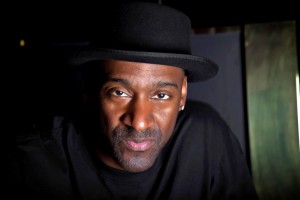
- “Japan has been a really beautiful place for a musician to play jazz. And so when I heard about the disaster, I said, man, I’d love to be able to give back a little bit.” (Andrew Dunn)

By JQ magazine’s Justin Tedaldi (CIR Kobe-shi, 2001-02) for Examiner.com. Visit his page here to subscribe for free alerts on newly published stories.
Born and bred in New York, Marcus Miller is a multi-instrumentalist, songwriter and producer who’s worked with everyone from Miles Davis to Luther Vandross to Frank Sinatra while waxing a score of records on his own. On May 15, the Grammy winner returns home to New York’s Highline Ballroom for a special one-night all-star benefit concert to provide financial relief and support to those devastated by the recent tsunami tragedy in Japan.
“Marcus Miller Presents: A Concert for Japanese Tsunami Relief” will feature performances by cutting edge artists from around the globe and across the musical spectrum, including African vocal superstar Angélique Kidjo, hip hop/jazz pioneer Q-Tip, trumpeter Wallace Roney (Miles’ heir apparent), drummer Ahmir “Questlove” Thompson (of the Roots), and taiko drummer/bamboo flautist Kaoru Watanabe, among others. In this exclusive interview, I spoke with Miller about the show, his three-decade history with Japan, and other high points of his career.
How did this benefit concert come together?
I heard about what was going on over there, and was trying to figure out—probably like a lot of people—what can I do? And I figured, you know what? I might be able to put together a benefit concert to try to raise some money, because at the time [of the earthquake] it seemed devastating, and as the weeks have gone by we actually realized it was much worse than we thought, with all this radiation and stuff. So you just want to do whatever you can to help, and show everyone that we’re thinking about them and trying to support them.
How did you choose the performers?
I just wanted to try to present something that was unique, you know what I mean? That kind of represented New York, because there’s a whole lot of different things going on in New York, and this is where I’m from. I thought it was a nice opportunity to bring a lot of different elements together.
Tell us about your history with Japan.
I first when to Japan when I was nineteen years old. I went with a saxophone player called Sadao Watanabe, who was the first Japanese musician to go to Berklee College of Music in Boston; one of the really early jazz musicians. And he’s really, really famous over there, you know, like a national icon. So it was a great introduction to Japan, because we went to every city in Japan—we went to the Japanese cities that Japanese people haven’t been to.
So I got a taste of the country and a taste of the culture, and I’ve been going back ever since. I’ve been there with the Brecker Brothers; I’ve been there with Miles Davis; I’ve been there with my own groups; with Herbie Hancock. And their appreciation of American jazz is just incredible—at first you can’t believe it, because they know every record that you’ve ever played on. I’ve had people waiting for me in hotel lobbies with a stack of a hundred LPs, and they want me to sign each one because I played on each one of them, you know? I sat there in the hotel, man, for an hour (laughs) signing LPs just because I admired their enthusiasm so much. So it’s been a really beautiful place for a musician to play jazz. And so when I heard about [the disaster], I said, man, I’d love to be able to give back a little bit.
What are some of your favorite memories of Japan?
My early memories—anybody who’s visited Japan probably has the same memory—first is the incredible jetlag. Staying up all night, and then wanting to go to sleep right before your concert, you know? If you ever saw Bill Murray in Lost in Translation, sitting on the edge of his bed in the middle of the night, everybody goes through that (laughs). But also, how generous their culture is; it’s very polite. Everyone is bowing to everyone, and when you get back to the States after you’ve been in Japan, you’ve got to remember to stop bowing, because then people think there’s something wrong with you, you know? The food is always a trip, interesting, and learning how to use chopsticks.
And the fact that they never really say “no” in Japan. Like if you walk into a store and say, “Do you have size ten shoes?” they shake their head yes and say, “Yes, I don’t think we have any,” you know what I mean? (Laughs) You begin using that. And like I was talking about, the enthusiasm for music is incredible there, and the beauty of the country—we go from city to city on the high-speed trains, so you get to really see in between the two cities; you get to see all these incredible fields and flowers and rice fields and workers in the traditional kind of Japanese clothes. It’s a really beautiful country. So those are the kinds of things that strike me about Japan.
You mentioned Sadao Watanabe before. Do you have any other favorite Japanese musicians?
There’s a guitarist named Kazumi Watanabe. I guess Watanabe’s a pretty common name, but Kazumi Watanabe’s a musician that I went to Japan with who’s also a great guitarist. I’ve played with a bunch of great Japanese American musicians—Teruo Nakamura was my first Japanese American musician who I played with and really learned a lot from; he’s a bass player. But they have some incredible Japanese musicians—I played with a Japanese koto player who plays the traditional instrument in a very contemporary style, very cool.
Read the complete interview here.
Hanami: JETAA NY
JETAA Chapters Comments Off on Hanami: JETAA NY
New York JET alums enjoy the Sakura Matsuri 2011 at Brooklyn Botanical Garden.

Smile Kids Japan’s Mike Maher-King to speak at TEDxTokyo
Celebrity, Earthquake Tsunami, Events, Japan Trends, Notable JET Alums, Return on JET-vestment, Volunteer Comments Off on Smile Kids Japan’s Mike Maher-King to speak at TEDxTokyo
 Mike Maher-King (Fukui), founder of Smile Kids Japan, will be one of the speakers at TEDxTokyo: Entering the Unknown on Saturday, May 21 at Miraikan Tokyo.
Here’s some background on Mike from the TEDxTokyo website which does a nice job summarizing some of the good work he’s been doing since the Tohoku Earthquake/Tsunami:
Mike Maher-King
Network Organizer, Fundraiser and CatalystChanneling good intentions is tougher than it looks, but Michael Maher King seems to possess the knack. The young British founder and CEO of Smile Kids Japan—which has now joined Living Dreams—was a teacher in Fukui when his wife informed him that some of their students were orphans. In May 2008, they started up Smile Kids to lend their time, skills and care to Fukui’s orphanages.
The March 11 Tohoku disaster broadened the group’s focus and ambitions. Working alongside the Living Dreams NPO, Michael is now taking their network concept to 18 orphanages in Miyagi, Iwate and Fukushima through the Smiles and Dreams: Tohoku Kids’ Project. They plan to set up regular fun and interactive volunteer visits, distribute donated items, and spark long-term projects that cover everything from computers to mentoring to scholarships. Michael hopes to go nationwide and help Japan’s other orphans shape their own destinies.
 And here’s the event description from the TEDxTokyo website:
Join us
The entire event will be streamed live here on:
- May 21st from 9am JST
- May 20th from 8pm EDT
Join us for all of the talks as they happen, and exclusive backstage interviews.
On Saturday May 21st from 9am JST (Friday May 20th from 8pm EDT) the curtain will rise on our third annual event, Entering the Unknown, which is set to be bigger and better than ever as we bring together an even wider range of speakers and participants to share ideas and inspiration.
In the wake of the devastating March 11th earthquake and subsequent tsunami & radiation menace, we abruptly altered our focus to explore practical and inventive ways of rebuilding and renewing Japan, and uplifting the spirits of its people.
Over 30 speakers and 300 participants will be joining us at Tokyo’s iconic Miraikan, with thousands more around the world watching on the day via our bilingual live streams, whilst taking part through our social media channels.
We invite you to be a part of this special event – put the date in your diary, follow our latest updates on Twitter, and join us here live from Tokyo on the day as we Enter the Unknown.
Hyogo Times and Wide Island View
JET Prefecture Round-up, Uncategorized Comments Off on Hyogo Times and Wide Island View
Hot off the press! Hyogo Times May 2011 issue is available for download at the website (left-hand side).
Wide Island View, the JET publication of Hiroshima-ken has also been recently updated.
JET Prefecture Round-Up 05.13.11
JET Prefecture Round-up, Uncategorized Comments Off on JET Prefecture Round-Up 05.13.11
Emily Lemmon, (Hyogo-ken, Shiso-shi, 2009-present), PSG volunteer, organizer of Hyogo-ken’s PEPY Ride, student of Shorinji Kempo, and editor of the Hyogo Times, gives a little taste of what JETs are doing around Japan. To submit items for future JET Prefecture Round-up posts, e-mail Emily at jetinfogather [at] gmail.com.
Events by Region
Tohoku Region
Akita
- volunteerAKITA has been very active, starting with a one-day trip on April 24th, then spending Golden Week with the Fruit Tree Project, and continuing volunteer work May 14th – 15th in Kesennuma.
- The 7th annual Akita International Sumo Basho will take place on June 5th at the Akita Budokan in Akita City; funds will support Tohoku.
Iwate
- Two free yoga classes were held on April 28th and 29th, donations taken to benefit Tohoku.
Kansai Region
Hyogo
- Transitions Art Show opens May 22nd in Kobe, and features the work of some of your local JETs.
- The 4th annual Himeji Pub Quiz on May 28th will be attended by 13 teams!
- 2011 Himeji Prom-stravaganza will be June 4th.
- Taj Ultimate, the Ultimate Frisbee Tournament, will be held July 9th and 10th, 2011 (start practicing)!
- Himeji Riiide to Taiyo gathered 45,000 yen for PEPY, and 36,060 for Tohoku, and a good time was had by all.
Shikoku Region
Ehime
- Ehime JET Ian is making an appearance in Matsuyama’s free performance of traditional Japanese theater songs, dances, and instruments in Dogo on May 15th.
- Ehime JETs cycle the Shiminami Kaido to raise funds for tsunami and earthquake victims on May 21st!
- CIR Chang Hemi (from Korea) has put together an introductory course in Taekwondo on May 21st in Matsuyama.
- JETs enjoyed the Caribbean SOCA Bashment party on Saturday April 23, 2011 at Rondo’s in Matsuyama.
Kochi
- JETs Sam and Douglas are now teaching weekly self-defense classes in Kochi.
- CIR Steven will be leading the English interpretation of “The Road to Modern Western-style Painting in Japan” gallery guided tour on May 15th.
- JET Kavita will host a Bad Movie Night on May 21st, supporting Can Up for Japan.
- Kochi JETs are forming a group to attend the Beer Festival on June 3rd at the Nahari Hotel.
- Kochi’s JET farewell party will be held on June 17th.
- The Tosa-ben Genki Musical was performed by Kochi ALTs in the local dialect on April 16th, 17th, 23rd, and 24th in different places around the prefecture.
- Kochi JET Mia held an art show, What is a reason you get up in the morning?, from April 22nd to May 8th in Kochi City.
- 明日があるさ (Ashita ga aru sa) Party with a Purpose! was held on April 23rd, featuring live music, painting, and auctions, all to benefit Tohoku.
Tokushima
- The sixth annual Tokushima Touch Rugby Tournament approaches, May 28th – 29th!
Kyushu Region
Kumamoto
- Kumamoto JETs have been invited to attend a traditional Japanese wedding at Kikuchi Shrine on May 14th.
Kagoshima
- Bodacious Beach BBQ will be presented by Kagoshima AJET on May 28th in Hioki.
Multi-Regional
- ALT Soccer Tournament – West Japan Tournament to be held in Awaji, May 22-23rd. East Japan Tournament to be held June 4th-5th.
Job: Bi-lingual “Project Coordinator” Position – Boston MA (Aerospace/Defense)
Jobs Comments Off on Job: Bi-lingual “Project Coordinator” Position – Boston MA (Aerospace/Defense)
*Please make sure to indicate you learned about this position via JETwit if you apply. Yoroshiku!
Bi-lingual “Project Coordinator” Position – Boston MA (Aerospace/Defense)
A leading global Japanese trading company is seeking to fill a full-time, permanent position in the greater Boston , MA area.
Their business is focused in the aerospace/defense industry and they are looking for an Assistant Manager (or “Project Coordinator”) who will be able to support the company’s sales activities; assist in contract implementation and program management; provide logistical support and also be involved in pursuing future business development activities. In short they are looking for someone who can act as an “interface” to support their Senior Management and be a liaison to several large international companies they work with in the aerospace and defense industries (as well as to some government entities in Japan).
The main requirement for the position is the person needs to be fully bi-lingual in English and Japanese (speaking, reading and writing). Furthermore, due to the technical nature of the work, some demonstrated experience working in a technically oriented environment is preferred in the area of sales, marketing, business development, proposals, contracts, reporting or similar capacity.
The position will offer someone tremendous growth, stability and opportunity in addition to a competitive compensation and benefits package. Please note that U.S. citizenship or permanent residency is required for this position.
Individuals who are qualified and interested in this opportunity should forward a current resume to Steven T. Bear at steveb@wdsearch.com for immediate consideration.
The Atlantic: Japan Two Months Later
Earthquake Tsunami Comments Off on The Atlantic: Japan Two Months Later
42 photos with captions.
http://www.theatlantic.com/infocus/2011/05/japan-earthquake-two-months-later/100062/
Job: Research Analyst, MIPRO of Japan (D.C.)
Jobs Comments Off on Job: Research Analyst, MIPRO of Japan (D.C.)
Via JETAA DC yahoogroup:
Company Name: MIPRO of Japan
Job Title: Research Analyst
Job Type: Full Time
Wage/Salary: Depends on Experience
Job Location: Washington, DC Read More
“Arigatou, America” ad runs in Washington Times
Earthquake Tsunami, Volunteer Comments Off on “Arigatou, America” ad runs in Washington Times
Posted by Justin Manger to the JETAA DC yahoogroup:
Yesterday, in the May 10th edition of the Washington Times, there was a full page ad on the back of the first section. Below a sketched image of a firm handshake one simple word is written: Arigato.
This is one way the Japanese community, through the WA Project<http://www.facebook .com/WA.project>, is saying thank you to America and Americans for their support and help as Japan recovers from the tsunami that devastated the northeastern part of the country on March 11th. This of course includes a thank you for JETAADC’s help.
Take a look at the powerful image and message from a powerful grassroots project.
For background on the WA Project, read the Japanese press release<http://www.cepex. org/wp-content/ uploads/2011/ 05/WA-Project- Press-Release- Final-CEPEX- header-Japanese. pdf> and the English press release<http://www.cepex. org/wp-content/ uploads/2011/ 05/WA-Project- Press-Release- Final-CEPEX- header-English. pdf>
The project was also picked up by NHK (video): http://www3. nhk.or.jp/ news/html/ 20110511/ t10015809311000. html
東日本大震災を受けてアメリカの人たちから寄せられたさまざまな支援に対する感謝の気持ちを伝えようと、アメリカに住む日本人の有志らが、現地の新聞の紙面に大きな文字で「ARIGATO(ありがとう)」などと書いたメッセージを載せました。

Jobs: LinkedIn Japan – Product Manager, Design, Engineering and more
Japan Trends, Jobs Comments Off on Jobs: LinkedIn Japan – Product Manager, Design, Engineering and more
Thanks to former JETwit job poster Machiko Yasuda for sharing this interesting listing of jobs which she saw posted on Joi Ito’s blog:
As many of you know, I’ve been working closely with Reid Hoffman for years now and one of the things that I’ve been working with Reid on from the beginning was thinking about LinkedIn, especially in the context of Japan.
As LinkedIn begins its global expansion, Japan is an important priority and recently I’ve been advising LinkedIn on a more formal basis.
Japan REALLY needs LinkedIn right now. LinkedIn is NOT a social network; it is a professional network. It is a network that allows people to build their professional identity, share business expertise and information, and advance your professional knowledge about subjects important to you. As privacy issues exceedingly become a concern, it’s very important to keep your casual, gaming and social networks separated from your professional network. I think LinkedIn will be an essential tool for professionals in Japan as it is in the rest of the world.
So, this is my last “real job” before I transition over completely to the Media Lab role: helping to launch LinkedIn in Japan. And we’re looking for the best talent out there. We need an awesome, dedicated team to run LinkedIn in Japan. This team will be responsible for the strategy, product roadmap, and growth in Japan – this the chance to be highly entrepreneurial while having the strength of a global brand behind your team.
We’re Hiring!
We’re looking for a variety of roles, and they are listed below. We are particularly looking for product and management leaders who want to take on this chance to manage user growth. LinkedIn is serious about Japan and this team would be working directly with a high-quality senior team in the US. I think it’s a great career opportunity.
If you think you are a fit for for any of the roles we list below (or know someone who is), please apply for the role through the link below or email CPorter@linkedin.com. Please include your resume and/or a link to your LinkedIn profile.
These roles are currently posted regarding our growth in Japan:
We are also interested in general management and product marketing candidates.
I’ll be blogging more about LinkedIn in Japan as we get closer to launching the Japanese product, but I wanted to get the word out that LinkedIn is planning to come to Japan in 2011, and we’re hiring. Help me put together the dream team.
