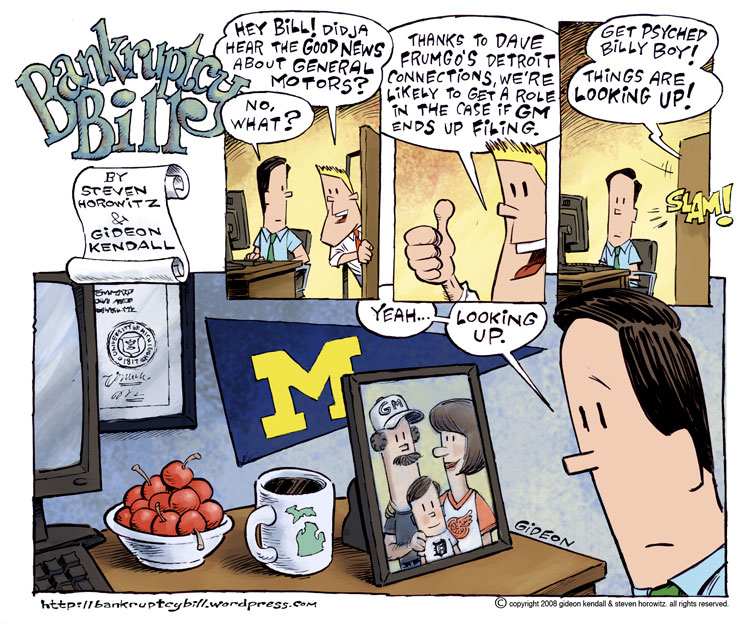
Bankruptcy Bill is a cartoon created by Steven Horowitz (Aichi-ken, 1992-94) and Gideon Kendall. To see more strips as well as original bankruptcy haiku, go to bankruptcybill.wordpress.com.

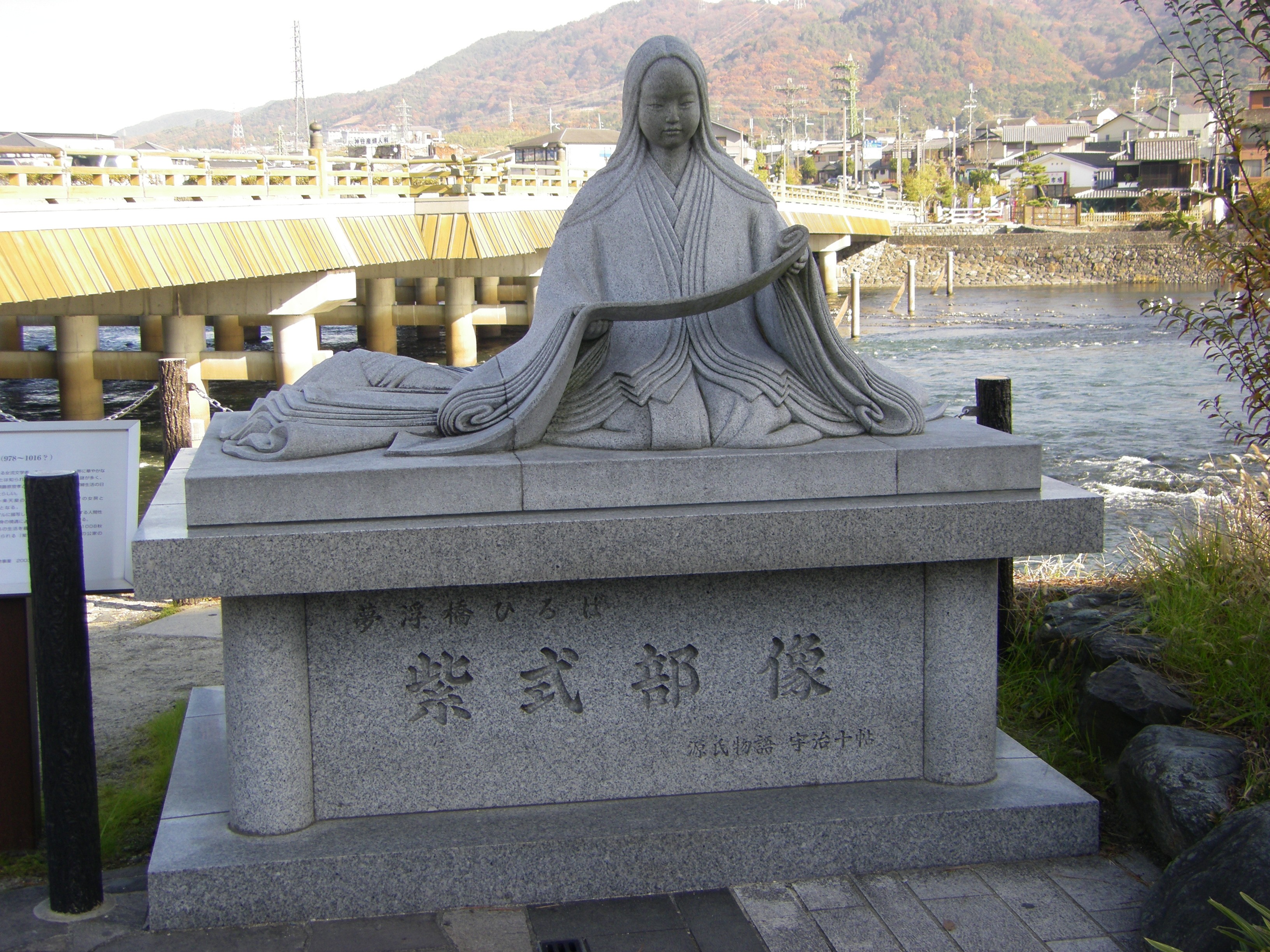 After a recent business trip to Tokyo, Seattle JET alum David Kowalsky spent the weekend in Kyoto. He snapped this shot of the Lady Murasaki statue (a tribute to her authoring of The Tale of Genji), along his walk from Uji Station to the impressive Byodo-in Temple. Upon returning to the U.S., he subsequently noticed this article in the NYTimes — “Kyoto Celebrates a 1,000-Year Love Affair” — though he points out that while the NYTimes article mentions fans shooting photos in front of the statue, in his own experience there was nary a Genji fan to be found.
Note: Look for David’s book review of Natsuo Kirino’s Real World in the upcoming issue of the JETAA NY Magazine, due out at the end of January.
 JET alum Michael Auslin (Resident Scholar at the American Enterprise Institute, former Professor of Japanese History at Yale University and one-time judge on Iron Chef America) has a new article in today’s Wall Street Journal Asia titled Ozawa and Obama that analyzes the state of Japan’s economy and political situation and discusses the ways that Japan and the U.S. need to work together.
WITLife is a periodic series written by professional Interpreter/Translator/Writer Stacy Smith (Kumamoto-ken, 2000-03). In her recent posts, she’s been watching the news in Japanese and sharing some of the interesting tidbits and trends together with her own observations.
Today’s news discussed Japanese travel trends during the New Year’s holiday, and it turns out that 2.87 million people passed through Tokyo’s domestic Haneda Airport during this time. Many were taking part in what’s called the u-turn rush, or the phenomenon of people returning to Tokyo and other big cities from their hometowns at the end of a holiday season. According to the survey, 84% were u-turning and 16% were coming back from places like Guam and South Korea where they could take advantage of the strong yen.
This piece did a check of what kind of omiyage people had received from their families. A young man from Okinawa had two large cheesecakes his mother had baked for him. A man from Kagoshima held Read More
 WITLife is a periodic series written by professional Interpreter/Translator/Writer Stacy Smith (Kumamoto-ken, 2000-03). In her recent posts, she’s been watching the news in Japanese and sharing some of the interesting tidbits and trends together with her own observations.
A visit to a shrine, or hatsumoude, is an essential part of Japan’s oshougatsu. This year’s visits incorporated the idea of power spots, or places from which you can receive special energy. Depending on what sort of wishes people hoped to fulfill, they made visits to “power spot shrines” targeted to their desires. The third most popular request was for success in business, and one temporary worker interviewed expressed hope that work would continue to come to him. Currently laborers such as himself make up 1/3 of the work force, and their protests have received much news coverage.
The second most popular request was for luck in love, with one woman insisting that the shrine she had been visiting for the last couple of years during oshougatsu was the reason she was able to get married last year. Incidentally, the idea of searching for a marriage partner in the same way as searching for a job has become so prominent in Japan that the expression “konkatsu” has come into vogue. This phrase derives from Read More
James Kennedy (Nara-ken, 2004-06), author of The Order of Odd-Fish, has a short story in the Chicago Reader this week. It’s called “The Most Dangerous Beard In Town” and, according to James, “it’s whimsically illustrated by the very talented Jeremy Russnak.”
Bonus recommended reading: On his blog today, James shares the results of a New Yorker cartoon game he invented and then played with his family. One hat is filled with everyone’s New Yorker style drawings and another with urbane punchlines. The drawings and punchlines are paired randomly, and the results satirize nicely.
 WITLife is a periodic series written by professional Interpreter/Translator/Writer Stacy Smith (Kumamoto-ken, 2000-03). In her recent posts, she’s been watching the news in Japanese and sharing some of the interesting tidbits and trends together with her own observations.
Akemashite omedetou gozaimasu! Welcome to the year of the cow. I hope it is a happy and healthy one for all! I received some electronic New Year’s greetings from friends in Japan, and the noise a cow makes in Japanese (「モー」) was often used as a dajare (pun) in the phrase: “Kotoshi mo yoroshiku onegaishimasu.” Gotta love Japanese humor!
Social woes are already plaguing Japan in early 2009. During the end of the year a provisional “Toshikoshi Haken Mura” was set up in Hibiya Park for temporary employees who have become jobless/homeless due to premature cutting off of their contracts. This was a village where they could live over the holidays, and on the eve traditional toshikoshi soba (extra-long soba connecting the new year to the old) with mochi in it was served. One 40-year old recipient said that it was the first proper meal he had had in two weeks. When asked about his prospects for the new year, Read More

Deadline: Thursday, January 8, before 5:00p.m. EST
Welcome to the JetWit Haiku Challenge! The challenge is to submit one or more haiku using the designated word. The best haiku submitted wins the prize.
This challenge is courtesy of Roland Kelts (Osaka, 1998-99), author of Japanamerica: How Japanese Pop Culture Has Invaded the U.S., published by Palgrave Macmillan. You can also follow Roland on his blog japanamerica.blogspot.com.
-
Designated word: “Pop” (you must use this word in your haiku; multiple submissions welcome)
- Deadline: Thursday, January 8, before 5:00p.m. EST
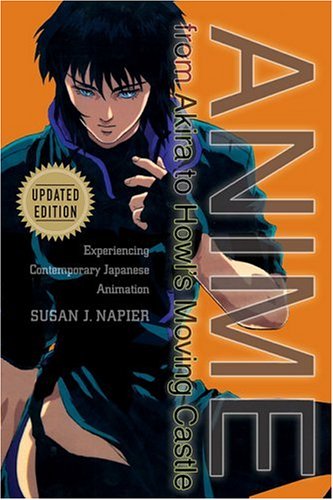 Prize: Free copy of Japanamerica + Susan Napier’s Anime: From Akira to Howl’s Moving Castle mailed to you.
- Form: Haiku are typically 5-7-5 and have a seasonal reference. (Though the form actually has a fair amount of flexibility.)
- E-mail responses to: jetwit /atto/ jetwit /dotto/ com
 WITLife is a periodic series written by professional Interpreter/Translator/Writer Stacy Smith (Kumamoto-ken, 2000-03). In her recent posts, she’s been watching the news in Japanese and sharing some of the interesting tidbits and trends together with her own observations.
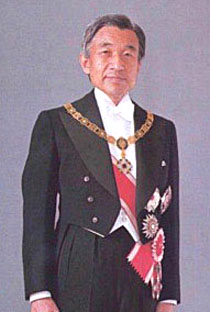
Today (already yesterday in Japan) celebrated the birthday of two of this country’s fixtures, the Emperor and Tokyo Tower. The former turned 75 and the latter 50, and both have been showing slight signs of aging.
In the customary palace visit open to the general public, Emperor Akihito apologized for causing people to worry regarding his health, as he is still fighting a cold. Because of this, many of the usual events surrounding his birthday will be canceled or postponed.
 Tokyo Tower has recently undergone renovations such as a new elevator and new illumination, and author Lili Frank was on hand to offer greetings at its 50th anniversary party. He wrote the 2005 best seller Tokyo Tower, later made into drama and movie versions (which I liked so much that I’m now reading the book and enjoying it just as much).
*News of this year’s nesting phenomenon continues, and two trends regarding Christmas cakes are “mini” and “luxurious.” Mini cakes as small as 5-10 cm in diameter are wildly popular, as people would rather be able to try several different kinds instead of just one. On the other hand, high-end Christmas cake is also selling well. Whereas your typical strawberry shortcake goes for 500 yen, these luxury cakes are as much as 2,500 yen each.
As one consumer explained, “This is something I buy only once a year so I might as well go all out!”
 WITLife is a periodic series written by professional Interpreter/Translator/Writer Stacy Smith (Kumamoto-ken, 2000-03). In her recent posts, she’s been watching the news in Japanese and sharing some of the interesting tidbits and trends together with her own observations.
The phenomenon of “net café refugees” became a hot topic in Japan last year, when it was estimated by the Health Ministry that 5,400 people with no fixed addresses, mostly those in their 20s, slept at 24-hour Internet cafes for as little as 1,000-2,000 yen per night. These legendary facilities house small cubicles equipped with reclining chairs, computers and TVs, and many cafés allow free soft drink refills. Some even have showers.
In this dismal economy, usage of net cafés has been on the increase. A café profiled in this morning’s news said that it offers a rate of 59,520 yen per month for those staying longer than 30 days, and that out of its 58 rooms, 50 were occupied long-term.
One such resident who volunteered for an interview said that he had been there for over six months. After losing his real estate job two years ago when his company went bankrupt, he has been struggling to make ends meet as a day laborer. However, being 39 prevents him Read More
Bankruptcy Bill is a cartoon created by Steven Horowitz (Aichi-ken, 1992-94) and Gideon Kendall. To see more strips as well as original bankruptcy haiku, go to bankruptcybill.wordpress.com.
Welcome to the JetWit Haiku Challenge! The challenge is to submit one or more haiku using the designated word. The best haiku submitted wins the prize.
This challenge is courtesy of Roland Kelts (Osaka, 1998-99), author of Japanamerica: How Japanese Pop Culture Has Invaded the U.S., published by Palgrave Macmillan. You can also follow Roland on his blog japanamerica.blogspot.com.
-
Designated word: “Pop” (you must use this word in your haiku; multiple submissions welcome)
- Deadline: Thursday, January 8, before 5:00p.m. EST
- Prize: Free copy of Japanamerica + Susan Napier’s Anime: From Akira to Howl’s Moving Castle mailed to you.
- Form: Haiku are typically 5-7-5 and have a seasonal reference. (Though the form actually has a fair amount of flexibility.)
- E-mail responses to: jetwit /atto/ jetwit /dotto/ com
JET alum Lars Martinson creatively updates readers on the progress on his graphic novel Tonoharu: Part 2 in a recent post on his blog (larsmartinson.com):
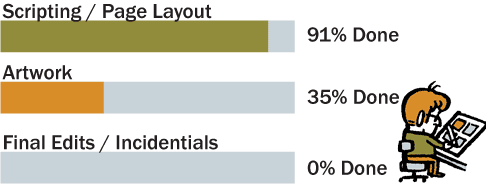
Progress Bar Key
Scripting/Page Layout: Self-explanatory
Artwork: The Drawing, Inking, and Computer Work for the comic
Final Edits/Incidentals: Post-Production Edits, Designing the Cover, Preparing for Press, etc.
****
When I wrote the first progress report for Tonoharu: Part Two back in mid-July, I was a quarter of the way through the artwork. I concluded the entry saying I’d update on my progress again when the artwork was halfway done. I estimated/hoped that that update would come in “three or four months”,–>Click here to continue reading the post.
A JET alum in Seattle shared a link to this interesting article on Salon.com about a guy named Brian Raftery who wrote a book about karaoke called Don’t Stop Believin’: How Karaoke Conquered the World and Changed My Life.
I enjoyed the article, though I think his explanation about the origin of karaoke slips into cultural generalizations, especially regarding the question of how karaoke became so big in Japan before the US. My understanding is that, even before karaoke machines, there was a tradition at enkais of making people stand up and sing a song on their own. Microphones and later karaoke machines were add-ons to the experience.
Any other JET perspectives or comments on karaoke? Post them below.
 WITLife is a periodic series written by professional Interpreter/Translator/Writer Stacy Smith (Kumamoto-ken, 2000-03). In her recent posts, she’s been watching the news in Japanese and sharing some of the interesting tidbits and trends along with her own observations.
It looks like Japanese Prime Minister Taro Aso will be getting a lump of coal in his stocking. The Cabinet approval rate is currently at 16.7%, down 22 points from last month, and the disapproval rate is up 30 points to 64.7%. Further probing into sources of dissatisfaction revealed that 40% had no hope in the government, 27.6% criticized its bad policy, 26.5% faulted its lack of leadership and 26.4% said it could not be trusted. In addition, in response to the question “Who is more suited to being a politician?” 23.9% picked Aso but 34.8% picked Minshuto (Democratic Party of Japan) leader Ichiro Ozawa.
As a result of the “New Year’s Nesting” phenomenon, expensive osechi are a hot item for Japanese department stores. Whereas in previous years osechi selling at 10,000 yen or more were popular, this year meals in the 30,000-50,000 range are the best sellers. A customer shopping for osechi said she had planned to go to Hawaii for the holidays, but with the high fuel surcharge could no longer afford it. After deciding to spend New Year’s at home, she will put her plane fare/trip money toward a deluxe osechi. I guess you could call this practical pampering? Another factor is that prices of fish and other osechi ingredients went up this month, so the one-stop shopping that osechi packages offer seems like a deal compared to having to purchase all the necessary items yourself.