




Minamisanriku JET Kathryn Oi shares her experience of the earthquake and tsunami
 Earthquake Tsunami, JETs in the News, Writers
  Comments Off on Minamisanriku JET Kathryn Oi shares her experience of the earthquake and tsunami
Kathryn Oi (Miyagi-ken, Minamisanriku-shi) has shared a deeply personal description of her experience in the midst of one of the hardest hit towns by the earthquake and tsunami–Minamisanriku, which has lost approximately half of its 18,000 residents. The link below to the written piece which appears on the Claremon-McKenna College website where Kathryn went to college also includes a slideshow of before-and-after photos taken by Kathryn.
http://www.claremontmckenna.edu/news/japan2011.php
Katie Oi ’10 was teaching at a junior high school in Japan when the earthquake and tsunami hit the island. She offers the following firsthand account of the week following the disaster and her journey to safety. Katie is now back at home in Seattle, WA.
After a two hour nap or even a night’s long rest, I wake up suddenly feeling uneasy with a feeling like I had a bad dream somewhere deep within my slumber. It takes me even a few seconds to process where I am—back home in the comfort of my own bed—when it was just two weeks ago I was pinned in the heart of Mother Nature’s deadliest attack on Japan. I have to keep telling myself that the past two weeks were not a dream. What I witnessed was real: the devastation from a M9.0 earthquake and 30-meter tsunami, but also the perseverance to rise up as a people and continue to live in spite of all that.
CLICK HERE to read the full piece on the Claremont-McKenna College website.
Correction 3/31/11: Katie e-mailed to point out that she incorrectly mentioned the tsunami as 30 meters a couple times in her piece. The actual reported height, she says, was 16 meters.
Miyagi JET writes of ruin, survival, rebuilding
Article/Journalism, Earthquake Tsunami, JETs in the News, Writers Comments Off on Miyagi JET writes of ruin, survival, rebuilding
The below letter by current JET Waylon Bryson (Miyagi-ken, Sendai-shi) appeared recently in the Washington State University student publication where Bryson attended college.
The following letter was sent to WSU history instructor Roger Chan, who taught author Waylon Bryson, a philosophy graduate of 2007. Chan shared it with Noriko Kawamura, associate professor of history, who passed it on for WSU Today to share with the university community. Bryson is working in Sendai, Japan as an English teacher. This fall he will attend Vanderbilt Law in Nashville, Tenn.
I have lived in the city of Sendai, Japan for the past three and a half years, where I teach English for the Japan Exchange and Teaching (JET) Programme. I was at my desk in the teachers’ room of Hachiken Junior High School when the earthquake struck.
Earthquakes are quite common in Japan and I, like the other staff members, paid little attention at first.
Then the room moved several feet. I had to physically hold onto my desk so that it wouldn’t move away from me. A control panel on the wall lit up like a Christmas tree and alarm bells started sounding. I could hear students screaming from the floors above as cracks snaked along the concrete walls and the building started groaning ominously.
CLICK HERE to read the full article on the WSU Today site.
Fukushima perspectives by a Fukushima JET alum
Article/Journalism, Earthquake Tsunami, Writers Comments Off on Fukushima perspectives by a Fukushima JET alum
Thanks to JETAA Bluegrass Subchapter rep Roy Harrison for sharing the link to the excellent article by Fukushima JET alum and journalist Graham Shelby:
“JET Alum Graham Shelby put together a piece for the Louisville Courier-Journal about the experience of watching what’s happening in Fukushima from a distance that’s much greater geographically than it is emotionally.”
“Please give it a read. You’ll likely find it echoes the feelings you’ve been having for the past two weeks.”
http://www.courier-journal.com/apps/pbcs.dll/article?AID=2011303270046
WITLife is a periodic series written by professional Writer/Interpreter/Translator Stacy Smith (Kumamoto-ken CIR, 2000-03). She starts her day by watching Fujisankei’s newscast in Japanese, and here she shares some of the interesting tidbits and trends together with her own observations.
Japan’s recovery efforts continue to take place, and while it is easy to feel helpless in the face of the disaster’s aftermath we can each help out in our own small way. I would like to highlight some upcoming events that will enable you to contribute to the cause  while enjoying good food and music.
First up is Dine Out for Japan Relief, a week-long event in which the 70+ participating restaurants are donating 5% of their proceeds to Japan’s tsunami recovery and relief efforts. There are many familiar Manhattan Japanese favorites like Read More
Tokyo JET alum photojournalist seeks contact with displaced Tohoku JETs
Article/Journalism, Earthquake Tsunami, Notable JET Alums, Photography, Writers Comments Off on Tokyo JET alum photojournalist seeks contact with displaced Tohoku JETs
Thanks to Ed Snook of JETAA Tokyo for sharing this information:
JETAA Tokyo member Wes Cheek is planning on visiting the Tohoku region beginning Friday for a photojournalism assignment. He has expressed an interest in trying to get in touch with JETs who may have been displaced by the recent earthquake/tsunami. Additionally, Wes welcomes contact from any family or friends of JETs in Tohoku who would like him to try and get in touch with JETs.
- To contact Wes, you can e-mail Ed Snook at career [at] jetaa-tokyo.org.
- For updates on Wes and more information about his trip, go to Wes’ blog where you can find details and updates about his trip.
JETwit featured in CLAIR NY (aka Japan Local Government Center) Newsletter
Article/Journalism, Interview/Profile, JETs in the News, Local Government, Notable JET Alums, Writers Comments Off on JETwit featured in CLAIR NY (aka Japan Local Government Center) Newsletter
Here’s a link to the Spring 2011 Issue of the JLGC Newsletter, published bi-annually by CLAIR NY (aka Japan Local Government Center).
This issue includes a feature on JETwit.com (PDF) which I was asked to write a few months ago. It’s hopefully a helpful explanation of the background and purpose of JETwit. However, post-3/11 I have to admit it also feels dated and I feel somewhat conflicted about posting it now given what’s still going on in Japan.
Japan Times: How you can help – by JET alum Ashley Thompson
Article/Journalism, Earthquake Tsunami, Writers Comments Off on Japan Times: How you can help – by JET alum Ashley Thompson
A really helpful article in the Japan Times titled “How You Can Help” written by JET alum Ashley Thompson, who also writes survival tips and unique how-to’s about living in Japan at www.survivingnjapan.com. (http://search.japantimes.co.jp/cgi-bin/fl20110322a1.html)
A few readers have questions about donating supplies.
WA writes: “I have seen the tragic earthquake and tsunami incident that happened in Japan. I would love to donate food and clothes and help out as much as I can. Please tell me where I can send supplies.”
And JF: “We are a primary school in the U.K. with a new school logo and are therefore changing our school uniforms. We have an enormous amount of clothing: sweatshirts, polo shirts, etc. that we would like to donate.”
From IF: “I would like to find out a way to donate clothes and other articles to people in need in Japan. I live in Heidelberg, Germany.
“The items I have are in very good condition and others are new. Could you please tell me how to proceed?”
Right now, most organizations are strictly asking for monetary donations, not clothing or supplies. The general advice is to donate money to organizations that can quickly and easily locate and deliver necessary items to disaster-hit areas. Particularly if you live outside of Japan, the best way you can help is to donate money through a trusted charity of your choice, or one that is Japan-specific, such as the Japanese Red Cross Society, Salvation Army Japan, Oxfam Japan, JEN, Jhelp and Second Harvest Japan, to name a few. There are many more but most require Japanese- language ability to navigate online.
Cash and checks can also be sent by registered mail to The Japan Times Readers’ Fund, The Japan Times, 4-5-4 Shibaura, Minato Ward, Tokyo 108-8071, with checks payable to The Japan Times Readers’ Fund. Donations will be used to support the work of Red Cross Japan and the Japan Emergency Team, operated by Jhelp.
You may also want to search online for a group in your region that may have connections with an organization in Japan and is accepting supplies for donation. If you are currently in Japan, you can donate monetarily to any of the organizations above, an organization of your choice, or even through local convenience stores and similar venues. If you’d like to donate food or supplies, Second Harvest Japan is accepting a long list of items such as canned or packaged food, toilet paper, toiletries, over-the-counter medicines, sleeping bags, etc. You can find a comprehensive list and mailing address on the Second Harvest Japan websitee.
Jhelp is also accepting donations for food and certain supplies — see their website for more information. Also, try contacting your local prefectural office, city hall or volunteer office in Japan. Many places are collecting supplies such as blankets, diapers, and toiletries. Please do not deliver supplies yourself — this creates confusion, adds to traffic congestion, uses much-needed fuel, and makes it more difficult for relief supplies to reach disaster areas.
On the topic of monetary donations, DG writes: “I live in Toronto, Canada, and wish to send my sympathies and condolences for the loss of life and property to the Japanese people.
“I would also like to donate money to a relief effort. I know that some relief agencies are less principled than others, and divert funds to their own pockets. Are there any you would recommend?”
And PD is wondering: “I am seeking a small NGO based in Japan that is sending responders. As the leader of a national religious organization, it is my intent to send the funds we collect to Japan for use by Japanese responders.
“Can you help us identify a place where our funding could help a small group providing services to those in need? Perhaps a shelter, food operation or clinic?”
Whenever you donate money, you should ensure the organization is reputable, trustworthy and has a good track record. If looking for a “small” nonprofit organization, be extra careful and confirm it’s not a scam.
The best approach to finding a charitable organization that deserves your gift is to research and decide for yourself which organization is best. Charity Navigator/ provides listings of many charities with specific financial information and rankings. Though you won’t find Japan-specific organizations, many of these are accepting donations for the Japan relief effort or will donate directly to a Japanese charity (such as the Japanese Red Cross Society).
In addition to those mentioned earlier, other reputable and frequently recommended charities in Japan include Global Giving, Save the Children, World Vision, Mercy Corps and UNICEF. Some of these charities have financial information in English, but many do not. There are far more small organizations in Japan, but again, most require Japanese-language ability to navigate online.
Readers P and N write: “We are so sad at what has happened in Japan and we pray for the people every day.
“We are retired and have a spare room and could easily take in a small family until things settle down.”
And from RJ: “My family is concerned about the problems Japan is having with the nuclear accident, earthquake and tsunami.
“We are a family of four living in England: My wife and I have two boys, ages 19 and 12. We can offer a couple of spare rooms for a parent and child. This would just be for a few weeks until the situation is better.”
If you are not currently living in Japan, perhaps another form of giving might be a better idea (see above). While a generous offer, the logistics of moving people overseas temporarily are often more complicated and expensive than relocating to another part of Japan. Keep in mind too that most people will need housing for longer than a few weeks, especially if they were to go overseas.
If you are residing in Japan and have room to take in evacuees, you might try checking out the Couchsurfing group set up for the current crisis in Japan.
Note: There are subgroups within this Couchsurfing group for people in other countries to volunteer a place for evacuees to stay. Additionally, the Accommodate Japan Facebook group has listings of people around the world offering housing to evacuees, so they may be good to connect with.
Reader TM writes: “I would very much like to go to Japan to help. I can self-finance for many months, but would love to find a place to stay and some kind of organization to help with. What would you recommend?”
Currently, first-responders are doing their jobs and it’s best for untrained volunteers to stay where they are until the situation has been completely assessed. So, unless you are a medical professional or have disaster relief experience, for now, giving monetarily is the most helpful thing you can do.
Some general advice: Please, do not go to the disaster area alone or without an organization. After assessment is complete, and the disaster relief teams have done their work, organizations (such as Red Cross and others) will likely begin taking volunteers. This may be a few weeks to a couple months away, so best to watch for that.
For those living in Japan: If you are currently able to access the disaster areas or able to work on site, Jhelp ) is looking for volunteers.
The Association for Japan Exchange and Teaching, Smile Kids Japan and folks from Jetwit have compiled a list of prefectural volunteer organizations. Some prefectures are now accepting volunteers, while others have not yet posted volunteer information, but it may be possible to connect with one of these groups. Contacts are listed for some PVOs, but for general inquiries, contact Avalyn Beare or Michael Maher King at volunteer@ajet.net.
With the current power supply issues at Tokyo Electric Power Co. and in the Tohoku region, and with the government urging residents to conserve electricity, many people are wondering if they should be conserving electricity outside of the Kanto region (such as in Chubu, Kansai, Chugoku, etc.)
As of now, Tepco has not needed to execute all planned blackouts due to residents and businesses decreasing electricity usage in the region. However, planned outages are still scheduled and will likely continue in the coming weeks.
According to the official websites of electric companies across west and southern Japan, which includes Kansai, Chubu, Chugoku, Kyushu, and Shikoku (no information for Hokuriku), all are covering the demand of their own regions and sending extra electricity to the Kanto region. However, west and east Japan use two different electric current frequencies, 60hz and 50hz, respectively, and as there are only three converter stations in the country, very little electricity can be converted and sent (Kansai Electric’s website says maximum capacity is 1,000,000 kw). Hokkaido is also supplying electricity for the Tohoku and Kanto regions, as they run on 50hz.
So, for residents of west Japan, conserving electricity during this time is certainly a good idea and highly encouraged, though it’s not necessary to take it to any extremes. Then again, it’s better for the environment to use as little electricity as possible, and a little easier on your bank account.
WIT Life #157: Bye Bye Kitty!!!
Art, Events, Translating/Interpreting, Uncategorized, WIT Life, Writers Comments Off on WIT Life #157: Bye Bye Kitty!!!
WITLife is a periodic series written by professional Writer/Interpreter/Translator Stacy Smith (Kumamoto-ken CIR, 2000-03). She starts her day by watching Fujisankei’s newscast in Japanese, and here she shares some of the interesting tidbits and trends together with her own observations.
Last week I had the opportunity to attend the opening for the Japan Society’s newest exhibit, Bye Bye Kitty!!! The title refers to opposition towards the domination of Japan’s kawaii-ness, the idea of cuteness that has become Japan’s major export as represented by Hello Kitty. It features 16 artists, many of them quite young and not household names, and their interpretation of this concept. I was particularly drawn in by the intricacy of the works of 38-year old Manabu Ikeda, whose pen and ink masterpieces were incredibly detailed and required several minutes of close examination to take in all of their elements.
Equally interesting was the large-scale Read More
Kyodo News: Little Tokyo Community (LA) Mourns Tragedy, Rallies Support – by JET alum Jody Godoy
Article/Journalism, Earthquake Tsunami, Writers Comments Off on Kyodo News: Little Tokyo Community (LA) Mourns Tragedy, Rallies Support – by JET alum Jody Godoy
Kyodo News article by LA-based JET alum and Kyodo News reporter Jody Godoy (Fukui-ken):
Little Tokyo Community Mourns Tragedy, Rallies Support
Los Angeles Mayor Antonio Villaraigosa joined Japanese Consul General Junichi Ihara and more than 600 attendees at the Japanese American Cultural and Community Center in the Little Tokyo area on Thursday evening to mourn Japan’s quake and tsunami victims and show solidarity with the shaken country.
CLICK HERE to read full article.
Earthquake: Write for Tohoku – Call for Submissions
Earthquake Tsunami, Volunteer, Writers Comments Off on Earthquake: Write for Tohoku – Call for Submissions
Posted by Dipika Soni (Ishikawa-ken, 2003-06). Dipika currently works as an in-house translator for PFU (a Fujitsu company) in Kahoku-shi, Ishikawa-ken. She is also the vocalist for the Japanese hardcore punk band DEGRADE.
———————————————————————————————————————————-
There is an open call for submissions to an ebook anthology to raise funds for Tohoku.
Please go to the following website for more details: http://writefortohoku.wordpress.com/
WIT Life #156: 4th Annual Peace Festival
Events, Film, Translating/Interpreting, WIT Life, Writers Comments Off on WIT Life #156: 4th Annual Peace Festival
WITLife is a periodic series written by professional Writer/Interpreter/Translator Stacy Smith (Kumamoto-ken CIR, 2000-03). She starts her day by watching Fujisankei’s newscast in Japanese, and here she shares some of the interesting tidbits and trends together with her own observations.
Like most of you, I have spent the last couple of days glued to the coverage of the earthquake/tsunami/radioactive fallout news from Japan. I left Tokyo the day before the quake and was shocked to come home to the awful news. The feelings of helplessness and immense sadness can be overwhelming at times, so I was happy to be able to help out as a volunteer interpreter at the 4th Annual Peace Festival this weekend. It just felt like the right place to be in the midst of all that is happening.
On Saturday night I attended the world premiere of Twice Bombed: The Legacy of Tsutomu Yamaguchi, which told the amazing tale of this first officially recognized double atomic bomb survivor (二重被爆者 or nijuu hibakusha) who passed away last year at the age of 93. Yamaguchi was in Hiroshima and Nagasaki on August 6th and 9th respectively and was a truly inspiring figure, beginning his speaking out about his experience just five years before he died. Up until that point, his wife and daughter had encouraged him to stay silent as they were scared that Read More
Request: Personal essay for NYTimes op-ed about the earthquake?
Earthquake Tsunami, Writers Comments Off on Request: Personal essay for NYTimes op-ed about the earthquake?
Via JET alum and DC-based Kyodo News reporter Ben Dooley:
A good friend of mine is an op-ed editor for the NYT, and he’s looking for someone to write a personal essay about the earthquake to be run on the op-ed page. It needs to be about 900 words, written in English or Japanese. The ideal person would be a prominent writer, academic or government official from or with strong ties to Sendai.
I know that things are very difficult in Japan right now, but if anyone from the JET community could put me in touch with someone who is interested in this opportunity and fits the bill, I would really appreciate it.
Thank you for your time.
Best,
— Ben Dooley
bdooley [at] kyododc.com
JET alum Washington Post reporter seeks contacts with relatives in Sendai
Article/Journalism, Earthquake Tsunami, Writers Comments Off on JET alum Washington Post reporter seeks contacts with relatives in Sendai
Via JETAA DC:
Hi all — I’m a Washington Post reporter and former JET (Hiroshima ’02) looking for any local dc-area connections to the quake for a story on local reaction. In particular seeking anyone who might have relatives in the Sendai region or any of you who were based there for JET and have friends/former colleagues there that you are trying to reach. We are on an immediate deadline, so please email me asap with a contact phone number if you have such a story to share.
Domo,
David Nakamura
nakamurad [at] washpost.com
Surviving In Japan: How to Find a Non-smoking Restaurant in Japan
Advice, Blogs, Japan Local, Uncategorized, Writers Comments Off on Surviving In Japan: How to Find a Non-smoking Restaurant in Japan
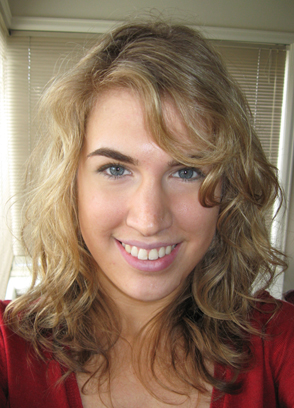
Ashley Thompson is "Surviving in Japan: without much Japanese."
Going out in Japan can sometimes be rough if you’re a non-smoker (like me). Granted, times are changing in Japan, and more and more facilities and areas are now completely non-smoking, or instead have a small room or area designated specifically for smoking. Kanagawa prefecture went completely non-smoking last year, making it the first prefecture in Japan to ban smoking in public areas such as beaches, and various public facilities such as schools and hospitals (though I think both of those are *generally* non-smoking in Japan now anyway) and even restaurants, if the restaurant didn’t already have separated smoking/non-smoking areas. At times, I wish I lived in Kanagawa, if only for that.
Now, of course, I mean no offense to anyone who does smoke – it’s all choice and I’m completely fine with that. My only issue is when kids or pregnant women are around or I have to sit and breathe it because of the location I’m in, as I’ve got some extremely annoying allergies (and I just don’t care for it in general). Thus sometimes, eating out can pose a challenge if you are a non-smoker and wish to avoid smoke at all costs.
Yes, smoke-free restaurants exist, as do various restaurants that are divided into smoking/non-smoking areas, but I can guarantee there are also plenty of restaurants that have neither. So if you are a serial non-smoker, you might be lucky to enjoy a good meal without inhaling secondhand smoke, that is, until the person sitting near you lights up. Of course, if it’s a smoking restaurant, you just have to deal with it, because they are well within their rights to smoke – but from experience, it’s also ruined some meals for me, and makes me want to try and avoid it when possible.
This is easier said than done.
The other day, my husband and I were feeling lazy and wanted to go out to eat, although I was feeling a little off that day and didn’t really want to take our chances with the smoking thing. I don’t know if you’ve heard of Tabelog (食べログ), a great restaurant search tool for all over Japan, but it comes in handy for looking up restaurants. I often browse that site, though I noticed most listings in our area did not designate if they were smoking, non-smoking, or if they had separated seating. (Some listings do, but I find it to be hit or miss, depending on location). The only way we could know for sure was to call every place and ask, and after the first few, it does get kind of annoying.

Enter new search. I pulled up Google, this time hoping I could somehow discover some non-smoking restaurants by using those very keywords (smart, I know…).
Lo and behold, I discovered a website called “Kinen Style”, or actually, “禁煙スタイル” (Non-smoking style). — CLICK HERE to read the rest of this post.
Exploring Eastern and Western Creativity: Q and A with Michael W. Morris – by Jennifer Olayon
Article/Journalism, Career, Graduate School, Writers Comments Off on Exploring Eastern and Western Creativity: Q and A with Michael W. Morris – by Jennifer Olayon
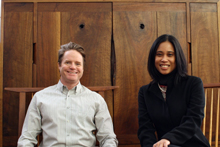
Michael Morris and Jennifer Olayon. Photo by JET alum Francis Lee.
Here’s a JET-relevant interview titled “Exploring Eastern and Western Creativity: Q & A with Michael W. Morris“ that appeared recently in AsianLife.com magazine and was conducted and written by former JETAANY President Jennifer Olayon.
Jennifer is a Contributing Editor for AsianLife.com magazine and previously served as a Senior Program Officer at Columbia Business School’s Center on Japanese Economy and Business. She is currently open to work and consulting opportunities in Human Capital Management and Diversity and Inclusion areas.
Michael W. Morris is the Chavkin-Chang Professor of Leadership and Director of Program on Social Intelligence at Columbia Business School and leading expert on relationships, conflict resolution, decision-making, and creativity, with a special interest in the role of culture.
Here’s an excerpt from the interview:
“There is a popular stereotype that Easterners are less creative; that they are imitative rather than inventive. While this stereotype is heard in the West, it is heard even more so in East Asia, which surprised me when I first began studying this topic. The creativity problem is a central topic in the social discourse of many East Asian nations, worried about making the transition from manufacturing economies to design and innovation-based economies. In bestsellers with titles like Can Asians Think? Asian polemicists have advanced theories about ways that Asian culture, language, socialization and schooling stunt creativity through hindering abstract critical thinking and molding conformist characters. This sells books, but I think it’s inaccurate.”
