




JET Alum Authors: Ari Kaplan – “The Opportunity Maker: Strategies for Inspiring Your Legal Career”
 Advice, Books, Career, Notable JET Alums, Writers
  Comments Off on JET Alum Authors: Ari Kaplan – “The Opportunity Maker: Strategies for Inspiring Your Legal Career”
 I recently learned of yet another JET alum author, Ari Kaplan (Hyogo-ken, 1993-94) who practiced law for nine years at a big firm before setting out on his own and, among other things, writing The Opportunity Maker: Strategies for Inspiring Your Legal Career Through Creative Networking and Business Development which became a big hit in the world of lawyers and especially among law students facing an increasingly uncertain job market and career prospects.
It turns out Ari, who speaks regularly at legal career events, has a new book coming out soon on the theme of “reinvention” intended not just for lawyers but for all professionals re-thinking their careers in a society where the ground increasingly seems to shift below our feet.
For more information about Ari, visit his website at www.arikaplanadvisors.com. You can also see media coverage of him on WGN-TV Chicago, in the Wall Street Journal’s Law Blog and in the Houston Chronicle
WIT Life #168: Sake Guy John Gauntner
Events, Food & Drink, Translating/Interpreting, Uncategorized, WIT Life, Writers Comments Off on WIT Life #168: Sake Guy John Gauntner
WITLife is a periodic series written by professional Writer/Interpreter/Translator Stacy Smith (Kumamoto-ken CIR, 2000-03). She starts her day by watching Fujisankei’s newscast in Japanese, and here she shares some of the interesting tidbits and trends together with her own observations.
Last night I had the chance to brush up on my sake skills at the sold out sake tasting event Back to Basics held at Japan Society. It was led by former JET John Gauntner, known as the world’s leading non-Japanese sake expert. He currently lives in Kamakura, and is well known among sake brewers and others within the industry as the window to making sake popular outside of Japan. His presentation gave a comprehensive overview of sake in less than an hour, presenting the audience with the essentials in easy to remember sound bites. His enthusiastic employment of the phrase “Absolutely!” in punctuating the rhetorical questions that he posed to himself had a particularly great impact.
We learned that translating sake as “rice wine” is a misnomer, as it is brewed in a way more similar to beer. Gauntner discussed how sake is one of the few products in the world that is Read More
Posted by Ashley Thompson (Shizuoka-ken, 2008-2010) of Surviving in Japan: without much Japanese and Lifelines columnist for The Japan Times.
 If you’re coming to Japan, you will probably hear someone lamenting about the inability to find any “real” deodorant here. When I heard this before coming, I promptly bought a 4-pack of my favorite kind (which I hadn’t even used up after two years). Yet, for those trying to save luggage space, unless you are REALLY attached to your deodorant, let me reassure you, it IS possible to get deodorant in Japan. And no, I’m not even talking about typical Japanese stuff – I haven’t tried any of it (as everyone often says it doesn’t work as well). Though, many of the Japanese brands do use aluminum as a main ingredient, which is the active ingredient you’d find in anti-perspirants anywhere.
So, before I lay out your options, you’ll need to know the Japanese word for deodorant when searching: デオドラント. This may also be shortened to: デオ. You may even see something with アンダーアーム (underarm).
A few other words to know:
stick: スティック
mist: ミスト
cream: クリーム
spray: スプレー
bar: バー
gel: ジェル
how to find deodorant in Japan: — CLICK HERE to read the rest of the post.
JET alum John Gauntner enlightens, entertains Japan Society audience
Celebrity, Cultural Outreach, Events, Food & Drink, Japan Society Round-up, Notable JET Alums, Return on JET-vestment, Writers Comments Off on JET alum John Gauntner enlightens, entertains Japan Society audience
*******************
Last night was Japan Society of New York’s Anual Sake Tasting: Back to Basics event with a lecture by JET alum John Gauntner (Kanagawa-ken) (aka “The Sake Guy”), now the leading sake educator in the world, followed by a sake tasting (and mingling) with about 20 sake exporters from all over Japan. I attended with professional Writer/Interpreter/Translator Stacy Smith (Kumamoto-ken CIR, 2000-03) (who writes the WIT Life posts on JETwit) and we had a terrific time, learning the basics of sake, running into Tomoko Okuno of Japan Society as well as Alma Jennings (Fukushima-ken, 2008-10) who was volunteering at the event, and of course finally getting to meet John in person.
John will be lecturing at similar events over the next few days in Boston, Toronto and several other cities in North America. So keep your eyes out and, if you attend, make sure to say hi and let him know you’re a JET alum as well.
Thanks to Japan Society for putting on a great event!

Stacy Smith (CIR Kumamoto, 2000-03) and John Gauntner (Kanagawa)
**************

Sake tasting: JET alums Stacy Smith, Alma Jennings and Steven Horowitz sample sake with Kensuke Shichida, President of Saga Prefecture-based Tenzan Sake Brewery
WIT Life #167: Japan and War as Seen Through the Lens of Film
Art, Events, Film, Translating/Interpreting, Uncategorized, WIT Life, Writers Comments Off on WIT Life #167: Japan and War as Seen Through the Lens of Film
WITLife is a periodic series written by professional Writer/Interpreter/Translator Stacy Smith (Kumamoto-ken CIR, 2000-03). She starts her day by watching Fujisankei’s newscast in Japanese, and here she shares some of the interesting tidbits and trends together with her own observations.
Recently I had the chance to see two films from 2010 that examine the issue of Japan and war. One was Anpo: Art x War which was screened at Columbia University last week, and the other is Caterpillar currently being shown at the IFC Center through this Thursday. The former is a documentary directed and produced by Linda Hoaglund, and the latter is a film made by the director Koji Wakamatsu of United Red Army fame (shown at Japan Society a few years ago and coming to IFC later this month).
Anpo uses a mixture of paintings, photos, anime, films and music by Japanese artists to Read More
Burger King Japan’s “Meat Monster” reviewed by JET writer for Esquire Magazine
Article/Journalism, Blogs, Career, Food & Drink, Japan Trends, Reviews, Writers Comments Off on Burger King Japan’s “Meat Monster” reviewed by JET writer for Esquire Magazine
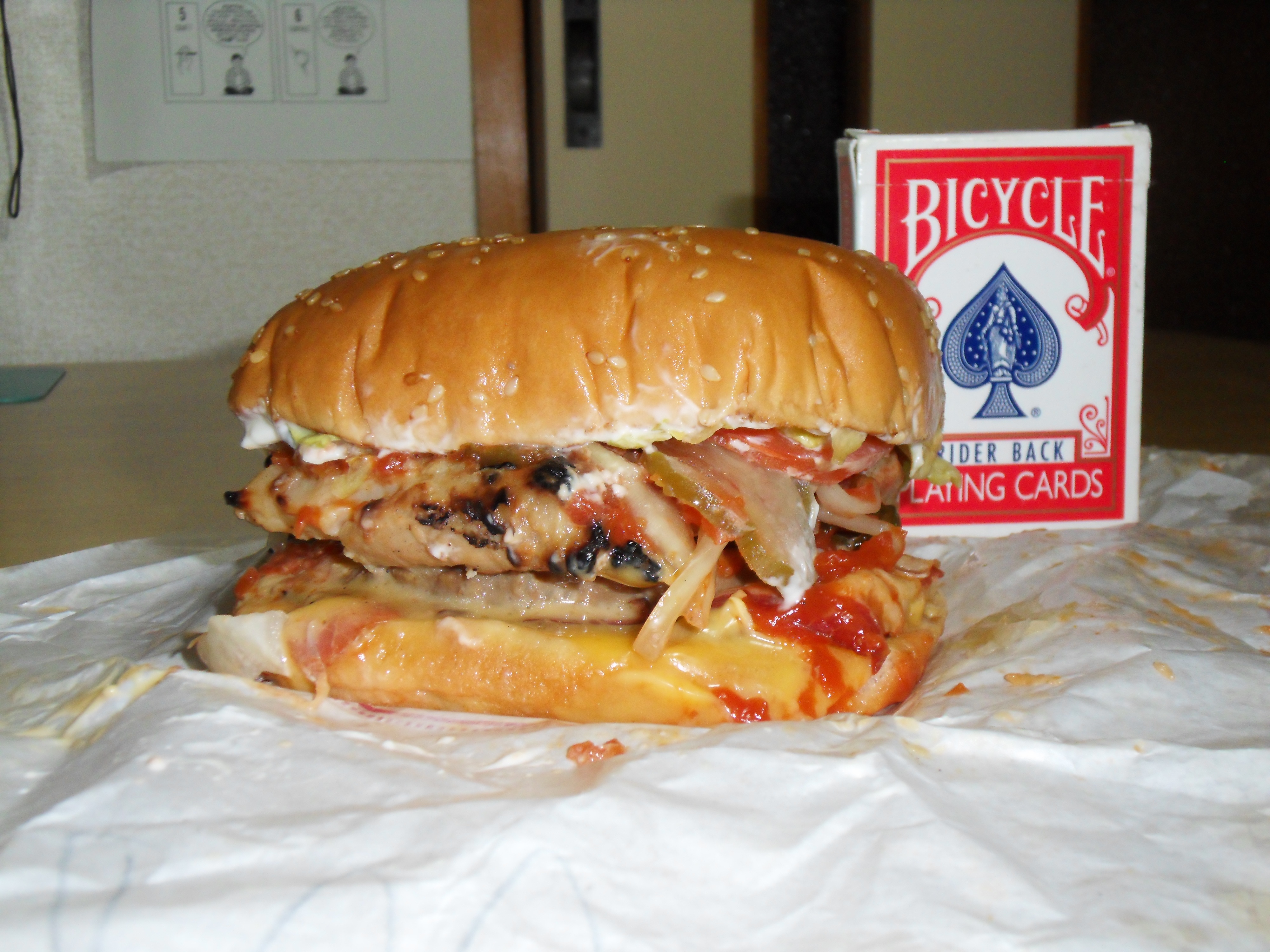
Meat Monster: "Oishisou! (de ha nai)"
Current Mie JET Patrick St. Michel shared the below about his recent “Meat Monster” review in Esquire Magazine, which JETwit believes is very much worth your time to read.
An Unexpected Burger Benefit of Life in Japan
Posted by Patrick St. Michel (Mie-ken, 2009-present).
Having now lived in Japan for nearly two years, I’ve discovered a host of benefits—from convenient public transportation to a copious amount of vending machines—that come with residing in this island nation. Recently, however, I encountered a completely unexpected benefit—one that involved consuming—in a single sitting—the FDA-recommended caloric intake for a herd of plus-size elephants.
Prior to joining JET, I attended—and graduated from—Northwestern University’s Medill School of Journalism. My pre-JET life also included working at three newspapers, an online music site, and an online magazine that I co-founded (http://www.northbynorthwestern.com). One of the friends I made along the way now works at Esquire magazine. Word had apparently spread stateside that Burger King Japan was launching a medically ill-advised burger aptly dubbed the “Meat Monster.” Knowing that I live in Japan and generally don’t give much thought to my arteries’ continuing ability to function, my friend asked if I would write a review of the Meat Monster for Esquire. Fortunately, I had inadvertently prepped for this unexpected assignment, having just reviewed McDonald’s “Mega Teriyaki” in my blog about life in Japan—http://www.japantrick.wordpress.com/. (I’ve also previously reviewed McDonald’s line of Big America burgers)
Some 1,160 calories and 2,290 milligrams of sodium later, I filed my Esquire story—http://www.esquire.com/blogs/food-for-men/burger-king-meat-monster-042611
As a postscript, my plan is to pursue a post-JET writing career in Japan. Toward that end, if anyone has suggestions—or knows of openings at traditional or online publications or public relations/marketing positions—I would love to hear from you! Reach me at mailto:patrickstmichel@gmail.com. If you’re still not sure about me, learn more at http://www.patrickstmichel.com, and if you’re interested in the Japanese music scene, follow my blog—http://www.makebelievemelodies.wordpress.com/.
Sake World e-Newsletter by John Gauntner (May 2011)
Celebrity, Cultural Outreach, Events, Food & Drink, Notable JET Alums, Writers Comments Off on Sake World e-Newsletter by John Gauntner (May 2011)
 The May 2011 issue of the Sake World e-newsletter by JET alum and the leading non-Japanese sake expert in the world, John Gauntner (a.k.a. “The Sake Guy”), is now available online.
Note: John will be lecturing tomorrow night at the Japan Society in New York.
In this issue:
- Greetings
- Smooth’em or Let’em?
- Announcements and Events: Sake Professional Course in NYC
- Did you Know?
- Sake Basics
- Sake Education Central
Thank you to Vancouver-based JET alum Alison Dacia Brown (Iwate-ken, Rikuzentakata, 2005-2008) for sharing the below piece which she originally wrote for JETAA British Columbia:
“Rikuzentakata”
Rikuzentakata in Iwate prefecture is the best little town that you’ve never been to.
I think I can safely assume that. I think Vancouverites in particular would have appreciated it because to me, Rikuzentakata as of March 10, 2011, was Vancouver in miniature, complete with a beach and mountains in the background. It made me feel like I was just across the pond from Canada. I actually requested Iwate on my JET application, which hardly anyone does. I was more than lucky to be placed where I was, and not just in terms of geography.
It had a quaint little sake factory called Suisen that held hanami parties during the cherry blossom season. It had a gorgeous, sandy beach lined with thousands of slender, yet majestic pine trees. It had the best neighbours a foreigner could ever have when she is away from home. Neighbours who fed her when she was sick with a stomach infection. It had an amazing Japanese woman, who translated all of her farewell speeches from Japanese into English. It had a hard-working Board of Education. It had an amazing ALT from Alaska.
Suisen is gone but I was told that in the days after the tsunami, the smell of sake permeated the area. I’m sure it was hiding more insidious smells. All of the trees which lined the beach are gone except for one. This tree is now called ‘The Miracle Tree’ and it’s giving hope to tsunami survivors. Unfortunately, it’s become a tourist destination and it’s making transportation into Rikuzentakata difficult.
The neighbour who fed her when she was sick, sometimes 3 times a day, lost her house which also housed the family’s tatami business. Her son was a volunteer firefighter and went directly to the beach to close the tsunami wall. His body was found 4 days ago and he has been cremated. The woman who translated her farewell speeches into English, Mutsuko Ozawa, is alive but has lost her mother, sister, nephew and cousins to the tsunami. Only her sister was found. Her house is gone and she has sent her children to central Japan while she and her husband fix up a new house to live in.
21 out of the 26 people who worked at her Board of Education are dead. It was an emergency meeting point, but unfortunately, the building which housed the Board of Education, was only 3 stories high. The tsunami went over it. My good friend, Kie Murakami, was still working at the Board of Education when the tsunami hit. I was hoping she wasn’t, as people change jobs every 3 years, as many of you know. I prayed she was somewhere else, away from the shore. She was found two weeks ago, and she has left behind a daughter and a husband who will miss her immensely. Kie was with Monty Dickson, who was the current JET ALT. He had taken over my position a year after I left Japan, and I know he loved the place as much as I did. I have a picture of Kie and Monty on the top of the local mountain, and it’s very hard to look at, knowing what has happened to them.
I hope to return someday to help. I think many of the former Iwate JETs feel this way. Right now, the only way I can help is by donating money, which we have all been doing. I have given hugs to Japanese people on Granville street in exchange for money. I have bought t-shirts. I have done a charity walk for Japan to raise money through JETAABC. I have donated money directly. But of course it is not enough. I desperately want to return to my adopted city which took care of me for 3 years to let them know that they have not been forgotten.
WIT Life #166: Monkey Business
Events, Roland Kelts, Translating/Interpreting, WIT Life, Writers Comments Off on WIT Life #166: Monkey Business
WITLife is a periodic series written by professional Writer/Interpreter/Translator Stacy Smith (Kumamoto-ken CIR, 2000-03). She starts her day by watching Fujisankei’s newscast in Japanese, and here she shares some of the interesting tidbits and trends together with her own observations.
Last weekend aside from going to the glorious Sakura Matsuri at the Brooklyn Botanical Garden, I attended a panel discussion at Asia Society about contemporary writing from Japan. I had heard about the event from former JET Roland Kelts, who in addition to publishing books of his own and lecturing at both NYU and Tokyo University, is a contributing editor to the inaugural issue of the English language version of the Tokyo-based literary magazine Monkey Business (currently available for purchase!). The magazine is run by award-winning translator Motoyuki Shibata, who served as editor of the English version along with colleague Ted Goossen.
All three were on hand at this event, which was divided up into the two sections of Read More
WIT Life #165: 自粛
Translating/Interpreting, WIT Life, Writers Comments Off on WIT Life #165: 自粛
WITLife is a periodic series written by professional Writer/Interpreter/Translator Stacy Smith (Kumamoto-ken CIR, 2000-03). She starts her day by watching Fujisankei’s newscast in Japanese, and here she shares some of the interesting tidbits and trends together with her own observations.
Recently in my work interpreting for Japanese groups and in casual conversations with Japanese friends, certain expressions keep popping up. In my mind, they have become a sort of post-disaster vocabulary, phrases which are unique in their relevance to the aftermath of the earthquake and tsunami which hit Japan on March 11. I would like to discuss one of those words, 自粛 (jishuku), which means self-control or voluntary restraint.
Immediately after the disaster, 自粛 referred to people holding back from going out and enjoying themselves as usual, in order to show respect to the victims and people in the disaster area. Nomikai were postponed, vacations were canceled and people forced themselves to put on somber faces that reflected the seriousness of the tragedy. It became enough of a phenomenon to received the name of 自粛ブーム (self-restraint boom).
However, soon there was a backlash to this movement as seen in Read More
Surviving in Japan: Yellow Sand in Japan – How Does it Affect You?
Advice, Blogs, Japan Local, Writers Comments Off on Surviving in Japan: Yellow Sand in Japan – How Does it Affect You?

Ashley Thompson is "Surviving in Japan: without much Japanese."
Posted by Ashley Thompson (Shizuoka-ken, 2008-2010) of Surviving in Japan: without much Japanese and Lifelines columnist for The Japan Times.
Weather reports recently (May 2011) mentioned an increase in 黄砂, kousa starting today and continuing over the next few days over much of Japan, which I mentioned on Twitter and heard many replies from people wondering what exactly yellow sand is and why it’s important to know about, so I wrote up the following information:
Along with the prevalence of spring-time pollen, there’s another annual annoyance that often affects Japan, known as “yellow sand”, “Asian dust”, “yellow dust”, or a more official term, Aeolian Dust, and in Japanese as 黄砂 (こうさ, kousa). This dust is stirred up by the wind from deserts in Mongolia, northern China and Kazakhstan, and carried in clouds over China, North and South Korea, and Japan. Seems relatively harmless, but supposedly this dust has also been found to carry a variety of toxic particles, such as heavy metals, sulfur, viruses and bacteria, asbestos, and other pollutants. As far as I’ve been able to find, Japan doesn’t seem to have experienced many health problems due to this dust (please correct me if you know otherwise), though South Korea has reported adverse health effects, particularly in those with respiratory problems. The dust can also decrease visibility, stain laundry, and cause other problems.
Just to clarify, this isn’t necessarily something you need to worry about on a daily basis during spring, but it might be good to be aware of for when it does occur, particularly if you live in Okinawa, Kyushu, Chugoku or Kansai (though it can apply to other regions). If it does appear in significant amounts, you may want to think about hanging your laundry indoors and possibly wearing a mask outside, especially if you have allergies and/or respiratory problems. I’m not a medical expert, so definitely look up “Aeolian Dust” and “health effects” so you can gain a better idea about how it might affect your health, because as I said, the information about adverse health effects in Japan seems to be sparse.
The U.S. Consulate of Naha (Okinawa) issued this statement on April 28, 2011 about dealing with Aeolian dust, particularly if you have health issues:
If you suffer from allergies or have a pre-existing respiratory problem such as asthma, emphysema or other forms of chronic respiratory disease you may want to consider limiting outdoor activities when high dust levels are present.
– Wear glasses instead of contacts
– Close windows
– Wash exposed skin after returning indoors
– Wear long sleeves
– Cover mouth and nose
– Do not drink or eat food outside
– Drink water frequently
– People with lung disease, older adults, and children should avoid prolonged or heavy exertion
Now, I want to introduce to you two tools you can use to determine the levels of “yellow sand” in your area on any given day, and also how to look at predictions: — CLICK HERE to read the rest of the post.
WIT Life #164: More notable Nihonjin
Events, Film, Translating/Interpreting, Uncategorized, WIT Life, Writers Comments Off on WIT Life #164: More notable Nihonjin
WITLife is a periodic series written by professional Writer/Interpreter/Translator Stacy Smith (Kumamoto-ken CIR, 2000-03). She starts her day by watching Fujisankei’s newscast in Japanese, and here she shares some of the interesting tidbits and trends together with her own observations.

Interesting article in the NYT today profiling the new head of the M.I.T Media Lab, a 44-year old Japanese venture capitalist named Joichi Ito. Ironically enough, Ito attended both Tufts and the University of Chicago in the past, but didn’t graduate from either as he didn’t like their learning styles. However, his accomplishments include serving on the board of the Internet governance organization Icann and the Mozilla Foundation, and along the course of his career he has invested in more than 12 start-ups such as Flickr and Twitter. In Japan, he helped establish Read More
Surviving in Japan: 6 Ways to Deal with Allergies in Japan
Advice, Blogs, Japan Local, Writers Comments Off on Surviving in Japan: 6 Ways to Deal with Allergies in Japan
Posted by Ashley Thompson (Shizuoka-ken, 2008-2010) of Surviving in Japan: without much Japanese and Lifelines columnist for The Japan Times.
Ashley Thompson is "Surviving in Japan: without much Japanese."
Are you going to Japan, or in Japan, and wondering what to do about your allergies? I know the feeling. I’m allergic to mold and dust mites, which are especially hard to escape in Japan.. Last winter they somehow managed to debilitate me while allowing a little virus to invade my inner ear – labrynthitis. Labryawha? It’s a deep inner ear inflammation. Makes you dizzy, lightheaded and generally unable to move. Some people get vertigo, and motion sickness. Anyway, that all aside the point – you can read the full story here.
*Note: This post is about nasal allergies and rhinitis, rather than food allergies. Please also note I am not a medical professional, and if you have severe allergies you should seek a doctor’s advice and appropriate medication and/or treatment.
Allergies are quite prominent in Japan – with a large number of those suffering primarily from pollen type allergies. So if you too suffer from rhinitis, you will find a very allergy-friendly (so to speak) country in Japan. A few ways to deal:
1. Wear a mask – Folks in Japan wear a mask for a variety of reasons, but most notably to keep allergies in check or to prevent the spread of whatever illness they might currently be carrying. Personally, I avoid wearing the mask because it annoys me, but just saying.
2. Allergy meds – I won’t go into too many specifics, as those with allergies probably already use specific kinds of medicine. My doctor in the U.S. primarily prescribed me Flonase (a nasal spray), which is available in Japan, so if you use Flonase, you can get a prescription here as well (and much cheaper at that, with the national health insurance). Whatever prescription you have in your home country or whatever OTC meds you use, bring the info to a doctor in Japan to find what you need (or a similar alternative). You can also get Claritin by prescription here in Japan. The Japanese pronunciation is: クラリチン.
3. Drink beni fuuki (べにふうき) – a very strong, concentrated green tea. The taste is quite bitter compared with regular green tea, because of the concentration, but studies in Japan have shown that those who drink it have less histamine response – due to the higher number of catechins. Available in supermarkets and online. — CLICK HERE to read the rest of the post.
WIT Life #163: Two Japanese recognized by Time’s Top 100
Translating/Interpreting, Uncategorized, WIT Life, Writers Comments Off on WIT Life #163: Two Japanese recognized by Time’s Top 100
WITLife is a periodic series written by professional Writer/Interpreter/Translator Stacy Smith (Kumamoto-ken CIR, 2000-03). She starts her day by watching Fujisankei’s newscast in Japanese, and here she shares some of the interesting tidbits and trends together with her own observations.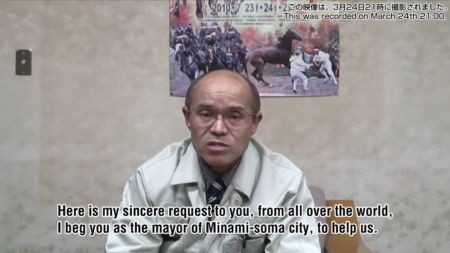
Two Japanese men were selected to be on Time magazine’s annual list of the 100 most influential people worldwide. Both received recognition in regard to their handling of the recent earthquake/tsunami. The first is Mayor Katsunobu Sakurai of Minami Soma, a town 15 miles from the Fukushima nuclear power plant. In an earlier post I highlighted an article about his Read More
Surviving in Japan: How to do a Furikomi (Bank Transfer)
Advice, Blogs, Japan Local, Writers Comments Off on Surviving in Japan: How to do a Furikomi (Bank Transfer)
Posted by Ashley Thompson (Shizuoka-ken, 2008-2010) of Surviving in Japan: without much Japanese and Lifelines columnist for The Japan Times.
Ashley Thompson is "Surviving in Japan: without much Japanese"
I’m going to assume you already have a bank account in Japan. And perhaps you signed up with GoLloyds to transfer money to your bank accounts in your home country, or you made some online purchases, or even have a bill that needs to be paid by furikomi (bank transfer). So now you are at the bank, panicking in realization that the stupid ATM doesn’t have a “transfer” button in English (usually only withdrawal, balance inquiry and deposit). I’ve been there, too.
You can of course, ask the bank employees to help you, but they are only available during business hours, which often end at 3 p.m. Not the best news for those of you (probably most of you) who are working during the day. Or you could take someone with you who can read kanji. But what if those said kanji-readers start to passive-aggressively hint that they are busy and would just love to help but don’t know if they can? Ok…. you think. I guess I’ll try to do it myself. After my constant barrage of questions within a two week duration, I decided to figure out the transfer thing myself – even if it took me ages. Two days and two ATM visits later, I succeeded.
Oh, and try not to sit in front of the ATM the first time you try this with a long line of folks waiting behind you for their turn with the machine. (Avoid after-work rush hour). They may not show it, but they are burning with rage inside, thinking you are clueless, and why would you be so stupid as to do this by yourself?, and that they have families and dinner and shopping and things to get to. And yet, soon enough you will be impressing the socks off all of them, and standing behind them in line thinking the very same thing.
*Note: Some of the information here may not display on the ATM you use, although most of it should at some point. The placement may vary slightly, as may the color and size of buttons. Just look for the particular kanji here, and you’ll be all right.
**Remember to bring along the information from GoLloyds, or the online retailer, or the bill, or whatever it is you have furikomi information for.
Some of this information may or will include:
Account/beneficiary name (for GoLloyds type transfers): 受取人 (うけとりにん, uketorinin)
Financial Institution (the “receiving” bank, or recipient): 振込先 (ふりこみさき, furikomi saki)
Bank name: 銀行名 (ぎんこうめい, ginkoumei)
Branch name: 支店名 (してんめい, shitenmei)
Account Number: 口座番号 (こうざばんごう, kouza bangou)
Remitters/payers name: 振込人名 (ふりこみじんめい, furikomi jinmei)
other words to know:
furikomi (bank transfer): 振込 (ふりこみ) – sometimes this is preceded by お
bank: 銀行 (ぎんこう, ginkou)
account: 口座 (こうざ, kouza)
regular deposit: 普通預金 (ふつうよきん, futsuyokin)
confirm: 確認 (かくにん, kakunin)
correction: 訂正 (ていせい, teisei)
amount: 金額 (きんがく, kingaku)
cancel: 取り消し (とりけし, torikeshi)
go back/return: 前に戻る (まえにもどる, mae ni modoru)
cash: 現金 (げんきん, genkin)
*When doing a furikomi, keep in mind there should be a cancel button on every screen if you need to stop the process at any time (say, a line 20 people long are standing behind you, starting to invade your personal space). You’ll see confirm and correction typically when entering information.
how to do a furikomi (bank transfer)
I just want to apologize in advance for the lack of quality pictures – I had a mad horde of folks surrounding me from behind, waiting for me to hurry up and finish as I discreetly and hastily snapped photos with my iPhone.
1. Make sure to choose 日本語 (Japanese) on the main screen, instead of English (unless the ATM you use has a transfer function in English, then you won’t need to worry about the rest of this tutorial).
2. Press お振込, the polite form of “furikomi”. (Some ATMs may just say 振込). In the picture it is the button on the bottom.

CLICK HERE to read the rest of the post.
