




Stories from the JET-Tourist Tally Project
 Anecdote Article, Local Government, Return on JET-vestment, Travel/Tourism, Uncategorized
  Comments Off on Stories from the JET-Tourist Tally Project
 Below are approximately 150 comments received so far as a result of the JET-Tourist Tally Project. First the Top 10 Comments followed by all comments organized according to prefecture. (Click here for the latest totals from the JET-Tourist Tally Project.)
Important: If you have not yet responded, please help out by entering your JET Tourist-Tally information in the Google Form we’ve set up. And of course feel free to share any comments or stories! Every response matters. CLAIR, MOFA, JNTO and the prefecture governments are all paying attention to the results.
**********
The Top 10 Comments from the JET-Tourist Tally Project
(FYI, the comments were evaluated on the basis of “omoshiroi” plus effectiveness at demonstrating the value of JET.)
I took my parents up through Tohoku to experience a part of Japan tourists typically don’t see. We hiked Yamadera, shot over to Sendai and Matsushima, went to Hiraizumi, traveled through Aomori up to Sapporo, went over to Onuma Park, down to Hakonodate, and then down to Aomori for a few more days. They loved all of our experiences, from using an onsen and sleeping in a ryokan to learning how to order their own food. My father particularly loves to tell the story about a tiny yakiniku restaurant we stumbled into in Hiraizumi. The owner couldn’t speak English, but he did know at least one word. He came over to my father, put a beer down and said “suds.” From that point on, they were friends. A Buddhist monk sitting a few tables over joined us and invited us to visit his temple the next day. It was an amazing intercultural experience in an ancient town usually overlooked by tourists.
-Abigail McBain (Aomori-ken, Ajigasawa-machi, 2004-06)
My family said they never would’ve thought to visit Japan before I did JET, and since visiting twice couldn’t believe they ever said that because they had the most amazing time. Especially memorable was the opportunity to see village life in Japan and experience Japanese hospitality, something regular tourists rarely get to experience.
-Kirsten Jones (Tokushima-ken, Tsurugi-cho, 2005-07)
My parents still talk about the experiences they had visiting me in Japan. My father in particular. As a result he still maintains links to Japan and often buys tea directly from a Japanese seller near Uji named Hibiki-an. I myself have returned to Japan as a tourist three times since I finished the JET Programme, one time with a fellow JET alumna, staying 10 days each time. I plan to visit Japan again. I also often encourage my American friends who are interested in visiting Japan to go. One of my co-workers recently went there on vacation, again for about 10 days, and had a wonderful time.
-Rose de Fremery (Shizuoka-ken, Hamaoka-cho, 1998-2001)
Being able to share a country that I love (Japan) with people that I love (my family) was one of the best experiences of my life. My mother still talks about coming to visit me for those two weeks. We were able to explore my town (Hamamatsu) and also Tokyo, Hiroshima and Kyoto. In addition, this was the first time my mother had ever left the United States; she is amazingly proud to say she became a world-traveler when she was in her 50s! This would not have happened if I had not been a JET participant and could confidently share parts of Japan with my family.
-Jennifer Butler (Shizuoka-ken, Hamamatsu-shi, 2001-04)
Both of my visitors were and still are keen practitioners of aikido. They continue to teach the martial art and will be regular visitors to Japan, also inspiring others to travel there. Without my JET experience I wouldn’t have been able to take them to Japan. Also, I am now a British Airways pilot flying regularly to Tokyo so I could perhaps list a figure of several thousand visitors!
-Darren Tostevin (Fukuoka-ken, Omuta-shi, 1990-91)
Prior to my becoming an ALT, my fiance had never had any interest whatsoever in visiting Japan. It was only once I went there and started to tell her about the people I had met that she began to read more and educate herself about the country. When she finally came to visit me, she was constantly amazed at how genuinely welcoming and helpful everyone was as well as how easy it was to get around and experience everything that Japan has to offer. To this day she still tells everyone about her experiences there and how Japan went from the bottom of her “Places to Visit” list to become her favorite country that she’s ever visited. Not only did the JET Programme give my family and friends an amazing opportunity to see what Japan has to offer but it also converted someone who never had given the country a second thought into a vocal volunteer tourism spokeswoman.
-Gregory Blair (Nagasaki-ken, Saikai-shi, 2007-08)
I made sure to show two of my guests around Niigata, which is not your typical tourist destination–and they loved it even more than Kyoto! Having JETs in locations off the beaten track surely helps those areas.
-Maureen O’Brien (Niigata-ken, Niigata-shi, 2006-08)
Several of these visitors (at least 5) had previously stated absolutely no interest in visiting Japan…it took quite a bit of convincing on my part to get these individuals to come. In the case of one, a senior citizen friend from England, it just seemed so un-knowable and far beyond her comfort zone. But she loved it once she arrived. The other four, a Philippine-American family who are friends here in the US, were previously very anti-Japanese due to experiences their grandparents’ generation suffered during WWII. They couldn’t understand how I would possibly want to move to Japan on JET. But they kept in touch the entire two years, and finally – just one month before I returned – they agreed to come for a visit. They fell in love with the people and the country, their prejudices were totally erased. Even now, three years later, they are still talking about Japan…only now it is in terms of how wonderful and warm the people are and how we should all live up to these standards of hospitality. A total about-face!
-Margie Banin (Kochi-ken, Motoyama-cho, 2005-07)
My parents would never have dreamed of visiting Japan had I not been there. Now they are complete Japan enthusiasts and are really interested in the country and culture. My friends who came to visit still talk about it now and pass this on to other people, encouraging others to visit Japan. Also, thanks to my stories, pictures and news from the two years I spent in Japan, my whole network of friends and family have shared my interest in the country. I also organised letter exchanges with my old high school, and at least 20 students has direct contact with Japanese students at my school in Yakage-cho, and have become Japan enthusiasts.
-Annie Barber (Okayama-ken, Yakage-cho, 2007-09)
I had heard about all sorts of difficulties vegetarian ALTs had settling in to Japan, so I was a little worried when a vegetarian friend of mine came to visit. After five days of my drilling her with phrases that would help her order meat-free food, she and her companion ventured off to Kyoto, Osaka and Hiroshima for a week. They had no problems and were really impressed with how the restaurants were able to cater for her special dietary requests. They were also really impressed with the variety of food offered (tofu, seasonal / mountain veggies, tempura, etc.) that were appropriate for vegetarians. Another example of excellent service in Japan, going that extra mile to satisfy the customer! (On another side note, I’ve been pining for a visit back to Japan since I left and have managed to persuade my family to come with me after Golden Week this year. Assuming everyone can make it, that will be another 4 people spending a total of 48 days tourist travel in Japan!)
-Martin McCloud (Niigata-ken, Tokamachi-shi, 2004-09)
***********
Stories from the JET-Tourist Tally Project
(Organized by Prefecture) Read More
Akita Global Network Newsletter – Vol 2
Local Government, Uncategorized Comments Off on Akita Global Network Newsletter – Vol 2
Hot off the presses, it’s Volume 2 of the Akita Prefecture Global Network Newsletter (“AGN”). This newsletter is part of Akita-ken’s efforts to stay connected with its JET alumni as well as study abroad students who were based in Akita-ken. And this issue features an essay by Dan Dooher (Akita-ken, 2006-10)
To get on the e-mail list for this pdf newsletter, please contact the Akita Prefecture International Affairs Division at: kokusaika@pref.akita.lg.jp The newsletter welcomes submissions from alumni as well.

**********

JETs in the News: Lars Martinson featured in Japan Times article on ex-pat comics
Blogs, Books, Cartoon/Illustration, Celebrity, Interview/Profile, Japan Trends, JETs in the News, Notable JET Alums, Return on JET-vestment, Uncategorized, Writers Comments Off on JETs in the News: Lars Martinson featured in Japan Times article on ex-pat comics

JET alum and 'Tonoharu' creator Lars Martinson.
********
JET alum/cartoonist Lars Martinson (Fukuoka-ken 2003-2006), author of the graphic novels Tonoharu: Part Two and Tonoharu: Part 1, is the focus (along with Adam Pasion, author of the Sundogs anthologies) of a thoughtful Japan Times article by Gianni Simone on comics about Japan “that tell it like it is.”
Here’s the link to the article: http://search.japantimes.co.jp/cgi-bin/fl20110205a1.html
And below are a few excerpts about Martinson from the article:
The comic life of expats in Japan
Americans Lars Martinson and Adam Pasion tell it like it is with cutting-edge manga
By GIANNI SIMONE Special to The Japan Times
Tales of expat life in Japan all too often get blown out of proportion and quickly become picaresque adventures that little resemble real life.
**********
Luckily for us, many comic artists who have lived here seem to be more level-headed and have tackled the subject with a more realistic, no-nonsense approach.
**********
As the title suggests, “Tonoharu: Part Two” is not Martinson’s first foray in the field of expat comics: He self-published the first volume of this four-part saga in 2008 thanks to a grant from the prestigious Xeric Foundation.
Martinson, 33, first arrived in Japan in 2003 to work as an assistant language teacher, and spent the next three years working at a junior high school in a small town in Fukuoka Prefecture. His second stint in this country was in 2008 when he studied East Asian calligraphy under the auspices of a two-year research scholarship from the Japanese government.
Travel had played a pivotal role in his life (he had lived in Thailand and Norway as well), so when he came up with the idea of producing a graphic novel, he decided to make foreign travel a central theme.
“I planned from the start to turn my Japanese experience into a comic,” Martinson says, “even though I didn’t want it to be a mere autobiographical story. So I chose a 20-something American like me as the protagonist, but added a fictional group of eccentric expatriates living in the same rural Japanese town.”
At times living in the middle of nowhere was a challenge. Still, Martinson has no regrets about those three years spent in Kyushu.
“I’m actually a city slicker,” confesses Martinson, “and would love to live in a huge city in Japan at some point. Also, I’m sure that expat communities are awesome, but they can also separate you from the native population. When you live out in the country, you don’t have the option to just hang out with other Westerners, and this can force you to get involved in the host culture in ways you probably wouldn’t otherwise.”
Click here to read the full article: http://search.japantimes.co.jp/cgi-bin/fl20110205a1.html
Click here to read more JetWit posts about Lars Martinson:
Click here for Lars Martinson’s official blog/website: http://larsmartinson.com
Foxhound87: Setsubun!
Uncategorized Comments Off on Foxhound87: Setsubun!
Joshua Small is a First Year JET currently living in Ikaruga-cho, Nara-ken and has been chronicling his experience on his blog Snorlax87.
Setsubun is a bizarre festival in Japan. I know that calling a Japanese festival bizarre is redundant, but bear with me. Setsubun is the day before the beginning of Spring in Japan. It literally means, “seasonal division.” Roasted soybeans are thrown at an Oni (demon or ogre), while the people say “Demons out! Luck in!” (鬼は外! 福は内!, Oni wa soto! Fuku wa uchi!?). Although this is not common practice in households anymore, most people attend a shrine or temple’s spring festival where this is done. I recently went to Setsubun.
I decided to go to Setsubun with Center of the Universe (Tenri) JETs. We hopped the bus from Tenri Station and walked about 10 minutes to Oyamato Shrine. We walked through the large gate and wandered onto the shrine’s grounds. There was a large bonfire, so we gathered there for a moment to warm up. As I was warming my hands, I noticed an older woman walk up to the fire and throw a department store shopping bag into the fire. My first thought was, “Are people burning their garbage on sacred ground?” Turns out, there was stuff inside the bag. Though no explanation was given to me, I assume people burn things that bring bad luck or memories. Again, this is a guess.
The priests had set up a stand selling bags of soybeans. Each bag had a number in it that corresponded with a prize. I won a bag of potato chips. Yay. Another JET won an apple. Um…yay? When the ceremony started, we moved to the action. 2 priests were sitting on stage next to large drums. They said something in Japanese, hit the drum, and reacted as if horrified. The “demons” had arrived.
CLICK HERE to read the rest of the post.
http://snorlax87.blogspot.com/
JETs with JDs >> What Student Loan Reform Means for the Law Student
Uncategorized Comments Off on JETs with JDs >> What Student Loan Reform Means for the Law Student
Andrew R. McCarthy (Akita-ken, 2005-08) is a law student at The Ohio State University Moritz College of Law focusing on international trade, business, and tax. He currently runs the blog JETs with J.D.s, an information source for current JET alumni law students and prospective law students for career paths and approaches within the current legal market. For those considering law school and trying to comprehend the costs and the risks of such an endeavor, he also recommends The Law School Tuition Bubble.
When you’re graduating with a great legal mind, $100k in student loan debt, and the best job offers you have are all tossing you $50k or less, what is there to do? Roll over and die, perhaps? This JETs with J.D.s post looks at the basic structure of student loan reforms, particularly the expansion of income-based repayment, and why it’s going to be an often consulted resource for the law graduates in the “Lost Generation.”
Full post is available here.
Visit Japan: February in Japan
Travel/Tourism, Uncategorized Comments Off on Visit Japan: February in Japan
The Japan National Tourism Organization (JNTO) provides rather helpful travel information for JETs and non-JETs alike, whether you’re traveling to or around Japan or helping a friend or relative plan their trip. If you haven’t seen it yet, take a look at their website at www.japantravelinfo.com.
Below is a recent item from the Visit Japan Facebook page:
Kisaragi, the old Japanese name for the month of February, is a contracted form of kinu sara gi, which means “wear still more clothes.”
Setsubun – celebrated on February 3 or 4 – is a favorite annual celebration among Japanese children. On this night, children fill a wooden cup with roasted soybeans and run around throwing them at an oni, or devil, (usually played by the dad) and shouting “Oni wa soto; fuku wa uchi!” This translates as “Out with the devil; in with good fortune!”
The only national holiday in Kisaragi, though, is National Foundation Day on February 11. This is the date calculated to be the day on which Jimmu – the first emperor of Japan – was enthroned, according to the Nihon Shoki (Chronicles of Japan).
WIT Life #152: Kaga Maki-e
Art, Events, Food & Drink, Translating/Interpreting, Uncategorized, WIT Life, Writers Comments Off on WIT Life #152: Kaga Maki-e
WITLife is a periodic series written by professional Writer/Interpreter/Translator Stacy Smith (Kumamoto-ken CIR, 2000-03). She starts her day by watching Fujisankei’s newscast in Japanese, and here she shares some of the interesting tidbits and trends together with her own observations.
Recently I had the opportunity to interpret for a delegation from Kanazawa that was here to promote the city in general and especially its ancient craft of 蒔絵 (maki-e), a lacquerware technique that uses silver and gold powder. This art form actually originated in Kyoto which has its own style known as Kyo Maki-e, but the Kanazawa version is called Kaga Maki-e, Kaga referring to the area of Kanazawa where it originated. This picture, courtesy of fashion blogger Alice Chin, shows two delegation members at the ribbon cutting ceremony for the new Kaga Maki-e display.
On the left is native New Yorker and long-term Kanazawa resident Evelyn Teploff-Mugii, a designer who has modernized the thousand year old maki-e process to make breathtakingly beautiful accessories. Her Evelyn Claude line will be offered in the US for the first time. To her right is Read More
Fluent Chinese Speaker wanted for Live Japanese TV News Program
Uncategorized Comments Off on Fluent Chinese Speaker wanted for Live Japanese TV News Program
via Jet alum Rosa Sobrino. Posted by Dipika Soni (Ishikawa-ken, 2003-06). Dipika currently works as an in-house translator for PFU (a Fujitsu company) in Kahoku-shi, Ishikawa-ken. She is also the vocalist for the Japanese hardcore punk band DEGRADE.
—————————————————————————————————————–
Live Japanese TV news program looking for a fluent Chinese speaker to help us with our report in Manhattan Chinatown this Thursday, February 3 from 1p.m. to 5p.m. (4 hours). We’ll be reporting on Chinese New Year and we need someone to help us with production and to communicate with the local community.
If you are interested, please contact Rosa anytime at 917-755-0955.
 What do you like about JetWit?
Please take a moment to share your response for the benefit of potential supporters and sponsors of JetWit, JETAA and the JET Program.
Here’s a link to the comments section of the original post from April 28, 2009 where the question was first asked: https://jetwit.com/wordpress/2009/08/09/what-i-like-about-jetwit/#comments
Thanks for your help and yoroshiku onegaishimasu.
–Steven Horowitz (Aichi-ken, Kariya-shi, 1992-94)
Brooklyn, NY
JET alum Bruce Feiler’s TED talk on The Council of Dads (video)
Books, Celebrity, Notable JET Alums, Uncategorized, Video, Writers Comments Off on JET alum Bruce Feiler’s TED talk on The Council of Dads (video)
JET alum Bruce Feiler, author of Learning to Bow, Walking the Bible and several other best-sellers including his recent book The Council of Dads, recently spoke in connection with the TED lecture series:
FoxHound87: Great Day!
Uncategorized Comments Off on FoxHound87: Great Day!
Joshua Small is a First Year JET currently living in Ikaruga-cho, Nara-ken and has been chronicling his experience on his blog Snorlax87.
I am having a great day today!
First Class: English Conversation for Juniors (2nd Year’s)
The topic of today’s class was “Future Hopes/Dreams.” I borrowed the idea for the warm-up game from Rogue, the ALT in Tenri.
Warm-Up: Pairs of students come to the front of the classroom. Students stand with hands poised in Western style as though they are about to draw guns. I show them an occupation picture card. The first student to shout the occupation on the card and raise their hands like guns is the winner. Sounds silly right? The kids LOVED it! I called on volunteers who could then challenge another to “combat.” The boys got really into it. Instead of drawing simple pistols, some drew bazookas, bow & arrow, etc. Even the losing player’s death was dramatic. Some kids did a simple “touch the chest” move. Others fully acted like they had gotten shot. My favorite moment was the last fight. The winning student “shot” the losing student after yelling the right occupation. Except this time, the losing student did a matrix-style maneuver to dodge the “bullets.” HYSTERICAL…
CLICK HERE to read the rest of the post.
http://snorlax87.blogspot.com/
Fellowship for Social Entrepreneurs
Uncategorized Comments Off on Fellowship for Social Entrepreneurs
 Stephanie Boegeman (ALT, Akita-ken, 2006-09) gets her kicks from finding fun crazy ways to see the world and getting paid to do it. She is constantly in search of job, internship, and travel ideas to add to her site Playing With Hire, in the hopes that more JET alumni and like-minded souls join her in her quest to find creative, inspiring, and unique ways to make ends meet.
Those of you with big ideas on how to change the world for the better may want to investigate the Shuttleworth program, which supports social innovation. The award is the equivalent of a year’s salary, plus a travel allowance. The next proposal review is in June. More details on the program can be found here.
FoxHound87: Takoyaki? Yes, please.
Uncategorized Comments Off on FoxHound87: Takoyaki? Yes, please.
Joshua Small is a First Year JET currently living in Ikaruga-cho, Nara-ken and has been chronicling his experience on his blog Snorlax87.
Last Saturday, I enjoyed my first takoyaki party! Mind you, this is not my first time eating takoyaki (fried bread balls with octopus inside), but it was my first time participating in their creation. I went to the center of the universe (Tenri) and, after basking in the warm glow of Oyasama, went to Rogue’s apartment. Since we had some time to kill, she took me to a store that supposedly sold clothes in larger sizes. I didn’t buy anything, but it is good to know there may be a place in this country that I can buy clothes from.
My Japanese friend joined us kind of late, but we all went to the grocery store to pick up supplies. We got snacks, alcohol, soda, and materials for the actual takoyaki.
Rogue bought a takoyaki maker earlier that week. She did all the real cooking. I took all the verbal abuse and helped out in any way I could. Mostly I just drank Melon Cream Soda and ran around doing odd jobs.
Rogue knew that I didn’t actually like takoyaki, so she made a custom batch just for me.
My Takoyaki:
-The takoyaki Batter
-Mini hotdogs
-Cheese
-Ginger
They were yummy! My only problem was the diced, pickled ginger. It’s good, but it overpowers EVERYTHING else. It’s like it takes the other ingredients, kicks them in the nuts, and shouts “I’M THE ONLY FLAVOR! THERE CAN ONLY BE ONE!!!” Yes, Ginger is the highlander of the takoyaki world.
CLICK HERE to read the rest of the post.
http://snorlax87.blogspot.com/
JetWit Society: Japanese royalty at the Museum of Natural History today
Uncategorized Comments Off on JetWit Society: Japanese royalty at the Museum of Natural History today
Just heard from a friend who works at the Museum of Natural History that there is apparently some Japanese royalty visiting the museum right now. No other details at the moment.
 What does “Saving JET” have to do with joining your JET prefecture’s LinkedIn group?
- The biggest threat to JET (and JETAA) now is attrition at the local government level as prefectural governments increasingly choose to reduce costs by getting ALTs from dispatch companies rather than hiring JETs.
- The most effective way to counter this trend is to demonstrate a positive ROJ (“Return on JET-vestment”) at the local government level.
- Local governments have expressed a strong interest in being able to connect and communicate with JET alumni who worked in their prefectures.
- JET Alumni have never been organized by prefecture….
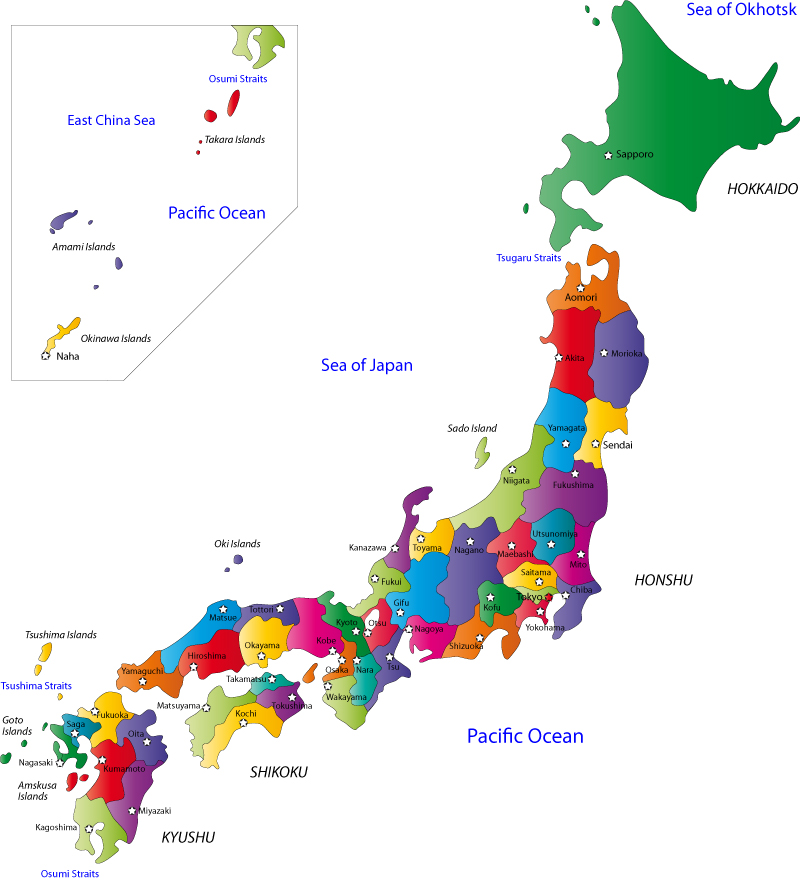
……until now. So please do your part and sign up for your respective JET Alumni LinkedIn Group below. It’s one small act of giving back to your prefecture that can make a big difference over time.
Yoroshiku onegaishimasu.
–Steven Horowitz (Aichi-ken, Kariya-shi, 1992-94)
jetwit [at] jetwit.com
Prefectural JET Alumni LinkedIn Groups
- FYI: All groups below were created in connection with JetWit and not by the prefectural governments. They’re just intended to help facilitate future communications.
- Current JETs and Monbusho English Fellows (MEFs) welcome too, as always. Additionally, prefectural and other government employees as well as residents of each prefecture are welcome to join the groups.
- If anyone would like to be a “Manager” for their respective LinkedIn group, that would be very helpful. Just get in touch. Primary role will be approving requests to join the group.
- You may of course join other groups in addition to your own prefecture’s group if it’s helpful to you.
-
Aichi JET Alumni
-
 Akita JET Alumni
 -
Aomori JET Alumni
-
Chiba JET Alumni
-
Ehime JET Alumni
-
Fukui JET Alumni
-
Fukuoka JET Alumni
-
Fukushima JET Alumni
-
Gifu JET Alumni
-
Gunma JET Alumni
-
Hiroshima JET Alumni
-
Hokkaido JET Alumni
-
Hyogo JET Alumni
-
Ibaraki JET Alumni
-
Ishikawa JET Alumni
-
Iwate JET Alumni
-
Kagawa JET Alumni
-
Kagoshima JET Alumni
-
Kanagawa JET Alumni
- Kobe JET Alumni
-
Kochi JET Alumni
-
Kumamoto JET Alumni
-
Kyoto JET Alumni
-
Mie JET Alumni
-
Miyagi JET Alumni
-
Miyazaki JET Alumni
-
Nagano JET Alumni
-
Nagasaki JET Alumni
-
Nara JET Program Alumni (set up by Savannah Maynard)
-
Niigata JET Alumni
-
Oita JET Alumni
-
Okayama JET Alumni
-
Okinawa JET Alumni
-
Osaka JET Alumni
-
Saga JET Alumni
-
Saitama JET Alumni
-
Shiga JET Alumni
-
Shimane JET Alumni
-
Shizuoka JET Alumni
-
Tochigi JET Alumni
-
Tokushima JET Alumni
-
Tokyo JET Alumni
-
Tottori JET Alumni
-
Toyama JET Alumni
-
Wakayama JET Alumni
-
Yamagata JET Alumni
-
Yamaguchi JET Alumni
-
Yamanashi JET Alumni
Note on Methodology: I took a relatively awkward approach to setting this all up. I created subgroups via my LinkedIn account. However, LinkedIn only lets a user create up to 10 groups and up to 20 subgroups, so I had to create a new LinkedIn account (“Jet Wit”) and use that account to set up the rest of the prefectural alumni groups. Not ideal, but it seemed to be the best solution under the circumstances and given limited resources. It’s always better to have something than nothing. I’m very open to any ideas and suggestions on better ways to set this up.
