




Anthony Bianchi back in Brooklyn for “Xaverian High School Japan Benefit Concert” tonight
 Celebrity, Earthquake Tsunami, Events, Fundraising, Music, Notable JET Alums
  Comments Off on Anthony Bianchi back in Brooklyn for “Xaverian High School Japan Benefit Concert” tonight
Just heard from JET alum, Brooklyn native and current Inuyama City Councilman Anthony Bianchi (Aichi-ken, Inuyama-shi) that he’s back in New York for a very short stay in order to attend his alma mater Xaverian High School‘s “Japan Benefit Concert” tonight (Thursday, March 31).
Anthony notes that any JET alums around are welcome to come. [Ed. Note: Sorry for the short notice. I wasn’t able to post this until 4:21 pm and it starts at 7:00 pm.]
Start time: 7:00 pm
Location: Xaverian High School, 71st St & Shore Road in Brooklyn
Cost: $10

JET alum Lee-Sean Huang (ALT Oita-ken ’03-’06 / webmaster, JETAANY.org & JetWit) was recently spotted in a flash mob music video for the dance pop girl group Xelle. You can spot Lee-Sean in the back of the train, dancing with the big spotlights.
Justin’s Japan: Q&A with Billy Sheehan of Mr. Big
Article/Journalism, Justin's Japan, Music Comments Off on Justin’s Japan: Q&A with Billy Sheehan of Mr. Big
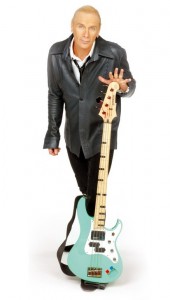
- Billy Sheehan of platinum-selling rock group Mr. Big. (William Hames)

By JQ magazine’s Justin Tedaldi (CIR Kobe-shi, 2001-02) for Examiner.com. Visit his page here to subscribe for free alerts on newly published stories.
Considered by many to be the Eddie Van Halen of bass, Billy Sheehan launched his recording career in the late ’70s with the Buffalo-based rock trio Talas, then joined original Van Halen frontman David Lee Roth’s band in the mid-’80s for two platinum-selling albums. After parting with Diamond Dave, Sheehan formed Mr. Big in 1988. Best known for its hit ballad “To Be with You”—which went to number one in 15 countries including the U.S. in 1992—Mr. Big called it quits a decade later, but in 2009 the original lineup reformed for a massive tour of Asia and Europe.
In February, the band released What If…, the first album in 15 years from the reunited rockers, which instantly went gold in Japan upon release. I spoke with Billy about the new album, his long relationship with Japan, and Mr. Big’s future touring plans.
What are some of your favorite “culture shock” memories from Japan?
Let’s see. Well, I toured with a Japanese band called B’z [in 2002], and they’re a huge band. One of their singles released that I played on [1999’s “Giri Giri Chop,” with Pat Torpey] sold, I think, three or four million units in a day; they’ve sold more records in Japan than Madonna has sold. Amazing statistics; wonderful bunch of guys, too. But we’ve played in little, tiny places where very few Western bands have ever performed. We did a thing on this little island where at the hotel there weren’t even Western numbers on the doors, so I had to remember the character of the kanji on the door to try to remember which door was mine, and that was an interesting moment for me.
It must have been a thrilling experience to go on tour with them.
We played all over. In Mr. Big, that’s one thing we’ve done, as well. Most bands [play] Tokyo, Osaka, Nagoya, and that’s it. But we’ve done Sendai, Kagoshima, Niigata, Sapporo, Fukuoka; all kinds of little places, a lot of places where many bands don’t get to. In Sendai, the first time we played there, we found out that they were having a petition to have Mr. Big play there. It had 30,000 signatures on it, and the place we were playing could only hold about 5,000 people, so we asked, what happened to the other 25,000 people that signed the thing? It was pretty fun; a sweet, sweet beautiful little city, great spot. We were very lucky to see a side of Japan that not a lot of Westerners see. It’s a very inspirational experience.
In your opinion, how do you think Japan has changed from the time you first went there up until now?
I know the economy’s been in trouble for a while, so now we’re starting to see things like discount stores and prices that aren’t set anymore; that’s a new thing for them, to go into a store and not pay absolute full retail for something, which they did for a long, long time. Now, they’re actually looking for bargains. That’s an interesting cultural change that not a lot of Japanese folks are used to. Also, the idea that once you work for a company, you are there for a lifetime of work; it’s not as secure anymore. So, I do believe there is a little bit of concern and worry amongst the average folks now that things are changing, and it’s sad to see. It’ll be interesting to see how things play out in the end.
When you played the Mr. Big reunion shows in Japan in 2009, did you notice any shift in the people who were coming to the shows?
We were very, very surprised at how many young kids were in the audience. We had a few gray heads of hair out there, too, of course, but there was amazingly a very large amount of very young kids, because I guess like any band, when you’re fortunate enough to get to some plateau of success, things start to kind of become timeless, as with this whole Beatles fans thing—I’m not comparing ourselves to them, of course, but same principle. So, we’re pleasantly surprised to see a lot of very young people whose parents probably turned them on to it, or their older brothers or sisters. So, that was a great thing.
You’re spanning generations now over there.
Yeah, I think there’s probably three generations easily being represented in the audience. We’re so thankful.
You’ve been known to get extra work and gigs in Japan over the years, like the B’z tour, Hard Rock Cafe radio spots, bass clinics, and other appearances. Do these usually come to you by reputation, or do you have to actively campaign for them?
Generally, they come to me, which I’m humbled by. It’s awful nice of them to consider me for their endorsement things and what have you. Fortunately, the press in Japan is thorough and omnipresent, so we really get a lot of coverage, and if we get fortunate enough to have a reputation that precedes us, that’s pretty cool. And it’s been an incredibly lucrative thing, to be frank—we’ve made a lot of money from Japan. And when we played there, we realized that. So, we played, and I came off the stage and practically collapsed from exhaustion a couple of times, because we push hard in our appreciation for what we have now as a result of the fans there. We don’t forget it for a minute. That’s pretty awesome.
Click here for the complete interview.
Justin’s Japan: Tak Matsumoto of B’z wins first Grammy
Article/Journalism, Justin's Japan, Music Comments Off on Justin’s Japan: Tak Matsumoto of B’z wins first Grammy
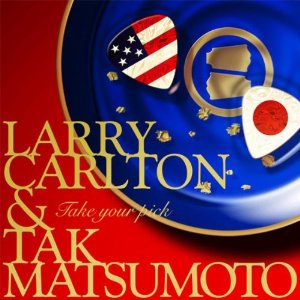
'Take Your Pick' was named Best Pop Instrumental Album last night at the 2011 Grammys. (335 Records/Vermillion Records)
By JQ magazine’s Justin Tedaldi (CIR Kobe-shi, 2001-02) for Examiner.com. Visit his NY Japanese Culture page here to subscribe for free alerts on newly published stories.
While Justin Bieber came up empty, Takahiro Matsumoto of the J-rock band B’z won big at the 53rd annual Grammy Awards in Los Angeles last night (Feb. 13).
The famed 49-year-old guitarist, commonly known Tak Matsumoto, netted his very first Grammy gold (Best Pop Instrumental Album) for Take Your Pick, a collaboration with the equally legendary American guitarist Larry Carlton.
Carlton, whose licks Matsumoto admitted to copying as a teenager, has been recording since the 1960s and has played on over 100 gold and platinum records, including discs by Steely Dan, Michael Jackson and Billy Joel. Take Your Pick, which contains original compositions by the duo supported by American session players, was released last June and goosed by a two-month Japanese tour by the axe slingers.
“I had never told anyone until now, but the Grammys was one of my dreams and a big goal,” Matsumoto said yesterday after winning the award. This was Carlton’s fourth win and 19th nomination overall.
Click here for the rest of the story.
WIT Life #154: Congratulations to Japanese Grammy Winners!
Music, Translating/Interpreting, WIT Life, Writers Comments Off on WIT Life #154: Congratulations to Japanese Grammy Winners!
WITLife is a periodic series written by professional Writer/Interpreter/Translator Stacy Smith (Kumamoto-ken CIR, 2000-03). She starts her day by watching Fujisankei’s newscast in Japanese, and here she shares some of the interesting tidbits and trends together with her own observations.
A bit of bright news in light of the Japanese government’s confirmation that its country’s economy has indeed dropped to #2 in the world. Omedetou to the following Grammy winners!
Pop Instrumental Album
“Take Your Pick,” Larry Carlton and Tak Matsumoto (guitarist in the popular Japanese rock duo B’z, pictured here on right)
Opera Recording
“Saariaho: L’Amour De Loin,” (Japanese American) Kent Nagano, conductor; Deutsches Symphonie-Orchester Berlin and Rundfunkchor Berlin
Instrumental Soloist(s) Performance (with Orchestra)
Mitsuko Uchida (“Mozart: Piano Concertos Nos. 23 & 24,” Cleveland Orchestra)
Other winners include Japanese classical pianist Mitsuko Uchida who received Best Instrumental Soloist Performance with Orchestra, while the Best Contemporary Jazz Album award went to the Stanley Clarke Band, which includes Japanese jazz pianist Hiromi Uehara.
 Info courtesy of Diana Lee, President of AsianInNY.com. Diana is handling performances for the 32nd Asian/Pacific American Heritage Festival in New York.
The Asian/Pacific American Heritage Festival is a free, day-long celebration of Asian/Pacific Americans. On May 8th, 2011, from noon-6pm, performing groups from the New York tri-state area will take the stage in front of an audience of over 8,000 in Union Square, Manhattan.
We are currently seeking submissions for:
- Performances from artists and companies working in music and/or dance including folk, traditional, and contemporary expressions.
- Must be appropriate for a family oriented 20-30 minutes performance on an outdoor stage.
The event has a history of high media coverage featured in the New York Times, Newsday, the Village Voice, Time Out magazine, NY1 News, and many ethnic papers.
We will have a merchandizing table for performers who participate in this festival to sell their items or place their promotional materials (flyers/posters).
To submit registration or auditions for performances, please visit our registration site at: http://bit.ly/etkYAP
Deadlines:
Performances Submissions: Friday, February 18, 2011
For more information regarding the festival: www.capaonline.org
If you have any questions, please don’t hesitate to contact me here or at info [at] ASIANinNY.com.
Thank you,
Diana Lee
VP of Performance of APA Heritage Festival
Justin’s Japan: Interview with Ary Warnaar of Anamanaguchi
Article/Journalism, Justin's Japan, Music Comments Off on Justin’s Japan: Interview with Ary Warnaar of Anamanaguchi
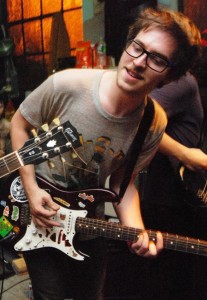
- See Ary Warnarr with Anamanaguchi at New York’s Silent Barn Saturday, Feb. 5. (Leia Jospe/leiajospe.carbonmade.com)

By JQ magazine’s Justin Tedaldi (CIR Kobe-shi, 2001-02) for Examiner.com. Visit his NY Japanese Culture page here to subscribe for free alerts on newly published stories.
The music of Anamanaguchi is part hacked Nintendo Entertainment System, part crowd surfing rave. The Brooklyn-based foursome and chiptune vanguards are on an artistic roll after releasing an acclaimed video game soundtrack based on the film Scott Pilgrim vs. the World, and earlier this month the band played packed houses at both The Studio at Webster Hall as a headliner and Irving Plaza with Super Mash Bros.
If you missed them, fear not: Anamanaguchi returns this Saturday at Silent Barn. I caught up with their co-guitarist and songwriter Ary Warnaar for this exclusive interview.
How did Anamanaguchi form, and what made you decide to specialize in playing chiptune music?
Pete [Berkman, the band’s lead songwriter] started writing chip music in 2003 and was releasing it online under the name Anamanaguchi. Once there was a demand for the music in a live setting, Pete decided to form a band. Over the years the lineup changed quite a bit, but solidified in 2007-08 with Pete on guitar, James [DeVito] on bass, Luke [Silas] on drums and me on guitar as well. I started messing around with chip music when I met Pete and James at New York University in the music technology program. I had been writing electronic music for most of my teen years and had become quite bored with most software by the time I entered college. Modern music software gives you unlimited options in terms of creation, and often lets you skip most steps of creation with presets and loops…software for limited sound chips (such as the 2A03 in the Nintendo Entertainment System) does the exact opposite. You’re extremely limited and are forced to make every note and every sound count. I found that the primitive software and extreme limitations actually made me write more complex music, and helped me focus on expressing myself. The harsh sound palette of simple squarewaves and white noise was also a breath of fresh air to me…overproduced lush sounding electronic music drenched in reverb and pads with hundreds of channels can get kinda boring. Chiptune music is a nice way of going back to basics.
What does the band’s name mean?
Before studying music technology, we were all fashion majors at the Parsons School of Design. Pete and James both interned for Armani, I was a secretary at Prada, and Luke worked at the Gucci store in SoHo. Whenever we showed up at fashion parties, people would always call us as the “Armani-Prada-Gucci” boys. After a couple bottles of Veuve Clicquot, people just started slurring the nickname into “Anamanaguchi.” We quickly realized the fashion world wasn’t for us, but that name just stuck when we made the shift to being a band.
Tell us about your history with Japan. How did it pop up on your radar, what made you want to go there, and how do you keep up your connection with it back home?
Hmm…I’m sure we all have different answers for this. I’ll start with answering for the band, and then get more personal:
As a band, we have never been to Japan.
As a band, we are DYING to go to Japan.
Touring in Japan is kinda our number one dream. Japanese culture, and more specifically, its music scene, is totally awesome. Even the chip-scene in Japan is amazing with artists like quarta330, USK, Maru, Aonami, Cow’P, BSK, YMCK, etc., etc…..
Personally, I have been to Japan twice. I went to Tokyo a couple summers ago and loved it so much that a week after I got back home, I bought another ticket right back to Japan to go to the Fuji Rock Festival. BEST TIME EVER. I’m always keeping up with what’s coming out of Japan, whether it’s reading blogs online searching for new Japanese artists, or asking my girlfriend to buy me clothes when she goes back to Tokyo to visit her family.
What’s your fanbase in Japan like? What things would you like to see and do there on tour?
I don’t really know what our fanbase is like in Japan…I know we have fans there, but we have yet to meet any of them! Hopefully we’ll be out there sooner than later. I love Tokyo, but haven’t really gotten a chance to see any other cities in Japan. Touring would be an awesome excuse to see all of Japan.
Click here for the complete interview.
Justin’s Japan: X Japan Signs North American Deal with EMI
Article/Journalism, Justin's Japan, Music Comments Off on Justin’s Japan: X Japan Signs North American Deal with EMI

X Japan will release its first album in 15 years especially for North America. (Nishioka)
By JQ magazine’s Justin Tedaldi (CIR Kobe-shi, 2001-02) for Examiner.com. Visit his NY Japanese Culture page here to subscribe for free alerts on newly published stories.
Hot on the heels of a rapturous North American tour last fall that climaxed with a sold out gig at New York’s Roseland Ballroom, X Japan is one step closer to cracking America.
The supergroup, which began recording in the mid-’80s and went on to become one of the most successful in Japanese history, has inked an exclusive three-year North American manufacturing and distribution agreement with EMI Music. The first release will be the track “Jade” on March 15, followed by the band¹s as yet untitled American debut set for a summer 2011 release.
“We are so honored to have X Japan as part of the EMI Label Services/Caroline family,” commented EMI Label Services executive VP Mike Harris in a press release issued Thursday. “After the highly successful North American tour last fall, the timing is perfect for the upcoming X Japan release.”
Led by the charismatic drummer/pianist Yoshiki (whom this reporter conducted an exclusive interview with in October), X Japan is currently putting the finishing touches on the disc, the band¹s first new studio album since 1996 and fifth overall. Half of the songs will be culled from some of the band’s gold and platinum Japanese singles, while the other half are brand new songs. An estimated 95% of the lyrics are being sung in English by vocalist Toshi.
Click here for the rest of the story.
Justin’s Japan: Anamanaguchi, Peelander-Z, Starscream to Rock NYC
Article/Journalism, Justin's Japan, Music Comments Off on Justin’s Japan: Anamanaguchi, Peelander-Z, Starscream to Rock NYC

Anamanaguchi headlines New York's The Sudio at Webster Hall Friday, Jan. 14 (Ethan Saks)
By JQ magazine’s Justin Tedaldi (CIR Kobe-shi, 2001-02) for Examiner.com. Visit his NY Japanese Culture page here to subscribe for free alerts on newly published stories.
If you’re looking for new music from New York bands to kick off the new year, your search ends here. This Friday (Jan. 14), The Studio at Webster Hall will host a concert headlined by Anamanaguchi with support by Peelander-Z and Starscream.
If Anamanaguchi’s name is unfamiliar, their sound will whisk you back to the 1980s glory days of the Nintendo Entertainment System. As perhaps the biggest artists of the chiptune genre, the Brooklyn-based foursome tosses punk-flavored electric guitar, bass and drums on top of pop bloops and beeps from a hacked NES and Game Boy that yields retro-futuristic results on disc and onstage. Last year, the group composed the songs for the video game soundtrack based on the film Scott Pilgrim vs. the World, and in November they held a free concert in Union Square to support the controversial alcoholic energy drink Four Loko.
Click here for the rest of the article.
WIT Life #146: 明けましておめでとうございます!
Japan Trends, Music, Translating/Interpreting, WIT Life, Writers Comments Off on WIT Life #146: 明けましておめでとうございます!
WITLife is a periodic series written by professional Writer/Interpreter/Translator Stacy Smith (Kumamoto-ken CIR, 2000-03). She starts her day by watching Fujisankei’s newscast in Japanese, and here she shares some of the interesting tidbits and trends together with her own observations.
A big akemashite omedetou gozaimasu to everyone! 今年もよろしくお願いいたします。 I hope everyone had a good end to the year and that you are feeling ready for the Year of the Rabbit that we have now entered. I spent the night of 元旦 (gantan) or New Year’s Day with co-workers from the Japanese restaurant that I used to waitress at, and we enjoyed osechi ryouri in lacquer boxes and bowls of ozouni as we watched 紅白歌合戦 (kouhaku uta gassen) or the Red and White Singing Contest. The white or men’s team won for the 6th consecutive year with a healthy margin of over 50,000 votes.
Aside from the usual vapid J-Pop and classic enka, I was really struck by singer Kana Uemura’s トイレの神様 (toire no kamisama), or The Toilet Goddess. This acoustic ballad is a whopping almost ten minutes long, and it tells the story of Read More
 Did you or your friends write or hear any songs about your JET experience, your town, your region, or anything JET-related?
We know a bunch of songs have been written by some number of the 50,000+ JET alumni over the 23 years of the JET Program. Now it’s time to try and gather them together in one place.
E-mail your songs to jetwit [at] jetwit.com or input them right into the comments section of this post. Whatever works for you. And if you have a recording or a video of the song being performed, then share that as well.
To start things off, here are some song lyrics about Saga-ken by a Japanese comedian translated into English by a JET.
Justin’s Japan: Michael Jackson Covers J-pop Classic on New Album
Celebrity, Justin's Japan, Music Comments Off on Justin’s Japan: Michael Jackson Covers J-pop Classic on New Album

'Michael' hits stores Dec. 14. (Sony Music)
By JQ magazine’s Justin Tedaldi (CIR Kobe-shi, 2001-02) for Examiner.com. Visit his NY Japanese Culture page here to subscribe for free alerts on newly published stories.
According to Billboard, Yellow Magic Orchestra’s 1979 electropop smash “Behind the Mask” will appear on Michael, the first posthumous album from the late recording megastar Michael Jackson.
Penned by YMO’s Oscar-winning composer Ryuichi Sakamoto with Chris Mosdell, “Behind the Mask” was first brought to Jackson’s attention by legendary producer Quincy Jones during the Thriller sessions in the early ’80s. The King of Pop cut the Japanese group’s song, adding an extra melody line and additional lyrics. Legal battles barred it from making the album, and the tune languished in the vaults until now.
Click here to read the rest of the article.
Justin’s Japan: Carnegie Hall to Kick Off JapanNYC 2010 Concert Week
Article/Journalism, Justin's Japan, Music Comments Off on Justin’s Japan: Carnegie Hall to Kick Off JapanNYC 2010 Concert Week
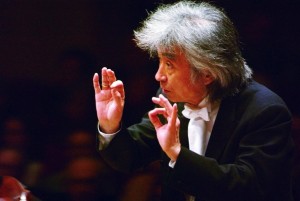
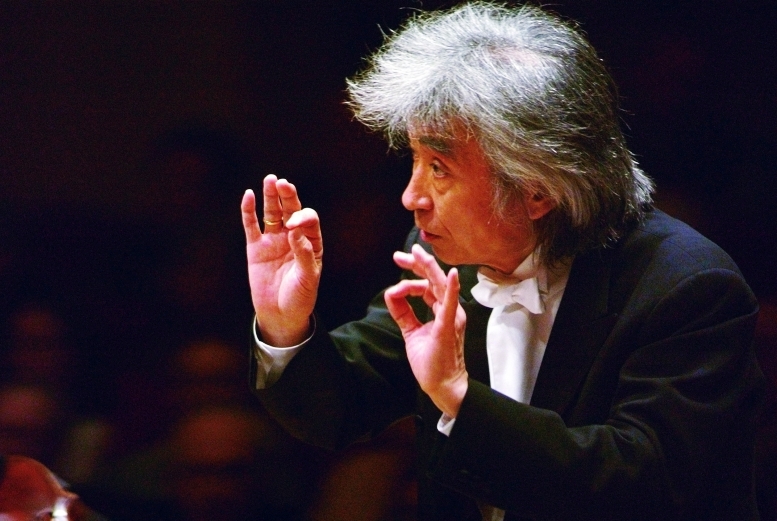
- Maestro Seiji Ozawa, artistic director of Carnegie Hall’s JapanNYC festival. (Mark Corke/New York Observer)
By JQ magazine’s Justin Tedaldi (CIR Kobe-shi, 2001-02) for Examiner.com. Visit his NY Japanese Culture page here to subscribe for free alerts on newly published stories.
Starting this Saturday, Carnegie Hall’s JapanNYC festival will unveil its first citywide series of musical performances. Led by artistic director Seiji Ozawa, who is best known for his record-setting 29-year career as music director of the Boston Symphony Orchestra, the festival’s musical highlights next week will see Maestro Ozawa helming rare overseas concerts by the Saito Kinen Orchestra with conductor Tatsuya Shimono, pianist Mitsuko Uchida and others, plus tributes to the legendary late composer Tōru Takemitsu, considered by many to be Japan’s greatest composer.
Additionally, as part of the Works & Process series at the Guggenheim Museum, a series of performances of Prokofiev’s Peter and the Wolf—performed by the Juilliard Ensemble and George Manahan with visual art by Rei Sato of Kaikai Kiki and narration by fashion designer Isaac Mizrahi—will surely delight music fans of all ages.
The performances follow other city exhibitions and ongoing events under the JapanNYC banner that run through next year, including Yoshitomo Nara: Nobody’s Fool at Asia Society, The Sound of One Hand: Paintings and Calligraphy by Zen Master Hakuin at Japan Society, and On Becoming an Artist: Isamu Noguchi and His Contemporaries, 1922-1960 at The Noguchi Museum in Queens.
JapanNYC returns in March and April 2011 with three weeks of events across New York City, including performances of classical, jazz and traditional Japanese music; contemporary theatre and visual art; noh theater and kyogen plays; modern dance; film; taiko drumming and more.
Click here for the complete performance schedule.
**********
Matt Leichter (matt [dot] leichter [at] gmail [dot] com) (Saitama-ken 2003-05) is a renegade attorney who plays by his own rules. He operates a think tank of one, The Law School Tuition Bubble, where he archives, chronicles, and analyzes the rising cost and declining value of legal education in the United States. He also maintains the “Bankruptcy Legal Topics,” and, “Bankruptcy Billables,” sections for Steven Horowitz’s Bankruptcy Bill. For further reading regarding JETs and the law, he recommends JETs with J.D.s.
Take a break, and listen to some Rock & Roll, primate!
Interview with Guitar God John McLaughlin
Article/Journalism, Celebrity, Music Comments Off on Interview with Guitar God John McLaughlin
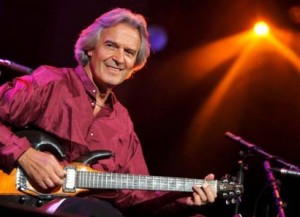
- Grammy-winning musician John McLaughlin. (Absolutely Live Entertainment)

By JQ magazine’s Justin Tedaldi (CIR Kobe-shi, 2001-02) for Examiner.com. Visit his NY Japanese Culture page here to subscribe for free alerts on newly published stories.
Whether you call it electric jazz, fusion, or just good old music, John McLaughlin is the forefather of this style on the six string. From his contributions on classic albums by Miles Davis starting with the landmark In a Silent Way in 1969 to his own work with the massively influential Mahavishnu Orchestra and as a solo artist, McLaughlin is a legend who has continued to record with no signs of slowing down.
His 2009 collaboration with Chick Corea, Five Peace Band, won the Grammy Award for Best Jazz Instrumental Album earlier this year, and in April McLaughlin then released his new disc with the 4th Dimension, To the One (Abstract Logix). Following a concert at New York’s Town Hall last weekend, the artist graciously took the time to answer some questions.
Tell us about your history with Japan. What attracted you most to the culture?
I’ve been studying the cultures of Asia for many years, and I’m very attracted to the culture of Japan, in particular to the impact Zen has had on the Japanese mind and spirit. That said, any in depth study of Zen will bring you to China and the culture of Chan, the forerunner of Zen. In my opinion, there is one singular problem with religions in general: they are exclusive. To me, this exclusivity is not right. Zen and Chan’s “ways” of discovery are non-exclusive. They speak about the reality of everyone having Buddha nature, and the potential of realizing it. This is the aspect of Zen and Chan that appeals to me strongly: the non-discrimination and inclusivity of everyone.
Are there any Japanese musicians of whom you’re a fan? What other kinds of Japanese performing arts do you enjoy?
I am less of a fan of Japanese music than I am to the poetry of haiku strangely enough, though I do enjoy the koto and shakuhachi music. The Zen calligraphy is something for which I have a great admiration.
Why do you think the Japanese possess such a great interest in jazz?
For sure the answer lies in the culture of the Japanese mind. Perhaps because the spontaneity of jazz appeals to their innate sense of honesty. In improvisation, jazz or otherwise, there’s no room to lie.
Click here to read the rest of the interview.
