




Surviving in Japan: How to find Tylenol in Japan
 Advice, Blogs, Japan Local, Writers
  Comments Off on Surviving in Japan: How to find Tylenol in Japan
Posted by Ashley Thompson (Shizuoka-ken, 2008-2010) of Surviving in Japan: without much Japanese and Lifelines columnist for The Japan Times.
I’ve previously showed you how to find ibuprofen in Japan, but what about acetaminophen? Otherwise known as Tylenol. Though Tylenol itself is a bit more difficult to find in Japan than ibuprofen (I can’t find it in my local drugstore but I can find it in the drugstore in the closest major train station in my area). You can also find it online quite easily. Though, keep in mind that other brands of medicine in Japan also contain acetaminophen, but many of those brands also contain caffeine (カフェイン), occasionally aspirin (アスピリン), and some other active ingredients, which may or may not be exactly what you want.

First things first: acetaminophen in Japanese is アセトアミノフェン.
And, Tylenol is — CLICK HERE to read the rest of the post.
Japan Times article on Iwate CIR Amanda Krips
Earthquake Tsunami, Japan Local, JETs in the News, Notable JET Alums, Return on JET-vestment, Translating/Interpreting Comments Off on Japan Times article on Iwate CIR Amanda Krips
********
Thanks to Fukui JET Mike Maher-King for forwarding on this Japan Times article about Iwate CIR Amanda Krips.
JET coordinator finds Iwate spirit contagious
 MORIOKA, Iwate Pref. — Iwate Prefecture’s coast suffered some of the most severe damage in the March 11 quake and towering tsunami, where more than 4,500 people have been confirmed killed and 2,700 are still missing.
But only about two hours by car inland, Morioka, the prefecture’s capital, was barely damaged by the 9-magnitude temblor. Residents only had to deal with a two-day power outage and a gas and supply shortage that lasted a few weeks, according to Amanda Krips, 24, an American who works for the prefectural government.
“Sometimes it makes it difficult to believe there is a total destruction only two hours away,” said Krips, who is on the Japan Exchange and Teaching Program and serves as coordinator of international relations for the prefecture.
Iwate has one of the fewest numbers of JETs. In addition to three coordinators, including Krips, there were 21 assistant language teachers this year. But the tsunami took the life of one of them, Monty Dickson. The 26-year-old from Alaska perished in Rikuzentakata where he taught English to elementary and junior high school students.
As the prefectural advisor for JETs in Iwate, Krips contacted her colleagues soon after the earthquake. Although she had phone numbers and email addresses, checking updates on Facebook was the fastest way to confirm their condition, she said. “Even if they didn’t have access (to the Internet) they could call their parents who would post on the wall.”
In about four days, a worried Krips was able to confirm the safety of all the JETs except Dickson. “He became the only person who we haven’t heard from. So after about a week I figured that it’s probably not going to be good news,” she said. Dickson’s body was found about a month later.
“It was difficult to know that someone I had known in person had died,” Krips said.
She went with her supervisor to Rikuzentakata for the first time when Dickson was found. “That was the first time I saw what happened, the extent of the tragedy. About 6 km from the coast I started to see debris on the riverside. You get into Rikuzentakata and nothing’s there. Basically destroyed. That was really hard to see,” she said.
Dealing with what happened and the radiation scare has been difficult and stressful to many, but Krips said the JETs didn’t panic and reacted in a reasonable manner. A few returned to their home countries for spring break but are back and teaching at their assigned schools, she said.
Many will finish their contract in August and new replacements will arrive. “The situation is fine here; there’s nothing to worry about. We’ll try our best to assure them that they are safe,” said Krips, who has another year in Iwate.
Having spent a year in Kyoto as a college student, Krips, originally from New Jersey, said that although Kyoto was a magical time, she likes Morioka much better, even after the quake.
“People here take a little bit longer to get past their shyness (than people in the Kansai region), but they are nice and genuine, and they’re pretty strong people. That’s what made living here so wonderful.”
Krips observed that people have been stoic about the tragedy. “I haven’t seen anyone curse nature. It happened, so we have to deal with it. I haven’t talked with very many people, but I think a lot of them have the purpose of rebuilding now.
“Everybody is working hard. They have smiles and they don’t complain or anything,” she said.
Krips has done a lot of translation of incoming letters of condolence from other countries sent directly to the prefecture. “I don’t think I can do very much for the reconstruction, but anything I can do to help relations between Iwate and people from other countries that might want to help, I’ll do my best with that,” she said.
JETAA NY joint event with Kyushu association
Cultural Outreach, Events, Japan Local, JETAA Chapters, Networking, Return on JET-vestment Comments Off on JETAA NY joint event with Kyushu association
 Last night JETAA New York joined with New York Battenkai, a New York-based association for Japanese ex-pats from Kyushu, for a unique happy hour at Nightengales (2nd Ave & 13th St) and another example of JETAA chapters supporting prefecture and local government efforts. (Translation Note: “Batten,” it was explained, is connecting phrase unique to Kyushu dialect.)
As New York is home to many other similar prefecture associations, perhaps this could end up serving as a model for future JETAA Chapter-Prefectural Association events.
Surviving in Japan: How To Find Ibuprofen in Japan
Advice, Blogs, Japan Local, Writers Comments Off on Surviving in Japan: How To Find Ibuprofen in Japan
Posted by Ashley Thompson (Shizuoka-ken, 2008-2010) of Surviving in Japan: without much Japanese and Lifelines columnist for The Japan Times.
 This is for all those die-hard Advil fans out there, like myself. Though I try to use any kind of drug sparingly, at least once a month I find myself growling for drugs (I’m sure you can guess which “once” I’m referring to, ladies). And then I take two. Sometimes three. No matter how tough I am the rest of the month, I run to the drug cupboard with my proverbial tail between my legs.
Yes, I admit, I did bring a large bottle of Advil with me when I first came to Japan, and last time my mom sent me a care package I asked for some Advil. It’s almost like a comfort drug – you know, comfort food. The very sound of it just puts you at ease. Advil. No pain. Ahhh…
Anyway! What if you have no Advil, because you’ve completely emptied your bottle, and in extreme I-NEED-DRUGS pain? Fear not, you (or someone in your place if you’re unable to move due to said pain) can find ibuprofen in Japan. Probably most, if not all, drug stores and pharmacies will carry it. The amount of ibuprofen in each pill is typically the same as regular Advil. Although, be forewarned, they often put caffeine in the pills too. Why, I don’t know. Perhaps they think a boost of energy will somehow kick the pain out of you. In any case, it’s not less effective, but keep in mind gel caps are harder to come by, if that’s your thing.
The word to look (or ask) for is — CLICK HERE to read the rest of the post.
Monkey Majik JET alum rocker and Ambassador Fried deliver Canadian beef to Tagajo, Miyagi
Celebrity, Earthquake Tsunami, Japan Local, JETs in the News, Notable JET Alums, Volunteer Comments Off on Monkey Majik JET alum rocker and Ambassador Fried deliver Canadian beef to Tagajo, Miyagi
Thanks to JETAA Ottawa President Lisa Malin for sharing this:
Brief English summary of Japanese article below:
Canada’s Ambassador to Japan Jonathan T. Fried delivered a load of Canadian beef to Tagajo City, Miyagi Prefecture along with Maynard Plant (Aomori-ken, 1997-2000) and one other member of Monkey Majik (a four-person Canadian-Japanese band based in Sendai and Tagajo). The beef was served atop locally grown Hitomebore rice to make steeki-don for 1,000 people living in shelters in Tagajo. The Ambassador’s aim was to help residents get their strength back after everything they’ve been through, and it appears to have been the first meat many had enjoyed for quite awhile.
***********
(Japanese article)
宮城〕
| カナダ牛でステーキ丼 駐日大使ら炊き出し 多賀城
カナダ牛のステーキで元気になってもらおうと、駐日カナダ大使と音楽グループ「MONKEY MAJIK」のメンバーらが2日、多賀城市内2か所の避難所でステーキ丼の炊き出しを行った。 同グループはカナダ人と日本人の4人組。仙台市を拠点に活動しているが、デビュー前は多賀城市が活動の中心だった。 震災後は各地でボランティア活動を続けながら、カナダ大使館に支援を呼びかけると、4月にはジョナサン・フリード大使が多賀城市に避難物資を届け、今回の支援を約束した。 大使館は「力のつく温かいものを食べてもらいたい」と、県産米「ひとめぼれ」の上にカナダ牛を豪快に盛りつけた 1000食分のステーキ丼を用意。避難所が置かれた市文化センターと市総合体育館では、フリード大使が「お元気ですか」と声をかけながら、被災者にステー キ丼を手渡した。 2歳の長男とステーキをほおばった同市桜木、無職佐藤深雪さん(33)は「肉を食べたのは本当に久しぶり。柔らかくておいしかった」と顔をほころばせた。 (2011年6月3日 読売新聞) |
Japan Local: Hokkaido e-newsletter
Article/Journalism, Cultural Outreach, Japan Local, Local Government, Translating/Interpreting, Travel/Tourism Comments Off on Japan Local: Hokkaido e-newsletter
Via AJET June 2011 Newsletter:
For anyone interested in learning about Japan’s northernmost prefecture, HOKKAIDO! The Red Brick Bulletin is an electronic newsletter published by the Hokkaido Government and prepared by the prefectural English language CIR (i.e., JET). Topics range from nature to history, cuisine to tourist attractions, and much much more!
http://www.pref.hokkaido.lg.jp/ss/tsk/akarenga_eng.htm
Japan Local: JET blog on Aomori sightseeing
Blogs, Japan Local, Local Government, Return on JET-vestment, Travel/Tourism, Writers Comments Off on Japan Local: JET blog on Aomori sightseeing
Here’s a really nice JET blog on sight seeing in the Tsugaru region of Aomori by Aomori JETs Emma Sayers, Mike Moses and Kelly Isom:
Let’s Go Tsugaru: http://letsgotsugaru.blogspot.com.
*If you’re aware of any other JET blogs about sightseeing and tourism in Japan, please let us know at jetwit [at] jetwit.com. Yoroshiku.
Local Japan: Prefecture Tourism Links
Japan Local, Local Government, Return on JET-vestment, Travel/Tourism, Uncategorized Comments Off on Local Japan: Prefecture Tourism Links
Here are the results of the “Local Japan Prefecture Tourism Websites Project.”
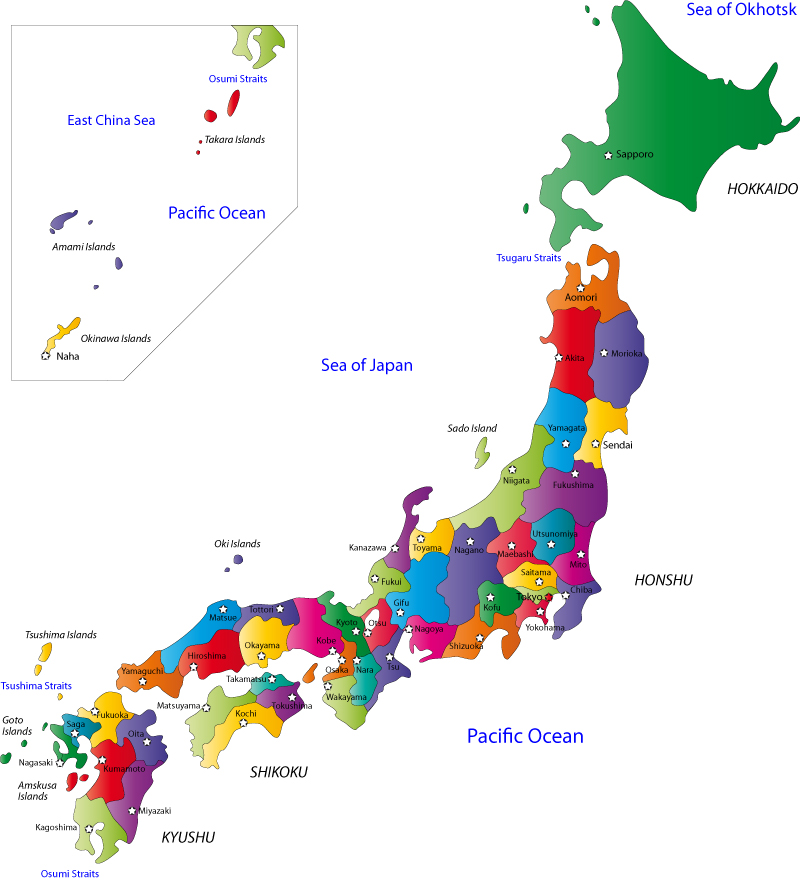 Reminder: One of the purposes of the project is to help increase the “Return on JET-vestment” for Japan by helping to promote tourism to Japan, especially to more local and regional areas. JETwit also intends to use this list so it can hyperlink to prefectures when mentioned in future JETwit posts. (e.g., “Steven Horowitz (Aichi-ken, Kariya-shi, 1992-94)”)
How you can help further:
- Build the list: If you’re aware of any additional links that might be helpful–e.g., a blog (especially by JETs) or sites for a region or a city or a town–feel free to post in the comments section or e-mail to jetwit [at] jetwit.com and I’ll add them to the appropriate section.
- Tell readers one reason why someone should visit your (former) region/prefecture/city
*Note: Where prefectures didn’t have their own tourism website or English language info guide, I’ve used the Japan National Tourist Organization’s (JNTO) reference page for that prefecture.
Regional Tourism Sites:
- Tohoku: Tohoku Tourism Promotion Organization http://www.tohokukanko.jp/english/
- Shikoku: TOURISM SHIKOKU http://www.tourismshikoku.org/
- Kyushu: http://www.kyushu-tourist.com
Prefecture Tourism Sites
Aichi
- http://www.jnto.go.jp/eng/location/regional/aichi/index.html
- Kariya City – http://www.city.kariya.lg.jp/wwwe_data/index.html (Steven Horowitz, Aichi-ken, Kariya-shi, 1992-94)
Akita
Aomori
- http://www.pref.aomori.lg.jp/foreigners/sightseeing.html
- http://www.jnto.go.jp/eng/location/regional/aomori/index.html
- http://wikitravel.org/en/Aomori
- JET blog about sight seeing in the Tsugaru region of Aomori by Aomori JETs Emma Sayers, Mike Moses and Kelly Isom: http://letsgotsugaru.blogspot.com.
- Towada and Beyond http://towada-city.blogspot.
com – Thanks to JET alum Mel Tee (Aomori-ken, Towada-shi), who still works for Towada, for sharing this. - http://www.en-aomori.com/ is another good Aomori sightseeing website in English (also has Japanese, Chinese, and Korean versions) – Thanks to Mel Tee for sharing this one as well.
- http://melt-in-japan.blogspot.com/ – And this is a blog by Mel about life in Aomori!
Chiba
Read More
Shimane JETs Raise Over $21,000 USD for Tohoku Disaster Relief
Earthquake Tsunami, Fundraising, Japan Local, Return on JET-vestment, Volunteer Comments Off on Shimane JETs Raise Over $21,000 USD for Tohoku Disaster Relief
From the JETAA USA website originally posted by JETAA USA Country Rep Jessyca Wilcox:
 Shimane JETs Raise Over $21,000 USD for Tohoku Disaster Relief
Shimane AJET gathered their local ALTs, CIRs and Japanese community members to join together for a charity hike. On May 15th over 60 ALTs and CIRs and 50 Japanese people took part in a sponsored “Charity Hike.”
The hike took place on Shimane’s highest mountain: Mt. Sanbe in Oda City, Shimane. It was attended by people from 14 countries: America, Ireland, France, England, Jamaica, Canada, Scotland, Kenya, China, Korea, Japan, Australia, New Zealand and South Africa.
In the weeks leading up the event particpants raised $21,023 USD (¥1,715,338) from local and international donations (via the internet). At the summit of Mt. Sanbe, the participants held a photo opportunity and called out a strong message of support for the people of Tohoku and Japan from the international community. Please see the photograph below.
In the week after the event, the money was transferred to the Japanese Red Cross (70%) and “SMILE and Dreams: Tohoku Kids Project” (30%).
Lauren Hale, a Shimane JET from Denver, CO said, “Japan has been such a great home to us all and we were so glad that we could be a part of the relief effort. We raised over twice the amount that we had originally hoped for!”
Check out the project website for video coverage and photos: www.sanbehike.com
*Shimane JET alums (and anyone else), please don’t hesitate to post words of support for the terrific work of Shimane AJET and all involved in the comments section below.
Surviving in Japan: 40+5 more ways to survive the rainy season
Advice, Blogs, Japan Local, Writers Comments Off on Surviving in Japan: 40+5 more ways to survive the rainy season
Posted by Ashley Thompson (Shizuoka-ken, 2008-2010) of Surviving in Japan: without much Japanese and Lifelines columnist for The Japan Times.
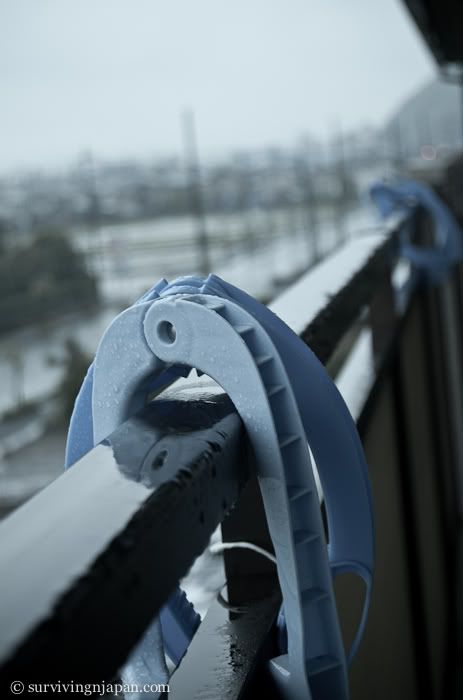
Bleak, gray, rainy season, or 梅雨
The rainy season (梅雨, つゆ) has arrived.
Apparently beginning 12 days earlier than last year in central Japan, according to tenki.jp, and also earlier than normal in southern Japan as well. Though it doesn’t feel all that humid yet. I typically associate the rainy season with tropical jungle-like humidity that makes you feel like you’re living in a sauna.
Don’t be fooled though – it will likely sneak up on us before we know it. For now, my pregnant self will enjoy the moderate temperatures and bearable humidity levels.
Oh, and for those who may not know, it doesn’t actually rain constantly during the rainy season in Japan – it will either spontaneously downpour or sometimes rain for a while in variations between sprinkling and heavier rain, with some breaks here and there.
Before coming to Japan, being from Seattle (U.S.), I rarely, if ever, used an umbrella. In fact, it’s usually quite easy to tell the difference between locals and tourists in Seattle for this very reason. (Everyone thinks it rains there all the time, but it doesn’t – it’s just cloudy most of the year).
So I came to Japan with no umbrella, figuring I could just buy one somewhere easily (but in no hurry). Except that my friend and I got caught in the rain on our second day here. Not Seattle drizzle we were familiar with. A downpour. Sheets of rain.
As we were outside with no cover, we were instantly soaked (as if we’d fallen into a pool or something), and spent the next 10 minutes or so running from building cover to building cover to the nearest convenience store to buy an umbrella. (With bystanders laughing at us good-naturedly, of course).
Of course, by the time we bought the umbrella and walked out of the store, the rain stopped. That’s Japan for you. Everyone gave us strange looks when we entered the hotel again, dripping all over the floor. Lesson learned: During the rainy season, Always. Carry. An umbrella.
So, in honor of the arrival of this year’s rainy season, I pull from the archives:
40 tips to survive the rainy season in Japan
There are also some good suggestions in the comments, so be sure to read those as well!
And of course, a few more to add:
41. Forget number 4 on the previous list – with all the energy conservation we should be doing, go out instead and share the A/C instead of using it at home. (Although with the temps the way they are right now there really isn’t much of a need for A/C…) — CLICK HERE to read the rest of the post.
JET Prefecture Round-Up 05.30.11
Cultural Outreach, Earthquake Tsunami, Events, Fundraising, Japan Local, JET Prefecture Round-up, Uncategorized Comments Off on JET Prefecture Round-Up 05.30.11
**************
Emily Lemmon, (Hyogo-ken, Shiso-shi, 2009-present), PSG volunteer, organizer of Hyogo-ken’s PEPY Ride, student of Shorinji Kempo, and editor of the Hyogo Times, gives a little taste of what JETs are doing around Japan. To submit items for future JET Prefecture Round-up posts, e-mail Emily at jetinfogather [at] gmail.com.
Events by Region
Hokkaido
- The Hokkaido Players present The Jungle Book, May 22nd (Sunagawa), 28th (Takinoue), and June 4th (Kutchan).
- Iwamizawa International Mini Festival will be June 18th at Higashiyama Park, (next to the sports centre)
Aomori
- On Saturday, June 5th, Aomori AJET will be holding a double-parter event, a gala dinner and a club event, in Morioka City. These events are being held to bring together JETs from all over Tohoku, and raise money for Earthquake Relief (Japan Red Cross).
- There will be an International Lunch at the Aomori City Chuo Shimin Center on Saturday, June 18th. On the menu is Thai curry! At the same time, Aomori Prefecture’s branch of UNESCO will be presenting sessions on Japanese culture, and providing free tea ceremony sessions for those who would like to try it.
- The 7th annual Akita International Sumo Basho will be held in Akita city on Sunday June 5th.
Iwate
- JETs are invited to attend a tour of Nataya-cho, led by volunteer guides, in Morioka on June 12th.
Kansai Region
- Block 6 and 7 Sayonara Formal will be held in Kobe on June 25th.
Nara
- The International Arts Festival, featuring performances in a wide range of disciplines, will be put on by the JETs of Nara prefecture on June 19th.
- Nara’s farewell to leaving JETs, the Bye Bye Bash,complete with awards, will be held at the Yagi Kintetsu Beer Garden on June 17th.
Hyogo
- 2011 Himeji Prom-stravaganza will be June 4th.
- Hyogo AJET’s Sayonara Party will be June 17th
- Taj Ultimate, the Ultimate Frisbee Tournament, will be held July 9th and 10th, 2011 (start practicing)!
Chugoku Region
Tottori
- Tottori’s Got Talent, in which participants compete to win money for charities of their choice, will be held in Tottori city on June 11th.
Shikoku Region
Ehime
- “There is Hope Through Music” for Tohoku – On July 9th, Ehime JET Dan will gather fellow JETs to the Asakura Kominkan in Imabari to record videos with the fireman brass band. The videos will be combined with videos from the Kurosawa Piano Music Foundation of California and broadcast both online and to the victims in refugee camps in Japan.
- Eight JETs will assist with the Imabari Higashi Secondary School English Camp June 11th and 12th.
- Ehime JET Melanie is planning a fundraising festival event, in conjunction with Imabari City International Exchange Association (ICIEA), to raise funds for Tohoku and Kanto region disaster relief. The event will take place on Sunday, July 24, at Saisai Kiteya in Imabari.
Kochi
- Ladies Day Spa – ladies of Kochi gather for pampering on June 4th.
- Kochi Surf Camp will be at Irino Beach July 16th – 18th.
- JETs Sam and Douglas are now teaching weekly self-defense classes in Kochi.
Kyushu Region
Oita
- A team of Oita JETs will be playing in the Mud Volleyball tournament in Nakatsu City on June 5th.
- JETs and non-JETs will mingle and show their talents at the Rotary Dinner and Talent Show in Oita City on June 18th.
- Oita JETs will assist with rice planting on to Moritas’ Organic Farm in Bungo Ono City on June 18th or 25th.
- Sayonara Party – Oita JETs say farewell on July 9th in Oita City.
- Bad weather forced the cancellation of the Oita camping trip on May 29th, so JETs went bowling instead.
Kumamoto
- Kumamoto’s Got Talent will be performed at Good Time Charlie’s on June 4th.
- KumAJET Sports Day was Saturday, May 21st, in Nimarukoen.
Nagasaki
- ALTernative Nagasaki, the photo art exhibit explores Nagasaki through the eyes of its transient population of ALTs. Opening night is June 11th
Kagoshima
- Bound in Japan is an art project promoting multicultural exchange and diversity awareness, presented by a former Kagoshima JET.
Surviving in Japan: How to Find Anti-itch, Insect Bite Medicine
Advice, Blogs, Japan Local, Writers Comments Off on Surviving in Japan: How to Find Anti-itch, Insect Bite Medicine
Posted by Ashley Thompson (Shizuoka-ken, 2008-2010) of Surviving in Japan: without much Japanese and Lifelines columnist for The Japan Times.
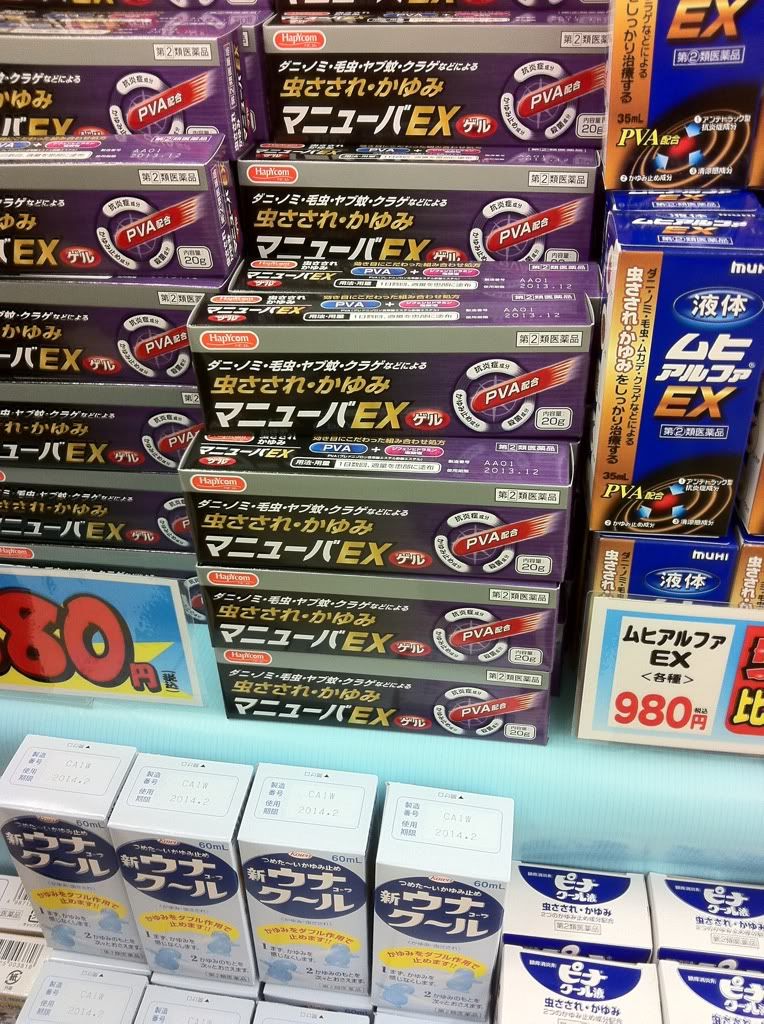 This post is a follow-up to A Survival Guide to Mosquito Repellent in Japan, for those who try in vain but perhaps still end up with itchy, annoying bites (I know the feeling…). My first apartment in Japan was constantly bombarded with mosquitoes, as it was next to this swampy water pool. Despite my best efforts, I couldn’t keep them all away. (Although I’m convinced I seem especially attractive to them – they go after me far more than my husband!)
I visited a drug store in the first month after my arrival in hopes of discovering some anti-itch cream, the kind you use for mosquito bites, but without any idea of what exactly to look for or what it was called. After browsing the walls and aisles of various items, still unsure of what to get, I asked one of the store employees for help. I looked up mosquito in the Japanese-English dictionary on my phone, showed her the result, pointed to some of the red welts on my hand and arm, and asked if they had anything for that. Fortunately for me at the time, she understood right away and led me to the anti-itch/insect bite medicine, pulling out a box of ムヒ (Muhi), which is a common brand here in Japan.
So, to help you in your search for anti-itch/insect bite medicine, and perhaps save you some trouble of finding what you need at the store, I’ve included some necessary words to know, and some of the common ingredients you’ll typically find in these types of medicine.
Words to Know
When searching for anti-itch, insect bite medicine, look for these words:
虫さされ むしさされ mushi sasare insect bite (may also see as 虫刺され)
かゆみ kayumi itching
Though the brand and item name are typically most prominent on any packaging, you’ll likely see 虫さされ and/or かゆみ somewhere on the box/bottle.
Depending on your personal preference, you can find anti-itch, insect bite medication in various forms, including the following:
gel ジェル
lotion ローション
patch パッチ
cream クリーム
liquid type 液体 (えきたい) (usually this rolls or dabs on)
If you want something “extra strength”, try looking for the following words, or something with “EX”: — CLICK HERE to read the rest of this post.
Japan Times: JET teacher aids school rebuilding
Blogs, Cultural Outreach, Earthquake Tsunami, Fundraising, Japan Local, JETs in the News, Local Government, Notable JET Alums, Return on JET-vestment, Volunteer, Writers Comments Off on Japan Times: JET teacher aids school rebuilding
“My name is Andras Molnar, an English teacher from Yamamoto Town in Japan, a place recently devastated by the earthquake and tsunami. I am trying to raise funds for the reconstruction of the schools in my town, as well as buying school supplies and uniforms for children who lost everything in the tsunami.”
U.S. teacher aids school rebuilding
SENDAI — An American English teacher at a middle school in Miyagi Prefecture has set up funds to solicit donations for rebuilding elementary schools damaged by the tsunami following the March 11 earthquake.
Pennsylvania native Andras Molnar, 25, said that although he is leaving the prefecture’s town of Yamamoto in August when his teaching contract ends, he is “hoping to stay connected” with the town through the fund.
Molnar said he became interested in Japan through “anime” such as “Gundam” and spent a year in the country as a high school student and again while at university. He came to Yamamoto, a coastal town of around 16,000, in August 2009.
He said he got along well with locals through a drum circle and surfing, a hobby of his.
“Everyone is very open, kind and I like them a lot,” he said in Japanese.
After the town was engulfed by the tsunami, he stayed at the junior high school for a week, busily checking the whereabouts of his students and doing what he could at evacuation sites, he said.
He then moved to Tokyo for around one month at the suggestion of his parents and friends.
But after getting email from friends in Yamamoto inquiring about him, he wondered why he was not giving his best when all the people in the town were doing their utmost, he said.
Molnar said it was this that prompted him to return to his apartment in Yamamoto.
“It was really good that I returned,” he said. “I feel encouraged by the children.”
He set up relief funds in Japan and the United States to help rebuild two elementary schools where buildings were devastated by the tsunami, and is soliciting donations through his blog.
Surviving in Japan: A Guide to Mosquito Repellent in Japan
Advice, Blogs, Japan Local, Writers Comments Off on Surviving in Japan: A Guide to Mosquito Repellent in Japan
Posted by Ashley Thompson (Shizuoka-ken, 2008-2010) of Surviving in Japan: without much Japanese and Lifelines columnist for The Japan Times.
 That wonderfully hot and humid time of year is upon us – summer. And of course, the rainy season and along with it, mosquito season. I still remember my first apartment in Japan, next to a large drainage pool area where I can only guess thousands of mosquito eggs were hatching every day. And then they show up at 3am – that high-pitched buzzing whine in my ear as I attempt to sleep.
Since being in Japan, I’ve struggled with the best ways to control them, and though not every solution is always 100% effective, hopefully some of these options may help you get through the summer with a few less uncomfortable, itching bites and restless nights.
Words to know
First of all, wherever you’re looking for mosquito repellents or related items, you’ll probably want to know some of the following words and terms:
蚊 か ka mosquito
虫 むし mushi insect
虫よけ or 虫除け むしよけ mushi yoke insect repellent
防虫 ぼうちゅう bouchuu protection against insects
忌避 きひ kihi avoid, evade
殺虫剤 さっちゅうざい sacchuuzai insect killer/insecticide
蚊取り かとり katori “remove mosquitoes”
天然成分 てんねんせいぶん tennen seibun natural ingredients
室内用 しつないよう shitsunaiyou indoor use
屋外用 おくがいよう okugaiyou outdoor use
Ingredients in Insecticides and Insect/Mosquito Repellents
You’ll generally find most insect repellent products in Japan fall into one of two categories (although a few will be part of both):
Natural mosquito repellents usually contain oils such as citronella (シトロネラ油), lavender (ラベンダー油), lemon eucalyptus (レモンユーカリ精油), and other essential oils. Some may also contain pyrethrum (a certain kind of flower), such as the natural mosquito coils, in which you’ll want to look for these kanji: 除虫菊. Many natural products will use 天然成分, though, keep in mind some of these still contain some chemical or harmful ingredients – so best to check the ingredient label if that is something you’re concerned about.
Chemical mosquito repellents/insecticides: Nearly all of the chemical repellents and insecticides contain pyrethroid, which is a chemical imitation of pyrethrum. You’ll typically find ピレスロイド系 in the active ingredient list, sometimes in parentheses, as most of the ingredients listed among chemical repellents are pyrethroids of some kind, even if the name is different. Though pyrethroid is considered safe for general use in certain amounts by the Environmental Protection Agency in the U.S. (and of course, considered safe in Japan as well), it doesn’t make it necessarily healthy, especially if you have respiratory problems – so feel free to read up on it, learn more about it, and decide for yourself if it’s something you feel comfortable using. Also, please remember to take appropriate precautions when using any product with pyrethroid – try to keep areas ventilated, wash your hands/skin if you come in contact with the chemical surface, etc.
The other chemical commonly used (in body/skin repellents), and which I’ve also mentioned in the skin repellent section, is deet (ディート), which you may already be familiar with.
Important note: when looking for the following items at your local daily goods store or home store, keep in mind that some of the insect repellent items for your body are actually located in the pharmacy area, while the others, such as insecticides and other insect repellents, will be located in another area, most likely under: 殺虫剤.
Electronic Vapor Repellents — CLICK HERE to read the rest of the post.
Question: Do you know of any Japanese prefectures, cities, towns, regions, etc. that have their own tourism website in English? (e.g., Shimane Prefecture: http://visitshimane.com) Or even their own English language website that might be helpful in some way to potential tourists? And if not, do you have time to look some up?
Your help needed: Please either post the locations and URLs in the comments section below. Or email the information to jetwit [at] jetwit.com.
Goal: To gather in one place a list of as many English language tourism sites for Japan as we can find.
Background: One more thing the JET alumni community can do to increase the “Return on JET-vestment” by helping to promote tourism to Japan, especially to more local and regional areas. I thought about this when I stumbled on the visitshimane.com website and realized that there must be a bunch of other Japanese prefectures and local governments that have set up sites to encourage tourism. In addition to gathering and posting them all in one place on JETwit, I thought it would also be great if every time we list a JET alum along with prefecture and years on JET (e.g., Steven Horowitz, Aichi-ken, 1992-94), we can hyperlink the prefecture and/or town to the appropriate tourism site. This will help drive more traffic to those sites and also provide additional linkbacks, which are valuable to a website with regard to search engine optimization.
Thanks for everyone’s help with this collaborative effort. Yoroshiku onegaishimasu.
p.s. I checked with Japan National Tourist Organization (JNTO) as well as CLAIR and as far as I can tell there’s no previously existing version of this kind of list.
