




Justin’s Japan: A Whole Month of Arts, Events, Music
 Art, Article/Journalism, Events, Justin's Japan
  Comments Off on Justin’s Japan: A Whole Month of Arts, Events, Music

The Legend of Zelda: Symphony of the Goddesses comes to the Theater at Madison Square Garden Nov. 28. (Jason Michael Paul Productions)
By JQ magazine editor Justin Tedaldi (CIR Kobe-shi, 2001-02) for Examiner.com. Visit his Japanese culture page here for related stories.
Hurricane Sandy may have wreaked havoc on the Eastern Seaboard, but New York is holding strong in November with a bounty of Japan-related events from MoMA to Madison Square Garden.
Nov. 6
Nausicaä of the Valley of the Wind Box Set
Nausicaä of the Valley of the Wind is an epic fantasy tale written and illustrated by legendary Studio Ghibli director Hayao Miyazaki, creator of My Neighbor Totoro, Spirited Away, Howl’s Moving Castle and Ponyo. A modern masterpiece (made into its own classic film adaptation in 1984), the entire series is now available in this deluxe box set containing two hardcover volumes with interior color pages and full-color double-sided poster in a special slipcase.
Nov. 9-11
The American Dream Japanese Network (JaNet) was originally created in 2001 following the 9/11 attacks to cheer up and unite the Japanese community, which lost many of its prominent members working in the World Trade Center. An annual Japanese music and performing arts showcase, this year’s three-night event features such diverse acts as Taka Kigawa, Taiko Masala, and Yosakoi Dance Project – 10tecomai, last year’s Talent Night winners!
Monday, Nov. 12
Geisha: The Golden Years 1870-1890 Opening Reception
This Long Island City gallery is proud to present an exhibition of 19th century hand-colored photographs of Geisha and Maiko from the Burns Archive. These photographs are the original images used by Dr. Stanley Burns and his daughter Elizabeth to create their noted book, Geisha: A Photographic History 1872-1912. The images in this exhibition showcase the best of Japanese photographs that were made to show the perceived exotic nature of Japan to the West. Several of the great early photographers’ studios are represented, including Kusabi Kimbel, Ogawa Kazumasa and Baron von Stillfried.
For the complete story, click here.
JET Alum Artist Beat: LeJarie Noguchi, Artist’s Representative at ARTas1
Art, JET Alum Artist Beat Comments Off on JET Alum Artist Beat: LeJarie Noguchi, Artist’s Representative at ARTas1
******** JET Alum Artist Beat is a new feature organized by Jessica Sattell (Fukuoka-ken, 2007-2008) intending to share the wide scope of creative work that JET alumni are pursuing as artists, designers, and/or craftspeople, either professionally or for personal enjoyment. She is interested in interviewing and providing exposure for artists and arts professionals, and welcomes links to online portfolios, stores and businesses. Feel free to email Jessica at hello (dot) jessicasattell (at) gmail (dot) com with suggestions.
How do artists get their work into world-renowned galleries? How do companies find ways to visually enhance their brand images? How do publishers find illustrators for manuscripts and cover art? The answers are all rooted in the diverse fields of arts marketing and artist representation! LeJarie (Battieste) Noguchi (Aichi-ken, 1995-1998) is an Artist’s Representative at ARTas1, a Torrance, California-based company that helps bring the visions of dynamic Japanese visual artists to North America through licensing channels and gallery exhibitions. ARTas1 positions itself as a unique firm in that it represents and promotes exclusively Japanese artists. Their goal is to bridge the Japanese and the worldwide art communities into a shared celebration of creative talent, hence the “1” in their title.

A small sample of ARTas1’s artists and the variety of their styles
LeJarie brings her experiences as a reporter, writer, translator, and Japanese media consultant to her position, where she represents over 70 unique artists working in a wide variety of mediums and styles. She graciously took the time to share a little more about her profession as well as the work of one of her favorite up-and-coming artists.
Tell us a little bit about your background. How did you become interested in Japan and choose to participate in the JET Program?
I majored in Japanese Studies at UCLA, and when I first began my studies, I had never heard of the JET Program. Originally, I thought I would just go to Japan and find a job or continue my studies there. But, when I heard about the opportunity to live and work in Japan through JET, I was determined to go. Thankfully, I was accepted. I didn’t really have a Plan B, but I do remember asking all of my family members for enough money for a one-way ticket to Tokyo if I didn’t get accepted to the JET Program!
How did you become involved with ARTas1?
I saw a job listing there about six years ago and contacted them about the position. At that time I didn’t have any direct sales experience and wasn’t involved much with Japanese art. But then I happened to see another listing with them about two years ago, contacted them, and they hired me! By then I had a bit more sales experience and more experience with art and media.
What does an Artist’s Representative do?
As an Artists’ Representative, Read More
Call for Artists for New Feature: JET Alum Artist Beat
Art, JET Alum Artist Beat Comments Off on Call for Artists for New Feature: JET Alum Artist Beat
JET Alum Artist Beat is a new feature organized by Jessica Sattell (Fukuoka-ken, 2007-2008) intending to share the wide scope of creative work that JET alumni are pursuing as artists, designers, and/or craftspeople, either professionally or for personal enjoyment. She is interested in interviewing and providing exposure for artists of all mediums, and welcomes links to online portfolios or stores.
The beauty (and the greatest strength) of the JET program is that is attracts such a wide variety of dedicated, talented people from all walks of life. We’re a wonderfully diverse bunch, and JET allows us to further explore and develop our interests, hobbies, and passions within new communities. Whether you’re an alum, a current JET or a prospective JET, we all have stories to tell about how Japan has inspired us, no matter our professional path.
As an aspiring fashion stylist living in Japan during my JET tenure, I saw my own creativity blossom exponentially. My community’s many galleries, museums, cafes and shops spoke to Japan’s inherent acceptance of a DIY mentality and curiosity about art. While I didn’t choose to pursue a path in fashion, I did follow my love of visual art and am crafting a career to help promote the work of artists and creative individuals.
JET Alum Artist Beat aims to profile JETs working as professional artists or who create art for personal enjoyment. There are many JET alums working as artists and in the art world, and many of them wear several different hats! Explore the Art Library here at JETwit to learn more about what some of them are up to, and check out the art category archives for a glimpse of some past projects involving the JET community. There’s also the JET Alum Creative Types LinkedIn group, which is open to new members.
Are you an artist, designer or craftsperson? We’d love to hear your story and share your creative work in a profile piece. Contact Jessica at hello.jessicasattell (at) gmail (dot) com to say hello and introduce yourself!
Justin’s Japan: New York Comic Con Welcomes ‘Sakuran’ Creator Moyoco Anno
Art, Article/Journalism, Books, Justin's Japan Comments Off on Justin’s Japan: New York Comic Con Welcomes ‘Sakuran’ Creator Moyoco Anno
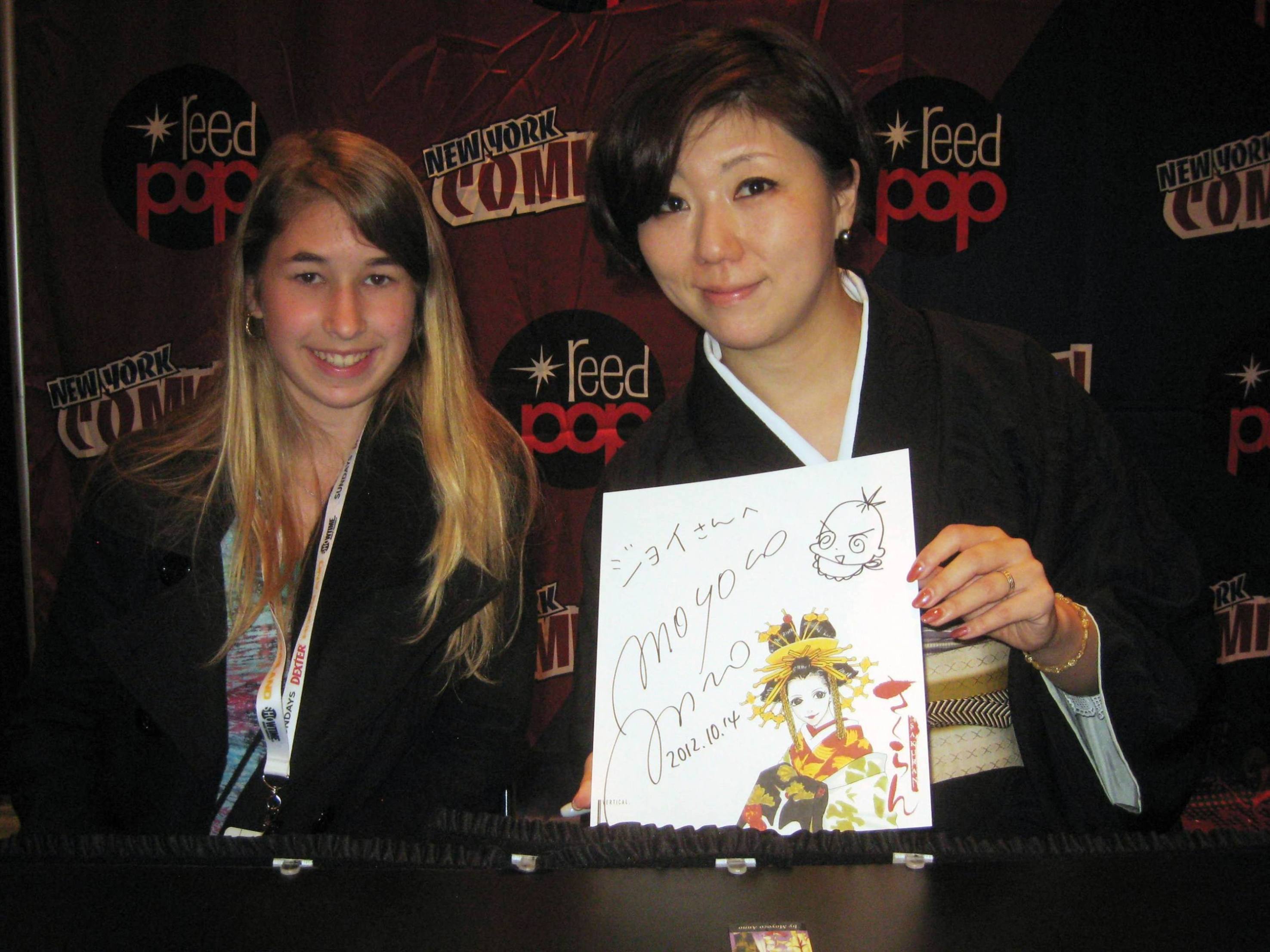
Manga author Moyoco Anno with New York Comic Con attendee Joy Charbonneau of Pacifica, CA, Oct. 14, 2012. (Justin Tedaldi)
By JQ magazine editor Justin Tedaldi (CIR Kobe-shi, 2001-02) for Examiner.com. Visit his Japanese culture page here for related stories.
Anime and manga fandom came out in full force at New York Comic Con last weekend, with a record 116,000 fans visiting the Jacob K. Javits Center for the annual event. Sunday (Oct. 14) hosted special guest artist Moyoco Anno of Sugar Sugar Rune and Sakuran fame.
A professional mangaka (manga artist and author) and one of the most respected names in Japanese comics today for her josei (ladies’) comics, Anno was in town to promote the recently released English-language edition of Sakuran, a starkly drawn tale of Japanese courtesans in the Edo period.
“We’d been thinking about publishing Sakuran for a few years now, and were finally able to convince [our] CEO to take the plunge,” said Ed Chavez, marketing director of Vertical Inc., the book’s North American publisher, which had its own booth at Comic Con. Based in New York, Vertical translates Japanese works of fiction and non-fiction that are considered good reads with universal themes from its vibrant book market.
Standouts of Vertical’s manga stable include Osamu Tezuka’s Buddha, Usamaru Furuya’s No Longer Human and Kanata Konami’s Chi’s Sweet Home.
For the complete story, click here.
JETAA Northern California: Pacific Bridge: Fiber Futures: Japan’s Textile Pioneers Opens
Art, Events, Japan Local Comments Off on JETAA Northern California: Pacific Bridge: Fiber Futures: Japan’s Textile Pioneers Opens

This summer and fall, the Museum of Craft and Folk Art (MOCFA) in San Francisco is proud to present a traveling exhibition co-organized by the Japan Society (New York), Tama Art University (Tokyo), and International Textile Network Japan. Fiber Futures: Japan’s Textile Pioneers explores a new art that is emerging from a remarkable fusion of Japanese artisanal and industrial textile making. Coaxed from materials as old as hemp and as newly developed as microfilaments, a varied array of more than 25 works by artists from multiple generations will be on view in this extraordinary two-part exhibition.
By transcending and cutting across the limitations imposed by the inherited oppositions between art, craft, and design, this two-part exhibition brings together over 20 contemporary Japanese artists who are active at the cutting edge of the global fiber-art movement. These men and women transform fabrics into sculptures, pictures, emulations of nature, and even abstract meditations on memory and identity. The materials range from silk, cotton, recycled cocoons, antique paper scraps, jute, and hemp to stainless-steel wire and weaving and dyeing technology. Ultimately the goal is expressing an environmentally sustainable ethos.
The opening reception of Fiber Futures was on July 20, 6-8pm and offered an exciting opportunity to preview the exhibition and meet several artists and curators visiting from Japan. Special guests in attendance included Joe Earle, Vice President and Director of the Japan Society Gallery, and distinguished artists, Machiko Agano, Akio Hamatani, and Hiroko Watanabe (President of International Textile Network Japan). In addition to a delicious sake tasting hosted by the innovative and contemporary Japanese restaurant, Ozumo, who shared some of Japan’s finest premium and limited edition sakes, entertainment included TOMOSAITO, the guitarist/beat producer of FOTOS. The exhibit runs until the 3rd of November this year.
Nicole Crescenzi, Development and Curatorial Associate
Museum of Craft and Folk Art
51 Yerba Buena Lane
San Francisco, CA 94103
For a print version of the article, click here.
JapanLocal: Tokyo Moves Video
Art, Film, Travel/Tourism, Video Comments Off on JapanLocal: Tokyo Moves Video
Patrick Lee (also known as Pat Leezy) is a current 2nd year JET in Nagasaki-ken who specializes in videography. His videos can be seen on his Youtube Channel. He can be contacted through Facebook and Twitter.
Tokyo is a city of contrasts. Its towering skyscrapers and neon-lit nights suggest a modern metropolis ceaselessly advancing into its future. Yet Japan’s capital visibly prides itself on its rich heritage, preserving various historical landmarks throughout the city. Pat spent a week this past April during cherry blossom week exploring this delicate relationship with his point-and-shoot camera.
SCBWI Tokyo Illustration Day with John Shelley
Art, Books, Cartoon/Illustration, Events Comments Off on SCBWI Tokyo Illustration Day with John Shelley
SCBWI-Tokyo Publicity Assistant Suzanne Kamata (Tokushima 1988-90) shares the following:
Sunday August 19, 2012
SCBWI Tokyo Illustration Day with John Shelley:
Breathing Life Into Your Pictures
Power up your pictures! Give your illustrations vitality and zest! This SCBWI Tokyo Illustration Day featuring illustrator John Shelley will focus on techniques that children’s illustrators use to create resonance in their work and will explore how visual psychology works to convey mood, emotion, and movement. The Action and Emotion Illustration Assignment to be completed in advance of the workshop provides an opportunity for illustrators to develop their craft through open critiques at the event.
Time: Sunday, August 19, 2012, 9:00 am-5:00 pm
Place: Tokyo Women’s Plaza, Audiovisual Room, A & B
5-53-67 Jingumae, Shibuya-ku, Tokyo (by the Children’s Castle and United Nations University). For a map see www.scbwi.jp/map.htm Read More
JET alum wins “Japan Day @Central Park” poster contest
Art, Cartoon/Illustration, Contest, Cultural Outreach, Notable JET Alums, Return on JET-vestment Comments Off on JET alum wins “Japan Day @Central Park” poster contest
 Congratulations to Aaron Porter (ALT Kyoto-fu, Yawata-shi, 1998-2001), who is the 2012 winner of New York’s “Japan Day @Central Park“ poster contest!
From the JapanDayNYC.org website:
“Japan Day – Cherry Blossom Art Contest”
Contest Results
WINNER
To commemorate the 100th anniversary of Japan’s gift of cherry trees to the New York City, Japan Day invited visual artists to submit artwork that featured the beautiful of both cherry trees and Central Park.
Thanks to all of your support, the art contest received total of 45 submissions. All Jurors will agree that, there were a number of impressive entries that made the selection process a challenge. In fact, the Judges also awarded 5 honorable mentions, in addition to choosing a winner.
We are delighted that we can now reveal the winner of the Japan Day Cherry Blossom Art Contest — Aaron Porter and his art work!
【Japan Day 2012 Official Poster Visual using Mr. Porter’s Art Work】

From Aaron’s profile on the Japan Day NYC website:
 Aaron is originally from Chicago and received a Bachelor’s Degree in Scientific Illustration from Northern Illinois University. He began his career as a newspaper artist in South Florida in 1988 in a pre-digital world. Aaron first worked for the Sun-Sentinel in Fort Lauderdale, then the Miami Herald. While in South Florida, Aaron earned a MFA in painting at the University of Miami.
Shortly after finishing his course work, he was accepted into the Japan Exchange and Teaching Program the summer of 1998. He taught English in four junior high schools in Yawata City (Kyoto Prefecture) and still to this day considers it the most exciting three years of his life. While in Japan, he spent his spare time getting to know Japanese culture and painting. His paintings during this period were most often about Japanese culture. During his time in Japan, he had a painting exhibition at the Kyoto International Center in Kyoto Station as well as a number of other small shows in coffee houses and wherever he could get his work shown.
Aaron returned to the States the summer of 2001 and began his new career in newspapers at The Journal News in White Plains, New York. Presently, Aaron is a part-time digital art instructor at the Bronx Community College as well as a freelance graphic artist and illustrator.
Aaron is married to a Japanese woman from Fukuoka whom he met in New York City after he returned from Japan. They live in Up State New York, visit NYC often and travel to Japan each year to visit her family. Much to his wife’s disappointment he speaks very little Japanese.
WIT Life #197: DC Sakura Matsuri, Part 2
Art, Food & Drink, Travel/Tourism, WIT Life, Writers Comments Off on WIT Life #197: DC Sakura Matsuri, Part 2
WIT Life is a periodic series written by professional Writer/Interpreter/Translator Stacy Smith (Kumamoto-ken CIR, 2000-03). She starts her day by watching Fujisankei’s newscast in Japanese, and here she shares some of the interesting tidbits and trends together with her own observations.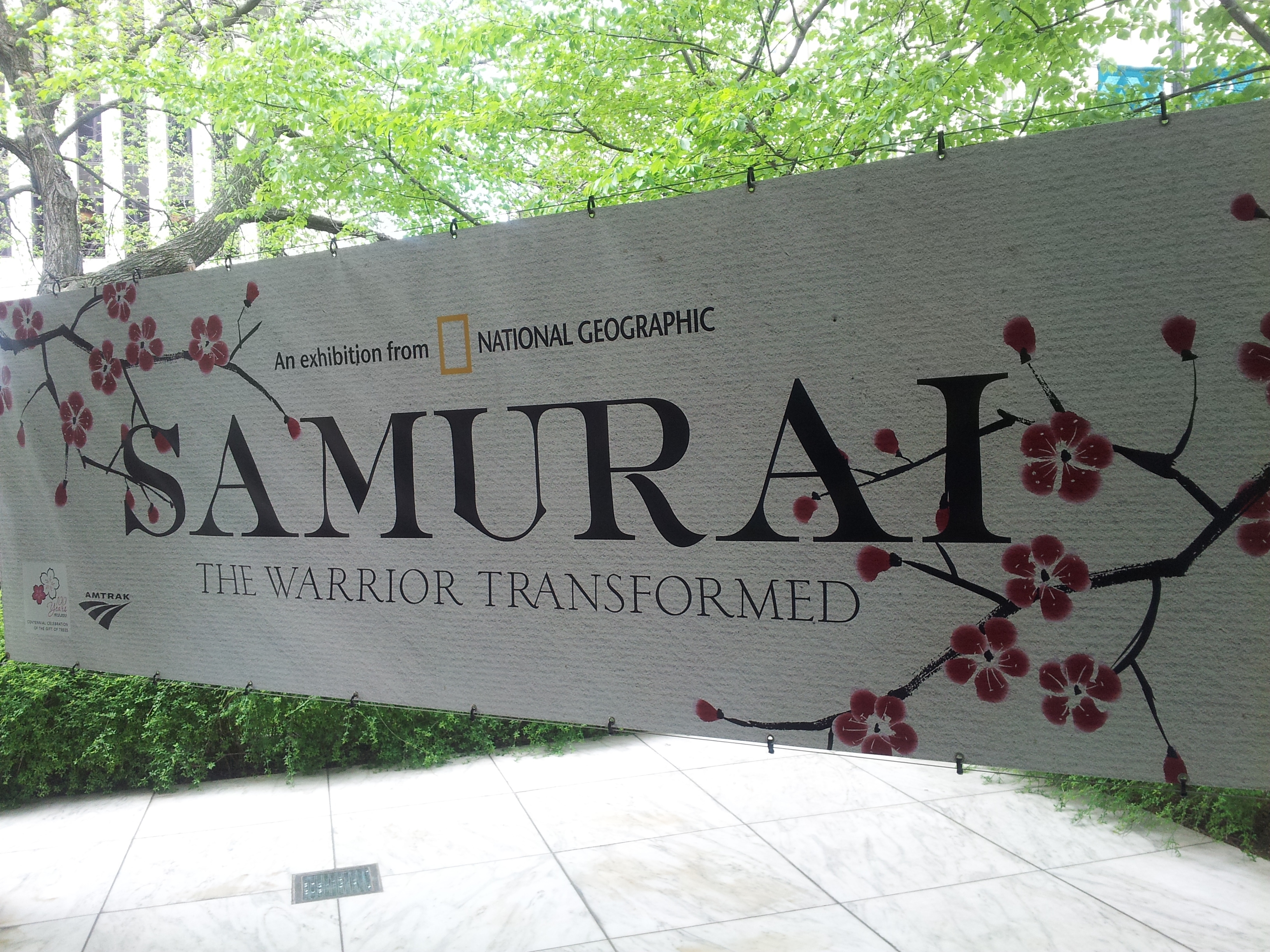
Today is the big parade to celebrate the centennial sakura matsuri, but unfortunately all the blooms are long gone. However, the festival goes through the end of the month, so for those who find themselves in DC there are plenty of Japan-related activities to keep you entertained. I had a chance to sample many of them this week, the first of which I’d recommend being the National Geographic Museum’s samurai exhibit running through early September.
It shares the history of how the now legendary cherry trees made their way to DC, as well as displays unique items such as swords and armor that were gifted from Read More
WIT Life is a periodic series written by professional Writer/Interpreter/Translator Stacy Smith (Kumamoto-ken CIR, 2000-03). She starts her day by watching Fujisankei’s newscast in Japanese, and here she shares some of the interesting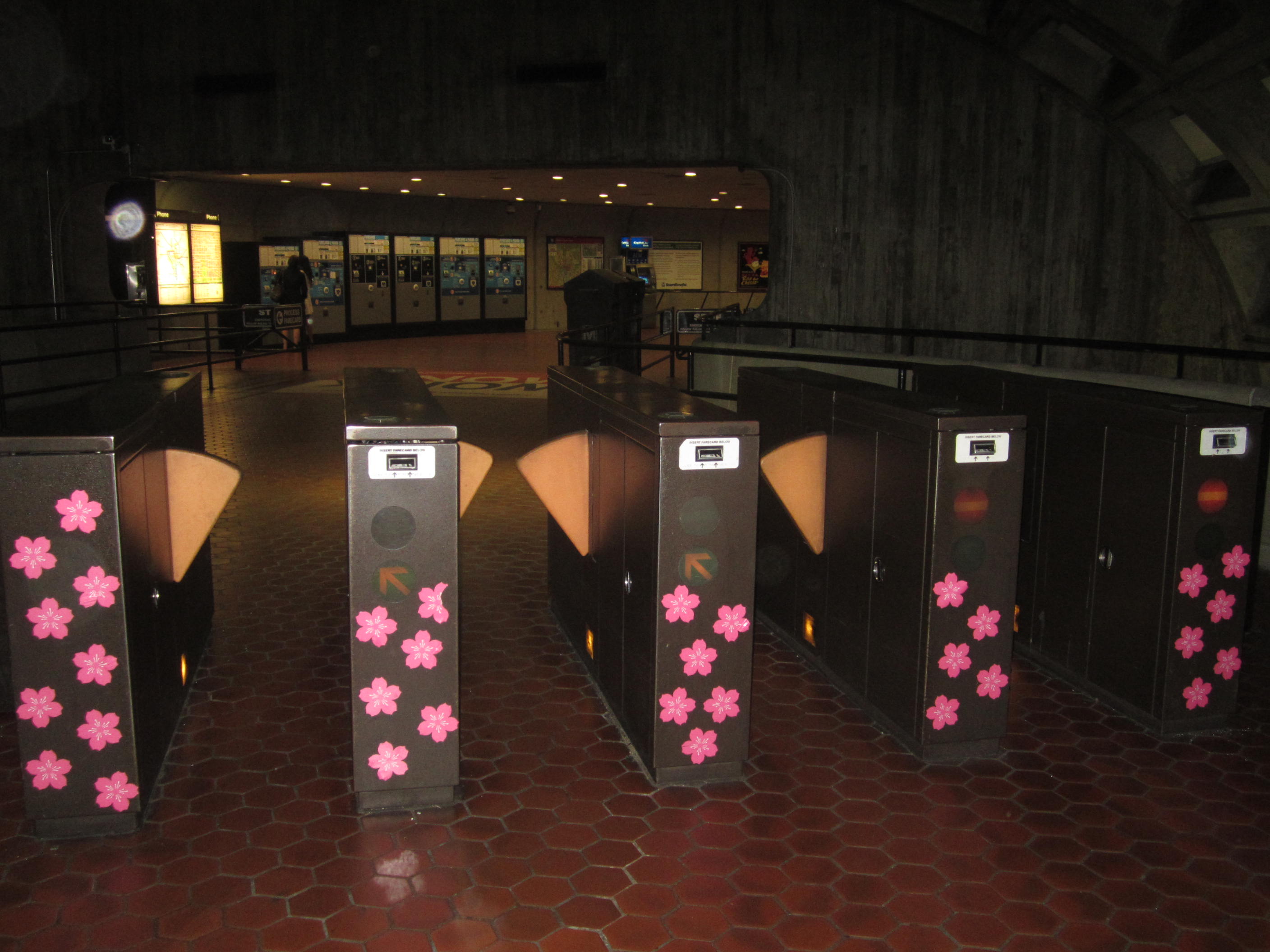 tidbits and trends together with her own observations.
I’m down in DC to begin a new business trip, and was thrilled when I found out my assignment would coincide with the famous Sakura Matsuri. This year is extra special as it marks the 100th anniversary since the 3000+ trees were gifted from Japan to the U.S. Even the Metro gets into the spirit, as you can see with their turnstile decorations. Due to the warm weather it is doubtful that the blossoms will last until the conclusion of the festival at the end of the month, but I’m hoping to do some hanami while I’m here.
On another Japa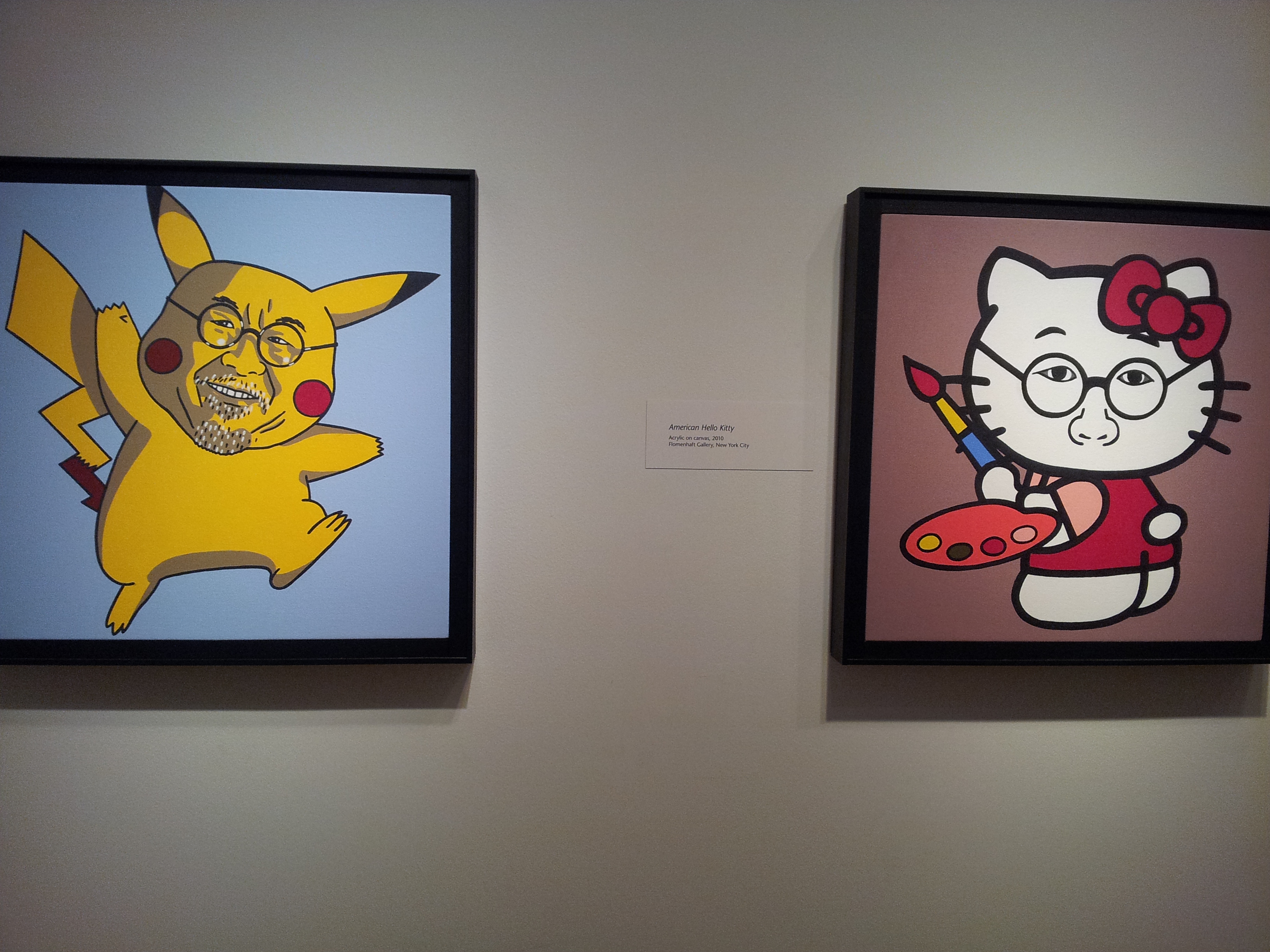 n-related note, today I went to see an interesting exhibit at the National Portrait Gallery entitled “Asian American Portraits of Encounter.” It features several different Asian American artists, including three Japanese. One is Satomi Shirai based in New York, the second is Shizu Saldamando based in California, and the last is Roger Shimomura based in Read More
LAST CHANCE – “Fall Flowers of Japan” @ NY Botanical Garden until 10/30/2011
Art, Cultural Outreach, Events Comments Off on LAST CHANCE – “Fall Flowers of Japan” @ NY Botanical Garden until 10/30/2011
Carolyn Brooks (Ishikawa-ken, Kanazawa, 2006-11) is co-author of the blog MadSilence–a cross-cultural blog written with her father–and a current culture/education related job-seeker in the NY area available for full-time or consulting work.
Feeling a bit homesick for the full moon, momiji and manju that are signs of fall in Japan? Despair not, for 4 days remain of the wonderful “Fall Flowers of Japan” display at the New York Botanical Garden. It will continue until Sunday, October 30th, 10AM to 6PM, and costs (a completely worthwhile) $20 to see. The main focus of the display is kiku, chrysanthemums. They have dozens of varieties to see, including traditional shapes and colors from Japan trained into waterfalls or bridges, and new strains bred in American which look like bird’s nests and exploding stars.

These mums were bigger than a grapefruit, and were so glossy and translucent that they should be made of spun sugar!
Les Pumps: Japan-inspired Shoe Art
Art, Art & Design Observer Comments Off on Les Pumps: Japan-inspired Shoe Art
by Lee-Sean Huang (ALT, Oita-ken, 2003-06). Lee-Sean is an artist, designer and educator based in New York City. He is the webmaster of JetWit and JETAANY. His new Art & Design Observer series features profiles art, design, and culture with a Japanese flavor.

Les Pumps is a collection of handmade art by the Barcelona-based Brazilian artist Caio de Paula Marques that uses vintage women’s shoes as 3D canvases. Caio decorates the shoes with hand-painted details and applies old manga art as a collage. The first Les Pumps collection is called “Sakura Vintage,” and Caio cites Japan as a major influence for his creative work. Are there any JET visual artists out there whose work has been influenced by Japan? Let us know in the comments, and we can feature your work here on JetWit.
According to the artist:
Les Pumps was born out of the need of creating an artistic project, in a more old fashion way, that involved manual crafts and to have a little break from using mainly digital tools as I have done as a graphic designer in the past years.
So in the search for interesting structures, aiming to work in a three dimensional way, and being a shoe lover myself, such fetishistic object of the feminine world seemed the perfect canvas for my art work.
Many hours have been put into each pair, from the investigation and purchase of the shoes, through which I´ve learned a great deal (now I can tell the difference between a pair of pumps from a pair of stilettos) and the many steps of execution till the final piece is ready, an average of 15 hours is needed.
For my first collection, the main motif has been SAKURA (meaning cherry blossom) so full of symbolism in Japan, reflecting the great interest I’ve always had towards this country and its culture ever since I can remember.
Perhaps the most innovating about this collection has been the use of COLLAGE, technique that allows the creations of different contexts and in this case, also recycles other artist’s works, which also relates to the concept of Vintage. Once more, the Nipponic culture is present as the paper I use is actually from 80’s manga.
VINTAGE SHOES have been my choice, as they convey history and strengthen the artistic value and the concept of uniqueness.
JQ Magazine: Art Review – ‘Fiber Futures: Japan’s Textile Pioneers’ at Japan Society
Art, Article/Journalism, JQ Magazine Comments Off on JQ Magazine: Art Review – ‘Fiber Futures: Japan’s Textile Pioneers’ at Japan Society

From left to right: 'Feel the Wind' (2010), by Fuminori Ono; 'Birth' (2011) by Hitomi Nagai; 'Su no hana' (Nest Flowers) (2011) by Takaaki Tanaka. (Vlad Baranenko)
By Vlad Baranenko (Saitama-ken, 2000-02) for JQ magazine. Vlad is an avid photographer.
Opening this week at New York’s Japan Society is the exhibit Fiber Futures: Japan’s Textile Pioneers, which showcases the works of Japanese textile masters and explores the ever evolving relationship between traditional fabric manufacturing and the uses of unconventional technology and materials to create awe-inspiring works of art. To commemorate the opening of the gallery and the designation of the Japan Society building as a city landmark, a special preview event was held on Sept. 14 with many of the artists in attendance along with an exhibition walkthrough from gallery director Joe Earle.
Originally conceived in 2007, the project received approval following this year’s devastation in Japan, and is jointly presented by Japan Society and the International Textile Network Japan in collaboration with Tama University. According to Japan Society, the collection of 35 works on display was thoroughly selected by a special committee to showcase the work of 30 contemporary masters of a movement originally envisioned in the 1950s to “reflect the fecundity of the Japanese artistic tradition and ingenuity.” Since many of the pieces had to make a long journey from Japan to New York, unique containers had to be meticulously designed for each piece to preserve the artist’s intended presentation and allow the viewer to fully appreciate each work.
To simply describe the collection as a stunning example of creativity and the profound Japanese insight into the coexistence of nature and man would not be enough to credit the artists on display. The exhibition explores such themes as the passage of time and seasons just to name a few. While many of the works are composed of traditional materials such as silk and washi paper, modern materials such as stainless steel, vacuum deposited aluminum, and complex chemical dyes are also added to create three-dimensional enchanting expressions.
Signs of a setsuden summer
Advertising, Art, Japan Trends, Photography Comments Off on Signs of a setsuden summer
Posted by Tom Baker (Chiba-ken, 1989-91), coauthor of The Sushi Lover’s Cookbook and Tokyo Chic and contributor to Time Out Tokyo and Time Out Shortlist Tokyo. He blogs as “Tokyo Tom Baker.”
 “Setsuden,” or conserving electricity, has become a huge buzzword in Japan as the weather heats up and many nuclear power plants remain shut down. Many businesses have put up signs explaining their own setsuden activities and asking the public to join in.
Recently I have been been photographing setsuden signs around the Tokyo area for my blog.
Some of the signs are very simple and functional, like the message seen here on a closed escalator at a train station, which simply says, “Setsuden-chuu.”
Others are clever pieces of writing and/or graphic design.
I have a gallery of signs here, as well as explanations of my picks for the best-designed sign here and the best slogan here.
Earthquake Support Event: WE ARE HERE – Little voice and art 311 Japan (NYC)
Art, Earthquake Tsunami, Events, Fundraising, Photography Comments Off on Earthquake Support Event: WE ARE HERE – Little voice and art 311 Japan (NYC)
Posted at the request of CLAIR New York:
WE ARE HERE – Little voice and art 311 JAPAN is an exhibition of messages from Japanese children of areas affected by the disaster as well as photos of the area. The exhibition is being held at the AIGA Gallery in New York on 22nd St and 5th Avenue in Manhattan from today through May 20. They are also collecting messages from visitors to those children.


