




Justin’s Japan: Interview with Filmmaker Amy Guggenheim on ‘When Night Turns to Day’
 Film, Interview/Profile, Justin's Japan
  Comments Off on Justin’s Japan: Interview with Filmmaker Amy Guggenheim on ‘When Night Turns to Day’
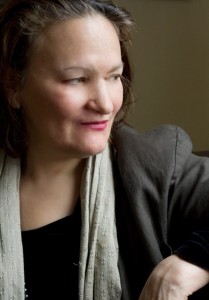
- ‘When Night Turns to Day’ director Amy Guggenheim. (Courtesy of A. Guggenheim)

By JQ magazine’s Justin Tedaldi (CIR Kobe-shi, 2001-02) for Examiner.com. Visit his NY Japanese Culture page here to subscribe for free alerts on newly published stories.
New York-based writer/director/producer Amy Guggenheim is currently hard at work on When Night Turns to Day, a dramatic feature that will be shot in New York and Tokyo. A present-day romantic thriller with martial arts, sword choreography and tattoos, the film follows May, a young American female writer who gets drawn into both Japanese sword fighting (kendo) and a passionate relationship with Toshi, a young Japanese martial artist. Beyond anything she’d ever imagined, both must face secrets from their past, barely escaping with their lives.
Guggenheim herself is a third dan (degree) kendo practitioner who has competed in Tokyo, a grant recipient from the New York State Council on the Arts and the Mellon Fund, and the director of her own production company. I caught up with her to learn more about When Night Turns to Day, which begins shooting in Japan next year.
What made you interested in making a movie about kendo from an American perspective?
I got interested in making a film involving kendo after making a multimedia theater piece called Monsters and Marvels with video projection and 14 actors. It’s about the unconscious influence we have on each other from various cultures, Japanese being one of them. It’s also a way to express my vision of kendo as an American woman in 2010, interested in the “art” aspect of the “martial art.”
What is your personal history with Japan?
I’ve been involved with Japan in one way or another since the 7th grade. I was first interested in the design culture and the values of simplicity and essence, then later in kabuki, noh and butoh. In my background in theater, I was trained by Zen-influenced artists including Elaine Summers— an early intermedia artist from Judson Church (John Cage, Merce Cunningham, etc.), and then Eiko and Koma—butoh artists based in New York. When I was doing my own solo theater performance work, I started practicing kendo. For a few years I toured in Europe, Latin America and the U.S. performing my work and then practicing kendo with local dojos.
With the honor of having an Asian Cultural Council Grant in 2008, I was able to travel again to Japan (the first two trips were kendo-related—2006 participating in the first International Women’s Kendo Tournament in Tokyo), and in these last two years I’ve gone back several times and have been working with Masaru Koibuichi of Koi Pictures (our co-producer there), Setsu Asakura (art director) and others.
The dark, erotic tension of Japanese culture is my own language as well, and also the intuitive intelligence at the heart of kendo is my subject, too.
How did you get into kendo originally? Are there any films that cover the subject that inspired you with the idea or development of your film?
Bobby Troka, a kendo player and voice coach, worked with me on a solo piece of mine, suggesting I try it. I thought it was “too formal,” but once I did it, I fell in love with it and couldn’t stop! That was in 1990. There’s surprisingly few films that adequately deal with kendo, and I must say the idea developed out of my own experience and imagination and was inspired by people I met in the kendo world along the way. The way Kwaidan, directed by Masaki Kobayashi, deals with the uncertain spaces of the psyche, is evocative. Kurosawa’s Ran, Dreams and The Seven Samurai, Shindo’s Onibaba, Masumura’s Irezumi and Hong Kong martial arts films also have great inspirational material.
What are your current goals regarding the next steps in getting the film made?
We are assembling a terrific, experienced, creative team here and in Japan, and launched a mini-fundraising campaign going with Kickstarter.com that ran through November. We will next move on to preliminary test shooting and start working with sword choreographer Kataoka Noboru and actors in New York City. We are working hard to complete financing for the feature to shoot next fall, which will include investors, pre-sales and sponsors. If people are interested in donating to the project to help get us to principal photography next year, please go to our website at www.whennightturnstoday.com. You can also contact me by e-mail about donations, the project, or interest in getting involved with creative skills or production.
Click here for the rest of the interview.
Justin’s Japan: Interview with ‘Fried Chicken and Sushi’ Cartoonist/JET Alum Khalid Birdsong: Part 2 of 2
Article/Journalism, Justin's Japan, Notable JET Alums Comments Off on Justin’s Japan: Interview with ‘Fried Chicken and Sushi’ Cartoonist/JET Alum Khalid Birdsong: Part 2 of 2
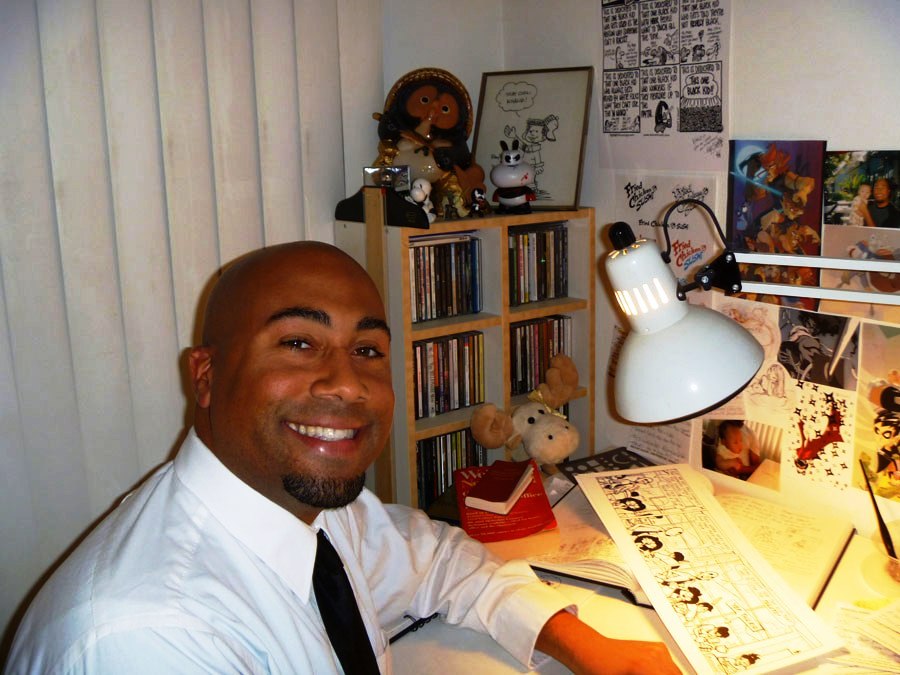
Khalid Birdsong at work. (Courtesy of K. Birdsong)
By
JQ magazine’s Justin Tedaldi (CIR Kobe-shi, 2001-02) for Examiner.com. Visit his NY Japanese Culture page here to subscribe for free alerts on newly published stories.
For Fried Chicken and Sushi, was it a conscious decision to make the lead character black?
Of course, definitely. I’m obviously an African American, and I think that I was concerned because I thought, is anybody going to want to read about this black guy going to Japan? I felt like I wanted to be true to who I am, and there’s a certain kind of way of being able to comment on race, the way that we perceive and look at people. When you go to Japan, they don’t really care who you are, you’re just a foreigner. So it’s a different kind of perception, and I really like that idea. If I keep Karl as black, I can have things that I think about that can be a whole lot easier to write, but I think it would be an interesting thing that you don’t see very often.
What kinds of crazy situations did you observe in Japan regarding Japanese people’s impression of you?
Where do I start? One thing in general is that everyone would ask me questions about America as if everyone in America does the same thing, you know? Since the Japanese people have a shared history and are all kind of the same race, they say, “Well, what is it like in America?” and “What do families eat for dinner in America?”, and it’s always so difficult to answer those questions because I have to say, well, it depends—we have a lot of cultures and so everybody’s different, and people celebrate different things. So that always would frustrate me because they want to generalize and put us all into one box, and it was hard to do. I always found that to be funny and I would start laughing when they would ask me those questions and look at me strangely: “Why are you laughing? This is a very serious question!”
What were some of the funnier or grossly inappropriate things that you experienced there that may or may not make the cut for future episodes of Fried Chicken and Sushi?
Maybe I’ll put this one in there—I don’t know if I’m the only one where this happened—but a lot of students always are asking if you have a girlfriend or something like that. But I would have several students come up to me and ask if I had a lover, like, “Do you have a lover?” And I always would say, “Uhh…well, no.” It was just the kind of English that they would use. I’m sure that you remember that there were just certain words that were always just a little different, and it would make me laugh all the time when they asked me that question, which I would always get.
Did you find yourself in the situation of having to educate your students on certain cultural things?
All the time. About America, and talking about holidays and what people do, just like the whole Christmas thing, like, “How do you celebrate Christmas?”, you know? “Christmas is not for lovers in America and we have family over.” That kind of explanation would go on and on. Certain things, even racial issues—they would learn about Martin Luther King and then they felt like there were no problems for black people in America anymore because of Martin Luther King, and everyone’s treated equally all the time in America. So there are a lot of cultural issues that I would try to discuss and help them to understand. Also, even though we have things that are different, there’s things that are the same, too. They always wanted to know what’s different, but I tried to say that things are still the same. We have families that we love and we like to celebrate and laugh and eat, and so I think that was allowed because they want to act like we’re so different and no one’s like Japanese people, but we actually do share things in common just as people.
How about race-related questions?
Just being tall and getting the students who were just shocked at how tall I was, I got that all the time: “Oh, dekai! Se ga takai!”, “you’re so tall,” and everything. They thought that I played basketball, and I really, really suck at basketball [laughs]; it’s really embarrassing. So I was leaving school one day and the kids were out playing basketball, so of course they called me over, “Oh, Birdsong-sensei, please shoot the basket.” So I thought, okay, sure—I knew I was going to miss, and they’ll see how much I suck, and it’ll be great. So of course I shoot it, and of course I make it, and they’re all like, “WOAH! You’re the greatest!” [laughs] Here we go, living up to the stereotype. Those things didn’t happen much, but they would happen on occasion, that’s for sure.
Click here for the rest of the interview.
Justin’s Japan: Interview with ‘Fried Chicken and Sushi’ Cartoonist/JET Alum Khalid Birdsong: Part 1 of 2
Interview/Profile, Justin's Japan, Notable JET Alums Comments Off on Justin’s Japan: Interview with ‘Fried Chicken and Sushi’ Cartoonist/JET Alum Khalid Birdsong: Part 1 of 2
By JQ magazine’s Justin Tedaldi (CIR Kobe-shi, 2001-02) for Examiner.com. Visit his NY Japanese Culture page here to subscribe for free alerts on newly published stories.
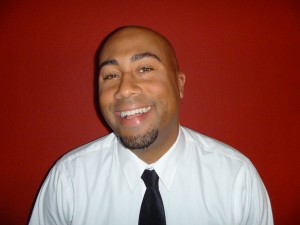
Cartoonist/JET alum Khalid Birdsong. (Courtesy of K. Birdsong)
Cartoonist and teacher Khalid Birdsong lived in Japan for two years working as an assistant English teacher on the JET Program. Last spring he launched the original webcomic Fried Chicken and Sushi, which is published twice a week and based loosely on his real-life experiences in Japan, mining the cross-cultural humor that living abroad provides.
Birdsong now lives in the San Francisco Bay Area with his wife, whom he met in Japan, and baby daughter. He plans to visit Japan next year, which he feels will inspire even more stories. I spoke with the artist about his time on JET, life as a teacher, and the future of his creation.
Where did you grow up, and what is your history with comics?
I guess I’d call Atlanta, Georgia, home—that’s where I’ve spent most of my life. I’ve traveled quite a bit. I’ve lived in several countries—in Nigeria, Germany, the Bahamas and also Japan. So I’ve kind of had that international view of things. I’ve always enjoyed reading comics no matter where I might be living. I’ve always liked to draw them, but I didn’t really read American comics until I was in middle school. Mainly, I would read Asterix and the European comics, and I’d watch a lot of animation. But I’d still draw my own comics and make up my own characters and do my own comic books and then sell them for a quarter to my friends; people always knew me as the comic book kid. So I just kept it going—even in college, I went to Howard University in Washington, D.C., and I studied graphic design and illustration there. Everything I learned, I tried to bring it back into comics and cartooning. I also did T-shirt designs, and did some freelancing for a couple of years on my own, which meant that I was freelance working, but I was also a security guard, and I was waiting tables, and all the other things that you do. And I just fell into teaching art in elementary school, and I’ve been teaching ever since. I really, really love it. It’s great.
How did you get hooked on Japanese culture?
I think like most people in high school, at least when I was in high school in the early ’90s, it was this brand new thing, when trying to look at Japanese animation when you didn’t have a translation and watching stuff you couldn’t understand with friends—and trying to read any certain comics that you could get your hands on—it was something new and exciting. I just always thought, “Boy, it must be interesting to actually live in Japan; that must be something amazing to do.” But I never thought I would really ever do it. I was just interested in the art and language. Even in college, same thing—it became more prevalent. I would enjoy more and more anime and manga, along with American comics. So I think that’s what really started me off. I was drawing comics, but I was still drawing in an American-type cartoony style. I didn’t have that quote-unquote manga style, but that’s what kind of started me into it. And then I started thinking what it would be like to live over there once I started actually teaching art.
That’s when you discovered the JET Program?
Yeah, when I was teaching art, I guess I had this feeling—I was in my mid-20s, and I just thought it would be nice. Me and my friend Jason, who’s actually the J in the Fried Chicken and Sushi comic—we both talked about going to Japan just to visit just for a couple of weeks. And so we tried to plan a trip, but we didn’t have the money and all this—didn’t quite happen. And then, he actually found out about the JET Program online, and then I looked into it, too, and we said, “We should try to apply, let’s do it.” I was already teaching [in the U.S.], so we applied, and I went through the, whatever, nine-month span of time that it takes to go through everything, and I made it in and he didn’t, and it really was not cool; it really hurt us both. But he’s a good friend, so he said, “You need to go on ahead and do it,” and so I did.
So the relationship between the two characters in the comic is based on real life.
It is. A lot of what I’m telling in the comic is based on truth in my life, but there are things that I may change or over exaggerate or add on as time goes by, as Karl’s character develops and becomes more of his own character and individual, and the same with J. So there’ll be things that I make up, but I try to keep as much of it as I can based on some of my real experiences—I think people can tell what comes from truth and real experience.
So you’re saying you didn’t have a talking tanuki spirit haunting you?
[laughs] That’s great! You know, the thing with that is, in real life I really do have a very overactive imagination. You might have known some Japanese when you went over there, but for me, I really didn’t. I listened to some CDs and studied some basic greetings and everything, so when I was there I had no idea what anyone was saying. I would just get lost in my own imagination, and there were tons of stories going on in my head and all this—I would imagine things moving around that weren’t moving around. So no, I didn’t have a tanuki, but I wanted to have something that would represent that state of craziness I was in, where I’m there but also kind of detached from it all.
Because of budget woes, there’s been talk of the Japanese government trimming or potentially cutting the JET Program altogether. As a JET alum, what are your thoughts on the value and benefits of the program from your own experiences?
I think that for me, it was great to be able to travel to another country and to get international experience as a teacher and teach English and be able to travel in a place where I never thought I would and learn a new language, so that is very valuable for me. I think that even though people argue, saying that maybe having a native speaker in the classroom is not that all that important for Japanese people, I think that it’s still great for them to have someone from another country, because I feel that Japanese people don’t really get a chance to really experience or talk to or have someone that’s not Japanese around them typically. So I think it’s a great way for them to not just learn about other cultures and what’s around them, not to mention English, but in terms of international relations I think it’s a really great program for that.
And the work you’re doing now is an extension of those ideals.
I totally agree, it’s really great. It challenges stereotypes, and I wish we could have more of it instead of cutting it down.
Click here for the rest of the interview.
Justin’s Japan: Michael Jackson Covers J-pop Classic on New Album
Celebrity, Justin's Japan, Music Comments Off on Justin’s Japan: Michael Jackson Covers J-pop Classic on New Album

'Michael' hits stores Dec. 14. (Sony Music)
By JQ magazine’s Justin Tedaldi (CIR Kobe-shi, 2001-02) for Examiner.com. Visit his NY Japanese Culture page here to subscribe for free alerts on newly published stories.
According to Billboard, Yellow Magic Orchestra’s 1979 electropop smash “Behind the Mask” will appear on Michael, the first posthumous album from the late recording megastar Michael Jackson.
Penned by YMO’s Oscar-winning composer Ryuichi Sakamoto with Chris Mosdell, “Behind the Mask” was first brought to Jackson’s attention by legendary producer Quincy Jones during the Thriller sessions in the early ’80s. The King of Pop cut the Japanese group’s song, adding an extra melody line and additional lyrics. Legal battles barred it from making the album, and the tune languished in the vaults until now.
Click here to read the rest of the article.
Justin’s Japan: Carnegie Hall to Kick Off JapanNYC 2010 Concert Week
Article/Journalism, Justin's Japan, Music Comments Off on Justin’s Japan: Carnegie Hall to Kick Off JapanNYC 2010 Concert Week
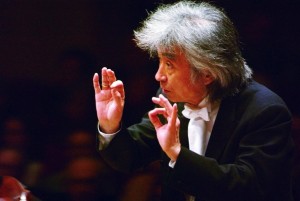
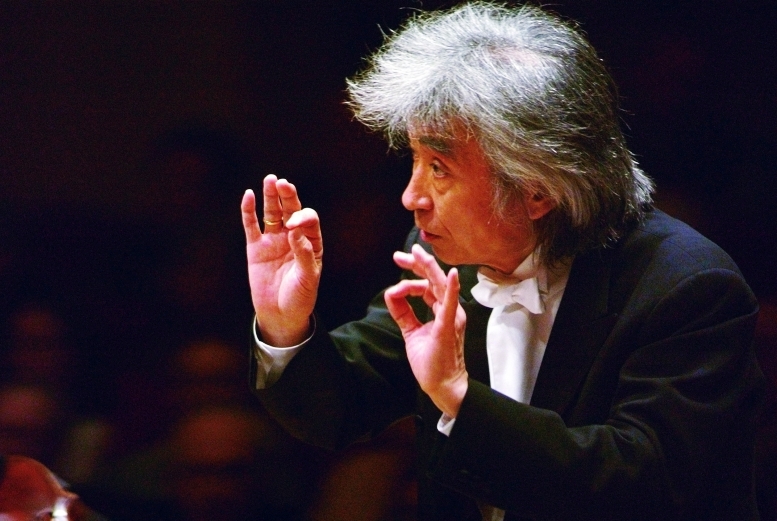
- Maestro Seiji Ozawa, artistic director of Carnegie Hall’s JapanNYC festival. (Mark Corke/New York Observer)
By JQ magazine’s Justin Tedaldi (CIR Kobe-shi, 2001-02) for Examiner.com. Visit his NY Japanese Culture page here to subscribe for free alerts on newly published stories.
Starting this Saturday, Carnegie Hall’s JapanNYC festival will unveil its first citywide series of musical performances. Led by artistic director Seiji Ozawa, who is best known for his record-setting 29-year career as music director of the Boston Symphony Orchestra, the festival’s musical highlights next week will see Maestro Ozawa helming rare overseas concerts by the Saito Kinen Orchestra with conductor Tatsuya Shimono, pianist Mitsuko Uchida and others, plus tributes to the legendary late composer Tōru Takemitsu, considered by many to be Japan’s greatest composer.
Additionally, as part of the Works & Process series at the Guggenheim Museum, a series of performances of Prokofiev’s Peter and the Wolf—performed by the Juilliard Ensemble and George Manahan with visual art by Rei Sato of Kaikai Kiki and narration by fashion designer Isaac Mizrahi—will surely delight music fans of all ages.
The performances follow other city exhibitions and ongoing events under the JapanNYC banner that run through next year, including Yoshitomo Nara: Nobody’s Fool at Asia Society, The Sound of One Hand: Paintings and Calligraphy by Zen Master Hakuin at Japan Society, and On Becoming an Artist: Isamu Noguchi and His Contemporaries, 1922-1960 at The Noguchi Museum in Queens.
JapanNYC returns in March and April 2011 with three weeks of events across New York City, including performances of classical, jazz and traditional Japanese music; contemporary theatre and visual art; noh theater and kyogen plays; modern dance; film; taiko drumming and more.
Click here for the complete performance schedule.
Justin’s Japan: Interview with author Hideo Dan on ‘Lipstick Building’
Books, Interview/Profile, Justin's Japan Comments Off on Justin’s Japan: Interview with author Hideo Dan on ‘Lipstick Building’
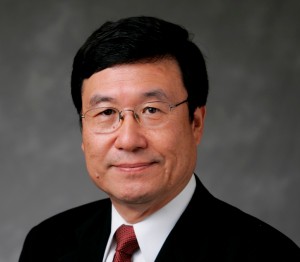
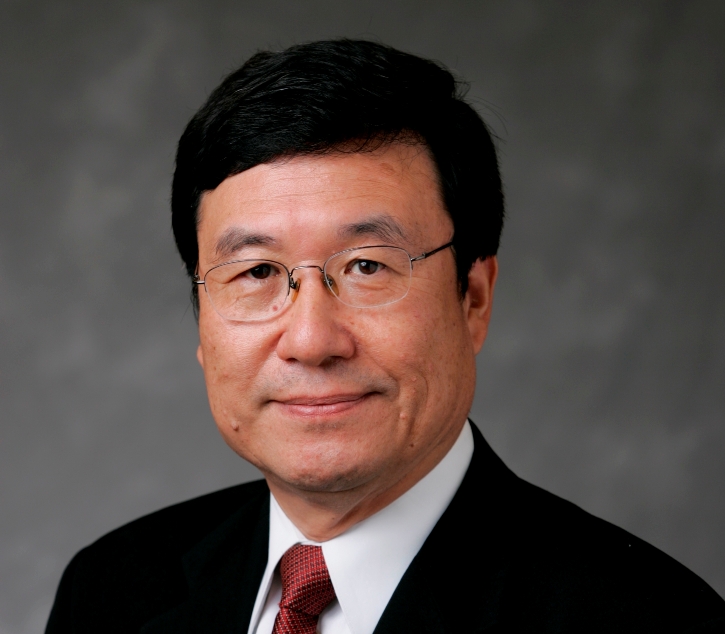
- Meet ‘Lipstick Building’ author Hideo Dan at Manhattan’s Kinokuniya Bookstore Saturday, Dec. 11. (Courtesy of Hideo Dan)
By JQ magazine’s Justin Tedaldi (CIR Kobe-shi, 2001-02) for Examiner.com. Visit his NY Japanese Culture page here to subscribe for free alerts on newly published stories.
Hideo Dan is a vice president and attorney at law of a New Jersey-based healthcare company who is now a debut author. Published by NY Seikatsu Press, Lipstick Building is a fast-paced suspense novel based on the author’s 30-year real-life experience in New York as a shosha (trading company) man and a corporate attorney with an international law firm.
Kenji Kadota, who works for a Japanese trading company in New York, is introduced at a party to Suzanna, a beautiful businesswoman from Peru. She proposes a big business opportunity to Kenji—an attractive prospect of exporting Japanese machinery to a major Peruvian construction company. Is this a great business chance, or is something ominous ahead? The story develops quickly into intrigue and adventure, with Kenji and Suzanna crisscrossing through South America and Europe, providing readers entertainment and thrills to the end.
The author will be the subject of a special talk and book signing event Saturday, Dec. 11 at Manhattan’s Kinokuniya Bookstore. I caught up with him to learn more.
How did you come to the U.S.?
The first time I came to the U.S. was in 1971, when I attended Indiana University for a year to study journalism. I could not land a job in journalism, so I started to work for Nissho-Iwai, a trading company, a.k.a. shosha, upon graduation from Osaka University with a law degree. In 1979, Nissho-Iwai sent me to its New York subsidiary as legal manager.
Lipstick Building is based on your three decades of experience at a Japanese trading company. How long did it take to write this book?
Actually, I was with the trading company for 14 years, seven years each for Japan and New York. After that, I left the company and joined a law firm in New York, having had passed the New York Bar Exam while I was with Nissho-iwai American Corporation. After almost nine years with the law firm, I joined Eisai, a Tokyo-based pharmaceutical company, as general counsel for its U.S. operations.
It took nearly one and a half years to write this book. I was able to do it since I was asked to manage Eisai USA Foundation, a charitable organization on the part-time basis, two years ago.
What is your personal experience with Peru? Are there any other international experiences that helped your writing?
Unfortunately, I have never been to Peru—I was planning to do so this year but because of the flood at Machu Picchu, my trip was cancelled. So I did lots of research on Peru on Google and at a library. I had met a very attractive Peruvian student when I was attending Indiana University, which gave me some inspirations for this book. In fact, Europe (Spain and Switzerland) plays a much larger part in this story than Peru. I have been to Spain and Switzerland on business and pleasure on numerous occasions and have been attracted by culture and scenery in those countries. Especially in Spain—I was fascinated by flamenco and its dancers. Flamenco is an important element in this novel.
What are the big differences between working at a trading company in Japan versus the U.S.? Did these differences shape the story?
At the trading company in New York and also at the law firm where I worked, naturally I interacted heavily with non-Japanese people, colleagues and clients, which constantly reminded me of cultural and linguistic differences between Japan, the U.S. and many other different cultures. As someone who is very curious about anything, I enjoyed learning those differences on daily basis. At the same time, I got impressed with striking similarities at a deep human level. My book certainly reflects those experiences and observations.
Click here for the rest of the interview.
Justin’s Japan: Interview with ‘Tonoharu’ Cartoonist/JET Alum Lars Martinson
Cartoon/Illustration, Interview/Profile, Justin's Japan Comments Off on Justin’s Japan: Interview with ‘Tonoharu’ Cartoonist/JET Alum Lars Martinson
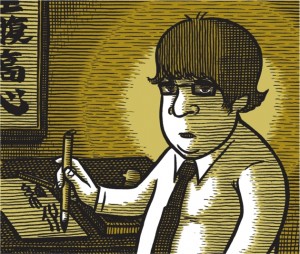
- JET alum and ‘Tonoharu’ creator Lars Martinson. (Illustration by Lars Martinson)

By JQ magazine’s Justin Tedaldi (CIR Kobe-shi, 2001-02) for Examiner.com. Visit his NY Japanese Culture page here to subscribe for free alerts on newly published stories.
Minnesota-based cartoonist Lars Martinson went to Japan in 2003 to teach English on the JET Program, an exchange initiative sponsored by the Japanese government. During his three-year stay in rural Fukuoka, he was inspired to break ground on an ambitiously stylized four-part graphic novel named Tonoharu (Pliant Press) based on the trials and tribulations of living in Japan. Part Two was released in November, and I caught up with the artist to discuss the series so far and Japanese life through an expat’s eyes.
How would you describe the differences in Tonoharu: Part Two compared to the previous book? Did you do anything different in terms of storytelling or approach?
With each volume I’ve tried to explore different facets of living abroad. The first book focuses on the sense of loneliness and isolation that occurs after the “honeymoon period” of cultural acclimation ends. The second book deals with the relationships that develop, both with members of the native population and with other expats.
My approach to storytelling has gotten more deliberate as I’ve gone along. For Tonoharu: Part One, I started by writing “Page 1, Scene 1” at the top of a piece of paper and launching into a detailed script before I had a clear sense of what direction I wanted the story to go in. Diving straight into minutiae like that is like working on the interior design of a house that hasn’t been built yet; you should know how big the windows are before you pick out the curtains. So for Part Two—and now Part Three—I’ve given much more thought to the structure of the story, and made sure I was happy with the big picture before I got too wrapped up in details and nuance.
Tell us about your experiences on the JET Program. What made you choose to apply, and what was your overall take on the three years that you were there for?
When I was 16, I lived with a host family in Nagoya for a summer vacation exchange. The experience inspired a lifelong interest in international travel. I’d go on to live in Thailand and Norway for a year apiece as an exchange student, and visit a dozen or so other countries as a tourist. After I graduated from college, I wanted to try working abroad, and also wanted to return to Japan. A friend of mine introduced me to the JET Program, and I knew immediately that it was right for me. And sure enough, my three years in the JET Program were among the best I’ve ever had.
All JET participants hit high and low points while in Japan. What were some of yours?
My elementary school classes were among the most satisfying experiences. I planned all the lessons pretty much single-handedly, so once I got the hang of it, it was gratifying to see how excited the kids were about learning English, and how much they retained.
One of the more frustrating aspects of the experience, at least in the beginning, was the language barrier. It’s hard to form meaningful friendships when you can’t—y’know—talk to people. So it was always sad when I wanted to befriend someone and they clearly wanted to befriend me, but the logistics of not being able to communicate effectively got in the way.
Last summer, it was announced that the JET Program is facing sweeping budget cuts that may endanger its future. What’s your take on the value of the program in today in Japan and in the participants’ home countries?
I suppose with the economy being what it is, some cuts are probably inevitable. But I really hope they don’t gut the JET Program. My life has been enhanced beyond measure by having the opportunity to interact with foreign cultures, and I hope Japanese students will continue to be given the same opportunity. It’s hard to quantify the benefits of the JET Program, but that doesn’t really make them any less real or important.
What kind of feedback on the books have your received from JETs and those associated with the Japanese community?
I’ve tried to make the book accessible to readers regardless of their background, but it goes without saying that those who are familiar with Japan or the JET Program are able to appreciate it on a different level. JETs tend to pick up on all these little details in the books that other readers breeze pass without notice. I remember a JET alum commenting on a scene in Part One where the main character wears a fancy suit to his first day on the job, but since it’s summer vacation everyone else in the teacher’s room is wearing ratty gym clothes. It’s little things like that that you’d only consciously notice if you’d been in that situation yourself.
Click here for the rest of the interview.
Justin’s Japan: Interview with ‘Hiroshima in the Morning’ Author Rahna Reiko Rizzuto
Article/Journalism, Interview/Profile, Justin's Japan Comments Off on Justin’s Japan: Interview with ‘Hiroshima in the Morning’ Author Rahna Reiko Rizzuto

- ‘Hiroshima in the Morning’ author Rahna Reiko Rizzuto. (John Searcy)
By JQ magazine’s Justin Tedaldi (CIR Kobe-shi, 2001-02) for Examiner.com. Visit his NY Japanese Culture page here to subscribe for free alerts on newly published stories.
In June 2001, award-winning Japanese American author Rahna Reiko Rizzuto went to Hiroshima on a six-month fellowship to interview the hibakusha, or remaining survivors of the atomic bomb. Three months later, the September 11 attacks on the U.S. changed everything, from the recollections of the survivors to Rizzuto’s own relationship with her family back in America, including her husband and two young sons in New York.
The result was Hiroshima in the Morning, a memoir released last fall in which the author weaves these threads into a deeply personal story of awakening about how we choose our identities, how we view history, and how we use memory as a story we tell ourselves to explain who we are. I caught up with Rizzuto to discuss her emotional journey and impressions of Japan.
What was the most interesting thing about talking with the atomic bomb survivors in Hiroshima?
I went to Hiroshima initially because I knew so little—almost nothing—about the atomic bomb and its effects. I arrived more than 55 years after the bombing, so I expected memories to be a little hazy. When I first arrived, I met people who were very committed to telling their stories in the interest of peace. They wanted to testify about the power of the atomic bomb and the devastation of war in general in hopes that there would be no more war. That would make their sacrifices worth it.
I was there to write a novel, though, not a factual piece, so what I was looking for was textures and details about what it was like to live in those times, and how one survived war. So what I was getting was not exactly what I was looking for. Their stories were very complete and rehearsed. What happened then, though, was after three months of listening to these testimonies, the September 11th attacks happened within sight of my Brooklyn home. The world changed. And so did their stories.
In hindsight, how different did the interview project turn out because of 9/11?
I don’t think anyone can underestimate the effects of those attacks. They reverberated immediately, all the way to Japan, and we all suddenly felt the world was not safe. We were not safe. And if we weren’t safe, there was no peace, and if there was no peace, the hibakusha realized, then their sacrifice was for nothing.
Almost immediately, this destabilization affected their stories. They began to feel more, and to remember more. Moments and people they had blocked out came back to them. They remembered heat, and color and sound. And they remembered what it felt like to go back to their homes and find their mothers’ bones.
Which of the testimonials affected you the most? Why?
The most unbearable stories were often about children. Children who died; children who tried to save their brothers or parents; children who cremated their parents, at age six, because that was what their parents would have wanted. In the months after 9/11, though, something happened which was very moving and powerful. A number of people came to me to tell their stories. Before then, I had been finding my own interviewees with the help of my translators, but after September 11th, I found out that many people actually knew I was there, listening, and they sought me out because they needed a witness. They needed a safe place to relive, and purge, their memories. And then, it wasn’t just the sad moments. It was also the happy memories of life before, and their family members before. They needed to share those, too, and they gave them to me so their loved ones would not fade away.
Click here for the rest of the interview.
Justin’s Japan: Interview with Colin Quinn on Broadway’s ‘Long Story Short’
Celebrity, Interview/Profile, Justin's Japan Comments Off on Justin’s Japan: Interview with Colin Quinn on Broadway’s ‘Long Story Short’
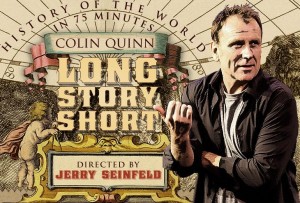
- See ‘Colin Quinn: Long Story Short’ on Broadway through Jan. 8. (Colinquinn.com)

By JQ magazine’s Justin Tedaldi (CIR Kobe-shi, 2001-02) for Examiner.com. Visit his NY Japanese Culture page here to subscribe for free alerts on newly published stories.
Give Colin Quinn 75 minutes, and he’ll give you a hilarious history of the world’s greatest empires. Written and performed by the Brooklyn-born comic (Tough Crowd, Saturday Night Live) and directed by Jerry Seinfeld, Colin Quinn: Long Story Short premiered earlier this month on Broadway to rave reviews from the New York Times, Variety and Entertainment Weekly. I spoke with stand-up’s Renaissance man about the show and his admiration for today’s Japan.
Putting this show together had to have been an educational experience on so many levels. What did you learn?
It was more like thinking about things that I sort of knew more than learning. It’s like realizing how it really is amazing that we’ve never changed at all in terms of how we behave as people.
How about for the sense of stagecraft in your act?
Definitely the sense of movement; the sense of being in different places and trying to, you know, keep it about movement—a lot more movement—which I definitely think is important. In stand-up you don’t think in those terms. Thinking in terms of acting as different characters, you do it a little bit, but not really.
Your show covers China, but Japan is totally absent. Do you have any plans to inject more of it in future shows?
It is kind of a disgrace to leave out imperial Japan; they were a giant empire, let’s face it. I had this whole thing about the Dutch and Japan and England all being these little countries that ran things. Maybe I’m going to try to find a way to incorporate that stuff in. I used to have a line about how Japan was like the little guy that used to intimidate the big guy China—China was kind of the mama’s boy at that time. So maybe there’s a way that I can incorporate that back in, but we cut it out for time.
Where have you traveled to in the world?
I’ve been to Japan, I’ve been to China, I’ve been to Africa, I’ve been to the Middle East, I’ve been to Europe a little bit. I’ve never been to South America.
What was your time in Japan like?
I was just doing shows for the USO, so I was at all the military bases. I spent two weeks in Japan, but I went everywhere except Tokyo. [laughs]
What other cities and places did you visit?
I was in Nagasaki and Hiroshima and all that stuff, just wherever the military bases were.
When was that?
About six years ago. I’ll tell you the truth, it was so beautiful to travel—we traveled by bus most of the places, and just passing the houses, everybody’s got these beautiful roofs. It’s like, wow, the people really just care, you know?
Click here for the rest of the interview.
Justin’s Japan: ‘Summer Wars’ Anime Aims for Oscar (Film Review)
Article/Journalism, Film, Justin's Japan Comments Off on Justin’s Japan: ‘Summer Wars’ Anime Aims for Oscar (Film Review)
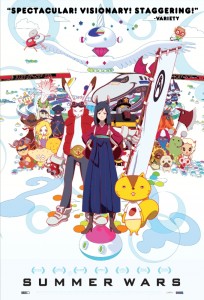
- ‘Summer Wars’ comes to New York’s IFC Center Dec. 29.

By JQ magazine’s Justin Tedaldi (CIR Kobe-shi, 2001-02) for Examiner.com. Visit his NY Japanese Culture page here to subscribe for free alerts on newly published stories.
The opening scene of Mamoru Hosoda’s animated film Summer Wars transports us to the virtual world of OZ, a place where hundreds of millions of users chat, shop and play via customized avatars in a breathtakingly trippy space that owes much to contemporary Japanese pop artist Takashi Murakami and Mamoru Oshii’s Ghost in the Shell movies. But it’s in rural Nagano where most of Summer Wars occurs, and this setting gives it a heart in a world that’s becoming increasingly addicted to online social networks and mobile devices.
The film enjoyed a sold-out reception of its English language premiere at Asia Society yesterday as part of distributor GKIDS’ annual New York International Children’s Film Festival. Fueled by Internet buzz and rapturous word of mouth upon its initial release in Japan last year, the film won a clutch of awards and is an official entry for Best Animated Feature at the 2011 Academy Awards.
The plot: teenage OZ moderator Kenji (voiced by Michael Sinterniklaas) agrees to a “job” escorting his popular schoolmate Natsuki (Brina Palencia) to her great-grandmother’s upcoming 90th birthday celebration at the family’s enormous estate in Ueda. The catch: he’s asked by his secret crush to pose as her fiancé, which hits complications as her crazed extended family enters the picture. To make matters worse, Kenji unwittingly triggers a malicious AI program called Love Machine that threatens not just the existence of OZ, but the rest of the real world with its interdependence on technology. It’s up to the boy—a girl-phobic math prodigy—to gain new confidence in himself in order to right OZ and win his dream girl’s heart.
Click here for the rest of the review.
Interview with Guitar God John McLaughlin
Article/Journalism, Celebrity, Music Comments Off on Interview with Guitar God John McLaughlin
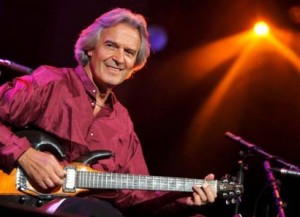
- Grammy-winning musician John McLaughlin. (Absolutely Live Entertainment)

By JQ magazine’s Justin Tedaldi (CIR Kobe-shi, 2001-02) for Examiner.com. Visit his NY Japanese Culture page here to subscribe for free alerts on newly published stories.
Whether you call it electric jazz, fusion, or just good old music, John McLaughlin is the forefather of this style on the six string. From his contributions on classic albums by Miles Davis starting with the landmark In a Silent Way in 1969 to his own work with the massively influential Mahavishnu Orchestra and as a solo artist, McLaughlin is a legend who has continued to record with no signs of slowing down.
His 2009 collaboration with Chick Corea, Five Peace Band, won the Grammy Award for Best Jazz Instrumental Album earlier this year, and in April McLaughlin then released his new disc with the 4th Dimension, To the One (Abstract Logix). Following a concert at New York’s Town Hall last weekend, the artist graciously took the time to answer some questions.
Tell us about your history with Japan. What attracted you most to the culture?
I’ve been studying the cultures of Asia for many years, and I’m very attracted to the culture of Japan, in particular to the impact Zen has had on the Japanese mind and spirit. That said, any in depth study of Zen will bring you to China and the culture of Chan, the forerunner of Zen. In my opinion, there is one singular problem with religions in general: they are exclusive. To me, this exclusivity is not right. Zen and Chan’s “ways” of discovery are non-exclusive. They speak about the reality of everyone having Buddha nature, and the potential of realizing it. This is the aspect of Zen and Chan that appeals to me strongly: the non-discrimination and inclusivity of everyone.
Are there any Japanese musicians of whom you’re a fan? What other kinds of Japanese performing arts do you enjoy?
I am less of a fan of Japanese music than I am to the poetry of haiku strangely enough, though I do enjoy the koto and shakuhachi music. The Zen calligraphy is something for which I have a great admiration.
Why do you think the Japanese possess such a great interest in jazz?
For sure the answer lies in the culture of the Japanese mind. Perhaps because the spontaneity of jazz appeals to their innate sense of honesty. In improvisation, jazz or otherwise, there’s no room to lie.
Click here to read the rest of the interview.
Interview with Jazz Musician Keiko Matsui
Article/Journalism, Celebrity, Music Comments Off on Interview with Jazz Musician Keiko Matsui

Keiko Matsui performs at New York's Blue Note Nov. 23-25. (Jun Sato)
By JQ magazine’s Justin Tedaldi (CIR Kobe-shi, 2001-02) for Examiner.com. Visit his NY Japanese Culture page here to subscribe for free alerts on newly published stories.
Contemporary jazz icon Keiko Matsui began playing piano at the age of five. With sales of over 1.2 million units in the U.S. and sold-out appearances at concert halls across the world, she is one of the most recognized artists in the genre.
In addition to being the first Japanese artist to top Billboard’s contemporary jazz chart, she actively supports a range of charities, including the Y-Me Breast Cancer Organization. United Nations World Food Programme’s efforts in Africa, and California for A3M’s charity for the National Marrow Donor Program.
Matsui is now putting the final touches on her latest album, due early 2011 with Shanachie Records. I spoke with her prior to her debut three-night stand happening next week at New York’s venerable Blue Note Jazz Club.
Congratulations on your very first show at New York’s Blue Note. How do you feel about playing there and what do you expect?
Of course in New York, Blue Note is a legendary place, and I’m very happy to be there. At the same time, I have toured in many different countries, and I always feel very fortunate at the concerts to feel that music connects us beyond the culture, history, country, everything. So, I really feel that this experience at Blue Note will be very special.
When did you first come to the U.S.?
In the early ’80s.
What did you do there?
At that time, I was invited to Los Angeles by Yamaha for a special recording. I was also a student, and had the opportunity to make a sample album with Vinnie Colaiuta and Nathan East. That was my first visit to the U.S., and also my first recording there. I invited Vinnie to record on my new album, so I’m glad to see him again.
What were your memories of that experience? Did you have any culture shock?
I only had one week there, so of course I didn’t know much about the music scene in the U.S., but I was so entranced by Nathan and Vinnie’s playing. It was great creating music together with great musicians, but at that time they were so open. Maybe this is a cultural difference, because Japanese language is based on politeness and different words depending on who you talk to, but English doesn’t have that. So, Japanese people speak really strictly, I felt.
You’ve had a successful career for a long time. Why have you decided to play Blue Note now?
That’s true. For me, that’s something I’m kind of questioning myself, too. [laughs]
Click here to read the rest of the interview.
Interview with Competitive Eater Takeru Kobayashi
Article/Journalism, Celebrity, Events Comments Off on Interview with Competitive Eater Takeru Kobayashi

Justin with Kobayashi and Friend of JET Sarah Goebel.
By JQ magazine’s Justin Tedaldi (CIR Kobe-shi, 2001-02) for Examiner.com. Visit his NY Japanese Culture page here to subscribe for free alerts on newly published stories.
Takeru “The Tsunami” Kobayashi is a three-time Guinness World Record holder for competitive eating. He burst on the American scene in 2001 at Coney Island’s annual Nathan’s Hot Dog Eating Contest by downing 50 dogs in 12 minutes, doubling the previous record. Kobayashi went on to win the contest six consecutive times while shattering other gastronomic records around the world.
After a shocking arrest and subsequent dismissal of charges in July at this year’s Nathan’s event, Kobayashi returned to the stage last night at the Japan Arts Matsuri in Brooklyn for another challenge: to become the world’s fastest 12-inch pizza eater. While he fell less than 20 seconds short of the 1:45 record (saying afterward that the pie was softer than he anticipated), there was no doubt among the crowd that the champ will give it another try in the near future. Hours before taking the stage, I spoke with Kobayashi through his interpreter Emiko Watanabe for this rare English language interview.
What kind of training does one have to do to be the world’s fastest pizza eater?
I had to practice how to use a knife and fork, because I have to use it for this challenge. That was the main thing.
That’s interesting. Most people don’t use a knife and fork to eat a pizza.
It would be much easier if I was allowed to use my hands instead. So it’s going to be a little harder.
What’s your favorite kind of pizza?
Pizza Margherita.
How are things after July 4th? Do you find that you’re more popular and recognized in New York from people on the street?
[laughs] I think so; I feel that I’m more recognized than before. I was famous before as a six-time champion [at the Nathan’s contest], but after Independence Day this year, people think I’m more interesting and have humor, so people notice me a lot more than before.
Where do you live in New York?
Manhattan.
Many celebrities in America are known for their talent, but personality is also important. Are you making more efforts to do things like learn English to become a bigger celebrity here?
I started going to an English school last month.
What kinds of things do your fans ask when they recognize you?
They don’t really ask anything, but they do ask to take a picture with me.
Any memorable encounters?
I met this fan who didn’t recognize me at first. She was an African American lady, and when she first spoke to me, she just thought I was a cool or cute Japanese guy. We talked, but then she recognized who I was, saying, “Oh my God! Oh my God!” It turns out that she was scrapbooking all of my articles from Independence Day, and the reason she did that is because she thought I was cute. When she realized that I was the same person, she went out of control screaming.
Click here to read the rest of the interview.
Kobayashi Headlines New York’s Annual Japan Arts Matsuri
Article/Journalism, Events Comments Off on Kobayashi Headlines New York’s Annual Japan Arts Matsuri

Eating champ Takeru Kobayashi competes at JAM 2010 Nov. 13. (Courtesy of Rei Miura/NPO American Dream Japanese Network)
By JQ magazine’s Justin Tedaldi (CIR Kobe-shi, 2001-02) for Examiner.com. Visit his NY Japanese Culture page here to subscribe for free alerts on newly published stories.
“Ultimate Food Fighter” Takeru Kobayashi returns to eat another day to break a new Guinness World Record as the special guest of the 8th Annual Amnet New York Japan Arts Matsuri this weekend at Java Street Hall in Brooklyn. While traditional Japanese matsuri, or festivals, occur in the summer, this year’s edition of JAM will sport some of today’s best, most energetic Japanese performing artists working in New York. With the entire event will be aired live worldwide via Ustream, JAM will beat the drum for Japan and Japanese culture through art and entertainment. New Yorkers know Kobayashi primarily as the six-time winner of the Nathan’s International July 4 Hot Dog Eating Contest, but on Saturday he will attempt to break the Guinness world record for the quickest time for downing a 12-inch pizza.
Sunday, Japanese singer-songwriter Senri Oe will perform piano with his own jazz trio, featuring Semar on bass and Joe Abams on drums. This year, JAM expects to draw a two-day total of over 800 ardent fans of Japanese arts. Over the two days, the popular “Talent Night” will feature nearly two dozen up-and-coming singers, dancers, musicians and other performers who successfully made the cut before JAM’s judges. Brooklyn-based Japanese drum group Taiko Masala is one of the performers poised to bring Japan a bit closer to the borough, and an audience participation dance demonstration by Yosakoi Dance Project 10tecomai (featuring JETAANY member/JetWit contributor Kirsten Phillips) is guaranteed to raise the roof.
For the complete story, click here.
Talking Bra (Yes, a Talking Bra) to Stimulate Japanese Tourism
Article/Journalism, Events, Humor Comments Off on Talking Bra (Yes, a Talking Bra) to Stimulate Japanese Tourism
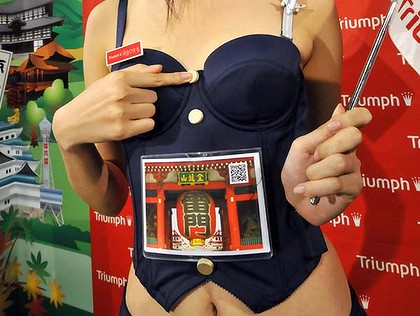
"Welcome to Japan": Electronic buttons running down the centre of the garment triggers audio greetings in English, Chinese and Korean. (AFP)
Courtesy of the Sydney Morning Herald.
As Japan hosts a Asia-Pacific summit this week, a women’s underwear maker on Wednesday unveiled a bra that is meant to lift spirits as well as bust lines and support the country’s tourism sector.
Triumph Japan showcased its bustier-style “Welcome to Japan! Bra” that it said was inspired by a tour guide’s uniform, features a display for images of sightseeing spots and can greet visitors in three languages.
A row of three electronic push buttons running down the centre of the garment triggers audio greetings in English, Chinese and Korean.
“Furthermore, tour guide flags are inserted on each side of the bra,” the company said. “When not used to guide tourists, the flags act as side stays, providing good support and creating an attractive bust line.”
Read the complete story (with video!!) here.

