




Justin’s Japan: Tribeca Film Festival Q&A with director David Gelb on ‘Jiro Dreams of Sushi’
 Film, Interview/Profile, Justin's Japan
  Comments Off on Justin’s Japan: Tribeca Film Festival Q&A with director David Gelb on ‘Jiro Dreams of Sushi’
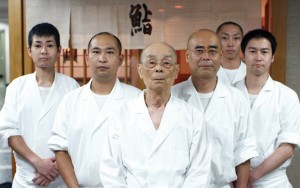
- Jiro Ono, center, with his dream team of sushi masters. (Fortissimo Films)

By JQ magazine editor Justin Tedaldi (CIR Kobe-shi, 2001-02) for Examiner.com. Visit his page here to subscribe for free alerts on newly published stories.
An indubitably delicious documentary, Jiro Dreams of Sushi follows 85-year-old master sushi chef Jiro Ono, owner of the esteemed ten-seat Sukiyabashi Jiro restaurant in Tokyo. From the ins and outs of the tuna auction to the proper way to massage an octopus, the film is a lushly photographed homage to the artisan sushi techniques that earned Jiro an elite three Michelin stars, one of just twenty-six restaurants in all of Japan to receive the honor last year.
This mouthwatering movie makes its New York bow Thursday (April 21) as part of the Tribeca Film Festival. In this exclusive interview, I caught up with director David Gelb to discuss his cinematic celebration of the art of sushi, along with its themes of family, tradition, and the value of hard work.
Tell us about your relationship and history with Japan.
When I was very young my parents took me to Japan on business trips. Even though I was only nine years old the third time I went, I already felt a tangible familiarity and affection to the food and the culture. The toys were definitely cooler. I was as fascinated by a history populated by samurai and warlords as much as the fiction with the giant robots and all that.
What else do you enjoy most about Japanese culture?
My favorite thing about the Japanese culture is the philosophy of specialization and mastery. There is a lot of value and respect for people that devote their lives to a single craft. You don’t see this as much in some Western countries.For example, in the USA, many local butchers have been driven out of business by supermarkets. Because of this, the sons of butchers are looking for other jobs to survive, and the skills they and their fathers have developed will be lost. In Japan, however, you’ll see more businesses dedicated to excellence before profits. Being a master butcher is a highly respected and potentially lucrative enterprise. Even in Japan, however, the consolidation of big business and globalization is a threat to craftsmen in small shops. According to many Japanese craftsmen that I interviewed, it has become harder to find young people that have the patience to learn a skill fully. In Japan, it takes years to become a master butcher.
What were your goals with this film? Did it turn out the way you originally anticipated, or did anything about it change during the production period?
Originally, this was going to be a much more general film that would feature many sushi chefs all over the world. In my mind it was the [celebrated BBC documentary] Planet Earth of sushi. I shot some short test segments, but then changed course and decided on a more human approach, making it just about Jiro and his family. Everything I wanted to convey about sushi was right here at Jiro’s restaurant.
How much time in all did you spend filming? Was it difficult to shoot in Japan and work around scheduling repeat visits to Tokyo?
I shot for the month of February in 2010, then returned to L.A. to work with my editor, Brandon Driscoll-Luttringer. After we spent a few months translating and reviewing the footage, we figured out what the story was about, and I returned to Japan to finish. I had some fantastic help on the ground in Tokyo—my translators Yukako Inoue and Shino Nakamura—to organize everything. Without them, it would have been extremely difficult.
What were Jiro and his family’s ground rules for making the film? Was there anything that you were forbidden from shooting?
The only rule was not to film the duo of incredibly hardworking and meticulous ladies that are in charge of cleaning and the cash register. It is a shame because one of the amazing things about Sukiyabashi Jiro is that it is probably the cleanest and most organized restaurant in the world. Literally not a spec of dust goes unchecked in the entire restaurant. The bottoms of the tables are just as clean as the tops. Women of that generation are particularly shy of cameras, and I was very careful to respect their wishes not to be filmed.
Read the rest of the interview here.
Justin’s Japan: Deep Purple Guitarist Steve Morse Weighs in on the Japan Catastrophe
Interview/Profile, Justin's Japan, Music Comments Off on Justin’s Japan: Deep Purple Guitarist Steve Morse Weighs in on the Japan Catastrophe

Steve Morse, far right, with his Deep Purple bandmates. (Ellenwood Artist Group)
By JQ magazine editor Justin Tedaldi (CIR Kobe-shi, 2001-02) for Examiner.com. Visit his page here to subscribe for free alerts on newly published stories.
Throughout its career, Deep Purple–who formed in England in 1968 and released their debut album that year–has sold over 100 million albums worldwide. Revered in Japan, their iconic rock hits include “Smoke on the Water,” “Highway Star,” and “Woman from Tokyo.” After a four-year hiatus from American shores, the band’s upcoming tour, called Deep Purple: The Songs That Built Rock, finds them returning with a symphony orchestra.
In this exclusive interview, I spoke with Steve Morse, the group’s guitarist since 1994, about the tour, and his thoughts on the cataclysmic events happening in Japan.
Regarding the recent catastrophe in Japan, is the band planning to do any special shows or benefits at this point?
No, we haven’t gotten anything that we’re privy to at the moment. I think the thing in Japan is, they sort of differ from a Third World country that just totally doesn’t know what to do. The people of Japan are so incredibly organized and capable, I don’t know how anybody can help them that isn’t right there. They need all kinds of support. The logistics of getting what they need to them is obviously the problem—it’s not being able to afford it, as far as what I’ve seen. And don’t forget that at this time I’ve got a limited view, because I’m working all the time [Morse was touring with the band in Eastern Europe during this interview], and I can’t just turn on the TV and get anything set to a certain very narrow international news station.
So from my point of view, it looks like they need more logistical support than moral support to raise more money for food or anything. I could be wrong, but it looks like they’ve got that part covered, and the government is willing to do whatever it takes to get the people back on their feet and working again. But they’re handling some really amazing problems right now, and one last thing that I get from that is how incredibly dignified they are in such a time of stress.
Of course Deep Purple has a long relationship with Japan and its people, making live albums recorded there something special long before bands like Cheap Trick came along. What’s it like when you go over there as a member of the group?
Deep Purple has very old acquaintances, like promoter Mr. Udo, and everybody knows people there, so it’s a friendly, familiar place. And like I said, it’s so organized and dignified, it’s just wonderful. It’s wonderful to see a guy driving a cab that’s spotless, with white gloves on, and that’s any cab you get into.
The trains, they come exactly on time, they leave exactly on time, and they go really fast. So a lot of times we just ride the trains, because it’s the best way to go. And when you’ve got mass transit that’s that organized, even in an earthquake zone, it’s still the way to go. It beats traffic, you know? And whenever we get mass transit that’s that organized and that cool and that fast and that reliable, I think then America could really cut down on one person per Suburban, you know? (Laughs.)
Is there any place that you haven’t played yet that you’re looking forward to?
Oh, yeah. I’d like to see—and this is not a joke—Antarctica. Because I’m fascinated with technology and how people cope with things. Since I’m a member of Deep Purple, and have played outside in the snow on top of a mountain, in a desert (laughs) and in a monsoon in Korea, I think, outside, getting drenched, it seems like if we can play anywhere, we might as well go to the most extreme gig possible, and that would be Antarctica. Maybe even the North Pole, I don’t know. But there’s some parts of Africa that we haven’t been to, and that would be interesting, especially if they were able to accommodate all the power and logistics for the band. The adventure never stops.
Read the rest of the interview here.
Justin’s Japan: New York’s Blue Note Benefit for Japan concerts to stage two-night support stand
Article/Journalism, Justin's Japan, Music Comments Off on Justin’s Japan: New York’s Blue Note Benefit for Japan concerts to stage two-night support stand
- The Blue Note Jazz Benefit for Japan concerts will be held at New York’s Highline Ballroom April 18-19. (Blue Note New York)

By JQ magazine’s Justin Tedaldi (CIR Kobe-shi, 2001-02) for Examiner.com. Visit his page here to subscribe for free alerts on newly published stories.
Japan has always been there for jazz. Now, jazz is giving back.
The Blue Note New York will host a harmonious benefit at Manhattan’s Highline Ballroom for two consecutive nights beginning Monday (April 18), with all of the ticket proceeds to be donated to the Japan Relief and Recovery Fund spearheaded by Direct Relief.
The event is being organized by talent buyer Seiko Kinoshita, who has worked at Blue Note New York since 1996. “As the details of the disaster unfolded, I felt sad and frustrated that I couldn’t do much to help, being so far away from my home country,” said the Fukuoka native. “Having worked in the jazz industry for most of my adult life, I decided to organize a benefit concert and was very encouraged by the willingness of the artists, as well as their agents and managers, to support the event. I believe that every little bit helps, and I want the Japanese people to know that New Yorkers and the jazz community care deeply about them and their country and want to do what they can to help.”
For the last 23 years, Blue Note has maintained clubs in multiple Japanese cities, with current establishments in Tokyo and Nagoya. Ron Carter, the distinguished jazz bassist who will be among the all-star musicians at Highline on April 19, wrote of his concerns and appreciation for the Japanese people: “We share the grief of the enormous loss of life and displacement of the Japanese people. I will pray for Japan’s fast recovery and will do everything in my power to help. The Japanese jazz fan is the most important supporter of my music, and I am always grateful for the years Japan has stood by my side.”
Click here for the complete story.
Justin’s Japan: One month after the Tohoku Earthquake, New York offers more Japan benefit events
Article/Journalism, Events, Justin's Japan Comments Off on Justin’s Japan: One month after the Tohoku Earthquake, New York offers more Japan benefit events

Catch the Rock 4 Japan benefit concert at Brooklyn Bowl on April 12. (Cathyland & Packrat Planet)
By JQ magazine’s Justin Tedaldi (CIR Kobe-shi, 2001-02) for Examiner.com. Visit his page here to subscribe for free alerts on newly published stories.
The massive aftershocks reported in Japan earlier today symbolized the island nation’s continued appreciation of support from around the world one month after the Tohoku Earthquake. Here are some of this week’s benefit and lecture events in New York.
Monday, April 11, 2:00 p.m.-9:00 p.m.
Japan Earthquake and Nuclear Crisis Relief Exhibition
Featuring artist talk “Dialogue with Mariko Mori and Ingo Günther” moderated by Reiko Tomii and live performances
Gallery 61, New York Institute of Technology, 16 West 61st Street. 11th floor
Donations welcome
Just one month ago, the 2011 Tohoku earthquake and tsunami and aftermath rocked the nation of Japan. The death toll is still climbing, with over 10,000 people who lost their lives, and almost 20,000 people reported missing. Over 300,000 people lost their homes and are now living without adequate food and water. Millions of people are living with anxiety and fear of being exposed to the dangers of raising radioactive levels. And their struggles are far from over.
We Are One features artwork donated by Japanese artists living in New York to support the people in Japan. Their mission is to raise money to help with the relief efforts of the Japan earthquake and nuclear crisis, spread awareness of what has happened, and what we can do among the international community. On display are donations from approximately 100 professional Japanese artists living in New York in painting, drawing, mixed media, prints, and photography. All donated artwork will be sold at a reasonable price of $100-$200. All proceeds will go to Japan Society’s “Japan Earthquake Relief Fund.”
Tuesday, April 12, 7:00 p.m.-9:00 p.m.
iNFiNiTY cooperation cross-cultural mass choir performance
Lt. Joseph P. Kennedy Center, Lower Auditorium
34 West 134th Street(Between Lenox and Fifth Avenues)
Donations welcome
“Don’t Give Up” is a song written by the American gospel composer Danny Eason. It was recorded by Eason in Japan in 2010 with Japanese blind artist Kohshi with the Japanese choir Gospel Now Japan. For this special charity rehearsal event managed by NY Hallelujah Company LLC, you can join the choir for Japan and sing with the group, raising your voice for Japan and encouraging its people. All voices and all musicians are welcome, prior to an upcoming performance in May with Eason.
According to the Japanese Red Cross, over $223,000,000 in donations were received in just one week from Japan’s friends overseas and from corporations. Over 20,000 people have been rescued by the Japanese Ministry of Defense and they are trying to save even more lives. Over 10,000 lives have been lost, but the number of victims will continue to rise with an additional 18,000 people unaccounted for, and 240,000 people have been forced to leave their homes to stay in temporary shelters. To participate, contact project leader Ms. Kyoko Uchiki at NYHCLLC[at]gmail.com or (212) 996-4302. For additional information, visit www.myspace.com/dont-give-up.
Tuesday, April 12, 8:00 p.m.-12:00 a.m.
Featuring The Orion Experience
Brooklyn Bowl
61 Wythe Ave.(between N 11th & N 12th Streets)
$10 suggested donation, 18+ only.
The critics are raving about The Orion Experience’s upcoming EP NYC Girl. USA Today says it “recalls ’70s-era Electric Light Orchestra,” while Time Out New York exclaims “The Orion Experience…impresses with its buoyant, hooky tunes, making awesome use of a coed tag-team vocal approach on a new EP.” The band also recently released their song “Nippon Ga Dai Suki (Japan We Love You)” for the first time in the U.S., with all proceeds from purchases via CDBaby and iTunes going to The Jewish Federations of North America’s Japan Relief Fund.
For a complete listing, click here.
Justin’s Japan: In New York This Week, JET Fundraisers, Networkings, Sake, Arts, Monster Wrestling
Article/Journalism, Earthquake Tsunami, Justin's Japan Comments Off on Justin’s Japan: In New York This Week, JET Fundraisers, Networkings, Sake, Arts, Monster Wrestling

By JQ magazine’s Justin Tedaldi (CIR Kobe-shi, 2001-02) for Examiner.com. Visit his page here to subscribe for free alerts on newly published stories.
Only in New York. As the JapanNYC festival’s slated performances wrap up this week, here’s a rundown of more Nippon-flavored events of note:
Tuesday, April 5, 6:30 p.m.-9:30 p.m.
Slate – 54 West 21st Street (between 5th and 6th Avenues)
$25 donation for entry, plus two raffle tickets. Additional tickets can be purchased both in advance and during the event.
The JET Alumni Association of New York, in partnership with NY de Volunteer, will be holding a fundraiser to benefit Japan. The night will include great drink specials, entertainment, and wonderful raffle prizes. Over 30 generous JET Alumni and local businesses have donated goods and services to the cause, such as cooking classes, bottles of sake, private dance lessons, handmade jewelry, and more!
All proceeds from this event will go to the JETAA USA Japan Earthquake Relief Fund. During the event, volunteers will be collecting messages for Send Hope to Japan from the World to further express solidarity during this difficult time. This open event will have a great crowd of JET alumni, members of the local Japanese community, and many other New Yorkers wanting to show their support. All are welcome to attend.
Tuesday, April 5, 7:00 p.m.-10:00 p.m.
Solas – 232 East 9th Street (between 2nd and 3rd Avenues)
Free with RSVP to events@hillslearning.com. $5 suggested donation at door.
Spring is here, and what better way to bring in the new season than to celebrate and network! Hills Learning and Two Rivers Associates will provide a raffle, snacks, and, of course, multiple opportunities to build your network. Come enjoy the fresh smells and sights of spring and build up your contacts in the season of new opportunities. The Solas bar will of course provide an extended happy hour for guests, and an exclusive second floor private bar service.
Saturday, April 9, 11:00 a.m.-11:00 p.m.
Concert for Japan
Japan Society
333 E. 47th Street (between 1st and 2nd Avenues)
Tickets: $5/$100 for gala block for certain acts
Japan Society‘s is raising the roof (and funds to help Japan) with this ambitious 12-hour concert extravaganza, from which 100% of the proceeds will go to the Japan Society’s Japan Earthquake Relief Fund. John Zorn organized the GALA BLOCKS, which include Philip Glass and Hal Willner, Lou Reed, Laurie Anderson, Ryuichi Sakamoto, and Bill Laswell with gigi band. New York-based Japanese bands Echostream, Hard Nips, and Me and Mars will also perform. Shakuhachi Grand Master James Nyoraku Schlefer assembled a group of traditional Japanese artists such as koto player Masayo Ishigure and gagaku flute player Sadahiro Kakitani. In addition to these musical delights, there will be special activities, from learning basic Japanese phrases to origami crane folding to learning the basics of shodo calligraphy.
Saturday, April 9, 7:00 p.m.
Kaiju Big Battel – “When Danger Comes to Town”
B.B. King Blues Club & Grill
237 West 42nd Street (between 7th and 8th Avenues)
Tickets: $15.00 advance general admission/$18.00 day of show
In perhaps the ultimate American nod to Godzilla and Ultraman-styled smackdowns, Kaiju Big Battel is live wrestling of epic proportions. Planet Earth is under threat: scattered throughout the galaxy is a monstrous mob of maniacal villains, menacing alien beasts, and giant, city-crushing monsters that are waging war against one another. Currently, the Kaiju Universe maintains an active roster of approximately 30 monsters, including a blue alien-glutton named Sky Deviler, a factory-worker-turned-soup-can called Kung-Fu Chicken Noodle, and a despicable, square-headed mad scientist known as Dr. Cube. After a rapturous reception at Brooklyn’s Warsaw last October, Kaiju is taking Manhattan with no holds barred.
Click here for the rest of this week’s events.
Justin’s Japan: Earthquake and Tsunami Update ~ JET Alumni Aid and What You Can Do
Article/Journalism, Earthquake Tsunami, JETAA Chapters, Justin's Japan Comments Off on Justin’s Japan: Earthquake and Tsunami Update ~ JET Alumni Aid and What You Can Do

People take shelter as a ceiling collapses in a bookstore during an earthquake in Sendai, northeastern Japan March 11, 2011. (Reuters/Kyodo)
By JQ magazine’s Justin Tedaldi (CIR Kobe-shi, 2001-02) for Examiner.com. Visit his page here to subscribe for free alerts on newly published stories.
Friday’s Sendai Earthquake and Tsunami has devastated Japan, with Prime Minister Naoto Kan calling it the most difficult crisis for the nation since World War II. At this time, the death toll is expected to exceed 10,000, and the country’s workers are racing to prevent a nuclear crisis in the wake of aftershocks.
Helping those affected are participants of Japan’s international education exchange initiative the JET Program, along with its alumni association here in New York (of which this reporter is a member). Another member, Brooklyn resident Steven Horowitz, serves on JETAA New York’s board of directors and is the founder of JetWit.com, a global JET alumni resource site now featuring a significant stream of relief and support efforts updates via its 55,000 members worldwide.
“My goal is to make information available to people that might not be able to find it elsewhere, or in English,” said Horowitz, who worked on JET as English teacher in Aichi Prefecture in the 1990s. “JETs are ideal conduits for information, because so many JETs and JET alums are great at absorbing Japanese information and putting it out there in English through social media and other ways.”
While no integrated system has been set up at this time to accept donations in Japan, Horowitz has been sharing ways people can help, whether they’ve lived in Japan before or just have a desire to help.
“Since JetWit is a central communication platform for the JET alumni community, I’m trying to gather and disseminate as much information as possible,” Horowitz explained. “I’m doing my best to support the efforts of the Japanese government and disseminate the information to people who might need it.”
Click here for a listing of donation resources.
JQ Magazine: JQ&A with Yumi Tanaka of the New York Peace Film Festival
Article/Journalism, Film, JQ Magazine Comments Off on JQ Magazine: JQ&A with Yumi Tanaka of the New York Peace Film Festival

See ‘A Thousand Cranes’ at the New York Peace Film Festival March 12-13. (Daiei Motion Picture Co.)
By JQ magazine editor Justin Tedaldi (CIR Kobe-shi, 2001-02). For more Japanese culture, visit his Examiner.com page here.
Manhattan’s Upper East Side kicks off the weekend with the 4th Annual New York Peace Film Festival, which promotes a deeper understanding of international relations from films and presentations worldwide. Saturday focuses on the devastation of the atomic bomb, beginning with the 1958 Japanese film A Thousand Cranes, the story of young Hiroshima bomb victim Sadako Sasaki. JQ caught up with Yumi Tanaka, the festival’s co-founder and executive producer, for this exclusive interview.
Tell us a little about yourself.
I was born and raised in Japan and came to the States to attend college. Upon graduation, I landed a job and remained in the country. When I moved to NYC for a job, I also started taking an acting class. I thought it will help me at business meetings when I have to do a presentation. I loved theater since I was a child. My first experience was with the Takarazuka Revue at the age of three with my father. I studied theater, as literature helped me taking these acting classes, and I was recommended to do a stand-up comedy workshop then. That’s how I started doing stand-up comedy while holding a real job. Then, I pursued the entertainment industry. I took serious acting classes from a teacher who had taught many famous comedians like Ray Romano, and the list goes on.
It was 9/11 that changed my life. I wanted to do something more meaningful instead of being onstage at smelly comedy club to make drunks laugh. In 2005, I met a Hiroshima survivor visiting New York for an NPT [Nuclear Non-Proliferation Treaty] conference. He told me his life story; how he was hiding as a hibakusha [atomic bomb survivor] for a long time. Then, he said, “Hibakusha are getting older. If we all die, the, there’s no people who carry on to tell our stories.” That was the moment. I thought I could use my knowledge and experiences with theater to tell their story.
In 2006, I met Jonathan Fluck, who used to run children’s theater for over 20 years. He had just produced a poetry performance of Hiroshima and Nagasaki. A mutual friend introduced us. Although Jonathan had never been to both cities, his passion towards nuclear abolition was in sync. So we started the New York Peace Film Festival in 2007, and we’ve held one every year except 2009 due to the bad economy.
Justin’s Japan: Q&A with Paul Gilbert of Mr. Big
Uncategorized Comments Off on Justin’s Japan: Q&A with Paul Gilbert of Mr. Big

Paul Gilbert of Mr. Big. (William Hames)
By JQ magazine’s Justin Tedaldi (CIR Kobe-shi, 2001-02) for Examiner.com. Visit his page here to subscribe for free alerts on newly published stories.
A founding member of the platinum-selling Los Angeles-based rock group Mr. Big, guitarist extraordinaire Paul Gilbert joined the group in 1988, and then departed a decade later to focus on a pop-tinged solo career. Best known for its hit ballad “To Be with You”—which went to number one in 15 countries including the U.S. in 1992—Mr. Big broke up in 2002, reforming the original lineup seven years later for a massive tour of Asia and Europe.
Last month, the band released What If…, the first album in 15 years from the reunited rockers, which instantly went gold in Japan upon release. To celebrate, Mr. Big are kicking off their new world tour at the House of Blues Sunset Strip on April 2, the original lineup’s first American gig since the mid-’90s. In this exclusive interview, I caught up with Gilbert about the new disc, his time away from Mr. Big, and his rich history with Japan.
What does the title of the new album refer to?
“What If…” is the beginning of any idea. Anything that you want, anything great…all starts with an idea. “What If…” Mr. Big got back together, and recorded a new album? This is it!
What are your own personal goals when writing a song?
I’m sort of a chord person. I’m happy if the song has a cool key change or some interesting chords that you might not expect. And of course, it should have a good melody to match. Also, with Mr. Big it’s impossible not to take advantage of the crazy stuff that Billy [Sheehan, bassist] and I can do together.
You’ve always had a strong bond with your fans in Japan. How did Japan come into your life growing up, and was your first time there like?
Growing up? Godzilla movies and Speed Racer! Actually, the first electric guitar I ever played was my uncle Jimi [Kidd]’s Ibanez Destroyer. I didn’t know that Ibanez was a Japanese guitar company, but I’ve certainly had a great time working with them since I started endorsing their guitars in the ’80s. The first time I went [to Japan] was in ’89 for a Mr. Big tour. Every tour we did just got bigger and bigger—we ended up doing three sold out nights at the Budokan. That’s crazy; I still can’t believe it.
What are some of your favorite memories from your time in Japan?
I actually tried to learn to speak Japanese, so I’ve rented apartments there for a few months at a time. It really felt like an adventure to live in a foreign country and to get by without speaking English. I remember being happy just riding the trains around and exploring Tokyo.
Years ago on your website you entertainingly chronicled your efforts to study the Japanese language through your own doodles. Do you still keep up with your studies?
I’ve pretty much given up on my Japanese. If my hearing was better, I might keep at it, but I can barely hear English at this point, and it’s really difficult to learn a new language without being able to hear the details. Plus, if I put that time into playing my guitar, I get some good results.
Why do you think Mr. Big caught on with the Japanese so well?
That’s a difficult question because we’re talking about “groups” of people. It’s complicated enough to understand individual people…Am I avoiding the question? Probably. I’m really thankful for my success anywhere, but I’m just not that interested in it. I’d much rather think about notes, and chords, and rhythms, and singing, and playing, and what pedals I’m going to put on my pedalboard for the upcoming tour.
You’ve made lots of highly amusing appearances on Japanese TV over the years. What were some of your favorite moments?
I had fun jamming with a band called “Sex Machineguns.” It just makes me happy there is a band called “Sex Machineguns”; what a fantastic name that is. There was a show where a famous Japanese female singer had to play a game where she picked her “type” of guy from among all the guys on the show…and she picked me. I was about 20 years older than everyone else on the show, so I didn’t think I had a chance. That cheered me up.
Click here for the complete interview.
Justin’s Japan: NYC Hosts March Anime, Yakuza Film Fests
Article/Journalism, Film, Justin's Japan Comments Off on Justin’s Japan: NYC Hosts March Anime, Yakuza Film Fests

'Welcome to the Spaceshow,' an animated entry for this year's New York International Children's Film Festival. (Aniplex)
By JQ magazine’s Justin Tedaldi (CIR Kobe-shi, 2001-02) for Examiner.com. Visit his page here to subscribe for free alerts on newly published stories.
Anime sci-fi and a Studio Ghibli-inspired effort from China are the Eastern animation highlights at this year’s New York International Children’s Festival, running March 4 to 27 in Manhattan. The acclaimed festival received national attention two years ago when it hosted the premiere of The Secret of Kells, a European fantasy film that was later nominated for an Academy Award for Best Animated Feature.
North America’s largest film festival for children and teens, NYICFF offers an eye-opening selection of the best new animated and live action film from around the world for ages 3 to 18, with gala premieres, filmmaker Q&As, filmmaking workshops, pre-screening giveaways, audience voting, and the NYICFF Awards Ceremony. Its jury this year includes Uma Thurman, Matthew Modine, Susan Sarandon, Gus Van Sant, James Schamus, Christine Vachon, Michel Ocelot, and John Turturro.
From March 9-19, New York’s Japan Society simmers nearly 50 years of yakuza (Japanese mafia) movies—a mainstay of Japanese cinema—in the Globus Film Series Hardest Men in Town: Yakuza Chronicles of Sin, Sex & Violence, featuring 15 of the genre’s sharpest selections.
In addition to acclaimed classics by directors Hideo Gosha (The Wolves) and Kinji Fukasaku (Cops vs. Thugs, Battles Without Honor and Humanity), the series includes lesser known titles and overlooked treasures by Seijun Suzuki (Youth of the Beast), Takashi Miike (Dead or Alive), Rokuro Mochizuki (A Yakuza In Love, Onibi: The Fire Within), and Academy Award winner Sydney Pollack (The Yakuza), as well as contemporary incarnations of the genre such as Takeshi Kitano’s Outrage. Among eight premieres, four will receive their first screening outside of Japan.
The fest ignites Wednesday (March 9) with a special introduction and live Q&A by celebrated filmmaker Paul Schrader for The Yakuza, Sydney Pollack’s overlooked 1970s gem starring Robert Mitchum and Ken Takakura. The film was Schrader’s debut as a screenwriter (in collaboration with his brother Leonard and Chinatown scribe Robert Towne), and he would go on to pen the scripts for Martin Scorsese’s Taxi Driver and Raging Bull and direct such diverse works as American Gigolo and Mishima, among others. Few films show more deference and respect to Japanese film culture than The Yakuza, which has been lauded as the most original introduction to its eponymous genre.
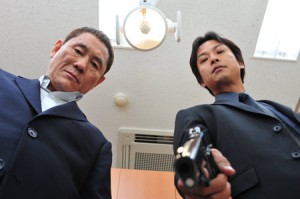
- ‘Outrage,’ a new crime drama by Takeshi Kitano, left, premieres as part of Japan Society’s Hardest Men in Town film festival, March 9-19. (‘Outrage’ Production Committee )

Justin’s Japan (or America): Oscar Winner + Film Director Q&As
Article/Journalism, Film, Justin's Japan Comments Off on Justin’s Japan (or America): Oscar Winner + Film Director Q&As

Academy Award-winning songwriter Randy Newman. (Pamela Springsteen)
JetWit is proud to announce that JQ magazine’s Justin Tedaldi (CIR Kobe-shi, 2001-02) is now the official Music Q&A and Perfoming Arts Q&A reporter for Examiner.com‘s national page! Kicking off his new channels are exclusive interviews with Academy Award-winning songwriter Randy Newman and filmmaker Kevin Smith.
Visit Justin’s site here to subscribe for free alerts on newly published stories.

Writer/actor/director Kevin Smith. (Mark Mainz/Getty Images)
Justin’s Japan: Q&A with Billy Sheehan of Mr. Big
Article/Journalism, Justin's Japan, Music Comments Off on Justin’s Japan: Q&A with Billy Sheehan of Mr. Big
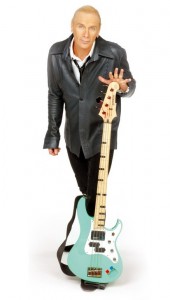
- Billy Sheehan of platinum-selling rock group Mr. Big. (William Hames)

By JQ magazine’s Justin Tedaldi (CIR Kobe-shi, 2001-02) for Examiner.com. Visit his page here to subscribe for free alerts on newly published stories.
Considered by many to be the Eddie Van Halen of bass, Billy Sheehan launched his recording career in the late ’70s with the Buffalo-based rock trio Talas, then joined original Van Halen frontman David Lee Roth’s band in the mid-’80s for two platinum-selling albums. After parting with Diamond Dave, Sheehan formed Mr. Big in 1988. Best known for its hit ballad “To Be with You”—which went to number one in 15 countries including the U.S. in 1992—Mr. Big called it quits a decade later, but in 2009 the original lineup reformed for a massive tour of Asia and Europe.
In February, the band released What If…, the first album in 15 years from the reunited rockers, which instantly went gold in Japan upon release. I spoke with Billy about the new album, his long relationship with Japan, and Mr. Big’s future touring plans.
What are some of your favorite “culture shock” memories from Japan?
Let’s see. Well, I toured with a Japanese band called B’z [in 2002], and they’re a huge band. One of their singles released that I played on [1999’s “Giri Giri Chop,” with Pat Torpey] sold, I think, three or four million units in a day; they’ve sold more records in Japan than Madonna has sold. Amazing statistics; wonderful bunch of guys, too. But we’ve played in little, tiny places where very few Western bands have ever performed. We did a thing on this little island where at the hotel there weren’t even Western numbers on the doors, so I had to remember the character of the kanji on the door to try to remember which door was mine, and that was an interesting moment for me.
It must have been a thrilling experience to go on tour with them.
We played all over. In Mr. Big, that’s one thing we’ve done, as well. Most bands [play] Tokyo, Osaka, Nagoya, and that’s it. But we’ve done Sendai, Kagoshima, Niigata, Sapporo, Fukuoka; all kinds of little places, a lot of places where many bands don’t get to. In Sendai, the first time we played there, we found out that they were having a petition to have Mr. Big play there. It had 30,000 signatures on it, and the place we were playing could only hold about 5,000 people, so we asked, what happened to the other 25,000 people that signed the thing? It was pretty fun; a sweet, sweet beautiful little city, great spot. We were very lucky to see a side of Japan that not a lot of Westerners see. It’s a very inspirational experience.
In your opinion, how do you think Japan has changed from the time you first went there up until now?
I know the economy’s been in trouble for a while, so now we’re starting to see things like discount stores and prices that aren’t set anymore; that’s a new thing for them, to go into a store and not pay absolute full retail for something, which they did for a long, long time. Now, they’re actually looking for bargains. That’s an interesting cultural change that not a lot of Japanese folks are used to. Also, the idea that once you work for a company, you are there for a lifetime of work; it’s not as secure anymore. So, I do believe there is a little bit of concern and worry amongst the average folks now that things are changing, and it’s sad to see. It’ll be interesting to see how things play out in the end.
When you played the Mr. Big reunion shows in Japan in 2009, did you notice any shift in the people who were coming to the shows?
We were very, very surprised at how many young kids were in the audience. We had a few gray heads of hair out there, too, of course, but there was amazingly a very large amount of very young kids, because I guess like any band, when you’re fortunate enough to get to some plateau of success, things start to kind of become timeless, as with this whole Beatles fans thing—I’m not comparing ourselves to them, of course, but same principle. So, we’re pleasantly surprised to see a lot of very young people whose parents probably turned them on to it, or their older brothers or sisters. So, that was a great thing.
You’re spanning generations now over there.
Yeah, I think there’s probably three generations easily being represented in the audience. We’re so thankful.
You’ve been known to get extra work and gigs in Japan over the years, like the B’z tour, Hard Rock Cafe radio spots, bass clinics, and other appearances. Do these usually come to you by reputation, or do you have to actively campaign for them?
Generally, they come to me, which I’m humbled by. It’s awful nice of them to consider me for their endorsement things and what have you. Fortunately, the press in Japan is thorough and omnipresent, so we really get a lot of coverage, and if we get fortunate enough to have a reputation that precedes us, that’s pretty cool. And it’s been an incredibly lucrative thing, to be frank—we’ve made a lot of money from Japan. And when we played there, we realized that. So, we played, and I came off the stage and practically collapsed from exhaustion a couple of times, because we push hard in our appreciation for what we have now as a result of the fans there. We don’t forget it for a minute. That’s pretty awesome.
Click here for the complete interview.
Justin’s Japan: Q&A with Yuki Chikudate of Asobi Seksu
Article/Journalism, Interview/Profile, Justin's Japan Comments Off on Justin’s Japan: Q&A with Yuki Chikudate of Asobi Seksu

Asobi Seksu singer/keyboardist Yuki Chikudate. (Polyvinyl Record Co.)
By
JQ magazine’s Justin Tedaldi (CIR Kobe-shi, 2001-02) for Examiner.com. Visit his pages here to subscribe for free alerts on newly published stories.
Formed in New York City in 2001, the band Asobi Seksu and its core members Yuki Chikudate (vocals, keyboards) and James Hanna (guitar) cut their teeth in the indie shoegaze and dream pop scene as it graduated from a dense, textured guitar-based sound to a more abstract, atmospheric approach.
Fluorescence, the band’s fourth and latest studio album, hits stores today (Feb. 15). I caught up with Chikudate prior to the band’s sold out show at New York’s Mercury Lounge later this week for this exclusive interview.
What kind of goals did you and James have recording Fluorescence?
We knew that we were interested in making an album that better captured what we sound like live. We wanted it to be colorful.
How did you approach the recording compared to your other albums?
The approach was to let go and have fun. I think we felt a lot more relaxed this time—it was summer.
Do you have any other special plans for promoting the album in addition to touring?
Hoping to play some festivals this year—outdoor shows are the best!
I read that you grew up in Southern California and attended a school for children of Japanese expatriates who planned to return home after several years abroad. Was this your first brush with Japanese culture outside the home, and how do you think the experience influenced your view of Japan or the way this aspect of its society operates?
I was born in Japan, so no, it wasn’t my first experience with Japanese culture outside my home. My view of Japan was that all my family was there. Sometimes I wished that it wasn’t so far away. As a kid, the strict disciplinary nature of Japanese school sucked!
Click here for the rest of the interview.
Justin’s Japan: Tak Matsumoto of B’z wins first Grammy
Article/Journalism, Justin's Japan, Music Comments Off on Justin’s Japan: Tak Matsumoto of B’z wins first Grammy
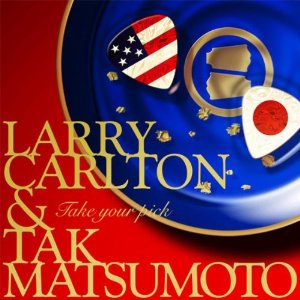
'Take Your Pick' was named Best Pop Instrumental Album last night at the 2011 Grammys. (335 Records/Vermillion Records)
By JQ magazine’s Justin Tedaldi (CIR Kobe-shi, 2001-02) for Examiner.com. Visit his NY Japanese Culture page here to subscribe for free alerts on newly published stories.
While Justin Bieber came up empty, Takahiro Matsumoto of the J-rock band B’z won big at the 53rd annual Grammy Awards in Los Angeles last night (Feb. 13).
The famed 49-year-old guitarist, commonly known Tak Matsumoto, netted his very first Grammy gold (Best Pop Instrumental Album) for Take Your Pick, a collaboration with the equally legendary American guitarist Larry Carlton.
Carlton, whose licks Matsumoto admitted to copying as a teenager, has been recording since the 1960s and has played on over 100 gold and platinum records, including discs by Steely Dan, Michael Jackson and Billy Joel. Take Your Pick, which contains original compositions by the duo supported by American session players, was released last June and goosed by a two-month Japanese tour by the axe slingers.
“I had never told anyone until now, but the Grammys was one of my dreams and a big goal,” Matsumoto said yesterday after winning the award. This was Carlton’s fourth win and 19th nomination overall.
Click here for the rest of the story.
Justin’s Japan: Interview with stylist Haruo Noro on NYC’s Lunar New Year Celebration
Article/Journalism, Events, Justin's Japan Comments Off on Justin’s Japan: Interview with stylist Haruo Noro on NYC’s Lunar New Year Celebration

Haruo Noro brings his unique stylings to NYC's Lunar New Year Celebration Saturday, Feb. 5. (Courtesy of Julia Dubrovich)
By JQ magazine’s Justin Tedaldi (CIR Kobe-shi, 2001-02) for Examiner.com. Visit his NY Japanese Culture page here to subscribe for free alerts on newly published stories.
Haruo Noro came to the U.S. to open his own salon after finding success as a stylist in Japan and London. Last year, he worked with the networking site AsianInNY on their “Lucullen” Lunar New Year Fashion Show for designer Joyce Huang. Today (Feb. 3) marks the beginning of the Lunar New Year, and to ring in the Year of the Rabbit AsianInNY has teamed up with the Greater Chinatown Community Association to present their Lunar New Year Celebration this Saturday in Manhattan. I caught up with Noro, who is again working with his stylists and make-up artists for this distinguished cultural event.
Please tell us about your journey to New York from Japan.
I was born and raised in Aomori, Japan, within a family of stylists. My initial training, cutting technique, discipline and inspiration was born here as well. As my experience grew, so did my thirst for new adventures. I wanted to see the world of fashion and beauty. I wanted to expand my knowledge and creativity.
The salon sponsored me to continue my education in London at the Vidal Sassoon Academy, which is where I first experienced a full variety of hair types and textures. London opened my mind through its culture and fashion, giving me the confidence with my skills and the possibilities in the styling industry.
I have been lucky to have had an offer as an assistant to a top stylist in New York City, Oscar Blandi, through which my learning experience continued. I fully blossomed into a complete stylist during my time there. I continued on to Rita Hazan and then my path became clear. I opened my very own salon, which is in the vision as I have always imagined. Fashion, beauty, diversity and creativity here is endless.
How did you first get involved with AsianInNY? What events have you worked on with them before and what was the reaction from the public?
I first got involved with AsianInNY in 2010. When I heard about this opportunity, I was very excited to be part of the Lucullen Fashion Show at the Lunar New Year Celebration. I was especially enthusiastic about having the support of the Asian community in New York, which I am a part of. The designer loved our work, a sophisticated braided bun, which complimented the garments and added a stylish flair. We have received many positive reviews and are happy to be back this year as a sponsor for AsianInNY’s biggest Lunar New Year Celebration in New York City, this time doing both hair and make-up for two designers, as well as singers participating in the show.
What kind of styling are you doing for the upcoming Lunar New Year Celebration and who are you working with?
We will be styling for two designers Way Zen and Janet Zheng. I will be working with my salon team. Haruo Noro Salon will be doing both hair and make-up. The hair for Way Zan collection will be simple yet romantic, loose updos. The hair for Janet Zheng menswear will be natural yet edgy. The make-up lead artist Wenya Chang describes the look as a beautiful look that simply emphasizes the natural beauty of the woman. Light shimmery brown on the eyes, with a rosy flush on the cheeks and a glossy natural lip color. Most importantly, a sexy, dewy complexion.
How would you describe your own style in determining the perfect cut? Did you find yourself adapting your creativity in order to match the image of the Lunar New Year Celebration?
I am always inspired by the artistry in the designs and intuitively create what I see as a companion piece of art. I strive to create a masterpiece each and every time.
Click here for the complete interview.
 Info courtesy of Diana Lee, President of AsianInNY.com. Diana is handling performances for the 32nd Asian/Pacific American Heritage Festival in New York.
The Asian/Pacific American Heritage Festival is a free, day-long celebration of Asian/Pacific Americans. On May 8th, 2011, from noon-6pm, performing groups from the New York tri-state area will take the stage in front of an audience of over 8,000 in Union Square, Manhattan.
We are currently seeking submissions for:
- Performances from artists and companies working in music and/or dance including folk, traditional, and contemporary expressions.
- Must be appropriate for a family oriented 20-30 minutes performance on an outdoor stage.
The event has a history of high media coverage featured in the New York Times, Newsday, the Village Voice, Time Out magazine, NY1 News, and many ethnic papers.
We will have a merchandizing table for performers who participate in this festival to sell their items or place their promotional materials (flyers/posters).
To submit registration or auditions for performances, please visit our registration site at: http://bit.ly/etkYAP
Deadlines:
Performances Submissions: Friday, February 18, 2011
For more information regarding the festival: www.capaonline.org
If you have any questions, please don’t hesitate to contact me here or at info [at] ASIANinNY.com.
Thank you,
Diana Lee
VP of Performance of APA Heritage Festival
