




WIT Life #97: Anko obsessed
 Anecdote Article, Food & Drink, Translating/Interpreting, Uncategorized, WIT Life
  Comments Off on WIT Life #97: Anko obsessed
WITLife is a periodic series written by professional Writer/Interpreter/Translator Stacy Smith (Kumamoto-ken CIR, 2000-03). She starts her day by watching Fujisankei’s newscast in Japanese, and here she shares some of the interesting tidbits and trends together with her own observations.
For those of you who have been faithful readers of my blog, you probably have a sense of the sweet tooth that I have, especially regarding 和菓子(wagashi). This is something known well by those closest to me, as well as those looking for the fastest way into my heart :) My birthday was this past weekend, and my friends came through with flying colors in terms of satisfying my cravings for something sweet.
I celebrated my birthday with dinner at Koiso, the best Japanese restaurant in NY (and I’m not saying that just because I used to waitress there!). It is a truly authentic family-run joint where regulars dominate the clientele, and there are always multiple conversations taking place in Japanese. Taisho (the sushi chef), gets his supplies from the Freeport Fish Market, and he always lets customers know what fish are the freshest that day. Omakase (leaving it in the hands of the master) is definitely the way to go for the best sushi/sashimi!
Taisho’s wife Kyoko-san is the waitress and all-around life of Koiso, and the warmest woman you will ever want to meet. For my birthday, she had all of my favorites prepared. As you can see in the picture on the right resembling an anko trifecta, she made me a generous portion of Read More
Japan America Society Roundup 5.30.10
Japan Society Round-up Comments Off on Japan America Society Roundup 5.30.10
Current Hiroshima-ken JET Gail Cetnar Meadows, Editor of Hiroshima JET webzine the Wide Island View, shines a light on some of the upcoming events of Japan America Societies…
 Piano concert performances — JSNC members are invited to attend the Kurosawa Piano Music Foundation’s two upcoming concert performances. The foundation has organized a piano ensemble festival designed to promote U.S.-Japan cultural exchange through music. The festival’s mission is to provide a “trading post” where musicians exchange music from both countries and promote friendship and mutual understanding through musical performances.
- Date: Monday and Tuesday, June 21 and 22
- Time: For a complete listing of performances, see the KPMF website.
- Place: Tateuchi Hall at Finn Center Community School of Music and Arts (CSMA), 230 San Antonio Circle, Mountain View, California
- For more information, click here.
- Technology Showcase of Hiroshima University and Western Japan’s Innovative Academia — JETRO New York invites Japan Society members to this free half-day event featuring a selection of biomedical technologies with commercial potential developed by scientists at Hiroshima University and other innovative academic institutions in Western Japan. This will be the first time these institutions come to the U.S. to present innovative technologies originating in their laboratories. The universities will explain these new technologies through presentations and poster sessions. Following the event, there will be an opportunity to network with the representatives from these universities.
- Date: Friday, June 11
- Time: Program 1:30 to 5 p.m. Reception 5 to 6 p.m.
- Place: The Nippon Club 145 West 57th Street, New York, NY 10019
- For more information, click here.
 Texas Folklife Festival 2010 — JASSA is participating in this cultural festival with more than 40 different cultural groups represented at the event. This three-day event showcases Texas’s diversity and heritage with a wide variety of ethnic food, music, dance, arts and crafts. Volunteers are needed!
- Date: Friday to Sunday, June 11 to 13
- Time: June 11 — 5 to 11 p.m. June 12 — 11 a.m. to 11 p.m. June 13 — 12 to 7 p.m.
- Place: Institute of Texan Cultures on the UTSA HemisFair Park Campus
- For more information, click here.
Does your Japan America Society have an upcoming event that you’d like to share with JetWit readers? Email Gail Cetnar Meadows the info.
Article about JetWit in CLAIR publication
Uncategorized Comments Off on Article about JetWit in CLAIR publication
There’s a nice article (in Japanese) about JetWit in the June 2010 issue of a CLAIR publication. I believe it was written by Hanzawa-san, who works in the CLAIR-NY office and served for one year as the JETAA USA Lisaison.
http://www.clair.or.jp/j/forum/forum/pdf_248/09_jet.pdf
The Big Bubble Battle (Bart I): Enter the University
Academic, Advice, Blogs, Career, Graduate School Comments Off on The Big Bubble Battle (Bart I): Enter the University
**********


Matt Leichter (matt [dot] leichter [at] gmail [dot] com) (Saitama-ken 2003-05) is a renegade attorney who plays by his own rules. He operates his own blog, The Law School Tuition Bubble, where he archives, chronicles, and analyzes the rising cost and declining value of legal education in the United States. He also maintains the “Bankruptcy Legal Topics,” and, “Bankruptcy Billables,” sections for Steven Horowitz’s Bankruptcy Bill.
If American law schools are festering in a tuition bubble, universities must be too! Right? Break out the tako-yaki and watch universities and law schools enter the sumo ring to see which bubble is bigger.
Job: Human Resources and General Administration (NYC)
Jobs Comments Off on Job: Human Resources and General Administration (NYC)
Via Max Consulting:
Job Number: F6386
Location: Mid-town, Manhattan NY Area
Industry: Retail
Title: Human Resources & General Administration
Job Description:
Administer HR and Training policies and practices and align them to meet company objectives. Staffing/Recruitment. Policies and Documentation. Compensation and Benefits. Employee Payroll. Employee Training and Development. Employee Communications. General Administration. Employee Discipline. Administrative and corporate liaison experience is preferred. Conversational level in Japanese is preferred but not a must.
Salary: Depending on Experience
Please email your resume to info @maxjob.com or call 212-949-6660.
Job: News reporter/research assistant for Daily Yomiuri (Los Angeles)
Jobs, Uncategorized Comments Off on Job: News reporter/research assistant for Daily Yomiuri (Los Angeles)
Via Caleb Rabinowitz of the Daily Yomiuri in Los Angeles:
News Reporter/Research Assistant
Location: Los Angeles, CA
Description:
The Los Angeles Bureau of the Yomiuri Shimbun, Japan’s largest national daily newspaper, seeks a reporter/research assistant. We cover social issues, sports events, national politics and any major breaking news in the Western and Midwestern states of the U.S. This job primarily involves gathering news, tracking newswires, assisting sportswriters, arranging interviews, conducting background research, creating scrapbooks of news clips and transcribing interviews. The office is often fast-paced, and the position will include exciting opportunities to travel to major news events, report on major sporting events, interview high-ranking state and national officials, and cover the entertainment industry. Applicants must be fluent in English and speak conversational or better Japanese. Those who speak Spanish will be preferred. Read More
Tom Baker (Chiba-ken, 1989-91) is a staff writer for The Daily Yomiuri. He usually writes for DYWeekend, the paper’s arts and leisure section. You can follow Tom’s blog at tokyotombaker.wordpress.com.
He recently interviewed Azby Brown, author of “Just Enough,” a book that describes how Japanese people 200 years ago (including the million-plus residents of Edo, which was the world’s largest city at the time) led environmentally sustainable lives. Here is an excerpt:
 Most of the details are of purely historical interest. It is unlikely, for instance, that you will ever need to stitch a thatched roof onto your house with a wooden sewing needle the size of a spear.
However, the larger patterns that emerge from the details are of vital interest today. A farmer’s thatched roof could be made of rice straw, making good use of a by-product of food production. The same straw also was used to make rope, sandals, bags or mats. And when those items were worn out, they could be composted or mulched to help grow more rice, or they could be burned as fuel, incidentally creating ash that could be sold to the makers of ceramics, dyes and other products.
Brown calls this an example of “the zero-waste ideal.” But it wasn’t just farmers living close to the land who approached this ideal. Even urban Edo recycled almost everything and wasted almost nothing. “It was a self-policing system, because nearly every waste product had economic value for someone else,” Brown writes.
“Waste product” in this context means more than just rags, scraps and ash. Even the contents of the city’s toilets had economic value, with farmers paying for the privilege of hauling “night soil” away to make compost for their fields. Urine was collected separately, to extract ammonia and other useful chemicals.
Brown thinks these are practices to which the modern world would do well to return, especially in the present era of “alarming topsoil losses.” Unfortunately, the “yuck factor” keeps such resources from being utilized.
“I don’t know if you’ve ever seen…a composting toilet,” Brown said in the interview. “The compost that comes out is absolutely inoffensive. You really would think it was peat moss. You would not know what it was. There is almost no smell. [The problem is] the idea more than anything else.”
The use of night soil as farm fertilizer actually promoted public health in the Edo era, Brown writes. Because waste was collected and hauled away, it stayed out of the urban groundwater supply, helping to spare Edo from the deadly cholera epidemics that often swept large Western cities of the time.
Job: Paid Internship at Japan Society of Northern California (SF)
Jobs Comments Off on Job: Paid Internship at Japan Society of Northern California (SF)
Via JETAANC jobs yahoo group:
The Japan Society of Northern California has a part-time internship available with a monthly stipend. The intern provides administrative support to the Japan Society staff and helps maintain the Society’s on-line presence. This position requires a pleasant office demeanor, good written and spoken English language skills, good organization with an eye for detail, and a capacity to multi-task. The intern is part of a small team, demonstrating initiative to solve challenges.
Required Qualifications:
Read More
Job: Asia Society seeks Director (NYC)
Jobs Comments Off on Job: Asia Society seeks Director (NYC)
Via the JETAA USA LinkedIn group:
The Director is a key organizational leader with responsibility for growing and directing the International Studies Schools Network, an integral part of the Asia Society’s national initiative to promote international education in US schools.
RESPONSIBILITIES:
Read More
Job: New AET needed in Shintoku (Hokkaido)
Jobs, Uncategorized Comments Off on Job: New AET needed in Shintoku (Hokkaido)
Via the Hokkaido JETs Yahoo listserv:
The Shintoku BOE is looking for an applicant to fill one of its two Assistant English Teacher (AET) positions. The town is looking for someone who can help the Japanese teachers with the Eigo Note. The successful applicant will also help teach at 2 junior high schools, design and teach a children’s conversation class and coordinate a yearly English/holiday party with the town’s other AET.
Application deadline: June 18th
Position begins: August 1st
Job: Business Operations Manager with Nichi Bei Foundation (SF)
Jobs Comments Off on Job: Business Operations Manager with Nichi Bei Foundation (SF)
Via the JETAANCjobs Yahoo listserv:
The Nichi Bei Foundation, a non-profit newspaper based in San Francisco’s Japantown, is currently recruiting for a Business Operations Manager. Strategic business planning experience, familiarity with accounting management software, and Japanese language ability preferred.
WIT Life #96: ヒューストンの日本庭園
Anecdote Article, Translating/Interpreting, Uncategorized, WIT Life Comments Off on WIT Life #96: ヒューストンの日本庭園
WITLife is a periodic series written by professional Writer/Interpreter/Translator Stacy Smith (Kumamoto-ken CIR, 2000-03). She starts her day by watching Fujisankei’s newscast in Japanese, and here she shares some of the interesting tidbits and trends together with her own observations.
The hot, humid weather down here in Houston certainly takes its toll on the body, but I was able to enjoy a morning run this weekend with one of the participants in my group (By the way, this fellow runner is also a former interpreter, and I would highly recommend her Japanese-only very entertaining blog). Our destination was Hermann Park located just off of the Rice University campus, and when we arrived and did some exploring we were able to find a Japanese garden! (日本庭園 or Nihon teien)
It was authentic in all respects, with manicured paths and a large tea house in the back. We took respite in the shade and Read More
J-DOC: JLPT 2010 – Lessons from the past and recommendations for the future!
Uncategorized Comments Off on J-DOC: JLPT 2010 – Lessons from the past and recommendations for the future!
J-DOC, C-DOC, and K-DOC are recurring features written by Friend Of JET, Jon Hills, who maintains the blog for Hills Learning (www.hillslearning.com). Hills Learning is a NY-based  language learning services company offering customized and personal Japanese, Chinese, and Korean language learning options.
Japanese Class listing can be found at: Japanese Classes or Japanese Classes Online
So it’s about that time of year where students are thinking about and preparing for the JLPT (The Japanese Proficiency Exam). Preparing for the exam this year will be different than last year, there have been a lot of changes to the exam. This article explores the Japanese proficiency exam with personal accounts of past failures and successes, and how this relates to the JLPT 2010.
For those readers who are not sure what I’m talking about by the “1-kyu” in the title of this article, there are 5 levels of the Japanese proficiency exam in 2010. 5-kyu is the beginner level, where as 1-kyu is the highest level.
Last year’s 1-kyu exam was quite difficult… (Click JLPT FAQ for the rest of the article)
WIT Life #95: 事業仕分け
Anecdote Article, Article/Journalism, Japan Trends, Return on JET-vestment, Translating/Interpreting, WIT Life Comments Off on WIT Life #95: 事業仕分け
WITLife is a periodic series written by professional Writer/Interpreter/Translator Stacy Smith (Kumamoto-ken CIR, 2000-03). She starts her day by watching Fujisankei’s newscast in Japanese, and here she shares some of the interesting tidbits and trends together with her own observations.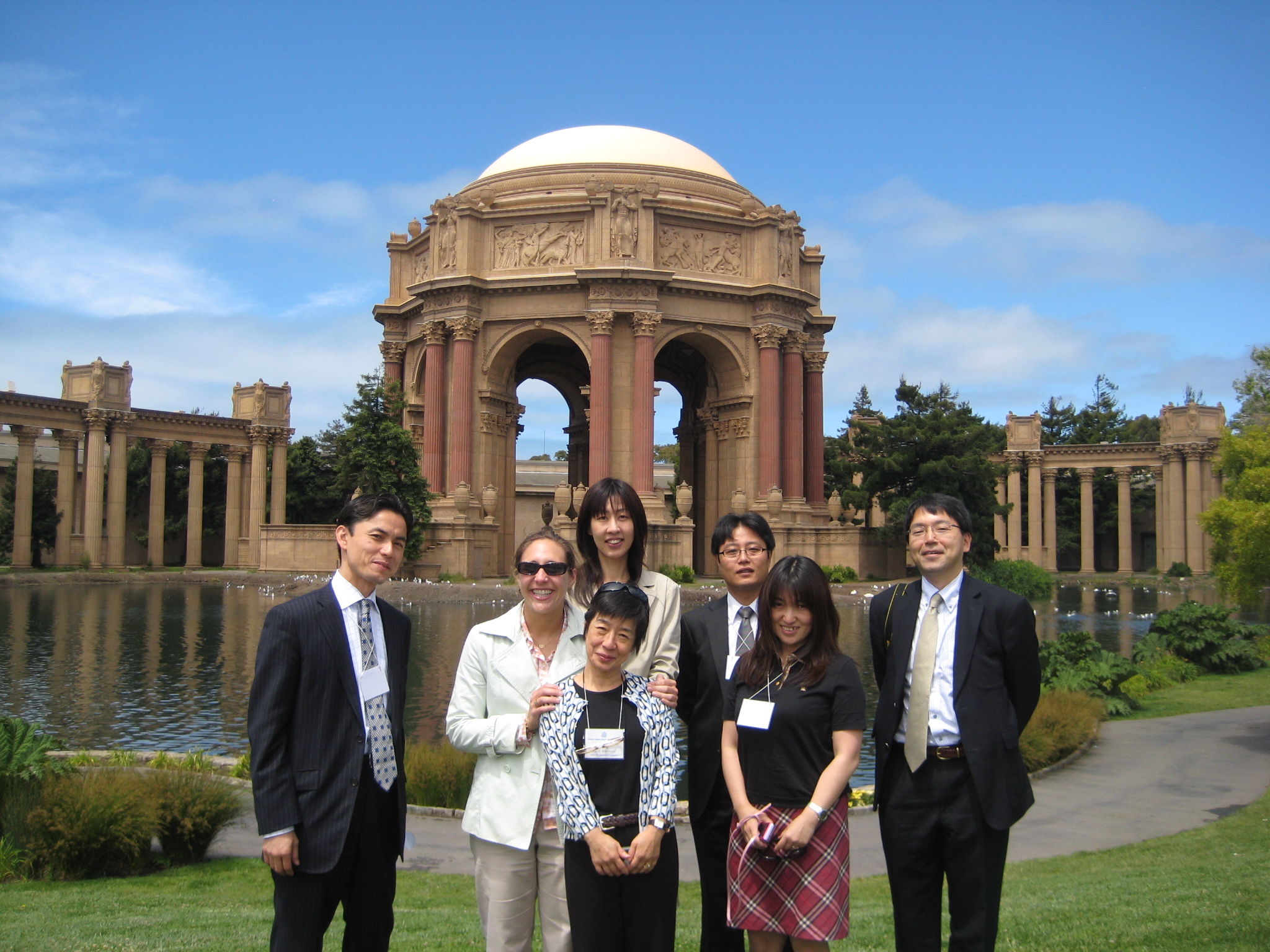
The Japanese government is currently undertaking 事業仕分け (jigyo shiwake), budget screening or review and prioritization of government projects. This has become a buzzword since the DPJ came into office promising to eliminate wasteful government spending. The party sees this reassessment method as a potentially powerful way to chop budgets. It is being carried out to the point where no one knows where the ax will fall next.
In fact, the group I am currently interpreting for is here in the U.S. for a year through a program carried out by Japan’s National Personnel Authority and supported by the State Department. They are representatives of a variety of Ministries and will spend their time researching and producing papers on topics relating to their respective fields, with the hopes of applying this knowledge when they return home. However, they are concerned that due to jigyo shiwake there might not be a group to succeed them next year.
I recently received news from a friend at the Japan Local Government Center, the New York branch of the Council for Local Authority on International Relations (CLAIR), one of the sponsors of the JET program. He told me that Read More
The Juris Doctor Is Your New Bass-O-Matic
Academic, Advice, Blogs, Career, Graduate School Comments Off on The Juris Doctor Is Your New Bass-O-Matic
**********
Matt Leichter (matt [dot] leichter [at] gmail [dot] com) (Saitama-ken 2003-05) is a renegade attorney who plays by his own rules. He operates his own blog, The Law School Tuition Bubble, where he archives, chronicles, and analyzes the rising cost and declining value of legal education in the United States. He also maintains the “Bankruptcy Legal Topics,” and, “Bankruptcy Billables,” sections for Steven Horowitz’s Bankruptcy Bill.
Like me, many American JETs contemplate going to law school when faced with their contracts expiring. You may hear about the value of the Juris Doctor – the degree that’s so flexible you can do anything with it. Find out why you should recontract and save your yennies by reading this.
